With theranostics set to play an increasing role in cancer treatments, Mirion Medical products empower medical physicists as they introduce radiopharmaceutical techniques into the clinic
In the ongoing quest to improve cancer treatments, the radiation oncology community is looking to add to its armoury of radiation-based treatments. In particular, radiopharmaceutical therapy (RPT) – also known as molecular radiotherapy (MRT) – and the emerging sub-field of theranostics are set to play an expanded role as radiation medicine shifts towards a more integrated, multidisciplinary approach.
RPT is an evolving modality that uses a tumour-targeting molecule attached to a therapeutic radioisotope to deliver radiation directly to tumour cells. Theranostics takes this approach a step further, pairing the therapeutic radioisotope with a diagnostic analogue to image the disease before therapy and predict how the radioactive drug will be taken up by a specific patient.
“Interest in theranostics has really exploded since the clinical approvals of two radioactive drugs that are being used right now to treat patients,” explained Jeff Kapatoes, vice-president of regulatory, physics and product at Mirion Medical, at the recent QA & Dosimetry Symposium (QADS) hosted by Sun Nuclear.
The two approved drugs – Lutathera and Pluvicto – are approved for treating neuroendocrine tumours and certain prostate cancers, respectively, currently for later-stage disease but with multiple clinical trials ongoing to expand their remit to early-stage disease. “There are also active trials that treat other disease sites, such as lymphoma, breast and lung,” Kapatoes noted. Alongside, some 70 companies are developing their own therapeutic radiopharmaceuticals, with nine candidates now in phase-three trials and closing in on approval.
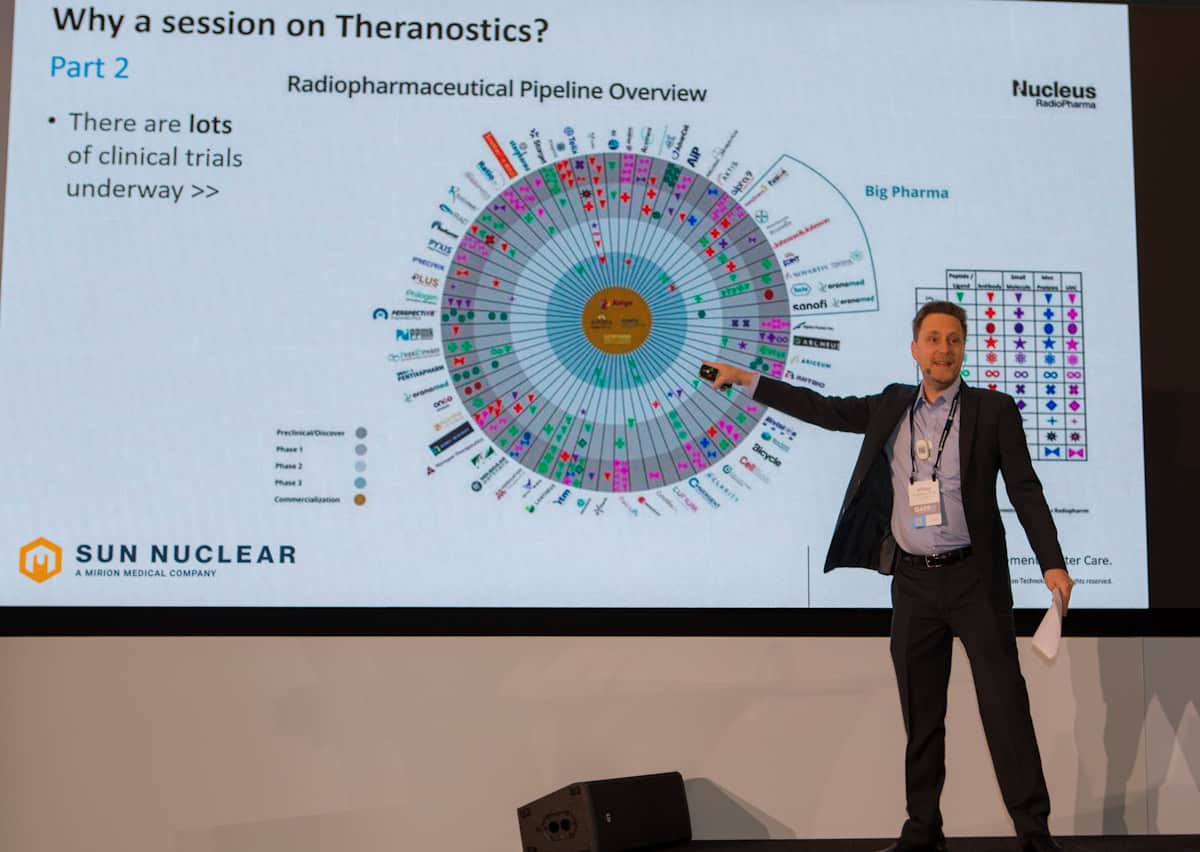
But despite its vast potential, theranostics is still in the early stages of widespread clinical adoption. While external-beam radiotherapy benefits from established treatment and quality assurance methodologies, this is simply not the case for theranostics. And as demand continues to grow, it’s vital that the full theranostic workflow is standardized – from radioisotope production through to final delivery to the patient.
Mirion Medical can support this integration of theranostics into radiation oncology, offering a broad portfolio of products designed for the entire theranostics lifecycle. The transition will also rely heavily on the contribution of medical physicists, who are uniquely positioned to implement theranostics programmes within their institutions.
Theranostics today
Speaking at the QADS event, John Sunderland from the University of Iowa explained the current situation. “The reality is, in external-beam radiotherapy, there are methods to ensure that the beam reaches the right place and the energy deposited is what you think. In RPT, you don’t control where the dose goes, biology and biochemistry do.”
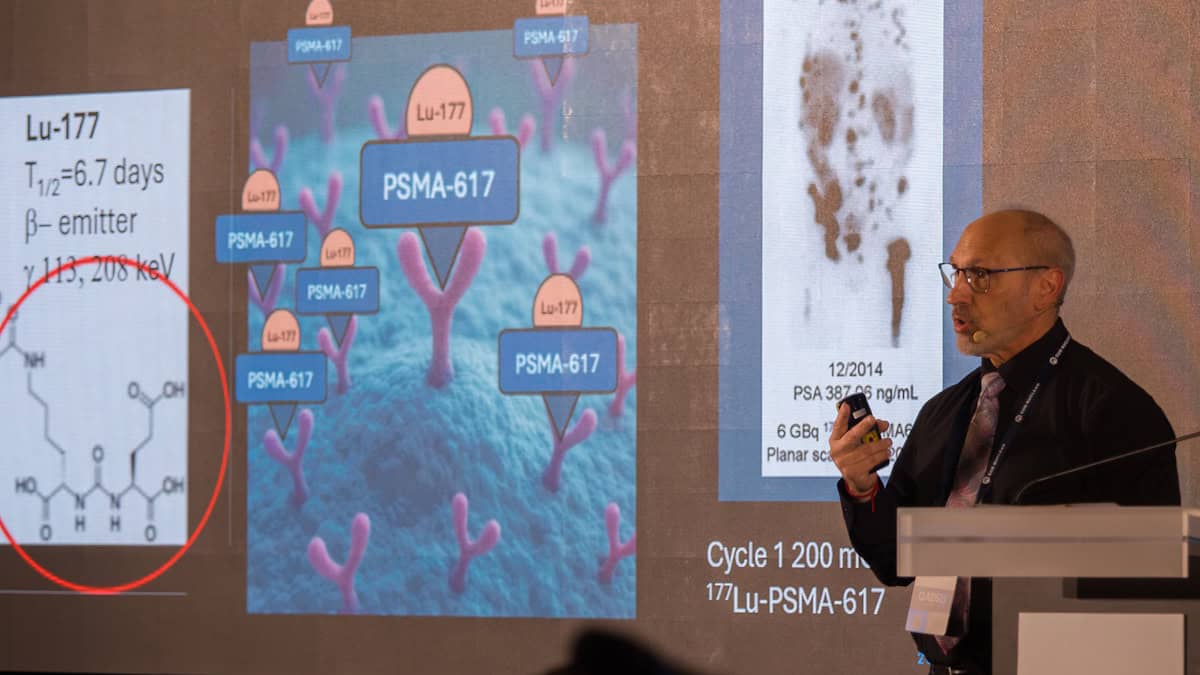
He described a typical theranostic prostate cancer treatment, which begins with a PET/CT scan to visualize how a diagnostic radioisotope binds to the patient’s prostate cancer cells. Candidate patients are then injected with a therapeutic radioisotope comprising the same cancer-targeting molecule labelled with the beta emitter lutetium-177 (177Lu), which delivers highly localized radiation dose to the tumours. Importantly, this drug can also be imaged, using SPECT/CT to track its delivery.
Serial imaging enables treatment to be tailored to a patient’s response. Sunderland discussed one patient who had almost complete response after three treatments with Pluvicto (which is delivered in up to six cycles of 200 mCi). “There’s no reason to keep giving radiation dose to this patient, which might result in adverse events, we may as well stop,” he explained.
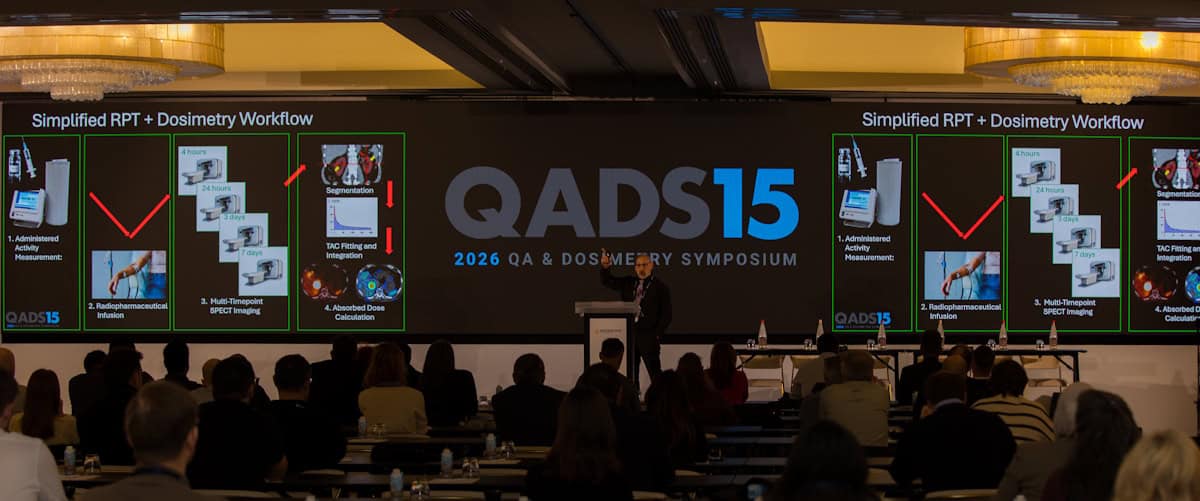
More typically, a patient will exhibit stable disease or a modest response – likely because not enough dose was delivered to the tumour. Simply increasing the amount of injected activity, however, risks increasing the dose to non-target organs such as kidneys or bone marrow. “Instead, we’re trying to move to dosimetry-modulated RPT where you modulate the amount of injected activity based upon the dosimetry in that first cycle,” Sunderland explained. “Then you can optimize the efficacy while maintaining critical organ toxicity levels to below where they might have adverse effects.”
Such dosimetry modulation requires three things: accurate measurement of the injected activity using a radionuclide calibrator; quantitative SPECT mapping of the absorbed radiation dose; and uniform software tools. But challenges remain, due to a lack of standardization at all three stages.
“Even expert physicists making the same dosimetry measurements with the same image data could vary by 20 to 30%, just because of the methodology they choose,” said Sunderland. “We have to standardize. We’re not where the external-beam people are, we’re all doing it differently because it’s so new.”
The PDIB project
The Precision Dosimetry Imaging Biomarker (PDIB) project hopes to remedy this situation via three parallel projects: establishing a network of secondary standards calibration laboratories (SSCLs); standardization of SPECT/CT scanner calibration procedures; and standardization of dosimetry calculation workflows. “Only if we can do that are we actually going to be able to define our radiation dose-effect curves, as the external-beam field has been doing for years,” said Sunderland.
The first project aims to enable accurate measurement of the injected dose. To achieve this, four SSCLs – at BC Cancer, the University of Iowa, the University of Alabama Birmingham and the Belgian Nuclear Research Centre – will work with the national metrology labs NIST and NPL to support clinical trials worldwide. Using high-purity germanium detectors, the labs will perform absolute activity measurements of the six most commonly used radionuclides (177Lu, 131I, 225Ac, 111In, 203Pb and 212Pb). These samples can then be used by radiopharmacies and imaging/therapy sites to adjust their own dose calibrators to the SSCL measurements, targeting an overall activity uncertainty of less than 3%.
The second project, designed to harmonize quantitative calibration of SPECT/CT for therapeutic radionuclides, involves 12 imaging sites across the US, Europe and Australia. “There’s no standard way to calibrate right now and there’s no way to validate the calibration,” said Sunderland. The plan is to calibrate seven common quantitative SPECT/CT scanner models, using three different phantoms and the six radionuclides, using SSCL-supplied samples to ensure accurate activities.
The final project addresses the dosimetry calculations. Led by five international experts (two in North America, two in Europe and one in Australia), the project will examine 177Lu dosimetry for kidneys, bone marrow and tumours using 20 curated 177Lu-DOTATOC datasets. The teams will use five cases to develop standard operating procedures, then test these procedures on the other 15 cases, using five different dosimetry software packages, to investigate inter-user dosimetry variability.
“Radiopharmaceutical therapy is a big deal,” Sunderland emphasized. “The market for nuclear medicine is growing exponentially; it’s going to be double that of external-beam radiotherapy by 2030. And there are not nearly enough nuclear medicine physicists to do this work.”
In the US, RPT is a shared domain between radiation oncology and nuclear medicine, with active discussion around which department should be handling radiation for therapeutic versus purely diagnostic purposes. In Europe, meanwhile, theranostics generally sits solely within the remit of nuclear medicine.
“We need to recruit the external-beam physicists into the fold,” said Sunderland. “From a dosimetry and physics standpoint, there’s a lot of overlap here and a lot of expertise.”
Supporting the theranostics workflow
This blurring of traditional boundaries between nuclear medicine and radiation oncology creates both opportunities and complexities. With a comprehensive portfolio of products that span both domains, Mirion Medical aims to ease this convergence of disciplines and support the physicists navigating this transition.
Designed to standardize and streamline the full theranostics workflow, ec² Software enables radioisotope manufacturers, radiopharmacies and clinical facilities to provide traceability and support precision, safety and regulatory adherence.
“Products from ec² Software enhance precision through accurate dose tracking and documentation across the radiopharmaceutical lifecycle, improve safety by reducing manual steps, and support regulatory compliance with auditable records,” Kapatoes explained. “Overall, ec² Software helps health systems move from fragmented processes to consistent, scalable operations.”
Daily QA 4 Pro redefines machine quality assurance for next-generation radiotherapy

Meanwhile, Mirion’s broader Radiopharma offering supports the physical and operational infrastructure required for safe and accurate delivery of theranostic procedures. This includes dose calibrators, SPECT calibration phantoms and shielding systems from Capintec, all of which will be key enablers for the introduction of dosimetry-modulated RPT.
“While ec² provides the workflow, traceability and compliance layer, Mirion’s hardware and monitoring solutions address the measurement, protection and safety environment in which those workflows operate,” said Kapatoes. “Together, they create an integrated approach, linking what’s happening operationally with what’s happening physically. This alignment helps health systems standardize processes, reduce variability and maintain compliance as programmes scale.”