

Single-molecule spin qubits can be controlled with light
Next step is to integrate these bottom-up structures onto photonic circuits, say researchers
 Read article: Single-molecule spin qubits can be controlled with light

Next step is to integrate these bottom-up structures onto photonic circuits, say researchers
Read article: Single-molecule spin qubits can be controlled with light
Calculations suggest certain types of black hole could split into two, like a waist branching into legs
 Read article: Rapidly rotating black holes could ‘wear pants’, say theorists
Discovery could aid the development of advanced body-centred cubic materials for demanding environments
 Read article: Versatile metal alloy stays tough through extreme cold
New method makes flexible perovskite photovoltaic devices mechanically stronger and robust to heat without blocking their electrical pathways
 Read article: Polymer nanospheres could improve perovskite solar cells
Ultrafast flashes of light could permit detailed studies of electron behaviour in atoms and ultrafast imaging of structures within materials
 Read article: Attosecond hard X-ray pulses reach record-high intensities
Pink, purple and blue white dwarfs also exist, upending common ideas about these end-of-life stellar remnants
 Read article: White dwarf star glows an eerie green
Finer resolution gives atmospheric scientists a more accurate picture of storm behaviour
 Read article: Climate prediction model breaks resolution records and removes ‘popcorn-like’ rain
New approach could help connect hard and soft tissues in future biomedical implants
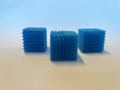 Read article: Metamaterial mimics the transition between bone and tendons
University College London team proposes explanation for why the same colours sometimes appear different on different displays
 Read article: Why do people see colours differently? Sometimes, it’s the display’s fault
Models suggest the Arsia Mons Elongated Cloud appears via a process never previously seen in a real planetary atmosphere
 Read article: Mystery of recurring Martian cloud may be solved