

Ultrathin solar cell is efficient and easy to make
Performance of perovskite-based devices has improved rapidly
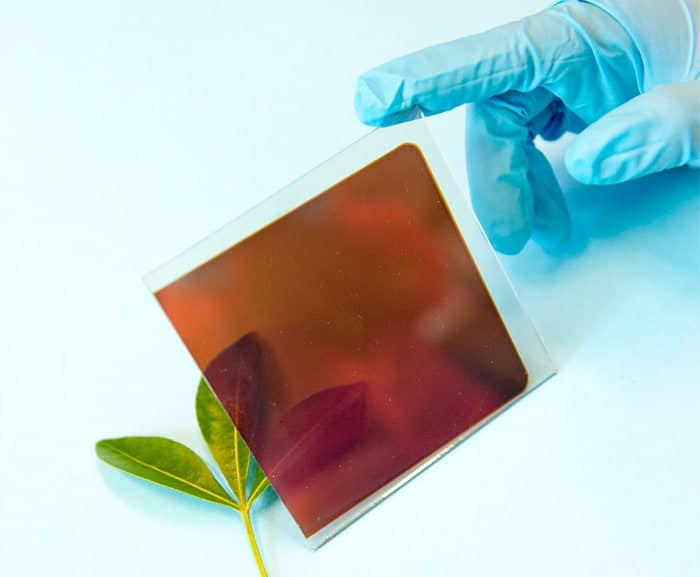 Read article: Ultrathin solar cell is efficient and easy to make

Performance of perovskite-based devices has improved rapidly
Read article: Ultrathin solar cell is efficient and easy to make
Fabrication process could be commercially viable
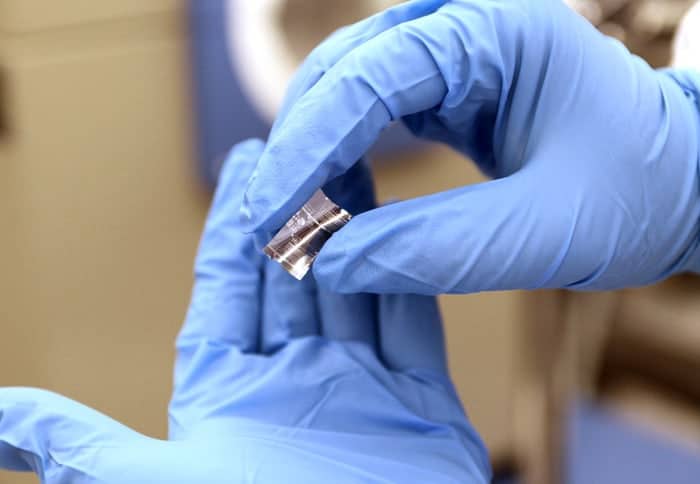 Read article: New silicon devices are fast, flexible and semi-transparent
p-doped material could be suitable for integrated circuits on a chip and RF transistors
 Read article: Chlorine has graphene covered
Nanowire LED array works thanks to "piezophototronic effect"
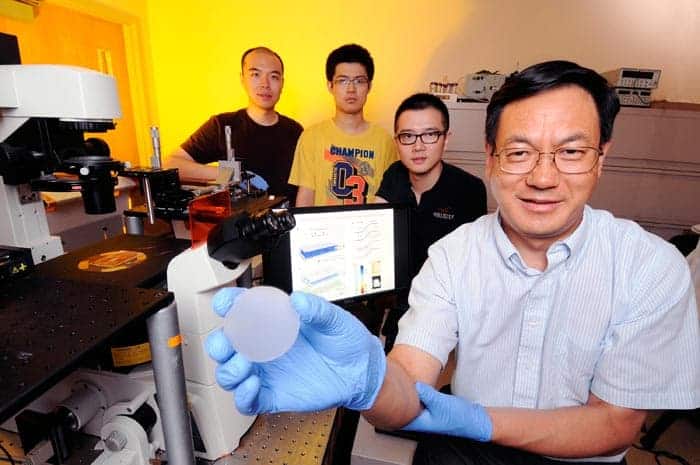 Read article: Highly sensitive skin-like sensor lights up at touch
Technique could have implications for high-density data storage
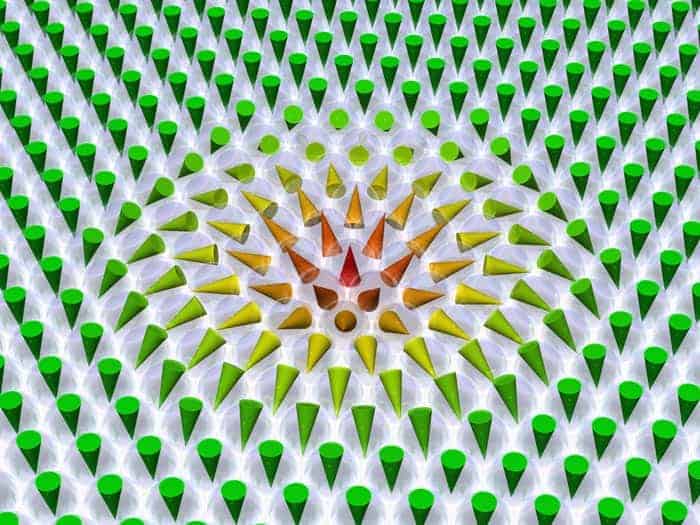 Read article: Skyrmion spin control could help speed up electronics
New device has millikelvin sensitivity
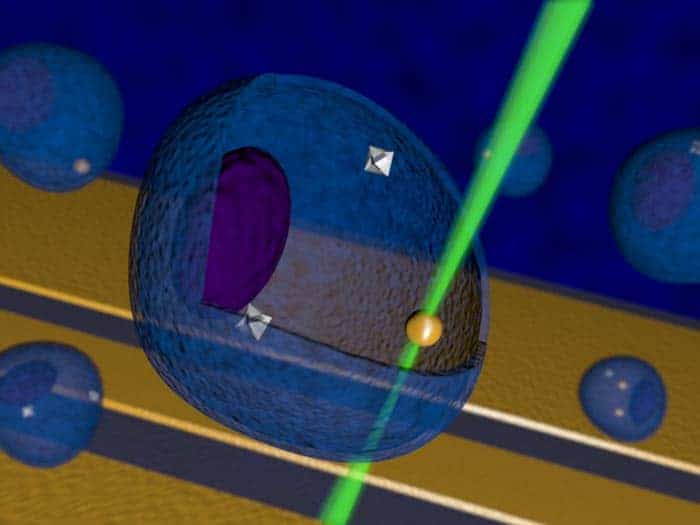 Read article: Nanodiamond thermometer takes temperature of biological cells
Flexible sensor could find use in robotics and healthcare
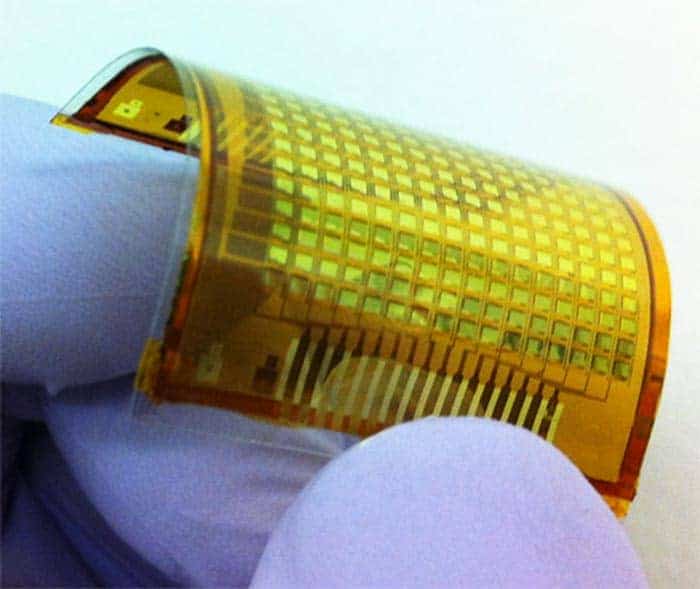 Read article: ‘Electronic skin’ lights up when touched
Best metal-oxide photoanode ever made from haematite
 Read article: ‘Champion’ nanostructures could improve solar water-splitting cells
Coated gold particles could inhibit tumours
 Read article: Nanoparticles control blood-vessel growth
All-graphene microwave circuits could be possible
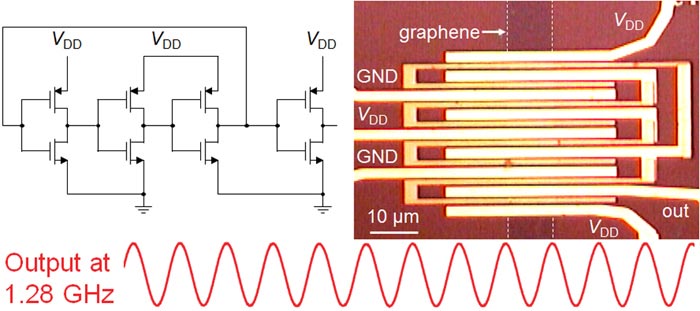 Read article: Graphene circuit breaks the gigahertz barrier