

Daguerreotypes reveal their plasmonic secrets
Nanotechnology from the nineteenth century could help in the development of plasmonic colour printing technologies of the future
 Read article: Daguerreotypes reveal their plasmonic secrets

Nanotechnology from the nineteenth century could help in the development of plasmonic colour printing technologies of the future
Read article: Daguerreotypes reveal their plasmonic secrets
Researchers have made the first ever intrinsically magnetic topological insulator in the laboratory
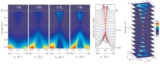 Read article: Magnetic topological insulator goes clean
New observations will be important for designing improved PCMs in the future for next-generation non-volatile memories
 Read article: X-ray diffraction reveals switching mechanism in phase-change materials
New technique could be used to control devices for ultrafast low-power non-volatile logic and memory
 Read article: Strain switches 2D phase-change transistor
New biomimetic super-elastic, lightweight carbon-tube-based material is based on a hollow hair microstructure
 Read article: Polar bears inspire insulating aerogel
A new experiment intercepts a quantum leap as it is occurring – something deemed impossible until now
 Read article: To catch a quantum jump
“Dilation” technique could allow researchers to study exotic physics in non-classical Hamiltonians
 Read article: Single-spin system breaks quantum symmetry
New technique is much more efficient than conventional approaches to produce pure actinide isotopes
 Read article: Metal ion separation speeds up
The approach could be an inexpensive and rapid alternative to growing crystals in the laboratory
 Read article: Growing better single crystals with the help of machine learning
Extended platform will allow researchers to investigate complex biomolecular interactions within cells
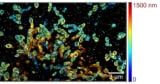 Read article: Single-molecule localization microscopy goes 3D