

Molecular graphenoids make coherent spin centres
Quantum dots in graphene containing pentagonal defects might be used as quantum sensors
 Read article: Molecular graphenoids make coherent spin centres

Quantum dots in graphene containing pentagonal defects might be used as quantum sensors
Read article: Molecular graphenoids make coherent spin centres
The first highly efficient quantum-dot light-emitting diodes that do not rely on toxic heavy metals could find applications in next-generation TV displays
 Read article: Quantum dot LEDs go cadmium-free
A polystyrene that incorporates ultrafine particles of iron in a mesoporous silica matrix is less likely to ignite and produces less smoke when heated
 Read article: Making plastics less flammable
New multispectral photodetector could find applications in medicine, food safety and precision agriculture
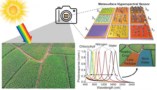 Read article: Plasmonic nanocubes make an ultrafast thermal camera
Devices with a more highly curved spiral arm or two spiral arms that mimic hand kneading could produce a better-quality dough
 Read article: Bread machines get a much-kneaded physics makeover
Researchers coin the term "phoamtonics" to describe a new field of study that exploits the photonic properties of foam-based structures
 Read article: 3D foams could control light
Physicists irreversibly split photon wavepackets using unconventional technique
 Read article: Light forks one way in a Bose–Einstein condensate
Mathematical model puts new constraints on fundamental sensing limits
 Read article: How well can biological cells sense their environment?
Exciton energy is critical to the light-emitting performance of quasi-2D perovskites
 Read article: Managed triplets improve perovskite LEDs
New method could turn waste products into oils, lubricants and waxes found in everyday detergents and cosmetics
 Read article: Catalytic technique ‘upcycles’ single-use plastic