

Metallic glasses bear up better under strain
New rejuvenation technique makes these metastable materials less likely to fracture
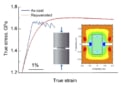 Read article: Metallic glasses bear up better under strain

New rejuvenation technique makes these metastable materials less likely to fracture
Read article: Metallic glasses bear up better under strain
Devices based on photon-assisted tunnelling could harvest energy from nuclear power stations, chemical manufacturing facilities and other sources of waste heat
 Read article: Novel photovoltaics generate electrical power from thermal sources
Novel phenomenon occurs due to quantum tunnelling and might be exploited in future quantum information technologies
 Read article: Superconductor transition switches single-molecule magnet
New device could find applications in areas such as the life sciences, airport security and quality control in manufacturing
 Read article: Terahertz microscope produces highly accurate ‘ghost’ images
Breakthrough scheme might aid the development of networked quantum computers
 Read article: Quantum secrets can be teleported and shared between multiple senders and receivers
Highly sensitive device is the first to detect changes in potassium ion levels in the brains of freely moving mice
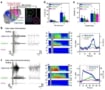 Read article: A nanosensor to detect epileptic seizures
New technique could allow for data transmission at 100 gigabits per second
 Read article: Sound waves boost the modulation speed of quantum cascade lasers
Mathematical model describes how proteins self-assemble into the amyloid fibrils associated with diseases like Alzheimer’s and Parkinson's
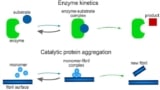 Read article: Protein aggregation goes catalytic
Simple trick of adding salt to a solution could allow engineers to deposit more uniform coatings and dyes
 Read article: A salty solution for the coffee-ring effect
Metastable materials become softer when made into micron-sized wires
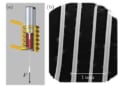 Read article: Making metallic glasses more plastic