Tipsy sludge worms simulate active polymers
Worms’ viscosity is controlled using temperature and alcohol
 Read article: Tipsy sludge worms simulate active polymers

Worms’ viscosity is controlled using temperature and alcohol
Read article: Tipsy sludge worms simulate active polymers
New findings could have practical implications in areas such as fire-fighting and riot control
 Read article: Capsule-deformation model predicts whether a water balloon will burst
Devices incorporating a light-sensitive hydrogel break down inside the body when exposed to light from an ingestible LED capsule
 Read article: Light activation offers non-invasive removal of medical implants
A polystyrene that incorporates ultrafine particles of iron in a mesoporous silica matrix is less likely to ignite and produces less smoke when heated
 Read article: Making plastics less flammable
New method could turn waste products into oils, lubricants and waxes found in everyday detergents and cosmetics
 Read article: Catalytic technique ‘upcycles’ single-use plastic
Unusual-looking polymers have strong adhesive properties
 Read article: Turbulence transforms polymers into gecko-like dendrites
Technique could produce scalable, reversible, shape-shifting structures with hitherto unseen complexity for use in a host of practical applications
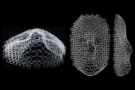 Read article: Material lattice morphs into doubly curved shapes
SMAIS technique produces synthetic covalent organic 2D polymer sheets with the largest crystalline domain sizes ever
 Read article: Surfactant monolayers help make polymer crystals
New fibrous material could allow robots to feel touch and sense how they interact with their environment
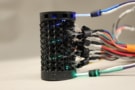 Read article: Optical lace could make a ‘nervous system’ for robots
Protein batteries could be promising alternatives to conventional lithium-ion devices
 Read article: Protein building blocks make sustainable organic batteries