The code for better science: programming and astronomy

Ivelina Momcheva finds she spends a lot of her time programming. Whether it is to analyse data or to produce figures for papers, she sits at her keyboard at Yale University in New Haven, US, writing line after line of code. Despite it being a major part of her job, however, she has never received any formal training in software development. “Once I started graduate school, I mostly taught myself,” she says. “I picked up a few recommended books, took some online classes and looked at code written by colleagues.”

Momcheva’s Yale colleague Erik Tollerud has a slightly different story. The son of a professor in computer science, he took a computing course as an undergraduate. With that background, he was better prepared than Momcheva – though perhaps not by much – for a life in modern astronomy. So are Momcheva and Tollerud typical of today’s astronomers – some trained a little in software development, others not at all? In December last year the pair attended the .Astronomy 6 (pronounced “dot astronomy”) conference in Chicago, US, where they found a lot of their fellow astronomers debating how software is used, and about the current levels of training. Seeing there was no consensus, the pair decided to find out for themselves by conducting an informal survey.

The results, based on responses from more than 1100 astronomers at all career levels, reveal just how ill-prepared astronomers are for what constitutes much of their working life. Some 90% of the respondents write at least some of their own software, according to the survey, yet fewer than one in 10 have received “substantial” training for it. About half said they have received “little” training, while 43% say they have had none at all (arXiv:1507.03989).

Momcheva and Tollerud, it turned out, were not in any way unrepresentative. “One of the points we wanted to make with the paper was that there is very little training for something that is a substantial portion of our jobs, and that is a problem,” says Momcheva. “We should consider it very seriously.”

The lack of training has caught the attention of others in the field, too. “It’s quite surprising that more than 40% of astronomers claim to have had no training in software development,” wrote theoretical astrophysicist Peter Coles of the University of Sussex in Brighton, UK, on his blog In the Dark. “We do try to embed that particular skill in graduate programmes nowadays, but it seems that doesn’t always work!”

On the job

Some might argue that a lack of training is not a problem. Scientists have always been quick to turn to computers to benefit their work, and there is a long history of them learning coding on the job without resorting to formal classes. Isn’t immersion like this actually the best way to learn, just as people learn a foreign language by living in its native country? Tollerud dismisses the comparison. “Despite the word ‘language’, the analogy is not so much learning a language as it is learning maths,” he says. “Maths is one of the fundamental underpinnings of science, but you would never say you can just pick up calculus and linear algebra as you go along.”

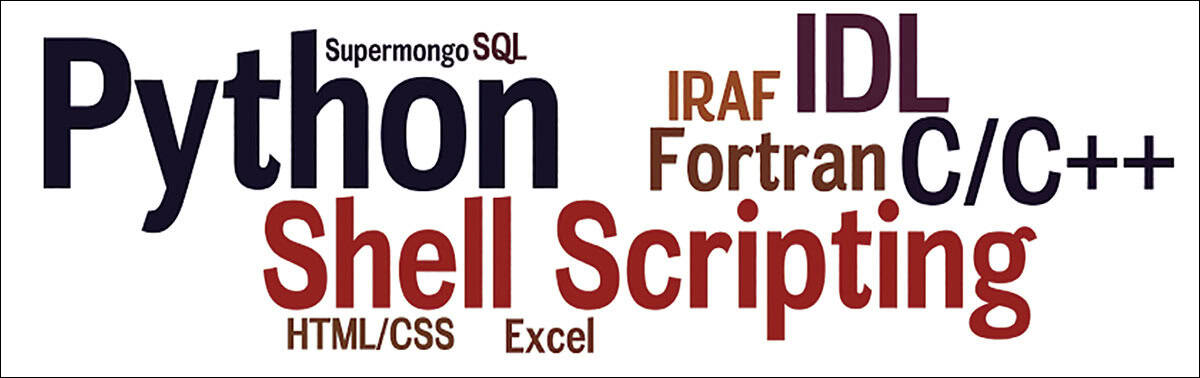
Even so, astronomers apparently have a good way of picking out what works for them, and what does not. Despite hundreds of programming languages in popular use, astronomers stick to just a trusted handful. Two-thirds of astronomers use Python, according to the survey, while 44% use IDL, 37% use C or C++ and 28% use Fortran. “Historically, a lot of scientific code was written in Fortran,” Tollerud explains. “And even though it’s now generally recognized as being more difficult to work with, it’s still used because it’s got decades and decades of astronomers’ brainpower embedded in it. They don’t want to change to something new.”

Tollerud admits, however, that languages such as Fortran, which are closer to actual machine code, can actually produce faster software. Jonathan McDowell, an astrophysicist at the Harvard–Smithsonian Center for Astrophysics in Cambridge, US, agrees. “Software engineers sometimes try and push us towards the latest greatest language that will be forgotten in 10 years,” says McDowell, who is leading software development for NASA’s Chandra X-ray Observatory. “Fortran may be a legacy language in the rest of the world but it’s a living one for us, and for a bunch of good reasons.”
Names of coding languages

Training needed

McDowell also shares Momcheva and Tollerud’s view that software training is inadequate. “A quick glance at [many astrophysicists’] code shows how deep the need is for some formal training,” he says. “Astronomer code is sloppy, tangled and often stuck in the styles of the 1960s.” He believes software courses ought to focus on the “simple stuff”: loops, subroutines, established coding styles, and so on. “Most astronomers only need the basic stuff, because they’re not trying to do anything super-fancy,” he explains. “A few do need fuller software-engineering training, [but] for those we probably only need to give them the basics and then point them in the right direction.”

Astronomer code is sloppy, tangled and often stuck in the styles of the 1960s

Momcheva believes the best time for would-be astronomers to learn programming is not at undergraduate level, as not all students will be planning to stay in academia, but as a graduate, because by that stage your path into research is more certain. Tollerud agrees that programming should be a “central” part of the graduate curriculum, although he notes that, in many US institutions, curricula are being shrunk to make way for research. Perhaps, he concludes, only those who have not had any prior training as an undergraduate should be required to take extra computer-science classes. “Personally, I think that might be the best way to do it – to give everyone the same fundamentals,” he says.

There are already ways for scientists to brush up on their programming skills, if they want to. In the US, astronomer Demitri Muna runs week-long “SciCoder” workshops on software development for astronomers. Internationally, the volunteer organization Software Carpentry runs two-day workshops for scientists of all disciplines.

Much of this, in fact, is an effort to take programming more seriously as a part of modern science – not just to make the software better, but to give proper credit to all those who create it. “There is less recognition of software as being a thing that is critical for doing the science as there is [for] actual instrumentation,” says Tollerud. “Even though, in modern astronomy, it is.”
The world of physics in 2016

As another year draws to a close, it’s time for me to peer into my crystal ball and predict the key events in physics that could take place in 2016. I always find it simpler and easier to say what’s coming up in “big science” – dominated as it is by massive projects in particle physics, astronomy and cosmology that are planned years in advance. And next year is no exception.

So let’s start at CERN, where physicists at the Large Hadron Collider (LHC) will spend 2016 continuing to smash protons together at an energy of 13 TeV as part of “Run II”, which began last year. Fabiola Gianotti, who takes the reins from Rolf-Dieter Heuer next month as CERN’s 15th director-general, will be keen to ensure the lab gathers as many top-quality data as possible, even if the LHC’s unlikely to reach its planned collision energy of 14 TeV or get “new physics” beyond the Standard Model in 2016. Indeed, a presentation at CERN just before Christmas of the first Run II data from the ATLAS and CMS experiments already appears to limit the possibility of “supersymmetric” particles to yet higher energies.

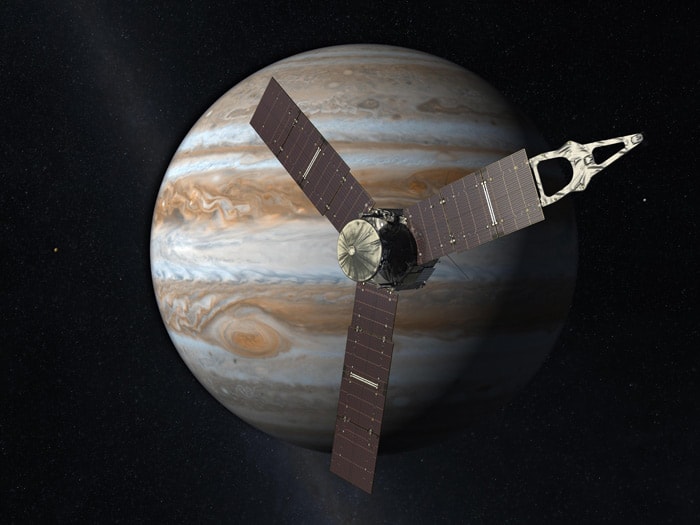
Up in space, NASA’s Juno mission is set to enter the orbit of Jupiter on 4 July, handily timed for a watching US public. After a five-year journey, Juno will be the first craft to visit Jupiter since Galileo in 1995. The Japanese Space Agency (JAXA) is set for a busy year, too. Its Akatsuki spacecraft entered orbit around Venus last month, and mission scientists expect to receive its first data in April. JAXA also plans to launch the ASTRO-H X-ray telescope into low Earth orbit this year, to study everything from the large-scale structure of the universe to the distribution of dark matter in galaxy clusters.

Meanwhile, the European Space Agency will release the first data early next year from its Gaia mission, which seeks to create a 3D catalogue of about a billion astronomical objects. March will see the European Space Agency’s Lisa Pathfinder craft begin work to test the technology for a future space-based gravitational-wave observatory. Another tantalizing prospect for 2016 will be the Event Horizon Telescope imaging a black hole for the first time.

Astroparticle physicists, meanwhile, are set to start work in 2016 on a $14m upgrade to the Pierre Auger Observatory – the world’s largest cosmic-ray observatory – in Argentina. The AugerPrime upgrade will involve installing scintillation detectors alongside the 1660 existing water Cerenkov detectors, allowing researchers to more efficiently separate the electrons and muons that are created in the cascade of secondary particles created when a comic ray hits the Earth’s atmosphere. This, in turn, should make it easier to identify cosmic rays that are high-energy protons.

Ups and downs

All is not entirely rosy in astronomy, though. Hawaii’s Supreme court recently ruled that the construction permit for the $1.4bn Thirty Meter Telescope (TMT) on top of Mauna Kea mountain is invalid. The ruling will force the telescope’s backers to restart the entire permit process, delaying the project and adding further uncertainty. Construction of the TMT has already been on hold since last April following protests by native Hawaiians, who see its construction on Mauna Kea as desecration of their spiritual and cultural pinnacle.

In nuclear physics, the ITER tokomak fusion reactor, which is being built in Cadarache in southern France, faces another turbulent year. After last November’s ITER council meeting, rumours surfaced that the project’s completion could slip by six years, from 2019 to 2025. The council will now carry out its own review to see if there is scope for tightening the timeline and cutting costs, with a new plan, or “baseline”, due out in June. On a related note, the Wendelstein 7-X stellerator in Greifswald, Germany, which switched on last week, is set to be put through its paces next year as researchers test this type of fusion device.

Quantum frontiers

Predicting what will happen across the rest of physics and in physics-based industry is harder, where progress is vital but fragmented across myriad groups, sectors and businesses. My tip is seeing “Li-Fi” – a light-based alternative to radio-frequency Wi-Fi – gaining commercial traction. Work on graphene and other 2D materials will continue, with the focus on layering a few 2D materials to make novel “designer” heterostructures using, say, graphene layers as electrodes and boron nitride as insulators.

Applications of physics are crucial, and it is thanks to them – and through the advocacy of organizations like the Institute of Physics (IOP), which publishes Physics World – that science funding in the UK survived cuts in the country’s recent Comprehensive Spending Review. There will be further positive developments for UK science in 2016, with the opening of the massive new £650m Francis Crick Institute in London. Named after the co-discoverer of the structure of DNA, the institute will be the country’s flagship biomedical-science lab, with as many as a fifth of the 1250 staff being physicists, chemists, mathematicians and engineers. Remember that biosciences and the environment dominate Altmetric’s list of the top 100 most popular scientific papers of 2015, as judged by how much they were shared and discussed in mainstream and social media.

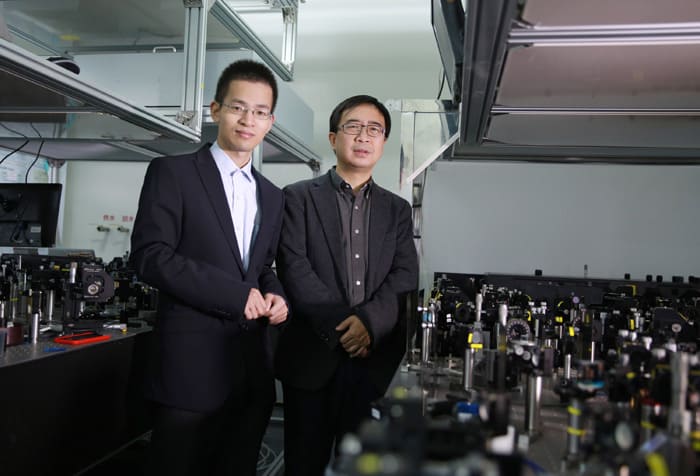
The beauty of physics, however, is that even the most esoteric research can unleash unforeseen benefits – as the winners of the Physics World 2015 Breakthrough of the Year will concur. We picked Jian-Wei Pan and Chaoyang Lu of the University of Science and Technology of China in Hefei, for being the first to achieve the simultaneous quantum teleportation of two inherent properties of a fundamental particle – the photon. The researchers are already talking about applications, such as “long-distance quantum communications that provide unbreakable security, ultrafast quantum computers and quantum networks”. We can also look forward to further developments in 2016 from the UK’s ambitious £270m National Quantum Technologies Programme, which seeks to stimulate applications of quantum physics.

Speaking of which, surely 2016 will be the year when Anton Zeilinger – the doyen of quantum communication, computation and information – will finally win a long-overdue Nobel Prize for Physics? I’ve backed the Austrian quantum guru for Nobel glory for a long time, and 2016 has to be his year, possibly with Alain Aspect and John Clauser for their Bell’s inequality experiments. The Nobel Committee for Physics take note.

Season’s greetings

As for Physics World, in 2016 we’ll be keeping an eye on the industrial side of physics via our “Focus on” series, which includes nuclear energy (April), nanotechnology (May), optics and photonics (June) and vacuum technology (August). There will also be focus issues on neutron scattering (October), and astronomy and space (December). Also don’t miss our special report on China in September, which will see the editorial team visiting the world’s fastest rising physics powerhouse. We have special issues coming up on diversity (March), planetary physics (July) and natural hazards (November). Plus, on this website, we will be following all of the developments in the world of physics through our news and blog channels as well as our podcasts, videos and 100 Second Science. And finally, remember that all IOP members can read the award-winning digital magazine online or through our apps, and, if you are not already an IOP member, don’t forget to join to get instant access to every issue.

  • Happy with our predictions? Annoyed at something we missed? Tell us what you think by commenting below

International Year of Light draws to a close

The International Year of Light and Light-based Technologies (IYL 2015) will soon draw to a close, in a year that has seen thousands of events celebrating the science and applications of light in more than a 100 countries worldwide. Officially launched in January at the headquarters of the UN Educational, Scientific and Cultural Organization (UNESCO) in Paris, IYL 2015 has involved more than 100 partners from 85 countries – including the Institute of Physics, which publishes Physics World.

“IYL 2015 is among the most successful and visible of any of UNESCO’s international observances,” says John Dudley, president of the European Physical Society (EPS), which came up with the idea for the year of light in 2009. “This year has seen unparalleled co-operation between partners who have not traditionally worked together.”

A range of international and national events have been held, touching on light in everything from archaeology and communications to medicine and the arts. The Light: Beyond the Bulb project, for example, has put the science of light into public settings around the world, such as parks, metro-stations, airports and libraries, while the Study after Sunset initiative promoted the use of solar-powered light-emitting-diode (LED) lanterns in parts of the world where there is little or no reliable source of light after dark. The iSPEX-EU campaign has used “citizen science” to measure air pollution with smartphones; while children, teachers, scientists and artists from more than 25 countries came together to write the “SkyLight” science opera.

Leaving a legacy

Organizers behind the year hope that the impact of IYL 2015 will be felt for many years to come. Dudley says that a number of projects are already under way to put long-term programmes into place. The international firm Royal Philips Lighting, for example, has already called on governments to work together and end light poverty by 2030.

“In developing countries, the need for reliable and safe lighting for education and improved quality of life is now clear at both the public and political level,” says Dudley. “Another example is the awareness of how smart lighting and good design can reduce energy waste and cut light pollution – it is hoped that standards associations will now follow this up to influence building codes.”

Dudley says that IYL 2015 has also allowed the scientific community to make governments and funding agencies aware of the “many ways in which photonics and associated technologies impact their lives, in areas from medicine to communications”. One important message, he adds, is that many of the applications we benefit from today have their origins in basic curiosity-driven research carried out decades ago. “It is not easy to change the mindset of short-term budgets,” he says. “But if we have succeeded even a little, this will be among the most important legacies of the year.”

The closing ceremony for IYL 2015 will take place on 4–6 February in Mérida, Mexico, and is set to be attended by senior figures behind the year, including Nobel laureates, diplomats and business leaders, with a scientific programme consisting of plenary lectures, panel sessions and parallel workshops. It will review the year and its successes, and will focus in particular on ensuring an enduring legacy. A series of light-themed films created by Physics World over the last year will be shown in Mérida as part of a film festival.

“The ceremony aims to identify new projects and products that can have a positive impact on people’s lives and the environment,” says Ana María Cetto of the National Autonomous University of Mexico. “It will address major issues such as light in medicine, the build environment, culture and the arts, as well as the use of light in research, education, energy and industry. We will also look at how to create a dark-sky-friendly future.”

Raising awareness

The UN has declared “international years” since 1959, to draw attention to topics deemed to be of worldwide importance. In recent years, there have been a number of successful science-based themes, including physics (2005), astronomy (2009), chemistry (2011) and crystallography (2014).

This year was picked to celebrate light because it marks a number of anniversaries, including 1000 years since the publication of the work on optics by Ibn al-Haytham, during the Islamic Golden Age. The year also marks 200 years since Augustin-Jean Fresnel’s seminal paper introducing the notion of the wave nature of light, 150 years since James Clerk Maxwell’s work on electromagnetism that paved the way for technologies from lasers to mobile phones, as well as the centenary of the incorporation of the speed of light as an essential part of our description of space and time in Einstein’s equations of general relativity.

A resolution endorsing IYL 2015 was first adopted by UNESCO in October 2012 and submitted to the UN in November 2013. At the 68th session of the UN General Assembly in Paris in September 2013, the resolution was then adopted to declare 2015 the International Year of Light and Light-Based Technologies, to “raise awareness of how optical technologies promote sustainable development and provide solutions to worldwide challenges in energy, education, agriculture, communications and health”.

  • A free-to-read digital edition containing 10 of our very best feature articles on the science and applications of light is available either by downloading the Physics World app onto your tablet or smartphone, which is available for iOS and Android from the App Store and Google Play, or on your desktop
  • For a selection of the best Physics World videos on light, including a series of specially commissioned videos for IYL 2015, visit Physics World Showcase: Light

The 10 quirkiest physics stories of 2015

By Michael Banks

From a physicist creating an award-winning beer to a font based on Albert Einstein’s handwriting, physics has offered up its fair share of interesting stories this year. Here is our pick of the 10 best, in chronological order.

UK to open its first “pub observatory”

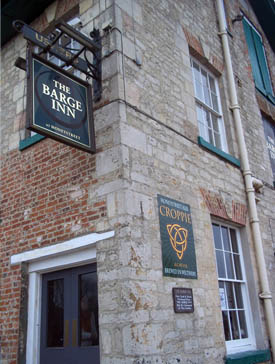
Fancy having a few pints while gazing at the stars? Well soon you could do just that, thanks to a new initiative at the Barge Inn in Honeystreet on the banks of the Kennet and Avon Canal in Wiltshire, UK.

The boozer is already a favourite among UFO aficionados and crop-circle hunters, but now the free house, which has its own brewery making beers such as Alien Abduction and Roswell, is creating the UK’s first pub observatory. The 205-year-old, rural inn received planning permission earlier this year from Wiltshire County Council to construct a 6 m-tall domed observatory in its neighbouring campsite.

Dubbed the Honeystreet Observatory, it will be able to accommodate groups of about 20 people and will feature a Celestron 14″ 1400 Pro telescope. Images from the instrument will also be relayed onto screens in the pub.

But will it be a good idea to mix alcohol with astronomy, particularly with the tricky ascent to the telescope? “Gazing at the stars and falling down the stairs is a regular activity, so we think it will be business as usual,” says pub landlord Ian McIvor. The observatory is set to open in spring 2016 and Physics World editorial staff are looking forward to checking out this important new scientific venue.

(more…)

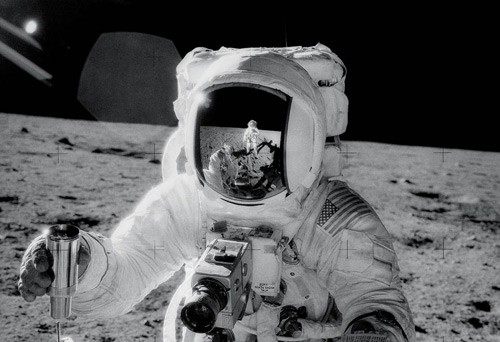
Preserving Apollo’s data legacy

By Louise Mayor in San Francisco

Day two of AGU Fall 2015 saw the likes of SpaceX CEO Elon Musk and NSF director France Córdova talking in rooms packed full of earth and space scientists. But what grabbed my attention was a short talk by Nancy Todd of NASA’s Astromaterials Acquisition and Curation Office.

NASA being NASA, I assumed that all its data from completed missions would by now have been digitized and made accessible. That, I learned, is not true – but Todd and her colleagues are on the case.

(more…)

Quest to understand ‘nothing’ wins Physics World’s 2015 Book of the Year

Trespassing on Einstein's Lawn by Amanda Gefter

What sparked your interest in physics? It’s a question that appears regularly in Physics World‘s “Once a physicist” column (which profiles people who studied physics and then went on to do something else), and common responses include “I was good at it in school” and “I had an inspiring teacher”. But for the science journalist Amanda Gefter, the answer is much less conventional. As she explains in her book, Trespassing on Einstein’s Lawn – which Physics World has chosen as its Book of the Year for 2015 – her interest in physics began “in a Chinese restaurant, circa 1995, when my father asked me a question about nothing”.

At the time, Gefter was an angsty teenager who found her high-school science classes boring, yet her father’s question struck a chord. Soon the pair were devouring popular-physics books, and a few years later, they blagged their way into a physics conference. Eventually, Gefter became a science journalist as a “cover” so that she could continue asking questions about what is “real” in the universe we observe around us.

Gefter’s background is an important part of Trespassing on Einstein’s Lawn, which mixes her coming-of-age story with a penetrating (and frequently mind-blowing) analysis of what modern physics has to say about the nature of reality. In the book, Gefter grows from someone with little knowledge of physics, into the sort of person who asks questions like “How can we apply the holographic principle to our de Sitter universe?”, and she takes readers with her, sharing and explaining the answers that theorists such as Alan Guth, Fotini Markopoulou, Kip Thorne and Leonard Susskind have given her over the years. Hence, Gefter’s private quest for understanding becomes a way of introducing general readers to some of the most esoteric concepts in physics and cosmology.

This combination of the personal and the scientific is highly unusual in popular-physics writing, and it helped propel Trespassing on Einstein’s Lawn to the top of a strong shortlist for Physics World‘s annual books award, which recognizes works that are “novel” as well as “interesting to physicists” and (of course) “well written”. That said, the other nine books on the 2015 shortlist also have these qualities in abundance, and you can find out more about a few of them if you listen to our latest podcast.

In the podcast, you’ll hear Physics World‘s editor Matin Durrani and reviews editor Margaret Harris discussing their favourite shortlisted books with Andrew Glester, the science communicator behind the Cosmic Shed podcast. You’ll also hear Amanda Gefter describe the pros and cons of explaining highly mathematical concepts without resorting to equations – something she discusses at greater length in a previous edition of the Physics World podcast.

This is the seventh year that the magazine has picked a Book of the Year. Previous winners include The Strangest Man, Graham Farmelo’s biography of Paul Dirac (2009); How the Hippies Saved Physics, David Kaiser’s analysis of how relative outsiders helped revive interest in the fundamentals of quantum mechanics (2012); and Stuff Matters, Mark Miodownik’s paean to the science of everyday materials (2014).

Book of the Year 2015

Each year, Physics World reviews a shedload of great physics books, and in 2015 we’re taking that turn of phrase literally, teaming up with The Cosmic Shed podcast to record our “Book of the Year” announcement in – yes – a garden shed.

In this podcast, you will hear Physics World‘s editor Matin Durrani and reviews editor Margaret Harris being quizzed on some of their favourite shortlisted books by The Cosmic Shed‘s Andrew Glester, a Bristol-based science communicator who loves to debate “science fiction, science fact and everything in between” from the comfort of his garden shed. For the most part, this podcast sticks with science fact, but with several of 2015’s shortlisted books having decidedly cosmic overtones, you never know where the discussion might lead….

We hope you enjoy hearing about these books as much as we enjoyed reading and talking about them. Congratulations to all the shortlisted authors!

Shortlist for Physics World‘s Book of the Year 2015 (alphabetical by author)

Life on the Edge: the Coming of Age of Quantum Biology Jim Al-Khalili and Johnjoe McFadden

Physics on Your Feet: Ninety Minutes of Shame but a PhD for the Rest of Your Life Dmitry Budker and Alexander Sushkov

Half-Life: the Divided Life of Bruno Pontecorvo, Physicist or Spy Frank Close

Trespassing on Einstein’s Lawn: a Father, a Daughter, the Meaning of Nothing and the Beginning of Everything Amanda Gefter

Beyond: Our Future in Space Chris Impey

The Water Book: the Extraordinary Story of Our Most Ordinary Substance Alok Jha

Monsters: the Hindenburg Disaster and the Birth of Pathological Technology Ed Regis

Tunnel Visions: the Rise and Fall of the Superconducting Super Collider Michael Riordan, Lillian Hoddeson, Adrienne Kolb

The Copernicus Complex: the Quest for our Cosmic (In)Significance Caleb Scharf

Atoms Under the Floorboards: the Surprising Science Hidden in Your Home Chris Woodford

Are reticent climate researchers 'failing humanity'?

AGU Fall 2015

By James Dacey in San Francisco

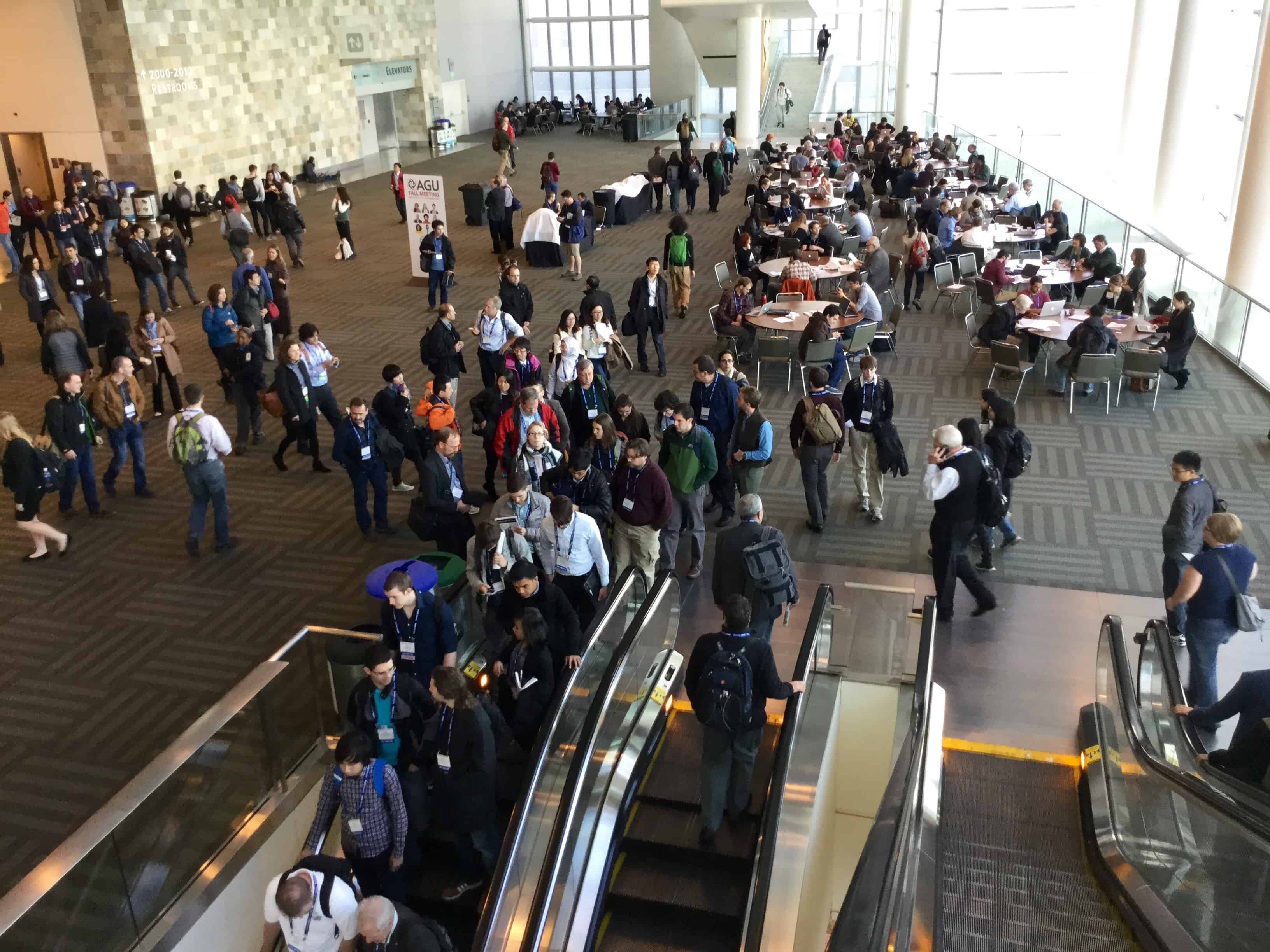
Droves of delegates poured into the Moscone Center in San Francisco today for day one of AGU Fall 2015 – the largest Earth and space-science meeting in the world, with a whopping 24,000 delegates expected over the week. Having arrived from the UK on Saturday night, the jet-lag has kicked in with a vengeance today, so a couple of the conference coffees were definitely in order this morning. I’m just taking a break now after an interesting session about communicating climate change, and whether those researchers who don’t engage in the public debate are “failing humanity”.

The room was packed to the rafters, no doubt down to the profile of the speakers. First up was James Hansen, the former NASA scientist who has been outspoken in his criticism of the recent COP21 climate discussions, or at least the lack of concrete proposals to cut carbon emissions. Hansen restated his beef with the deal and argued that the only workable solution is for authorities to collect a carbon fee at source, such as charging domestic mines for the weight of carbon they sell. This, he believes, is the most effective way to make renewable energy and low-carbon options more viable. Not one to pull his punches, Hansen described US Energy Secretary Ernest Moniz’s idea that China will be able to curb much of its carbon missions using carbon capture and storage (CSS) technologies as “pure unadulterated bullshit”.

(more…)

Our favourite pictures of 2015


New Horizons uncovers Pluto’s icy secrets

It will come as no surprise that our top image(s) come from NASA’s New Horizons flyby of the dwarf-planet Pluto, which took place on 14 July this year. At its closest approach, the craft was a mere 12,472 km from the planet’s surface – roughly the same distance from New York to Mumbai, India – making it the first-ever space mission to explore a world so far from Earth. Since then, New Horizons has released many stunning, close-up views of the previously unseen dwarf planet, revealing that it is a chilly world where glaciers of frozen nitrogen, methane and carbon dioxide flow around sturdy hills made of water ice. The images revealed that Pluto has mountains several kilometres high, escarpments that run for 600 km and a “bedrock” made of frozen water. Instead of picking just one image, above is a composite film that consists of some of the best views of this distant world. They were made with the telescopic Long Range Reconnaissance Imager, which took pictures every three seconds.

Lasers reveal previously unseen fossil details

You could be forgiven for thinking that the photograph above is of some astronomical wonder such as a nebula, but you would be wrong. Above is a fossil of the skull of a Microraptor, imaged using a new laser-based scanning technique, which could potentially help researchers to get new information from fossil specimens. Developed by palaeontologist Tom Kaye of the Burke Museum in Seattle, together with colleagues also in the US, this inexpensive and non-destructive approach uses commercial-grade lasers to stimulate fluorescence in the fossil. This reveals detail that would not have been observable with traditional visual enhancers such as ultraviolet light, which have a far lower irradiance level. Laser scanning can also help to identify composite fakes – fossils that have been cobbled together from different specimens – by revealing differences in fossil mineralogy.

Clap your eyes on the first ‘images’ of thunder

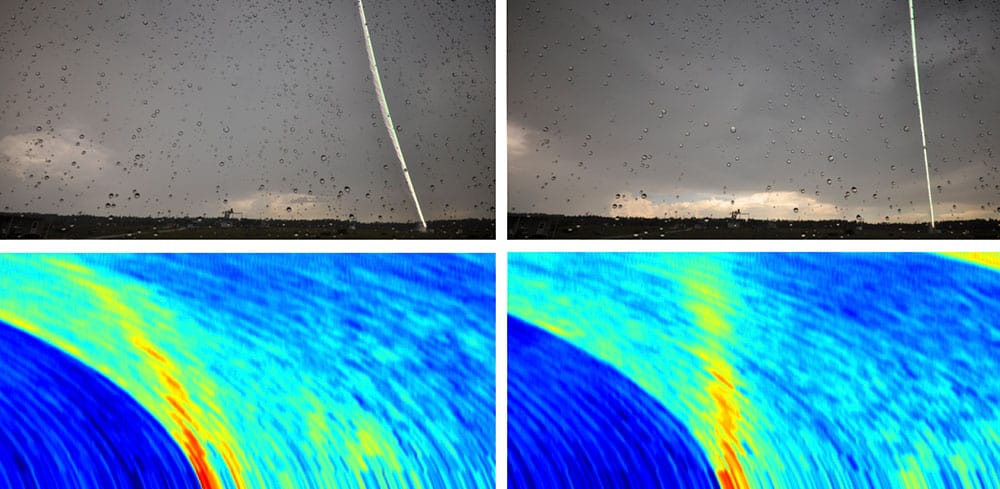
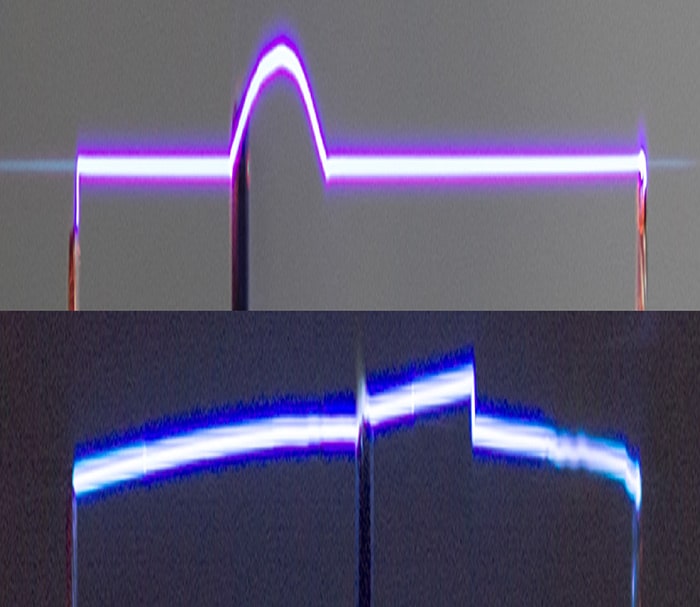
The cool blue arcs of colour that you see above are among the first images of thunder that have been taken by an international team of researchers. Created by visualizing the sound waves produced by artificially triggered lightning, the novel experiment was carried out by Maher Dayeh of the Southwest Research Institute together with colleagues in Australia and the US. They designed a large array of 16 microphones, lined up 95 m from the launch pad where the lightning would hit. Following each strike, the recordings were processed and converted to give a vertical “acoustic profile” of the lightning bolt. With sound waves from higher up taking longer to reach the receivers, each return-stroke signal has a characteristic curved appearance. The team compared long-exposure optical photographs of triggered lightning events (top) with acoustically imaged profiles of the discharge channel (below), corrected for sound-speed propagation and atmospheric-absorption effects.

Could lasers guide and control the path of lightning?

Following on from imaging thunder, many scientists – mad or otherwise – have sought to control lightning. Thanks to the latest work done by an international team of researchers, electrical discharges could be controlled and guided with lasers, along complex paths and even around obstacles. Our ability to control the exact path such currents take is limited because they are affected by everything from air temperature to the presence of pre-ionized matter. Recent developments in optical physics have brought to light new types of “non-diffracting” laser beams with unusual properties. Both Airy and Bessel beam lasers can “self-heal”, which means that if their intensity peaks are blocked by an obstacle, they can reconstruct themselves on the other side of it. Matteo Clerici, a physicist at INRS University in Canada and Heriot-Watt University in the UK, and colleagues fired different laser beams between two wire electrodes, placed 5 cm apart, between which a high voltage (of 15 kV) was then applied. The images above show how the discharges jump over an obstacle and how the Bessel (top) and Airy (bottom) beams restore themselves, leaving the electric discharge to continue along an almost unaffected trajectory.

Gravitational lensing creates ‘Einstein’s cross’ of distant supernova

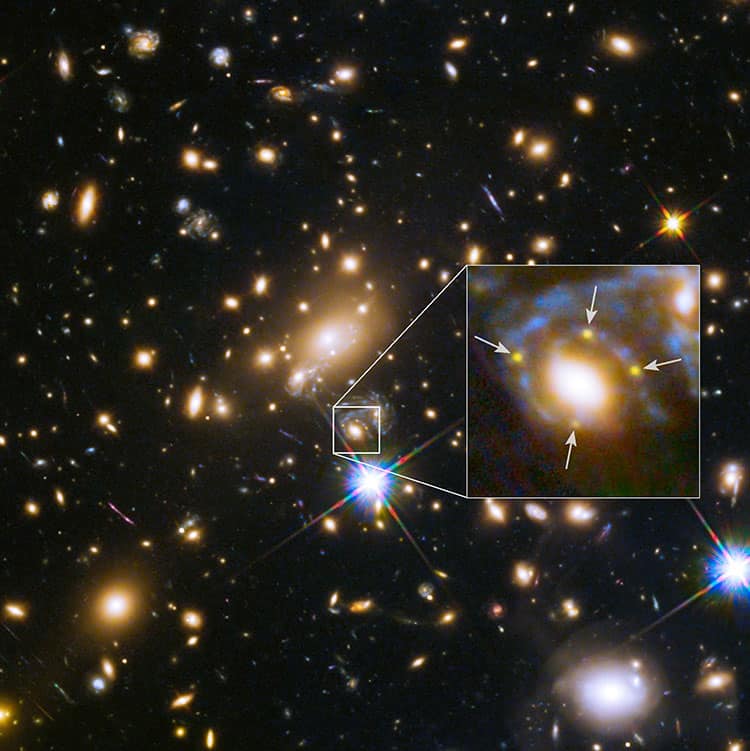
A distant galaxy has created four images of a supernova even further away, via gravitational lensing, that have been captured for the first time by an international team of astronomers using the Hubble Space Telescope (HST). The “Einstein cross” pattern forms as light from the distant supernova is lensed as it passes a galaxy that sits within a cluster of galaxies, on its way to Earth. In the image above, the many red galaxies are members of the massive MACS J1149.6+2223 cluster, which creates distorted and highly magnified images of the galaxies behind it. A large galaxy (centre of the box) has split the light from a supernova in a magnified background galaxy into four yellow images (arrows) to form the cross. Patrick Kelly from the University of California, Berkeley, together with colleagues across the globe, already knows that a fifth image will appear in the next decade, providing a “replay” of the supernova, because light can take various paths around and through a gravitational lens and therefore arrive at Earth at different times. This is particularly rare and useful, because astronomy is not normally a predictive science.

Revealing the secret strength of a sea sponge

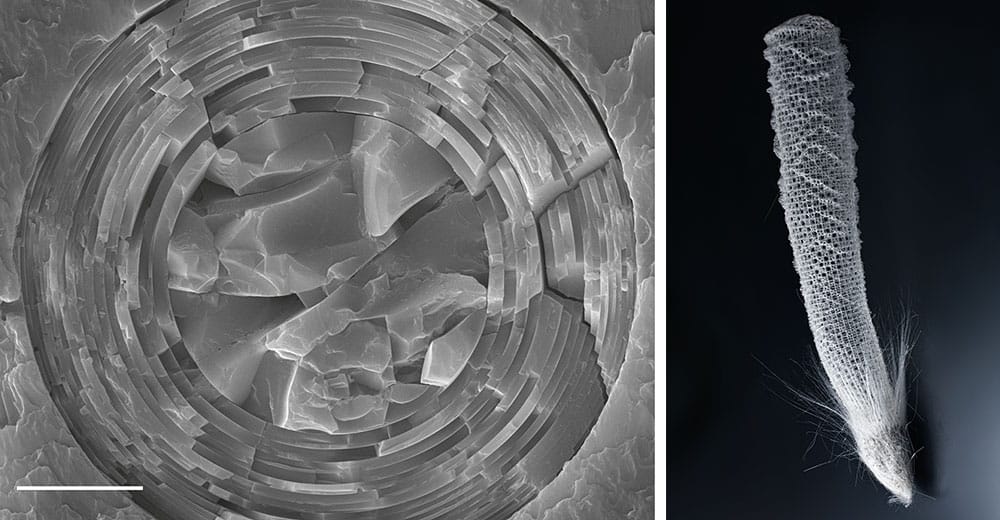
Found in deep waters in the western Pacific Ocean, the 20–35 cm-long delicate-looking sea sponge (right) Euplectella aspergillum – also known as Venus’s flower basket – has a hidden strength. Its skeleton is firmly attached to the sea floor by thousands of glassy silica “spicules”, which, despite being no thicker than a human hair, have a remarkable load capacity. The spicules are covered in backward-facing barbs that can transmit significant forces along their length to the rest of the sponge’s structure. Each spicule is about 10 cm long and comprises a silica core surrounded by 10–50 concentric silica cylinders, each separated by a thin layer of organic material. Mechanical engineer Haneesh Kesari and colleagues at Brown University and Harvard University in the US have now unravelled the clever design of the sponge by developing a mathematical model of the internal structure of a spicule. A scanning electron micrograph of a spicule (left) shows concentric rings of silica that become thinner towards the outside of the structure (the scale bar is 10 µm long).

Satellite sensor unexpectedly detects waves in upper atmosphere

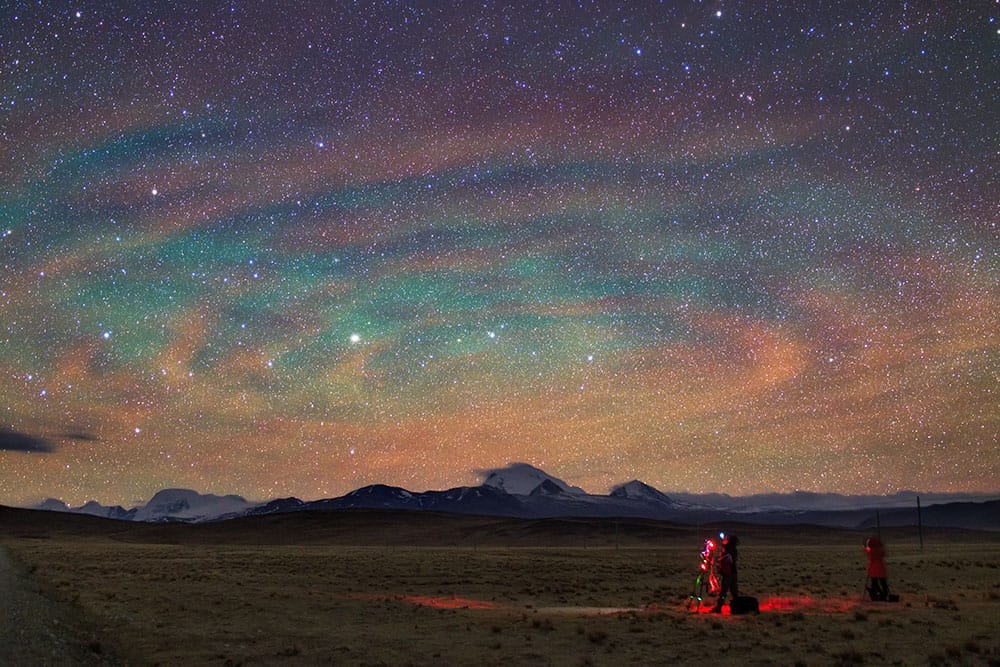
On 27 April 2014, photographer Jeff Dai was shooting the night sky over the Himalayas, near the border of Tibet, China and India, at an elevation of 4700 m above sea level. After examining his long-exposure images, he was surprised to see large concentric ripples in the glowing air – invisible to the naked eye – that it turns out were formed by a massive thunderstorm that raged over nearby Bangladesh. Coincidentally, the US Suomi National Polar-orbiting Partnership environmental satellite was looking down at the same spot at the same time and, rather unexpectedly, its on-board “Day/Night Band” (DNB) sensor also imaged the ripples, which are disturbances in the upper atmosphere’s nightglow caused by atmospheric “gravity waves”. Such waves drive winds and alter the local temperature and composition in the middle and upper atmosphere. Their observations revealed a complex array of gravity waves in the upper atmosphere that have never before been observed globally at this spatial detail.

Balloon bursts approach the speed of sound

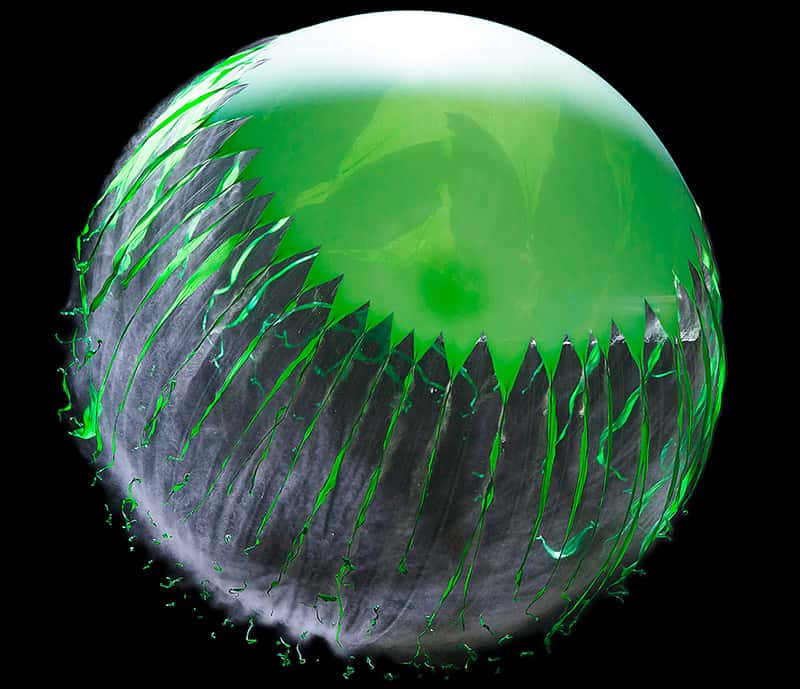
French artist Jacques Honvault is famous for his high-speed photographic images, including the spectacular shot above of a balloon fragmenting just after it is popped. Now, physicists Sébastien Moulinet and Mokhtar Adda-Bedia of the Ecole Normale Supérieure in Paris, have discovered that there is a critical point in the inflation of a balloon beyond which it will create such beautiful flower-like patterns when it bursts. The duo filmed the rupturing process of a latex balloon at 60,000 frames per second using a high-speed camera. In some of their experimental runs, the balloons were filled to a relatively low internal air pressure and then pierced with a scalpel. In these cases, the slit cleanly expanded as the balloon burst. However, when inflated to the pressure at which the balloons would burst spontaneously, the initial slit would suddenly bifurcate to create a “Y” shape. These cracks would further split until the balloon was shredded. The researchers looked at latex balloons of four different thicknesses, inflated to varying degrees. They found that when the stress in the material is above a critical value of about 1.8 MPa, the balloon will fragment. Below it, the rupture is a single slit. The physicists believe that the critical value corresponds to the crack moving at its maximum speed of about 570 m/s – the speed of sound in the latex membranes.

Imaging the polarity of individual chemical bonds

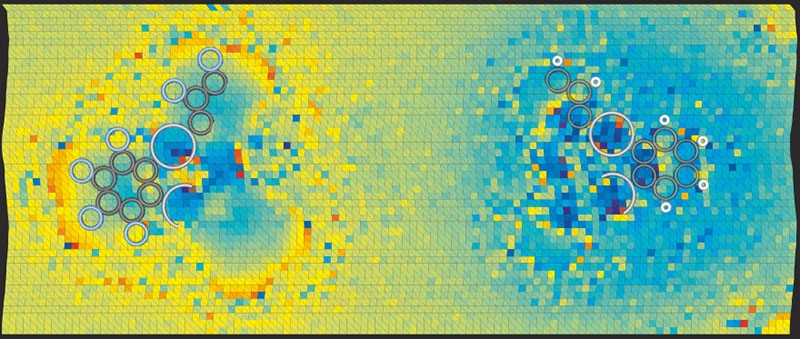
A new imaging method – based on atomic force microscopy (AFM) – allows users to precisely detect and map the charge distribution within molecules has been developed by researchers in Europe. The technique has been used to reveal the difference in bond polarity between two structurally identical but chemically distinct molecules. Jascha Repp of the University of Regensberg in Germany and colleagues were keen to improve images taken in a variation of AFM – dubbed kelvin probe force spectroscopy (KPFS) – that are often distorted. To demonstrate their technique, the researchers looked at the structurally identical molecules F12C18Hg3 (left) and H12C18Hg3 (right) pictured above. They showed for the first time that the C–H bonds in the first compound were polarized with the negative charge on the carbon atom, whereas the C–F bonds in the second were polarized the opposite way.

Organic microflowers bloom bright

The image above may look exactly like a fire-red carnation, but what you are looking at is a digitally coloured artificial microflower, magnified nearly 20,000 times. Developed by researchers at RMIT University in Melbourne, Australia, together with colleagues in India, these artificial organic flowers self-assemble in water, blooming just like an actual flower. The team has developed, for the first time, floral microstructures that form via a self-repeating arrangement in water. The artificial microflowers, which take about three hours to fully develop, are created by mixing two organic components (naphthalenediimide-bearing phosphonic acid and melamine) in water, which is then evaporated. Such floral structures could be used in a variety of fields – from optoelectronics and chemosensors to nanotechnology, biotechnology, biomedicine and organic electronics – thanks to their distinctive surfaces.

Designing smarter cities

By James Dacey in Berkeley, US

This weekend politicians at the COP21 summit in Paris signed a landmark legal agreement to keep global temperature rises at bay by curbing carbon emissions. The tricky next question of course is: how are we actually going to do this? In this short video, civil engineer Arpad Horvath of the University of California Berkeley explains that one of the aspects will be a fundamental rethink of our urban infrastructures. Horvath believes we need to move towards “smart cities” with smaller carbon footprints at all levels – from greener individual buildings, to more sustainable transport networks.

(more…)

Copyright © 2026 by IOP Publishing Ltd and individual contributors