Research on magnetic plasma confinement wins Plasma Physics and Controlled Fusion Outstanding Paper Prize

Experimental physicist Stefano Coda from the Swiss Federal Technology Institute of Lausanne (EPFL) and colleagues have been awarded the 2026 Plasma Physics and Controlled Fusion (PPCF) Outstanding Paper Prize for their research on magnetic confinement fusion.

The work – Enhanced confinement in diverted negative-triangularity L-mode plasmas in TCV – is based on simulations and experiments on the TCV tokamak based at the EPFL.

Fusion is usually performed via two types of plasma confinement. Magnetic involves using magnetic fields to hold stable a hydrogen plasma, while inertial confinement uses rapid compression, usually by lasers, to create a confined plasma for a short period of time.

In the late 1990s, scientists working on the TCV tokamak found that a certain plasma shape — dubbed negative triangularity – can help to keep the hot plasma stable and better contained.

The award-winning work build on the progress made in the decades since to show that such a configuration can lead to enhanced plasma confinement.

Indeed, the findings highlight how negative‑triangularity plasmas are no longer a niche idea but can work reliably, at high performance, and in reactor‑relevant conditions making them promising for real fusion power.
Stefano Coda from the Swiss Federal Technology Institute of Lausanne

Awarded each year, the PPCF prize aims to highlight work of the highest quality and impact published in the journal.  The award was judged on originality, scientific quality and impact as well as being based on community nominations and publication metrics.

The prize will be presented at the 52nd European Physical Society Conference on Plasma Physics to be held in Edinburgh from 29 June to 3 July.

The journal is now seeking nominations for next year’s prize, which will focus on papers in the following areas: foundational and discovery plasma physics; astrophysical, space and ionospheric plasmas; laboratory astrophysics, high energy density physics; low temperature, dusty and industrial plasmas, and inertial fusion.

Below, Coda talks to Physics World about prize, the importance of recognition and what advice he has for early-career researchers.

What does winning the 2026 PPCF Outstanding Paper Prize mean to you?

This prize is especially meaningful as it recognizes a line of research that has long been associated with our facility TCV but has taken decades to enter the mainstream. Negative triangularity is now considered a realistic option for a fusion power plant. The success of this paper confirms our group’s longstanding and continuing leadership in this effort.

How important is it that researchers receive recognition for their work?

Recognition takes several different forms. It begins with the simple act of acceptance of a publication through the peer-review process. The broader recognition that comes from downloads, citations, and ultimately the propagation of a scientific idea – the replication of an experiment, the application of a theory, a practical implementation of a conceptual notion – is the engine that keeps propelling science forward by giving it visibility and credibility. Researchers are driven primarily by curiosity and the desire to contribute new knowledge, so recognition is most meaningful when it reflects genuine scientific impact. Prizes and awards are then the cherry on the cake!

What advice would you give to early-career researchers looking to pursue a career in plasma physics?

Do not lose sight of the beauty of the science. Plasma physics is enormously complex, full of unsolved mysteries, and yet still rooted largely in classical physics. It is an exceptionally exciting time for the field with applications ranging from manufacturing to biology, and above all nuclear fusion, whose tantalising promise of abundant clean energy is driving tremendous momentum in both the public and private sectors. But whatever direction you choose, it will be rewarding if you keep your eye on the beauty of the science.

How AI is transforming human robots

It was fantastic to see the men’s marathon world record being broken in London at the end of April when Kenya’s Sabastian Sawe became the first person to officially complete the run in under two hours. It’s an achievement that a whole generation of world-class runners had had their eyes on, with Sawe completing the race in a headline-grabbing 1:59:30.

Perhaps less attention was given to another achievement a week earlier, which saw a humanoid robot run the Beijing E-Town half-marathon in 50:26, breaking the human record by almost seven minutes. What’s particularly impressive is that at the inaugural event in 2025, the robot winner took 2:40:42 to complete the race, with many robot entrants failing even to reach the finishing line.

In just one year, in other words, the robot half-marathon record has been slashed by more than two-thirds, an unthinkable feat in human terms. What’s more, the rules between the first and second robotic competitions were tightened. They now favour robots that can run on their own (rather than via remote control) and penalize those that need to be taken off course to have their batteries changed.

Giant steps

My mind began spinning, trying to work out what must have happened over the past year to realize such advancements. How did we go from remote-controlled, slow and clunky robots to autonomous, agile and sleek devices? It turns out that these increases in speed and endurance have been driven by a combination of better hardware, specialized designs and advanced algorithms.

Robots now benefit from powerful actuators enabling higher torque and faster movement of its hips and knees. Anatomical designs have also been optimizied to mirror biological efficiencies by, for example, using lightweight limbs and lower torso components to minimize the energy lost when a robot’s foot strikes the ground.

Other changes include the use of liquid cooling technologies to stop a robot from getting too hot during prolonged activity and finding ways to mimic highly efficient natural bipeds, such as an emu or ostrich. Improved AI and control software have also allowed robots to navigate varied terrain and stay stable autonomously, rather than relying on remote operation.

AI answers

Of all these developments, I believe the most significant is the expanding use of AI. To me, it seems that AI will be the enabler for robots to become more “human”. In China, humanoid robots are already being developed to automate what is dubbed the hardest task in the car industry – the final assembly stage.

This work typically consists of real people carrying out highly labour-intensive tasks such as installing wiring harnesses, fitting a vehicle’s interior trim and instruments, or bringing its engine and chassis together. Being super-precise tasks that require manual dexterity, this work has previously been thought too complex for robots.

However, through a combination of imitation learning, simulation and real-time human guidance, it’s now becoming conceivable for robotic devices to do this kind of work. Underpinning this aspiration are what are known as  Vision-Language-Action (VLA) models, which process camera images together with natural language or text descriptions and translate these into physical actions.

Having emerged relatively recently from work at AI firm Google DeepMind, VLA models differ from traditional, task-specific programming robotics by offering generalization and the ability to handle novelty. They are seen as the next big thing in AI because they bridge the gap between understanding the world (vision and language) and interacting with it (action) – potentially letting robots do tasks they have not been explicitly trained on.

VLAs typically rely on existing Vision-Language-Models (VLMs), which provide a combined knowledge of text (large language models) and images (computer vision models). The VLA model is then fine-tuned on task-specific data to learn a mapping of visual observations and text instructions to create the desired robot action.

One challenge in training VLAs is getting enough data with appropriate visual and contextual information. It may be gleaned from real robots (imitation) but it can also be generated by human guidance or teleoperation – a manual process involving humans “showing” robots how to do a specific task. The task is time-consuming, having to be performed deliberately and repeatedly using equipment that captures appropriate levels of data quantity and quality.

A third option is to build virtual simulation environments to train the models and optimize robotic movements. As VLAs inherently learn to associate higher-level cognition with lower-level physical actions, the trend will be to move from fixed, pre-programmed scripts towards AI and large-scale simulation training. The result: robots that become more autonomous and versatile in real-world situations.

We are all getting used to AI becoming an increasing part of our everyday life – think how much GenerativeAI models have improved since they first appeared a few years ago. But I wonder what will be next for robots as they become capable of moving independently and spontaneously, having the ability to operate with full autonomy within dynamic human environments, such as homes and factories.

When we – eventually – experience the full physical embodiment of Artificial General Intelligence, will it be like living on the filmset of I, Robot or Blade Runner, with humans and humanoids coexisting and, in some cases indiscernible? Several years ago, this was something I did not expect to see in my lifetime. But in April it just got one giant leap – or at least one half-marathon – closer.

Interface between air and water gets a new twist

Interfaces between air and water are omnipresent in nature and in industrial processes, but we understand surprisingly little about what goes on there. Researchers in Germany now report that a new spectroscopy technique could reshape our understanding of the molecular structure of these aqueous interfaces and the dynamical processes at play. Their discoveries could lead to better models of atmospheric processes and improved electrochemical devices such as batteries, to name but two examples.

When air and water meet, the interface between them strongly influences the behaviour of the first four layers of water. This interfacial water, as it is known, is only 7-8 angstroms thick, and the water below it behaves like a bulk liquid. To study interface effects, researchers therefore need to probe only these four layers and characterize the way their H2O molecules are oriented.

Probing the H-O-H bending vibration

One way to do this is to observe the bending vibration of the H-O-H structure, as this parameter approximately aligns with the water molecule’s dipole. In particular, one can analyse how the anisotropic bending mode changes with the thickness of the interfacial water. This can be calculated using a factor known as the depth-dependent second-order susceptibility, 𝜒(ଶ)(𝑧).

There is a problem with this approach, however, because it requires the H-O-H bending vibration to originate from the electric dipole of H2O and to contain only an interfacial dipolar signal. This is not always the case because electric quadrupolar signals from the bulk of the sample, as well as magnetic dipolar signals, can also contribute to the spectra.

These other signals do not provide any information on the orientations of the H2O dipole. Worse, they can mask the structural information that researchers are looking for. This means they either need to be ruled out or have their contributions to the overall signal removed.

A tuneable visible upconversion

The new technique, developed by Martin Thämer and colleagues in the Nonlinear Interfacial Spectroscopy Group of the Fritz-Haber Institute der Max-Planck-Gesellschaft, involves feeding the 800-nm-wavelenght light output from a Ti:sapphire laser into two independent optical parametric amplifiers. The first amplifier produces mid-infrared light through a process called difference frequency generation (DFG) and the second produces a signal beam that is subsequently doubled in frequency to produce a tuneable visible upconversion.

Using these two beams, the researchers irradiated the surface of a water sample and excited nonlinear vibrations in the water molecules. This excitation generates two new light beams at different visible frequencies. By measuring the differences in the phase and amplitude of these beams, the team was able to isolate the vibrational response of the interfacial water layer and separate it from the bulk-water quadrupole term.

Thämer and colleagues then combined their spectra with high level molecular dynamics simulations developed by their colleagues at the Frei Universität Berlin to determine the precise orientations of the water molecules in the interfacial region.

Traditional description is insufficient

Traditionally, the structure of interfacial water is described in terms of water molecules pointing up or down (the “tilt angle”). However, based on the team’s results, Thämer says this description is insufficient. An additional orientation parameter is required, namely the “water twist angle”, or the molecule’s rotation about the axis of its dipole. “The new picture of the water structure we present is layered one with alternating twist and tilt angles that indeed extends over only four molecular water layers,” Thämer tells Physics World.

Looking ahead, the researchers, who detail their work in Science Advances, say they now plan to study other aqueous interfaces, including charged interfaces and biomolecular systems.

Quiz of the week: new SKA boss Jessica Dempsey did what before becoming an astronomer?

Fancy some more? Check out our puzzles page.

Pigeons’ immune system can sense Earth’s magnetic field, study suggests

Some animals could sense Earth’s magnetic field by using the superparamagnetic properties of white blood cells in their livers, a new interdisciplinary study has revealed. Led by Clivia Lisowski at the University of Bonn, the team’s insights into homing pigeon navigation could help scientists resolve the decades-old mystery of how animals can sense magnetic fields. The research also shines new light on the inner workings of the immune system.

Animals ranging from sharks to bats appear to use Earth’s magnetic field to navigate during long migratory voyages. However, the nature of this magnetoreception is poorly understood.

“How they sense Earth´s magnetic field has been a mystery,” Lisowski explains. “Several hypotheses were suggested, but these have often resulted from laboratory experiments. They were hardly ever done in the field, and so couldn’t explain how migration would work at night or in dark environments.”

In their study, Lisowski’s team investigated the origins of magnetoreception in homing pigeons. These birds are famous for finding their way back home after being released in unfamiliar locations. “We combined expertise from research fields that usually are not intersected, namely immunology, physics and animal behaviour,” Lisowski explains. “[This gave] us a truly interdisciplinary approach to solve the mystery of magnetoreception in homing pigeons.”

Searching for magnetism

As part of this approach, the researchers searched for magnetism in several different tissues of the bird – including the liver, spleen, muscle, and beak. They used vibrating-sample magnetometry (VSM), whereby samples are placed in a constant magnetic field and vibrated up and down. If the sample is magnetic, it will induce an electric field that is proportional to its magnetization.

The team also did field studies of homing pigeon flight patterns and studied the birds’ anatomy. The latter involved using dyes to visualize microscopic structures embedded in tissues along with genomic assays of the tissues.

This combined analysis revealed the presence of superparamagnetic macrophages in homing pigeon livers. Macrophages are specialized white blood cells whose primary function is to engulf and digest pathogens. They are a cornerstone of the immune system. Superparamagnetic means that the macrophages are very easily magnetized.

“The macrophages are superparamagnetic due to their physiological function of degrading old and damaged red blood cells,” Lisowski explains. “They sequester and store the iron from red blood cells as oxide nanoparticles in ferritin proteins.”

Connecting to the brain

Within homing pigeon livers, the researchers found that these macrophages were often in the vicinity of – and sometimes even in direct contact with – nerve fibres in liver tissue. This could allow magnetic information to be passed from macrophages to the brain.

At the atomic level, Lisowski’s team proposes that the effect emerges from unpaired electrons in ferritin proteins, which interact with each other through magnetic dipole–dipole coupling to enhance their magnetic susceptibility. This subatomic effect could in turn explain the distinctive circling behaviour observed in pigeons after they take off. This circling could allow these unpaired electrons to be imprinted with magnetic information, before the birds settle into a more uniform flight.

The research could also improve our understand of the immune system. The team suspects that the sensing abilities imparted by their superparamagnetic properties could enable macrophages to better gauge their surrounding environments: distinguishing between what to fight, and what to tolerate.

“Our finding that the immune system can also sense the Earth´s magnetic field is a completely new layer in this concept of ‘immuno-sensation’, and opens the door to new research,” Lisowski says.

The research is described in Science.

Physics-based models still beat AI for predicting extreme weather events

Artificial intelligence (AI)-based weather models are not as good as physics-based forecasting systems at predicating extreme weather events, say researchers at the University of Geneva, Switzerland and the Karlsruhe Institute of Technology, Germany. After comparing the outputs of different models on the same dataset of extreme events, the team found that AI models systematically erred on the side of normality, underestimating temperatures for extremely hot events while overestimating them for cold ones. This could be because the models learn from what has already happened and struggle to forecast events outside their training data.

With extreme weather events growing more common and intense due to our rapidly warming climate, being able to predict them is becoming ever more important. In recent years, meteorologists have sought to address this by developing a new generation of AI models that vie with physics-based numerical weather prediction (NWP) systems in the accuracy and extent of their forecasts – at least for everyday weather events.

Black or grey swans

In the new work, researchers led by Zhongwei Zhang and Sebastian Engelke sought to understand whether AI could also be competitive when forecasting extreme weather episodes. These episodes are usually defined by variables such as wind, atmospheric pressure or temperature falling well outside norms for location and season, and are sometimes termed “black swans” or “grey swans” depending on how extreme they are.

“In the past, only relatively moderate extremes were documented,” Zhang and Engelke observe. “But given the current rate of high rate of global warming, record-breaking events now sometimes exceed previous record levels by large margins.”

That’s potentially a problem for AI, they add, because several recent studies have shown that such models come up short when asked to extrapolate beyond their training data. For example, in 20205, researchers at the US National Oceanic and Atmospheric Administration (NOAA) and the Allen Institute for Artificial Intelligence in Washington, US, found that a seasonal AI forecasting model could not predict values for the North Atlantic Oscillation, which plays a crucial role in Europe’s weather and climate. Another study found that models tend to underpredict the intensity of the most extreme storms (as measured by mean sea-level pressure) or other high-impact events such as heat waves.

A large sample of record-breaking events

To test this hypothesis, Zhang and Engelke constructed a large dataset of record-breaking events for heat, cold, and wind extremes during 2018 and 2020. This dataset included several well-known events, such as the Siberian heatwave in early 2020 and the US heatwave of August 2020, but also tens of thousands of less-heralded ones. The 2020 dataset, for example, included 162,751 heat, 32,991 cold, and 53,345 wind records spread across different seasons and climatic zones.

The researchers assessed how well the three leading deterministic AI weather models –GraphCast, Pangu-Weather (and operational variants) and Fuxi – performed when extrapolating from this dataset of record-breaking events. They then compared these models’ performance to that of the physics-based High RESolution forecast (HRES) model developed by the European Centre for Medium-Range Weather Forecasts (ECMWF), which is widely acknowledged as today’s best physics-based NWP model.

In line with previous studies, the researchers found that both GraphCast and Fuxi were better than HRES at forecasting normal weather events. However, for record-breaking temperature and wind events in 2020, the situation was reversed, with the physics-based HRES model consistently outperforming all AI models for hot and cold temperature records as well as wind speed records.

A difficult study

The researchers report that the most difficult aspect of the study was the sheer length of computation time required to analyse huge AI and numerical forecast datasets. To complicate things further, Zhang notes that some of the most recent AI weather models are being developed by big tech companies and are not publicly available.

As well as showing that purely data-driven AI models struggle to forecast record-breaking extreme weather events, Engelke says the team’s work also provides a protocol for systematically evaluating forecasts of extreme events. “We hope this will motivate the research community to thoroughly evaluate the next generations of AI forecasts to advance our understanding of their advantages and their limitations compared to conventional physics-based models,” he says.

In this study, which appears in Science Advances, the Geneva/Karlsruhe researchers focused on evaluating the forecasts of deterministic AI weather models. They are now doing the same for forecasts made by recent probabilistic AI weather models, which they suspect will face similar extrapolation limitations.

“We are also working on building AI models ourselves that have improved forecast performance on extreme events,” Zhang and Engelke reveal. “This might be achieved this by creating hybrid models, which are a smart combination of physical and AI-based weather models.”

Word flower puzzle no. 5

How did you get on?

12 words Warming up nicely

17 words Getting hot, hot, hot

22 words Top dog!

Fancy some more? Check out our puzzles page.

Inside EPSRC: Charlotte Deane on funding the future of UK physics

This episode features Charlotte Deane, who is executive chair of the UK’s Engineering and Physical Sciences Research Council – or EPSRC.

In conversation with Physics World’s Matin Durrani, Deane talks about her career in both academia and industry – and her leadership of the University of Oxford’s Protein Informatics Group.

Deane explains EPSRC’s role in funding research in physics and other sciences in the UK. She talks about the long-term strategy behind changes in funding priorities that were announced earlier this year. She also explains how EPSRC is supporting students and highlights the importance of quantum technologies and artificial intelligence to the future of the UK.

Experiment that may or may not disprove Bohmian mechanics continues to spark debate

In the event of a nuclear holocaust, the only life remaining on Earth may be cockroaches, Keith Richards and physicists arguing about philosophical interpretations of quantum mechanics. One especially rich source of arguments is a deterministic alternative to the standard Copenhagen interpretation that dates back to the American (and later British, after Princeton University fired him for alleged communist sympathies) theoretical physicist David Bohm. According to Bohm, the position of a quantum particle is well defined everywhere and guided by a “pilot wave” which, alas, cannot be measured directly.

Despite these philosophical differences, Bohmian mechanics makes the same predictions as the Copenhagen interpretation. Except maybe it doesn’t. Occasionally, a bright theorist hypothesizes that, under very specific circumstances, one could distinguish them. Very occasionally, a bright experimentalist conducts an experiment that claims to actually do so.

This is what happened last year when Jan Klärs and colleagues at the University of Twente in the Netherlands sent photons from a laser down one of two coupled waveguides towards a potential step. When the photons reached the step, they could pass through it by quantum tunnelling. They could also pass into the other waveguide. The researchers interpreted the distance the photons travelled through the barrier before tunnelling into the other waveguide as a measurement of their speed.

The key result was that, when the wave functions on both sides of the barrier were the same, the photons still tunnelled at, ahem, light speed – matching the Copenhagen notion that tunnelling occurred equally in both directions. However, the Twente team calculated that Bohmian mechanics predicted that photons inside the step – where the guiding equation didn’t have a real-valued frequency – would be at rest and get stuck. Interferometric measurements showed that wasn’t happening.

Not so fast

Game, set and match to Copenhagen? Er, no. Proponents of Bohmian mechanics immediately disputed the team’s definition of velocity. “It’s just an operational definition,” says Aurélien Drezet of the CNRS University of Grenoble-Alps in France. “It has the units of velocity…but that doesn’t mean that Bohmian mechanics can interpret the result.”

In a “Matters Arising” article in Nature, Drezet and two colleagues at the Technion–Israel Institute of Technology in Haifa now add an experimental qualm. The fact that the Twente team was able to produce an image shows that radiation must be leaking out of the cavity, Drezet claims: “If you go to higher approximations and include cavity losses, you explain the experiment completely using Bohmian mechanics,” he says.

Klärs, who is preparing a formal response, is unconvinced. On the first point, he sees no reason “why the same speed measurement, which correctly captures the Bohmian velocity in the propagating regime, should cease to be a speed measurement in the evanescent regime”. On the second, he says his group did not ignore radiative leakage from the cavity: they measured it and found it “does not have a significant impact on the scattering physics we investigate or on the interpretation of our results”.

This could go on for some time – regardless of how many seconds it is to midnight.

X-ray velocimetry study earns Ronan Smith the PMB Early Career Researcher Award

Ronan Smith, a postdoctoral research fellow at Adelaide University, has been chosen as the winner of this year’s Physics in Medicine & Biology (PMB) Early Career Researcher Award. The award is presented to the author of the “best paper” in PMB’s 2025 Early Career Researcher Focus Collection, as selected by the journal’s editorial board.

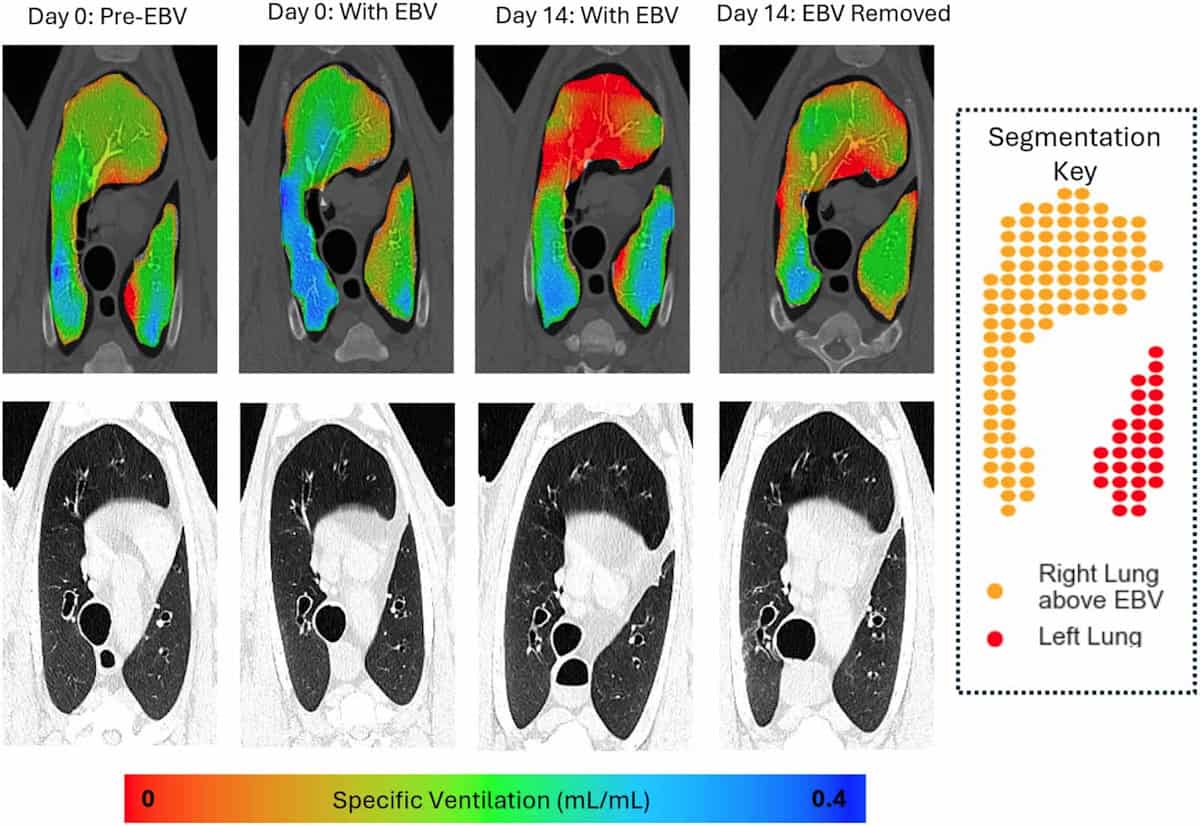
Smith’s research involves implementing X-ray velocimetry (XV), a novel imaging method that uses X-rays to track lung motion during breathing and create 3D maps of local ventilation. In his award-winning paper, Visualising ventilation changes following endobronchial valve placement with x-ray velocimetry functional lung imaging, Smith investigates the potential of XV imaging to detect changes in lung function after insertion of an endobronchial valve (EBV).

EBVs are one-way valves that are placed into the lung to help treat emphysema – a condition that damages air sacs in the lungs, causing air to get trapped inside and making breathing difficult. The EBV, which in some cases can be used in place of surgery, prevents airflow into damaged lung areas so that the rest of the lung can function more effectively.

Successful valve placement causes the targeted area of lung to collapse, which can be imaged using CT. Smith proposed that use of XV functional lung imaging to non-invasively measure regional and local changes in airflow could more accurately assess the clinical impact of EBV placement.

“The lungs are a dynamic organ, their job is to be constantly moving,” he explains. “Because X-ray velocimetry looks at lung motion, it lets us see exactly where the air is or isn’t flowing, so you can instantly see that airflow has changed within the lungs. CT only measures structural changes, which may not necessarily be correlated to changes in lung function.”

In vivo demonstration

To investigate this potential advantage, Smith and colleagues carried out a pilot study on healthy sheep, which have a similar lung size to humans. They performed XV imaging on two anaesthetized and ventilated animals, before and after placing EBVs in their lungs.

The XV scanning process involves recording fluoroscopic videos of individual breaths at various angles around the lung, with anatomic positioning provided by an accompanying breath-hold CT scan. To analyse the data, the researchers used XV LVAS software from 4DMedical, the MedTech company that developed and commercialized the XV technology.

XV and CT imaging

The software correlates motion in the XV videos with CT data to measure the lung’s expansion and contraction during a breath cycle. It creates a 3D map of specific ventilation (the change in voxel volume during a breath, divided by its starting volume) in small voxels throughout the lungs. This map can then be used to calculate mean specific ventilation and ventilation heterogeneity across a given lung region.

As soon as the EBVs were inserted into the animals’ lungs, XV imaging could visualize and quantify a reduction in airflow to areas downstream of the valves. This effect was seen both in regions where collapse was visible in CT scans, as well as those where collapse could not be detected by CT. Ventilation changes were also clearly observed in the remainder of the lungs.

“The main finding of our study was that X-ray velocimetry imaging can detect airflow changes from endobronchial valve placement in the lungs,” says Smith. “Our research could be really important for people [with emphysema], as tools to help with better placement and verification will lead to improved treatment options.”

Future prospects

Since the publication of this paper, Smith has focused on further applications of pre-clinical and clinical XV imaging. “I’ve been working as part of a great interdisciplinary team looking at how lung function changes in a range of diseases, to both understand the diseases, and as an outcome measure when we test treatments,” he says.

This work includes the world’s first paediatric clinical trial of XV imaging, which is examining the feasibility of using the technology in children with cystic fibrosis. The researchers have imaged around 30 children to date and aim to publish their findings later this year. They are currently planning future studies to see how XV imaging could enhance clinical decision making and improve outcomes for these children, as well as looking at other childhood diseases where it could be of relevance.

“As an early-career researcher, I’m also focussing on developing my own research, looking at another novel X-ray imaging method called dark-field X-ray imaging,” Smith adds.

The perfect award

Smith tells Physics World that he was excited to receive the PMB Early Career Researcher Award, acknowledging the efforts of everyone involved in this “hugely collaborative project”, including clinicians, scientists, 4DMedical and the staff in the preclinical imaging facility where the study was performed.

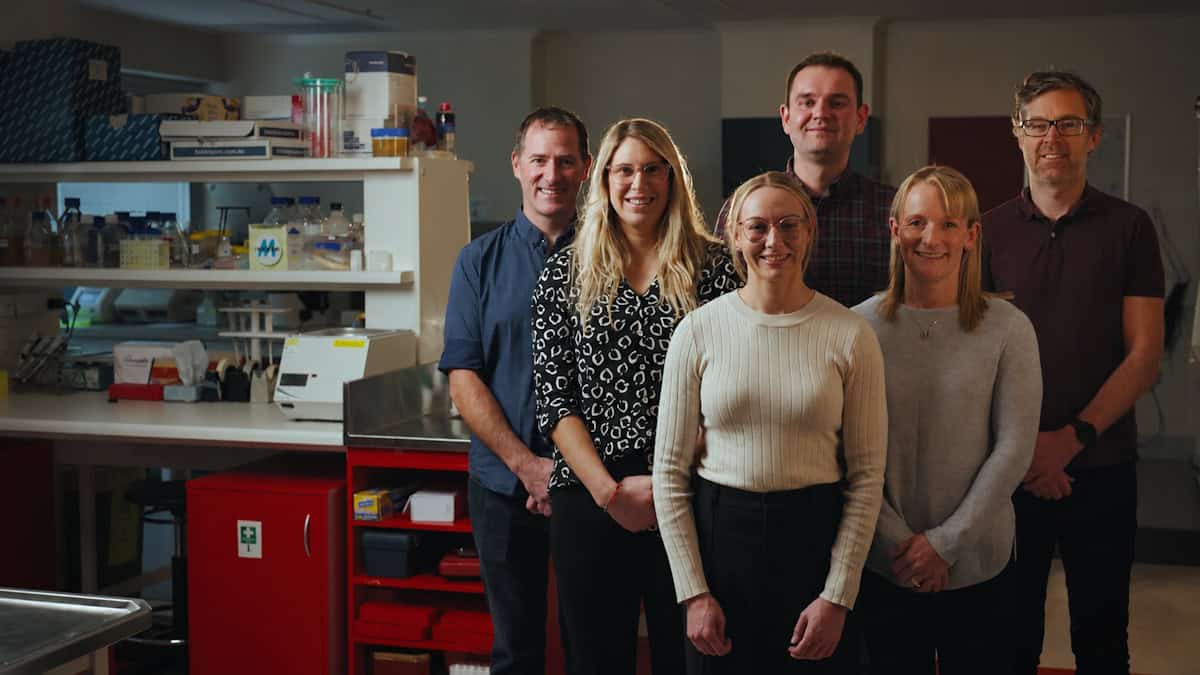
Ronan Smith and colleagues

“As a physicist working in medicine/biology, it feels like the perfect award to get,” he says. “It’s great to see interest in the work we are doing, and fantastic evidence we can use to convince the funding bodies it’s worth continuing this work.”

  • The PMB Early Career Researcher Focus Collection 2025 publishes papers from early-career researchers (defined for this collection as a postgraduate student or someone who completed their PhD in 2019 or later) in biomedical physics, with the aim of highlighting research excellence from emerging leaders. The Early Career Researcher Award was introduced to further recognise an outstanding contribution from one of the early-career authors, selected according to the quality of scientific content, number of citations and downloads, and peer review ratings.
Copyright © 2026 by IOP Publishing Ltd and individual contributors