What a modern-day US Declaration of Independence should say

Displayed in a sealed case at the National Archives Museum in Washington DC, the US Declaration of Independence is – alongside the Constitution, the Emancipation Proclamation and the Gettysburg Address – one of America’s most sacred documents. Just a single sheet of parchment, it was signed on 4 July 1776 by 56 representatives of 13 colonies, declaring themselves free of British rule. Even though years of fighting followed and Britain did not officially recognize the colonies’ independence until 1783, America dates its birth to that signing.

For many American citizens, the Declaration of Independence is greatly revered. I remember my grandfather had a copy mounted in the entryway to his home, and when I was 10 years old offered me $1 if I memorized it. I had no trouble with the start, for the document’s first sentence is arresting. “When in the Course of human events, it becomes necessary for one people to dissolve the political bands which have connected them with another”, decency requires that “they should declare the causes which impel them to the separation”.

The second sentence is equally exhilarating and unforgettable: “We hold these truths to be self-evident, that all men are created equal…”.  I didn’t discover until years later that this evidently didn’t include women, slaves, or the people referred to as “merciless Indian Savages”. Four truths later, the signatories zoomed in. When a government destroys “life, liberty and the pursuit of happiness” it is the “Right of the People to alter or abolish it”.

King George III was doing just that, they claimed, and the signatories followed with a laundry list of appalling grievances that amounted to tyranny. These included: obstructing justice, bending judges to his will, sending agents to harass and murder people, giving amnesty to those agents, transporting people overseas, cutting off trade with the rest of the world, making the military responsive to himself alone, and on and on.

Current US president Donald Trump claims that the Declaration of Independence led to “the greatest political journey in human history”. The document, he adds, set an example for the world. “The Story of America Makes Everyone Free,” he writes on an official website that has been counting down the days, hours, minutes and seconds to the 250th anniversary of the signing.

Destroyers of Earth

The enormous attention that the US administration is paying to this anniversary has made me wonder, however, whether a government today could destroy life, liberty and the pursuit of happiness badly enough to make it necessary to alter or abolish it. The answer was staring me in the face. What if it destroyed science enough to make citizens vulnerable to natural threats?

I’ve therefore been trying to imagine a revised declaration. Among the self-evident truths, I think, is that human beings are endowed with the right to protection against nature, that the purpose of science is to understand nature and its threats, and that a sovereign’s duty is therefore to foster science and act appropriately on its findings. A no-brainer, right?

These truths are more important than ever in the 21st century, I envision the document saying. Until recently in human history, nature could be treated as an inert stage for human activity. But human activity can now interact with nature in a destructive way to threaten human life, liberty and the pursuit of happiness.

We experience such destruction in the degradation of the Earth’s atmosphere, in rising sea levels, in the spread of infectious diseases, in the increasing pollution of land, sea and air, and in coastal floods and water shortages. The current US administration, I’d continue, is not only doing nothing to prevent this destruction, but also actively campaigning against people who are fighting it and trying to make the world safer.

Human freedom and independence require developing science to understand and cope with nature’s threats. When science is ignored, nature rules

The administration claims that stopping these attempts increases the freedom of US citizens. It does not, however, and instead enslaves us to nature. Human freedom and independence require developing science to understand and cope with nature’s threats. When science is ignored, nature rules.

Yet the current US sovereign, a wannabe King, has made unprecedented attacks on science. His ignorance, denials and repudiations have unleashed untold damage and destruction to the health, welfare and safety of citizens. His actions threaten not only our lives but human lives elsewhere. His actions even threaten the global conditions that make human life possible at all.

Our grievances

My revised declaration would follow with a long and easily verifiable list of modern-day grievances. These would include the fact that Trump has declared that threats whose existence is scientifically well-established are hoaxes, scams and have “no basis in fact”. He has prevented agencies from investigating these threats and from developing technologies to use against them.

He has fired people who study these threats and installed political appointees to oversee funding of research. Despite publicly denying and ridiculing findings about climate change and rising seas, he has admitted their truth when it comes to protecting his own golf course.

The US administration has also declared, contrary to scientific findings, that claims of outbreaks of disease have been “fabricated” and that vaccines do not work. It has cancelled grants to develop vaccines, attacked vaccine makers, revoked recommendations that children be vaccinated, fired experts in vaccines, and damaged the process of vaccine development.

The US administration has sought to gut or close the most important US science agencies. He has withdrawn the US from international agencies that track and address the most important threats to human life and health. He has invented false facts about nature and forced US agencies to agree with him. And he has damaged and extorted America’s top universities by trying to dictate their research, hiring, admissions, courses and curricula.

The critical point

My document would reach a rousing conclusion.

A people, it would say, are only truly free and independent when they and their offspring are able to live in a safe environment, not stalked by disease, and educated freely without government interference. A sovereign who ignores and damages science is unfit to be a ruler by exposing the people to the enslavement of nature. Citizens in a democracy have the right to a leader who does not enslave them to nature.

The final sentence of the document would be: “Let us take those rights back.”

Like the Declaration of Independence 250 years ago, my imagined one may seem revolutionary but only expresses what Thomas Jefferson, the author of the original, called “the common sense of the subject.”
How to model a net‑zero system across timescales

A successful clean‑energy transition depends on understanding how to balance variable renewable power with the growing electricity demands of transport, heating, and industry. A key challenge is capturing how renewable energy sources like wind and solar fluctuate hour by hour, but this variability also creates new opportunities to align supply with increasingly flexible forms of demand, such as electric vehicles, heat pumps, and other electrified services. Alongside these short‑term dynamics, it is equally important to determine the long‑term infrastructure needed to support a fully decarbonised energy system.

In this research, two powerful models (REMIND and PyPSAEur) are linked and allowed to exchange information repeatedly to determine both what infrastructure should be built and how it would operate each hour of the year. REMIND is a global energy and climate model that looks decades ahead, analysing investments, technology choices, and pathways to netzero. PyPSAEur is a detailed model of the European electricity system that simulates realtime grid behaviour. By combining a model that excels at longterm planning with one that captures hourly power system dynamics, the researchers create a much more realistic tool for answering these complex questions. 

They then test this approach on a Germany case study under two conditions: one with demandside flexibility (where electricity use can shift to cheaper hours, such as smartcharging electric vehicles) and one without flexibility. Their findings show that a fully renewable energy system is technically and economically achievable, that flexible systems perform far better than inflexible ones, and that even with flexibility, electricity prices can vary significantly between sectors, creating political challenges around fair pricing. Both scenarios of the German case study reach net-zero emissions by 2045.

This research gives policymakers a clearer way to design reliable, affordable, fully renewable energy systems by showing how to integrate renewables, manage electrification, use flexibility to reduce costs, understand sectoral price differences, and build markets. 

“Models used to inform climate policy have always faced a fundamental trade-off: they either capture the long-term perspective needed for investment decisions, or the hourly detail needed for power system planning, but not both. Our coupling of REMIND and PyPSA-Eur is a first step towards resolving this trade-off for an increasingly electric future energy system.” – Dr Adrian Odenweller, Potsdam Institute for Climate Impact Research

Read the full article

REMIND-PyPSA-Eur: integrating power system flexibility into sector-coupled energy transition pathways

Adrian Odenweller et al 2026 Prog. Energy 8 025001

Do you want to learn more about this topic?

The role of grid-forming inverters in enabling high penetration of renewable energy in power systems: standards, ancillary services, current deployment, and future perspectives Ali Q Al-Shetwi et al. (2026)

The hidden mechanics behind earthquakes

Earthquakes occur when tectonic plates rub against each other, become temporarily stuck, and then suddenly release accumulated stress as they slip. Although earthquakes have been studied for decades, the microscopic mechanics that cause faults to stick, slip, and generate friction are still not fully understood. 

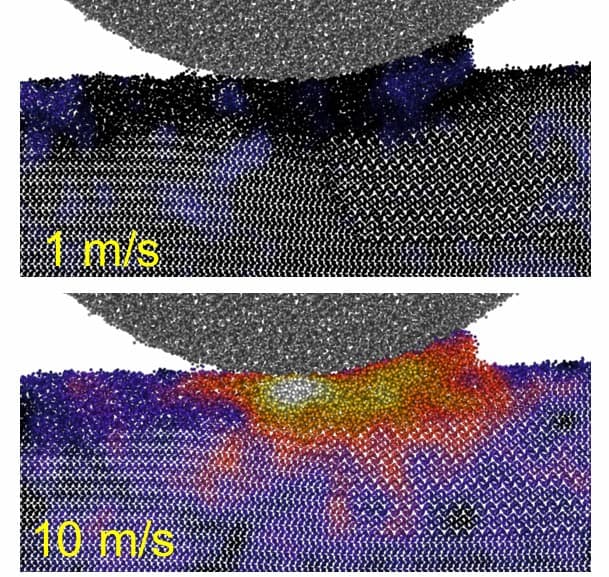
In this research, scientists use a granite-on-granite system to investigate these processes. Granite is common in continental crust and mechanically similar to many fault rocks, making it a strong laboratory analogue. The researchers used three complementary approaches. First, they performed controlled experiments measuring friction, wear, and surface roughness as two granite surfaces slid past each other, including tests with water, different temperatures, and different sliding speeds. Second, they ran molecular dynamics simulations of a silica (amorphous SiO₂) tip sliding on quartz (crystalline SiO₂), the dominant mineral in granite, to observe how atomic bonds break, phases transform, heat builds up, and friction emerges. Third, they applied theoretical models of contact mechanics (how surfaces actually touch through tiny asperities) and flash heating (how much local heating occurs and whether it weakens the material). 

Traditionally, earthquake models assume that friction comes from mechanical processes such as asperity interlocking (high points locking together), plowing (hard grains digging into the opposite surface), and gouge grinding (crushed particles resisting motion). However, this study shows the opposite of what those models predict: more wear leads to less friction, and less wear leads to more friction. Instead of friction coming from grains digging or grinding, it arises from tiny asperities that plastically flatten, coldweld together, and resist sliding because their welded atomic bonds must be broken. This represents a major shift in how fault friction is understood. 

Rigid tip sliding over quartz at two velocities

The study also finds that friction is largely insensitive to temperature, sliding speed, and hold time, suggesting that classic rate-state friction laws may not scale to real faults. The simulations identify three main energy dissipation mechanisms which are bond breaking, plastic deformation, and stressinduced phase changes. This shows that flash heating at laboratory speeds is too small to weaken quartz, whereas earthquake level slip speeds would generate much stronger thermal weakening. They also reveal that certain quartz polymorphs can form purely from stress, meaning their presence in natural faults does not necessarily indicate high temperatures. 

Taken together, these results suggest that fault friction is dominated by adhesive bonding at asperities rather than mechanical grinding, and that tectonic motion may be governed more by creepslip than classic stickslip behaviour. 

Read the full article

Granite sliding on granite: friction, wear rates, surface topography, and the scale-dependence of rate–state effects

Sergey V Sukhomlinov et al 2026 Rep. Prog. Phys. 89 038301

Do you want to learn more about this topic?

The physics of earthquakes by Hiroo Kanamori and Emily E Brodsky (2004)

Pushing many-body entanglement to its absolute limit

An absolutely maximally entangled (AME) state is one in which every possible division of a many-body system into two groups is as entangled as quantum mechanics allows. This makes AME states uniquely valuable as benchmarks for quantum theory and as resources for quantum technologies. Yet basic questions about their existence, structure and classification have remained unresolved, even after two decades of study.

In a new work, dedicated to Ryszard Horodecki, this field has been advanced in several important ways. First, the authors provided a comprehensive and up to date overview of known methods for constructing AME states, going beyond traditional approaches based on stabilizer and graph states. The authors showed how recent ideas from combinatorics, matrix and group theory generate entirely new families of highly entangled states that were previously unknown.

They also went on to study how entanglement behaves when particles are removed from an AME system. This reveals how robust these extreme states are to loss and noise, an essential consideration for real quantum technologies.

One highlight is a solution to the quantum version of Euler’s famous “36 officers” problem.  This puzzle asks whether 36 officers from six ranks and six regiments can be arranged in a 6 x 6 grid so that no row or column repeats a rank or regiment. Classical mathematics proves this is impossible.

The paper shows however, that quantum mechanics can bypass this restriction altogether. By using an absolutely maximally entangled quantum state, the researchers constructed a quantum version of the puzzle in which all constraints are satisfied simultaneously. The solution relies on superposition and quantum entanglement rather than fixed arrangements, illustrating how quantum theory enables outcomes forbidden in classical mathematics.

By mapping the limits of multipartite entanglement, this work connects abstract theory with practical goals such as quantum error correction, secure communication, and benchmarking future quantum computers.

Read the full article

Absolutely maximally entangled pure states of multipartite quantum systems – IOPscience

Grzegorz Rajchel-Mieldzioć et al 2026 Rep. Prog. Phys. 89 057601

New findings shorten the road to cryptographically relevant quantum computers

Celebrity gossip might break the Internet, but not in the way that quantum computers could. “The advent of quantum computers poses a critical threat, as they could break widely deployed encryption schemes,” warns Lily Chen, a cryptography expert from the US National Institute of Standards and Technology (NIST). Systems at risk include banking encryption, digital signatures, secure messaging, secure shell tunnelling, cryptocurrency and more.

Today’s quantum computers are still too small and error-prone to defeat gold-standard encryption. However, new results from Google Quantum AI and start-up Oratomic suggest that could change, with two widely used cryptographic systems – elliptic curve cryptography (ECC) and the Rivest-Shamir-Adleman (RSA) algorithm – potentially coming under threat sooner than many scientists predicted.

Space–time trade-off

At present, anyone who wants to access encrypted information needs a secret digital key. To obtain this key, an attacker must first solve a difficult mathematics problem. For example, breaking the RSA algorithm boils down to factoring a large number into its prime components. Breaking ECC involves finding a secret number that connects two points on an elliptic curve.

Classical computers might take billions of years to solve these problems. But if an attacker had access to a powerful enough quantum computer, they could solve the problems in mere minutes using an algorithm devised by Peter Shor in 1994.

Several years ago, experts estimated that cracking a typical RSA scheme with 2048-bit keys (RSA-2048) would require tens of millions of physical quantum bits (qubits), which are the building blocks of quantum computers. A year ago, this value dropped to a million. By February 2026 it was down to 100,000. The latest results from California-based Oratomic push the floor even lower, to 10,000 physical qubits. The largest neutral-atom qubit array – realized last year in the lab of Oratomic co-founder Manuel Endres – stands at 6100 qubits. This makes the benchmark of 10,000 feel alarmingly close, though Endres’ array hasn’t yet been used for computation.

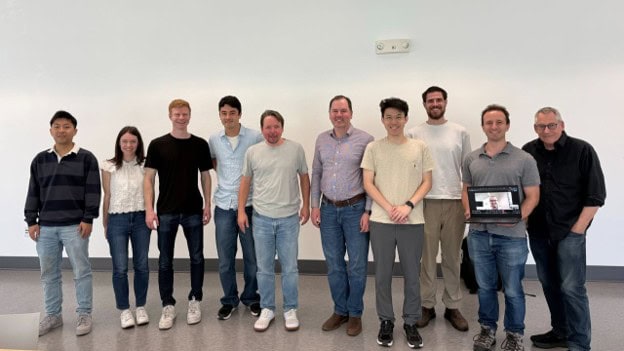
Photo showing 10 people standing against a neutrally-coloured backdrop. Nine of them appear to be men and they are all casually dressed in jeans, khakis and a mix of polo shirts, t-shirts and button-down shirts. One of them is holding a laptop with a screen containing the face of an 11th person.

There are, however, trade-offs. Quantum computers that use fewer qubits or more space-efficient hardware generally have longer computation times. Oratomic’s proposed 10,000-qubit platform would require three years to crack ECC with 256-bit keys (ECC-256) and 120 years to crack RSA-2048. The company’s predicted time-efficient alternative could solve ECC-256 in 10 days, but that would require 26,000 qubits. Solving RSA-2048 in 97 days would take 100,000 qubits.

Oratomic’s numbers have not yet been peer-reviewed, and outside experts say they depend on different assumptions about future hardware developments. “The space-efficient [architecture] is mostly based on assuming aspects that have been demonstrated to work individually in state-of-the-art academic labs,” explains Maria Violaris, a quantum physicist at Oxford Quantum Circuits, who was not involved in the research. “Meanwhile, the time-efficient one relies on more speculative assumptions that need future innovation.”

A second perspective

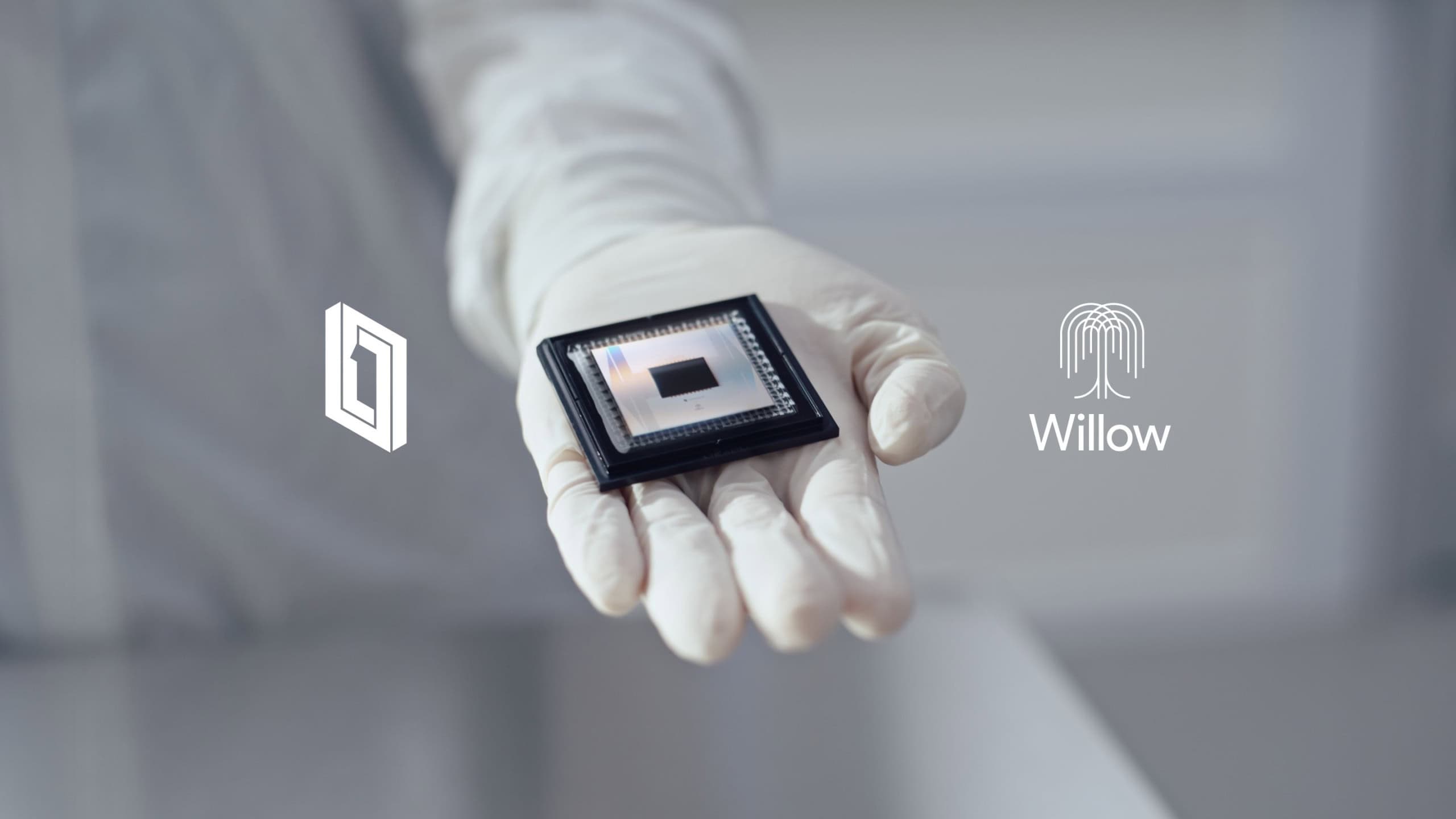
On the same day as the Oratomic team posted its findings on the arXiv preprint server, researchers at Google Quantum AI released a white paper with their own updated resource estimates. They report that a computer with 500,000 physical qubits made from superconducting circuits could solve ECC-256 in 18 minutes – and potentially even less (see box). Google’s current state-of-the-art processor, Willow, has 105 physical qubits. However, the researchers warn against assuming gradual and predictable progress because quantum computing developments are driven by overcoming scaling barriers rather than by steady increases in processor size.

The quantum threat to cryptocurrencies

Elliptic curve cryptography (ECC) underpins the security of most blockchain networks, including Bitcoin and Ethereum. Bitcoin transactions take an average of 10 minutes, so if a quantum computer can crack ECC and determine the secret key during that window, the transaction could be intercepted and funds stolen in real time.

While Google Quantum AI’s results predict that it would take 18 minutes to solve ECC on a 500,000-qubit quantum computer, they argue that the run time could be effectively shortened in some circumstances. To understand how, imagine planning a heist in which you need to open a safe. Although you won’t know the exact combination until you get your hands on the safe, if you know the model number in advance, you can prepare some tools to help you crack it faster.

A quantum computer could do something similar. According to the Google Quantum AI researchers, half the ECC algorithm only depends on the elliptic curve and not on the specific transaction. A quantum computer could precompute this half, wait in a primed state until a Bitcoin transaction begins, then quickly solve the second half in only nine minutes, dropping below the 10-minute threshold.

Quantum computing platforms that use superconducting, silicon, and photonic qubits are well-positioned for real-time attacks because they tend to compute faster than neutral-atom and ion-based computers. However, the latter could still pose a serious risk through “at-rest” attacks. Such attacks involve adversaries collecting archived and publicly available data, then decrypting it later with few time constraints.

Which threat arrives first will depend on how different quantum computing architectures mature and scale, a path still marked with considerable uncertainty. “Ultimately, feasibility is difficult to say as it depends on how challenging it will be to increase scale or to take a novel approach by engineering [new] hardware,” notes Maria Violaris of Oxford Quantum Circuits.

The high number of physical qubits required for quantum computation comes from the need to detect and correct errors. Google Quantum AI’s estimate is based on a well-known error-correction method known as the surface code. In this approach, physical qubits are arranged in a rectangular grid and interact with their nearest neighbours. Quantum information is spread redundantly across this grid, allowing errors on one physical qubit to be found and fixed. The entire grid is considered one logical qubit, and the ratio of logical to physical qubits is called the encoding rate.

In the surface code, reducing error amounts to adding more physical qubits per logical qubit, and typical encoding rates range from a few hundred to a few thousand. In contrast, the Oratomic team based its estimates on a newer method of error correction called quantum Low-Density-Parity-Check (qLDPC), which reduces error more efficiently by making the physical qubits interact over large distances. Hengyun (Harry) Zhou, a physicist at the Massachusetts Institute of Technology in the US who was not involved in the research, explains that this longer-range connectivity can significantly increase the encoding rate. For qLDPC codes, a typical rate is around 1 to 10, but rates can now go as high as 1 to 2.

Because neutral atoms are highly reconfigurable, neutral atom platforms like those used by Oratomic (and other companies, including QuEra Computing, Infleqtion, Pasqal, planqc and Atom Computing) are naturally suited to the required long-range connectivity that qLDPC codes require. However, Zhou argues that it’s “not completely out of the question” that superconducting qubit platforms could use these codes too. “There is some additional cost that the lack of reconfigurability in those platforms currently leads to, but I would say if we’re thinking about a beyond-10-year timescale, it’s quite imaginable that things could also change for other platforms as well,” he says.

Responsible disclosure

Google Quantum AI’s white paper may represent a turning point in another respect. Rather than being open about their circuit designs, its authors hid them behind a “zero-knowledge proof”, which provided enough information to verify claims while hiding details that they say could provide bad actors with an “instruction manual”.

Photo of the Google Quantum AI Willow processing chip, held in the palm of a person's outstretched and gloved hand. It's square and silvery with a black frame. The Google and Willow logos hover on either side of the hand.

This is a relatively novel approach within the quantum computing community, which has thus far followed the conventional academic practice of publishing results with full transparency. A Google blog post expresses hope that “our approach to responsible disclosure can spur an important conversation among quantum computing researchers and the broader public”.

Certainly, it has already spurred a conversation among experts. “This is the first time I’ve ever seen a new mathematical result actually announced that way,” Scott Aaronson, a quantum physicist at the University of Texas at Austin, US, wrote on his blog. “I’m not sure how much it will actually help, as once other groups know that a smaller circuit exists, it might be only a short time until they’re able to find it as well.”

Zhou echoes this sentiment. “These are the kind of results that could potentially have a lot of general societal safety implications, so you want to make sure that they’re safeguarded responsibly,” he observes. “That being said, I think it is also possible that other people, now that they know what is possible, might come up with related constructions.”

What comes next?

In the long run, protecting against threats likely means migrating away from RSA and ECC and towards new mathematical problems that are difficult for both classical and quantum computers to solve. Google recently introduced 2029 as an internal deadline for migrating major system to so-called post-quantum cryptography (PQC), and many experts believe the migration ought to begin now.

“Migrating to PQC is a massive undertaking that won’t happen overnight. Starting migration today is a necessary risk management strategy,” urges Chen from NIST. She notes that NIST has been instrumental in guiding this migration, beginning with its 2016 call for cryptography experts to design and evaluate new algorithms for PQC, and culminating in its publication of the three most promising ones in 2024.

The Google Quantum AI researchers also outline recommendations to help cryptocurrency communities and policymakers prepare for the PQC era. And while urgency permeates their white paper, ongoing PQC efforts prompted them to end it on a positive note. “These trailblazing projects demonstrate that transition to post-quantum cryptography is realistic and instil hope that it will have been completed before the first [cryptographically relevant quantum computers] come online,” they write.

Muon g−2 calculation sets precision record and backs the Standard Model

The most precise calculation of the muon’s anomalous magnetic moment to date has put to rest the possibility of that property revealing new physics beyond the Standard Model – at least for now. The new result, from an international team of physicists, was obtained using a new method to calculate this anomaly that is based on lattice quantum chromodynamics (QCD).

In the Standard Model (SM) of particle physics, which is currently our best theory of the fundamental forces of nature (barring gravity), the muon is an elementary particle. It belongs to the same family (of quarks and leptons) as the electron, but is more than 200 times heavier. The muon interacts with other SM particles via two of the fundamental forces – electromagnetism and the weak force.

Quarks and leptons all possess a magnetic moment that comes from their intrinsic angular momentum, or spin, and quantum theory posits that this magnetic moment is related to the spin by the “g-factor”. This quantity was originally calculated to be equal to exactly two for both the electron and muon.

Experiments over the last 50 years have detected minute deviations from this number, however. This difference, of roughly 0.1 %, is known as the “anomalous g-factor”, aµ = (g – 2)/2, and it comes from so-called radiative corrections – the continuous emission and re-absorption of short-lived “virtual particles” by electrons and muons.

Measuring such discrepancies is very important for physicists because the g-factor could point to the existence of other particles – both known and as-yet undiscovered – so hinting at physics beyond the SM. They can do this thanks to the muon. Since this particle is so heavy compared to the electron, the impact of virtual particles acting on it is significantly greater. This enhanced sensitivity means that measuring the muon g−2 is better for searching for new physics than the electron g−2.

Difficult measurements and calculations

The problem is that such calculations are not easy – all the more so because the muon’s magnetic moment also receives contributions from the strong force as well as the electromagnetic and weak interactions (even though the muon does not itself partake in strong interactions). These strong contributions come from the muon interacting with the photon, which in turn interacts with quarks that then themselves interact via the gluon — the mediator of the strong-force.

The strong force (which is responsible for binding quarks into protons, neutrons and other hadrons) is notoriously difficult to integrate into theoretical calculations, however, because it is so strong.

In the new work, the researchers overcame this problem using lattice QCD of the most uncertain theoretical contribution to the muon g−2 – the “leading-order hadronic vacuum polarization” (LO-HVP), which has been traditionally determined using experimental data. Lattice QCD, they explain, is a computational technique that simulates the strong force on supercomputers by dividing space-time into a fine grid or lattice of small cells. The equations of the strong interaction are then solved on this lattice.

To reach the level of precision required to calculate the muon g−2, the researchers improved on their previous lattice calculation using finer grids and also combined it with experimental data in the very long-distance interaction region. This hybrid approach dramatically reduced errors, so allowing for the most precise value of the muon magnetic moment ever.

“Our result together with the other contributions yields a prediction that combines three interactions (the electromagnetic, weak and strong forces), each of which require vastly different theoretical tools, into a single calculation that differs from the recent experimental measurement of aμ by only 0.5 standard deviations,” says Kalman Szabo of Penn State University in the US, who is a lead researcher on the team. “This provides a notable validation of the Standard Model to 11 digits.”

The original goal in their latest work, he explains, was to have an unambiguous and ab initio pure theoretical work to calculate the magnetic moment of the muon. “When we started, there were very strong signs that there was a tension between experiment and theory in this quantity, which would mean the presence of a new interaction.”

No tension and no new interaction

“Confirming this tension would have been – with some bias from our side – the ‘fundamental discovery of the century’”, he says. “In the end, however, our study shows that there is no tension. Thus, we did not find the new interaction but proved that quantum theory holds with an unprecedented accuracy.”

The result does not mean that new physics has been ruled out, however, he adds. Future experiments and calculations will help clarify the picture, but for now, the Standard Model holds strong.

“We now have a beautiful proof of quantum field theory and this gives credibility to any further work based on this theory,” he tells Physics World. “The accuracy is astonishing, which gives hope to answer other questions related to the strong interaction with similar or even better accuracies.

“Indeed, other groups are now racing to try to validate (or refute) our result, something that can only beneficial for the advance of our field in general.”

The research is described in Nature.

ESTRO debate reveals rising confidence in upright proton therapy

Two years ago, the ESTRO 2024 meeting in Glasgow dedicated a conference session to the discussion of upright radiotherapy. In particular, the speakers pondered whether this emerging technique – in which patients are treated sitting up rather than lying down – offers hope of increasing access to advanced radiotherapy, or whether it’s merely hype.

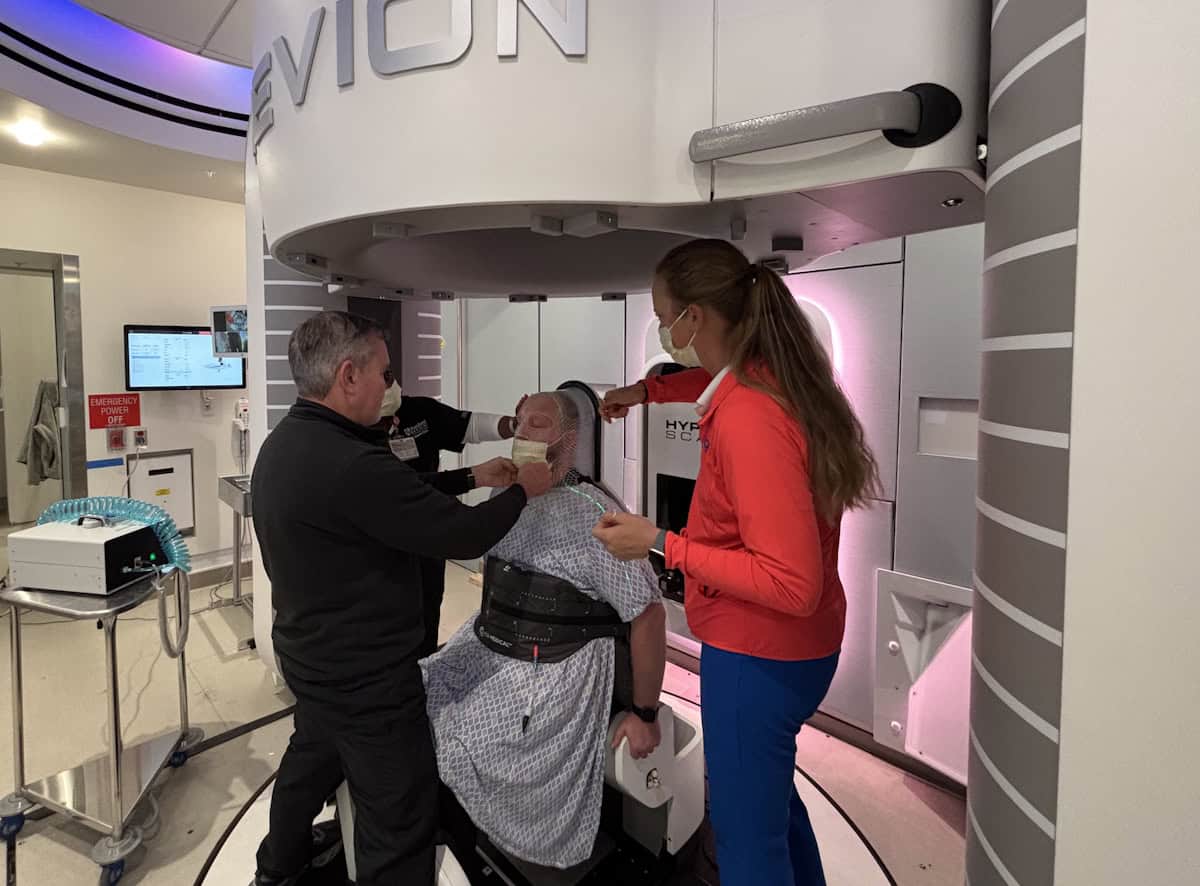
Things have moved on since then. Leo Cancer Care introduced its upright photon therapy system, Grace, and received commercial approval in the US and (just last week) Europe for its Marie upright positioning and CT system. Stanford Medicine recently unveiled the world’s first ultracompact proton therapy facility, pairing Mevion Medical Systems’ compact S250-FIT proton therapy system with the Marie platform. Meanwhile, the body of published research on the feasibility and patient experience of upright treatments continues to grow.

At this year’s ESTRO 2026 meeting in Stockholm, the theme was revisited by four experts in the field, who debated the motion that “Upright radiotherapy will be a mainstream and standard radiotherapy delivery option in 2035”.

The customary pre-debate vote revealed that just one quarter of the audience thought that photon-based upright radiotherapy would become mainstream, with the remainder believing that it would remain a niche technique. When it came to upright proton therapy, however, the vote was split roughly 50:50. So could the speakers persuade the attendees to change their minds?

Patient-centred care

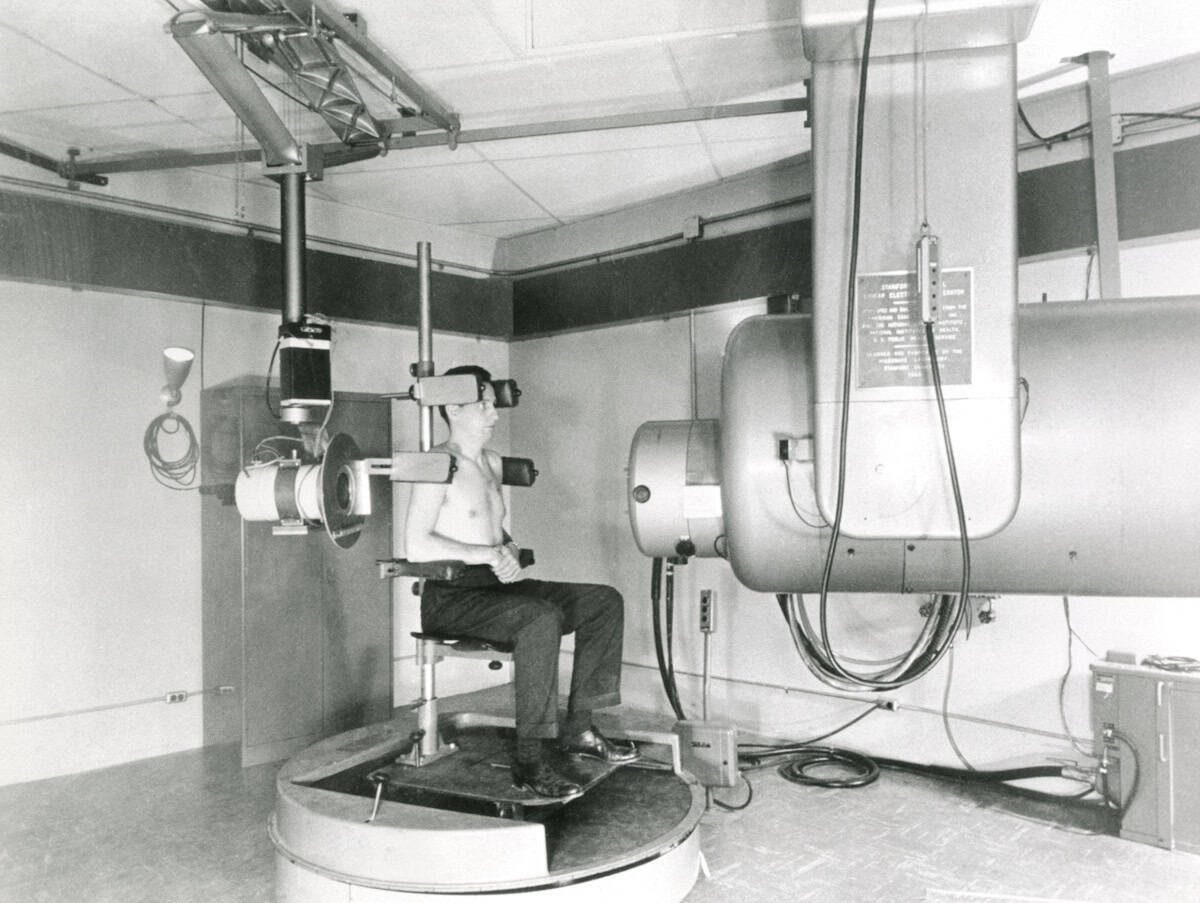
The debate began with Tomas Kron from the Peter MacCallum Cancer Centre in Australia arguing the case for upright X-ray radiotherapy. He pointed out that upright positioning is not a new idea. “Historically, photons and upright have been around for a very long time. It has been, if not standard practice, widely used. But what role will it play in 2035?”

The first high-energy linear accelerator for medical use

Kron described a clinical imaging trial underway at Peter Mac investigating upright cone-beam CT for planning lung cancer radiotherapy. The study showed that image quality was good enough for adaptive treatment planning, and that the lung was expanded and moved less in the upright position. Kron noted that patient setup and imaging was “really, really easy”, taking just a few minutes.

But what’s more important, he emphasized, is the patient experience. Patients treated while sitting up can maintain eye contact with the doctors throughout, they feel more involved and empowered, with one patient commenting: “My breathing was strong, I felt comfortable, the band around my chest was giving me a bear hug.”

“It’s really all about patient-centred care. Physical comfort and emotional wellbeing are top priorities,” Kron said. “Clearly, in an upright scenario this is much more likely to be the case.”

Upright radiotherapy offers many other unique features, including anatomical advantages and the ability to customize the chair, for example, for bariatric or paediatric patients. An upright treatment system is also more compact than a couch-based machine, requiring a smaller bunker. It could also be used as a mobile radiotherapy unit, said Kron – reducing the need for patient travel.

Kron’s team found that 80–90% of their patients could be treated just as well with upright radiotherapy as supine (lying down). “There are anatomical advantages with upright, there are patient preferences, there are economic benefits. What’s not to like,” he concluded.

The myth of mainstream

“Upright radiotherapy will not be mainstream and standard,” declared the second speaker, Livia Marrazzo from the University of Florence in Italy.

“Mainstream means widely adopted, used across the majority of radiotherapy centres, the default in clinical practice … and standard is even stronger, backed by clinical evidence, guideline-endorsed, reproducible and validated,” Marrazzo told the delegates. “It’s not ‘it works in some centres, is technically feasible, has early adopters, may have advantages for some patients’. But that is where we are with upright radiotherapy.”

Livia Marrazzo

From a practical standpoint, most of the roughly 16,000 radiotherapy systems worldwide are linac-based recumbent machines with a typical lifecycle of 10 to15 years. Many were recently replaced with supine systems optimized for intensity-modulated and image-guided radiotherapy. “The installed base is locked into supine geometry for another full cycle,” Marrazzo explained.

She refuted many of the advantages proposed by Kron. “We have limited clinical evidence supporting comfort advantages,” she said. “It may benefit specific patient groups and conditions, but this doesn’t mean mainstream.” Overall, clinical experience is limited, with no comprehensive evaluations of plan quality and no comparative clinical studies.

She highlighted the particular challenges of breast cancer treatments, which account for 25-30% of cases in her radiotherapy department. “When we place a breast cancer patient upright, we lose the natural breast separation, so have much more difficulty in hitting the target and avoiding the contralateral breast,” she explained. “This exemplifies how upright is not a plug-and-play replacement for a conventional supine workflow.”

“Are we sure we would like to have upright as the standard radiotherapy delivery option by 2035 or do we want to push our efforts somewhere else?” Marrazzo concluded. She would prefer a focus on introducing technologies such as AI-driven planning and contouring, fully adaptive workflows, ultra-hypofractionation or biology-guided treatment adaptation. “These are all solutions that can be software-driven, scalable and compatible with existing supine infrastructure.”

The motion for protons

With half of the audience already agreeing that upright proton therapy will become mainstream, Petra Trnkova from Czech Technical University had perhaps a slightly easier task as she presented the case for upright protons. Nevertheless, she began by suggesting that her opponents are simply “scared of progress and won’t accept that, even without evidence, we can move forward in radiotherapy”.

Trnkova reiterated the benefits of upright radiotherapy cited by Kron: favourable patient anatomy, lower installation cost, improved sustainability, and patient-centric management. “For proton therapy, these improvements are much more significant,” she noted.

For starters, upright systems could help address the massive disparity in access to proton therapy around the globe. Sharing a map showing how proton therapy facilities are mostly distributed in wealthy countries, Trnkova noted: “My opponents may tell you that it’s not possible to do this by 2035, but when you look at this map, I ask you, can we wait any longer?”

Compact S250-FIT proton therapy system

Increasing access to proton facilities is enabled by the extreme size reduction when eliminating the need for a large rotating gantry, enabling proton therapy systems small enough to fit in a standard linac vault. Upright proton therapy can also reduce machine complexity, increase rotation speed and lower energy consumption – reducing costs, improving system upgradeability and increasing environmental sustainability.

“Another consequence of smaller facilities is we can really have patient-centred care,” Trnkova added. Recalling the 10 to 15 year linac lifetime mentioned by Marrazzo, she suggested another option: “You can replace your linac with proton therapy. Then you can have the full set of treatments available for each patient”.

Upright proton therapy could also ease the introduction of new treatment techniques, such as proton arc therapy, which offers dosimetric benefits over intensity-modulated proton therapy, but it is difficult to deliver with a gantry. It could also enable in vivo dosimetry, using shoot-through protons for range verification, or mixed-beam delivery of protons and photons.

“Upright positioning offers many opportunities, it’s the only way towards the democratization of proton therapy,” Trnkova concluded. “Stop asking what opportunities upright radiotherapy brings, start asking what you can do to bring it faster to clinical practice.”

The reality check

The final speaker, Carles Gomà from Clinic Barcelona in Spain, reflected upon what makes a good radiotherapy system. “In my view, it’s a three-legged stool: beam delivery, imaging and immobilization,” he said. “And progress comes with a combination of the three.”

For example, focusing too heavily on beam delivery and imaging can lead to immobilization being forgotten. “Immobilization means comfort, and if we are comfortable, we are still,” Gomà explained. “I cannot care less how many papers say patients are more comfortable in an upright position,” he added, pointing out that people will pay five times more to fly in business class where they can lie down.

The other reason cited for moving to upright proton therapy is its lower cost. “But is proton therapy expensive?” Gomà asked. He described the situation in Catalonia, which has a population of eight million and in 2018 spent Euro 42.2M on external-beam radiotherapy. “This is exactly the same cost as one immunotherapy drug for the same population,” he pointed out. “Proton therapy is not expensive; photon therapy is ridiculously cheap.”

Gomà also considered whether “suboptimal protons” are better than photons. “I’m going to answer no,” he said, describing two recent phase III, randomized trials comparing photons with protons for oropharyngeal cancer. The US trial concluded that proton therapy provides a new standard-of-care option, but the UK trial reported no difference between the two modalities.

“Let’s learn from history and not repeat the same mistakes,” he concluded. “True progress is improvement without compromise. If we want to make the stool higher, we have to work on all three legs at the same time.”

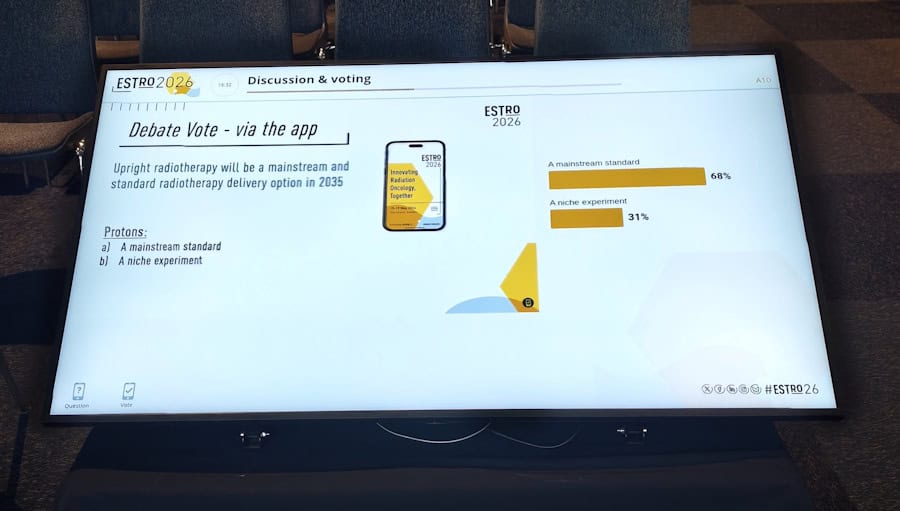
Final vote at the ESTRO debate

The debate concluded with decisive a final vote: while support for upright photon therapy reduced a little, over two-thirds of the audience believed that upright proton therapy will indeed become mainstream and standard by 2035.

Writing on LinkedIn, session co-chair Ye Zhang from the Paul Scherrer Institut noted: “The debate sparked an inspiring shift in perspective, with final voting showing slightly increased scepticism toward mainstream upright photon therapy (dropping from 23% to 18% support), but a dramatic surge in favour of upright proton therapy, which jumped from 47% to a 69% majority.”

Solar at the centre of Nigeria’s future

Nigeria is Africa’s most populous country and one of its largest economies, which puts enormous pressure on its electricity system. At the same time, the country has committed to reaching net‑zero emissions between 2050 and 2070. Today, Nigeria’s power sector is underpowered, unreliable for many citizens, and heavily dependent on fossil fuels and diesel generators, which are costly and polluting.

This study explores pathways for Nigeria to reach net‑zero emissions by 2050, 2060, and 2070, focusing on which technologies would be required. Across all scenarios, solar power becomes the backbone of the system, providing 37–55% of electricity by 2050 and remaining central in the two longer term scenarios. Nuclear power also plays a major role when allowed, but faces barriers such as high upfront costs, regulatory capacity, and public safety concerns. If nuclear is excluded, Nigeria must rely even more on solar and on gas with carbon capture and storage (gas-CCS).

Although transitioning to net‑zero requires significant upfront investment, the study finds that a clean electricity system is cheaper overall than continuing with fossil fuels, and earlier transitions do not significantly increase total costs.

The authors conclude that Nigeria should build a balanced clean‑energy mix (solar, hydro, nuclear, gas‑CCS), rapidly scale up solar deployment, strengthen institutions, mobilise international and private financing, and coordinate regionally to ensure a reliable, affordable, and achievable transition.

“Nigeria’s electricity transition is not only a climate challenge; it is also a development and reliability challenge. Our analysis shows that solar power will be central to any net-zero pathway, but achieving an affordable and dependable electricity system will require a diversified mix of clean technologies, stronger institutions, and sustained investment in the grid and supporting infrastructure.” – Dr Michael Dioha, Clean Air Task Force

Read the full article

Technology options and optimal pathways to a net-zero electricity system in Nigeria across different timelines

Michael O Dioha et al 2026 Prog. Energy 8 014001

Do you want to learn more about this topic?

The zero-emissions cost of energy: a policy concept Colin Beal and Carey King (2021)

Why interdisciplinary science is needed more than ever

The lines between separate scientific disciplines are becoming more blurred. Solving today’s problems often requires teams of scientists from a range of specialisms. But multidisciplinary collaboration also has challenges, in particular the need to “speak the same language”, ask the “right” questions and be familiar with techniques and knowledge that exist in other fields.

To see the importance of finding a common language look no further than the rapid uptake of large language models (LLMs) such as ChatGPT. LLMs can be convenient research aids, but the information provided by them is not always accurate. We can ask LLMs questions about another field, but without existing domain knowledge we cannot always tell if the answers are reliable.

Getting up to speed with a new research field can be tricky – it’s difficult to understand everything fully, but tempting to think that you do. There’s a parallel with sport where it might sound reasonable, say, to assume that mixed martial arts (MMA) fighters can easily become boxers. However, the evidence suggests that MMA fighters often struggle against professional boxers even though fist fighting uses a subset of the skills needed to be successful in MMA.

Back in academia, it’s common to get pushback from “real experts” whenever grant proposals or papers drift too far outside one’s own comfort zone. Nevertheless, discipline mixing is needed more than ever. Today’s problems often straddle different scientific disciplines: how to treat large, complex datasets, for example, is a common challenge in many different fields.

Look up at the stars and not (just) down at your tea

We realized this recently in our work at Queen’s University Belfast, which has been pushing for researchers to share their data analysis strategies with colleagues in other fields. In our case, we had been collaborating with Yicong Li at the Institute for Global Food Security on infrared and ultraviolet-visible spectroscopy and machine-learning models for monitoring the freshness of fish, which required only a few samples for analysis.

However, many food studies need hundreds or thousands of samples to be analysed and class imbalances can quickly arise in which some types of foodstuff have more examples than others. This can then lead to training datasets that do not produce predictive models. One example is tea, which Li has been investigating recently, again via spectroscopy and machine learning, using many samples from all over the world.

Li was trying oversampling, which creates synthetic data to equalize class imbalances. Yet over in the Queen’s physics department, we discovered another strategy was being used to classify problems in astrophysics. Matt Nicholl and PhD student Xinyue Sheng had been working on predicting the classes of energetic cosmic explosions, based on an image of the galaxy where they occurred. They wanted to train their model to find particularly rare classes, so their training set had the same problem: there were only a handful of examples of some classes of interest.

In addition to oversampling, they were also using a “weighted loss function” in their training, in which weights were inversely proportional to the number of examples in a given class. Their approach led to a substantial improvement in their astrophysics application, but it turns out the basic idea is completely general in nature and can be just as easily applied to tea.

Sleeping beauties

Knowledge exchange does not only concern data, but sometimes a whole set of ideas. An interesting study of citation metrics in 2015 by researchers at Indiana University found that there is a class of papers that receive very little attention for years before suddenly shooting skywards with a deluge of citations. Notably, these “sleeping beauty” papers include Albert Einstein, Boris Podolsky and Nathan Rosen’s work in 1935 examining non-locality in quantum mechanics, which led to John Bell’s theorem in 1964 and ignited significant interest in the original “EPR” paper.

Such citation trends can arise because the papers’ findings are adopted by researchers in a different field. Other similar instances include work in the 1930s and 1940s on hydrophobic theory, which describes how certain substances minimise their contact with water. Yet perhaps the sleepiest of sleeping beauties is the principal component analysis (PCA) work by Karl Pearson, which slumbered for over 100 years before “awakening” in the early 2000s.

PCA – a technique that simplifies complex datasets by reducing the number of variables while minimizing information loss – had already been gaining traction during the 1980s and 1990s when matrix calculations became easy for computers alongside the development of statistical software packages and open scripting environments. In research papers published today it would be unusual not to see PCA used as an exploratory tool for multivariate dataset analysis.

As these examples show, it’s crucial that communication channels are open between varying fields. However, too many academic researchers can get siloed. Interdisciplinary science hubs are one way to break down barriers, acting as spaces to exchange ideas between scientists.

One example that we have been involved with is Smart Nano NI, which is a consortium of universities and photonics-based companies in Northern Ireland. It recently released TITAN, a bio-process analysis system based on gold nanostructured chips, for real-time bio-analysis. Smart Nano NI is now moving from benchtop to backpocket, looking to develop fully miniaturized sensing devices by integrating different kinds of photonic components like lasers, filters and detectors, all on the same chip.

Elsewhere, centres for doctoral training – such as the Photonic Integration and Advanced Data Storage programme with the University of Glasgow – bring together groups of PhD students to work on various projects under a common theme. These schemes not only foster new ideas with the student cohort but bring together academics to bridge different parts of research. Either way, we are getting people talking and interested in emerging scientific questions.

So if you are sitting on a problem, there might be a chance that someone in a different field has solved it or at least offered the tools to do so. As our sky-gazing friends might say, “There is nothing new under the Sun.”

New bolometer achieves sub-zeptojoule resolution

A bolometer that can measure absorbed energy at a resolution of less than a zeptojoule (10−21 J) has been unveiled by Mikko Möttönen and colleagues at Finland’s Aalto University.  Their device could soon enable researchers to measure the energy of individual lower-energy photons – leading to new opportunities in quantum computing and information processing.

A bolometer detects radiation using two main components: an absorber, which heats up as it captures incoming radiation, and a thermometer, which converts this temperature rise into a measurable electrical signal. Bolometers are some of the most sensitive radiation detectors in use today.

Indeed, high-performance bolometers based on nonlinear oscillators, superconducting qubits or Josephson junctions are sensitive enough to detect individual microwave photons with energies of about 10−23 J. However, these devices are not able to resolve photon energies very well and only work over certain photon energy ranges.

Normal sandwich

A Josephson junction comprises a normal (non-superconducting) material sandwiched between two superconductors. Thanks to the proximity effect, superconducting Cooper pairs of electrons can penetrate some distance into the normal material. So, if the normal material is narrow enough, a supercurrent will flow across the junction.

“We started to build bolometers based on so-called proximity superconductivity around 2010 when I obtained my European Research Council Starting Grant,” says Möttönen.

In the team’s previous bolometer design, the normal material (a metal) absorbs photons, thereby increasing the temperature of the Josephson junction. This results in a shift in the impedance of the junction – and this shift is measured and related to the amount of energy absorbed. A key feature of this approach is the integration of the absorber and thermometer functions into a single structure.

In their latest study, Möttönen’s team has expanded their design to include multiple junctions. “We used gold-palladium (AuPd) and aluminium as the materials such that we can independently engineer the absorber part of the device from the thermometer part,” he describes. “We can optimize the strength of the superconductivity in the thermometer for high sensitivity.”

Impedance match

Their design consists of a AuPd nanowire (a normal metal), split into two segments. The first acts as an absorber and is tuned to match the impedance of the transmission line delivering microwave photons. This ensures that the highest possible amount of microwave power is transferred to the nanowire, across a broad range of photon energies.

The other nanowire segment acts as the thermometer. Superconducting aluminium islands are placed next to the nanowire, creating a series of Josephson junctions. By measuring inductance shifts across the junctions the team determined the energies of single photons at resolutions smaller than 1 zJ.

The researchers are hopeful that their design will be developed to create practical detectors of single lower-energy photons – and potentially other types of particle. This would be especially useful for calibrating the components of quantum computers.

“We will use this sensor in what I refer to as an autonomous quantum processing unit to measure qubits at millikelvin temperatures and feed back to information through millikelvin controllers and microwave sources,” Möttönen says. “This will dramatically reduce the price of quantum computers in the future.” The detector design could be also adjusted to receive telecom signals at the single-photon level – providing an ideal platform for the ultra-secure communication method of quantum key distribution.

Copyright © 2026 by IOP Publishing Ltd and individual contributors