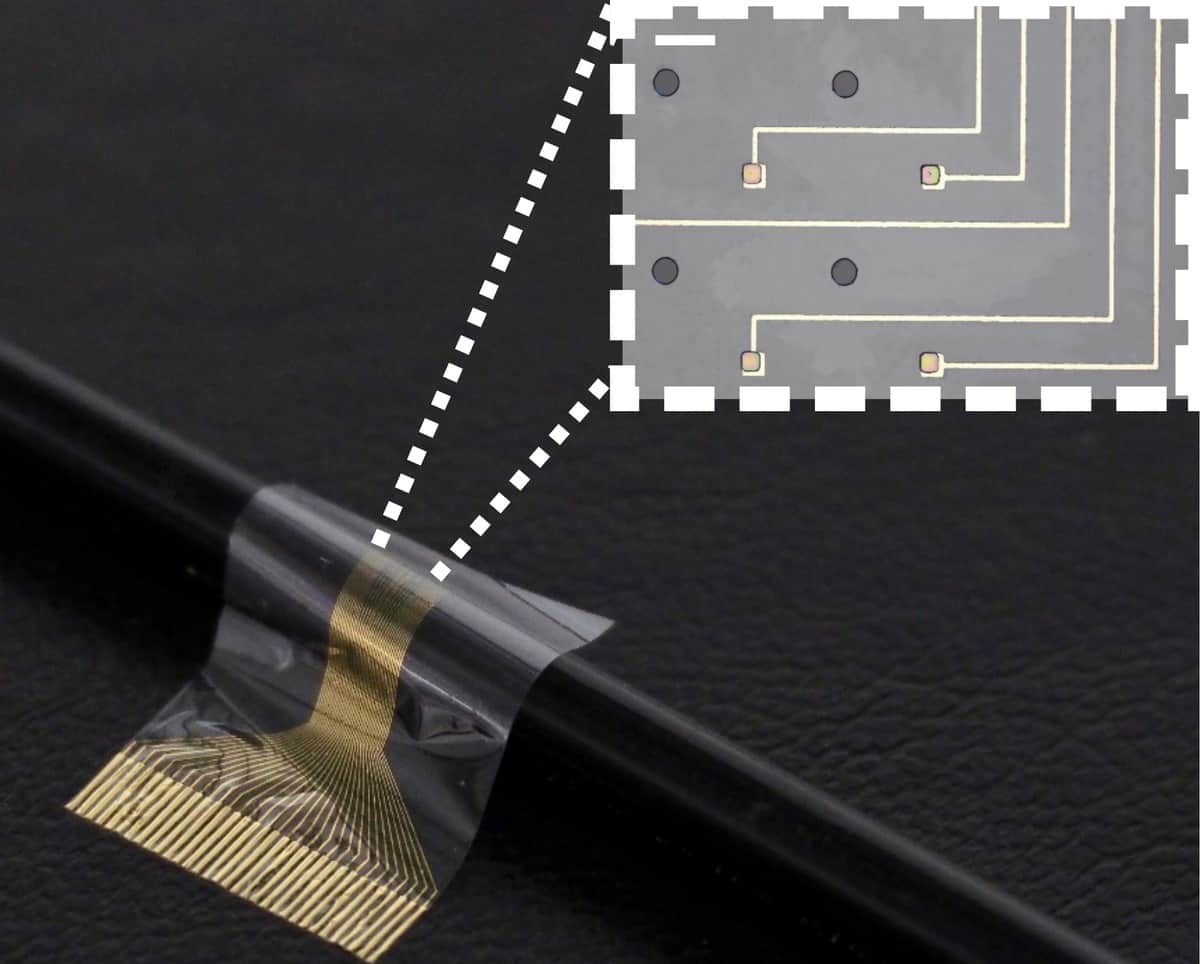
Pairs of entangled photons are a key ingredient of photonic quantum computers, quantum key distribution systems, and many quantum networking designs. Producing entangled photons on demand generally requires bulky lasers and prolonged alignment procedures – and this limits the commercial viability of these technologies. Now, a team of researchers in Germany and the Netherlands have used a new architecture to combine several integrated photonic technologies into one device. The result is a complete entangled photon source on a chip that is about the size of a one euro coin.
“This chip is very easy to use,” says team member Raktim Haldar, who is a postdoctoral researcher at Leibniz University Hannover. “You just plug it in and switch it on, and it can generate the quantum photons – you don’t need anything else or any other expertise.” He adds that in the future, the source could be found in every optical quantum processor in the same way that lithium-ion batteries are found in every electronic system today.
Photonic quantum bits (qubits) are one of several technologies that are competing to become the basis of future quantum computers. They offer several advantages over other types of qubits including those based on superconducting devices and trapped atoms or ions. For example, photonic qubits do not need to be cooled to cryogenic temperatures, and they are less susceptible to environmental noise that can destroy delicate quantum systems.
Difficult to entangle
On the downside, photonic qubits are more susceptible to losses and they are much more difficult to entangle – the latter being necessary for computations that involve more than one qubit at a time.
Integrated photonics, in which photons are confined to travel in micron-width waveguides printed on chips, offers a way to improve light-based quantum computers
“Photonic quantum computers have a big problem with loss,” says Elizabeth Goldschmidt, a quantum optics professor at the University of Illinois Urbana Champaign who was not involved in creating the new source. “Because interfaces are particularly lossy, going on-chip is very important.”
In their latest research, Haldar and colleagues have created a photonics system-on-a-chip that generates entangled photons. It consists of three main components: a laser; a filter ensuring laser stability at a narrow frequency band; and a non-linear medium generating entangled photon pairs. While lasers and quantum light sources requiring an external laser have been created on-chip before, putting both on the same chip has been a challenge. This is because the materials used for lasing are different from those required for filtering and entangled pair generation, and the manufacturing processes for the two materials are generally incompatible.
Hybrid integration
The team overcame this incompatibility using a technique called hybrid integration. The gain medium used for lasing was made from indium phosphide, while the filtering and photon-generation components were made from silicon nitride. To stick the two together, the team used the expertise of Klaus Boller’s group at the University of Twente. Boller’s team is adept at gluing different chips together with enough finesse that the microscopic light-guiding components line up and connect so perfectly that barely any light is lost at the interface. To avoid reflection at the interface, they added an anti-reflecting coating and tiled the end of the indium phosphide waveguide upwards off the chip by 9°. This allowed them to achieve less than 0.01 dB of loss across the interface.
To aid in the seamless integration of all the components, the team chose a design in which the laser gain medium, filter, and photon-pair generation waveguides are all contained inside the lasing cavity. “They came up with this clever scheme to integrate both the filtering and the pair production into the same silicon nitride rings, and the laser on the same chip, which is very cool,” Goldschmidt explain.
Engineering the entire mechanism inside the laser cavity was no easy matter. In particular, the filter they employed had not been adapted for quantum light purposes, and they worked hard to adapt it. “The loss has to be equal to the total gain to maintain laser action,” says Haldar, “and that is a very difficult technical challenge. If a gap between two waveguides is, say, 200 nm, changing it to just 180 nm may make the whole chip not work.”
The chip creates pairs of frequency-entangled photons with 99% fidelity about 1000 times per second. The team is now working towards extending the on-chip photonic capabilities to include the creation of multiphoton cluster states. These are states comprising multiple entangled photons that could be used as effective qubits that are less susceptible to losses. Creating effective cluster states is a difficult open problem in quantum computing. Goldschmidt says, “multiplexing several of these sources on the same chip is a very clear path forward and lets you entangle more degrees of freedom and build up more complicated entangled states”.
Lithium-ion batteries (LIBs) are set to play a key role in the transition to a decarbonized world. They are one of the principal energy sources for electric vehicles, grid storage and many consumer electronics. As things stand, however, the way that we produce and manage LIBs over their life cycles is far from perfect – bringing environmental, economic and geopolitical concerns. In the latest episode of the Physics World Stories podcast, Andrew Glester looks at how we can make LIBs more sustainable, with a focus on activities in the UK.
The first guest is Gavin Harper, a metallurgy researcher at the University of Birmingham, a lead author on a recent LIB roadmap article in JPhys Energy. Harper talks about opportunities for improving LIB waste management and creating circular economies. For instance, batteries can be designed to make it far easier to reuse constituent parts, while smart grids can enable consumers to trade energy between electric cars, houses, and the grid. Harper tackles the big question: is it more environmentally friendly to own an electric car, rather than a conventional fossil fuel-powered vehicle, if you consider the full life cycle?
Local lithium supplies
Some of the most contentious issues with LIBs relate to lithium mining. Roughly 60% of known lithium reserves are located within the salt flats of Latin America, mostly within the “lithium triangle” of Bolivia, Argentina and Chile. The vast amounts of water needed for extracting lithium from brine deposits can lead to water scarcity, pollution of local soils and water, and disruption of local ecosystems. Meanwhile, China has surged ahead of the world in its capacity for manufacturing LIBs, with Western nations now keen to build up their own knowledge bases and search for local lithium deposits.
One intriguing possibility in the UK is to extract lithium directly from geothermal waters near the coast of Cornwall. Ali Salisbury, an exploration geologist at Cornish Lithium, joins the podcast to explain how Cornwall’s unique geology – lying on top of a large, fractured mass of granite containing lithium-rich minerals – is enabling this possibility. Cornish Lithium says the method could have minimal environmental impacts, and the company is also investigating more sustainable forms of hard-rock lithium mining in the same region.
It is strange to think that for decades after the Second World War, most British people were not aware of the important role played by codebreakers at the Buckinghamshire country house, Bletchley Park. While there had been rumours about the UK’s Government Code and Cypher School (GC&CS) – later renamed Government Communications Headquarters (GCHQ) – since its inception in 1920, it wasn’t until the 1990s, when some records were declassified, that the pivotal actions of the secret organization came to light. Suddenly, there was a flood of memoirs, histories and biographies; mathematician Alan Turing became a household name; and Bletchley Park became a popular tourist destination as a museum dedicated to its wartime role.
With this influx of revealed secrets, something that may have escaped public notice was that those memoirs were invariably written by men, and the names that became semi-well-known alongside Turing were also all men. But by 1945, three-quarters of the staff at Bletchley Park were women – many of them skilled codebreakers themselves, sometimes running teams and departments. So who were these women and why don’t we know about them?
Jackie Uí Chionna – a historian based in Ireland – hasbegun to fill this void with her new biography of Irish linguist and codebreaker Emily Anderson. Queen of Codes: the Secret Life of Emily Anderson, Britain’s Greatest Female Codebreaker describes how Anderson – born in 1891 – was raised on the grounds of Queen’s College, Galway (now the University of Galway) by her parents Alexander Anderson, a physicist, and Emily Gertrude Anderson, a suffragist. Though Anderson chose to pursue modern languages – she was fluent in German, French and Italian, and studied in Germany after graduating from University College, Galway – she was also skilled in mathematics and the classics.
It was an irresistible combination for her recruitment in 1917 into MI1(b), a British military intelligence organization created during the First World War. Anderson’s family publicly supported British rule over Ireland, which at the time was a key factor if an Irish citizen was to be hired for a British military role. The Easter Rising of 1916 – when Irish republicans led a rebellion against British rule – had triggered political discontent that would later, in 1919, erupt into the Irish War of Independence.
When Anderson was approached by MI1(b) to become a codebreaker, she was only 26 and had just returned to University College, Galway to take up a professorship. She was set for a glittering academic career, so she only accepted a role with the Foreign Office “for the duration of the war”. However, she ended up staying with them for the remainder of her working life.
After the First World War, Anderson was asked to remain in her codebreaking role. She was the only woman hired for the newly created GC&CS at the level of junior assistant (a deceptive title, as she was in fact a codebreaker, not an administrator or interpreter). However, she did not accept the job until it was agreed that she would be paid at the same rate as men for the role. This was an unprecedented demand and shows how exceptional her skills must have been in her first years of learning the art of codebreaking.
While the story of Anderson joining GC&CS is fascinating, what is sadly lacking in this memoir is detail about codebreaking at this time. Uí Chionna explains some basic concepts such as cyphers and cribs but I would have liked to learn more about exactly what Anderson and her colleagues did, especially in those early years. In fairness, Uí Chionna is hampered by all the records of MI1(b) having been destroyed in 1920. This, coupled with the almost entire absence of surviving personal correspondence to or from Anderson, does at times make Queen of Codes feel like it is itself an exercise in codebreaking, piecing together the clues of Anderson’s life from the fragments available.
What the public saw
This lack of available sources would leave Uí Chionna with a rather slim pool of facts about Anderson were it not for her having, remarkably, a whole second career alongside her secret one.
In 1923 she became the head of the Italian diplomatic section of GC&CS, where she and her team decoded diplomatic telegrams between the Italian government and its military. Anderson felt Italian “wasn’t her best language” so in her free time she set about translating Benedetto Croce’s Goethe – a work in Italian about the German poet Johann Wolfgang von Goethe – into English.
Though it may have begun as a skill-honing exercise, Anderson’s translation of Goethe was published in 1923. She followed this up with a challenge that combined all her linguistic and codebreaking skills but, crucially, one that she was able to perform publicly and receive credit for – she decided to track down, translate and publish all the letters of the composer Wolfgang Amadeus Mozart.
Mozart (and some of his family) wrote letters in Italian and German, and in codes of sorts. As Anderson herself described them, there are “passages which are curiously involved, words written backwards, phrases reversed [and many of them] are untidily written, larded with erasures and splashed with ink-blots”. Not only did translating the letters take work, tracking them down required extensive travel to mainland Europe, which was not always straightforward in the 1930s and Anderson almost certainly took advantage of contacts she made through her more secretive line of work.
In 1938 the three volumes of Letters of Mozart and His Family were published to great acclaim and, indeed, are still a key reference work. Anderson enjoyed minor fame as a musicologist and decided to follow this up with a translation of the complete letters of Ludwig van Beethoven. But this project was interrupted by the Second World War.
Back to secrets
The chapters about Anderson’s time at Bletchley Park (1939–1940), and then at the Combined Bureau Middle East (1940–1943), are where Uí Chionna provides the most detail of Anderson’s “day job” of codebreaking – no doubt because these records have survived and been made public. From her base in Cairo, Anderson broke Italian codebooks and provided intelligence that changed the course of the war in North Africa – and she was awarded an OBE for this work. In 1943 she returned to the diplomatic section of GC&CS at its new offices in Berkeley Street, London, and remained there until she retired in 1950.
It is to Uí Chionna’s credit that she discusses, but does not linger on, the question of Anderson’s sexuality. She never married (indeed, she would not have been able to retain her job if she had done so) and there is some limited evidence of her having relationships with women. Being gay would in some ways have made her a perfect candidate for military intelligence, as the legal and social situation at the time would have necessitated a life of discretion. But we cannot know for sure about this aspect of Anderson’s private life, and Uí Chionna doesn’t press the point.
What Uí Chionna does spend some time analysing is why female war-time codebreakers never wrote memoirs or spoke about their work publicly, as so many of their male counterparts did. The main reason, she argues, is that men felt a need to prove what they had been doing during the wars. Women could say they’d become civil servants for the duration and no-one would think twice of it, but men were expected to have gone overseas to fight. Men with money and a private education – which was the case for many who were recruited to GC&CS – were expected to have had a commission, to have held military titles and earned medals. It could cause real, lasting damage to a man’s reputation if word got out that he had stayed in Britain, even with cover stories about vital work for the Foreign Office.
For my taste, Queen of Codes spends a little too much of its time on Anderson’s musicology research and speculation about her relationships with her immediate family. It is also repetitive in places and, conversely, hides some fascinating details in its extensive endnotes. But on the whole, this is a thoroughly researched and highly readable account of a woman who may have appeared to the world as the epitome of ordinary, but was in truth anything but.
Language decoding involves recording a person’s brain activity and using this to predict the words that they were hearing, saying or thinking. Ultimately, such a system could help restore communication to those who are unable to physically speak.
That’s the goal of researchers at The University of Texas at Austin, who have created a decoder that reconstructs continuous language from non-invasive functional MRI (fMRI) data. “Eventually we hope that this technology could help people who have lost the ability to speak, due to injuries like strokes or diseases like ALS,” explained first author Jerry Tang at a press briefing.
Current systems for decoding speech from brain recordings are based on brain–computer interfaces that require invasive neurosurgery to implant. Previous non-invasive approaches, meanwhile, typically only decode single words or short phrases. The new fMRI-based model, described in Nature Neuroscience, can decode continuous language for extended periods of time.
“We were kind of shocked that this worked as well as it does,” said Alexander Huth, who co-led the study with Tang. “It was a long time coming and it was exciting when it finally did work.”
Extensive training
The key to this success, explained Huth, lies in the creation of bigger and better training datasets, combined with use of a neural network-based language model for feature extraction.
To train the decoder, the researchers recorded fMRI data from volunteers while they listened to 16 h of narrated stories. They then used these fMRI datasets to create user-specific decoding models. Each model was trained by extracting semantic features that capture the meaning of phrases, and modelling how these features influence brain response.
The researchers then tested the individual decoders on a participant’s brain responses as they listened to new stories. Based on the resulting fMRI data, the decoder outputs words as predictions of what the user is hearing. They found that the decoder could generate intelligible word sequences that captured the meanings of the new stories, as well as reproducing some exact words and phrases.
They note that the system does not precisely replicate the original words, but rather recovers the gist, for example, interpreting “I don’t have my driver’s license yet” as “she has not even started to learn to drive”.
The decoder creates these paraphrases due to way that fMRI works, by recording the blood-oxygen-level-dependent (BOLD) signal. “Functional MRI does not measure the firing of neurons, it measures changes in blood flow and blood oxygenation in the brain, which are a noisy, sluggish proxy for neural activity,” Huth explained.
Following an impulse of neural activity, the BOLD signal rises and falls over approximately 10 s, thus it is not responding to a single word but a few seconds of activity. This means that each brain image can be affected by over 20 words. “We can’t recover the exact words with this approach because we always see words mashed together. But we are able to disentangle that and we can recover the overall idea,” Huth added.
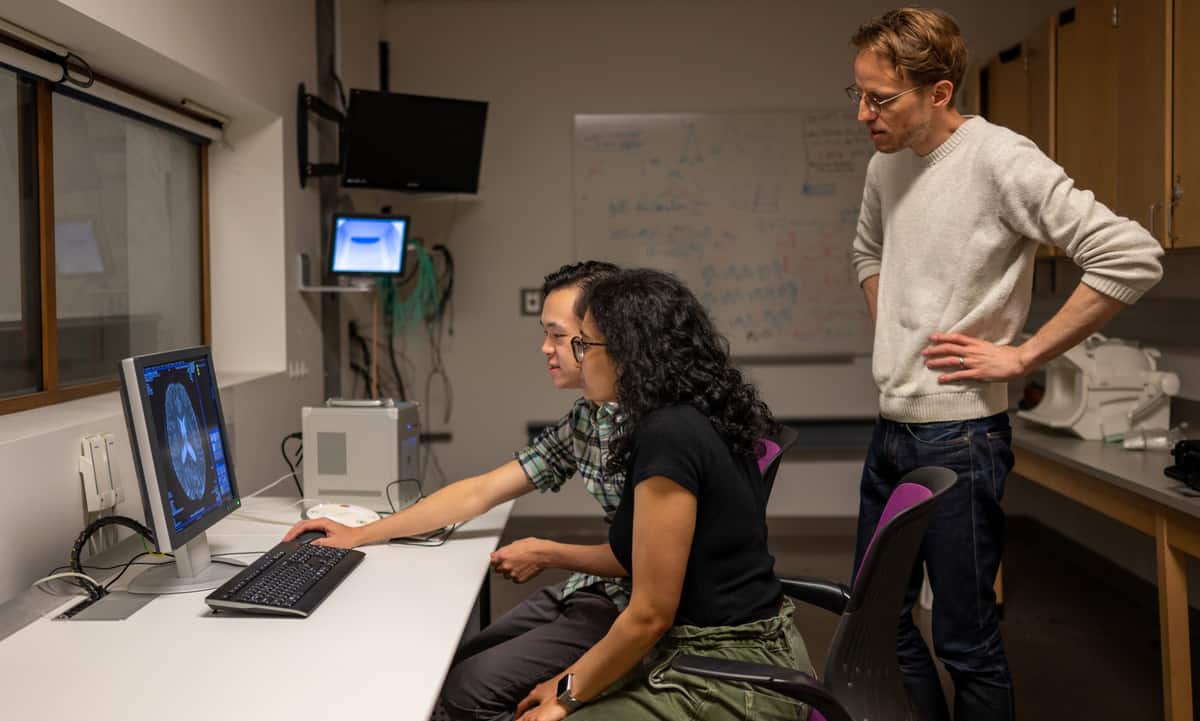
Non-invasive imaging Jerry Tang, Shailee Jain and Alex Huth (standing) collecting brain activity data in the Biomedical Imaging Center at The University of Texas at Austin. (Courtesy: Nolan Zunk/University of Texas at Austin)
The team also ran the decoder while users imagined telling stories or watched silent movies. In both cases it successfully recovered the gist of what they were imagining or seeing. When subjects watched silent movies, for example, the decoded sequences accurately described events from the films. Comparing the decoded word sequences to descriptions of the films for the visually impaired revealed that that they were significantly more similar than expected by chance.
Privacy protection
Finally, the researchers addressed the issue of privacy and potential misuse of the technology. “We believe that nobody’s brain should be decoded without their co-operation,” stated Tang. A privacy analysis revealed that a decoder trained for one individual did not work when used with another person, and that a participant must willingly participate in the decoder training.
Users were also able to “sabotage” the decoding by performing a separate task while listening to a story in the scanner. Tasks such as naming animals or telling a story silently in their head prevented the decoder from recovering information about the story that they were listening to. “Of course, this could all change as technology gets better, so we believe it’s important to keep researching the privacy implications of brain decoding and enact policies that protect a person’s mental privacy,” said Tang.
Another potential obstacle with the use of fMRI for language decoding is its reliance on access to an MRI scanner, making it unsuitable for practical applications outside of the lab.
“We think of this work as a proof-of-concept that we can decode language from non-invasive recordings,” explained Tang. “Moving forward, we want to see if our approach works with recordings from cheaper or more portable devices like electroencephalography, magnetoencephalography and functional near-infrared spectroscopy (fNIRS).”
Of these three, fNIRS is the most similar to fMRI, measuring the same BOLD signal in the brain but with lower spatial resolution. To assess its potential, the researchers simulated fNIRS data by blurring fMRI data. They found that the decoding performance degraded, but not to zero, and suggest that it should be plausible to apply their model to fNIRS data. “We are testing this out and are very excited about this approach in particular,” said Huth.
Using a strategy that mimics the encoding of information in our brains, a trio of researchers in China has proposed a new platform for artificial intelligence (AI) that could be far more robust than existing architectures. The approach, which has yet to be implemented in the lab, exploits the inevitable non-uniformity of artificial neurons that are a result of defects in real magnetic materials.
So far, the latest advances in artificial intelligence (AI) have mainly been achieved using conventional digital-computer hardware. However, it is becoming apparent that conventional silicon devices are not ideal for AI and researchers are developing neuromorphic architectures that mimic the structure and function of the human brain. These systems promise to boost both the computing speed and energy efficiency of AI systems.
Mimicking synapses
The underlying architecture of some neuromorphic computing systems involves tiny memory storage devices – which stand in for the neurons in our brains. These are linked together by memristors – which change their resistance in response to the current flowing through them. This allows them to mimic the synapses responsible for conveying electrical signals between neurons. These signals change in strength over time as information is learned and lost.
One challenge in creating neuromorphic computing systems with existing fabrication and micromachining techniques is that it can be difficult to ensure uniformity of the component devices. This means that their performance can vary widely. If this variation is too great, it can severely limit the accuracy of the overall system.
However, Yuan points out that this non-uniformity is not necessarily a problem – so long as the right approach is taken. “We certainly do not have identical cells in our brain, and there are also random processes in the brains’ neural dynamics,” he says. “Nevertheless, people can still perform precise tasks of cognition and movement without much difficulty.”
Population coding
In their study, Yuan and colleagues explored a promising strategy for reproducing this natural variation. Called “population coding”, this approach represents information in the collective activity of a population of neurons, rather than in individual cells.
As Yuan explains, this scenario actually mimics the brain’s function more closely than systems of identical neurons. “In the brain, information about positions, directions, colours, and other continuous variables are usually encoded by a group of cells,” he says. “In this way, the information is hardly influenced by noise of individual cells.”
By implementing population coding, the researchers calculated how the memristor synapses linking artificial neurons can be implemented using domain walls. These are structures found in ferromagnetic materials that mark the boundaries between regions of different magnetic orientation. The location of a domain wall in a material can be shifted by passing an electrical current through the material – forming the basis for a domain-wall synapse memristor.
The trio has calculated that by using such domain-wall memristors, the non-uniformity of component devices can be an advantage. “We demonstrate that even employing these highly nonuniform devices, applying a population coding strategy can significantly improve the performance of a neural network,” Yuan explains.
The research suggests that using population coding to exploit domain-wall synapses offers a route towards more robust neuromorphic computing systems, with performances comparable to those of more traditional digital computers.
Yuan and team also believe that their approach can also be applied to other types of neuromorphic components including resistive, phase-change, and ferroelectric devices.
Ten years. That’s how little time we have, or so it’s commonly believed, before quantum computers could potentially hack into all our supposedly private Internet data – whether it’s e-mails, medical records, bank transactions or government secrets. Information streaming down fibre-optic cables to every corner of the world, which is currently secure against the most powerful supercomputer decoders, will suddenly become visible to anyone with the right quantum tech.
At the end of last year, however, a team of researchers in China – led by Bao Yan from the State Key Laboratory of Mathematical Engineering and Advanced Computing in Zhengzhou – hit the headlines when they published details of a new algorithm that, they claim, makes classical encryption vulnerable even to the quantum computers of today (arxiv.org:2212.12372). Their research, which is yet to be peer-reviewed, has been challenged by some in the field. But the underlying message is clear: the quantum “bomb” could go off sooner than we think.
Commercial success BT and Toshiba have already carried out trials using quantum key distribution to send data with complete security down fibre-optic cables between the offices of the accountants EY in London. (Courtesy: iStock/metamorworks)
In fairness, quantum-technology experts have been raising the alarm for years about the dangers posed by quantum computers to information security. In 2020, for example, the UK’s National Cyber Security Centre published a white paper, which said that large companies and organizations “should factor the threat of quantum computer attacks into their long-term roadmaps” and start prioritizing systems for a transition to quantum-safe platforms.
Then in January 2023, the US computing giant IBM, which owns what is currently the world’s largest quantum computer, the 433-qubit Osprey, published its own report Security in the Quantum Computing Era. In the document, the company said that quantum computing is an “existential threat” to classical data security. “Make no mistake,” IBM warned. “The impact is coming – and it’s not a question of if, but how soon and how disruptive.”
For proven security against quantum attacks, only quantum defences will do. Fortunately, physicists have long been developing quantum cryptography – and in particular quantum key distribution (QKD) – in readiness for a “post-quantum” world where quantum computers are everywhere. The beauty of QKD, which encrypts data using the quantum properties of photons, is that it guarantees the security of the keys used to scramble data while those keys are in transit.
In 2004 Id Quantique became the first company to secure a bank transfer via QKD and now there are dozens of businesses offering QKD products, with QKD-based networks quickly getting bigger and ever more complex. Japanese electronics giant Toshiba and UK telecoms firm BT have already developed a QKD network across a distance of 30km, from central London to Slough. Accounting giants Ernst and Young (EY) became the first customer last year when the firm used the network to send data between two of its offices – one at Canary Wharf and the other at London Bridge.
Spanning an area roughly 600 km2, the BT/Toshiba network is a big step forward for commercial QKD, but it’s just one part of a spreading global web of quantum traffic. National commercial QKD networks are likely to emerge within a few years, and at some future point we will see a “quantum internet”. This will be a global, quantum-secured information super-highway, connecting quantum as well as classical computers; through which anyone can share sensitive data without fear that it may one day be hacked.
But just how close are we to that tantalizing prospect? And is it truly realizable at all?
The key to secrecy
It’s not difficult to encrypt data. On today’s Internet, that’s usually done using the Advanced Encryption Standard (AES) algorithm, which was developed at the US National Institute of Standards and Technology in 2001. Once you’ve encrypted your information with a key linked to the algorithm, you simply send the data over the Internet to someone else, who decrypts it using the same key.
It’s almost impossible for anyone to decode the data without the secret key. That all sounds great – but how do you share the key without someone getting their hands on it first? In principle, you could take the key in, say, a briefcase or send it via homing pigeon. But for practical global communications the key is sent over the existing public fibre-optic network.
That’s obviously a bit risky, so the key itself is encrypted using “public key cryptography”. The most common way of securely exchanging the key is using the RSA algorithm, named after the computer scientists Ron Rivest, Adi Shamir and Leonard Adleman, who invented it in 1977. In fact, RSA is responsible for almost all secure Internet traffic these days as you can tell from the “https” at the start of a URL.
RSA encrypts the AES key by generating two further keys – one public, one private – making three in total. The public key is available to anyone, but only the person with the private key can unscramble the information. Someone wanting to obtain the AES key just needs to broadcast a public key, wait for the AES key to be sent back with this public encryption, and then decode it using his or her private key.
RSA keys are generated by multiplying large prime numbers, before being used to encrypt data according to a simple mathematical formula. Using conventional classical computing devices, it is very difficult to find the factors of the keys in order to decrypt the data, which is why data can be sent securely right now. In fact, it has been estimated that even the best supercomputers would take billions of years to crack the present RSA standard, which has key sizes of 2048 bits (numbers more than 600 digits long).
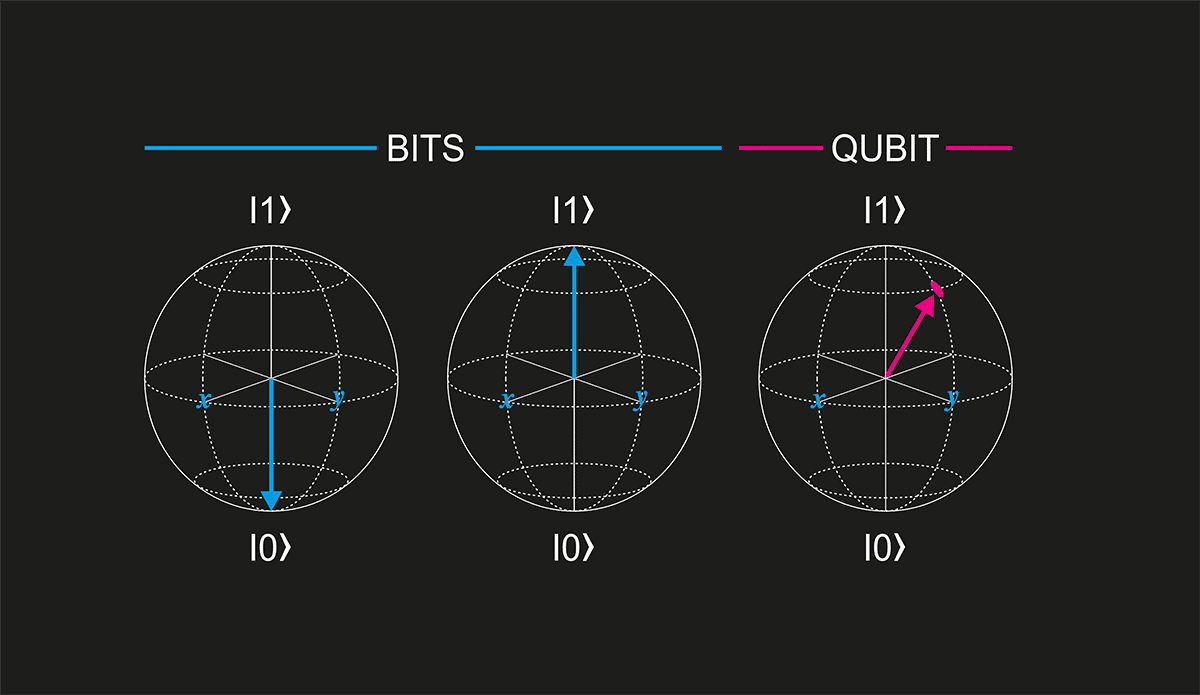
Numbers game The fundamental building block of all quantum-information technology is the quantum bit, or “qubit”. Whereas classical bits encode information in the binary values 0 or 1, qubits can be in a superposition of both values, and can be entangled with one another. By exploiting these traits, quantum computers can explore many possible solutions to a multi-variable problem all at the same time. That makes them much more efficient then classical computers at tackling optimization tasks, such as predicting molecular structures, forecasting the weather or modelling financial markets. But the reason why they threaten data security is that quantum computers are so good at factorizing large numbers, on which most current cryptography is based. (Shutterstock/Vallabh Soni)
Quantum computers, by contrast, can factorize large numbers quickly and easily – undermining much of classical cryptography and potentially putting the security of the Internet at risk. Quite how many quantum bits, or “qubits”, a quantum computer would need to break RSA-2048 is, however, a matter of debate. Until recently, it was thought several thousand would be required. According to Yan’s new paper, however, you’d need only 372 qubits, placing the milestone squarely within reach of IBM’s Osprey, which has 433 qubits.
IBM has not yet commented on this danger, but the bigger worry is not whether anyone’s got a massive enough quantum computer right now. Hackers who want to wreak havoc just need to store encrypted data now – and then sit tight and wait until a powerful enough quantum device comes along to do the cracking. It’s what’s known as the “harvest now, decrypt later” approach.
One solution to this problem is to design new protocols that are more resistant to attacks from quantum computers. Based on various schemes that don’t need factorization, this form of “post-quantum cryptography” is being actively developed, with new standards expected to emerge in the next year or so. But the integrity of these protocols depends on various assumptions about the practical limits of quantum computers – assumptions that may be acceptable to most users, but not all.
The bottom line is that QKD is the only method of key distribution that is proven to be secure in principle. In essence, therefore, we want to move from “AES + RSA” to “AES + QKD” or AES and some other form of post-quantum cryptography.
Industrial impact
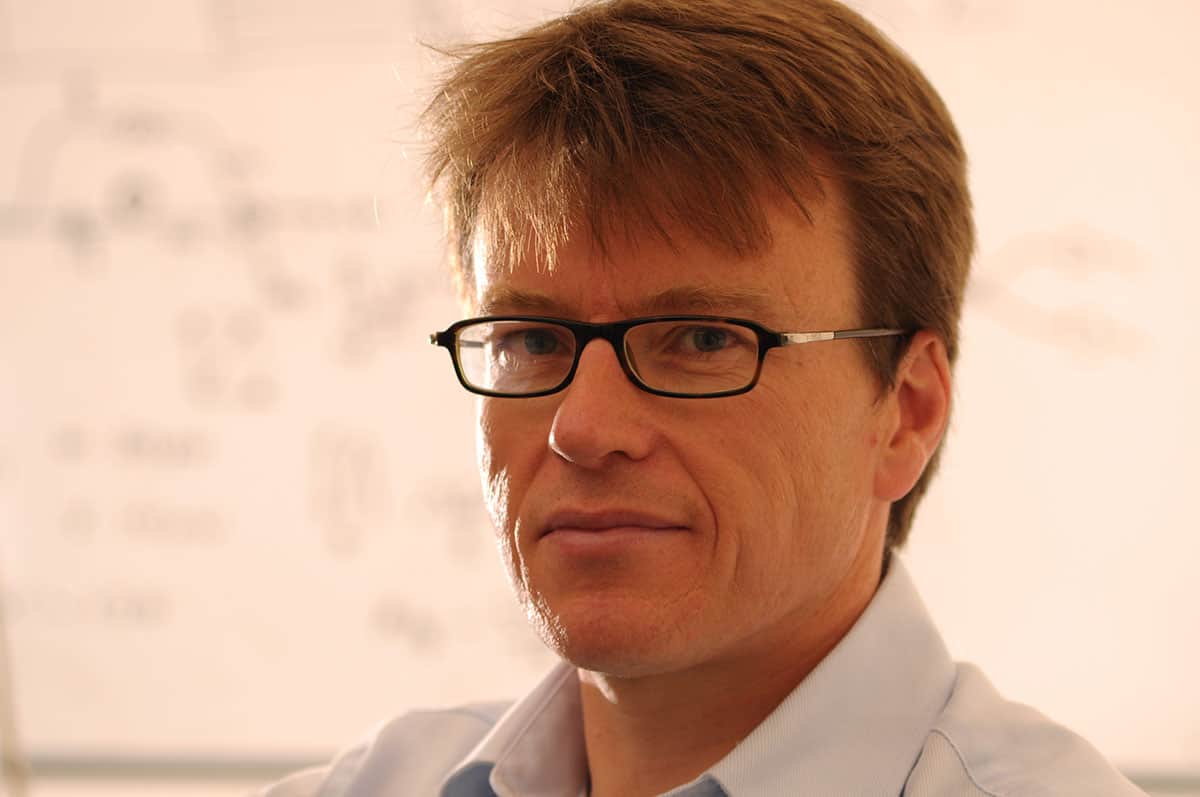
Quantum expert Andrew Shields has worked at Toshiba for almost 30 years. (Courtesy: Toshiba)
Shields says that people outside quantum physics who manage large volumes of data are finally beginning to grasp the threat of quantum computing to data security. “Awareness is definitely increasing,” he says. “It’s on their radar now.” Back when Shields started out, most attention focused on the world’s first QKD protocol. Known as BB84, it had been proposed in 1984 by theoretical physicists Charles Bennett at IBM and Gilles Brassard at the University of Montreal.
In the BB84 protocol, the qubits exist in the form of the polarization states of individual photons – for example “0” being a horizontally polarized photon and “1” being vertically polarized. Once a sender has sent a secret key consisting of a string of these polarization states to a receiver, the recipient can work out if anyone has been eavesdropping on the message. That’s because quantum mechanics dictates that such an observation would indelibly change the state of what is being observed.
The BB84 protocol is foolproof, but in practice it is very difficult to generate or transmit strings of single photons over long distances. That’s why the quantum network recently developed by Shields and his colleagues at Toshiba, in collaboration with BT, uses a different protocol for QKD. It relies on weak laser pulses that contain not one but several photons in the same polarization state (see figure).
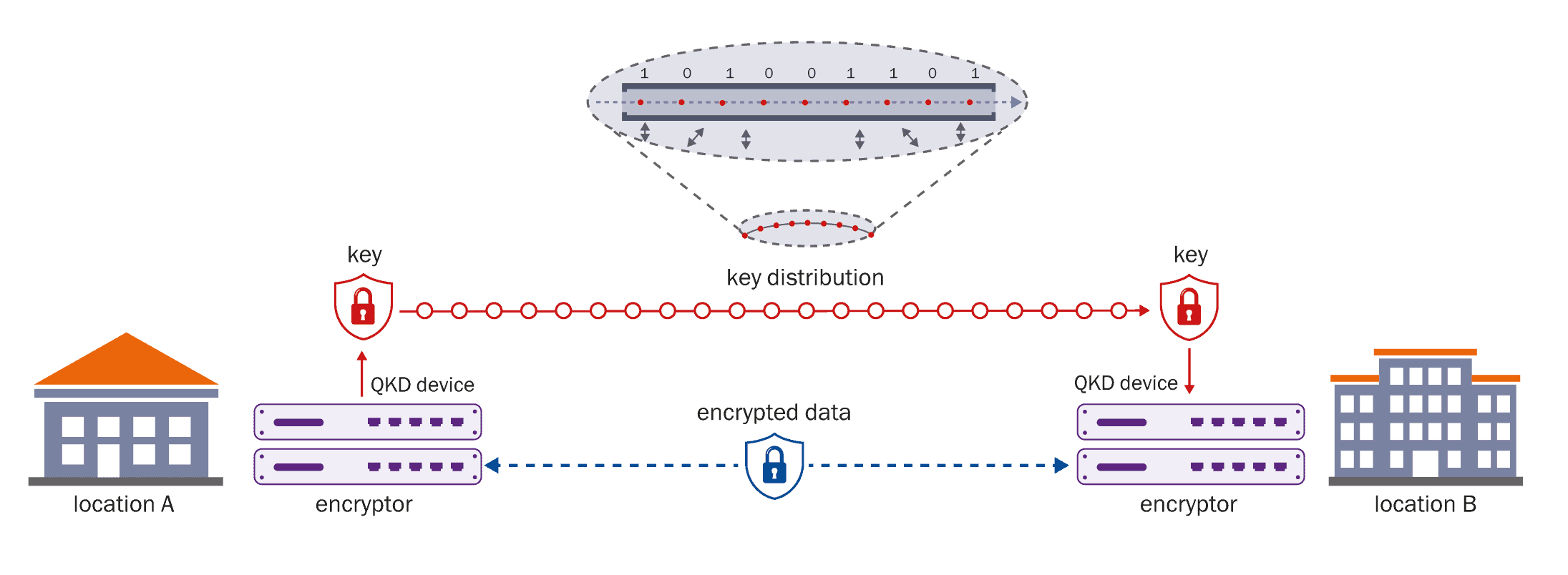
Quantum key distribution with a single photon stream
Quantum key distribution (QKD) allows data to be sent over the Internet without being hacked by quantum computers. It involves encrypting the data using a key made from a stream of single photons, where a “1” is, say, a horizontally polarized photon and “0” is a vertically polarized photon. When a receiver gets the key, they can use a QKD to decrypt the data and work out if anyone has been eavesdropping. That’s because quantum mechanics dictates that such an observation would indelibly change the state of the key.
Trouble is, if a key is encoded via a pulse with two or more photons, there’s a risk that one of the photons could be intercepted without affecting the integrity of the others, rendering those bits insecure. The solution to this conundrum was proposed in 2003 by Hoi-Kwong Lo at the University of Toronto and Xiang-Bin Wang, who was then at the Quantum Computation and Information Project in Tokyo. Based on earlier work by Won-Young Hwang at Northwestern University in the US, it involves interspersing the true key photon-pulses with even weaker “decoy” laser pulses.
There have been a lot of advances in single and entangled photon sources, but it is still most efficient to use weak lasers
Andrew Shields, Toshiba
Now, if an eavesdropper tries to siphon off some of the total signal, they will remove fewer photons from the decoy than the signal pulse, altering their ratio in the overall mix – a tell-tale signature that the receiver can detect. In fact, this decoy-pulse protocol is the new standard for long-distance QKD. Toshiba currently uses it for all its QKD products, including those in the Toshiba–BT metro network.
“There have been a lot of advances in single and entangled photon sources, but it is still most efficient to use weak lasers,” says Shields. “Using the decoy protocol, we can get very close to the ideal key rate predicted for using a true single-photon source.”
Indeed, in Toshiba’s commercially available QKD systems, keys can be generated, sent, received and processed thousands of times per second. It has even developed a QKD “multiplexing” technology, in which qubit photons can be sent and received alongside classical communications photons at different wavelengths. Essentially, there is one band of wavelengths for the QKD keys and another band for the classical signal.
“Quantum channels will have to use the existing communications infrastructure, as replacing it will not be realistic from a cost perspective,” says Shields. “All of our work, both for a quantum-secure network or the quantum internet, is directed at using the existing infrastructure.” In fact, it is not absolutely necessary to share the same physical fibre-optic cable channels even with existing infrastructure. That’s because Internet and other data are mostly transmitted over bundles of fibre-optic cables, not all of which are currently employed or “lit”.
Still, there is a strong argument for sharing infrastructure to maximize its future potential and allow QKD to reach the edges of networks, where channels peter out into single fibres. In the UK, as in most countries, fibre has not yet completely taken over from older copper cabling – and is not expected to do so until 2025.
Making quantum networks
Building on an earlier point-to-point trial in Bristol, UK, the Toshiba–BT quantum metro network links three existing core nodes: one in London’s West End, one in the City of London, and one 30 km west in Slough. According to the physicist Andrew Lord, who is senior manager of optical research at BT, anyone within a 10–15 km radius of one of the three nodes can now sign up to transmit data via QKD. However, this capability has not come about easily.
Our bread and butter is transmitting classical data, encrypted or not, from customer to customer. The question is, how do you add quantum to that?
Andrew Lord, BT
“Our bread and butter is transmitting classical data, encrypted or not, from customer to customer,” he says. “The question is, how do you add quantum to that? There are issues about the management of the quantum signal, making sure the right key hits the right end point. Then the standard WDM [wavelength division multiplexing] data channel has to be modified, too.”
The main problem is that shining high-powered lasers down a fibre can easily interfere with delicate quantum states. “Classical data swamps the quantum channel if we aren’t careful,” says Lord. “We’ve had to work with the WDM manufacturers to optimize that side of the network. It’s a very careful design that’s been needed to make it all happen.”
Fast forward to the future The internet could one day become a global, quantum-secured information super-highway through which anyone can share sensitive data without it being hacked. (Shutterstock/VideoFlow)
According to Lord, the network has been running since June 2022 without fail. Apart from involving accountants EY, the partnership has also attracted interest from elsewhere in the financial sector and from healthcare firms, as well as the government. It all helps Lord, Shields and their colleagues at BT and Toshiba determine what the market wants from a quantum network – and how to create a national, quantum-wide service.
BT is currently concluding a UK government-backed feasibility study that will put a price-tag on this kind of nationwide network using existing technology. But to develop an international network, which might well need transatlantic links, this technology will soon run out of steam. The quantum signals are weak to begin with, and the rate at which they refresh the keys slows 10-fold for every 50 km.
There are two ways forward, one of which is QKD via satellite. In 2020, researchers in China, led by Jian-Wei Pan from the University of Science and Technology of China, used the Micius satellite to establish QKD between Delingha in Qinghai province and Nanshan in Xinjiang province, which is over 1100 km away (Nature582 501). But satellite QKD is not straightforward. Micius orbits the Earth at an altitude of just 500 km and passes over its groundstations for only five minutes every night, stopping the keys from being continually refreshed. Higher orbits can provide longer coverage, but the satellite and groundstation would be further apart and the signal would be even weaker. Nevertheless, BT has an agreement with the London-based quantum startup ArQit to explore the potential of satellite QKD, with possible launches in the next two years.
The second way forward is to use “quantum repeaters”. These devices sit in the middle of long-distance channels, and distribute pairs of photons that have entangled properties to opposite ends of the channel.An input photon can be made to interact with one of these entangled photons, teleporting its state onto the distant twin of the entangled photon pair at the other end of the channel. The repeater thereby acts as a bridge that can extend the maximum distance over which a quantum signal can be transmitted.
But while partial aspects of quantum repeaters have been demonstrated, a fully working one is yet to be realized. Having successfully implemented basic QKD on integrated-silicon photonic technology last year, Toshiba is now working on an integrated-silicon quantum repeater, Shields says.
Invisible success?
Currently, then, there is no trouble-free path to a quantum internet. But technology is fast progressing, and in recent years big money has started to flood in. In 2018 the European Union announced that it would spend at least €1bn over the next 10 years on its Quantum Flagship drive to boost quantum technology. This year alone, the US has set aside almost $850m for quantum R&D, with much more feeding in privately via the likes of computing giants such as Google, IBM and Microsoft. The UK is investing heavily, too, with the government promising £2.5bn for quantum technology in its second 10-year quantum strategy, which it hopes will generate an additional £1bn of private investment. Dwarfing all these public investments, however, is China, which is reportedly allocating more than ¥105bn (about £12.5bn) to quantum R&D in its latest five-year plan.
It could be that some version of a quantum internet is with us before the decade is out. But the irony for those working on it is that only failure, not success, will get noticed. If they succeed, our sensitive data will not be hacked, and most people will be none the wiser that quantum computers ever posed such a threat.
Restoring function in paralysed limbs: in a study carried out in rats, researchers used a biohybrid device to improve the connection between the brain and paralysed limbs. (Courtesy: University of Cambridge)
Researchers at the University of Cambridge in the UK have developed a new type of neural implant made from pluripotent stem cells grafted into flexible electrode arrays. The device, which greatly improves the tissue–electronics interface, could be used to drive advanced neuroprosthetic limbs to a degree not currently seen in the clinic and improve function in paralysed limbs by bypassing injuries to the nervous system.
Creating functional neural implants is difficult since scar tissue tends to form around the electrodes over time, degrading the connection between the implant and the nerve.
To address this problem, the researchers, co-led by Damiano Barone, combined two advanced therapies: regenerative medicine, in which cells are introduced into the body to repair native tissue; and bioelectronics, where devices are implanted to interface with and control tissue. By including a layer of (skeletal muscle) cells reprogrammed from induced pluripotent stem cells (cells that can be differentiated into any type of cell) between the electrodes and the tissue, they found that the nerve on which the interface was implanted was able to grow into and biologically connect with the interface.
“This strategy allowed us to achieve a much higher quality and quantity of connections with nerves and prevent scar tissue,” explains Barone. “These connections can in turn be used to drive a muscle that is disconnected from the brain because of injury, or a prosthesis, so restoring mobility.”
Completely new way of interfacing with the nervous system
This is the first time that induced pluripotent stem cells have been used in a living organism in this way, and the concept opens the door to a completely new way of interfacing with the nervous system, Barone adds.
To create their biohybrid device, the Cambridge researchers began by fabricating a thin-film electrode array and decontaminating it. Next, they seeded induced pluripotent stem cells onto the device and induced these cells to transform into muscle cells.
“Our device is highly flexible and biocompatible and has high-resolution recording and stimulating capabilities,” Barone tells Physics World. “The stem cells we used in this project have the particular advantage of becoming the required type of cell in just eight to 10 days with a very high density.”
The team tested its device by implanting it into the paralysed forearms of rats. The muscle cells integrated with the nerves in the rats’ limbs and while movement was not restored, the device was able to detect signals from the brain that control movement, which is an important advance. The cells survived for the duration of the experiment (28 days), which is longest time period ever achieved for such a trial.
As well as being easy to integrate into tissue, and the fact that it is stable over the long term, the device could be implanted using keyhole surgery given its small size. This is in contrast with other neural interfacing technologies that are complex and much larger.
The researchers, who report their work in Science Advances, now plan to connect the biohybrid interface to either prosthetics or paralysed limbs to improve mobility in animal models and eventually in humans. “We also hope to explore the concept of biohybrid interfaces in other areas of clinical need with different electronic designs and different cell types,” says Barone.
If you’re a news junkie, you may have noticed the UK government announce its National Quantum Strategy – a new, 10-year programme of investment in quantum technology worth £2.5bn. Doubling previous commitments, the plan is intended to let the UK maintain its competitive edge in a field in which the country has long held a commanding position. Now if you’re wondering if the programme is really as good as it sounds, let me reassure you – before we go any further – it really is.
In terms of sheer financial muscle, China and America are the dominating forces in quantum tech. Estimates suggest that the Chinese government has invested at least $25bn since the mid-1980s in the field, with global management consultants McKinsey & Company reporting in 2021 that China had committed $15.3bn in public funds for quantum computing alone. That’s more than double that of the EU ($7.2bn) and eight times as much as the US ($1.9bn). Japan was fourth with $1.8bn and the UK fifth with $1.3bn.
The precise details of what China is spending its quantum-computing money on are unclear. But China also has a global lead in quantum communication, although this is a sector with less commercial potential given that several countries have raised questions over whether Chinese communications firms can be fully trusted. Late last year, for example, the US banned five Chinese telecoms equipment providers: Daha, Hikvision, Huawei, Hytera Communications and ZTE.
In terms of sheer financial muscle, China and America are the dominating forces in quantum tech
In Europe, the EU launched its decade-long Quantum Technologies Flagship in 2018, which aims to support hundreds of quantum researchers, with an expected budget of €1bn. Although the McKinsey analysis says that the EU spends the third highest amount on quantum computing, the figure is a little misleading as it implies all 27 EU countries are acting in unison, which is not necessarily the case. Still, individual EU nations, notably France, Germany and the Netherlands, also have their own national programmes.
The French announced their National Strategy for Quantum Technologies in January 2021, with some $1.8bn of funds for research, students and tech transfer. Germany’s quantum strategy kicked off in 2018 with $3.1bn of support, while the Dutch Quanta Delta NL project was set up in 2019 with $740m in funding over seven years. Canada, Israel, Japan, Russia, Singapore and South Korea all have significant national programmes launched from 2018 onwards.
So where does that leave the latest UK project? It is in fact the country’s second 10-year quantum plan, with the UK’s National Quantum Technologies Programme having been launched as far back as 2013. That first programme has already led to a national network of very effective quantum-technology hubs in quantum sensors and metrology (Birmingham), quantum communications (York), quantum enhanced imaging (Glasgow), and quantum computing (Oxford).
Seeking to develop and commercialize new technology, the hubs are a key part of a growing quantum industry in the UK offering expertise, facilities and incubation support in their specific areas. As I recently mentioned, it’s working well with a total of 46 quantum-tech firms having been set up in the country over the last decade as of the end of 2022 (according to Anchored-In). Together they have raised more than £346m in investment and now employ 850 people.
Quantum-enabled economy
The visionaries behind the original UK programme have close links with the Institute of Physics (IOP), which publishes Physics World. They were none other than Sir Peter Knight, who was IOP president from 2011–2013, and David Delpy – the IOP’s current honorary treasurer who chaired the UK quantum programme from 2014–2019. In fact, as a recent IOP report made clear, the IOP continues to provide valuable input and evidence into the new UK government strategy
The UK’s first quantum programme has been a huge success, giving the country leading capabilities in quantum computing, sensors and timing, imaging and communications, and helped to build their path to market. The government has funded 139 projects involving 141 quantum organizations through Innovate UK’s Quantum Technologies Challenge alone. In fact, the UK is second only to the US in terms of the number of quantum companies and second in attracting private investment, ahead of other competitors in Europe.
The UK’s new National Quantum Strategy aims to make the country a leading quantum-enabled economy by 2033. By then, the government envisages quantum technology will be an integral part of the UK’s digital infrastructure and manufacturing base, driving growth and helping to build a thriving and resilient economy and society. It will get there by spending £2.5bn over the coming decade, generating an additional £1bn of private investment in the programme (see box).
The UK’s new quantum-technology strategy is extremely well-thought out and targeted
People and skills are at the heart of the strategy, which is sensible because it always pays to invest in new talent when a field is just starting. In fact, the programme will see a further £25m over the next two years (and more after that), which will go on the launch of new doctoral training centres and fellowships, a Quantum Skills Taskforce, an industry-placement scheme and a quantum apprentice programme. There will even be a new “Office for Quantum” in the Department for Science, Innovation and Technology to get things moving.
For me, the UK’s new quantum-technology strategy builds on the existing decade of experience it has in this area, which makes it extremely well-thought out and targeted. I am sure it will deliver – and probably exceed – the UK’s goals as the country has a clear “first-mover” advantage in many areas of quantum 2.0. The full 61-page UK government strategy is well worth a read.
The first winner of a new £10,000 prize awarded by the quantum Business Innovation and Growth group of the Institute of Physics, sponsored by Quantum Exponential, will be announced at the Economist’s Commercialising Quantum summit in London on 17–18 May 2023.
The UK’s National Quantum Strategy
Published in March 2023, the UK’s National Quantum Strategy builds on the county’s National Quantum Technologies Programme, which began in 2014 as the first of its kind in the world. The new 10-year, £2.5bn programme aims to make the country a home to world-leading quantum science and engineering by supporting business and driving the adoption of quantum technologies.
The programme includes £100m for research hubs in quantum computing, communications, sensing, imaging and timing; an extra £70m for quantum computing and navigation; £25m for quantum fellowships and PhD training; £15m for government procurement of quantum tech; £20m for start-ups; an extra £20m for the National Quantum Computing Centre.
Targets include:
Keeping the UK third in the world in terms of the quality and impact of its quantum science by 2033, while increasing the number of research publications.
Making the UK the “go-to place” for quantum businesses, an integral part of the global supply chain and a preferred location for investors and talent.
Achieving a 15% share of global private-equity investment in quantum firms by 2033 (up from 12%) and 15% market share in quantum tech (up from 9%).
Ensuring 25%–33% of businesses have taken “concrete steps” to prepare for the arrival of quantum computing, with 75% of relevant businesses having already done so.
An unusual phase of ice that may be responsible for a spectacular atmospheric effect called a Scheiner’s halo has been observed in its pure form for the first time. Known as cubic ice, the phase develops when water freezes on low-temperature interfaces, and researchers in China have now confirmed its existence using transmission electron microscopy. The finding advances our understanding of ice and could be used to develop more accurate models of ice behaviour.
Ice is found on Earth in many forms, and the role it plays – for example, in cloud physics and climate change – depends strongly on its structure. The main type of naturally-occurring ice is hexagonal ice (Ih), so-called because the water molecules arrange themselves in a hexagonal lattice (this is the reason why snowflakes have six-fold symmetry). Under certain conditions, however, ice can form other structures. Indeed, 20 different forms of ice have been identified so far.
One of these 20 forms is cubic ice (Ic), which has a diamond-cubic structure with a repeating face-centred cubic array of tetrahedrally-coordinated water molecules. This type of ice is believed to play a role in the formation of Scheiner’s halos, which are extremely rare and always observed in the sky at an angle of 28° from the Sun or Moon. However, the existence of cubic ice has long been a subject of debate, as it proved difficult to detect pure-phase Ic unambiguously in experiments.
Ice insight: observation of cubic ice formation on graphene at 102 K by in situ cryogenic TEM. (Courtesy: Institute of Physics)
In their experiments, the ice formed on a freeze plate made from monolayer graphene at temperatures ranging from room temperature to liquid nitrogen temperature. As the researchers decreased the plate’s temperature, the residual water vapour in the vacuum chamber of the microscope gradually condensed – similar to the way water vapour in the air transforms directly into solid ice on cold days, forming a thin layer on surfaces such as windowpanes or windscreens.
The TEM images, which Wang, Bai and colleagues describe in Nature, reveal that depositing amorphous solid water onto the cold plate led to the formation of Ic nuclei, which have a single-crystalline lattice along the <110> zone axis. The researchers measured a lattice constant a in these crystals of 6.36 angstroms, which is similar to the diffraction value of 6.37451 angstroms for heavy-water ice Ic. The Ic nuclei grow to form a faceted crystallite in a few hours and the size of these crystallites is in the nanometre range. The observations imply that the resulting ice is pure-phase I, with a majority being single crystalline ice Ic together with a small amount of ice Ih.
Wang says that being able to track ice at molecular resolution in this way advances our understanding of ice and its properties. “Our study provides new insights into its formation behaviour, shedding fresh light on its structure, growth and defect dynamics,” she tells Physics World. “This knowledge could be used to develop more accurate models of ice behaviour, which could have important implications for fields such as climate and environmental science.”
The insights gained from the study of ice on low-temperature interfaces could also be exploited to develop materials with enhanced ice-repellent properties for applications in aviation, transportation and other industries, she adds.
Looking to the future, the researchers say they now plan to study how different ice polymorphs compete with each other during crystallisation, and to explore the microscopic mechanisms that lead to the formation of the variety of ice crystals observed in nature.
The Moon and Mars are dusty places and this has already caused astronauts some grief. When a landing module approaches the surface of an alien world, its descent is controlled by downward thrusters. These can kick up large amounts of dust, which can obscure the view of the landing site and also coat the spacecraft and nearby facilities in potentially damaging dust.
Now researchers in South Korea and the UK have studied the physics of these thruster-induced “brownouts” with the aim of reducing the threat that they pose to space missions. The team developed a model that describes the interaction between a rocket plume and the surface of a planet in near-vacuum conditions.
The model inputs information about the spacecraft and its engines, as well as the planet’s surface composition, topography, atmosphere and gravity. The simulation then calculates the shape and size of the plume, its temperature and pressure and the amount of material that is displaced from the surface. What is more, the simulation uses significantly less computer resources that previous models.
Efficient landing technologies
“The insights gained from this study of the effects of different parameters on plume-surface interaction can inform the development of more effective and efficient landing technologies,” says Byoung Jae Kim of Chungnam National University.
Georges Lemaître died in 1966, but not before making important contributions to cosmology – in particular his pioneering work on the expanding universe and the Big Bang. A professor of physics at Belgium’s Catholic University of Louvain, Lemaître was also rather famously a Catholic priest.
In Physics, Katherine Wright looks at a rare video interview of Lemaître that was recorded two years before his death. The video was broadcast in 1964 and is about 20 minutes long. Most of it was thought to be lost, but a mislabelled reel has since been found and has been uploaded to the Internet by the Belgian broadcaster VRT. Lemaître speaks in his native French and Flemish subtitles have been added.
Lemaître talks about cosmology as well as religion. Notably, the interview was done before the discovery of the cosmic microwave background – which provided strong observational support for his ideas.
Wright’s article also links to an English translation of the article if you don’t speak French or Flemish.