Ask me anything: Mary Bishai – ‘For a self-professed nerd like me, doing big science is heaven’

Born and raised in Egypt, Mary Bishai studied physics at the University of Colorado, Boulder, US, before doing a master’s and PhD, also in physics, at Purdue University. After a postdoc at Fermilab, she joined Brookhaven National Laboratory in 2004, where she is now a distinguished scientist. Bishai served as co-spokesperson for the Deep Underground Neutrino Experiment (DUNE) from 2023 to 2025 and, over the years, has collaborated on many other leading particle-physics projects, including MicroBooNE, the Daya Bay neutrino experiment, the Main Injector Neutrino Oscillation Search, the CDF experiment at Fermilab, and the CLEO experiment at Cornell University. In 2026 she was elected fellow of the American Association for the Advancement of Science.

What skills do you use every day in your job?

I enjoy brainstorming. If I am having a mental block or get stuck in a technical or personal interaction issue, I walk down the hall to chat with a colleague about their work – even if it isn’t related to my own problem. This serves two purposes. First, it helps ameliorate the feelings of loneliness and frustration to discuss your challenges with others. Second, a surefire cure for any mental block is to divert your attention to a different topic. Another essential skill is to try to play devil’s advocate with myself and colleagues. My team finds this infuriating sometimes, but it’s vital – you need to be your toughest critic.

What do you like best and least about your job?

For a self-professed nerd like me, doing big science is heaven. I get to geek out on a broad set of technical and scientific challenges and work with lots of really cool experts from a variety of disciplines. Recently, for example, as part of DUNE, I’ve been looking at designs for the infrastructure that houses the Long Baseline Neutrino Facility. Located at Fermilab near Chicago, it will send the world’s most powerful beam of neutrinos to a detector in an underground lab 1300 km away in South Dakota.

In any given week, I might find myself discussing the mechanical engineering of detectors or learning about the civil engineering required for large-scale facilities. I might be discovering fascinating details about the hydrogeology of the Fermilab site, exploring the design of focusing magnets, or studying the results of simulations of high-energy particle interactions in materials.

I could also find myself in a meeting of the artificial intelligence (AI) expert team, learning new AI approaches, such as improving the search for neutrinos from supernovae using our detectors. Wandering the hallways, I might bump into a colleague from Brookhaven’s chemistry division and get chatting about new detector materials. I also work with theorists on new ideas for physics at DUNE.

I’m happiest trying to connect the dots between physics goals and technical and engineering disciplines, coming up with multidisciplinary design solutions to realize these massive science projects

I trained as an experimental particle physicist, but I’m happiest trying to connect the dots between physics goals and technical and engineering disciplines, coming up with multidisciplinary design solutions to realize these massive science projects. Best of all is when I ask a question in an area I’m not an expert in – say civil engineering – and someone replies: “Hmm, we hadn’t thought about that.”

My least favourite part of the job is that it can be very challenging to deal with large international collaborations of scientists and engineers over the very long time scales of large-scale projects. You need a lot of emotional resilience, stamina and patience to keep going for the decades it takes to get these large-scale projects to fruition. Burn out and despondency are downsides; keeping yourself and your team going is very difficult.  

What do you know today that you wish you knew when you were starting out in your career?

Always be honest to the science. If it looks like something you put a lot of effort into is a dead end, drop it; don’t wait until someone tells you to stop. There will be a lot of dead ends before you find the right direction. When an approach fails, it means you have a new intellectual challenge – and that’s the fun part. Don’t be afraid to challenge established dogma and groupthink, even if it means difficult discussions with your colleagues no matter how senior. And most importantly, don’t keep pushing when you are burning out. It’s okay to step back and slow down for a while.

Sunlight can produce correlated pairs of photons

Producing pairs of correlated or entangled photons usually requires a complex laser system. Now, however, researchers at China’s Xiamen University have shown that these crucial ingredients in quantum optics experiments can come from a far more basic source: sunlight. The discovery could simplify optical systems that rely on a process known as spontaneous parametric down-conversion (SPDC), allowing the technology to be deployed in space and other locations with limited or no access to electricity.

SPDC occurs when a short-wavelength photon passes through a nonlinear crystal and gets converted into twin photons with a longer wavelength. Traditionally, the initiating (pump) photon in this paired-photon source comes from a coherent laser. However, recent research suggested that fully coherent light sources might not be strictly necessary, and that partially coherent sources might also be able to drive SPDC.

A Sun-tracking system

In the new work, researchers led by Wuhong Zhang and Lixiang Chen took this idea even further. Could sunlight – which is inherently incoherent – also drive SPDC?

In principle, Zhang and Chen suspected the answer was “yes”. After all, a ray of sunlight, like a laser beam, is just a stream of photons. The problem is that unlike photons from a laser, the brightness and incidence angle of solar photons is constantly changing. This makes it difficult to collect enough pump photons to produce correlated photon pairs at high rates.

To overcome this problem, the researchers installed a Sun-tracking system on the roof of their laboratory building. This was essentially a telescope mount that moves with the Sun to collect light continuously throughout the day. They then worked out how to efficiently couple this collected sunlight into a multi-mode fibre and transmit it into their laboratory. There, they used the light to pump a nonlinear crystal made of periodically poled potassium titanyl phosphate (PPKTP). Within this crystal, the SPDC process converted pump photons into correlated photon pairs, demonstrating that it is indeed possible to use sunlight to generate photon pairs with strong position correlations.

The team faced numerous challenges along the way. The low spatial coherence and temporal instability of sunlight needed to be mitigated, and the coupling into the fibre needed to be very efficient. However, Chen notes that sunlight does have one advantage over traditional laser sources. “Sunlight is inherently broadband in its spectrum, so it can precisely provide any favourable wavelength,” he says. “This means it could be adapted to diverse application scenarios.”

Towards laser-free and electricity-independent SPDC light sources

According to Zhang, the team’s work shows that laser-free and electricity-independent SPDC light sources are possible. Potential applications could include correlation-enhanced sensing in remote areas and space-based quantum key distribution and teleportation, and he tells Physics World that one of the team’s next goals is to test the system in outdoor environments.

Chen adds that the system, which is described in Advanced Photonics, could also become a platform for fundamental studies of how the coherence of light affects the photon-splitting process in SPDC. He and his colleagues are now focusing on improving the efficiency of their sunlight collection system; optimizing the design of their nonlinear crystal so that it is better adapted to the Sun’s broadband spectrum; and implementing advanced image reconstruction techniques such as compressed sensing. “We think that introducing AI technologies such as artificial neural networks and deep learning into such imaging systems will be a key priority in going forward,” Chen says. “They will inform us on how to exploit sunlight more efficiently to implement various advanced quantum information protocols.”

Quiz of the week: the last major galactic merger of the Milky Way created what feature?

Fancy some more? Check out our puzzles page.

Stunning Moon sculpture unveiled at Royal Observatory Greenwich

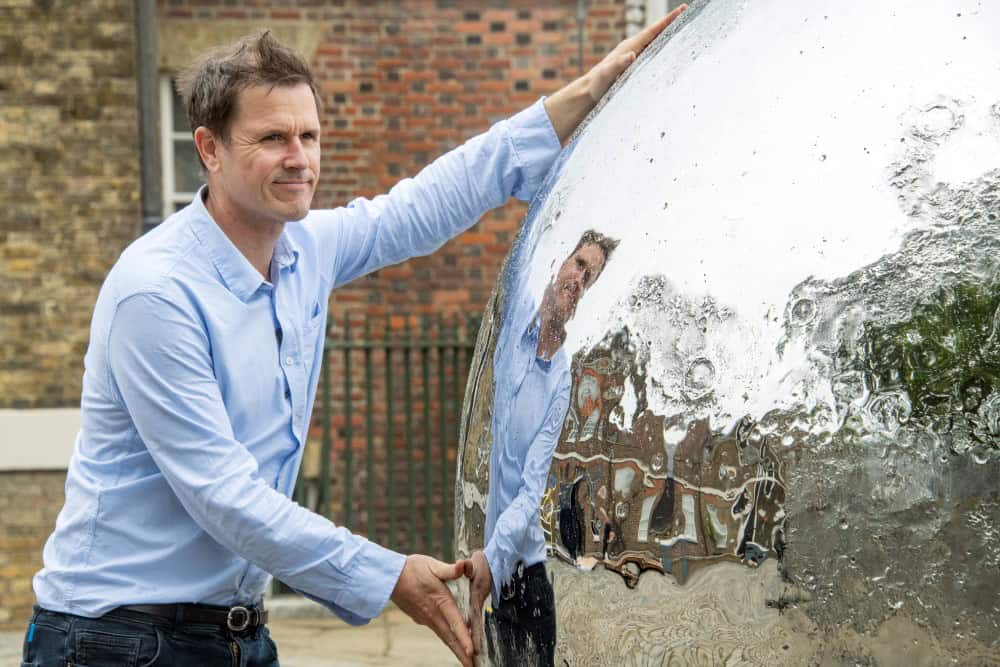
A spectacular new lunar art installation has been installed at the Royal Observatory Greenwich.

Dubbed Mirror Moon it has been created by British artist Luke Jerram and is open for public display today at the observatory.

The artwork is 2 m in diameter and is made of stainless steel. It uses accurate topographic data collected from NASA missions to map the features of the Moon onto the mirrored steel surface.

This includes craters, valleys, mountains and smooth lava fields as well as details from the heavily cratered far side of the Moon.

The installation opens as the NASA Artemis crewed missions foster a renewed interest in the Moon. A crewed lunar landing – Artemis IV – is currently set for 2028.

The Royal Observatory Greenwich is the home of Greenwich Mean Time and the Prime Meridian, and since its founding in 1675 astronomers have used the observatory to study the Moon.

Luke Jerram with Mirror Moon

Jerram is best known for his large-scale public engagement artworks including Museum of the Moon and the Earth artwork Gaia, both of which have been displayed internationally.

Jerram says that the observatory has been an “inspiration” for his work as an artist.

“I hope Mirror Moon will inspire generations of visitors to have an interest in contemporary science, art and the wonder of the night’s sky,” he adds.

To mark the installation, Royal Museums Greenwich are selling 20 limited-edition mini versions of the artwork for £2000 each.

Each one is hand signed and numbered by Jerram and includes a presentation box, bespoke display stand and certificate of authenticity.

Novel gravitational-wave model sheds light on dark matter

Physicists have developed a model that predicts how gravitational-wave emission changes when a binary black hole system moves through dark matter. Gravitational waves are ripples in spacetime generated by compact objects spiralling together in a cosmic dance that ends in a violent collision. In the presence of dark matter, these waves may carry an imprint of the surrounding environment. Despite making up over 80% of all matter, dark matter does not interact with the electromagnetic force, and its existence has been surmised only by its gravitational interactions, leaving its precise nature a mystery. Gravitational waves may provide a new way to probe the characteristics of dark matter.

One proposed dark-matter candidate is the light scalar boson, an extremely small particle orders of magnitude lighter than an electron, that can exhibit coherent wave-like behaviour. In the presence of spinning black holes, a process called superradiance can transfer rotational energy into the surrounding field of ultralight boson particles, amplifying the dark matter into a dense cloud around the black hole. These clouds can modify the dynamics of black hole binaries, encoding observable signatures into the gravitational-wave signals that they emit.

To understand what these signatures may look like, an international team of researchers developed a model for gravitational-wave emission from a binary black hole system moving through dark matter. Developing their model required meticulous numerical relativity simulations, but ensuring their results were accurate and reliable proved to be a challenge.

“The hardest part was making sure we truly understood what the simulations were telling us. The danger in numerics is fooling yourself,” explains Josu Aurrekoetxea of Massachusetts Institute of Technology. “You run a simulation, you see an effect, and you have to ask – is that dark matter, or is that my code?”

Working with Katy Clough of Queen Mary University of London and Pedro Ferreira of the University of Oxford, Aurrekoetxea spent several years developing these simulations, before joining forces with Soumen Roy of Université Catholique de Louvain and Rodrigo Vicente of the University of Amsterdam, whose expertise in analytical modelling and data analysis helped the team construct and validate the novel waveform model.

Most work in the field of gravitational waves and dark matter focuses on observations with future space-based detectors such as the Laser Interferometer Space Antenna. “Our motivation was to ask what could already be learned about specific dark-matter models using the LVK [LIGO–Virgo–KAGRA] gravitational-wave data available today,” says Vicente. “We were surprised to find that some of the more extreme models can already begin to be tested with signals observed by current experiments.”

Searching for these dark-matter imprints, they applied their model to 28 publicly available signals observed by the LVK collaboration, a global gravitational-wave detector network that has observed signals from hundreds of mergers. For each event, the team compared the signal to their predictive dark matter-modulated waveform and the standard waveform for black holes merging in a vacuum.

After rigorous testing, the researchers found that 27 of the 28 events were consistent with gravitational-wave signals expected from binary black holes evolving in empty space. One event, GW190728, showed a slight preference for the dark-matter model, indicating that its signal contains properties consistent with modulations from the presence of dark matter. However, the statistical evidence is not strong enough to claim a confident detection of a dark-matter imprint.

Although only one event demonstrated a preference for the predictive dark-matter model and no definitive claim of a dark-matter signature could be made, the researchers have demonstrated a novel method to probe and characterize dark matter through signatures encoded in gravitational-wave signals.

“Our findings from GW190728 suggest that, if this interpretation is correct and we are seeing a genuine environmental signature, similar effects may appear in future LVK events,” says Roy. Therefore, the next step for the researchers is to extend their analysis to LVK’s fourth observing run. Roy also says that if they can estimate the number and types of events that should carry dark-matter imprints, they can combine multiple signals to test their hypothesis more robustly.

“It has become clear that gravitational waves have tremendous potential to help us understand how matter behaves in the extreme gravitational fields surrounding black holes. This is particularly relevant for dark matter, which may interact only through gravity,” says Vicente. And as more gravitational-wave signals are observed, they provide a promising channel to uncover the elusive nature of dark matter.

The research is described in Physical Review Letters.

The discovery of mesoporous carbon support with characteristic porosity and the art of mastering its use

Want to learn more on this subject?

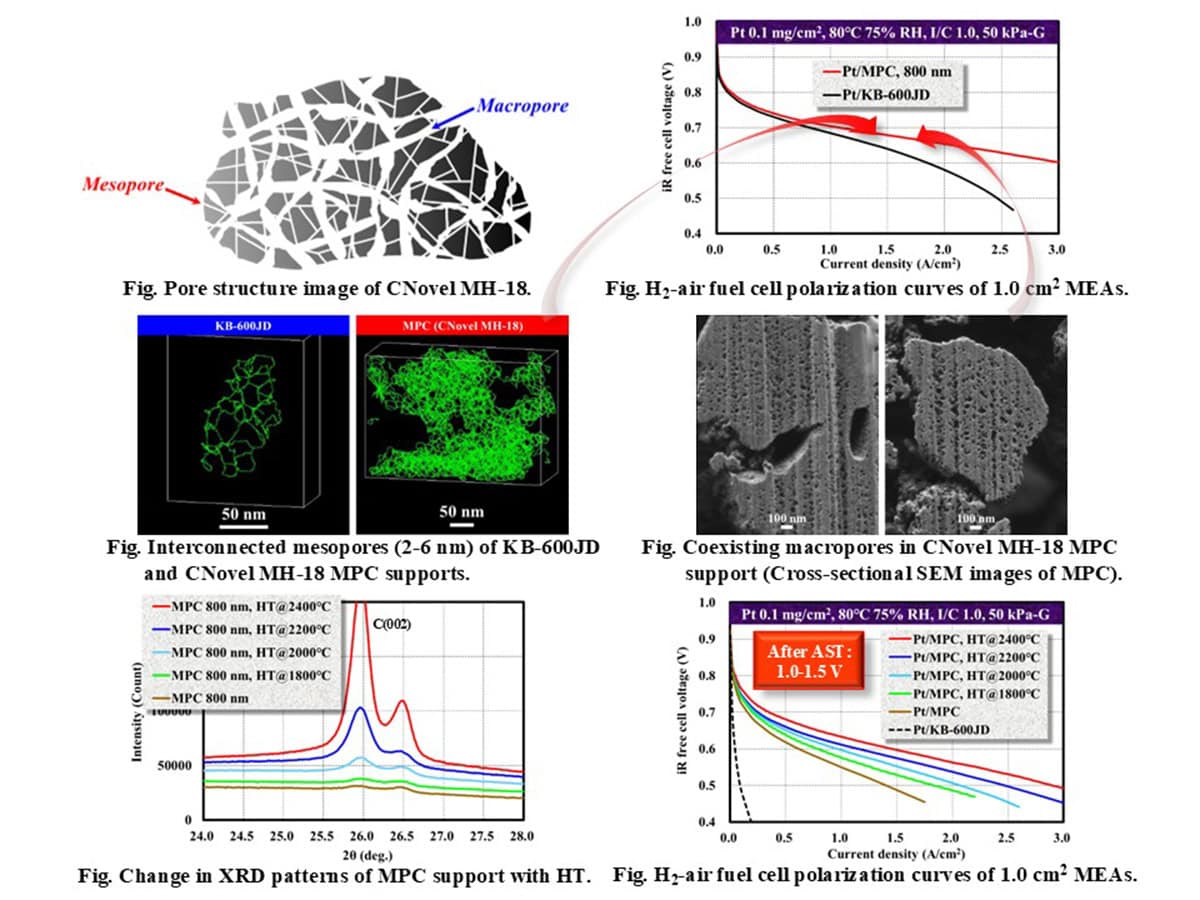
In 2020, Toyota Motor Corporation launched the FC-EV of MIRAI-II adopting mesoporous carbon of nano-dendrite (MCND) support for the PtCo alloy catalyst NPs to suppress ionomer poisoning.  Concurrently, we began using the CNovel® MH-18 mesoporous carbon (MPC) support mass-produced by TOYO TANSO, Osaka, Japan.  The characteristics of the MPC support were entirely different from those of the conventional Ketjen Black EC-600JD (KB-600JD) porous carbon support.

The MPC support has a primary particle size of approximately 2 μm (KB-600JD: 40–50 nm) and consists of isolated particles lacking the chain-like structure seen in KB-600JD.  Thanks to very unique porosity of the MPC support, that is, the coexistence of highly interconnected mesopores (2–6 nm) and macropores, allows oxygen molecules to access the Pt catalyst NPs from all directions within the MPC support, resulting in higher cell voltages compared to the Pt/KB-600JD catalyst at high current density regions.

The MPC support was ground to approximately 800 nm using a bead mill.  Since the grinding generates new surfaces on the MPC support, the ground MPC support was heat treated in an Ar atmosphere at temperatures ranging from 1800°C to 2400°C to improve the durability of the MPC support.  The durability of the Pt/MPC (800 nm) catalyst was evaluated using a triangular-wave potential cycle of 1.0–1.5 V vs RHE in MEAs.  The Pt/MPC (800 nm) catalyst using the freshly milled MPC support exhibited higher durability than the Pt/KB-600JD catalyst.  This is because although new surfaces were formed by bead milling, the purchased MPC (2 µm) was heat treated at 1800°C under an Ar atmosphere during TOYO TANSO’s final manufacturing process.

The durability of the Pt/MPC (800 nm) catalyst increased with rising the heat-treatment temperature, and the catalyst using MPC support (800 nm) heat-treated at 2400°C exhibited the highest durability under a triangular-wave potential cycle of 1.0–1.5 V vs RHE.

XRD and HR-TEM analyses revealed that the carbon (002) plane grew further upon the heat treatment.  The N2 gas adsorption/desorption isotherms measured at 77 K for the MPC supports indicated that porosity of the MPC support decreased with increasing the heat-treatment temperature, and the surface area of the freshly milled MPC support, 1338 m2/g, decreased to 351 m2/g after the heat treatment at 2400°C.  Considering the durability and the porosity retention of the MPC support (800 nm), a heat-treatment temperature in the range of 2000°C–2200°C is considered suitable.

Want to learn more on this subject?

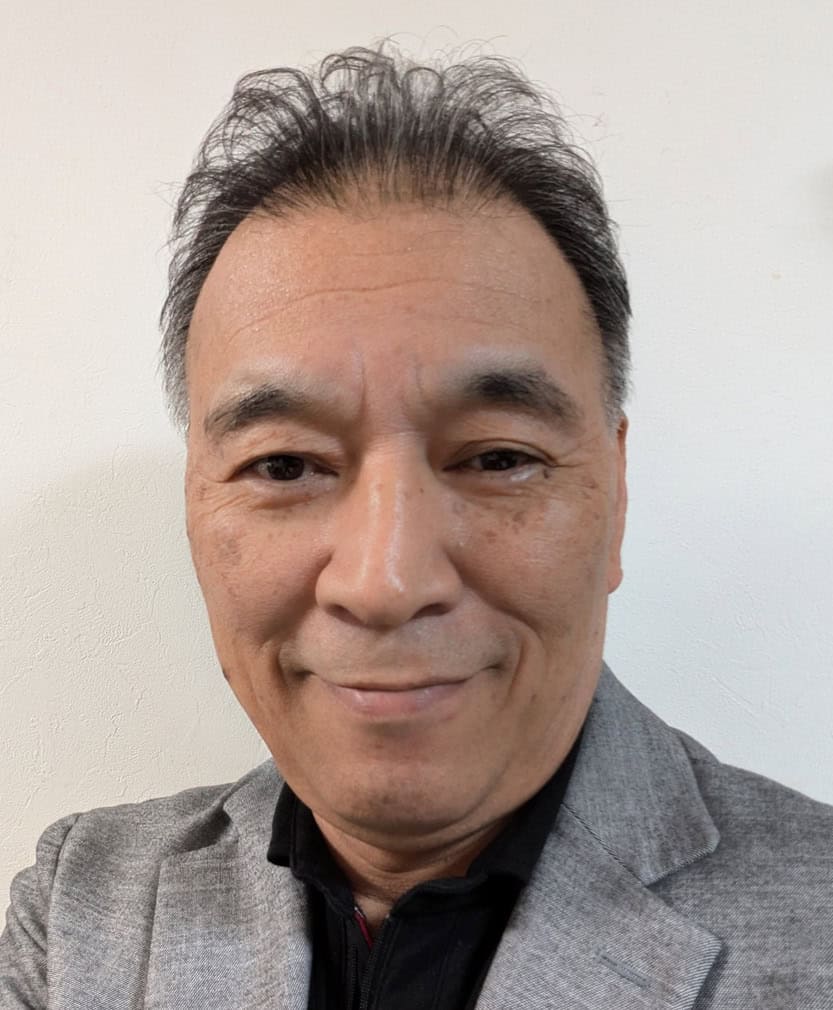
Hideo Daimon completed his MSc in chemistry at the Faculty of Science, Kwansei Gakuin University, in 1984, he joined the research and development department at Hitachi Maxell, Ltd.  At Hitachi Maxell, he conducted research on magnetic materials prepared via chemical routes; friction and wear of thin-film magnetic recording media, protective coatings and lubricants for the thin-film media, and electrodeposition and electroless plating of Ni and Ni-P films.

In 2000, he began synthesizing PtFe, PtRu and Pt nanoparticles for use in fuel cells. Daimon moved to Doshisha University in 2010, where he has been researching Pt and Pt-based catalysts used in cathodes for PEFCs, including Au@Pt- and Pd@Pt core-shell structured catalysts, as well as PtCo alloy catalysts.  Currently, he is engaged in research on mesoporous carbon supports to enhance the cell performance and durability of PEFCs applied to FCEVs.

ecs-biologic-high-current-hitachi-high-tech-logo

‘Galactic archaeologists’ share the 2026 Kavli Prize in Astrophysics

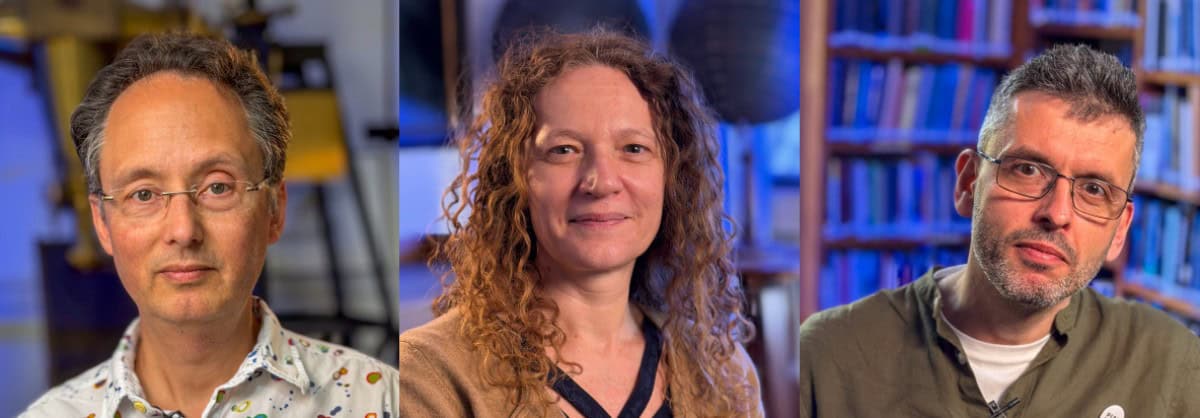
The 2026 Kavli Prize in Astrophysics is awarded to Vasily Belokurov, Amina Helmi and Rodrigo Ibata, “for uncovering the fossil evidence of past mergers proving that the Milky Way galaxy was built through hierarchical accretion”.

Belokurov is at the UK’s University of Cambridge; Helmi is at the Kapteyn Astronomical Institute at the Netherlands’ University of Groningen; and Ibata is at France’s University of Strasbourg.

Photo of the three Kavli laureates

This episode of the Physics World Weekly podcast features an interview with Helmi and Per Barth Lilje, who is chair of the Kavli Astrophysics Prize committee and is based at Norway’s University of Oslo.

In a wide-ranging conversation, we explore the history of the Milky Way and why the work of the Kavli laureates provides crucial evidence that our galaxy was formed by the merger of smaller dwarf galaxies. We talk about what hierarchical accretion tells us about dark matter and the Standard Model of cosmology – and we look forward to the future of the Milky Way.

  • Belokurov, Helmi and Ibata share the $1m prize money equally. The prize will be awarded in Oslo in September

This podcast is sponsored by The Kavli Prize.

Altermagnets can turn neighbouring materials altermagnetic, too

Altermagnets can transfer their unusual magnetic properties to nonmagnetic materials placed next to them, say theorists in China and the US. This so-called “proximity effect” had already been observed in ferromagnets and superconductors, but it is new for altermagnets, which were only recognized as a distinct class of magnetic materials in 2024. If confirmed experimentally, the team says the effect could aid the development of advanced quantum materials with applications in fields such as spintronics, valleytronics and fault-tolerant quantum computing.

In ferromagnets, proximity effects make it possible to tune properties such as magnetic anisotropy, coercivity and exchange bias in nonmagnetic materials that have acquired magnetic polarization from a neighbouring ferromagnet. Similarly, ordinary materials that have picked up superconducting correlations from a nearby superconductor are a mainstay of experiments on topological superconductivity and topological quantum computing.

In the latest research, physicists led by Tong Zhou of the Eastern Institute of Technology in Ningbo sought to understand whether altermagnets could likewise transfer their behaviour to a neighbouring material. To do this, they created a model of a van der Waals bilayer heterostructure in which the bottom layer is a two-dimensional (2D) altermagnet, V2Se2O, while the top layer is a non-magnetic semiconductor, PbO.

Zhou explains that the vanadium atoms in V2Se2O form two opposite-spin sublattices that are connected by rotational symmetry rather than by simple translation or inversion. This complex structure is what gives V2Se2O its characteristic altermagnetic spin splitting, with a band structure in which spin-up and spin-down electrons have different energies that vary in periodic patterns. V2Se2O also has a so-called spin texture, which is a pattern of spin polarization that produces a net zero magnetization in the material.

First-principles calculations

Using first-principles calculations, the researchers found that the distinctive symmetry-patterned magnetism of V₂Se₂O can indeed transfer into the PbO layer across the interface between them. As a result, Zhou says the originally spin-degenerate bands of PbO develop a clear momentum-dependent spin splitting.

Importantly, this pattern is not arbitrary. Instead, it follows the symmetry expected from the altermagnetic order of V2Se2O. What is more, the real-space spin density of the PbO mirrors the symmetry of the V2Se2O, showing that it has inherited altermagnetism rather than simply becoming generically spin polarized.

When the researchers rearranged the V2Se2O into a conventional antiferromagnetic configuration with no alternating spin splitting, they found that the induced splitting in PbO disappeared. They also observed that the degree of induced splitting decreases when the PbO is placed further away from the V2Se2O, confirming the proximity effect.

As a final piece of evidence, the researchers searched for similar proximity effects in other altermagnetic systems, ranging from insulators to metals and covering material platforms with 3D architectures as well as 2D ones. “Even graphene, one of the most common 2D materials, can acquire altermagnetic characteristics when interfaced with CrSb, which is an experimentally well-established altermagnet,” Zhou notes.

Altermagnets as interfacial “spin-pattern generators”

One of the work’s main implications is that altermagnets could be used to generate spin patterns in many otherwise non-magnetic materials, Zhou tells Physics World. “This means that instead of searching only for intrinsic altermagnets, we can now design ‘proximitized’ altermagnetic systems by combining an altermagnet with a semiconductor, metal or superconductor,” he says.

In semiconductors, Zhou notes, the altermagnetic proximity effect can induce controllable spin and valley splitting, which are promising for spintronics and valleytronics devices, respectively. In superconductors, meanwhile, the effect can generate momentum-dependent spin splitting without the need to apply an external magnetic field or introduce net magnetization – something that Zhou says offers a new route toward topological superconductivity and the Majorana modes that could revolutionize fault-tolerant quantum computing. “More generally, this effect provides a versatile platform for designing field-free spin devices, topological quantum devices and multifunctional van der Waals heterostructures,” he says.

Looking ahead, Zhou and colleagues say they would now like to observe the altermagnetic proximity effect in heterostructures fabricated in the laboratory. They also want to find out how to control the strength of the effect – for example, by changing interlayer spacing, stacking, strain, gating and possibly even layer twisting.

“More fundamentally, an important question is how fast and how reversibly altermagnetic order, and therefore the altermagnetic proximity effect, can be reconfigured dynamically,” Zhou says. “That would be especially interesting for controlling spin-dependent transport and topological phases in real time.”

The research is described in  Physical Review Letters.

Fractal maths helps distinguish genuine artworks from forgeries

Researchers at the Polytechnic University of Hauts-de-France have used fractal mathematics to create a new non-invasive method that can distinguish genuine artworks from forgeries (Surf. Topogr.: Metrol. Prop. 14 025016).

Art forgery is a growing problem worldwide and traditional authentication of an artwork relies on expert opinion, historical research, pigment analysis and digital techniques.

While these approaches can be effective, they are also resource‑intensive and can sometimes still be inconclusive.

The new technique works by capturing the subtle patterns created by an artist’s brushwork – patterns so consistent that they act like a morphological signature unique to that particular artist.

By converting high-resolution images of the artwork into 3D‑like topological maps the researchers created a microscopic “texture” of a painting, measuring how rough or detailed the surface is using fractal dimensions – a mathematical ratio that measures how densely a fractal shape occupies space as it scales.

The fractal dimensions are calculated for the whole artwork as well as for selected homogeneous areas that are representative of brushwork.

“Fractal analysis gives us a measurable fingerprint of an artist’s brushwork without needing to sample or disturb the painting,” notes lead researcher Francois Berkmans.

The researchers tested the fractal method on works attributed to the Dutch painter Vincent van Gogh finding that the well‑documented fake The Plowmen was a strong outlier compared to other works while the recently authenticated Sunset at Montmajour aligned closely with Van Gogh’s known painting.

Using eight works for each artist, the approach also successfully separated the stylistic signatures of Van Gogh with that of the 17th‑century painter David Klöcker Ehrenstrah.

The researchers say that the technology can improve authentication, especially when combined with other techniques such as chemical analysis.

“This approach won’t replace traditional expertise, but it significantly strengthens it,” adds Berkmans. “Our results show that our technique can clearly point out genuine artists and reliable detect known forgeries.”

It’s all kicking off: how much do you know about the science of football?

There are 10 questions in total: blue is your current question and white means unanswered, with green and red being right and wrong.

How well did you do?

0–3 Shambolic performance, didn’t even get past the group stage

4–6 Solid effort, but crumbled in the knock-out rounds

7–9 Great showing, just bottled it when the game went to extra time

10 Congratulations, you’re a World Cup winner!

Copyright © 2026 by IOP Publishing Ltd and individual contributors