Read more on IOPscience

Solar power from abandoned mines

Abandoned mining areas are difficult to farm, often unsafe to build on, and expensive to restore. They also pose long‑term environmental risks due to land degradation, water contamination, and unstable ground. However, these hard‑to‑use landscapes are often large, open, and exposed to sunlight, making them promising locations for solar power generation.

In this work, the researchers developed a novel tool called SolarMiner to locate abandoned mining areas and calculate how much solar power they could produce. The tool combines satellite imagery with a computer vision model, a form of artificial intelligence, to identify and classify different types of mining sites. SolarMiner can detect mining areas, determine their type (e.g., open‑pit, subsidence zones, water‑filled pits), measure their surface area, and estimate how much solar capacity could be installed, along with the electricity output and cost.

They tested SolarMiner on a major coal‑mining region in China, Shanxi Province. Focusing only on abandoned mining areas, the model estimated that land‑based solar panels alone could generate over five times the province’s 2023 electricity consumption. Floating solar panels on water‑filled mine pits could generate even more, over six times Shanxi’s usage in the same year.

This research highlights the enormous potential of abandoned mining sites for clean‑energy generation. Using SolarMiner will help direct governments toward smarter planning of solar farms and transmission networks by identifying exactly which mining areas can be transformed into low‑cost, high‑impact renewable‑energy assets.

Read the full article

Assessing open-pit mine-site photovoltaic (PV) and floating PV potential using vision large model

Guohao Wang et al 2026 Prog. Energy 8 025002

Do you want to learn more about this topic?

A review on modelling methods, tools and service of integrated energy systems in China Nianyuan Wu et al. (2023)

Shear strain reshapes magic angle graphene

Twisted bilayer graphene has become a key area of research in 2‑dimensional materials. Two graphene sheets are stacked and rotated slightly so their carbon atoms no longer align, creating an interference pattern called a moiré lattice. At specific magic angles (1.1°, 0.55°, 0.37°), the geometry and interlayer coupling slow the electrons dramatically, nearly reducing their velocity to zero. These slowed electrons form flat bands, where interactions become extremely strong and can give rise to exotic phases such as superconductivity and strange‑metal behaviour.

In this work, the researchers examined what happens as the twist angle varies from 0.35° to 1.30°, using scanning tunnelling microscopy (STM) to image individual atoms and local electronic states. STM measures the tunnelling current between a sharp metal tip and the sample, allowing the researchers to map the electronic structure across regions for the first, second, and third magic angles.

They found that shear strain, a sideways distortion where one graphene layer shifts relative to the other, has a far greater impact on the electronic structure than biaxial stretching or compression. Shear strain strongly controls how far apart the flat bands are, how wide they become, and how electrons distribute between them. It enhances the upper flat band while suppressing the lower one, making it a decisive structural factor rather than a minor defect. They also showed that remote bands depend only on twist angle, not strain, making them reliable markers of the local twist. Strain reshapes flat‑band energies within each moiré unit cell, and only a theoretical model combining strain and electron-electron interactions reproduces the full experimental behaviour.

This research demonstrates that shear strain, not just the twist angle, is a critical factor shaping the flat‑band structure in twisted bilayer graphene, redefining how correlated and superconducting states must be engineered.

Read the full article

Strain and twist angle driven electronic structure evolution in twisted bilayer graphene

Jiawei Yu et al 2026 Rep. Prog. Phys. 89 048001

Do you want to learn more about this topic?

Emergent phases in graphene flat bands by Saisab Bhowmik, Arindam Ghosh and U Chandni (2024)

Flat bands go 3D

Scientists study how waves move in many systems including sound, light, and even electrons. Normally, waves spread out and change as they travel. But sometimes they form flat bands, where the wave doesn’t spread at all. It’s like dropping a pebble into a lake and seeing no ripples. These flat bands are exciting because they make interactions stronger and can be used for ultra‑precise sensing and energy harvesting. The challenge is that in 3D materials, scientists have never been able to make bands that stay perfectly flat everywhere, they always become wiggly near the edges.

In 2D materials, however, flat bands appear naturally as Landau levels. These are fixed energy states created when a magnetic field forces electrons into tiny circular orbits. Because the electrons can’t move freely, all the states at that energy become perfectly flat. But extending this idea to 3D has been extremely difficult.

In this work, the researchers found a way around that problem by using sound waves instead of electrons. They built a special 3D structure that controls sound, and for the first time created a perfectly flat 3D Landau level across the entire material, not just in the middle. Sound waves are much easier to manipulate than electrons, which made the experiment possible.

They designed a structure called a Fock‑state lattice, which naturally produces a kind of synthetic magnetic field for sound. Unlike a normal magnetic field, this one is spherical-like, spreading evenly in all directions. This special field is what keeps the Landau levels perfectly flat everywhere in 3D.

This result settles a long‑standing debate by proving that truly flat Landau levels can exist in 3D. Even better, the same method can be applied not just to sound, but also to light, electrons, and superconducting circuits, opening the door to new technologies that rely on extremely stable, high‑quality resonances.

Read the full article

Realization of 3D all-flat bands in acoustic Fock-state lattices

Xiao Xiang et al 2026 Rep. Prog. Phys. 89 048003

Do you want to learn more about this topic?

Emergent phases in graphene flat bands by Saisab Bhowmik, Arindam Ghosh and U Chandni (2024)

Lodha Foundation unveils plans for India’s first privately funded physics institute

India’s first privately funded theoretical-physics research institute is set to open in the coming months in Mumbai. The Lodha Theoretical Physics Institute (LTPI), which was announced on 26 May, will be led by quantum physicist Jainendra Jain who is based at Pennsylvania State University in the US.

Jain, who will keep his position at Penn State, says that the new physics institute is expected to have at least 10 full-time faculty members, around 30 postdocs as well as long- and short-term visitors from around the world.

The first LTPI postdoc has already been recruited and Jain expects several visiting faculty members at LTPI by early 2027, who will be spending significant time in Mumbai. LTPI plans to hire 3–5 full time faculty members within the next three years.

LTPI is intentionally designed to be smaller and more focused than a typical research institute and will initially focus on three or four areas, one of which is strongly interacting quantum matter.

“We believe that this scale will allow the institute to respond nimbly to emerging scientific opportunities,” Jain told Physics World, adding that quantum matter “promises to continue to be a fertile ground for new transformative discoveries”.

LTPI is being set up by Mumbai-based Lodha Foundation – the philanthropic arm of India’s Lodha Group, which is one of the country’s largest real estate and construction companies.

In August the Lodha Foundation established the Lodha Mathematical Sciences Institute in Mumbai – India’s first privately funded mathematical sciences institute.

‘A destination of choice’

Privately funded research institutes are still a novelty in India, with most research, especially in basic science, carried out in publicly funded research institutes.

Compared to government-funded institutes, Jain says that LTPI’s goal “is to create an environment where researchers can devote the maximum possible fraction of their time and energy to science”.

To that end, Jains adds that administrative burdens and bureaucracy that often accompany publicly funded organizations will be kept to a minimum, with the institute having the flexibility to move into new areas.

LTPI will not grant academic degrees, and its members will not have mandatory teaching obligations.

Researchers at LTPI will also not be required to secure external funding to sustain their research programs, which will help them pursue long-term scientific questions.

“Our goal is to build an institute in India that stands alongside the finest theoretical physics centres and becomes a destination of choice for outstanding physicists from around the world,” adds Jain.

Sunil Mukhi from the publicly funded Indian Institute of Science Education and Research in Pune, says that the lack of government support for theoretical sciences as well as visitor programmes means that the LTPI will be a “huge benefit to the community”.

“Publicly funded institutes are subject to lots of rules and regulations that make it more complicated to function,” he says. “Government funding for [visitors] is very difficult to get because the value and necessity of visitor programmes is not understood by most of our agencies,” he says.

Mukhi adds it is “great to see industrialists stepping up” and that they are “now in a position to play a role”. “The talent is already there and only a well-funded, flexible, creative environment is needed,” adds Mukhi.

Nuclear shells govern close proton–neutron partnerships

Physicists have discovered that the quantum arrangement of protons and neutrons inside atomic nuclei plays a much bigger role in nuclear pairing than previously thought. That is the conclusion of an international team of physicists that has scattered high-energy electrons from calcium and iron nuclei. Their study improves our understanding of the strong nuclear force, which binds atomic nuclei together.

The team focused on the brief partnerships that form when a proton and a neutron come unusually close together inside a nucleus. Known as short-range correlated (SRC) pairs, these fleeting configurations involve only about 20% of all nucleons but account for almost all of the fastest-moving particles in nuclei. Because the two particles approach each other so closely, such pairs offer a rare opportunity to probe nuclear matter under extreme conditions.

The new measurements suggest that these pairs form according to quantum-mechanical rules linked to the shell structure of the nucleus rather than simply depending on how many protons and neutrons the nucleus contains.

Distance matters

Atomic nuclei contain protons and neutrons, collectively known as nucleons. In the standard shell model of the nucleus, these particles occupy different quantum states, or shells, much as electrons do in atoms.

However, the shell model does not tell the whole story. Nucleons occasionally come very close together, forming temporary pairs with exceptionally large velocities. Almost all of these pairs consist of one proton and one neutron.

According to team member Lawrence Weinstein of Old Dominion University in the US, such pairs can reveal what happens when nucleons approach each other so closely that their internal structures may begin to overlap.

“Nucleons are like people,” he says. “When they are far apart they do not interact, at moderate distances they can attract each other, but if they get too close they can repel each other violently.”

Quarks and gluons

The pairs therefore provide a way to investigate how the strong nuclear force behaves at very short distances and whether these close encounters affect the quarks and gluons inside nucleons, where quarks are the fundamental constituents of protons and neutrons and gluons are the particles responsible for binding them together.

Previous experiments had suggested that neutron-rich nuclei contain more short-range pairs than nuclei with similar numbers of protons and neutrons. However, those studies compared nuclei that also differed substantially in mass, making it difficult to determine the true cause of the effect.

To separate these possibilities, the researchers examined three carefully chosen nuclei: two calcium isotopes and an iron isotope.

“We studied calcium-40, calcium-48, and iron-54,” says Or Hen of the Massachusetts Institute of Technology, one of the authors of the study. “These let us see how the number of SRC pairs increased as we added eight neutrons from calcium-40 to calcium-48 and then added six protons from calcium-48 to iron-54.”

The measurements were carried out at the Thomas Jefferson National Accelerator Facility in Virginia. The researchers fired a beam of electrons at the nuclei and measured both the scattered electrons and protons knocked out of the target.

Reconstructed motion

By reconstructing the motion of the proton before the collision, they could determine whether it had belonged to a short-range correlated pair.

The team expected that adding large numbers of neutrons would significantly increase the number of proton-neutron pairs. Instead, the effect was surprisingly small.

“We found that adding 40% more neutrons only increased the probability of finding a proton in an SRC pair by 10%,” says Hen.

The additional neutrons occupied an outer quantum shell, while most of the protons remained in inner shells. The result suggests that the newly added neutrons rarely formed close-range pairs with protons in different shells.

The researchers then examined iron-54, which contains six additional protons occupying the same outer shell as the extra neutrons in calcium-48.

Dramatic effect

“Conversely, the added six protons in the outer orbital of iron-54 formed 50% more SRC pairs (relative to calcium-48), presumably with the outer-orbital neutrons in calcium-48,” Hen says.

The result points to an unexpected conclusion. Nucleons appear to prefer forming close-range pairs with partners occupying the same quantum shell rather than with particles located in different shells.

The finding also posed a challenge for existing theoretical models. Although some calculations reproduced part of the observed behavior, none predicted the strong increase seen in iron-54.

The work could have consequences beyond the structure of individual nuclei. Researchers have proposed that short-range pairs influence the properties of extremely dense matter, including the matter found inside neutron stars. The pairs may affect both the cooling of neutron stars and the relationship between pressure and density within these exotic objects.

Hen says that the team will now study wider range of nuclei. “We are extending this work to other stable nuclei from beryllium-9 to gold-197 to further study the effects of shell structure and mass on pair formation.”

Future experiments will also investigate unstable neutron-rich nuclei that cannot be studied using conventional targets. Those measurements should help determine whether the newly observed shell effects represent a general rule governing how short-range proton–neutron pairs form throughout nuclear matter.

The research is described in Nature.

Solar-thermal desalination process operates at near 100% efficiency

Constant access to a supply of freshwater is critical for life on this planet, as well as for the growth of industry, agriculture and modern-day economies. But natural water supplies are depleting in many parts of the world, with around 2.2 billion people lacking safely managed drinking water, according to United Nations estimates.

Many countries rely on converting ocean water into freshwater using desalination plants. But the reverse osmosis and thermal distillation techniques currently used are energy intensive and leave behind brine that raises the salt level of the water (and reduces oxygen levels), which can harm sea life.

Researchers from the University of Rochester have taken a new approach by developing a solar-thermal desalination process that’s less energy intensive, doesn’t generate brine and doesn’t require chemical additives to pre-treat the water.

“Today, about one quarter of the global population lacks safely managed drinking water; but at the same time the oceans contain an enormous resource of both water and valuable minerals,” explains lead researcher Chunlei Guo. “We wanted to develop a technology that could address these challenges together, producing freshwater sustainably while turning what is traditionally considered waste into a resource.”

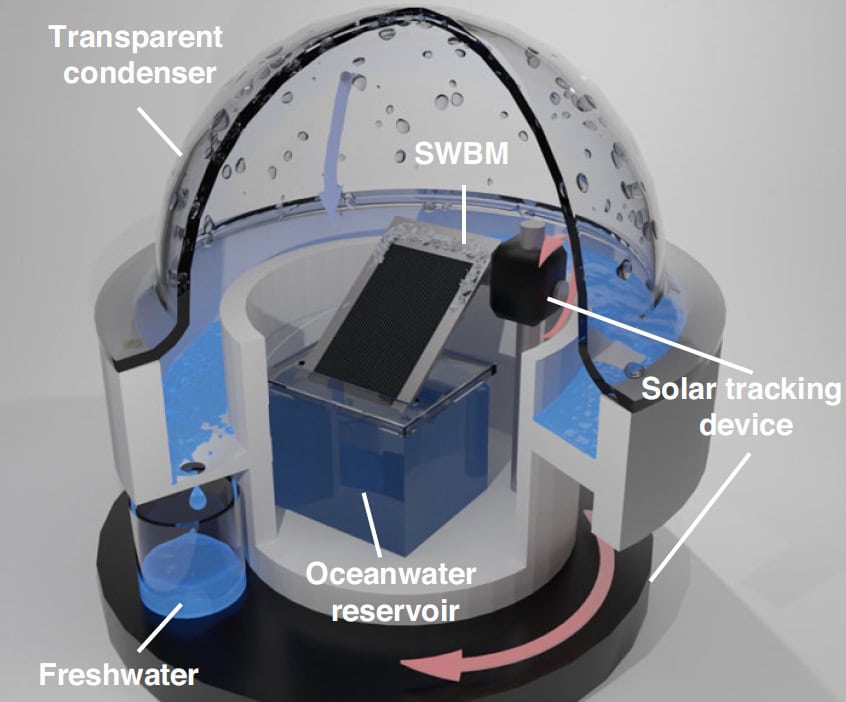
The novel desalination technology, described in Light: Science & Applications, is based on a multi-functional superwicking black metal (SWBM) panel created via femtosecond laser processing. Desalination involves evaporating and distilling the water, removing the salt in the process. To do this, materials that absorb sunlight and heat up, while wicking water, are required. The SWBM panel proved effective at both.

The SWBM panel is highly attractive to water and can pull a thin film of water upwards across its surface, while absorbing almost all solar energy. This uphill pulling of water against gravity means that the panel can be placed in any orientation, enabling effective solar tracking.

The evaporated and distilled water can be extracted from the panel and the remaining salts are directed away from the panel’s active region and deposited in its passive (untreated) regions. This not only self-cleans the active region of the panel, but enables continuous desalination to produce distilled drinking water.

Harvesting valuable minerals

This approach means that concentrated brines are not deposited back into the ocean, and the solid salt can be collected and used to produce common table salt. The process also extracts other precious minerals such as lithium, which could be used in battery manufacturing. As traditional land-based mining becomes more expensive, extracting lithium directly from ocean water could prove a lower-cost, more sustainable option.

“The most important advance is that our system can desalinate real ocean water continuously using sunlight alone, without generating waste, with little to no maintenance and while recovering valuable minerals such as lithium,” says Guo. “By using a superwicking, self‑cleaning surface invented in my lab to move salts away from the evaporation region, we overcame the clogging bottleneck that has limited solar desalination until now. This is the first time we have achieved stable, low‑maintenance, high‑efficiency and nearly 100% salt-recovery performance with actual seawater.”

Solar-tracking desalination system

The self-cleaning mechanism is vital for use in real-world scenarios. Many desalination technologies work in the lab where the only mineral component is sodium chloride. Ocean water, however, contains many other materials, such as magnesium and calcium salts, that could crystallize on the panel and clog it. The self-cleaning process is driven by etched grooves that stop these minerals from staying on the panel. If oceans contain too high a mineral content, wider and deeper grooves can be etched into the panel by applying a higher laser power during fabrication.

The team tested the solar-thermal desalination panel using water samples from Pacific, Atlantic and Indian Oceans. When tracking the sun over a week to purify the ocean water, the panel demonstrated an average evaporation rate of 1.76±0.04 kg/m2/h and a salt harvesting rate of 61.74 ± 2.46  kg/m2/h under one sun illumination, corresponding to 74% solar-to-vapour conversion efficiency and near-100% salt extraction.

The researchers are now working to scale up the technology and integrate it with other mature platforms, such as solar cells. “We have made significant progress by demonstrating that the desalination process can be used to cool the solar cells, improving electrical output while simultaneously producing freshwater. This approach could lead to a synergistic water-energy system that operates sustainably,” Guo tells Physics World.

Abnormal snoring sounds help diagnose common sleep disorder

Obstructive sleep apnoea (OSA) is a sleep disorder in which the throat muscles relax and block the airway during sleep, causing pauses in breathing. If left untreated, OSA can lead to serious health problems. A research team led by Mingjiang Wang at the Harbin Institute of Technology, Shenzhen in China, in collaboration with Huizhou University, has now come up with a new method for detecting OSA – based on recordings of the subject snoring.

“OSA is a common yet underdiagnosed sleep disorder,” explains first author Heng Li. “The clinical standard for diagnosis is polysomnography [PSG], which is expensive, time-consuming and unsuitable for large-scale or home-based screening.”

PSG collects multiple physiological signals via various sensors that patients wear while asleep, potentially disrupting their sleep patterns. “Therefore, we aim to develop a non-contact detection method using snoring, which is a typical symptom of OSA and can be recorded contactlessly using a microphone,” says Li.

The acoustic patterns of snoring, produced by the vibrations of upper airway, contain markers that reflect airway narrowing and collapse. However, developing a reliable snoring-based detection model is challenging, as labelled snoring datasets are scarce and snoring sounds vary greatly between individuals.

In this study, published in Physiological Measurement, the research team uses a pretrained audio model called Wav2vec 2.0 to address these challenges. By transferring acoustic knowledge learned from large-scale unlabelled speech and audio data, the model removes the need for labelled snoring datasets.

Wav2vec 2.0 was originally designed for speech recognition and is computationally intensive, making it unsuitable for routine OSA monitoring. Thus the team adapted it for snoring sounds, removing layers more relevant to speech recognition while retaining acoustic features relevant to snoring pathology, aiming to lower the computational cost.

“We do not use the pretrained model directly,” Li explains. “Instead, we prune higher speech-related Transformer layers and fuse low- and mid-level representations, so that the model emphasizes snoring-related acoustic information.”

Constructing a snoring dataset

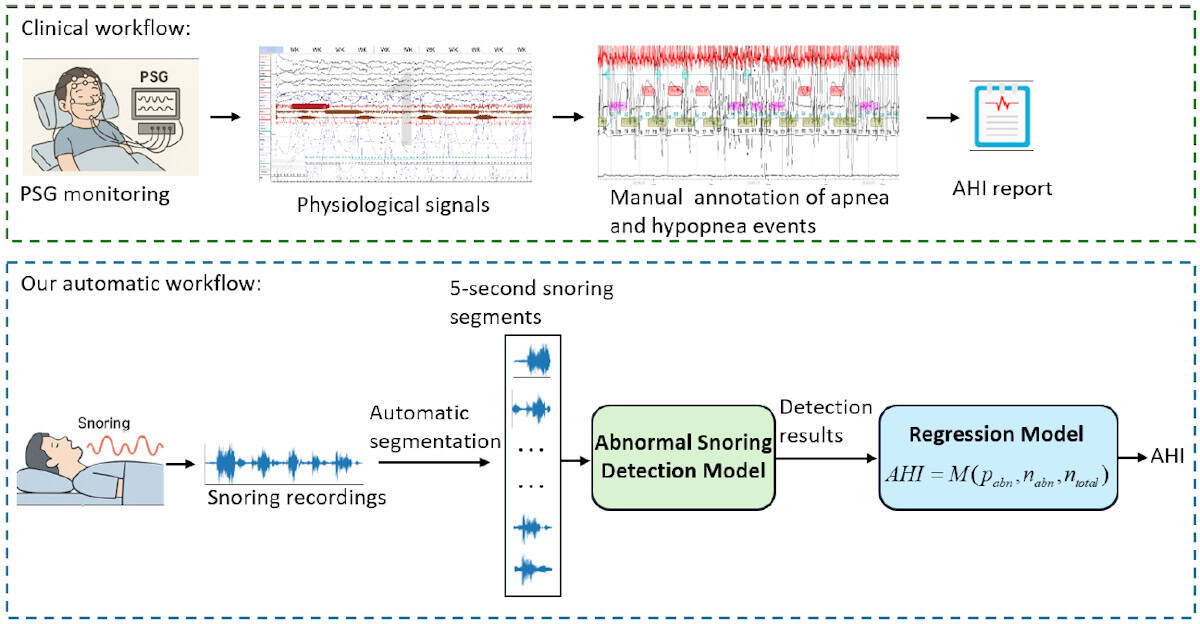
In collaboration with the Shenzhen People’s Hospital, the team collected sleep recordings from 100 individuals with apnoea-hypopnea indices (AHI) ranging from 2.4 to 68.3 events/hour. AHI – defined as the average number of apnoea (where breathing stops completely) and hypopnoea (shallow breathing) events per hour of sleep – is used to classify OSA from normal (AHI of below 5) through to severe (30 or above).

All subjects slept in hospital wards and were also monitored with a PSG device during sleeping. Sleep physicians then used the PSG data to annotate the audio recordings with apnoea and hypopnea events. Each recording was divided into 5-s audio segments and assigned as either abnormal, if they included apnoea/hypopnoea events, or normal.

Illustration of methods for detecting abnormal snoring

To evaluate their framework’s ability to detect abnormal snoring, the researchers compared it against five other pretrained audio models. They first ran a subject-dependent evaluation, in which random audio segments from all subjects were used for training, validation and testing. All models performed well – as expected when the training and test data come from the same subjects – but the adapted Wav2vec 2.0 model achieved the highest accuracy and sensitivity.

The team then performed a subject-independent evaluation, which better reflects a real-world scenario, with each subject’s data randomly assigned to the training, validation or test set. Here, the existing methods exhibited a reduced accuracy of between 65% and 71%, while the new model retained an accuracy of 73.95%.

“In subject-independent testing, this adapted model achieved better performance than the compared baseline models, suggesting improved generalization to unseen subjects,” says Li. The team’s model was also significantly more computationally efficient, an important factor for OSA screening in home-based or resource-limited scenarios.

AHI estimation

Finally, the researchers designed a snoring-based AHI estimation framework, using their detection model to identify abnormal snoring segments and calculating a ratio-based statistic – the number of abnormal segments divided by the total number of segments – to quantify OSA severity. They then used four common linear regression models to estimate AHI for individual subjects.

All models demonstrated reasonable accuracy and good correlation between predicted and PSG-derived AHI values. The mean absolute error was roughly 11 events/h, which means that the estimated AHI may deviate from the true value by 11 events per hour of sleep and could (if near a threshold between categories) result in an incorrect severity diagnosis. However, while the current model is not yet precise enough for clinical diagnosis, it could prove ideal as a potential tool for home-based OSA screening or pre-screening.

The researchers are now investigating how to more effectively apply pretrained audio models to clinical snoring analysis. “We are focused on making these models lighter and more suitable for home-based screening, while validating their effectiveness across large, multicentre datasets,” Yun Lu, one of the corresponding authors from Huizhou University, tells Physics World. “Additionally, we plan to improve the accuracy of AHI estimation by integrating snoring-based predictions with additional non-contact physiological information.”

Research on magnetic plasma confinement wins Plasma Physics and Controlled Fusion Outstanding Paper Prize

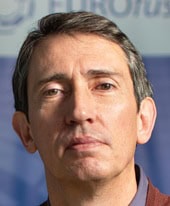
Experimental physicist Stefano Coda from the Swiss Federal Technology Institute of Lausanne (EPFL) and colleagues have been awarded the 2026 Plasma Physics and Controlled Fusion (PPCF) Outstanding Paper Prize for their research on magnetic confinement fusion.

The work – Enhanced confinement in diverted negative-triangularity L-mode plasmas in TCV – is based on simulations and experiments on the TCV tokamak based at the EPFL.

Fusion is usually performed via two types of plasma confinement. Magnetic involves using magnetic fields to hold stable a hydrogen plasma, while inertial confinement uses rapid compression, usually by lasers, to create a confined plasma for a short period of time.

In the late 1990s, scientists working on the TCV tokamak found that a certain plasma shape — dubbed negative triangularity – can help to keep the hot plasma stable and better contained.

The award-winning work build on the progress made in the decades since to show that such a configuration can lead to enhanced plasma confinement.

Indeed, the findings highlight how negative‑triangularity plasmas are no longer a niche idea but can work reliably, at high performance, and in reactor‑relevant conditions making them promising for real fusion power.

Stefano Coda from the Swiss Federal Technology Institute of Lausanne

Awarded each year, the PPCF prize aims to highlight work of the highest quality and impact published in the journal.  The award was judged on originality, scientific quality and impact as well as being based on community nominations and publication metrics.

The prize will be presented at the 52nd European Physical Society Conference on Plasma Physics to be held in Edinburgh from 29 June to 3 July.

The journal is now seeking nominations for next year’s prize, which will focus on papers in the following areas: foundational and discovery plasma physics; astrophysical, space and ionospheric plasmas; laboratory astrophysics, high energy density physics; low temperature, dusty and industrial plasmas, and inertial fusion.

Below, Coda talks to Physics World about prize, the importance of recognition and what advice he has for early-career researchers.

What does winning the 2026 PPCF Outstanding Paper Prize mean to you?

This prize is especially meaningful as it recognizes a line of research that has long been associated with our facility TCV but has taken decades to enter the mainstream. Negative triangularity is now considered a realistic option for a fusion power plant. The success of this paper confirms our group’s longstanding and continuing leadership in this effort.

How important is it that researchers receive recognition for their work?

Recognition takes several different forms. It begins with the simple act of acceptance of a publication through the peer-review process. The broader recognition that comes from downloads, citations, and ultimately the propagation of a scientific idea – the replication of an experiment, the application of a theory, a practical implementation of a conceptual notion – is the engine that keeps propelling science forward by giving it visibility and credibility. Researchers are driven primarily by curiosity and the desire to contribute new knowledge, so recognition is most meaningful when it reflects genuine scientific impact. Prizes and awards are then the cherry on the cake!

What advice would you give to early-career researchers looking to pursue a career in plasma physics?

Do not lose sight of the beauty of the science. Plasma physics is enormously complex, full of unsolved mysteries, and yet still rooted largely in classical physics. It is an exceptionally exciting time for the field with applications ranging from manufacturing to biology, and above all nuclear fusion, whose tantalising promise of abundant clean energy is driving tremendous momentum in both the public and private sectors. But whatever direction you choose, it will be rewarding if you keep your eye on the beauty of the science.

How AI is transforming human robots

It was fantastic to see the men’s marathon world record being broken in London at the end of April when Kenya’s Sabastian Sawe became the first person to officially complete the run in under two hours. It’s an achievement that a whole generation of world-class runners had had their eyes on, with Sawe completing the race in a headline-grabbing 1:59:30.

Perhaps less attention was given to another achievement a week earlier, which saw a humanoid robot run the Beijing E-Town half-marathon in 50:26, breaking the human record by almost seven minutes. What’s particularly impressive is that at the inaugural event in 2025, the robot winner took 2:40:42 to complete the race, with many robot entrants failing even to reach the finishing line.

In just one year, in other words, the robot half-marathon record has been slashed by more than two-thirds, an unthinkable feat in human terms. What’s more, the rules between the first and second robotic competitions were tightened. They now favour robots that can run on their own (rather than via remote control) and penalize those that need to be taken off course to have their batteries changed.

Giant steps

My mind began spinning, trying to work out what must have happened over the past year to realize such advancements. How did we go from remote-controlled, slow and clunky robots to autonomous, agile and sleek devices? It turns out that these increases in speed and endurance have been driven by a combination of better hardware, specialized designs and advanced algorithms.

Robots now benefit from powerful actuators enabling higher torque and faster movement of its hips and knees. Anatomical designs have also been optimizied to mirror biological efficiencies by, for example, using lightweight limbs and lower torso components to minimize the energy lost when a robot’s foot strikes the ground.

Other changes include the use of liquid cooling technologies to stop a robot from getting too hot during prolonged activity and finding ways to mimic highly efficient natural bipeds, such as an emu or ostrich. Improved AI and control software have also allowed robots to navigate varied terrain and stay stable autonomously, rather than relying on remote operation.

AI answers

Of all these developments, I believe the most significant is the expanding use of AI. To me, it seems that AI will be the enabler for robots to become more “human”. In China, humanoid robots are already being developed to automate what is dubbed the hardest task in the car industry – the final assembly stage.

This work typically consists of real people carrying out highly labour-intensive tasks such as installing wiring harnesses, fitting a vehicle’s interior trim and instruments, or bringing its engine and chassis together. Being super-precise tasks that require manual dexterity, this work has previously been thought too complex for robots.

However, through a combination of imitation learning, simulation and real-time human guidance, it’s now becoming conceivable for robotic devices to do this kind of work. Underpinning this aspiration are what are known as  Vision-Language-Action (VLA) models, which process camera images together with natural language or text descriptions and translate these into physical actions.

Having emerged relatively recently from work at AI firm Google DeepMind, VLA models differ from traditional, task-specific programming robotics by offering generalization and the ability to handle novelty. They are seen as the next big thing in AI because they bridge the gap between understanding the world (vision and language) and interacting with it (action) – potentially letting robots do tasks they have not been explicitly trained on.

VLAs typically rely on existing Vision-Language-Models (VLMs), which provide a combined knowledge of text (large language models) and images (computer vision models). The VLA model is then fine-tuned on task-specific data to learn a mapping of visual observations and text instructions to create the desired robot action.

One challenge in training VLAs is getting enough data with appropriate visual and contextual information. It may be gleaned from real robots (imitation) but it can also be generated by human guidance or teleoperation – a manual process involving humans “showing” robots how to do a specific task. The task is time-consuming, having to be performed deliberately and repeatedly using equipment that captures appropriate levels of data quantity and quality.

A third option is to build virtual simulation environments to train the models and optimize robotic movements. As VLAs inherently learn to associate higher-level cognition with lower-level physical actions, the trend will be to move from fixed, pre-programmed scripts towards AI and large-scale simulation training. The result: robots that become more autonomous and versatile in real-world situations.

We are all getting used to AI becoming an increasing part of our everyday life – think how much GenerativeAI models have improved since they first appeared a few years ago. But I wonder what will be next for robots as they become capable of moving independently and spontaneously, having the ability to operate with full autonomy within dynamic human environments, such as homes and factories.

When we – eventually – experience the full physical embodiment of Artificial General Intelligence, will it be like living on the filmset of I, Robot or Blade Runner, with humans and humanoids coexisting and, in some cases indiscernible? Several years ago, this was something I did not expect to see in my lifetime. But in April it just got one giant leap – or at least one half-marathon – closer.

Interface between air and water gets a new twist

Interfaces between air and water are omnipresent in nature and in industrial processes, but we understand surprisingly little about what goes on there. Researchers in Germany now report that a new spectroscopy technique could reshape our understanding of the molecular structure of these aqueous interfaces and the dynamical processes at play. Their discoveries could lead to better models of atmospheric processes and improved electrochemical devices such as batteries, to name but two examples.

When air and water meet, the interface between them strongly influences the behaviour of the first four layers of water. This interfacial water, as it is known, is only 7-8 angstroms thick, and the water below it behaves like a bulk liquid. To study interface effects, researchers therefore need to probe only these four layers and characterize the way their H2O molecules are oriented.

Probing the H-O-H bending vibration

One way to do this is to observe the bending vibration of the H-O-H structure, as this parameter approximately aligns with the water molecule’s dipole. In particular, one can analyse how the anisotropic bending mode changes with the thickness of the interfacial water. This can be calculated using a factor known as the depth-dependent second-order susceptibility, 𝜒(ଶ)(𝑧).

There is a problem with this approach, however, because it requires the H-O-H bending vibration to originate from the electric dipole of H2O and to contain only an interfacial dipolar signal. This is not always the case because electric quadrupolar signals from the bulk of the sample, as well as magnetic dipolar signals, can also contribute to the spectra.

These other signals do not provide any information on the orientations of the H2O dipole. Worse, they can mask the structural information that researchers are looking for. This means they either need to be ruled out or have their contributions to the overall signal removed.

A tuneable visible upconversion

The new technique, developed by Martin Thämer and colleagues in the Nonlinear Interfacial Spectroscopy Group of the Fritz-Haber Institute der Max-Planck-Gesellschaft, involves feeding the 800-nm-wavelenght light output from a Ti:sapphire laser into two independent optical parametric amplifiers. The first amplifier produces mid-infrared light through a process called difference frequency generation (DFG) and the second produces a signal beam that is subsequently doubled in frequency to produce a tuneable visible upconversion.

Using these two beams, the researchers irradiated the surface of a water sample and excited nonlinear vibrations in the water molecules. This excitation generates two new light beams at different visible frequencies. By measuring the differences in the phase and amplitude of these beams, the team was able to isolate the vibrational response of the interfacial water layer and separate it from the bulk-water quadrupole term.

Thämer and colleagues then combined their spectra with high level molecular dynamics simulations developed by their colleagues at the Frei Universität Berlin to determine the precise orientations of the water molecules in the interfacial region.

Traditional description is insufficient

Traditionally, the structure of interfacial water is described in terms of water molecules pointing up or down (the “tilt angle”). However, based on the team’s results, Thämer says this description is insufficient. An additional orientation parameter is required, namely the “water twist angle”, or the molecule’s rotation about the axis of its dipole. “The new picture of the water structure we present is layered one with alternating twist and tilt angles that indeed extends over only four molecular water layers,” Thämer tells Physics World.

Looking ahead, the researchers, who detail their work in Science Advances, say they now plan to study other aqueous interfaces, including charged interfaces and biomolecular systems.

Copyright © 2026 by IOP Publishing Ltd and individual contributors