Handmade is a very personal book. For author and materials scientist Anna Ploszajski, a myriad of materials are connected to different times and events in her life. For her, brass is linked with her learning the trumpet, paper with sex education in secondary school, and glass with the start of her studies at the University of Oxford. Plastic is connected with her grandfather’s arduous immigration to the UK, steel with an adventurous trip to Nevada as part of a racing team, clay with being bullied by one of her supervisors. Sugar reminds her of swimming the English Channel, wood with her grandparent’s garden, stone with her fear of heights, and wool with a road trip through the UK.
Indeed, Handmade: a Scientist’s Search for Meaning through Making could have been titled “My life in 10 materials”. As a reader, I found this connection charming, and it really shows that we live in a material world.
Ploszajski attempts to discover how all the materials we come across in our daily lives are made, and how they work. Each chapter in the book follows a similar structure. They start out with a personal story, tell the history of the material in question, and then there is a little bit of science and making. The strength of the book is the personal touch and the history of the material. The science itself makes for very light reading – while the information is accurate, it barely scratches the surface. Ploszajski also does not include any further references to detailed sources that the reader may choose to explore later. So perhaps Handmade is aimed at a very general audience, rather than those already in the sciences. I couldn’t help feeling that, despite my curiosity being awakened, it was not assuaged by the book, which is perhaps a missed chance.
Where I felt the book was lacking, despite its subtitle, was in the “making” element of the stories. When I was asked to review this work, I was excited. As a physicist in a School for Art and Design working with expert craftspeople every day, I have learned to respect and value the tacit knowledge of my colleagues. Coming from science and the tradition of academic recording of intellectual knowledge, it is not easy to recognize the wealth of craft-based knowledge and knowhow, which has an oral tradition and is handed down from expert to student. A lot of it is now endangered because there is not yet a system in place to record the skill sets connected to different craft activities.
Ploszajski approaches making with the attitude of an academic scientist: if the theory is understood, the making is just an add-on. In the chapter about glass she spends half a day at Chem Glassware. No further information is given about the company, which is regrettable. The production of chemical glassware is a minute subsection of glassmaking, with its own technicalities. It shows one aspect of what can be done with glass. Spending half a day trying to manipulate glass is not making anything, as it takes years of practice to understand and excel at the craft.
Spending half a day trying to manipulate glass is not making anything, as it takes years of practice to understand and excel at the craft
I was hoping to find a discussion of the connection between this kind of knowledge and the physical and chemical properties of glass, bridging between tacit and intellectual knowledge. Instead, the author has neither acquired new skills nor gained new understanding but feels her image of glass confirmed. It could also have been a good springboard to launch into the more exotic types of glass, which we unfortunately don’t hear about.
Another material close to my heart is paper, the subject of another chapter. Most prints are still done on paper. It is of paramount importance to understand paper whether one is an artist or an industrial printmaker. The paper substrate will determine how long the print will last, how it can be recycled, how the colour will appear and how it will “feel”. Ploszajski discusses paper for books, without going deeper.
Maybe instead of trying to make some paper, printing would have given her more insight into the interaction of ink and paper – for example how much appearance is changed just by choosing a different type of paper for a print. She mentions the problem of acid paper and its self-destruction when stored, but does not discuss how different publications demand different types of paper. There is a huge difference between the paper for a free newspaper, which will not last longer than a day and needs to be recycled, and a high-end photographic publication or an artist book that will be kept in a collection for the next 100 years or longer. Ploszajski does not mention the increasing importance of paper for the packaging industry. Maybe the paperback book will disappear into screen-based reading, but with the negative impact of plastic on the environment, paper will regain its importance in packaging.
Despite my grievances, the book is a pleasant read. While Ploszajski may not be much of a maker, she is a good storyteller. Ultimately, Handmade has demonstrated to me how difficult it is to appreciate in a balanced way two of the major forces that change the world: science and craft.
Wearable sensors that monitor biomarkers in biofluid just under the surface of the skin – wirelessly, painlessly and in real-time – could be of wide medical benefit. Such devices could measure glucose for diabetes management, for example, support the individualization of prescription drug dosing and automatic drug delivery, or even monitor alcohol levels in the body.
Researchers at the University of California San Diego have developed a miniaturized, fully integrated microneedle sensor that continuously monitors glucose, lactate and alcohol levels in interstitial fluid (ISF, the fluid present between cells and tissues) in volunteers. They validated the microneedle-acquired data against parallel lab-based measurements using standard reference methods
Writing in Nature Biomedical Engineering, co-principal investigators Patrick Mercier and Joseph Wang and colleagues describe the initial success of this microneedle technology in accurately monitoring fluctuating levels of single analytes, as well as multiplexed combinations (lactate–glucose and alcohol–glucose), in response to stimuli associated with exercise and food/alcohol consumption.
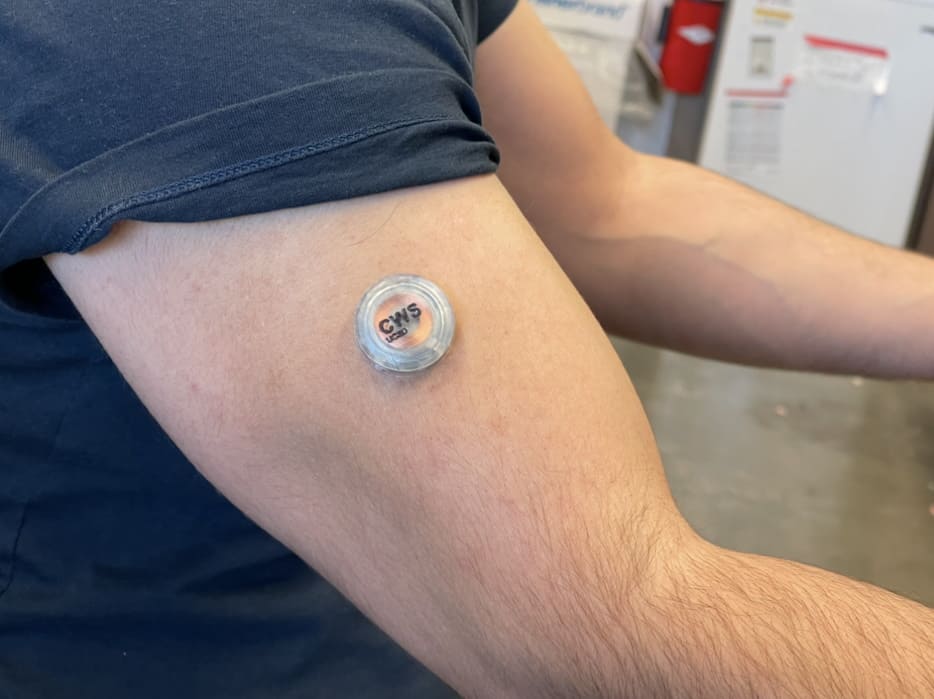
Painless monitoring: The sensor can be worn on the upper arm while the wearer goes about their daily activities. (Courtesy: Laboratory for Nanobioelectronics/UC San Diego)
The sensor technology is based on micron-sized needles that penetrate a few hundred microns into the skin. The small size of such microneedle sensors enables them to be created in a variety of form-factors, such as epidermal patches, and painlessly fixed onto many different locations of the body.
The system, designed for functionality, compactness and low-power operation, consists of a coin-sized layered sensor patch made from two primary components: a disposable sensor (the microneedle array) and reusable electronics (powered by a 30-day rechargeable battery). This design keeps costs low and enables easy replacement of the disposable elements.
The microneedle tips pierce the skin to reach the epidermis, where they continuously and selectively gather molecular-level electrochemical signals from the wearer’s ISF. The signals are carried through the low-noise, reusable sensor’s electronics interface and are wirelessly transmitted to the wearer’s custom smartphone app for visualization and analysis.
Promising results
For the study, five volunteers performed an identical exercise protocol, consumed an identical meal and drank an equal amount of wine to test the sensor’s performance for single-event activities. Multi-event activities included performing low- to high-intensity exercise for 4 min, consuming an entire meal including a dessert, and drinking a glass of wine rapidly and then gradually.
After high-intensity exercise, ISF lactate levels monitored for each participant at 5 min intervals rose rapidly from the resting value, then declined gradually to the original base value. The calibrated ISF lactate levels closely tracked blood lactate measurements taken every 10 min.
Glucose measurements from the microneedle sensor were comparable with blood glucose reference measurements, with data closely reflecting the meal consumed. Of note, each participant had a unique base glucose level in terms of the rates of glucose uptake and glylcolysis. Interestingly, the tests revealed that one of the participants was at increased risk of developing diabetes.
The microneedle sensor produced an instantaneous response to alcohol consumption, which was comparable to data acquired from a breathalyser unit. The researchers report large inter-participant variability and recommend that future research should correlate the ISF data with venous, rather than breath, alcohol levels.
The value of continuous monitoring
Mercier and Wang point out the enormous potential value of this sensor. Lactate data can provide insight into the severity and duration of hyperlactatemia, an elevated blood lactate concentration, in critically ill patients. Lactate levels are also a reliable marker of septic shock, organ failure, trauma or acute inflammatory response syndrome. In an emergency department, continuous lactate sensing can help guide early resuscitation therapies and treatment. Such data may also help athletes reach their maximum body performance and reduce risk of injuries.
Glucose data can be used to monitor plasma glucose levels for diabetic patients, as well as to detect impaired glucose tolerance. Combined monitoring of alcohol and glucose can help diabetic patients from developing delayed hypoglycaemia following alcohol intake.
Monitoring lactate during exercise is also useful for people with diabetes. As physical activity influences the body’s ability to regulate glucose, lactate monitoring can help individualize insulin delivery. Lactate–glucose monitoring, meanwhile, can provide more comprehensive pre-diagnostic information regarding the risk of metabolic syndrome.
Next, the researchers plan to optimize the biosensing chemistry of the sensor system, to mitigate enzyme stability and biofouling issues, and extend wear beyond several hours to several days or even weeks. They also aim to incorporate advanced calibration algorithms into the electronics, integrate other sensors (such as thermal sensors) to compensate for any fluctuations that could affect signal accuracy, and expand the multiplexed sensing capability to additional analytes. The team also intend to conduct clinical trials with large populations to further compare ISF data with centralized laboratory tests.
“By filling the current gaps between research and commercialization, the current work presents a leap forward in the field and can accelerate the emergence of next-generation, patient-centred remote monitoring wearable sensors, thereby offering a pathway to transform digital healthcare as we currently know it,” the researchers conclude.
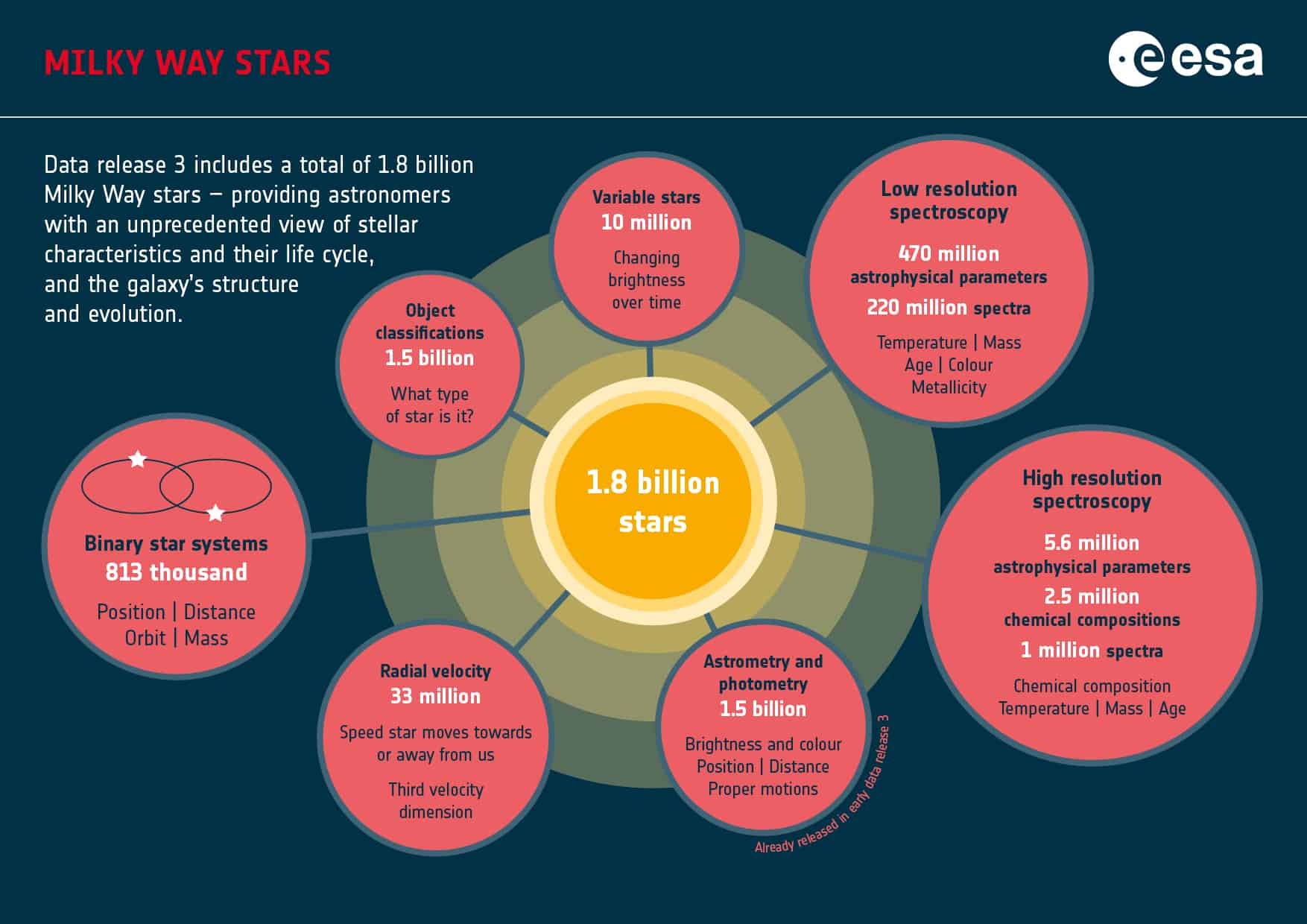
The European Space Agency (ESA) has released the latest data from its €450m Gaia mission. It contains information about billions of stars in our Milky Way, a catalogue of thousands of objects in our solar system such as asteroids and moons, as well as data on millions of galaxies and quasars in the universe.
Gaia’s aim is to create the most accurate and complete multi-dimensional map of the Milky Way. This will help astronomers to reconstruct the galaxy’s structure and past evolution over billions of years and to better understand the lifecycle of stars.
Developed by a consortium of 20 countries, Gaia was launched in December 2013 and started observations the following year from its position around 1.5 million kilometres from Earth in the opposite direction from the Sun, a point in space known as L2.
Gaia has two telescopes and the spacecraft rotates once every six hours so that they scan the sky, focusing light onto a huge CCD sensor with nearly a billion pixels – one of the largest ever flown in space.
The first data release, based on just over one year of observations, was published in 2016 and contained the distances and motions of two million stars. That was followed by a second release in 2018 that covered the period between July 2014 and May 2016. This included high-precision measurements of nearly 1.7 billion stars as well as measurements of asteroids within our solar system.
The data will open the floodgates for new discoveries
Josef Aschbacher
An initial release of Gaia’s third data set – which was published in December 2020 – contained high-precision measurements of nearly two billion stars. It allowed astronomers to trace the various populations of older and younger stars out towards the very edge of our galaxy – the so-called “galactic anticentre”.
Today, ESA scientists have released the third data set in its entirety, which includes everything that Gaia has been observing. The catalogue includes new information on the chemical compositions, stellar temperatures, colours, masses, ages, and the speed at which stars move towards or away from us as well as information on 800 000 binary stars, some 155 000 asteroids and millions of galaxies and quasars beyond the Milky Way.
The data release consists of about 10 terabytes of compressed data, making it one of the richest sets of astronomical data ever published.
Stars in their eyes
Gaia data release 3 in numbers. (courtesy: ESA/Gaia/DPAC)
One of the surprising findings from the latest Gaia data is that the probe can detect tsunami-like starquakes in hot, massive stars. These are tiny motions on the surface of a star that change their shape. Previously, Gaia had spotted oscillations that caused the stars to swell and shrink while keeping their spherical shape, but it has now seen so-called “nonradial oscillations” in thousands of stars that affect the whole shape of the star.
“Starquakes teach us a lot about stars, notably their internal workings. Gaia is opening a goldmine for ‘asteroseismology’ of massive stars,” says Conny Aerts of KU Leuven in Belgium, who is a member of the Gaia collaboration. She adds that Gaia should be able to detect many more starquakes in future.
Analogous to the 100,000 Genomes project in biology, we are now able to characterize hundreds of millions of stars
Nicholas Walton
The Gaia data also include the most comprehensive chemical map of the Milky Way ever made. The data show that stars that are closer to the centre and plane of our galaxy are richer in metals than stars at larger distances. Gaia has also detected over 200 candidate exoplanets, with more expected to be discovered by the time the next data set is released.
“It is a fantastic day for astronomy and for ESA,” noted ESA director general Josef Aschbacher at a press conference today. “The data will open the floodgates for new discoveries.” That view is backed up by Günther Hasinger, ESA’s director of science, who adds that Gaia “is turning the world of astronomy upside down”. He adds that the richness of data produce by Gaia is resulting in five papers based on its data being published every day, on average.
“This release represents a major step forward in our creation of a detailed census of our Milky Way, fully characterising a significant sample of its stellar constituents,” says Nicholas Walton from the Institute of Astronomy at the University of Cambridge, who is a member of the ESA Gaia science team “Analogous to the 100 000 Genomes project in biology, we are now able to characterize hundreds of millions of stars, which enables us to accurately determine their life cycles from birth to death, and to understand the incredible history and future of our Milky Way.”
A series of scientific papers describing the data will appear in a special issue of Astronomy & Astrophysics.
Opening a bottle of good champagne is one of life’s great delights and it is a process that also involves a lot of physics — from the nucleation of tiny bubbles in the fluid to the formation of a cloud of gas at the bottle opening. Now, Gérard Liger-Belair from Université de Reims Champagne-Ardenne and colleagues have studied the uncorking process in more detail, focussing on what happens in the few milliseconds after a bottle has been opened.
In 2019, research by the group showed, for the first time, the formation of shock waves in the fluid during cork popping. Building on that work, the team have now found that a succession of normal and oblique shock waves combine to form so-called “shock diamonds”. These are patterns of rings typically seen in rocket exhaust plumes. This results in the gas mixture escaping from the bottle at supersonic speeds.
“Our [research] unravels the unexpected and beautiful flow patterns that are hidden right under our nose each time a bottle of bubbly is uncorked,” says Liger-Belair. “Who could have imagined the complex and aesthetic phenomena hidden behind such a common situation experienced by any one of us?” At least it offers another excuse to open that bottle of vintage champagne.
Large cities, particularly those in the Americas, often have urban canyons of tall buildings that can have a significant effect on local wind conditions. But now researchers at France’s University of Lyon have shown that these canyons can affect how sonic booms propagate through urban areas. They have used fluid dynamics simulations to model how booms reflect from buildings and street surfaces.
“With these simulations, we were able to determine the ground pressure signals due to sonic boom propagation and reflection over the buildings and deduce noise levels,” said Lyon’s Didier Dragna. “We can thus predict the noise annoyance felt by the population due to sonic booms.”
While urban canyons did not appear to make sonic booms louder, the simulations suggested that the events lasted for longer times because of resonant effects caused by buildings. The team reports its results in The Journal of the Acoustical Society of America.
Pole reversal
Finally, if you are one to worry that the Earth’s magnetic poles are about to reverse you can now rest easy. Andreas Nilsson at Lund University in Sweden and colleagues have studied an anomaly in Earth’s magnetic field in the South Atlantic Ocean, where the field strength is decreasing rapidly. Some scientists had suggested that this is a harbinger of a pole reversal – something that happens about every 400,000 years.
But Nilsson and team have looked at magnetic field data dating back 9000 years and found that events like the current South Atlantic anomaly are more common than previously thought. The researchers reckon the anomaly will fizzle out in a few hundred years – and a pole reversal is not imminent.
A bound state in the continuum (BIC) is a symmetry-protected topological state that, despite lying in the continuum radiation spectrum of a system, is unable to radiate in the far field. When supported by a photonic crystal, it is characterized by a supposedly infinite lifetime and a remarkable ability to enhance non-linear effects.
Now, researchers in Italy, the US and France have utilized these properties to demonstrate polariton Bose-Einstein condensation in a planar waveguide in which semiconductor quantum wells are strongly coupled to a BIC. The particularly low excitation threshold of the system shows promise for creating easily-integrable hybrid light-matter optical circuits and quantum information processing systems. The full study is described in Nature.
Hybridization of light and matter
Due to their bosonic nature, exciton-polaritons (quasiparticles made from photons coupled to electron-hole pairs) can undergo a Bose-Einstein-like condensation, in which a macroscopic number of polaritons condense into the lowest energy quantum state. Light emitted from such systems mimics laser emission and polariton condensates are therefore sometimes called “polariton lasers”. These systems also have important applications in quantum computing and all-optical devices.
Extremely high particle densities are required to create such condensates, so they are generally realized in high-quality optical microcavities with long photon confinement times. However, these microcavities require complicated fabrication processes and cannot be easily integrated into electronic devices. As an alternative to microcavities, planar waveguides have recently been shown to support increased polariton confinement and easy tuning of polariton-polariton interactions, as well as simpler integration.
In this study, Vincenzo Ardizzone, a post-doctoral researcher at CNR-Nanotec in Lecce, and colleagues designed and built a planar waveguide that supported a BIC with zero intrinsic linewidth (i.e. an infinite lifetime). The waveguide was a layered structure consisting of 12 gallium arsenide quantum-well layers separated by aluminium gallium arsenide barriers, with a 1D grating etched into the top five layers. The grating lattice constant was chosen such that the BIC state was resonant with the excitonic transition of the quantum wells. This facilitated strong coupling between the light and matter, forming exciton-polaritons that, due to the presence of the BIC, are strongly localized within the grating and possess infinitely narrow linewidth.
Lowering the threshold
Using high energy laser pulses to excite the waveguide, the researchers then demonstrated polariton Bose-Einstein condensation. This was evidenced by the appearance of a double-peaked emission at the edges of the BIC in momentum space; a non-linear increase in emission intensity; a narrowing of the linewidth- and a blueshift — with the latter three effects being fingerprints of polariton condensation.
The laser excitation threshold of 3 µJ/cm2 is significantly lower than previously reported for both photon and polariton lasers. Notably, it has previously been shown that polariton condensation was not possible in a similar structure that did not contain a BIC, demonstrating that it is necessary to facilitate a sufficient build-up of the polariton population.
Topological thinking
The researchers also demonstrated that the topological properties of the BIC were exhibited by the polaritons both below and above the condensation excitation threshold. By measuring the polarization of the emission, they demonstrated the existence of polarization vortices – which relate to a system’s topological charge – in both regimes. This is highly significant as it shows that it is possible to transfer the topological charge of a BIC to a Bose-Einstein condensate, providing an alternative platform for studies on topological systems.
California-based start-up Bleximo is betting that its application-specific approach to quantum computing is more efficient – indeed transformative – in addressing highly complex practical problems across a range of industries – from global logistics and aerospace to pharmaceuticals, advanced materials, and energy production and distribution. The company, which is “powering innovation through quantum computing”, has been developing full-stack, superconducting application-specific computing systems since 2018, working with high-profile R&D partners such as the University of California Berkeley and Lawrence Berkeley National Laboratory as well as other companies in the quantum computing ecosystem.
Strategic differentiation comes with Bleximo’s co-design methodology, where coding and hardware design follow each other, with the focus on boosting a particular algorithm’s execution speed. The underlying holistic approach to product development, covering everything from the fundamental physics of superconductors to the software architecture of a deployed quantum computing system, integrates algorithms, software and hardware into one platform.
That unified development strategy is similar for all use cases, though each computing system may require changes and enhancements specific to a given application. As such, it is fundamental to Bleximo’s business model to collaborate closely with customers and R&D partners – whether government agencies, national laboratories, academic institutions or other technology companies – to ensure a granular understanding of their respective workflow pain-points and downstream computing requirements.
Co-design and collaboration
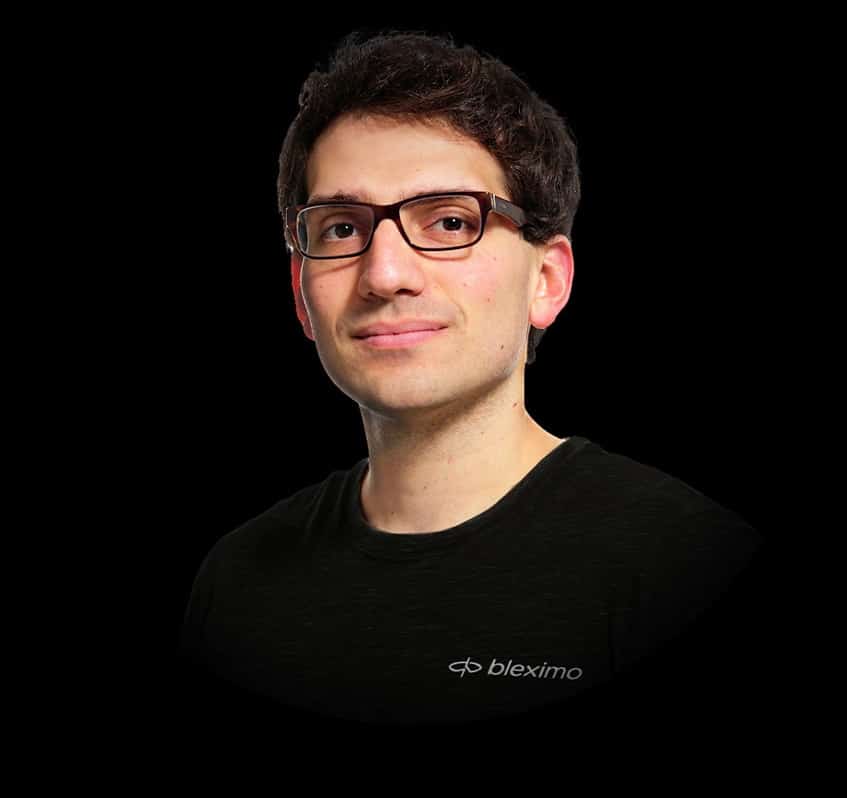
Fabio Sanches is head of quantum engineering at Bleximo, working with customers to develop targeted quantum algorithms that address their difficult computational problems while building a software framework for algorithm and hardware co-design. The raison d’être for application-specific quantum computers, says Sanches, is to address a challenge the customer faces from a high-performance computing standpoint. “The customer will typically have a problem that takes a lot of computing power and a considerable amount of time – even with access to leading-edge computing resources,” he explains. “These problems are the best candidates for studying the efficacy and upside of quantum computing solutions.”
Fabio Sanches: “We take the physics of the entire stack into account when engineering quantum computing systems.” (Courtesy: Bleximo)
Starting with a specific class of practical problems – for example, supply-chain optimization or the pricing of financial products – the task for Sanches and colleagues is to understand what quantum algorithms make sense to tackle the problem in question. The end-game of shortened execution times and faster operation hinges on the tight interworking between Bleximo’s algorithms team and the hardware engineering function.
“This is the back-and-forth where we add value for our customers,” notes Sanches. “Ultimately, because quantum computers are best suited for certain problems, we think it makes sense to build systems wholly tailored to those tasks by co-developing quantum algorithms, quantum processors and supporting hardware that are tuned for these specific applications.”
Bringing down the cost and complexity
The application-specific approach, in turn, means that Bleximo is able to eliminate a lot of the hardware overhead associated with quantum computing systems, driving down the upfront investments. “Our mantra is lower complexity translates into higher reliability and lower capital and operational costs,” explains Chiara Pelletti, the company’s director of hardware engineering. At the system sharp-end, this means qubits and couplers – as well as processor components, microwave controllers and other hardware building blocks – are only added on a “must-have” rather than “nice-to-have” basis.
“The objective is to figure out the best architecture for an application-specific quantum processor – how many qubits of different types are required and how they connect to each other – and to engineer the hardware to ensure it can run specific gate operations efficiently,” adds Pelletti. Put another way: design the simplest architecture possible in hardware to provide the necessary capabilities for the software, while also building a platform with the potential to scale to a larger number of qubits over time.
Chiara Pelletti: “Lower complexity translates into higher reliability and lower capital and operational costs.” (Courtesy: Bleximo)
To streamline the design of those application-specific superconducting quantum processors, Pelletti and her team have developed a software tool for quantum chip optimization – in effect, automated chip layout for the optimal placement of all processor components. “The workflow includes fine-tuning increasingly larger processor areas with the goal of meeting specifications and improving the coherence time, which is the time a qubit can basically ‘stay alive’,” she adds. “Engineering couplings to speed up gate and readout processes while reducing noise levels allows us to increase the number of operations that can be executed while the processor remains coherent.”
Zooming in, the core technical drivers for Pelletti and her team are eliminating any interference that might affect the qubit operation; engineering the platform to reduce classical cross-talk; and introducing ad-hoc filtering devices to the chip itself to protect the qubits from decoherence. Careful choices around packaging technology are also essential to maximize coherence, while a data-driven approach to chip design underpins everything, including experimental verification (and iteration) of key performance metrics and their dependence on microfabrication processes, chip packaging, cryogenic operating conditions and the control electronics.
It’s all about the people
Technology differentiators notwithstanding, the Bleximo value proposition is all about its people – or more precisely, the alignment of the team’s collective domain knowledge and expertise versus the fast-moving requirements of the nascent quantum computing industry. “On the hardware and software side, our strength lies in having a talented mix of engineers – focused on operational execution and issues like scalability, manufacturability and reproducibility – working alongside scientists geared up for ground-breaking applied research,” explains Sanches.
Bleximo, for its part, is also unique in having a team of mechanical engineers with specialist know-how in cryogenic science and technology – specifically, the dilution refrigerator subsystems and specialized wiring needed to achieve ultralow-temperature operation of the superconducting quantum processors. “We can take the physics of the whole quantum computing system into account because of our in-house expertise across a range of disciplines,” adds Sanches. “In this way, we’re creating solutions to address the fundamental problems with this emerging technology – solutions that will ultimately take computing power into uncharted territory.”
More broadly, argues Pelletti, quantum computing represents a compelling career pathway for talented graduate and postgraduate students in the physical sciences and engineering, especially those with an interest in continuous problem-solving at the interface between cutting-edge physics and technology development. “Joining a start-up is a great way to gain exposure to all the core disciplines in the field – processor design, testing, cryogenics and algorithm development – so you can figure out where your preference lies,” she concludes.
Making quantum computers practical
Alexei Marchenkov: “We will integrate quantum computing into the customer’s day-to-day operations.” (Courtesy: Bleximo)
Alexei Marchenkov is founder and chief executive officer of Bleximo. Here he gives Physics World the headline take on the start-up’s commercial and technology roadmap.
What sorts of customers and R&D partners are you looking to engage?
Bleximo’s focus on application-specific systems gives us a unique advantage, especially with organizations that already have an established quantum programme. We’re keen to work with teams that have a nuanced understanding of what their computational problems are, also what they are targeting in terms of a quantum computing solution to a given problem or pain-point in their workflow.
In this scenario, we can sit down immediately with the customer to start designing a quantum computing system to meet their requirements, working closely with them all the way through deployment of the quantum modules. From our perspective, a pharmaceutical scientist, for example, whose main role is to design new blockbuster drugs, doesn’t need to know how to program a quantum computer. Rather we will integrate quantum computing into their day-to-day operations.
How are you leveraging the emerging industry ecosystem in quantum science and technology?
Alongside our existing customer and partner collaborations, one planned initiative is to bring more academic and government researchers as well as quantum start-ups into the mix. We currently have several ongoing projects with research institutions and companies developing products for quantum computing, sensing and communications. These partnerships accelerate our own platform development while generating revenue.
What does success look like in the near term and over the medium term?
Right now, the priority for Bleximo is continuous product improvement and technology innovation, developing the architectures, algorithms and compilation methods that will enhance the performance of our superconducting quantum processors.
Over the next 12 months, we’ll deploy processors targeting several specific algorithms – at the level of eight to 16 qubits – and initiate beta-testing with a network of strategic partners. The context here is that connectivity, fidelity and coherence times are frequently a bottleneck to developers, much more than a large number of qubits. Our partners will be able to run their software on our backend and compare its performance to that on other backends.
Three years down the line, we plan to scale up to 1000-qubit processors. With this in mind, we’re working on a hybrid processor architecture that combines superconducting and photonic technologies that we believe will unlock much cheaper and more reliable control of superconducting qubits on a high-density chip – up to 1000 qubits on a 6 inch wafer.
If we want more people to become interested in physics, sending out the wrong signals about the discipline on social media is the surest way to fail. In this episode of the Physics World Weekly podcast, Georgina Phillips of the Institute of Physics (IOP) explains the importance of social media in reaching groups of people who are under-represented in physics. She also talks about the IOP’s Limit Less campaign, which aims “to support young people to change the world and fulfil their potential by doing physics”.
Also in this episode is Sara Fry, who is head of safety health environment at Atlas Copco – Vacuum Technique, which owns the Edwards vacuum instrumentation brand. She explains why the company has set science-based targets to reduce its greenhouse gas emissions that are in line with the goals of the 2015 Paris Agreement on Climate Change – and how the firm is meeting those goals. She also explains how the company is helping its customers to reduce their emissions.
The history of modern science is full of talented women whose research achievements have in some way been overlooked. One obvious example is Rosalind Franklin, whose meticulous X-ray analysis of DNA strands has generally been sidelined in the story of Francis Crick’s and James Watson’s elucidation of the molecule’s structure. Another is Jocelyn Bell Burnell, who many people believe should have shared the 1974 Nobel Prize for Physics for her observations and insights that revealed the existence of pulsars.
Even today, female scientists are less likely to be recognized for their contributions than their male counterparts. While more women are choosing to study science at undergraduate level, a recent analysis by Lokman Meho at the American University of Beirut revealed that worldwide only 30% of professors in science and technology are women, and that between 2016 and 2020 only 19% of the most prestigious research prizes were awarded to female scientists. Such imbalances at the top of the field are important, since they deprive aspiring young women of the role models that can help them believe they can build a successful career in science.
It is important to recognize the huge amount of work done by women in scientific research.
Ingrid Milošev, Jožef Stefan Institute, Slovenia
Providing greater recognition and visibility for the contributions of women was one key motivation for a recent focus issue of the Electrochemical Society’s flagship publication, the Journal of The Electrochemical Society (JES). “It is important to recognize the huge amount of work done by women in scientific research,” says Ingrid Milošev, head of physical and organic chemistry at the Jožef Stefan Institute in Slovenia and one of the issue’s guest editors. “The role of women in some leading positions has been understated, and we need to show that we are perfectly capable of taking on responsibilities that we should have taken already.”
The idea for the “Women in Electrochemistry” focus issue emerged from ongoing discussions about diversity, equality and inclusion (DEI) at the Electrochemical Society (ECS). “The ECS has been committed to diversity for many years, and in 2019 it formalized its DEI statement,” says Alice Suroviec, an associate editor of the JES and Dean of the School of Mathematics and Natural Science at Berry College in the US. “We thought the focus issue would be a good way to launch it out into the community.”
Conversations about diversity often feel like a US story, and we tried very intentionally to include people from all parts of the world.
Alice Suroviec, Berry College, US
The focus issue has been driven by a 50-strong team of female guest editors, who together represent a broad scope of research fields as well as different geographic locations. “Conversations about diversity often feel like a US story, and we tried very intentionally to include people from all parts of the world,” says Suroviec. “We also wanted to highlight the diversity issues that can arise in industry as well as in the academic sector.”
Those guest editors have played a crucial role in the success of the issue, reaching out to female colleagues with similar research interests and backgrounds. The response has been impressive, with more than 160 papers published to date. “There was a real energy and momentum behind this focus issue,” says Janine Mauzeroll, a technical editor for JES and a lead researcher in organic and bioelectrochemistry at McGill University in Canada. “It was clear that the guest editors were working hard to reach out to their networks, and positioning the issue to focus on the science has generated a really positive response.”
Positioning the issue to focus on the science has generated a really positive response.
Janine Mauzeroll, McGill University, Canada
Indeed, “science first” is the mantra followed by many women who decide to pursue a research career. Donna Strickland, who in 2018 was only the third woman to win the Nobel prize for physics, was taken aback at the amount of media attention that focused on her gender rather than her scientific achievements. “I don’t see myself as a woman in science. I see myself as a scientist,” she said in an interview with the Guardian newspaper. “I thought the big story would be the science.”
In that spirit, most of the articles in the focus issue are scientific papers reporting new research results, with the only stipulation being that the primary author or co-author had to be a woman. “What matters is the science, and we want to be evaluated based on the quality of our research,” says Mauzeroll. “In the process we might help the policy issue, which would be wonderful, but we are scientists, not policymakers.”
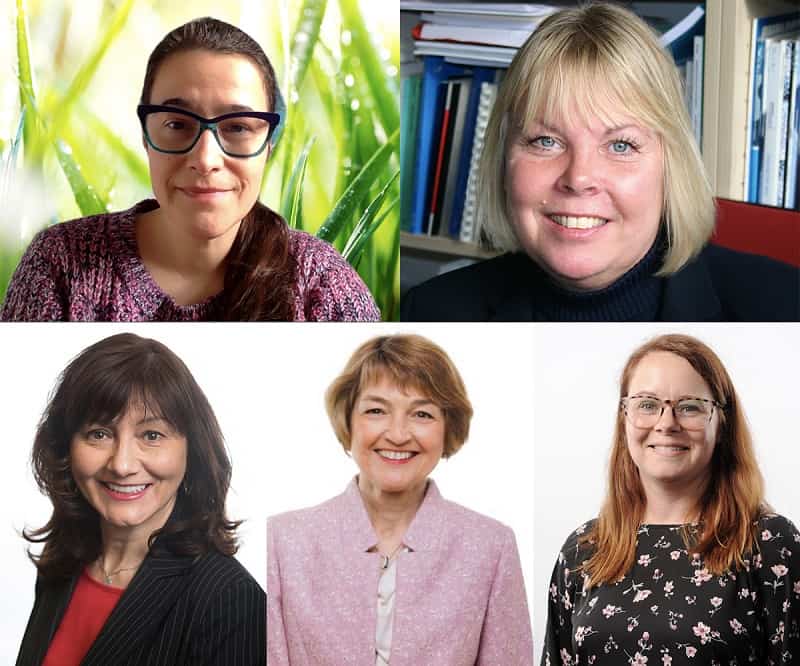
Taking charge: Female editors of The Journal of the Electrochemical Society have worked alongside a team of guest editors to produce a focus issue that highlights the scientific contributions of women in electrochemistry. Clockwise from top left: Janine Mauzeroll, Sanna Virtanen, Alice Suroviec, Ingrid Milošev, Olga Marina
Importantly, the technical merit of each article was assessed in exactly the same way as any other submission to the journal. “Scientific rigour is the most important factor for publishing in JES,” insists Olga Marina, one the journal’s associate editors and chief scientist for energy processes and materials at Pacific Northwest National Laboratory. Technical editor Sannakaisa Virtanen, professor for surface science and corrosion at the Friedrich-Alexander-University of Erlangen-Nürnberg in Germany, agrees: “It’s really important that we used the same criteria for peer review. We don’t want to have this feeling that we only get something because we are women.”
Scientific rigour is the most important factor for publishing in JES.
Olga Marina, Pacific Northwest National Laboratory
Contributions cover the full range of electrochemical research, ranging from batteries and energy storage through to organic and bioelectrochemistry. Meanwhile, some of the articles offer a more personal perspective on the challenges faced by female electrochemists in different workplaces and geographic locations. “The issue has a strong backbone of electrochemistry, but it also has personal stories that people can dive into,” says Suroviec. “Readers have enjoyed finding out about the experiences of other women in the field and in different parts of the world, and it has offered some interesting insights for people who aren’t women in science.”
Changing dynamics
Most of the guest editors remember the sensation of being the only woman in a research lab or at a scientific conference, but over the last couple of decades they have seen the balance shift as more female students choose to study science and engineering subjects at undergraduate level. “In my experience electrochemistry seems to be one of more open and welcoming scientific disciplines,” says Suroviec. “Part of the reason for that I think it that it is multidisciplinary, and you can come at it from many different avenues. It’s a team science.”
It’s really important that we used the same criteria for peer review. We don’t want to have this feeling that we only get something because we are women.
Sannakaisa Virtanen, Friedrich-Alexander-University of Erlangen-Nürnberg, Germany
As with many other research fields, however, the proportion of women who progress to senior positions remains troublingly low. The so-called “leaky pipeline” is a well-documented phenomenon in which women progressively drop out of the scientific system, resulting in fewer female scientists with the power and influence to bring about change that will benefit younger generations.
That gradual attrition is particularly evident in disciplines where there is strong female representation in the student cohort: in chemistry, for example, more than half of all undergraduate degrees in the US are now awarded to women, but data collected for the 2016/17 academic year by the Open Chemistry Collaborative in Diversity Equity initiative showed that female chemists accounted for only 20% of faculty positions and less than 16% of full professors.
Many different factors affect each personal decision to leave the scientific profession, but one obvious reason is the opposing forces of work and family. “No matter how much we love the science, it’s really challenging for any young researcher to secure a position, work abroad, apply for projects, and publish the best papers,” points out Milošev. “It’s very difficult to establish a relationship or start a family at that time, and many women choose to take a stable job that will make their life less complicated.”
Alleviating the pressures on young scientists would benefit both men and women alike, but surveys of students and academics suggest that female scientists are more likely to value a reasonable work–life balance. Plenty of evidence also shows that women tend to shoulder more responsibility for childcare and other domestic duties, with the Covid pandemic highlighting once again that it was generally female partners who were expected to compromise on their working life to look after children and supervise their home learning.
“Women will not want to become an electrochemist if they feel that 24 hours of their day must be dedicated to this job,” says Mauzeroll. “For students to choose this career path they have to be able to see themselves living this life.”
Entrenched attitudes and dynamics in the workplace also play their part, even if overt discrimination is largely – although not entirely – a thing of the past. Small, subtle and often unknowing biases can accumulate to make women feel undervalued and isolated in male-dominated environments, with surveys of female scientists and engineers citing issues such as double standards, uneven distribution of funding and resources, and a constant struggle to have their voices heard.
One common complaint is that ideas presented by women can often be ignored, particularly when they are in junior positions, while the same suggestion from a male colleague is more likely to be noticed and taken onboard.
Improving the opportunities and prospects for young female scientists is a strong motivation for many of the women who were involved in the focus issue. According to Mauzeroll, collecting together the scientific output of female electrochemists offers a powerful message to students who are making decisions about their future career. “It’s important to highlight the great work that’s being done by women in electrochemistry,” she says. “It’s a way for people to recognize themselves and think that they could pursue a career in the field.”
Diversity matters
While this issue has focused on women in electrochemistry, both the ECS and the JES editors are mindful that other minorities in science are disadvantaged by many of the same issues that affect women. “In the US there is a strong push against gender bias, but within the ECS there is a much broader discussion around DEI,” comments Mauzeroll. “In the future we hope to launch other focus issues that highlight the contribution and experiences of other underrepresented groups in the field.” Indeed, the latest issue of the society’s Interface magazine, guest edited by Suroviec, offers a more general perspective on the importance of diversity in science.
Addressing issues around diversity is particularly important in a discipline like electrochemistry, where talented scientists and engineers are in high demand to solve some of the most urgent challenges facing our planet. “The job market is really tight at the moment, and we don’t have enough PhD students or post-docs,” says Marina. “In the imminent hydrogen economy, electrochemistry will play a significant role in hydrogen production. For anyone competent and creative, the opportunities are there.”
Mauzeroll agrees that electrochemistry needs to attract more young people into the field: “It is the students who will come up with the big new ideas that will push electrochemistry forward. Hopefully this issue will make them feel like it’s really cool, really important, and they will choose electrochemistry for their future career.”
More generally, organizations like the ECS can play an important role in helping young women to feel like they belong in the field. “The ECS makes it easy for young people to become part of the community,” says Virtanen. “Even when I was a PhD student I was asked if I wanted to get involved in the activities of the Society. It helps when you feel that more established members of your professional community are interested in your opinions.”
The society’s twice-yearly meetings also create a strong sense of community, offering a valuable source of support and advice to women throughout their scientific careers. “The ECS provides access to a really strong network of people,” says Suroviec. “You can get an outside perspective on whatever your issue might be, ask other people about your experiences, and get some feedback to help tackle any problems. The opportunity to talk candidly is really important to give women confidence that their issue is real and that it can be solved.”
Milošev, as a guest editor from outside North America, says that being involved with the focus issue has brought her closer to her female colleagues in other parts of the world. “I love the connections we have made through this focus issue, and it really makes me feel part of a community,” she says. “It is really useful to build this network of contacts with the authors and the reviewers. We are connected, and we all depend on each other.”
Scientists in China have released a new geologic map of the Moon that is the most detailed yet. Created by a team led by the Institute of Geochemistry, Chinese Academy of Sciences, the image was made using data from China’s suite of Chang’e lunar exploration missions as well as information from other international organizations.
The map is to a scale of 1:2500000 and includes 12,341 impact craters, 81 impact basins, 17 rock types and 14 types of structures.
The colours on the image represent different periods on the lunar geologic timescale and the map also includes the locations of the Chang’e and Apollo landing sites.
When a CT scan highlights a suspicious looking nodule, the next step is to perform a biopsy to rule out malignancy. Current medical technologies, however, cannot provide real-time diagnostic information during biopsy. Instead, samples are sent away for histopathologic analysis, which can take several days. And some nodules may be too small to remove for further testing, leading to uncertainty and patient anxiety, as well as increased costs for further procedures and radiographic surveillance.
The ability to perform real-time in vivo detection of cancer cells could improve the diagnostic accuracy of biopsy-based diagnosis. Researchers at the Abramson Cancer Center at the University of Pennsylvania are working to develop such a technique. By combining an imaging agent that lights up cancer cells with a high-resolution confocal laser endomicroscopy (CLE) system, they have demonstrated real-time detection of lung cancer at the single cell level during biopsy. They describe their findings in Nature Communications.
“The emerging ability to light up a single cell that may be invisible to the eye provides great opportunity to give patients the best chance at an early diagnosis before cancer spreads,” explains first author Gregory Kennedy in a press statement. “This unique approach has the potential to improve the information we get from biopsies and it may increase our chances of identifying cancer early.”
Combined approach
The new technology platform brings together a needle-based CLE system, modified to detect near-infrared (NIR) optical signals, with pafolacianine, a cancer-targeting NIR fluorescent tracer. In their latest study, Kennedy and colleagues evaluated whether the technique, known as NIR-nCLE, could identify malignant cells during biopsy of lung nodules (the most common incidental nodule detected in the US).
Following evaluation of three ultrathin probe geometries, the Penn team employed a probe containing 10,000 optical fibre bundles with an imaging depth of 55 µm, a lateral resolution of 3.5 µm and a 325 µm field-of-view. The probe was used with a CellVizio CLE system that generates 785 nm excitation light.
Tests on human cancer cells cultured with normal fibroblast cells revealed that NIR-nCLE could identify a single cancer cell among the normal cells when co-cultured at a ratio of up to 1:1000. The team note that this is an important finding as tumours contain significant amounts of non-malignant cells and extracellular components.
To determine whether NIR-nCLE can differentiate tumour cells from normal lung tissue during biopsy, the researchers developed animal models of transthoracic and bronchoscopic needle biopsies. In the first model, they performed CT-guided NIR-nCLE and biopsy of tumour and normal lung tissue of tumour-bearing mice, 24 h after pafolacianine administration. In the bronchoscopic model, the researchers implanted caprine lungs with tumours from mice that had received pafolacianine prior to resection, and then performed NIR-nCLE and biopsies via a bronchoscope.
In both models, NIR-nCLE fluorescence correlated with malignancy as assessed by histological staining and immunofluorescence microscopy. To evaluate the diagnostic performance of NIR-nCLE, five non-expert blinded reviewers examined all of the imaging sequences (22 from malignant and 22 from non-malignant tissue biopsies). The reviewers independently diagnosed each NIR-nCLE sequence based on the presence of fluorescent cells, categorizing the images with an overall sensitivity of 100% and specificity of 92%. Importantly, there were no false-negative diagnoses and inter-observer agreement was excellent.
Tumour detection: CT scan of a patient in the Penn Medicine-led study showing a lung nodule circled in red. (Courtesy: Penn Medicine)
Finally, to assess the technique’s performance in human lung tumours, the team conducted NIR-nCLE-guided biopsy of tumour and normal lung tissue specimens from five patients undergoing lung cancer surgery. All nodules were ground glass opacities (GGOs), which have a soft-tissue architecture and are particularly challenging to diagnose. NIR-nCLE identified fluorescent cancer cells within the lesion in all five GGOs, achieving high diagnostic accuracy when compared with histopathologic analysis.
Five non-expert reviewers could distinguish NIR-nCLE imaging sequences within the GGOs (10 specimens) from those in normal lung (10 specimens) with a sensitivity of 100%, a specificity of 92% and an overall diagnostic accuracy of 96%. Again, there were no false-negative diagnoses and excellent intra-observer agreement.
The researchers note that this proof-of-concept study analysed pulmonary nodules as a test case, but hope that the approach can also be used for earlier diagnosis of other cancer types.
“This research shines a light on the possibility of being able to more accurately identify and diagnose lesions that could be cancerous, even those that are very small and may evade our typical diagnostic capabilities,” says corresponding author Sunil Singhal. “The quest to diagnose lung cancer in earlier stages is a centrepiece of our research, since early detection is so closely connected to chances for successful treatment.”