Simulations shed light on interactions that help spiders fly

Simulations using a computer graphics algorithm have given fresh insight into the interactions between the silk threads of a spider and the atmosphere. This novel numerical model, focusing on multiple silk threads, helps explain how spiders can exploit the positive electric potential of Earth’s atmosphere to fly and disperse.

Even though they do not have wings, some spiders can fly. They emit fine threads of silk and float through the air attached to them, a process known as ballooning. Scientists have been writing about this unusual dispersal behaviour since at least the 1600s – Charles Darwin even observed hundreds of ballooning spiders landing on the HMS Beagle when it was 60 miles offshore – but no one is quite sure how it works.

There are two competing theories to explain spider ballooning. The first suggests that rising warm air, created by thermal gradients as the sun heats the Earth’s surface, drags on the light silk threads and pulls the spider upwards. The other proposes that negative electrostatic charges on the spider’s silk threads interact with the positive electric potential of Earth’s atmosphere. This creates an electrostatic buoyancy that lifts the threads and with them the spider – if the conditions are right.

In this latest study – described in Physical Review E Charbel Habchi from Notre Dame University-Louaize in Lebanon and M Khalid Jawed of the University of California, Los Angeles, develop a new numerical model that they claim provides evidence for the role of electrostatic forces in ballooning. Previous simulations attempting to explore ballooning have modelled spiders with single silk threads. But spiders often balloon with multiple threads. This could alter the ballooning process as electrostatic repelling forces between the threads may affect their shape and distribution, impacting the way they interact with and move through the air.

To address these concerns, Habchi and Jawed used a computer graphics algorithm known as “discrete elastic rods” to model the ballooning of spiders due to electrostatic forces. Their 3D numerical simulation models multiple threads on a single spider and accounts for viscous forces, the weight and dimensions of the threads and spider, electrostatic lift and repelling forces, and the elastic bending force of the threads.

Habchi tells Physics World that at the start of the simulation the spider is on the ground and the silk threads are oriented vertically. As the spider lifts, the shapes of the silk threads change with time under the influence of gravity, the electrostatic interaction between the Earth’s electric field and the charge on the threads, and the hydrodynamic force exerted on the threads by air. “In addition, we highlight the importance of the Coulomb repelling forces in avoiding entanglement – the silks repel each other and, therefore, do not get tangled up,” Habchi explains.

These different interactions – particularly the repelling forces – cause the threads to bend and spread out, together forming a 3D, upside-down cone-like shape. The drag created by this conical shape acts against the electrostatic lifting force and determine the spider’s terminal upward velocity. The modelling showed that terminal ballooning velocity decreases linearly with the lift force.

To account for different ways that electric charge could be distributed on a silk spider thread, the researchers ran simulations with a uniform charge distribution along the threads, and with the electric charge concentrated at the thread tips. The results were similar for both.

“We show that small spiders can use the Earth’s electric field to balloon without the need of uplift thermal currents or wind,” says Habchi. “However, large spiders cannot balloon solely due to electric charge and need airflow or thermal currents.” He adds that more observational data from spiders in flight, while measuring the atmospheric charge, wind and other environmental factors, would be helpful to understand this process.

A better understanding of spider blooming could also have biomimetic applications. “The understanding of spider ballooning would be beneficial for the design of ballooning sensors based on a similar concept for the exploration of the Earth’s atmospheric properties,” Habchi tells Physics World.

Planets in Alpha Centauri could be carbon-rich – if they exist

Planets orbiting the Sun-like stars of Alpha Centauri could be carbon-rich worlds with diamonds and graphite littered across their surfaces, say astronomers. Although the existence of such planets has not been confirmed, the team argue that modelling their hypothetical mineralogy, interior structure and atmosphere could guide future observations by shaping our understanding of what is possible.

Alpha Centauri is a multiple-star system just 4.3 light-years away that features two Sun-like stars, designated A and B, plus the red dwarf Proxima Centauri. So far, astronomers have discovered one confirmed exoplanet (and two strong candidates) orbiting Proxima, but a 2012 “discovery” of a planet orbiting Centauri B was later disproven. A candidate planet for Centauri A is currently awaiting confirmation after its discovery in 2021.

Despite the lack of confirmed planets around Alpha Centauri A or B, a team led by Haiyang Wang of ETH Zürich, Switzerland and the Swiss National Centre for Competence in Research PlanetS set themselves the challenge of modelling what any planets orbiting the two stars might be like. “The model is the first of its kind and has proven to be useful for estimating the bulk elemental compositions of habitable-zone terrestrial planets orbiting Sun-like stars,” Wang tells Physics World.

Carbon world

Developed in 2019 by Wang and colleagues including Charley Lineweaver of the Australian National University, the new model allows astronomers to predict the chemical composition and mineralogy – and consequently the geology and atmospheric gases – of a planet. The “devolitization model”, as it is known, produces estimates for the abundance of volatile gases, such as water, carbon dioxide and nitrogen, that are driven out of planet-forming material by the heat from a nearby proto-star.

Within our solar system, for example, the carbon-to-oxygen (C/O) ratio is 0.5, meaning that there are twice as many oxygen atoms for every atom of carbon. Much of the carbon therefore ends up bonded to oxygen. A large amount of the remaining oxygen, meanwhile, bonds with elements such as silicon and iron to form rocks.

When Wang and colleagues applied the devolitization model to Alpha Centauri A and B, the C/O ratio came out higher, at 0.65. Any planets in this system would therefore be enriched with more carbon-bearing minerals, although how much carbon would exist on their surfaces remains unclear. Previous studies of carbon-rich planets have invoked a C/O ratio of 0.8, and at this level, the team’s chemical modelling indicates that “a large amount of carbon would be left over to form carbides, graphite and – with lots of pressure in the interior – diamonds,” Lineweaver says.

For a ratio of 0.65, however, the amount of surface carbon is less certain. “Any extra carbon may sink into the planet’s core,” Wang notes. To answer the question more fully, astronomers would need to conduct a spectroscopic analysis of the Alpha Centauri system at a precision more than twice the level of current instruments.

Stagnant planets

Too much carbon could be bad news for the habitability of any Alpha Centauri planets, Wang says. “Such a planet would be more geologically dead due to diamond’s increased thermal conductivity and viscosity,” he explains. A planetary mantle that conducts heat rather than undergoing convection would transfer heat from the planet’s core to the surface more slowly, allowing the crust to solidify. When coupled with a measured 25% reduction in heat-producing radioisotopes compared to our solar system, this could lead to planets with so-called “stagnant lids”, where a lack of convection in the mantle produces a solid crust and no plate tectonics.

The absence of active volcanoes belching carbon dioxide into the atmosphere would, in turn, severely reduce the planet’s active carbon cycle. This cycle acts as the planet’s long-term thermostat, removing carbon dioxide – a greenhouse gas – from the atmosphere before it overheats and putting it back in to prevent the planet freezing over for too long. Without an active carbon cycle, carbon-rich planets around Alpha Centauri A or B could suffer from a Venus-style runaway greenhouse effect or completely freeze over, depending upon their distance from their star.

“It’s my personal take, [but] the chance of finding an Earth-like planet around Alpha Centauri A or B is less than that of finding an analogue of either Venus or Mars,” Wang says. The model predicts that a hypothetical Alpha Centauri planet would begin life with an atmosphere composed of carbon dioxide, methane and water – similar to Earth’s atmosphere between 4 and 2.5 billion years ago – before evolving to become dry and dominated by carbon dioxide.

Real-life planetary laboratories

Given that no exoplanets have been confirmed around Alpha Centauri A or B, Debra Fischer, of Yale University, US, is cautious about the new results, which appear in The Astrophysical Journal. “Theory leading observations has never worked out well in the field of exoplanets,” says Fischer, who was not involved in the study. “This may be one evolutionary path for putative planets that have not even been detected yet.”

Meanwhile, Nikku Madhusudhan of the University of Cambridge, UK, points out that large uncertainties in the C/O ratio of the Alpha Centauri system make it consistent with a Sun-like composition as well as the higher-carbon version discussed in the ETH study. However, he adds that “the results are interesting, nevertheless”.

Lineweaver agrees that some of the model’s conclusions should be treated with caution. “I am less confident [than Wang] in the connection between our modelling and predicting the convective status of the rocky planets in the Alpha Centauri system,” he says. However, on the question of exoplanets existing in the Alpha Centauri system, Lineweaver says he is “more confident than most astronomers” despite questions about how frequently planets form in the dynamic gravitational fields of a binary star system. If the candidate world spotted in 2021 proves to be real, Lineweaver, Wang and their team may yet have a real-life laboratory for testing their models.

Technology with characters: the story of China’s unique transformation

Chinese characters, in use by the second millennium BCE or even earlier, have functioned longer than any other script, including Egyptian hieroglyphs. Yet they have tended to isolate China, including its science, from other cultures because of their baffling complexity, especially compared to alphabets. To quote a celebrated early 20th-century Chinese writer, Lu Xun: “If the Chinese script does not go, China will certainly perish!”

This quote opens Kingdom of Characters: a Tale of Language, Obsession and Genius in Modern China by Jing Tsu, a sinologist at Yale University who was born in Taiwan and educated in the US. Her pioneering, fascinating, if often demanding book tells the story of China’s unique transformation over the past century or so. As its clever title suggests, Tsu discusses not only written characters but also many characterful people from the Chinese worlds of computing, librarianship, politics, science and technology behind the transformation – most of whom are relatively unknown outside specialist circles.

They include Zhi Bingyi, who earned a PhD in physics from Leipzig University, returned to China in 1946 and led a distinguished career as an engineer, before being thrown into prison during the 1960s Cultural Revolution as a supposedly “reactionary academic authority”. Living in a cowshed, deprived of even toilet paper, with only a stolen pen and the lid of a ceramic teacup as a wipeable writing surface, he invented a way of inputting Chinese characters into computers by mapping them onto an alphabetic code. This he did while contemplating eight characters on the cowshed’s wall meaning “Leniency to those who confess, severity to those who refuse.” After his eventual release, and a period as a floor-sweeper, toolmaker in a factory and warehouse guard, his breakthrough was hailed in 1978 on the front page of a Shanghai newspaper with the comment: “The Chinese script has entered the computing machine.”

Zhi Bingyi

The technologies discussed in the book include the typewriter, telegraph, librarian’s catalogue and digital computer, each of which receives a chapter. As Tsu sums up: “Every technology that has ever confronted the Chinese script, or challenged it, also had to bow before it. Ideographic characters have pushed to the brink every universalist claim of Western technology, from telegraphy to Unicode [a standard international system for encoding various languages’ scripts in computers]. Having bent over backward many times to accommodate the technologies of the Western alphabet, the Chinese script, however, has not been altered in a fundamental way. Having survived, its presence has only been strengthened by those trials.”

Having bent over backward many times to accommodate the technologies of the Western alphabet, the Chinese script, however, has not been altered in a fundamental way

A century ago, it was by no means clear that this triumph would occur. In 1936, in his first interview with a Western journalist, the leader of the Communist rebels in China, Mao Tse-Tung (as he was then spelt in English), said: “We believe Latinization is a good instrument with which to overcome illiteracy. Chinese characters are so difficult to learn that even the best system of rudimentary characters, or simplified teaching, does not equip the people with a really efficient and rich vocabulary. Sooner or later, we believe, we will have to abandon the Chinese character altogether if we are to create a new social culture in which the masses fully participate [emphasis as per original source].”

In practice, Mao – himself a lifelong calligrapher – encountered so much opposition from Chinese intellectuals that he compromised. In 1955, six years after the People’s Republic was founded, Chinese characters were officially simplified by eliminating certain variants and reducing the number of strokes in many of those remaining – a process that continues to this day. And in 1958, the government introduced romanized Chinese script, known as Pinyin (“spell sound”), as the official system for writing Chinese sounds (including tones) and for transcribing characters, so that non-Chinese speakers could roughly pronounce the language. In the Pinyin spelling of names (which does not indicate tones), Mao Tse-Tung became Mao Zedong, Peking turned into Beijing and Canton into Guangzhou.

Although Pinyin was opposed during the Cultural Revolution, when xenophobic Red Guards tore down street signs in Pinyin as evidence of China kow-towing to foreigners, it caught on. In today’s China, the world’s second largest economy, many millions of Chinese computers and smartphones, and the Chinese app WeChat – founded in 2011 and now with over one billion monthly active users – use both characters and Pinyin. As global users type in Pinyin, an array of characters appears on screen, anticipating the sentence or phrase they are composing. Indeed, Pinyin is so popular that some younger Chinese people no longer bother to learn characters the hard way; they have, to some extent, become “Latinized”, in Mao’s sense.

The issue of making Chinese script compatible with technology predates today’s computers. Consider Morse-code telegraphy, which was introduced into China by various foreign companies. In 1870, at the request of the Great Northern Telegraph Company, Danish astronomer Hans Schjellerup, who had taught himself Chinese, started work on a telegraphic code for Chinese. He compiled a proto-list of 260 characters, but then had to return to his observatory work.

A French harbour captain in Shanghai, Septime Viguier, carried on Schjellerup’s work without, apparently, much knowledge of Chinese. Soon he produced tables of characters in 20 rows and 10 columns, with each character assigned a four-digit code from 0001 to 9999, leaving empty spaces for perhaps 3000 further codes. However, the link between character and code number was completely arbitrary. Viguier’s code offered no information about the character’s shape, meaning or sound, to the irritation of native speakers.

Moreover, the Morse-code transmission of numerical digits (rather than the 26 alphabetic letters) was slow and expensive for the customer because numerals required more dots and dashes than letters. For example, you need one dot to send an “e”, the commonest English letter, but six dots to transmit the number “6”. This caused much resentment in China, not to speak of unreasonable profits for foreign companies, over the next half-century.

Only in 1929 was Chinese telegraphy made more rational by Chinese government approval of a scheme created by scientifically educated Wang Jingchun, managing director of an important railway. He devised a phonetic code for each character – three decades before Pinyin – consisting of four alphabetic letters: one letter for its sound, another for its tone and two more for the spelling of the character’s component known as its “radical”. Now Chinese could be telegraphed without using numerals, more efficiently and cheaply. Nevertheless, notes Tsu, Viguier’s four-digit format “remained in use internationally and within China well into the 1980s”.

Such historic international struggles encouraged China’s newly confident 21st-century government to advance in computing without relying overmuch on foreign – especially American – technology. This determination has led to long-running international arguments about the Chinese characters in Unicode, especially with Taiwan’s computer scientists, who are generally opposed to China’s character simplification.

By 2020 there were 92,856 Han Chinese characters listed in Unicode (version 13.0). This total could yet increase dramatically, given that several hundred thousand unlisted characters are being extracted and collected from old records – depending on whether China can persuade the Unicode Consortium, based in California. What an astonishing contrast with the character-doubting China of less than a century ago.

  • 2022 Allen Lane 336pp £20.00hb

Best places for stargazing, a new message for alien civilizations

What do Carrick-a-Rede Rope Bridge in Northern Ireland, Compton Bay on the Isle of Wight and Llynnau Cregennen in Snowdonia National Park in North Wales all have in common? They are just some of the top 10 places in the UK to do stargazing. That is according to astronomer and science communicator Jenifer Millard, who has compiled the list together with some information about what you might be able to see from the locations with the naked eye, binoculars or a telescope.

Millard also offers advice to ensure you have the most “epic experience” when stargazing, which include wrapping up warm, going on moonless nights and using a red-light torch to preserve your “dark adaption”. Millard compiled the list in partnership with the UK car manufacturer Jaguar Land Rover, but let’s hope you don’t need one of their vehicles to get there.

When gazing up at the stars, have you ever wondered if there is an alien civilization gazing back at us? And if there is, should we try to contact it?  Some argue no, because we know what happened on Earth when technologically advanced societies conquered and subjugated others. I don’t subscribe to that view because I reckon any nearby advanced civilizations are already aware of our presence.

Broadcasting to the cosmos

Humans have sent messages out into space before – encoded in both in radio waves and on objects in spacecraft – and now Jonathan Jiang at NASA’s Jet Propulsion Lab and colleagues have proposed a new message that could be broadcast to the cosmos.

Their “Beacon in the Galaxy” (BITG) message is an updated and modernized version of the Arecibo Message. This used radio waves to beam simple descriptions of certain aspects of Earth and humanity to globular star cluster M13 in 1974. The BITG contains simple digital representations of things like the hydrogen spectrum, DNA and the human form. The message also contains information about where the Earth is and when the message was sent.

The team suggest that the message should be broadcast by the FAST radio telescope in China – and they have even worked out the best date and time to send the missive. Another option, they say, is to use the Allen Telescope Array in California. The team describes its proposal in a preprint on the arXiv server.

Time crystals on a quantum computer reach record size

Researchers in Australia have created the largest time crystal to date, using 57 qubits on an openly accessible IBM quantum computer to construct an exotic phase of matter with properties that repeat over time, rather than in space. The result emphasizes the utility of quantum computers for simulating complex quantum systems, and marks an important step towards creating even larger systems of time crystals.

The idea of using quantum computers to study quantum effects first rose to prominence in 1982, when the physicist Richard Feynman postulated that “to simulate quantum systems you would need to build quantum computers”. In the latest work, physicists Stephan Rachel and Philipp Frey of the University of Melbourne applied this principle to an intriguing type of quantum system known as a discrete time crystal (DTC). Whereas normal, material crystals display a fixed-dimensional periodicity in their structure, DTCs repeat their properties in time, with cycles that have an integer multiple of the period of the force that causes the change.

In principle, DTCs can do this forever without being destroyed by thermal effects – something that might, at first, appear to violate the second law of thermodynamics. However, unlike normal systems, DTCs do not thermalize because, thanks to a phenomenon known as many-body localization (MBL), they do not absorb energy. Achieving MBL requires a certain amount of disorder and interactions between multiple quantum objects, such that different quantum states exchange energy and never reach equilibrium.

To classify as a DTC, a system also needs to be truly many-body, and its coherence times (that is, the time over which fragile quantum states persist without being destroyed by interactions with their environment) must be long enough that its periodic variations are not mistaken for a short-term system change. Finally, one must be able to prepare the system in arbitrary initial states and show that all of them result in similar DTC behaviour.

A major milestone

The Melbourne team’s work, which is described in Science Advances, builds on earlier reports of DTCs that used quantum processors based on nine nuclear spins in diamond and 20 superconducting qubits. As in these previous experiments, the team turned a quantum computer into an experimental platform – a quantum simulator – in which all the requirements of DTCs could be met.

The DTC this time is made up of a chain of 57 quantum bits, or qubits. Its periodic change is due to randomized (disordered) flipping of qubits over the entire chain, with an imperfect spin-flip as the initiator and driving force, while the couplings between the qubits in the chain create the required many-body interactions. The researchers showed that this system fulfilled the requirements of a DTC over 50 cycles, with the duration mainly limited by the error rate of the quantum computer. Importantly, the team created DTCs from a wide range of initial parameters, made possible by the large number of qubits involved. When the researchers changed the parameters to values for which no DTC was expected, the quantum system quickly collapsed, making it possible to distinguish DTCs from non-DTCs in an experimentally accessible number of periods.

The noise still annoys

According to Rachel, the main limitation in their research was the experimental noise. Like all of today’s quantum computers, the IBM machine they used is a noisy intermediate scale quantum (NISQ) device, one that lacks an error mitigation scheme that would help separate the effects of noise from the system’s internal thermalization processes. Nevertheless, Rachel says it is exciting to have such prototype quantum devices openly available. The fact that this work was done by a team of just two researchers is, he adds, evidence of the strength of the IBM platform.

Tim Taminau, a researcher at QuTech in the Netherlands who was not involved in the study, calls the Melbourne team’s work “an important contribution to the field”. In his view, the experiment “ticks all the boxes for creating a DTC” and the results are “consistent with DTC behaviour”. However, while the large number of qubits involved is, he says, “extremely impressive”, it is notable that the DTC’s lifetime is limited by decoherence, rather than by the size of the system. “Even for small systems with ~10 qubits the DTC response is theoretically predicted to last over a million periods before finite-size effects become visible,” he tells Physics World. “Therefore, an important challenge remains to further improve the qubit quality.”

Could optical brain imaging helmets be the future of wearable technology?

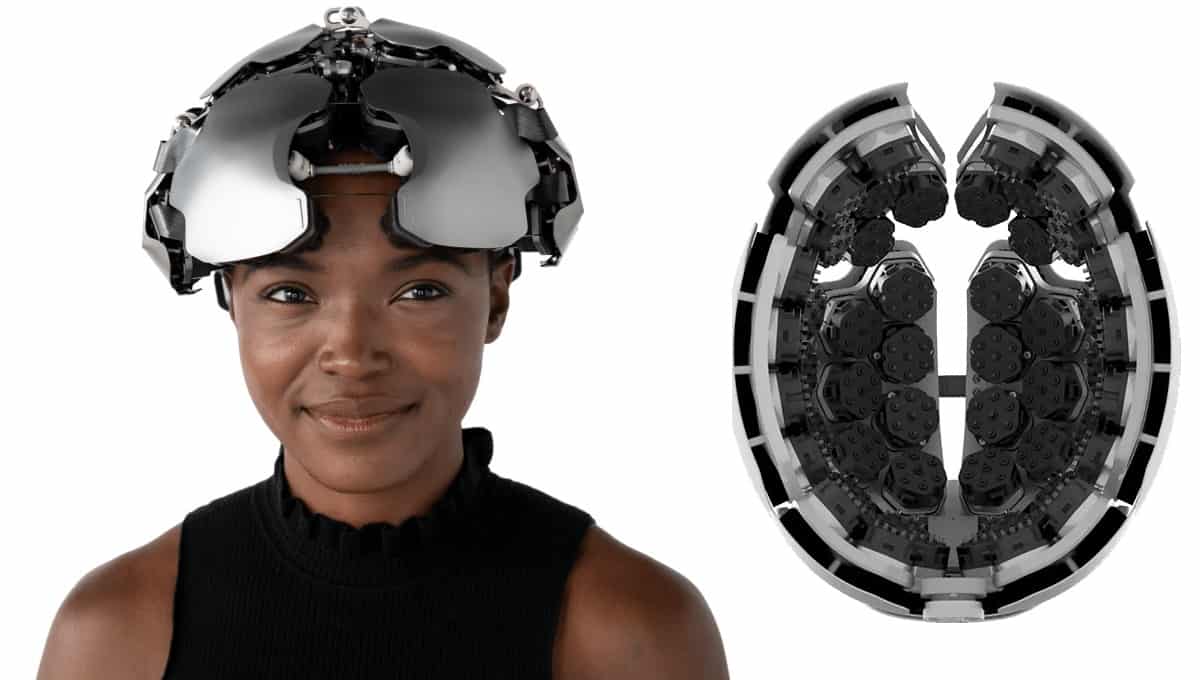
The Kernel Flow system

Recent years have seen huge advances in brain imaging technologies, allowing neuroscientists to explore and investigate how our brains work in more detail than ever before. To date, however, these technologies have remained in laboratory settings, with controlled experiments designed to investigate specific functions. Researchers at Kernel, a US-based neurotechnology company, hope to change this, freeing brain imaging from the laboratory and planting it in daily life. Earlier this year, Kernel researchers introduced their new device, the “Kernel Flow”, in the Journal of Biomedical Optics.

The Kernel Flow builds on the brain imaging technique of time-domain functional near-infrared spectroscopy (TD-fNIRS). fNIRS uses light in the near-infrared spectrum to measure changes in light absorption by the haemoglobin in the blood circulating in the brain. Such changes can provide information on brain function as the haemoglobin concentration changes in functioning areas of the brain because they require oxygen to power this activity. While TD-fNIRS is not a new technique, previous systems suffered from low channel numbers and slow sampling frequencies, limiting their utility in the neuroimaging field.

The researchers at Kernel designed an adjustable headset consisting of 52 modules organized onto four plates on each side of the head to provide coverage across the entire surface of the brain. Each module comprises a laser source surrounded by six hexagonally-arranged photodiode detectors that can detect more than one billion photons per second. Two lasers within the source emit light at different wavelengths (690 and 850 nm), which are directed towards the brain through the surface of the scalp.

The scattered and reflected light is then picked up by the detectors, which are placed 10 mm away from the laser source. The detected photon arrival times are recorded into histograms at a sampling rate of 200 Hz, with an overall system sampling frequency of 7.1 Hz.

The team tested the system using an optical phantom: a tank filled with a mixture of water, India ink and emulsion – with known optical properties – and a small, black PVC target placed at varying depths to mimic brain activity. This is a standard tool for characterizing the abilities of a TD-fNIRS system. The Kernel Flow performed comparably with larger benchtop systems, maintaining – or improving upon – performance whilst also being smaller and light enough to wear.

Finally, the team tested the Kernel Flow in human volunteers. Two participants took part in a neuroscientific test of the system, during which they tapped their left and right fingers in interleaved blocks with rest periods. Channels over the participants’ motor cortices showed significant haemodynamic changes during the finger-tapping tasks.

In addition, a channel on the forehead of one of the participants could pick out their heartbeat oscillation, an ability that is unique to this TD-fNIRS system and is enabled by its high sampling rate. These promising results have led to several follow-up studies on the application of the Kernel Flow system, including one exploring using the system to measure the effects of a psychedelic drug.

The researchers, however, acknowledge the limitations of fNIRS, and are evaluating the performance of their system on different hair and skin types, which can influence the effectiveness of optical brain imaging tools. While the Kernel Flow is not quite as commercially viable as your smart watch (yet), its introduction and the promise of commercial systems available as soon as 2024 suggests that brain function measurements may soon be as accessible as those currently used for measuring your heart rate or tracking your sleep.

Laser-powered photonic circuits drive displays, double-anonymous peer review takes on gender bias, International Year of Glass hits its stride

In this episode of the Physics World Weekly podcast, we meet Jonas Zeuner, who is co-founder and managing director of the Austrian start-up company VitreaLab. He explains how the firm’s laser-powered photonic integrated circuits could find use in applications including holographic displays, medicine, and telecommunications.

Our next guest is Kim Eggleton, who is research integrity and inclusion manager at IOP Publishing, which publishes scientific journals and Physics World. She explains how double-anonymous peer review can help eliminate gender and other biases in scholarly publishing. Eggleton also talks about how the double-anonymous process can help physicists become better reviewers.

The United Nations International Year of Glass 2022 kicked off earlier this year. Its chair, the physicist Alicia Durán, is also a guest on the podcast. She talks about what she hopes the International Year will achieve and previews some of the many glass-related events that are upcoming in 2022.

  • You can watch the opening ceremony of the International Year of Glass here.

APS March Meeting set to reconnect the global physics community

Two years ago, the American Physical Society (APS) was forced to cancel its annual March Meeting at the last minute due to the escalating COVID-19 pandemic. For the first time since then, the APS will once again convene the largest scientific conference for the global physics community, with thousands of delegates expected to converge in Chicago, Illinois, from 14 to 18 March 2022.

“The annual March Meeting is a signature APS event that attracts a diverse international community,” comments David Campbell of Boston University, the programme chair of this year’s meeting. “Around 10,000 scholars will present and exchange ideas at the cutting edge of current physics research, and will offer the next generation of physicists an insight into many exciting career opportunities.”

Hundreds of parallel scientific sessions will run throughout the week, supplemented by pre-meeting short courses, networking events, career development opportunities, and dedicated activities for students. The Kavli Foundation Special Symposium on 17 March is entitled “Why Physics is Fun, Stimulating and Can Improve Lives”, and will feature a number of high-profile speakers such as Carlo Beenakker from Leiden University in the Netherlands and Ulf Leonhardt from the Weizmann Institute of Science in Israel.

Virtual registration is also available for anyone unable to travel to Chicago. Invited sessions, tutorials and short courses will be live-streamed and captured for on-demand viewing, while all presenters are being encouraged to upload a video of their talk that will be made available to all registered participants. Poster presenters will also have the option of uploading a five-minute audio explanation of their work.

Those delegates who make it to Chicago will have the opportunity to engage with vendors and technical partners in the exhibit hall, and to learn about the latest innovations in instrumentation and software. Some of the latest product releases that will be presented at the APS technical exhibit are highlighted below.

Innovation drives electrical test and measurement

Tektronix and its subsidiary Keithley Instruments will be demonstrating a range of electrical test and measurement solutions for applications in quantum science, semiconductor devices and condensed-matter physics.

In the quantum space, the company’s arbitrary waveform generators (AWGs) and high-speed digitizers have been optimized to support the channel density and precision radiofrequency signals needed for the latest qubit systems. Instruments such as the AWG5200 can compensate for the negative effects of fixtures and connectors to ensure that qubits receive maximum fidelity from the wide-bandwidth signals produced by the 16-bit vertical resolution signal generator. Meanwhile, low-profile digitizers like the LPD64 offer the full capability and performance of Tektronix oscilloscopes – including a unique capability for simultaneous radio-frequency and time-domain analysis, called Spectrum View – in a fraction of the space.

4200A-SCS Parameter Analyzer

For semiconductor devices, the Clarius+ suite of software included with the popular Keithley 4200A-SCS Parameter Analyzer now provides even more pre-configured tests and supporting information, enabling faster setup and allowing students to work more independently. A new 1/f noise measurement has been added for characterizing 2D semiconductor devices, while a series of tests developed in collaboration with customers is now available for biological FET-based sensors.

Meanwhile, Keithley’s range of electrometers and low-resistance measurement setups offer precision and reliability for extreme electrical measurements in condensed matter physics and materials science. A new capability for acquiring multi-terminal electrical measurements allows researchers to use their bench-top equipment to perform more advanced characterization faster than ever before – and without the need for any custom programming.

Also on display will be Tektronix’s latest oscilloscope, the 5 Series B MSO. This scope offers maximum flexibility – including advanced signal-specific measurements and a broad range of active, differential, isolated and current probes different signals and devices – and features an award-winning, easy-to-use interface.

  • Visit Tektronix and Keithley Instruments at booth #304

Lock-in measurement system offers precision for cryogenic applications 

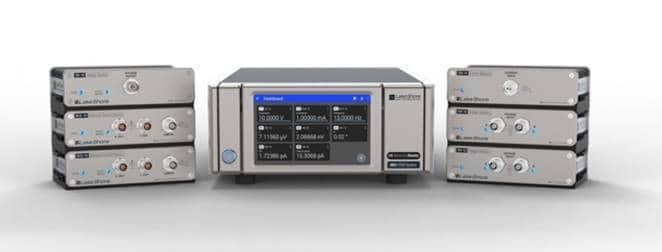
New from Lake Shore Cryotronics is the M81-SSM (Synchronous Source and Measure) System, which provides tightly synchronized DC and AC sourcing with both DC and AC measurement – including lock-in amplitude and phase detection. The system has been optimized for low-level, precision electrical characterization of materials and devices.

Lake Shore Cryotronics’ M81-SSM

Designed to eliminate the user complexities associated with setting up multiple single-function instruments, the extremely low-noise system ensures synchronized measurements from up to three source channels and up to three measure channels in a single M81 instrument. Owing to its modular/distributed architecture, the system allows signal and source amplifiers to be located as close as possible to the sample, which minimizes signal wiring, reduces noise and increases measurement sensitivity.

The M81-SSM easily integrates with cryogenic probe stations and other low-temperature systems, allowing simultaneous measurements of multiple devices operating at different amplitudes and/or frequencies. At APS, Lake Shore will demonstrate how the M81-SSM, when combined with its BCS-10 differential current source and CM-10 current measure modules, can be used to stimulate and measure small detector photocurrents of a diode mounted in the company’s VNF-100 cryostat when illuminated by a laser source.

In this setup, the source is driven by the BCS-10 module and optically modulated by a chopper wheel, with the resulting modulated photocurrent measured using lock-in detection by the CM-10 module mounted to the cryostat. Similar setups can be used for external quantum efficiency and many other multi-channel, mixed-signal applications.

  • To find out more, visit Lake Shore Cryotronics at booth #700

Intelligent AFM automates the imaging process

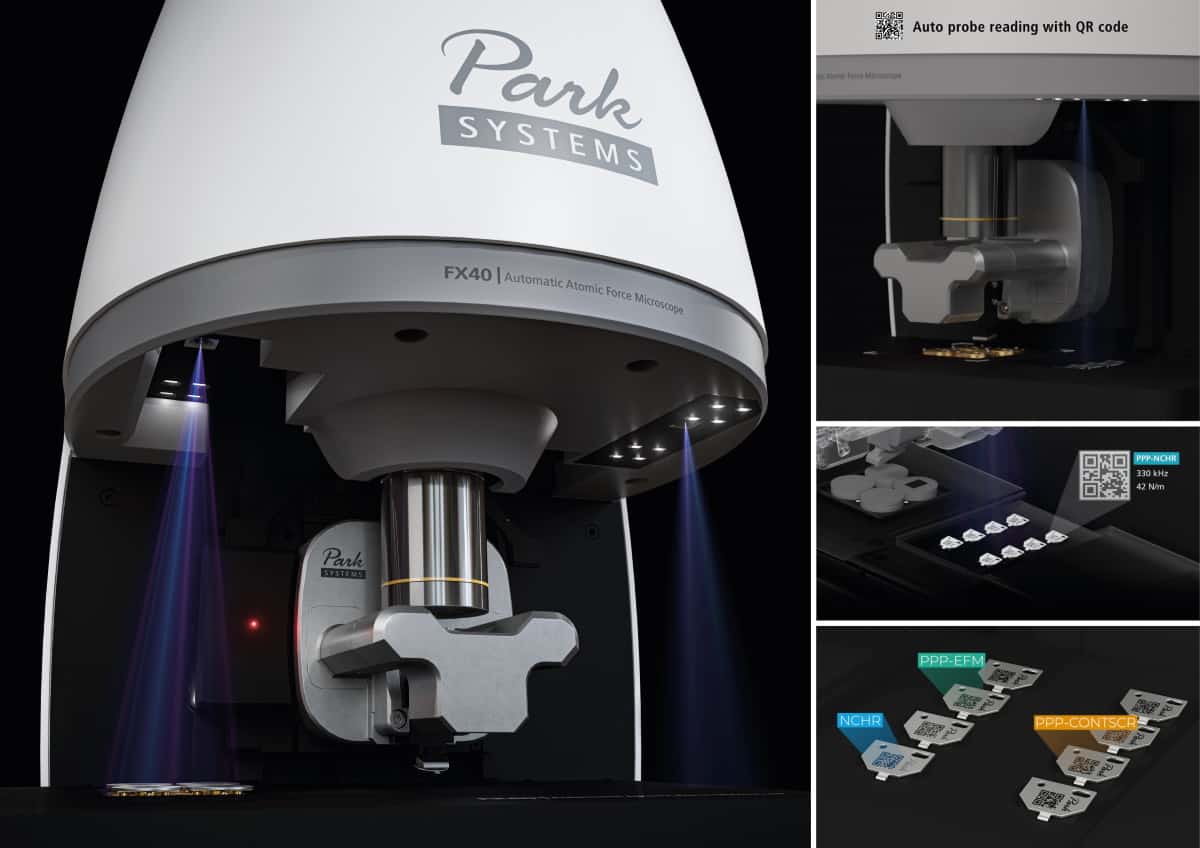
The Park FX40 from Park Systems is an autonomous atomic force microscope (AFM) with built-in intelligence. By integrating innovative robotics and machine learning throughout the system, the Park FX40 is the first AFM to fully automate all of the up-front setup and scanning processes. This includes automated probe exchange, probe identification, beam alignment, sample location, tip approach and imaging optimization – making time-consuming manual processes a thing of the past.

The Park FX40

The system’s autonomous operation enables scientists to measure more samples more quickly, rapidly generating publishable data and accelerating the research cycle. Automating the manual processes also allows untrained researchers to perform formerly training-intensive tasks, while trained researchers have time freed up to focus on their specialized experiments.

Park Systems has also upgraded many of the AFM’s key aspects, including electromechanics for much reduced mechanical noise, smaller beam spot size, improved optical vision and a multi snap-in sample chuck that can hold up to four different samples. Meanwhile, unique environmental sensing self-diagnostics and a head crash avoidance system ensure that the Park FX40 continuously operates at optimum performance.

  • Gilbert Min, Park Systems’ technical manager, will present a virtual workshop on 14 March at 9 AM CDT. The workshop, entitled Design and Evolution of Atomic Force Microscopy, will highlight the Park FX40 automatic AFM. The entire talk will be available online.


Fermentation turns greenhouse gases into useful chemicals

A carbon-negative process that produces industrial-scale quantities of acetone and isopropanol has been developed by researchers in the US. Their work could lead to the replacement of some emissions-heavy chemical production methods with more flexible and environmentally friendly processes.

According to the International Energy Agency, the chemical-production sector is the single largest industrial consumer of oil and gas and the third largest carbon emitter, putting out just short of a gigatonne of carbon dioxide emissions in 2020. Acetone and isopropanol (IPA) are two widely employed commodity chemicals used as industrial solvents and platform chemicals for materials production, with a combined global market worth $10bn. Unfortunately, they are manufactured from fossil resources using highly energy-intensive techniques that release hazardous waste and greenhouse gas (GHG) emissions.

As the climate crisis intensifies, researchers are seeking alternative means to lessen the climate impact of producing these commodities. A newly released paper in Nature Biotechnology offers the first report of high-production-rate, high-selectivity, and industrially scalable production of acetone and IPA through fermentation.

Production by fermentation

Acetone and IPA are normally produced by propene cracking and reforming, which are energy-intensive processes with no green alternatives. Scientists have developed methods for biomanufacturing substances by the fermentation of sugars. This involves using natural enzymes and micro-organisms to metabolize these sugars and output the desired products. However, the techniques developed to date have low yields and selectivity, making commercialization unfeasible. Instead, the new study considered autotrophic production, using waste resources such as carbon oxides (carbon monoxide or carbon dioxide) from heavy industry, or syngas from biomass resources, as a starting point.

Co-led by Ching Leang, Michael Jewett and Michael Köpke, the collaborative research team from LanzaTech Inc., Northwestern University, and Oak Ridge National Laboratory achieved industrially relevant productivities of up to about 3 g/l/h with continuous production over about three weeks and high selectivities of up to 90%. These results stand in stark contrast with previous leading rates of 3.8 mg/l/h and 1.2% selectivity.

If at first you don’t succeed; try, try again

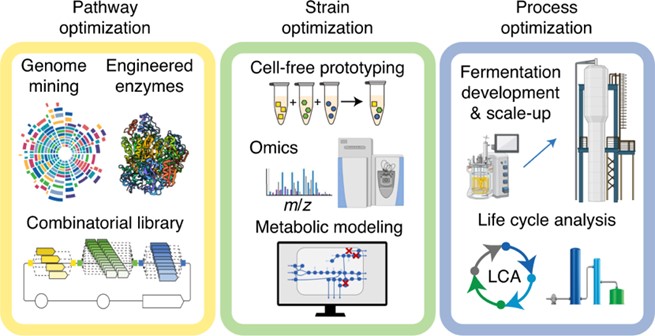
In order to achieve such high efficiencies, the team focused its efforts on optimizing the fermentation pathway, microbe strain and process.

Green fermentation

First, the team identified the best set of pathway enzymes to carry out the fermentation, exploring a collection of nearly three hundred biosynthetic genes for acetone production and subsequently screening a library of C. autoethanogenum sAdh enzymes to convert acetone to IPA.

Researchers then optimized the chosen strain to improve selectivity in production – that is to eliminate unwanted byproducts. To edit the strain, they identified and included several genetic modifications, including four gene knockouts and two gene over expressions. To date, previous studies have included a maximum of one genome modification. Including these modifications helped the team increase the proportion of energy in the feed gas that went to the product of interest.

Last, the team transitioned from a two-litre benchtop reactor to a loop reactor in a 120-litre plant. This step helped to demonstrate the scalability of the process and identify problems that might arise when moving from benchtop to industrial production. In particular, bioreactors of this size have spatial heterogeneities — that is, different zones of the reactor have varying chemical compositions. The researchers needed to evaluate the metabolic robustness of the process, analysing how the microbes maintained functionality despite changes in gas substrate concentration. Their observations confirmed that the developed strains could function on an industrial scale.

Greater flexibility

Traditional chemical manufacturing plants are built for single processes. In contrast, bioreactors such as this can be adapted to multiple purposes, offering beneficial flexibility, especially during economic crises when the availability of certain commodities (such as ethanol and IPA in 2019) fluctuate.

Further, gas fermentation is a promising approach from an environmental point of view. While traditional manufacturing of acetone and IPA emits 2.55 kg and 1.85 kg carbon dioxide respectively per kilogram produced, gas fermentation instead is a carbon-negative process as it utilizes waste carbon products. Life cycle analyses conducted by the team showed a negative carbon value; each kilogram of produced acetone and IPA absorbed 1.78 kg and 1.17 kg of carbon dioxide, respectively.

The researchers write that this contrast sparks hope for replacing an emissions-heavy process with a circular economic model “in which the carbon from agriculture, industrial and societal waste streams is recycled into a chemical synthesis value chain and displaces manufacture of products from fresh fossil resources”.

MR-guided magnetic seeds seek, heat and destroy tumours

Researchers at University College London have developed a minimally invasive cancer therapy that uses magnetic resonance navigation (MRN) to steer a ferromagnetic thermoseed through tissue to a target tumour. Once in place, the thermoseed is remotely heated to a high temperature, destroying the cancer cells via thermoablation. The technique, called MINIMA (minimally invasive image-guided ablation), could provide an alternative to surgery or radiotherapy for treating brain and prostate cancers.

MRN works by using the magnetic field gradients generated by the imaging gradient coil of an MRI scanner to steer the thermoseed within the body. The scanner can also image the seed in real-time, enabling its accurate navigation to target locations. The high precision of this emerging treatment could help reduce damage to adjacent tissue, limiting debilitating side effects.

Writing in Advanced Science, the researchers explain that MINIMA has the potential to combine diagnosis and therapy into a single MRI theranostic device that enables both tumour localization and treatment on the same platform.

“MR images will help determine the least invasive path along which the thermoseed will be navigated, and using imaging, the position of the thermoseed can be constantly assessed, giving real-time assurance of the thermoseed’s location,” explains senior author Mark Lythgoe. “Once at the target, an alternating magnetic field may be applied, causing the thermoseed to heat and deliver localized cell death. The thermoseed may then be navigated through the target tissue, heating at multiple locations until the whole region has been ablated. After the thermoseed is navigated back to the point of entry into the body and removed, MR imaging could assess the success of the procedure.”

Proof-of-concept study

In a preclinical study, Lythgoe and colleagues demonstrated precise thermoseed imaging, seed navigation through ex vivo brain tissue tracked to within 0.3 mm accuracy, and successful eradication of tumours in a mouse model. They also investigated the feasibility of using an MRI scanner with the capability to turn the magnetic field off and on, to ensure safe insertion and extraction of the seed.

MINIMA graphic

The team used a 2 mm-diameter chrome steel sphere as the thermoseed, selected because chrome steel has a high saturation magnetization, which increases the generated translational forces and improves tissue penetration. The seed’s spherical shape enables ease of movement in all directions, while its size is comparable to standard brain biopsy needles.

The researchers performed navigation experiments using a 9.4 T preclinical MRI system and a clinical 3 T system. They employed a frequency-selective MRI method that exploits image distortion artefacts around the thermoseed to pinpoint its location. To heat the seed, they used a custom-built MR-compatible magnetic alternating current hyperthermia system to generate an alternating magnetic field of up to 8 kA/m at 700 kHz.

Thermoseed movement was initiated in steps, with imaging after each step to confirm that the seed was steered precisely along the preplanned path. This repeat imaging enabled a high level of control over seed movement, by adjusting the applied force based on continuous assessment of the movement. The distance moved by the seed increased as the gradient strength increased, although certain tissue structures could hinder motion. Increasing the seed diameter and the duty cycle also improved tissue penetration and the efficiency of movement.

In studies in mice, a 5 min thermoablation successfully destroyed the tumour bulk, with new growth undetectable in a group of animals followed for up to 33 days. Cell culture research showed that the ablation volume could be controlled by varying the heating duration.

“One of the major advantages of MINIMA is that it may be applied to different tissues and diseases,” notes first author Rebecca Baker. “For example, the thermoseed could be guided through the brain to ablate an area causing seizures in patients with drug resistant epilepsy, possibly limiting damage to healthy tissue.”

Magnetomechanical stimulation

While MINIMA employs the imaging gradients inside the MRI bore to steer the thermoseed for precise tumour ablation, the team has developed another novel technology that utilizes the static fringe magnetic field at the edge of the bore to selectively stimulate astrocytes, star-shaped glial cells found in the brain and spinal cord.

“Astrocytes are implicated in a range of brain disorders such as epilepsy, stroke and depression,” explains co-author Yichao Yu. “They are also highly sensitive to mechanical stimuli.”

Mark Lythgoe, Rebecca Baker and Yichao Yu

Taking advantage of this property, the team developed a technique called magnetomechanical stimulation (MMS). Here, magnetic particles smaller than 1 µm are targeted to the cell membrane of astrocytes and, upon application of a magnetic field, generate a force that stretches the cell membrane. This activates the release of adenosine triphosphate (ATP), a signalling molecule that can influence the activity of neighbouring cells.

This ability to remotely stimulate astrocytes offers potential to treat certain brain and mood disorders, including severe depression. Indeed, animal models have shown that ATP released by astrocytes in certain brain regions has a potent anti-depressant effect.

“Because astrocytes are sensitive to touch, decorating them with magnetic particles means you can give these cells a tiny prod from outside the body using a magnet, and as such, control their activity,” says Lythgoe. “We are very excited about this technology because of its prospect as a neuromodulation therapy.”

Like MINIMA, the technique achieves both imaging and actuation using a single MRI system. The team demonstrated that they could assess the delivery of the particles to a specific brain region using an MRI scan and then induce MMS with the fringe field of the scanner.

“Because MMS exploits the intrinsic mechanosensitivity of astrocytes, it does not require genetic modification of the target cells as existing cell control technologies such as optogenetics and chemogenetics do. This removes a major obstacle to clinical translation,” comments Yu. “Moreover, the common existence of MRI scanners in hospitals mean that it may be possible to implement MMS without any additional hardware.”

In the future, the researchers plan to make MMS minimally invasive. Currently, particles are injected directly into the brain via a surgical opening in the skull. Instead, they hope to use methods such as MR-guided focused ultrasound to disrupt the blood–brain barrier, allowing particles injected into an arm vein to travel to a specific brain region via the leaky brain barrier.

Copyright © 2026 by IOP Publishing Ltd and individual contributors