Go on, admit it. Who secretly wouldn’t want to go into space? The lure of leaving our earthly shackles has certainly proved powerful for Amazon founder Jeff Bezos and Star Trek actor William Shatner, both of whom flew into space last year on board a Blue Origin craft. Richard Branson also blasted off on a Virgin Galactic test flight in 2021. But space tourism could soon be open to more than just billionaires. In fact, the market is expected to grow from $886m in 2020 to $2.5bn in 2027, according to the firm Marketwatch.
The main reason for the growth lies in reusable space craft, which slash launch costs. Back in 1981, when NASA unveiled its space shuttle, it cost about $85,000 per kilogram to put an object into space. By 2020, SpaceX’s Falcon Heavy vehicle had broken the $1,000/kg barrier. Growing competition helps too. Other firms in the commercial and space-tourism sector now include Space Adventures, EADS Astrium, Armadillo Aerospace, Excalibur Almaz, Space Island Group, Boeing and Zero 2 Infinity.
The main reason for the growth in space tourism lies in reusable space craft, which slash launch costs.
Here in the UK there are already five “space ports”, including one near Newquay in Cornwall, just off the Atlantic coast. Spaceport Cornwall expects to host regular Virgin Orbit launches from early 2022 and hopes to be the UK’s only “horizontal spaceport” – meaning that rocket-carrying planes can both take off and land. So far Virgin has sold about 100 seats at $450,000 apiece and has some 700 reservations.
Give me space
But space tourism is just a tiny part of the wider commercial space market, which Morgan Stanley estimates could generate revenue of $1 trillion or more by 2040. The most significant short- and medium-term opportunities, it said, are likely to come from satellites offering broadband Internet access connecting the most remote parts of the planet. Indeed, the global satellite internet market, which was worth $2.93bn in 2020, is projected to rise to $18.59bn by 2030.
Established providers, such HughesNet and Viasat, currently use a few big high-performance satellites in large orbits. In Viasat’s case, it is launching three new 6.4 tonne satellites into geostationary equatorial orbit 36,000 km above the Earth.
Delivering a connectivity of tens of megabits, the satellites will give users Internet access for as little as $100 per month. However, other firms – notably SpaceX with its Starlink system – are focusing instead on putting lots of smaller, cheaper satellites into space. Weighing just 260 kg each, they will fly in very-low Earth orbit at heights of roughly 550 km, which means that atmospheric drag will pull them down within a few years so they don’t end up as yet more space junk.
The wider commercial space market could generate revenue of $1 trillion or more by 2040.
Starlink will have a very low “latency” – the time between starting to do something on the Internet and receiving a response – of just 45 ms. That’ll make it great for calling, gaming and streaming, with Starlink’s latency not far off fixed broadband (14 ms) and far better than Viasat (630 ms) and HughestNet (724 ms). Starlink will also be faster, with some users reporting 400 MB download speeds already.
Most importantly, though, Starlink may be cheaper, partly because the company can launch up to 60 of its satellites at a time. SpaceX has already launched 1584 Starlink satellites to provide a near-global service and the firm has approval from US authorities to launch 12,000, with the eventual goal being 30,000. OneWeb – another US competitor – has so far launched 358 and will achieve global coverage using 648 satellites by the end of 2022.
I also see a lot of mileage with CubeSats – shoebox-sized craft initially invented as an educational tool for students. Quicker and cheaper to build than conventional satellites, there are already thousands of CubeSats orbiting the Earth. Sent up by universities, governments and start-ups, they do everything from monitoring deforestation to tracking radio-tagged endangered animals. They typically last for no more than five years, burning up when done. The Japanese firm Astroscale has even used them in testing for capturing space junk – releasing and catching a CubeSat using a magnetic system.
I see a lot of mileage with CubeSats – shoebox-sized craft initially invented as an educational tool for students.
Of course, there is an environmental cost to space, with most launches relying on fossil fuels. However, great strides are being made. Bezos’s Blue Origin’s rockets are already powered by a mix of liquid hydrogen and liquid oxygen, which emit little or no carbon dioxide when burned. The Scottish firm Orbex, meanwhile, is developing a reusable orbital rocket called Prime. Powered by ultra-low-carbon biofuel, it will have 86% fewer emissions than a fossil-fuel rocket. Orbex is also committing to offsetting all emissions from the rocket and ground operations, ensuring every launch is carbon neutral. The craft is due to blast off for the first time from the north of Scotland later this year.
Another interesting approach is being taken by SpinLaunch, a Californian firm that is developing a vacuum-sealed centrifuge to spin a rocket and then hurl it to space. Last November, it carried out the first successful test launch of its proof-of-concept system, which it says ultimately would need a quarter of the fuel of conventional craft and cost only a tenth of the price of a standard rocket launch.
Bright future
One of the problems with the space sector is the lack of clear agreement between nations about who can do what – and to ensure there is actually some space in space. We urgently need to develop a sensible, global framework for managing space traffic and deal with the problem of space junk. Given that even a tiny bit of debris could knock out an entire satellite, who would want to launch a craft if the payload were likely to be destroyed?
That problem aside, it’s certainly a boom time for the space sector. The UK, for example, recently celebrated the 100th start-up firm to join the European Space Agency’s UK business-incubation centre, which claims to be the world’s largest space-innovation network for start-ups. And while Elon Musk’s promise of settlements on Mars by 2050 might seem a tad optimistic, don’t underestimate the commercial potential of space closer to home.
• For much more on the commerical opportunities for businesses in space, check out this special Physics World Collection.
For thousands of years, sound has been an integral part of the human experience, and in many ways, it forms the bedrock of our social and cultural experiences. Indeed, humans have developed a taste for artistic expression through the generation of music. Music has become a powerful art form – both in performance and the creative process. When it comes to western classical music in particular, much of it is based on and developed through mathematical concepts – quite evident, for instance, in the detailed analyses of the compositions of the eminent musician Johann Sebastian Bach.
At the very foundation of many musical styles in classical music is the concept of “harmony” – the sound of two or more notes played at the same time – and then the more dissonant chords. Taken together, they can form opposing poles in musical creation. Interestingly, these concepts are deeply rooted in the physics of vibrations of macroscopic objects such as strings or membranes, and have evolved through the interaction of humans with physical objects.
Lend an ear
Whether it’s a piano, violin or guitar, many of our contemporary musical instruments are built and tuned such that notes played together sound pleasing to variant degrees. In order to achieve this result, musicians have developed the so-called “equal temperament” or tuning system, wherein a fundamental structure called an “octave” (or some other interval) is divided into equal steps, usually such that the musical pitch doubles its frequency. Following the definition of the harmonic series, the octave is uniformly divided into 12 tones whose frequencies are integer multiples of a fundamental vibrational frequency. This makes the equal temperament-octave system a near-perfect organization for musical composition and interpretation, and it has been at the core of classical western music.
Music, and its harmonic structure of sounds, is perceived by humans and animals through a complex auditory system, whereby an organ – such as the ear – collects pressure waves, applies a filter to prevent damages, and transmits (after an amplification and mechano-electrical conversion) sensory signals to the brain. This fascinating mechanism allows humans to interact with the surrounding environment. But the interaction of sound waves and other physical phenomena is also an engaging avenue of research (iScience 10.1016/j.isci.2021.102873). Such studies may lead to a different sensorial interpretation of sounds, providing a distinct stimulus perceived by eyes instead of ears, while also creating visual representations that can be subjects of new forms of art.
Molecular motions and even much smaller scales can be used to generate sound
Furthermore, recent research suggests that there is much to be explored when it comes to vibrational patterns as a fundamental, universal language of all living systems. In fact, it’s not just macroscopic objects that can serve as the source for sound. Molecular motions and even much smaller scales (such as wave phenomena at the quantum level) can also, if properly processed, be used to generate sound, thereby expanding our artistic palette based on advances in physics.
Protein sonification
A remarkable example of translating music into molecular structure, and vice-versa, lies in a key chemical constituent of life – namely the 20 amino acids that link up in chains to form all proteins. Generally speaking, proteins are the building blocks of all life, creating materials as diverse as human cells, hair and spider silk. Proteins are also key in countless other functions, including enzymes, drugs and viruses – each with unique physical properties that often link closely to their role as a biological agency. But protein structures, including the way they fold themselves into the shapes that often determine their functions, are exceedingly complicated.
1 Molecular music Frequency analysis of the molecular motions (and vibrational spectra) of each of the 20 amino acids after transposing the results in the audible frequency range. An example for a protein mapped into this scale is provided for lysozyme (ACS Nano13 7471). The sounds of amino acids have been made available as a free Android app (Amino Acid Synthesizer), providing a tool for STEM outreach and physics education. (Courtesy: MIT)
With this in mind, we developed a systematic way of translating a protein’s sequence of amino acids into a musical sequence, using the physical properties of the molecules to determine the sounds (ACS Nano13 7471). The system translates the 20 types of amino acids (figure 1) into a 20-tone scale. Any protein’s long sequence of amino acids then becomes a sequence of notes. The sounds are transposed in order to bring them within the audible range for humans (20 Hz–20 kHz), without affecting the structural features by following the concept of transpositional equivalence. Indeed, the tones and their relationships are based on the actual vibrational frequencies of each amino acid molecule itself, providing a physical basis for protein sonification.
Audio copyright Marcus Buehler
The amino acid scale
Audio copyright Marcus BuehlerThe amino acid scale
Audio copyright Marcus BuehlerThe amino acid scale
2 The amino acid scale From proteins to musical scores: (a) an example of protein folding. i–j are the locations on the amino acid sequence that are close due to the folding; (b) amino acid coding of the i–j contact points; (c) from the 3D structure of the protein to the musical score (Nano Futures5 12501). Overlay of notes due to the contact point is highlighted with the shaded rectangles. (Courtesy: MIT)
To underscore this concept, think of a song that can be sung or played at different frequencies. As long as the ratios of the frequencies played are consistent, the human brain can properly recognize specific musical information. For example, you can listen below to Beethoven’s “Fur Elise” which can be played at different transpositions – early on it is inaudible, but as the frequency ranges reach the audible spectrum, we can clearly recognize the piece through its salient musical structures that clearly identify it.
Audio copyright Marcus Buehler
Fur Elise transposed at different frequencies
Audio copyright Marcus BuehlerFur Elise transposed at different frequencies
Audio copyright Marcus BuehlerFur Elise transposed at different frequencies
While studying lysozyme – a naturally occurring, anti-microbial enzyme found in bodily secretions such as tears, saliva and milk – we developed a new type of “amino acid music scale” (figure 2). It provides a sonified reflection of each of the enzyme’s amino-acid building blocks, uniquely characterizing their chemical makeup. An example for a protein mapped into this scale is provided for lysozyme, which you can listen to below. As with music, the structure of proteins is hierarchical, with different levels of structure at different scales of length or time. So in addition to the sounds generated by each amino acid, the expression of rhythm and note volume can be derived from the secondary and higher-order structure of the protein molecules.
Audio copyright Marcus Buehler
Lysozyme mapped to the amino acid music scale
Audio copyright Marcus BuehlerLysozyme mapped to the amino acid music scale
Audio copyright Marcus BuehlerLysozyme mapped to the amino acid music scale
Whether it’s birds singing or humans talking, the vibration of macroscopic objects is critical to communication. But vibrations as a mode of communication also works at the nanoscale, where molecular vibrations mediate inter-protein interactions and docking. In a recent work, for instance, we demonstrated that the vibrational signature of coronavirus proteins in the virus structure can be directly correlated to epidemiological data of virus lethality and transmission rates (Matter 10.1016/j.matt.2020.10.032).
A crucial step in how a virus causes an infection is when its protein spikes attach to the ACE2 human cell receptor. Once these spikes bind with the receptor, it unlocks a channel that allows the virus to penetrate the cell. Previously, researchers looked at biochemical mechanisms when studying how spike proteins, which give coronaviruses their distinct crown-like appearance, interact with human cells. Instead, we used atomistic simulations and AI to study the mechanical aspects of how the spike proteins move, change shape and vibrate.
Good vibrations The spike protein of the coronavirus SARS-CoV-2 can be translated into sound to visualize its vibrational properties which could help in finding ways to stop the virus. The primary colours represent the spike’s three protein chains. (Courtesy: MIT)
The vibrations matter because the protein spikes are not static. Instead, they continuously change shape slightly, as they morph and attempt to break into the cell. This means that vibrations play a key role in the strategy adopted by the virus, as it attempts to trick the locking mechanism on the cell’s surface into letting it in, and then hijacking the cell’s reproductive mechanisms.
By modelling the atoms as point masses connected to each other by springs that represent the various forces acting between them, we were able to study how the vibrations develop and propagate. We found that differences in vibrational characteristics correlate strongly with the different rates of infectivity and lethality of different kinds of coronaviruses, taken from a global database of confirmed case numbers and case fatality rates. The viruses studied included SARS-CoV, MERS-CoV, SARS-CoV-2 and one of the mutations of the SARS-CoV-2 virus.
In all the cases we looked at, we observed key fluctuations in an upward swing of one branch of the protein molecule, which helps make it accessible to bind to the receptor. Another important indicator was the observed ratio between two different vibrational motions in the molecule. Together, these two factors show a direct relationship to the epidemiological data, including how infectious and lethal the virus may be.
As our method is based on understanding the detailed molecular structure of these proteins, it could be used to screen emerging coronaviruses or new mutations of the virus that causes COVID-19, to quickly assess their potential risk. Our work could also potentially point towards new ways to treat coronaviruses, by perhaps finding a molecule that can bind to the spike proteins such that their vibrations are limited or cancelled out altogether.
This work, together with the importance of complex vibrational signals in spider webs, for instance, points to a universality of vibrations and waves as elementary descriptors of materials.
Bach and proteins
If one had to name a classical composer who has influenced virtually all genres of music, from classical to pop, one would immediately think of Bach himself. A key concept on which he and many other composers designed their compositions is the so-called “circle of fifths” – a specific arrangement of the 12 tones of the chromatic scale, their corresponding key signatures, and the associated major and minor keys – as a sequence of perfect fifths.
Circle of fifths Divided into 12 stops – like the numbers on a clock, each stop is actually the fifth pitch in the scale of the preceding stop. It can be used for composing and harmonizing melodies, building chords and modulating to different keys. (Courtesy: Wikimedia Commons/Sluffs)
A fifth is the interval from the first to the last of five consecutive notes in a diatonic scale, and musical theory defines a perfect fifth as the interval corresponding to a pair of pitches with a frequency ratio of 3:2. The perfect fifth spans seven semitones. Although this organization may appear complicated, it is worth noting that composers and musicians have used it to make distinctions between pitches, and to make composition and melody harmonization easier to perform in different scales. The cycle of fifths is, in fact, the most natural sequence of pitches recognizable and familiar to the human ear.
One of the cornerstones of Bach’s compositional approach is the use of a method called counterpoint – the relationship between two or more musical lines (or voices) that are harmonically interdependent, yet independent in rhythm and melodic contour. The idea is to play “note against note” (hence: counter-point), making it a simple and, yet, deeply foundational concept in music.
We have found that the observation of the structural properties in living materials leads to a “materialization” of the counterpoint concept, when proteins fold. Folding is encoded structurally by the alignment of multiple sequences, which can be used to glean information on how they are spatially organized. Counterpoint can be a way to code structural information, to define where in a structure a specific type of connections is made, thereby defining its topology in 3D. We developed a method to represent folded protein nanostructures as musical compositions. The physical closeness of two amino-acid sequences, for example, can be reflected using a structure-score mapping by an overlay of notes for that feature, and vice versa, leading to webs of melodies (figure 2) (Nano Futures5 12501).
We developed a method to represent folded protein nanostructures as musical compositions
The interplay between Bach and proteins to study counterpoint can be better understood if we consider the “Goldberg Variations” (BWV 988) – you can listen to an extract below. This piece is, undoubtedly, one of the most intriguing of Bach’s compositions, consisting of an aria with 30 variations for harpsichord, published between 1741 and 1745. Each variation provides a different counterpoint style that helps the composer to continuously change tempos and melody, from slow harmonies to fugues, which can be beautifully interpreted by musicians (Bioinspir. Biomim.17 015001).
Audio copyright Marcus Buehler
An extract from the Goldberg Variations aria
Audio copyright Marcus BuehlerAn extract from the Goldberg Variations aria
Audio copyright Marcus BuehlerAn extract from the Goldberg Variations aria
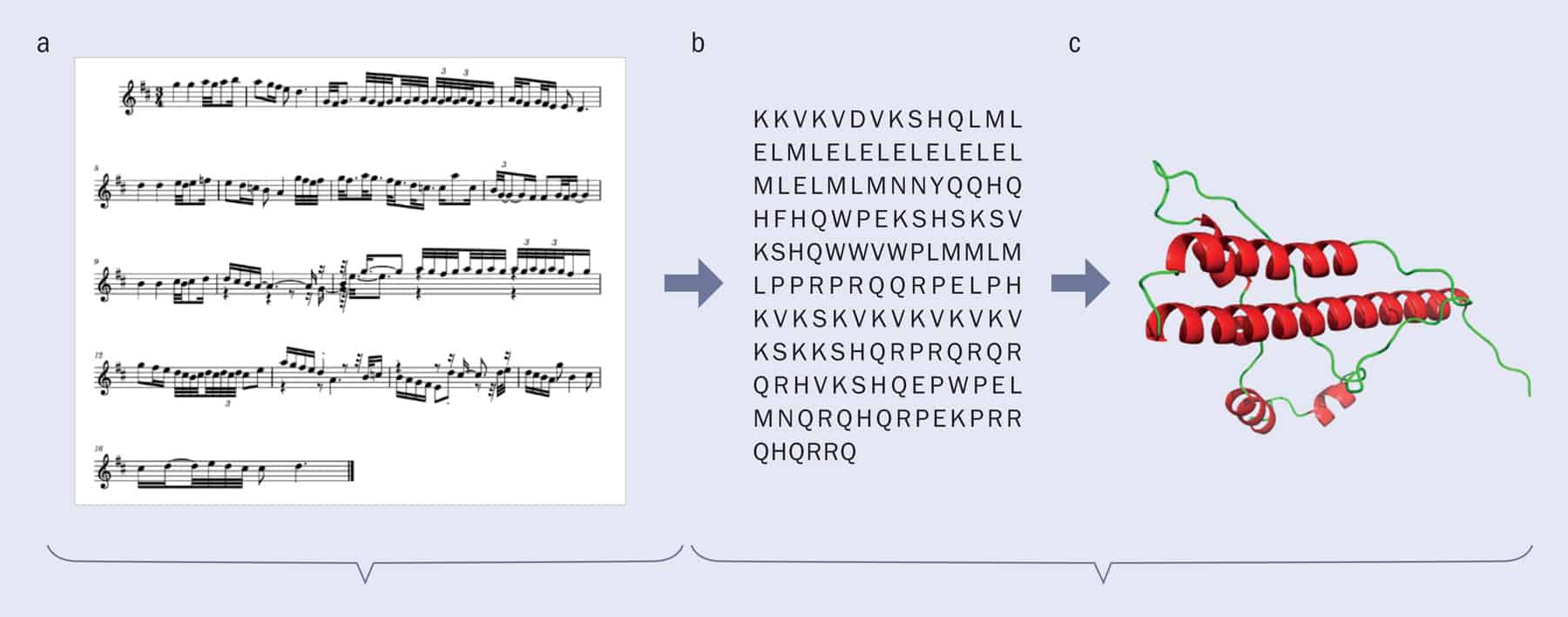
3 A protein folding aria Mapping the aria of “Goldberg Variations” in the protein domain (Bioinspir. Biomim.17 015001): (a) musical score (only the treble-clef line); (b) amino acid sequence achieved by mapping the score to a unique scale following the physical vibrations of the amino acids, ordered by the frequency of the lowest vibrational mode (the fundamental), and then mapped in the protein domain; (c) 3D structure of the protein folded using a deep learning method. (Courtesy: MIT)
To underscore the similarities between music and protein design, we mapped the first 16 measures of the main aria to a unique tonal scale, and then reverse-mapped notes to amino acids in the protein domain. The result was the sequence shown in figure 3, which can be folded using homology methods or deep learning approaches. The ordering of the amino acids is dictated by the scaling and mapped to the equal temperament scale, with notes from low to high pitch. The result from folding using a deep learning method (figure 3c) reveals the structure of a completely new protein that does not yet exist in nature, but rather was invented through Bach’s musical creativity. Through this mapping, we are learning new things about Bach, as well as exploiting specific features of the proteins to extract new musical compositions as one way to represent nature’s concept of hierarchy as a paradigm to create function from universal building blocks.
Strings and things, from a web to a harp
Another intersection between music and materials lies in the spider web. A commonplace architecture in nature, it nevertheless exhibits complex geometry and an extremely resilient building material. We can think of a spider as an “autonomous 3D printer”, as it builds its web using signals via vibrations, in which the silk exhibits properties comparable to various forms of music, in terms of hierarchical structure and function. In fact, we have recently developed a thousand-string harp out of a spider web – a natural structure with “strings” tuned to endow spiders with an exquisite sensor to detect the environment, that becomes an extension of their bodies. We can exploit this system to extract structural information as the basis for a new musical instrument (figure 4).
4 Mapping a thousand-string harp Sonification of a spider web, where each filament in the complex 3D web represents a “string” with its own vibrational features. As multiple strings are excited, complex sounds are generated (J. Multimodal User Interfaces 10.1007/s12193-021-00375-x). Left to right: natural 3D spider web; computer model of a laser-scanned web; 3D-printed version of the web. (Courtesy: MIT)
Through the use of virtual reality to map out a web that is traversable by humans, for instance, we can enter a world of new design methods for such systems where large-scale and small-scale relationships interplay. In 2014 our lab, with special efforts from postdoc Zhao Qin and graduate student Bogda Demian, created a computer model and simulation of the data generated via 3D scans of spider webs, made by artist Tomàs Saraceno in 2012. For the first time, not only could we accurately visualize the web, but also replicate its internal structure, gaining precise information about every single silk thread – the thickness, tension and length – and how threads interacted to create such an elaborate architecture.
The structure of the spider web also inspired many new musical pieces (listen to the clip below) and we also developed a granular synthesis technique that mimics the biochemical process of silk production (Computer Music Journal44 4). More recently, we combined this kind of web sonification with our molecular music, overlaying frequencies and melodies extracted from the proteins that make up silk, as well as other key features of spiders, such as its venom molecules.
Audio copyright Marcus Buehler
Variations of a spider's web
Audio copyright Marcus BuehlerVariations of a spider's web
Audio copyright Marcus BuehlerVariations of a spider's web
This work can be useful for understanding not only spider webs but also the complex hierarchical arrangement of neurons in the brain – and even the web-like large scale structure of our universe.
From amorphous nature to structure
A special feature of music is its abstraction, as it is devoid of direct image-bound meaning. Unlike words which are associated with a subject matter, sounds are abstractions that provide a foundation to ask the question of how hierarchical systems, building block by building block, generate more than the sum of their parts. The outcome of musical expression can be purely mathematical or logical, or physics driven (such as to generate perfect harmony by invoking certain cadences or chord progressions), or it can be based on an emotional objective. We now propose an alternative outcome in showing that it is possible to derive music from a living structure – such as a protein – that can be sonified.
In doing so, it can be heard, understood and experienced by our conscious brain in terms of its 3D-folded structure for the first time. So can music be a measure of consciousness? At the very core of the question of our personal experience as a human being, the universality of vibrations and resonances may be a key in the emergence of conscience. Such discussions may provide exciting opportunities for further research at the interface of neuroscience, physics, biology and music theory – and to explore new dualities of reality in this way.
Democratizing MRI: Prototype of a low-cost, low-power, shielding-free, ultralow-field brain MRI scanner. (Courtesy: CC BY 4.0/Nat. Commun. 10.1038/s41467-021-27317-1)
A compact ultralow-field (ULF) brain MRI scanner that does not require magnetic or radiofrequency shielding and is acoustically quiet during scanning has been developed at the University of Hong Kong. The scanner’s low manufacturing and operating costs reinforce the potential of ULF MRI technology to meet the clinical needs of hospitals in low- and middle-income countries, as well as point-of-care medical facilities such as surgical suites and emergency rooms.
MRI is the most valuable clinical tool used for assessing brain injuries and disorders, but according to the Organisation for Economic Co-operation and Development (OECD), approximately 70% of the world’s population has little or no access to it. High-field superconducting MRI scanners (1.5 T and 3.0 T) are expensive. In addition to acquisition costs of around $1–3m, such scanners are costly to install due to infrastructure requirements, and have high maintenance costs. All of these factors represent a major roadblock in MRI accessibility.
Senior author: Ed X Wu.
MR imaging using ULF technologies offers the promise of accessible healthcare with scanners that are simple to onboard, maintain and operate. Led by Ed X Wu, Lam Woo Professor in the Laboratory of Biomedical Imaging and Signal Processing, the Hong Kong team developed a permanent magnet-based, low-cost, low-noise, low-power and shielding-free ULF brain MRI scanner.
The prototype system, described in Nature Communications, is based around a compact two-pole 0.055 T permanent samarium–cobalt (SmCo) magnet, with dimensions of 95.2 x 70.6 x 49.7 cm and a front opening of 29 x 70 cm for patient access. The scanner has a footprint of approximately 2 m2 and can be operated from a standard AC power outlet. The team estimates that the machine could be built in quantity with material costs under $20,000.
The scanner configuration allows the formation of images using various universally adopted protocols for clinical brain imaging, including fluid-attenuated inversion recovery (FLAIR)-like and diffusion-weighted imaging (DWI). By building upon the methodologies developed for high-field MRI scanners, the ULF system provides a high level of flexibility for the development of future ULF MRI protocols.
The researchers developed a deep-learning-driven electromagnetic interference (EMI) cancellation technique to model, predict and remove external and internal EMI signals from MRI signals. This EMI cancellation procedure eliminates the need for a traditional RF shielding cage. Meanwhile, the high temperature stability of SmCo removes the need for any magnet temperature regulation schemes to stabilize temperature-dependent fields.
Wu and colleagues optimized four of the most common clinical brain MRI protocols – T1-weighted, T2-weighted, FLAIR and DWI – to produce signal-to-noise (SNR) ratios and contrast characteristics similar to those of clinical high-field MR images.
After tests on phantoms, the researchers used the scanner to image 25 patients with neurological conditions (brain tumours, chronic stroke and chronic intracerebral haemorrhages), using these four protocols. The patients then underwent the same exams on the hospital’s 3 T scanner. Examinations averaged approximately 30 min with the 0.055 T scanner, compared with 20 min using the 3 T system.
Scanner comparisons: Both 0.055 T and 3 T images visualized a brain tumour mass. (Courtesy: CC BY 4.0/Nat. Commun. 10.1038/s41467-021-27317-1)
A senior clinical radiologist evaluated the patient scans to determine which specific lesions could be observed in the 0.055 T images. The prototype scanner detected most key pathologies in the exams of all 25 patients, with similar image quality to that produced by the 3 T scanner.
One major advantage of the new scanner is that it produces fewer artefacts when imaging implants such as metallic clips and cerebrovascular stents. “In using ULF, metal implants not only exhibit fewer artefacts, but also experience significantly less mechanical forces and RF-induced heating,” the researchers write. “The presence of paramagnetic (titanium and titanium alloys) and ferromagnetic (cobalt, nickel and associated alloys) materials in aneurysm clips and cerebrovascular stents did not induce gross artefacts.”
As such, the ULF scanner should enable MRI scanning of patients with metal medical implants or accident-related metal fragments, who would otherwise not be candidates for conventional high-field MRI.
Future opportunities
Wu believes that the ULF technology is not designed to compete with mainstream MRI, but to complement it. “With a field strength that is almost two orders of magnitude lower than the mainstream MRI, the image quality is inevitably less appealing simply due to the MR physics: lower field strength, weaker MR signal, less to play with,” he says. “However, MR signals and physics have many appealing properties at ultralow-field, in terms of data acquisition and image formation.”
“I believe that computing and big data will be an integral as well as inevitable part of future MRI technology,” Wu adds. “Given the inherently 3D, highly quantitative and ionization-free nature of MRI, I believe widely deployed MRI technologies will lead to immense opportunities in future data-driven MR image formation and diagnosis in healthcare. This will lead to low-cost, effective and more intelligent clinical MRI applications.”
The researchers chose to develop a ULF brain MRI due to “the immense need and value of MRI in the diagnosis and prognosis of various neurological diseases and injuries,” noting that roughly 30% of clinical MRI cases involve the brain.
Ultimately, they hope that the development of such ULF MRI technologies will enable patient-centric and site-agnostic MRI scanners to fulfil the unmet clinical needs across various global healthcare sites, with the potential to democratize MRI for low- and middle-income countries. To this end, the team is making the key code and designs they have developed freely available in a public online repository.
A new technique allowing lasers to manipulate the energy and phase of electrons in electron microscopes has been unveiled by researchers in Germany and Switzerland. The technique opens up new potential applications in electron spectroscopy and could be used in the future to generate electron-photon entanglement.
Developed in the 1930s, electron microscopy is arguably the most important technology we have for studying matter at the atomic scale. This is because the wavelength of the electrons used is much shorter than that of visible light – and even typical X-rays. However, whereas advances in photonics such as cavity quantum electrodynamics have allowed the control of light at extremely high precision, manipulating electron beams has remained significantly more challenging.
One opportunity lies in utilizing the coupling between electrons and photons, allowing an optical laser to modulate an electron beam. Unfortunately, this coupling is relatively weak, and has therefore required high-power lasers, which are expensive and cannot be operated in the continuous-wave regime as they would damage sensitive equipment.
Subtle solution
In the new research, scientists at the Max Planck Institute for Multidisciplinary Sciences and Georg-August University, both in Göttingen, and the Swiss Federal Institute of Technology in Lausanne arrived at a subtle solution using integrated photonics. They coupled an optical fibre to a silicon nitride cavity with a quality factor of about a million on a silicon chip. When passed down the optical fibre, a low-power continuous-wave laser beam resonantly pumps the cavity, amplifying milliwatts into thousands of watts, all at a very well-defined frequency.
The researchers then passed the beam of an electron microscope close to the cavity. They found that, at specific resonant frequencies, the electrons coupled to the cavity’s evanescent field, which is a non-propagating component of the electromagnetic field found only in the immediate vicinity of a source. This caused a series of sidebands to appear around the central electron energy peak. “The electron beam behaves in such a way that it depends on this microelectronvolt-resolution optical excitation wavelength,” explains Claus Ropers at Göttingen, who co-led the research: “There may be future possibilities not only to characterize these cavities but to translate this to other forms of electron spectroscopy.”
One example is electron energy loss spectroscopy, in which a beam of electrons with a narrow range of energies is passed through a material and the energy of the scattered electrons is measured and used to infer the material’s electronic energy levels. By using the cavity to select for specific excitation frequencies, it should be possible to control the excitation energy – and therefore to infer the loss after scattering – much more precisely than before.
Advanced spectroscopies
Other possibilities are more complex: the broadening in the energy spectrum causes the electron beam to split into a train of phase-coherent pulses, and the researchers hope to use these to study time-dependent interactions. “More complicated forms of spectroscopy have been developed in optics that allow for much deeper microscopic insights into dynamical processes if you go from regular spectroscopy into coherent spectroscopy,” says Ropers. “The long-term goal is to transfer the schemes that are very advanced in optical spectroscopy over to electron spectroscopy.”
The researchers are also working on applications beyond spectroscopy: “This is the most efficient, cleanest, most controlled way an electron beam has ever interfaced with photonics,” says co-leader Tobias Kippenberg at Lausanne. They believe this could be used to create quantum entanglement between electrons and photons. “Right now, there are many, many photons in the cavity, so the final state of the cavity is not really different if one electron has picked up one photon,” Ropers explains; “But let’s say you don’t drive this with a laser, but with a single photon source, then this cavity can lead to an entanglement between the state of the cavity and the state of the electron.”
Ultrafast laser physicist Martin Kozák of Charles University in Prague says that the work’s key result is the strong enhancement of the coupling strength between incident photons and electrons, which allows scientists to modulate the wave function of the electron beam using a continuous wave laser of only 1 mW power. This is made possible by the extraordinarily high quality factor of the optical cavity. “[There is research] already demonstrating the inelastic interactions of electrons with optical fields, but the combination of low power requirements with fibre coupling allows this device to be installed in any electron microscope” says Kozák. “This might seem like a technical advance but the continuous phase-modulated electron beams open up a whole new field of quantum optics with free electrons.”
The past year has seen the exciting prospect of private space travel become a reality. In July, Blue Origin – the firm owned by Amazon founder Jeff Bezos – launched its first batch of space tourists. The crew, which included Bezos, reached an altitude of 120 km in an 11-minute flight. That same month also saw Richard Branson’s VSS Unity successfully carry out its first crewed flight – with Branson onboard – where it flew to an altitude of about 80 km. Since November 2020 SpaceX, which is owned by Elon Musk, has also been ferrying astronauts to the International Space Station as well as more recently taking civilian-only crews into space.
There has been a huge amount of generally positive media coverage about these endeavours. In a high-profile launch in October, Blue Origin sent William Shatner into space. The actor, who played Captain James T Kirk in the original Star Trek series, became the oldest person in space, with the event closing the circle that was opened by the first Black female astronaut Mae Jemison, who was the first astronaut to appear on Star Trek.
Space should not become a wild west for the rich
No-one can deny that these rockets are a huge feat of engineering. Blue Origin, for example, took over a decade to complete and had no trained pilots controlling the rocket. The world-class research and long-term jobs that these events create cannot be denied. The work done is pushing the boundaries of planetary- and Earth-based science, which is a requirement for progress.
These three pioneers of the private space industry, however, are not astronauts but corporate chief executives who have the interests of their business at heart. Indeed, the official definition of an astronaut was changed in July by the US Federal Aviation Administration to exclude Bezos and Branson, instead highlighting scientific research and public safety as a reason for space flight.
These private space initiatives, though full of well-intentioned bravado, are also having unintended consequences. For example, since 2015, Space X has been launching satellites in low-Earth orbit that belong to the “mega-constellation” Starlink. Throughout 2019 and 2020 SpaceX launched the first few hundred of the planned 12,000 satellites into low-Earth orbit, with the eventual goal of the array to beam internet across the globe.
Unfortunately, Starlink has some serious downsides when it comes to astronomy. Due to their relatively low orbital radius, Starlink satellites are not only much larger than other objects at similar altitudes, but the array is much more reflective than engineers had expected. For several months astronomers complained while multiple astronomical organizations, both professional and amateur, showed the impact they were having on observations. Satellite manufacturers took steps to reduce the impact such as adding an additional anti-reflection layer or a further sunshade, but these have not proven to be very effective.
Spoiling the view
Extreme record-breaking weather conditions are being recorded globally and are getting worse year on year. If these activities continue on their current trajectory, they will only cause yet more irreparable damage to the environment due to the whims of the ultra-rich. It is estimated that about 60 Starlink satellites will need to be replaced each month, while 11-minute rocket flights into space emit 100 times more carbon dioxide than airline flights. The pollution caused by such endeavours does not bode well for the green-energy future we need to reverse the effects of global warming.
Providing access to space for the lucky few who can afford the ride also raises the question of who is paying the true price for private space endeavours. The answer is all of us. In the wake of Bezos’s successful trip into space in July, he was criticized when he thanked his employees at Amazon who, in his words, “paid for this”. Bezos has sold £72m worth of tickets for future rides but it has been well documented that the employees at Amazon are treated poorly. In many countries, they are forced to work gruelling hours to reach unrealistic deadlines, have been denied healthcare during a pandemic and subsequently are forced to work under even more oppressive and dangerous conditions. Staff who worked on Blue Origin have also raised concerns that the company ignored safety protocols and harboured sexism in the workplace.
It is clear from the social and environmental issues that plague every part of corporate science that if the sector is to be sustainable then official regulation is needed to ensure that all scientific endeavours, private or otherwise, are done ethically. There are already around 6500 objects in orbit around Earth and space should not become a wild west for the rich. If space travel and scientific instrumentation are to be done at their best, it cannot be at the cost of the labour and lives of the most vulnerable on Earth.
Researchers have used electrical currents to manipulate the motions of single skyrmions at room temperature. Xiuzhen Yu, together with colleagues at Japan’s RIKEN Centre for Emergent Matter Science, formed the skyrmions in chiral-lattice magnets, then steered their paths using ultra-short electrical pulses. The team hopes that their results could pave the way for advanced, skyrmion-based information storage devices.
In condensed matter physics, skyrmions are particle-like excitations in magnetic materials that resemble vortices. They have topological stability, which means that they persist for very long times and are resilient to external perturbations such as noise. This stability means that skyrmions could be used in spintronics, which is an emerging technology in which magnetic spin is used to store and transfer information using much less energy than existing electronic devices.
So far, the motion of skyrmions have been observed in clusters or with large skyrmions (1 micron or bigger) in materials chilled to very low temperatures. However, to create practical spintronics devices, researchers must be able to manipulate the motions of small, individual skyrmions, in room-temperature conditions.
Chiral-lattice magnet
To achieve this, Yu’s team generated skyrmions within an alloy of cobalt, zinc and manganese that is a chiral-lattice magnet. This has a crystal structure that cannot be superimposed on its mirror image. In principle, skyrmions could be stable at room temperature in such a material.
Using nanosecond current pulses, the researchers could then force individual skyrmions to move in specific directions. To track these motions, the team used transmission electron microscopy (TEM), relying on the fact that skyrmions interact with an electron beam. Specifically, they used a form of the technique named Lorentz TEM, which is a powerful tool for studying topological magnetic structures.
Topological number
Through these observations, Yu and colleagues discovered that the motions of single skyrmions (each about 100 nm in size) were clearly affected by their topology. When a skyrmion’s topological number was reversed, the team spotted a subsequent reversal in its Hall motion – generated as the pulsed current flowed both perpendicular to an applied magnetic field, and transverse to the voltage across the chiral-lattice magnet conductor.
They also showed that when current pulses were applied, the skyrmion transitioned from a static “pinned” state – induced by defects in the lattice, to a linear flow motion exceeding 3 m/s. This occurred via a “creep event” – where the skyrmion’s velocity gradually increased, after exceeding a certain threshold value.
The experiment was the first time that researchers have tracked and controlled the motion of a single skyrmion. Yu’s team now hope that further studies of these dynamics, and their dependence on skyrmion topology, could lead to the use of skyrmions in spintronics devices.
The strong nuclear force is what holds atomic nuclei together, and our current mathematical understanding of it has led to remarkable insights into the nature of matter. Still, certain questions – such as the matter composition of the very early universe – have eluded physicists’ best efforts, and computer simulations of these regimes are intrinsically limited even with the largest conceivable classical machines.
In light of these limitations, some physicists have turned to quantum computers, hoping that their capabilities are a better match for the requirements of the simulations. A joint team from the University of Waterloo and York University, both in Canada, has now made headway toward this goal by simulating the interactions between matter particles using a class of quantum algorithms known as variational algorithms. The work could make it possible to study the behaviour of nuclei in the aftermath of the Big Bang and in astrophysical objects such as neutron stars – systems that are inaccessible on classical computers.
Simulating fundamental forces
In the quantum theory of electromagnetic interactions (known as quantum electrodynamics, or QED), the particle that carries the electromagnetic force – the photon – does not directly interact with itself. This type of theory is known as an Abelian gauge theory. In contrast, the theory of the strong force (known as quantum chromodynamics, or QCD), is non-Abelian, and its force-carrying particles, called gluons, do interact with each other.
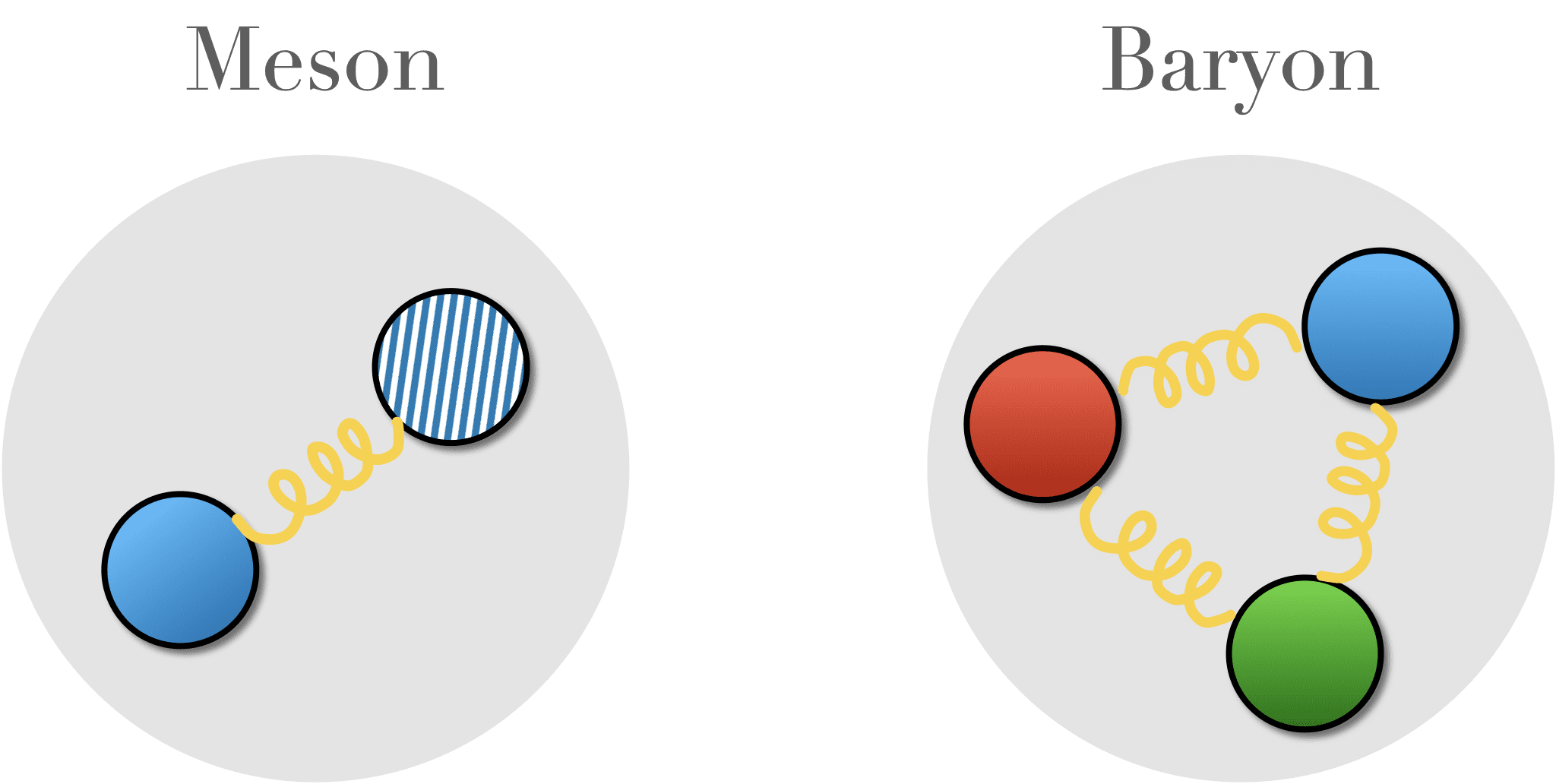
Composite particles: Artistic rendering of a meson (left) and baryon (right). The meson comprises a quark (represented by a filled circle), antiquark (represented by a striped circle), and a connecting gluon. The baryon consists of three quarks and three gluons. (Courtesy: Amara McCune and Jacob Marks)
This interaction allows a rich variety of composite particles to form, including baryons like protons and neutrons, which are made up of three matter particles called quarks, and mesons, which are quark-antiquark pairs. “Non-Abelian gauge theories are at the basis of how the matter around us is formed, and are necessary for a full description of our universe,” explains Jinglei Zhang, a postdoctoral fellow at Waterloo and an author of a paper describing the recent quantum simulations.
While making predictions in QCD is critical to our understanding of our universe, it is not without its challenges. Due to the nature of the gluon interaction, only at the highest energies can quarks become freed from bonds with other quarks. This property, known as confinement, arises because the strength of the strong force increases with decreased energy. Unfortunately, this makes it unfeasible to calculate or even approximate particle processes using the mathematical methods typically applied in simpler theories such as QED.
Physicists must then adopt an alternative strategy: simulating quarks and gluons on a computer. But this approach also has limitations. While theoretical predictions are usually made assuming a continuous spacetime, like the one we think we live in, this is not possible on a computer. Instead, quarks must be constrained to points on a grid, separated by some fixed distance and connected by the force-carrying gluons.
This approach, which discretizes space, is known as lattice QCD. There are two frameworks for implementing it on a classical computer. The first framework discretizes time as well as space, which makes it impossible to simulate the system’s dynamics and introduces an obstacle known as the sign problem. This problem arises when calculating predictions for quarks and gluons at high energies, where the positive and negative contributions are nearly identical. The simulations then need to be incredibly precise to make accurate predictions. The second framework retains the continuous nature of time, but runs into a different problem: the time to generate predictions increases exponentially with the number of particles, restricting its applicability to relatively small systems.
Quantum computers may provide a solution. Within the continuous-time framework, the fact that quantum bits, or qubits, exist in a simultaneous superposition of multiple states frees quantum computers from the exponential scaling that plagues their classical counterparts. This freedom could, in principle, make it possible for physicists to extend lattice QCD to previously unapproachable regimes.
Computing with error-prone quantum processors
In practice, however, today’s quantum processors are relatively small in scale and limited in utility. This is primarily due to noise arising from interaction between the quantum computer and the surrounding environment. Fortunately, a class of quantum computational routines known as variational quantum algorithms is remarkably resilient to noise, enabling scientists to make use of these noisy, intermediate-scale quantum (NISQ) devices.
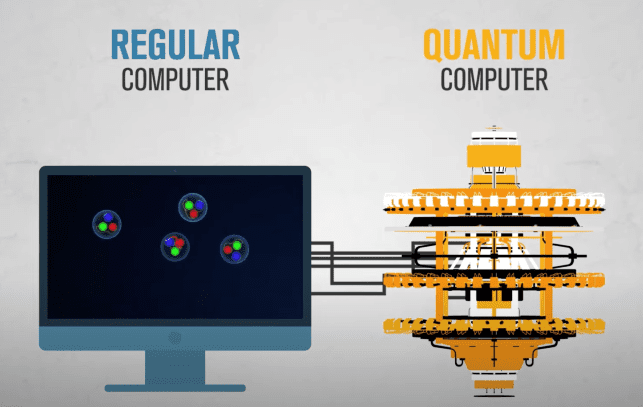
In variational quantum algorithms, a quantum processor works in concert with a classical processor to complete a task. As in other quantum algorithms, the quantum processor implements a sequence of gates that comprise a quantum circuit, and these gates act on a set of qubits called a register. The difference is that for variational quantum algorithms, some of these gates can be tuned by variable control parameters to generate a family of related quantum operations. Individual qubits, for example, can be controlled by “rotation angles”, which systematically transform qubit states into new superpositions of zero and one. The classical processor’s role, meanwhile, is to optimize over all of these parameters, choosing angles that allow the quantum processor to best perform the desired task.
Best of both: In hybrid quantum-classical algorithms, quantum and classical computers work together as co-processors to complete a task. (Courtesy: Jinglei Zhang)
The first application of variational methods to quantum algorithms came in 2014 with the development of an algorithm known as the variational quantum eigensolver (VQE). In the VQE, the classical optimizer chooses rotation angles that transform the state of the register into a physical state of the model system being studied (an eigenstate). Using this technique, the algorithm's developers were able to estimate the ground state energy of a molecule as precisely as they could with state-of-the-art classical techniques, despite the error-prone nature of their quantum processor. Since then, variational algorithms have been applied to a plethora of problems in chemistry and fundamental physics.
Lattice gauge theory on a quantum computer
In the latest work, which is described in Nature Communications, the Waterloo team showed for the first time that variational quantum algorithms enable NISQ processors to address questions in non-Abelian gauge theories. To demonstrate the feasibility of the technique, the researchers considered a lattice gauge theory model with the simplest possible non-Abelian group. While this model does not capture the full complexity of QCD, it retains some of the key features that make large-scale QCD simulations unfeasible on classical computers, and its matter particles and force-carriers behave like quarks and gluons respectively.
In the model, matter particles (fermions) and their antiparticles (antifermions) exist at fixed points along a one-dimensional chain, connected by gluon-like force-carriers. In the lowest-energy state of the model, fermions pair up with other fermions and antifermions pair with antifermions to form composite particles that resemble the baryons of QCD. The second-lowest energy state consists of fermion-antifermion pairs, which are analogous to mesons in QCD.
The team began by mapping the lattice of fermions and antifermions onto a system of quantum spins, which are easier to simulate on a quantum computer. Then, the researchers designed efficient variational quantum circuits to approximate the ground state and the first excited state of the model system. Because they knew the ground state and first excited state would be baryonic and mesonic respectively, they could restrict their variational searches to these smaller spaces, reducing overall computational cost.
To test the quality of this approach, the researchers ran their algorithms on an IBM quantum processor paired with a classical optimizer to estimate the energies of these two states for systems with up to four fermions and antifermions. These systems were small enough for the researchers to simulate them exactly on a classical computer, meaning they could compare the variational estimated energies with values extracted from the classical simulations. When they did, they found excellent agreement.
Building toward QCD
The Waterloo team’s findings mark a significant step toward a full-scale simulation of QCD on a quantum computer. The researchers now plan to extend their current method by adding more qubits, including three spatial dimensions, and enhancing the model to encompass the full nature of QCD. They also hope to push past the limits of lattice QCD on classical computers. “After that, we aim to simulate sign-problem afflicted models, including matter at high density and real-time dynamics,” Zhang says.
In December last year, we received a letter from the UK’s Astronomer Royal, Martin Rees, saying that he was not concerned about the risk of astronomical bodies colliding with Earth, because “the rate of impacts is calculable, small and not increasing” (January p27). At first glance, I might therefore have dismissed the Netflix film Don’t Look Up, released in late December, which is about a comet on course to hit us, as just another sensationalist disaster movie. But after watching the trailer, I knew that, at its core, this film isn’t really talking about a comet strike.
Written and directed by Adam McKay, Don’t Look Up begins with astronomy PhD student Kate Dibiasky (Jennifer Lawrence) and her supervisor Randall Mindy (Leonardo DiCaprio) discovering a Mount Everest-sized comet – a “planet killer” – set to crash into Earth, causing an “extinction-level event” in six months’ time. The pair contact NASA and are put in touch with the head of its Planetary Defense Coordination Office (Rob Morgan), who flies them out to Washington DC for a meeting with US President Janie Orlean (Meryl Streep). What drives the drama from this point is that, when the scientists tell people about their finding, almost no-one seems to care.
President Orlean appears mildly irritated by their presence, and it is clear that she is only interested in winning points in the polls. Journalists, meanwhile, would rather report the story as a “little science experiment”, or not at all, while the public is largely distracted by social media and the romantic troubles of pop star Riley Bina (Ariana Grande).
This premise would be too unbelievable – nonsensical even – if it didn’t so aptly mirror society’s behaviour in the face of the existential threat posed by climate change. In this respect, the film is obvious about its message, but I mean that in a good way. The absurdity of our lackadaisical response to our environmental predicament really calls for something that reflects it in the most unambiguous terms.
The analogy of a hazardous comet is useful in achieving this, as it has some properties that climate change lacks; it is a visible object with a discrete location and a very specific time at which it will do its damage. Climate change, on the other hand, is much more nebulous and therefore more insidious. I, for one, have become used to hearing in the news that “we can’t say for certain if global warming caused this specific disaster, but it will increase the frequency of such events…” It just doesn’t provoke the same anxiety for most people, even if it should.
So the film brings a beautiful bluntness to the topic in a way that I haven’t seen before in fiction. But that isn’t to say that it has no subtlety at all. The parallels are cleverly crafted, with well-thought-through details filling in a complex picture of reality. The audience will recognize characters who latch on to the idea that the comet’s collision is not 100% certain (it’s 99.78% certain) and who indignantly quote a scientist dismissing it as “more near-miss hysteria”. It turns out that the “expert” in question is in fact an anaesthesiologist, not an astronomer. The politicizing of scientific facts is also given a thorough treatment. At various points, officials throw accusations of fear mongering at scientists, claim that the comet will actually be good for the economy or even sow doubt that it exists at all.
I particularly enjoyed the story about Peter Isherwell (Mark Rylance), a billionaire tech-company chief executive who wants to harness the comet’s rare minerals with advanced but unproven technology. He promises that his plan will also prevent the comet from killing everyone, and treats those who doubt this gamble as naysayers who lack vision. This feels painfully similar to real-world corporations that prefer to avoid cutting their emissions by instead focusing on the development of techno-fixes, such as carbon capture and storage (CCS). Projects developing this technology currently only store a tiny fraction of global emissions, have repeatedly missed targets and face colossal challenges in scaling up.
Sure, CCS could be an essential part of a long-term decarbonization strategy, but it would be a huge risk to delay reducing our emissions now, relying on the hope that CCS will solve the whole problem before we reach planetary tipping points.
Power play President Orlean (Meryl Streep) and her adviser (Jonah Hill) are more worried about the next election than the asteroid. (Courtesy: Niko Tavernise/Netflix)
There are, of course, places where the film’s analogy breaks down. No-one set the comet on its trajectory as a by-product of profit-driven activities. The impact is also predicted to kill everyone on Earth quite quickly whereas climate change will catch up more gradually with those who are most responsible – even if it is already affecting many of those who have contributed the least to it. I would have liked to see more about this aspect of climate justice, which is only briefly hinted at. Nevertheless, the film packs a lot into its two hours and alludes to a great many of the complexities of our situation, even if the parallels don’t always line up perfectly.
Despite its serious message, however, Don’t Look Up is an entertaining and genuinely funny film, fleshed out with character arcs that kept me invested in the fates of the individuals. I was rooting for the astronomers as they tried increasingly desperate approaches to convince people to do something, while navigating their personal lives and grappling with the fact that they might only have six months to live. There are also some nods to academia that scientists will appreciate, such as the importance of peer review, the “publish or perish” problem and the issue of senior academics getting the credit for their PhD students’ discoveries.
All this enriches the movie beyond being the cold skeleton of an analogy, preventing it from feeling too preachy and making its message more palatable. But the irony of this is not lost on me. The film itself acknowledges the problems with society’s demand for this kind of media. When two TV show hosts joke about the comet and seem not to register the gravity of the situation, Dibiasky is left bewildered, and questions if she was clear in what she had just told them. “We just keep the bad news light” because it “helps the medicine go down” they explain. “Maybe the destruction of the entire planet isn’t supposed to be fun,” responds an exasperated Dibiasky. “Maybe it’s supposed to be terrifying.”
For the first time, astronomers have captured the death of a red supergiant star in real time: revealing a dramatic surge in brightness in the months preceding its final explosion. For researchers of the Young Supernova Experiment, led by Wynn Jacobson-Galán at the University of California, Berkeley, the event was far more violent than would be expected from previous observations. The result could transform astronomers’ conceptions of how massive stars spend the last few months and days of their existence.
To study the evolution of massive stars in their final moments, astronomers can observe the material surrounding them at the instant that they collapse and explode, in dramatic Type II supernovae.
This material is supplied as the star loses mass via wind and violent outbursts, and after the supernova produces an intense flash, it becomes ionized by highly energetic photons. By analysing its resulting emission spectra in the hours and days following this explosion, astronomers can use modelling techniques to reconstruct the evolving environment surrounding the star in its last few months. In turn, this can shed light on how the star’s internal structure is changing.
In the summer of 2020, observations by the Pan-STARRS survey in Hawaii, part of the Young Supernova Experiment, detected excessive amounts of light emanating from a red supergiant roughly 10 times the mass of the Sun, located in the galaxy NGC 5731. At first, this brightness remained remarkably stable and persistent. Yet after 130 days, observations from the W M Keck Observatory, also in Hawaii, recorded the star suddenly collapsing and exploding in real time.
By modelling the photoionization they observed in the dense material surrounding the star, Jacobson-Galán’s team showed that it had shed large amounts of mass prior to going supernova, at a rate of roughly 0.01 solar masses per year. Such violent behaviour was particularly surprising for a red supergiant. Based on previous observations within our own galaxy, these stars were thought to be relatively quiescent in their final moments; typically shedding mass at considerably slower rates.
This suggests that at least some red supergiants must experience turbulent changes to their internal structures prior to going supernova. From further analysis, Jacobson-Galán’s team determined that the power for the star’s bright emission likely originated from the burning of neon, oxygen or silicon. The products of this burning may then trigger buoyancy-balancing gravity waves – which would deposit energy into the star’s outer envelope, intensifying both its brightness and mass loss.
If similar events are discovered in the future, they could have a profound impact on astronomers’ understanding of how stellar evolution unfolds prior to supernovae.
Nano mask: even though the mask is extremely thin, the filtration efficiency is not inferior to that of respirators, say KTU researchers. (Courtesy: KTU)
One thing that I have learned during the pandemic is that reading lips and other facial expressions plays an important role in how many of us communicate. I have reasonably good hearing, but I now realize how much I use cues from a speaker’s lips – particularly in noisy environments. So, I can appreciate how mask wearing has affected the lives of people who rely on lip reading.
Now, a team of chemical technology and business students at Kaunas University of Technology (KTU) in Finland has teamed up with the start-up company Assero to create a face mask that facilitates lip reading, while also protecting us from the spread of COVID-19. The transparent mask works in the same way as a normal mask, by filtering air using several layers of material. The key ingredient to the Assero mask is a special nanofibre layer that is sandwiched between two thin see-through layers.
The students were advised by KTU chemist Dainius Martuzevičius, who explains, “The masks are made of very small filaments that are 15–20 times smaller than a hair. They have pores through which air can penetrate, but dirt and very small particles are effectively trapped.” The process to create the nanofibre material was developed at KTU, and Assero was spun-out of the university to commercialize the technology. The students worked with Assero scientists to create a prototype of the transparent mask. The team is now working on improving the filtration efficiency and mechanical properties of the material.
To mark the 80th birthday of the late Stephen Hawking this month, Google teamed up with the Hawking estate to release a two-minute video “doodle” to celebrate the Cambridge physicist, who died in March 2018. The animation recounts Hawking’s diagnosis with a neurodegenerative disease at 21 and his pioneering work on black holes as well as some inspirational quotes from the man himself. “We think he would have loved the Doodle and been very entertained to see his long, distinguished life expressed so creatively in this briefest history of all, a two-minute animation,” the Hawking estate noted. Meanwhile, the UK’s Science Museum Group announced that a new display will open on 10 February in London featuring several of Hawking’s most treasured possessions, including his wheelchair, PhD thesis, as well as a blackboard filled with “academic doodles”.