Spin-enhanced nanodiamonds could improve disease diagnosis

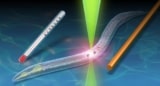
Fluorescent nanodiamonds can increase the sensitivity of paper-based medical diagnostic tests, according to a proof-of-concept study from researchers in the UK. Replacing the gold nanoparticles widely used in lateral flow tests with nanodiamonds that contain nitrogen-vacancy centres led to a dramatic improvement in test sensitivity. Taking advantage of the quantum sensing abilities of these nanodiamonds could enable earlier detection of diseases such as HIV, the study authors say, improving outcomes for patients.

Lateral flow tests, such as home pregnancy tests, for example, work by soaking a paper test strip in a fluid sample. If the hormone, protein or DNA being detected is present, the test is positive and the paper changes colour, normally with a coloured line appearing. These tests are cheap, easy to use and provide rapid results, making them perfect for home-testing and use in low resource settings. But they lack the sensitivity of other diagnostic tests and are often unable to detect low levels of biomarkers in early stages of infection.

Most lateral flow tests use what is known as a sandwich assay. If you are trying to detect a viral particle – an antigen – you attach antibodies that target it to visual tags, usually gold nanoparticles, and a specific point on the test strip, the test line. If the antigens are present, they bind to both the visual tags and the test line, immobilizing themselves and the gold nanoparticles in one place on the strip. This creates a visible line that indicates a positive test.

In new research published in Nature, Ben Miller of University College London and his colleagues found that if they replaced the gold nanoparticles with spin-enhanced nanodiamonds they could make the tests many thousand times more sensitive.

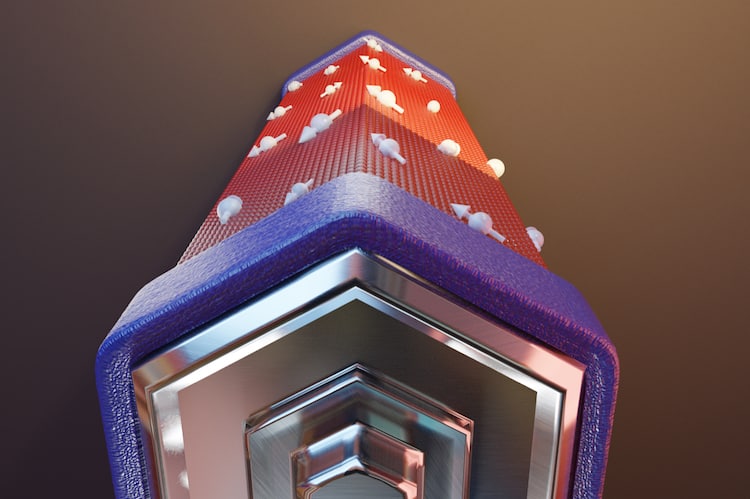
These nanodiamonds have a very precise imperfection in their crystal lattice known as a nitrogen-vacancy centre. The energy structure of this point defect causes the nanodiamonds to fluoresce. And the intensity of this fluorescence can be modulated by using an electromagnetic field to manipulate the electron spin of the nitrogen-vacancy centre. This fluorescence, and the ability to manipulate it, makes these nanodiamonds attractive as potential biomarkers.

To investigate whether these nanodiamonds could work in lateral flow tests, Miller created two tests for detecting the vitamin biotin: one using gold nanoparticles as the visual tag and the other using fluorescent nanodiamonds. The researchers then tested the assays using increasing dilute solutions of biotin. They found that the nanodiamond tests were 100,000 more sensitive than those that used gold nanoparticles, and could detect concentrations as low as 0.5 molecules per microlitre, or 27 particles in a 55 µl sample.

The researchers also created a lateral flow test for detecting HIV RNA. They found that after a 10-minute amplification step, which creates multiple copies of the RNA, they were able to detect HIV RNA in a sample that contained just a single molecule.

Reading the nanodiamond test strips, however, was not as simple as just looking at them. To check the results, the researchers imaged the paper strips using a fluorescence microscope while using a microwave field to modulate the nanodiamonds’ fluorescence.

Although you could use laboratory equipment to measure lower levels of gold nanoparticles than are visible with the naked eye, Miller tells Physics World that fluorescent markers are more sensitive, as fluorescence is easier to detect at lower levels than the change in light absorption caused by the gold.

However, when researchers previously tried to use fluorescent markers in similar assays, they struggled due to the background fluorescence from the test strips. This is where the nanodiamonds come in. Miller explains that you can modulate their fluorescence at a specific frequency and then filter to detect fluorescence at that frequency, separating their signal from the background fluorescence.

“We need to do more work to make [our tests] more applicable to low resource settings,” Miller tells Physics World. He says that the team is currently developing a prototype hand-held, low-cost portable reader, based around a smartphone. This will hopefully replace the microscope, he explains, making the test more suitable for primary care settings.

Happy new year! The January 2021 issue of Physics World magazine is now out

Physics World January 2021 cover

Wishing all Physics World readers a very happy and prosperous new year…let’s hope it’s better than the last one!

Now we all know that predicting the future is a mug’s game – even if it’s just trying to imagine what might happen in physics over the next 12 months.

But at a deeper level, do we even have our destiny in our hands? The notion of “free will” worries many physicists, who feel that our actions are the result of deterministic physical laws that govern the behaviour of particles, over which we have no control. Though if that’s the case, why bother with anything?

In the new issue of Physics World, science writer Philip Ball explores the debate about free will, while elsewhere there’s a great feature by Betony Adams and Francesco Petruccione on the links between quantum physics and consciousness. There may be nothing in it, but thinking about it surely beats worrying about what might happen in the real world over the next 12 months.

If you’re a member of the Institute of Physics, you can read the whole of Physics World magazine every month via our digital apps for iOSAndroid and Web browsers. Let us know what you think about the issue on TwitterFacebook or by e-mailing us at pwld@ioppublishing.org..

For the record, here’s a run-down of what else is in the issue.

• Silicon breakthrough bags award – The Physics World 2020 Breakthrough of the Year goes to researchers who have created a silicon-based material that emits light at practical wavelengths, as Hamish Johnston reports

• Astronomers mourn Arecibo collapse – The devastating collapse of the iconic Arecibo Observatory last month has left a large hole not just in astronomy but with the people of Puerto Rico too, as Liz Kruesi reports

• China space mission retrieves lunar samples – Chang’e-5 aims to return lunar material for the first time in 45 years to study the evolution history of our closest neighbour, as Ling Xin reports

• Why free will is beyond physics – Philip Ball argues that “free will” is not ruled out by physics – because it doesn’t stem from physics in the first place

• Why breadth beats depth – Niki Bell says that subject-matter experts do not necessarily make the best teachers

• Not over yet – The recent US presidential election doesn’t necessarily herald a new day for science, cautions Robert P Crease

• Powering the beast – The Internet will use a fifth of all the world’s electricity by 2025 –  and that’s no bad thing, says James McKenzie

• The light of the mind – Do quantum effects play a role in consciousness? Or are the two areas being linked simply because they are both difficult to understand? Betony Adams and Francesco Petruccione explore this developing, and contentious, field of quantum biophysics

• CERN’s new era for calorimeters – The new calorimeter for CERN’s CMS experiment is one of the most challenging engineering projects in particle physics of all time. Dave Barney explains how it will be pivotal to the success of the High-Luminosity Large Hadron Collider

• The 10 greatest predictions in physics – Over the centuries there have been many theoretical physics predictions that have rocked our understanding of how the world works. David Appell highlights what he thinks are the top 10 of all time

• Intertwined entities – Tushna Commissariat reviews Entanglements: Tomorrow’s Lovers, Families, and Friends edited by Sheila Williams

• Where many have gone before – Ian Randall reviews Space 2069: After Apollo – Back to the Moon, to Mars, and Beyond by David Whitehouse

• From physicist to patent attorney – Monifa Phillips beat the odds, becoming the first Black woman to graduate with a PhD in physics from the University of Glasgow. She describes her pathway into physics, her successes and struggles in academia, and her future in patent law

• Ask me anything – Erik Bakkers is professor of advanced nanomaterials and devices at the Eindhoven University of Technology (TU/e) in the Netherlands.

• Doomsday numbers – Peter Wright explains why R isn’t the only number to worry about


How the Arecibo Observatory created a scientific legacy for Puerto Rico

On 1 December 2020 disaster struck on the island of Puerto Rico. A few minutes before 8 a.m. local time the iconic Arecibo Observatory collapsed, devastating the radio-astronomy community and planetary-radar scientists. The radio telescope’s suspended platform – with its Gregorian dome focus and a plethora of instrumentation – fell after multiple suspension cables failed. The 900-tonne platform crashed into the 305 m dish lying 137 m below. It was the ending that many had feared would meet the legendary telescope, leaving a community of researchers, staff and the people of Puerto Rico in mourning.

Astronomers hold their telescopes in high regard and Arecibo was instrumental in understanding compact objects like pulsars and other remnants of once-massive stars. It was a crucial tool in studying the surfaces of solar system objects and especially for learning about potentially hazardous objects to Earth. And it was an icon in the search for extraterrestrial intelligence, known as SETI. The collapse now leaves a gaping hole in astronomy and atmospheric geoscience.

Arecibo was an engineering and architectural marvel. The dish itself, made of nearly 40,000 perforated aluminium panels, each about 2 m by 1 m, sat in a natural sinkhole in the Puerto Rican jungle. Suspended like a bridge 137 m above a canopy of trees was a platform where antennas, reflectors, receivers, platform motors and other instrumentation sat. The telescope first came online in 1963 and an upgrade in 1974 added a radar transmitter.

In the 1990s the telescope and its instrumentation were further upgraded – including the addition of the three-storey-tall Gregorian dome. In that upgrade, 12 new auxiliary cables were added to the six main ones strung between three reinforced concrete towers situated around the dish to help support the additional weight. “It is a magical place,” recalls astrophysicist Laura Spitler from the Max-Planck Institute for Radioastronomy in Bonn, Germany. “It’s greener than you can imagine. In the evening you get hit by the humidity and the sound of all the frogs chirping.”

Yet over the past 15 years, Arecibo suffered from budget reductions and in 2017 a category-4 storm – Hurricane Maria – slammed into Puerto Rico, damaging and flooding the site. In early 2018, with the observatory at risk of closing, a new collaboration – the University of Central Florida; Metropolitan University in San Juan, Puerto Rico; and Yang Enterprises in Oviedo, Florida – stepped in to manage the observatory and increase funding. But it was not enough. On 10 August 2020 an auxiliary cable slipped out of its socket on “tower 4” and swung down, carving a 30 m gash into the dish below. Once the auxiliary cable failed, the other cables had to take on more tension.

The management team brought in multiple consulting engineering firms to assess the structure and the tension on those cables, and they found that the remaining cables should hold it in place. But on 6 November, one of the four main cables attached to tower 4 snapped when it was carrying some 60% of its designed load. The environmental factors of the site over the years – from constant moisture, storms and earthquakes – had degraded the cables faster than expected. Some reports also suggest that poor maintenance may have accelerated the wear on the facility. The same independent engineering firms re-evaluated the site after the second cable failed and came to a different conclusion.

Speaking at a press conference two weeks later, Ralph Gaume, director of the division of astronomical science at the National Science Foundation (NSF), said that engineers had advised them that “the loss of one more cable on tower 4 will likely result in a catastrophic uncontrolled collapse”. Gaume and colleagues announced at that point that Arecibo would be decommissioned and safely dismantled – fixing it was no longer an option given the structural integrity and safety considerations for workers onsite.

To track any new wire breaks – each main cable was made up of about 170 wires – Arecibo staff used cameras in the main operations room and drones to monitor the situation every few hours. Further wire breaks were spotted on cables at tower 4, then on 1 December at about 7:55 a.m. local time, one of the main cables snapped, with others quickly following. The platform swung and pulled cables out of the other towers. And then the 900-tonne platform came crashing down onto the 305 m dish. Arecibo Observatory staff who live onsite heard the collapse and news spread quickly through social media. “It was just such a shock when it actually happened. I think many of us are still really taking it in,” says Robert Minchin, a radio astronomer from Universities Space Research Association, who between 2005 and 2018 was a staff astronomer at Arecibo.

A legend falls

Arecibo was a multifaceted research instrument. Its size made it the most sensitive radio telescope in the world for decades, peering into space to collect faint signals. Its observations led to the 1993 Nobel Prize for Physics being awarded to Russell Hulse and Joseph Taylor Jr for the discovery of a new type of pulsar that led to new ways to study gravity. The dish was the largest single-dish telescope in the world until 2016 when China’s Five-hundred-meter Aperture Spherical Radio Telescope (FAST) came online. One of Arecibo’s most important contributions was its series of sky surveys of compact stellar objects, mysterious pulsing radio signals and the diffuse gas between galaxies.

Arecibo’s SETI work was also iconic. Scientists would look through Arecibo data for narrow-band radio signals, such as a navigation beacon, accidental radar, television broadcasts or some other form of radio leakage from another civilization. Dan Werthimer, a researcher at the University of California, Berkeley’s SETI Research Center, and colleagues developed a “piggyback” technique at Arecibo. “We figured out a way to use the telescope at the same time that other astronomers were using it to do their sky surveys,” he says. “We would just go along for a ride.” Werthimer was also one of the developers of the SETI@home project, which launched in 1999 and used processing power on personal computers around the world while the machines were asleep to analyse data from Arecibo’s SETI search. After more than 20 years, in March 2020 the volunteer aspect of the initiative “went into hibernation”.

In 1974 Frank Drake and the late Carl Sagan used the just-installed Arecibo transmitter to send a message toward globular cluster M13, which hosts thousands of stars. Encoded in that beamed “Arecibo Message” – a message to another intelligent civilization, if they intercepted it – were graphics of DNA, a sampling of biochemicals of Earth-based life, the solar system, a stick-figure human, and a drawing of the telescope. Lasting just under three minutes, the pictorial message contained 1679 bits, arranged into 73 lines of 23 characters.

That transmitter, used for the Arecibo Message, was also what enabled planetary radar work at Arecibo. It would send radio waves toward planetary objects, such as just-discovered near-Earth objects, planetary moons and asteroids. “The signals scatter from the surface of those objects, and then we detect the echo,” explains Anne Virkki, who has led the planetary radar group at Arecibo. They compare the transmitted and received signals to learn about the object’s distance, motion, size and surface. A large portion of this work involves characterizing potentially hazardous-to-Earth objects, and Arecibo took on much of this planetary defence work. The next-best facility is some 20 times less sensitive. It is also part of the Deep Space Network, with a priority of communicating with spacecraft. The planetary defence work at Arecibo, funded by NASA, is part of this idea that the telescope could continue to evolve. “Arecibo was a telescope that kept reinventing itself,” says Werthimer. “It wasn’t the telescope that was born in the 1960s; it kept getting better and better.”

The NSF says it is not closing Arecibo, which also houses an education centre, a 12 m radio telescope and a LIDAR facility

Arecibo was doing science right up until 10 August 2020, when that auxiliary cable failed. Minchin and his colleagues had collected sky survey data the day before. Spitler, who studies transient radio sources including millisecond-long flashes of radio waves called fast radio bursts, had been monitoring one as recently as 8 August.

The National Science Foundation (NSF) says it is not closing Arecibo, which also houses an education centre, a 12 m radio telescope and a LIDAR facility. But questions remain whether the observatory can still have the same draw without the 305 m telescope. There have been calls to rebuild, producing a more advanced structure in the same location. But it’s not a simple task. “The NSF has a very well-defined process for funding and constructing large-scale infrastructure including telescopes,” says Gaume. “It’s a multi-year process that involves congressional appropriations and the assessment and needs of the scientific community. So it’s very early for us to comment on the replacement.” A petition to rebuild the telescope has had more than 100,000 signatures.

Arecibo’s legacy – a symbol of inspiration

Arecibo was more than a metal dish in the jungle. it was a place that inspired generations of people to study the universe and our place within it. “We recognize the significance of this loss to Puerto Rico and the significance of this loss to so many who have called the observatory home,“ notes Ashley Zuaderer, Arecibo programme director at the National Science Foundation. Indeed, Arecibo’s legacy is the community it built and inspired. The scientists it helped forge, the people who turned to it to understand our place in the stars, and the local Puerto Ricans who it filled with pride.

On 19 November, after the National Science Foundation announced it would decommission Arecibo Observatory, planetary scientist Edgard G Rivera-Valentín from the Lunar and Planetary Institute in Houston, Texas, who grew up in Arecibo, Puerto Rico, started the hashtag #WhatAreciboMeansToMe on Twitter, which received hundreds of responses. “Arecibo is more than an icon in Puerto Rico. It is part of our culture,” Rivera-Valentín told Physics World. “Over the past 57 years, it has woven itself into the Puerto Rican culture and has become a symbol of science and excellence in Puerto Rico. A symbol of our hopes and dreams to improve, to grow and to achieve. A symbol of inspiration.”


The 10 quirkiest physics stories of 2020

Despite the impact of the COVID-19 pandemic, physicists have still found time to carry out research that touches on the quirkier side of science. Here is our pick of the 10 best, not in any particular order.

Low-temperature LEGO

Condensed-matter physicists like to put materials under extreme conditions to tease out their interesting properties. So why not see if anything interesting happens with everyday objects? That is exactly what physicists at Lancaster University did when they put four LEGO bricks into their dilution refrigerator and cooled them to a chilly 70 mK. LEGO bricks are made from a material called Acrylonitrile Butadiene Styrene (ABS). The team found that this acts as a better insulator than many well-known bulk-insulator materials such as the glass-ceramic Macor or the plastic-based Vespel . Given that ABS is relatively cheap, the team says that 3D-printed scaffolds of the material could be an alternative to current materials used to build low-temperature equipment. Being a playful group of physicists, they also put a LEGO minifigure into the refrigerator, which not only survived the deep freeze but has also become the “world’s first LEGO cryonaut”.

Sag, settle, curl

Dried spaghetti has long perplexed physicists due to its tendency to break into three pieces when bent, rather than two. Nathaniel Goldberg and Oliver O’Reilly of the University of California, Berkeley, tackled another puzzle related to the stringy pasta. When placed in a pot of boiling water, a spaghetti strand will first sag and then settle on the pot’s bottom before finally curving in on itself into a U-shape. The researchers identify these three separate states as sagging, settling and curling, with Goldberg and O’Reilly creating a model that could predict the mechanical behaviour of the pasta as it cooks. The duo says that the model could be useful for the food-production industry and that future research could focus on the deformation of other types of pasta such as rigatoni or lasagne. It seems like the pasta-bilities are endless.

Grinding it out

You’d think that making an espresso is easy – just force hot, high-pressure water through a bed of coffee grounds. Some of us have become coffee connoisseurs during lockdown, but even for skilled baristas operating top-of-the-range coffee machines, creating cups of espresso that taste consistent from one to the next is tricky. So to discover the secret of the perfect espresso, a team of researchers led by mathematician Jamie Foster from the University of Portsmouth created a model to describe the espresso-making process. Espresso coffee normally comes in a fine grind, which maximizes the surface area of coffee that is in contact with the water. That, in theory, should result in a strong cup of coffee that gets the most flavour out of the grounds. But by examining different grinds of coffee, Foster and pals discovered that if the coffee is too fine, the water can be prevented from reaching all of the coffee grounds. The researchers’ theory is currently being tested at a coffee shop in Eugene, Oregon – which makes a mocha-ry of the notion that Americans aren’t interested in a decent brew.

Parking theory, part 2

Finding the best place to park your car might be the least of your worries during the current global COVID-19 pandemic. But when life does finally return to normal and you’re searching for that perfect car-park spot, US physicists Paul Krapivsky and Sidney Redner have some advice. Last year they examined whether it’s better to park far from your destination (which should be easy but then require a long walk) or to park nearby (which should be harder but require only a short walk). Their conclusion was that a “prudent” strategy is best, in which you park in the first gap of cars you come across but take the spot nearest to the venue. This year the duo formulated a general rule for this prudent strategy. According to Krapivsky and Redner, drivers who observe a particular rule will have a probability of finding the best spot that can be as high as 25%. Trouble is, their calculation depends on every driver observing the rules, which as we know isn’t guaranteed. And it assumes a 1D parking lot, which is the kind of place that only exists in a physicist’s imagination.

Backgrounds to the fore

With video-conference services like Zoom all the rage this year, you still might want to impress your friends and colleagues with a background from the Perimeter Institute for Theoretical Physics (PI) in Canada. As one of the world’s top centres for physics research, it released nine science-themed images for use as a backdrop when you don’t want colleagues seeing the dirty-laundry basket, rioting kids or peeling wallpaper behind you. The images include an artist’s impression of two colliding black holes, a dark-matter map of the cosmos as well as an exterior shot of the PI building in Waterloo, Ontario. Of course, PI isn’t alone – other Zoom backgrounds are available too, including images of the ATLAS detector at the CERN particle-physics lab and shots taken by the Hubble Space Telescope.

Friday on my mind

Come Dine with Me is the brilliant British TV show in which amateur home cooks take turns hosting a dinner party for each other throughout the course of a week. Each dinner is scored in private by the other contestants on the evening it’s served and whoever racks up the highest score at the end of the week wins a cash prize. Two physicists from the University of Hamburg analysed results from 2268 episodes of the German version of the show – Das Perfekte Dinner – and concluded that you have more chance of winning if you host a dinner later in the week. Cook on a Monday and you might as well just open a jar of sauerkraut. Peter Blum and Marc Wenskat say that their finding is an example of the “secretary problem”, which arises when things are rated consecutively using the same criteria. Apparently, the application of those criteria change as each scoring occurs, skewing the results. “When competing, one should always carefully choose when to compete,” the authors write. So if you want perfection, go last.

The bottom line

Researchers revisited a classic problem in the animal kingdom this year: why can penguins poo such large distances? In 2003 researchers from Germany, Finland and Hungary – who bagged an IgNobel prize in 2005 for their efforts – found that some penguins can fire their excreta as far as 40 cm, allowing these aquatic birds to continue to nurture their eggs without sitting in a sea of faeces. Researchers in Japan modified this pooping model to calculate the maximum distance that a penguin could manage to fling their dung when at a certain height. Thanks to the penguins’ “strong rectal pressure”, which they calculate to be higher than previous work, the team finds that the maximum distance is 1.34 m. The team says this information could be “useful” for zookeepers, who would know just how far away to stand to avoid getting hit by the firing faeces. So next time you visit the penguin enclosure – do keep your faecal distancing.

Cubic earth

We’ve long dismissed the notion developed by the Greek philosopher Plato that the universe is made of five types of matter: earth, air, fire, water and the cosmos. Each was described with a particular geometry: a cube in the case of earth. However, new research shows that Plato might have been onto something after scientists in the US and Hungary measured and analysed fragmentation patterns in around 100 rocks that they collected as well as thousands from datasets collected by others. To their surprise, they found that the resulting shape of the fragments is indeed a cube. “It turns out that Plato’s conception about the element earth being made up of cubes is, literally, the statistical average model for real earth,” says geophysicist Douglas Jerolmack from University of Pennsylvania. “And that is just mind-blowing.”

Fair slices

Watermelon being sliced

What’s the fairest way to slice up a watermelon? Physicists in Belgium, France and Italy tackled the problem using geometry and calculus. After cutting the whole watermelon in half along its length and then in the middle to yield four equal quarters, the researchers discovered that this “half rule” fell away when then trying to slice the watermelon up into equal thin portions. Instead, they found a “2/3 rule”. So for a spheroid of length 10 cm, for two slices, the first slice should be made at 3.5 cm along the length but for three slices, the first slice should be 2.1 cm and the second 4.2 cm. After doing the calculations, the researchers tested them on a 4 kg watermelon and used Archimedes’ principle to confirm that the slice volumes were equal. Eureka!

Borderline collider

And finally, in 1977 the Nobel-prize-winning physicist Leon Lederman published a tongue-in-cheek proposal to build a collider using existing subway tunnels in New York. The city was then in financial crisis and Lederman, who died in 2018, reckoned that physicists could acquire the tunnels for a knock-down price. It never happened, of course, but his proposal has now inspired Caltech physicist David Hitlin to propose building another collider to address the politically controversial wall along the US–Mexican border. In a preprint paper, Hitlin describes how long, straight sections of the border between the states of Sonora and Arizona could be blocked by a huge linear particle collider. Stretching some 300 km long, he reckons the machine could achieve a centre-of-mass energy of 5   TeV. The proposed International Linear Collider (ILC) in Japan, in contrast, would be a mere 20 km long and have an initial energy of just 250 GeV. And what would Hitlin call the facility if it was built? The TrumpILC, of course.

You can be sure that next year will throw up its fair share of quirky stories from the world of physics. See you in 2021!

Medical physics highlights of the year

This year has been a year like no other. In 2020, many physicists turned their research efforts towards tackling the pandemic. Within medical physics, researchers worked to develop improved diagnostics and potential treatments for COVID-19, as well as coming up with innovative technologies and devices to help healthcare workers.

Alongside, the medical physics community continued to innovate in the more traditional areas of research – from new approaches to delivering radiotherapy to novel diagnostic imaging devices and techniques. Here are a few of the highlights that caught my eye.

Tumour hypoxia tracked in real-time

Hypoxia, or lack of oxygen, in a tumour can make it resistant to radiotherapy. But currently, there’s no method to monitor tumour oxygenation noninvasively or without averaging across the whole lesion. In January, a team headed up at Dartmouth-Hitchcock’s Norris Cotton Cancer Center demonstrated that Cherenkov excited luminescence imaging (CELI) could be used to non-invasively image oxygen distribution in tumours during radiation delivery.

Tracking hypoxia

Brian Pogue and his team irradiated tumours in mice with X-rays, generating Cherenkov light that served as an internal source to excite a phosphorescent probe. They examined two tumour lines, one that’s responsive to radiation and one that’s radioresistant, and saw differences in tumour oxygenation that reflected their differences in response.

The researchers concluded that time-resolved CELI offers high spatial resolution and could be easily added to clinical protocols to evaluate tumour oxygenation at the time of radiation delivery – a long-sought goal in cancer therapy.

Real-time dosimetry for FLASH radiotherapy

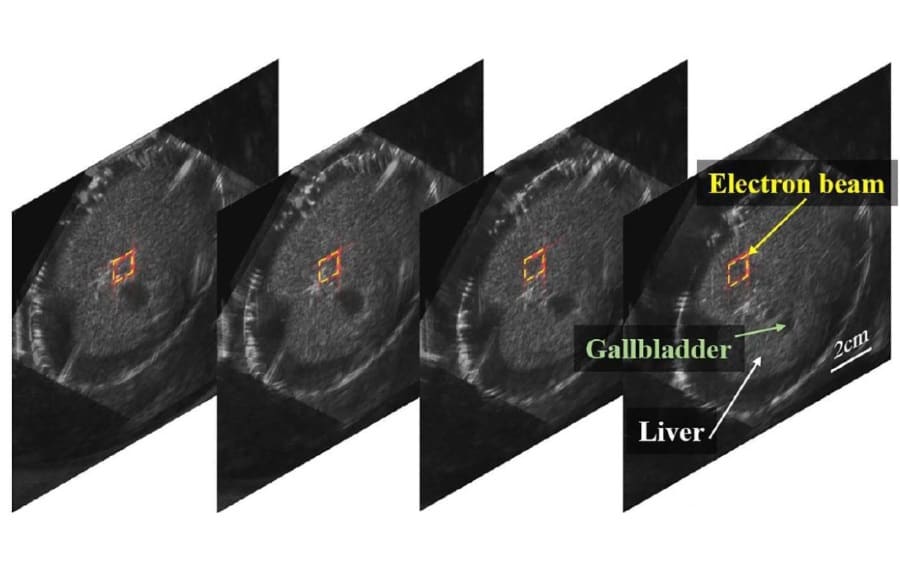
Ultrahigh dose rate radiation therapy (FLASH) is a hot topics in radiotherapy research. Animal studies have shown that FLASH can destroy tumours while vastly reducing damage to normal tissue, and clinical trials are just beginning. But with such high dose rates, it is vital to continuously monitor dose deposition in the patient. Researchers at the University of Michigan have proposed a new technique, ionizing radiation acoustic imaging, that can measure dose while simultaneously obtaining images of the radiation target and surrounding tissue.

FLASH dosimetry

The method is based on a thermoacoustic effect: as ionizing radiation deposits energy in the patient, the tissue temperature increases, causing expansion and a propagating pressure wave. In conventional radiotherapy, these waves are extremely weak. But with FLASH dose rates (40 Gy/s or more), the signals can be detected by ultrasound probes on the patient’s skin.

First author Ibrahim Oraiqat and colleagues showed that this acoustic imaging signal increased linearly with the dose-per-pulse and that measurements at different depths agreed with those from commercial film dosimeters. They also demonstrated simultaneous acoustic dosimetry and ultrasound imaging in a moving rabbit liver phantom.

Imaging airflow through the lungs

Cystic fibrosis (CF) is a hereditary disease that causes sticky mucus to build up in the lungs, hindering breathing and leading to lung infections. The lung damage caused by CF is often non-uniform, and treating the patches of damaged tissue can slow disease progression. To quantify and localize such damaged regions, researchers in Australia have developed a novel tool to measure regional lung function.

The team, led by Freda Werdiger from Monash University, used X-ray velocimetry (XV) to non-invasively generate high-definition images of real-time airflow through the lungs of mice. XV combines high-speed imaging – in this case, propagation-based phase-contrast X-ray imaging – and post-processing analysis to produce a detailed ventilation map of the lungs. The researchers tested the technique in mice with CF-like lung disease and their healthy littermates. Maps of regional lung expansion clearly showed the presence and locations of areas of airflow deficits in the diseased animals. Following its recent commercialization, this technology could help improve the length and quality-of-lives of people with CF and other respiratory diseases.

Non-invasive skin cancer detection

Suspicious skin lesions are usually identified by dermatologists using a handheld optical magnifier, and subsequently diagnosed via pathological analysis of a tissue biopsy. This process, however, is invasive, costly, time-consuming and dependent upon the skill of the physician. To address these shortfalls, Abraham Katzir of Tel Aviv University and co-researchers are creating an accurate, affordable clinical system that can identify skin cancers in near-real-time.

Skin cancer diagnosis

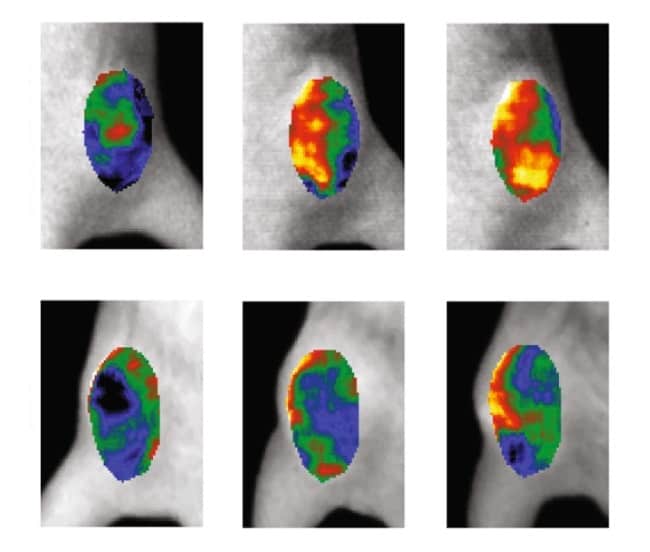
The team has developed a fibre-optic evanescent wave spectroscopy system based on a long, U-shaped, mid-IR transmitting fibre connected to a mid-IR spectrometer. By simply touching suspicious regions for 30 s with centre of the fibre, the system could identify cancerous lesions – including melanoma, basal cell carcinoma and squamous cell carcinoma – on patients’ skin.

Katzir suggests that in the future, this non-invasive “spectroscopic pathology” could replace standard invasive biopsies.

A portable brain MRI scanner

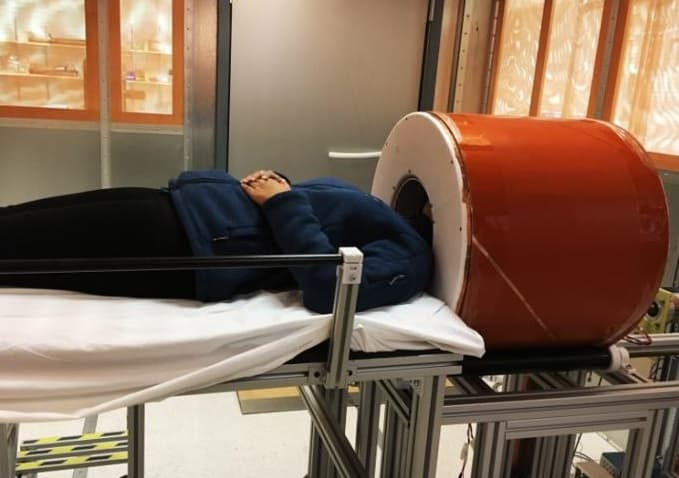
As 2020 drew to a close, we reported on a low-cost, portable brain MRI scanner being developed by researchers at Massachusetts General Hospital/Harvard Medical School. MRI is the standard modality for assessing neurological disorders, but conventional high-field scanners are expensive, immobile and require dedicated power and cooling infrastructure. As such, MRI is unavailable to critically ill patients who cannot be safely transported to the scanner or patients in low-resource settings.

Portable brain MRI

To address this, Clarissa Cooley and colleagues used an array of neodymium rare-earth magnets to generate an 80 mT static field. This permanent magnet does not require external power or cryogenic cooling, allowing the researchers to build a truly portable MRI brain scanner that can be wheeled around on a cart and operated from a standard power outlet. They demonstrated that the system could perform standard brain scans employed for diagnosing and monitoring clinically important brain pathology. Such a portable scanner could be used in many locations, such as a patient’s bedside, at the scene of an accident or in a rural clinic – expanding access to MR neuroimaging.

Global map of tiny ‘third-degree tides’ made using satellite observations

Third-degree tides – tiny sea-level fluctuations once known only locally from measurements made by tidal gauges – have been mapped out across the globe by geophysicist Richard Ray at NASA’s Goddard Space Flight Center in Maryland, US. As well as helping to refine ocean tidal predictions, the work could find application in geodesy and in understanding the behaviour of the Earth’s crust and mantle, which tides affect.

In simple terms, tides occur because the Moon’s gravitational tug causes the oceans to bulge out in two places – one positioned beneath the Moon and the other on the opposite side of the Earth. The gravitational potential can be expressed mathematically in terms of latitude and longitude using spherical harmonic functions.

To model the Earth’s dominant tidal patterns, explains Ray, “it suffices to use just the three spherical harmonic functions of degree two. However, that is only a first approximation.” In reality, the tidal bulges are ever-so-slightly asymmetrical, with one side larger than the other.  “To express that mathematically, we need higher degree spherical harmonic functions. Specifically, here we use functions of degree three,” says Ray.

Swamped in the data

The “third-degree” tides that arise from the tiny asymmetry are very small and their signal is easily swamped in tidal data – both by measurement noise and genuine non-tidal oceanographic signals.

“The tides are fairly obscure, because they are so small, but they can be detected in coastal tide gauges if the time series is long enough, say 10 years or longer,” Ray explains. “Away from these isolated tide gauges, little information about them has existed; no one had ever seen a global map of these waves from direct measurements.”

Today, maps of second-degree tides on the open ocean are made today using satellite altimetry observations. Records have been collected for some three decades, so researchers like Ray can search for third-degree tides. “The nice thing about going fishing for a time-coherent signal – like tides – is that after lots of averaging, even a tiny signal can eventually begin to emerge from the background noise.”

In his study, Ray worked with altimetry data collected by the TOPEX/Poseidon and Jason satellites, which operated from 1992–2005 and 2001–present, respectively. Ray used an averaging process that involved using a least-squares fit to sine waves of known frequency, which revealed the tidal amplitude and phase at each ocean location.

Distinctive pattern

The findings revealed a pattern of third-degree tides that was quite distinct from their second-degree counterparts. Ray says that this is a result of the spherical harmonic forcing being so different in each case. “Depending on the tidal forcing, its frequency, the ocean depth, and the shape of a basin, tidal waves can have certain resonances, some with unusually large amplitudes,” he adds.

The maps revealed that in the Atlantic Ocean, for example – where regular, second-degree diurnal (daily) tides are relatively suppressed – third-degree tides are relatively large. They reached even greater amplitudes in the Indian Ocean. In the South Pacific, meanwhile, third-degree tides were suppressed and barely reached 2 mm in height.

Philip Woodworth, a researcher at the UK’s National Oceanographic Centre in Liverpool says, “The largest third-degree tide, called M1, has been mapped previously around parts of the global coastline and at islands using tide gauges, but this is the first time they have been mapped over the whole ocean”.

Edward Zaron at Oregon State University adds, “It is truly astounding when you consider that the millimetre signals are here being extracted using data from satellites flying above the Earth at about 1300 km elevation, and it is a testimony to the precision of the satellite orbit determinations and geodetic sciences in the current age”. He concludes, “Richard is a master of these analysis techniques and their application to satellite altimetry”.

With his initial study complete, Ray is now looking to refine the accuracy of his tidal maps. “The results are still fairly noisy,” he says. “I’d like to apply formal data assimilation methods, which combine theory from fluid dynamics with measurements, to get the best of both.” He adds that the collection of more altimetry data in the future will also yield better results.

The research is described in Science Advances.

Nanotechnology and materials highlights of 2020

Regular readers of Physics World know that we have a penchant for materials and nanotechnology research. I developed my fondness for materials physics when I did a PhD many years ago on the magnetic properties of ultrathin films and my interest has never waned. So here are five of my favourite materials and nanotechnology stories of 2020.

Snake vision inspires pyroelectric material design

Bioinspiration and biomimicry involve studying how living organisms do something and using that insight to develop new technologies. Pit vipers have two special organs on their heads called loreal pits that allow them to “see” the infrared radiation given off by their warm-blooded prey. Now, Pradeep Sharma and colleagues have worked out that the snakes use cells that act as a soft pyroelectric material to convert infrared radiation into electrical signals that can be processed by their nervous systems. As well as potentially solving a longstanding puzzle in snake biology, the work could also aid the development of thermoelectric transducers based on soft, flexible structures rather than stiff crystals.

Perovskites could be platforms for exciton condensates

Is there anything that perovskites cannot do? This family of crystalline materials is usually associated with high-performance solar cells, but perovskites are true wonder materials that are finding increasingly exotic applications. Now, researchers have shown that certain perovskites could be ideal platforms for creating Bose–Einstein condensates (BECs) of excitons. Excitons are quasiparticles that comprise an electron–hole pair (and we do love a quasiparticle at Physics World). BECs are normally made from atomic gases that must be chilled to near absolute zero. However,  Kai Chang and colleagues reckon that exciton BECs in perovskites could exist at a balmy 77 K.

Rippling graphene harvests thermal energy

There is no shortage of clever applications for graphene – a sheet of carbon just one atom thick – but research really fired my imagination this year. The rippling thermal motion of a tiny piece of graphene has been harnessed by a special circuit that delivers low-voltage electrical energy. The system was created by  Paul Thibado and colleagues, who say that if it could be duplicated enough times on a chip, it could deliver “clean, limitless, low-voltage power for small devices”.

Supercurrent goes to the edge

The topological properties of matter have been a very hot topic over the past few years, so it is no surprise that in 2020 physicists have observed “topological superconductivity” for the first time. Nai Phuan Ong and colleagues have measured a robust supercurrent at the edge of a superconductor that is very different to the supercurrent in the material’s bulk. The team does not yet fully understand the reason for why the edge supercurrent remains independent of bulk supercurrent, but they believe it could come from the topologically protected edge states in the material.

Tipsy sludge worms simulate active polymers

Polymer strands are often described as worm-like, so why not use living worms to gain insights into polymer materials? And if you want to alter the behaviour of the worms, there is no better way than to give them a stiff drink. That is exactly what Antoine Deblais and colleagues did – using worms to gain new insights into the properties of poorly understood “active polymer” materials by measuring the viscosity of clusters of sludge worms as they were subjected to shear forces. The wriggling activity of the worms was controlled by adjusting their temperature, and the creatures were temporarily knocked out using alcohol.

Physics World review of 2020: a year we’re glad to say goodbye to

I remember receiving one of those “hilarious” WhatsApp messages in mid-March just as the coronavirus pandemic was taking hold and everyone was going slightly mad. Signed by “The Management”, it declared that it was no longer in anyone’s best interests to proceed with 2020 and that “after careful consideration”, this year had been cancelled. “While we recognize that a lot of hard work has gone into preparing for 2020, it has turned into a bit of a shitshow and we feel it is best to just call it off.”

I laughed, thinking that 2020 couldn’t possibly end up being that bad. Surely COVID-19 would be quickly forgotten and we’d all be back to “normal” in short measure. In fact, 2020 has been an absolute stinker. It’s ranged from the seriously bad – death, illness, lockdown and economic disruption – to the merely frustrating: social distancing, face masks and copious amounts of hand gel.

As if the pandemic wasn’t bad enough, 2020 saw the loss of several distinguished physicists who had had long and successful careers, including the Nobel laureates Philip Anderson (96), Masatoshi Koshiba (94), Arthur Ashkin (98) and Jack Steinberger (99), as well as the eminent mathematical physicist Freeman Dyson (96). We mourned too the destruction of the iconic Arecibo Observatory in Puerto Rico, which dramatically collapsed following structural damage.

It’s hard to put a positive spin on the year that’s mercifully drawing to a close (and I haven’t even mentioned Brexit yet, though there was some last-minute good news in the form of the withdrawal deal agreed by the EU with the UK on Christmas Eve, which means that Britain will fortunately remain part of the vital Horizon Europe research programme).

Positive spin

Still, I’ll try to look on the bright side. First off, as we’ve reported on the Physics World website in our “Physics in the pandemic” blog series, physicists have shown enormous resilience. Conferences, lectures and events have gone online, opening up such occasions for a more diverse mix of people. Kits for lab classes have been posted to students. Old data have been analysed while plans for future experiments have been drawn up. Hi-tech businesses have innovated with a renewed green focus, while medical and biophysicists have taken centre stage.

The importance of making physics more attractive and welcoming to people of all backgrounds has, rightly, been in the spotlight as never before.

The BlackInPhysics Week logoSecond, the importance of making physics more attractive and welcoming to people of all backgrounds has, rightly, been in the spotlight as never before. It was great to see Andrea Ghez’s work on black holes making her the second woman in three years to win the Nobel Prize for Physics, while October saw the first #BlackInPhysics week followed soon after by BlackInNano week. Here at Physics World we were delighted to welcome a new pool of contributing columnists from across the international physics community, bringing fresh voices to Physics World.

Great physics

We should also celebrate the fact that plenty of amazing physics has continued, as made clear through the variety of exciting research featured in the Physics World top 10 Breakthroughs of the Year, Our picks this year ranged from the first room-temperature superconductor (albeit at high pressure) to a super-sensitive X-ray detector. The overall prize went to physicists in the Netherlands and Germany, who created a silicon-based material with a direct band gap that emits light at wavelengths used for optical telecommunications.

There was also the exciting news of the potential discovery of phosphine – a signature of life – in the clouds of Venus. Finding life elsewhere in the cosmos would be a massive development, although we decided not to include the phosphine story in our Breakthroughs of the Year simply because the evidence doesn’t yet seem cast-iron, with some astronomers suggesting the signal was from sulphur dioxide instead.

Beyond physics, the science story of the year was of course the development of vaccines against COVID-19 and the role that modellers and bioscientists played in understanding the spread of the SARS-COV-2 virus.  The pandemic was not the stage that researchers would have wanted to remind the world of the value of science, but scientists have certainly been in the spotlight as never before. And we shouldn’t forget either the historic launch in May of SpaceX’s Dragon rocketship, which was the first privately built rocket to carry people into space, ferrying two NASA astronauts to the International Space Station.

Finally, closer to home, you may remember the special issue of Physics World magazine back in May, which looked at how to reduce, track and recycle all the plastic waste the world uses and discards each year. After a delay due to COVID-19, it was a pleasure and a relief earlier this month that that we were finally able to switch our print magazine from a plastic to a paper wrapper. Paper’s more expensive than the old “polywrap”, but it’s better on environmental grounds and I was pleased we could make the switch.

So as 2020 draws to its undignified close, I’ll end by saying a big “thank you” to all Physics World readers and advertisers for sticking with us this year. We’ve appreciated all your thoughts and contributions – after all, without the work of physicists around the world, there would be no Physics World.

Let’s just hope for a better 2021!


A year of quantum highlights

This pandemic-blighted year isn’t going to top anyone’s list of favourites, but looking on the bright side for a moment, 2020 has seen some remarkable advances in quantum science and technology. Here are a few of the highlights from subfields ranging from quantum fundamentals to quantum computing.

The most precise thermometer possible

How precise can a thermometer be? In January, Jukka Pekkola, Bayan Karimi and colleagues at the University of Aalto, Finland, and Lund University in Sweden found the answer by building a nanoscale device that can detect fundamental fluctuations in the electron temperature of a sample. The noise level in their thermometer is so low that they could detect the energy change due to the emission of a single microwave photon – all without disturbing the system. Being able to spot such tiny temperature changes could enable advances in fundamental physics, and this “quantum calorimeter” might also be used to make non-invasive measurements of quantum systems such as qubits in superconducting quantum computers.

Entanglement in “hot and messy” conditions

“Everybody knows” that quantum entanglement is a delicate phenomenon that only survives in ultracold, ultra-low-noise environments. And usually, “everybody” is correct. But in June, physicists at the ICFO in Barcelona, Spain used a technique called a quantum non-demolition measurement to show that at least 1.52 × 10¹³ out of the 5.32 × 10¹³ rubidium atoms in their 450 K sample were, in fact, entangled. The team, led by Morgan Mitchell and Jia Kong, also showed that this entanglement was non-local, meaning that it involved atoms that were not close to each other. As well as challenging assumptions about what entanglement looks like, the finding could be important for sensing technologies such as vapour-phase spin-exchange-relaxation-free (SERF) magnetometers that are based on hot, dense clouds of atoms.

zoom-1-light

The first quantum phase battery 

As quantum circuits become more complex, so, too, do the elements within them. In June, physicists at the NEST-CNR Nanoscience Institute in Pisa and the University of Salerno, Italy demonstrated the first quantum phase battery: a device that provides a persistent phase bias to the wavefunction of a quantum circuit, similar to the way that a conventional battery provides a persistent voltage bias to an electrical circuit. The device that Francesco Giazotto, Elia Strambini, Andrea Iorio and colleagues built out of InAs nanowires and superconducting Al leads was based on a theoretical concept developed only five years ago by physicists in Spain – a speedy turnaround that illustrates just how fast this field is progressing.

Measuring quantum tunnelling time 

How long does a particle take to tunnel through an energy barrier? To the physicists in the first “golden age” of quantum mechanics, who stumbled across tunnelling while playing around with the Schrödinger equation in the mid-1920s, the question would have seemed outlandish. Such is the progress in quantum fundamentals, however, that we now have an answer. In July, physicists led by Aephraim Steinberg of the University of Toronto, Canada, found that ultracold rubidium-87 atoms spent 0.62 ms tunnelling through a barrier 10 000 times wider than their diameter. While Steinberg acknowledges that his team’s definition of tunnelling time is not the only one available, their experiment sheds much-needed light on a phenomenon that remains poorly understood despite lying at the heart of practical technologies such as scanning tunnelling microscopes and flash memories.

Quantum advantage in an optical circuit

In September 2019, quantum computing experts at Google announced that they had used their Sycamore processor to solve a problem more than a billion times faster than a classical supercomputer. Within weeks, competing experts at IBM were pouring cold water over the claim, suggesting that the upgrade was more like a factor of 1000 (still impressive). Late in 2020, the quest for “quantum advantage” hit the headlines again as researchers led by Jian-Wei Pan and Chao-Yang Lu at the University of Science and Technology of China in Hefei announced that they had performed a quantum computation called Gaussian boson sampling 100 trillion times faster than a supercomputer could. Notably, Pan and Lu constructed their quantum circuit using optical elements rather than superconducting ones. The result is a work of art as well as science, with 100 inputs and 100 outputs generated by some 300 beam splitters and 75 mirrors arranged in a random manner.

Gaussian boson sampling

Whether such a system can be scaled up is an open question, but it’s also a question that isn’t unique to optical technologies. In a year that many of us would love to forget (and certainly don’t want to relive), developments like this – like the others on our list – are worth cheering.

Hydrogen sensor is inspired by butterfly wings

Photonic nanostructures found on the wings of some butterflies have inspired researchers in Australia to create a new and highly accurate sensor for measuring hydrogen gas. The device operates at room temperature and was made by a team led by Yilas Sabri and Ahmad Kandjani at RMIT University in Melbourne. The sensor could play a role in the safe industrial storage of hydrogen fuel and the research could also lead to the development of new techniques for non-invasive medical diagnoses.

As a promising source of renewable energy, increasing amounts of hydrogen gas are now being stored at large facilities around the world. Because of the extreme flammability of this gas, there is a need for highly accurate sensors that can detect even the smallest traces of hydrogen that has leaked into the air. Today’s commercially available sensors measure changes in electrical resistance in metal-oxide layers as they interact with hydrogen. However, these devices require temperatures of over 150 °C to operate and are also sensitive to other types of gas – limiting their potential for industrial applications.

Sabri and Kandjani’s team took a more sophisticated approach in their study; where instead of heat, hydrogen detection in their sensors is assisted by light. Their design employs photonic crystals: optical nanostructures that can be manufactured, but also appear in nature. In this case, the team was inspired by the wings of some butterflies – which have orderly patterns of tiny bumps that make the wings extremely good at absorbing light. To mimic this structure, the researchers fabricated a lattice of hollow titanium dioxide nanospheres, which they deposited onto an electronic chip. They then coated the device with a titanium palladium composite to enhance its sensitivity.

Explosion alarm

When activated by light, the surface of this sensor reacts hydrogen gas with oxygen to create water. The presence of water changes the sensor’s electrical resistance, providing a precise measure of the amount of hydrogen in the air. Operating at room temperature, the sensor can measure concentrations in the 10-40,000 parts-per-million range. It can therefore sound the alarm when the concentration of the gas is high enough to be an explosion risk. The device can discriminate between hydrogen and other gases with a selectivity that exceeds 93%.

The sensor was made using established fabrication processes so the team is confident that production could easily be scaled up for widespread using – including in hydrogen fuel cells. Furthermore, the ability of the sensors to detect low levels of hydrogen make them suitable for medical applications. By detecting the gas produced by gastrointestinal disorders in a patients’ breath, clinicians could carry out non-invasive diagnoses and monitoring procedures far more easily.

The research is reported in ACS Sensors.

Copyright © 2026 by IOP Publishing Ltd and individual contributors