Nanoindentation of metallic samples is closely related to hardness testing methods such as Vickers. The Vickers hardness test requires an imaging method to determine the size of the indentation cup. This implies that the Vickers hardness test is limited to larger indentation cups. Nanoindenation not only eliminates this shortfall by determining the size of the indentation cup from measurements of load and displacement, it also is much easier to automate the nanoindentation testing and the analysis of mechanical data.
This session contains an introduction into hardness testing, the indentation analysis following Oliver and Pharr (1992) and demonstrates the benefits of hardness testing at nanoscale for metallic samples.
Presenters:
Dr Ude Dirk Hangen
Nanomechanical Application Manager
Dr Rhys Jones.
Nanoindentation Product Sales Specialist
In this episode of the Physics World Weekly podcast we look back on the life of the prodigious condensed-matter physicist Philip Anderson, who died age 96 on 29 March.
We also have an exclusive interview with Professor of Extragalactic Astronomy at the University of Bath, Carole Mundell, who talks about her research on gamma-ray bursts. Mundell is also Chief Scientific Advisor to the UK’s Foreign and Commonwealth Office and explains how she translates science into scientific advice on issues of national importance.
We round off the programme by laughing along with a few physicists who have admitted to doing some pretty stupid things.
The physical sciences have not evaded the disturbance of daily life as a result of COVID-19 – the disease caused by the SARS-CoV-2 virus that is sweeping the globe. Government laboratories have either shut down or required employees to work from home while closing to visitors. The schedules of forthcoming space missions have been put at risk. Administrators of major telescopes have restricted or postponed critical observations. And individual postgraduates and junior scientists have seen their career paths put on hold as universities shut their doors.
In the US, national laboratories overseen by the Department of Energy (DOE) have suffered significant disruption. That occurred initially as a result of geography, with the virus having made its first deadly impact in the state of Washington. Most staff at the DOE’s Pacific Northwest National Laboratory in Richland, for example, have been working at home since early March. California’s Bay Area also emerged as an early hotspot.
A directive from California Governor Gavin Newsome that prohibited inessential travel and meetings led the SLAC, Berkeley, Lawrence Livermore National Laboratories, and the local branch of Sandia National Laboratory effectively to shut down, with most of their employees now working remotely at home too. There are exceptions, however. The Berkeley Lab is currently in a “safe and stable standby” status, with only critical work occurring on-site and most staff working remotely. This week, the lab’s Advanced Light Source began operating a limited number of beamlines for three days a week for users that are developing therapeutics to help combat the SARS-CoV-2 virus.
Other DOE labs have either restricted visitors, operated largely off-site or closed down as the virus created fresh hotspots. New York and New Jersey soon followed Washington state in exposure. The Princeton Plasma Physics Laboratory shut down on 13 March, requiring all its employees to work at home. A week later, Brookhaven National Laboratory responded to New York Governor Andrew Cuomo’s order that employees in “non-essential” jobs should stay at home. A subsequent order by Illinois Governor J B Pritzker also forced the Argonne and Fermilab facilities to restrict their operations. Meanwhile, the Oak Ridge National Laboratory in Tennessee and the Idaho National Laboratory have closed to visitors, researchers and the general public alike.
‘Heroes’ work’
NASA has been similarly affected, with greater impact on specific missions. On 19 March NASA administrator Jim Bridenstine announced plans to put all the agency’s centres under “stage 3 status”, which requires all but “mission essential” staff to work remotely. “We are going to take care of our people,” Bridenstine said. “That’s our first priority.”
An immediate result of NASA’s announcement was the temporary closures of the Michoud Assembly Facility in New Orleans and the nearby Stennis Space Center in Mississippi when the number of COVID-19 cases rose in the area. A result of the closures, Bridenstine noted, would be “temporarily suspension of production of the Space Launch System and Orion Hardware” – key components of the agency’s plan to land astronauts on the Moon in 2024. Analysts had already questioned the viability of that schedule under normal conditions, but it now seems even more doubtful.
A more immediate mission – Mars 2020 – remains on schedule. The $2.5bn project, which includes the newly named Perseverance rover, has a 20-day launch window that starts on 17 July. Failure to meet that window would delay the flight by two years. The mission has “the very highest priority”, Lori Glazer, head of NASA’s planetary science division, told a virtual meeting. “We’re going to ensure that we meet that launch window in July.” The project’s engineers are doing “heroes’ work” in maintaining that schedule, said NASA’s science head Thomas Zurbuchen.
The schedule of another prestige project, the James Webb Space Telescope (JWST), is less certain. California’s state-wide lockdown has applied to Northrop Grumman Aerospace Systems in Redondo Beach, which had been carrying out shaking tests on the $8.8bn observatory. A successor of the Hubble Space Telescope, JWST has already suffered numerous delays and is unlikely to meet its current launch date of March 2021.
Several observatories belonging to the Event Horizon Telescope have also closed down owing to the coronavirus, with the organization having cancelled its observing campaign planned to take place from late March into April. “We will have to wait for March 2021 to try again,” the organization said in a statement. Elsewhere in the world of astronomy, the Atacama Large Millimetre/submillimetre Array in Chile has suspended operations, as has the Association of Universities for Research in Astronomy, which has stopped observations at several of the telescopes it oversees and halted construction of the Vera C Rubin Observatory in Chile.
Meanwhile, the Laser Interferometer and Gravitational-wave Observatory sites in Hanford, Washington and Livingston, Louisiana, suspended observations on 27 March as did the Virgo detector in Italy. However, operations at the Kamioka Gravitational Wave Detector in northern Japan are still ongoing.
Academic institutions face their own coronavirus issues. Many research universities have moved to virtual operation. Those decisions have put particular pressure on postgraduate students who need to be on-site to perform their research. Some institutions, such as Brown University and the University of Alabama at Birmingham, have frozen hiring. In late March, a group of four organizations representing universities and medical colleges called on Congress to increase spending on research by government agencies.
The $2 trillion rescue package that President Donald Trump signed on 27 March includes some relief. It grants $100m to DOE labs, $75m for National Science Foundation grants, $66m for programmes of the National Institute of Standards and Technology as well as a fund worth $14bn for universities. Observers suggest that those amounts, while welcome, are too small. But the likelihood that Congress will pass another rescue package gives the scientific community some hope of extra support.
European impact
The impact of COVID-19 is, of course, not just impacting US labs. Most labs in Europe have also closed their doors too. The CERN particle-physics lab near Geneva has now reduced all activities on-site to those that are essential for the safety and security of the lab. CERN was moving to the latter parts of a long shutdown in preparation for a major upgrade to the lab’s Large Hadron Collider. Those activities have now been reduced, with officials at CERN working out how the impact will affect the timeline of the upgrade project, which was due to be complete in the mid 2020s. The CERN Council also announced in late March that it has postponed the release of the European strategy update that was due to be released in May.
Yet, a few major projects are still continuing to some degree. Mission controllers at the European Space Agency’s European Space Operations Centre in Darmstadt, Germany, are planning to test instruments on the agency’s Bepicolombo mission to Mercury as it completes a fly-by of Earth on 10 April – albeit with limited personnel. The ITER fusion experiment being built in Cadarache has cancelled all on-site visitors and onsite meetings, but is continuing with “critical responsibilities and functions”. Indeed, the project is still managing to undertake some construction tasks and has taken delivering of magnet components that have arrived from member states. Yet it looks likely that the SARS-CoV-2 virus will put back the start of operations that are currently planned for 2025.
The European Spallation Source, currently under construction in Lund, Sweden, has also put in place measures for staff to work remotely as well as cancelling visits to the site. Yet work is still continuing, with workers having recently installed the water tanks that are used for the proton target. Other neutron and X-ray synchrotrons facilities in Europe have closed such as the Institut Laue–Langevin and the European Synchrotron Radiation Facility, both in Grenoble, France, as well as the ISIS neutron source in Oxfordshire, UK.
An unusually energetic gamma-ray burst (GRB) has prompted astrophysicists to rethink the role of magnetic fields in these enormous stellar explosions. Observations made in the burst’s immediate aftermath show that key features of its associated magnetic field mysteriously vanished – a phenomenon that cannot be explained by current theories of how such fields form and evolve.
On 14 January 2019, NASA’s early-warning Swift satellite spotted a flash of gamma rays from an exploding massive star in a galaxy 4.5 billion light years away. Such flashes occur when a star’s iron core collapses into a stellar-mass black hole, producing two relativistic beams of strongly-magnetized particles. These beams generate gamma rays through synchrotron radiation, and as they shoot outwards from the collapsing core, the particles in them collide with circumstellar material shed by the star in the run-up to its explosion. The resulting shock creates an optical afterglow that can linger for months.
As soon as Swift detected the burst, which was designated as GRB 190114C, it automatically alerted a host of telescopes on the ground. Within 32 seconds, the MASTER telescopes in the Canary Islands and South Africa were in position and recording the burst’s afterglow.
This fast response has become standard within GRB astronomy, but the data proved anything but. Based on previous observations, astrophysicists expected the afterglow light to be polarized — perhaps by as much as 30 per cent, although the exact figure depends on the strength and structure of the GRB’s magnetic field. The polarimeters on the MASTER telescopes, however, initially measured a polarization of only 7.7 percent. A minute later, when the Liverpool Telescope in the Canary Islands began taking data on the burst, the polarization had dropped to just two percent, and it remained at this marginal level for the remainder of the observations.
That wasn’t the only odd feature about GRB 190114C. When another facility in the Canary Islands, the MAGIC telescopes, began taking data on the afterglow, it measured incredibly energetic emissions – in the tera-electron-volt (TeV) range – from inverse Compton scattering, which occurs when photons collide with electrons in the circumstellar material. This is the first time such emissions have been detected at such high energies in a GRB.
Shock physics
Unusual neighbourhood. A Hubble Space Telescope image of the afterglow of GRB 190114C, located in an interacting galaxy 4.5 billion light years away. (Courtesy: NASA/ESA/V Acciari et al./ICRAR).
In a paper published today in TheAstrophysical Journal, researchers led by Nuria Jordana of the University of Bath, UK, propose a partial solution to the mystery surrounding GRB 190114C. “We speculate that the low polarization is caused by the catastrophic dissipation of magnetic energy, which destroys the order of the magnetic fields and powers the afterglow,” Jordana tells Physics World.
The picture she and her colleagues paint is one of shockwaves bouncing around the circumstellar material. At some point in the 31 seconds before observations began, the blast wave from the stellar explosion struck this material. Pure kinetic energy allowed the jet and much of the forward shock to pummel through, but part of the wave was reflected, forming a so-called reverse shock.
Since localized disturbances scramble the forward shock’s magnetic field in random orientations, the forward shock is never polarized. The reverse shock, however, should still carry the magnetic field ejected by the newly-formed black hole.
In the case of GRB 190114C, something seems to have caused that magnetic field to catastrophically dissipate and dump its energy into the emission from the afterglow – which would explain the unusually high TeV energies. Jordana and colleagues infer that the weak polarization measured between 52 seconds and 109 seconds after the burst was the remnant of the large-scale magnetic field ejected from the black hole.
Looking for causes
The exact cause of the magnetic field collapse remains uncertain. According to Jordana, although the findings hint at a “universal role” for magnetic fields in GRBs, “the survival of the jet’s magnetic field must depend on additional, as yet unknown, physical factors”. She also points out that the polarization of the early optical afterglow has so far been measured in only a handful of GRBs. A larger sample will, she says, be needed to better understand the mechanisms that drive it.
Andrew Levan, an astrophysicist at Radboud University in the Netherlands who co-authored an earlier paper describing the TeV emission, says that the apparent lack of polarization is “a little surprising”, especially given what he describes as the “very early and sensitive observations” of the GRB’s afterglow. Levan’s group found that GRB 190114C occurred in the central region of a galaxy that is interacting with another galaxy – an unusual location, since GRBs tend to be caused by the destruction of massive stars with low abundances of heavy elements, and these are usually only found in less chemically-evolved galaxies. Levan says it’s “plausible” that GRB 190114C’s environment and unusual characteristics could somehow be linked. However, he adds, “it’s a very difficult problem to explain exactly how the field may have collapsed in this case”.
Ripples that appear on the surfaces of newly fertilized eggs closely resemble those found in other physical systems – according to Nikta Fakhri and colleagues at the Massachusetts Institute of Technology. The team discovered the similarity through statistical analysis of the spiral patterns produced by active proteins in newly fertilized starfish eggs. The researchers say that their discovery could lead to the development of biological computers that use ripples to process information.
When the egg cells of many species are fertilized, complex ripples are often propagate across their surfaces (cell membranes) before cell division begins. These waves are produced by a protein called Rho-GTP. This protein mostly sits inactive in the cell’s cytoplasm, but rapidly springs to action and attaches itself to the cell membrane when a separate hormone indicates cell division should begin. These ripples are known to produce intricate patterns as they propagate, but until now, the physical characteristics of the patterns have remained largely unexplored.
In their study, Fakhri’s team analysed the patterns in detail in fertilized starfish eggs, which are particularly large and easy to observe. To do this, they injected egg cells with a fluorescent marker that attached itself to Rho-GTP. Then they subjected the eggs to the relevant hormone in varying concentrations. In each experiment, they saw that concentrated waves of Rho-GTP oscillated out of moving central points to create spiral patterns. The team describes these centres as “topological defects” – freely-moving points where the molecules in a cell’s membrane do not join up seamlessly.
Universal laws
Fakhri’s group also observed that many spirals move across the membrane at a time. Some of the spirals arise spontaneously in pairs that move in opposite directions, whereas other pairs collide head-on, annihilating each other. After creating animations of the process, the team performed a statistical analysis of the motions of the spirals and topological defects. They discovered that these dynamics can be described by existing mathematical theories describing the dynamics of vortices. This suggested that the system’s behaviour is governed by the same universal laws as a wide variety of other, seemingly unrelated physical systems, albeit on widely differing scales.
The team found that the observed patterns were similar to turbulent vortices in the Earth’s oceans and atmosphere. The patterns also propagated in a way similar to electrical signals in the heart and brain. Perhaps more surprisingly, the velocities of clusters of spiralling waves resembled those found in quantum fluids. With further research, the team hopes that new techniques could emerge for manipulating these dynamics. If achieved, the biological ripples could be made to convey information and perform calculations in ways similar to quantum computers.
“Perhaps now we can borrow ideas from quantum fluids, to build minicomputers from biological cells,” Fakhri says.
On Thursday 12 March I went back to school to give a talk as part of British Science Week. The message I tried to convey to the audience of 10-year-old children was simple: to keep healthy, it is important to have a healthy lifestyle and exercise regularly. If they did not get why back then, I am sure they will by the end of this pandemic!
That was only one week before schools were shut down in the UK and the government recommended to all of those who could do to work from home. Our university had preceded them by asking non-clinical staff not to come to St Thomas’ Hospital, the central London hospital where I work that also treats many patients. As our head of school stated, being fully embedded within the hospital offers a fantastic environment for research, but can present additional health risks in times like these.
To be fair, there was a slow build up to this and we had seen it coming. First were the pods I noticed one day right outside the hospital entrance on my way to meetings with my supervisors. It turned out these were where suspected COVID-19 patients would go first to avoid entering the hospital premises and potentially contaminate other people. There were the students I met in the lift while I knew they should be having a tutorial I used to teach. They said that they thought it had been cancelled. But the strongest hint was when one of my supervisors asked to schedule our next few meetings on Skype, as the school would probably be closing soon. Two hours later we all received the e-mail from our head of school.
So ever since, I have been working from home while trying to stay away from the news as much as possible. I still saw the ExCeL centre in East London, where I helped my school to present a New Scientist Live stand on the future of surgery last October, get turned into the NHS Nightingale Hospital London. As for the hospital I work in, where Florence Nightingale established the first professional nursing school in the world, it probably looks more like a war zone now than a workplace…
My work is highly interdisciplinary, ranging from designing new technologies to help clinicians assessing cardiovascular status, to gaining more fundamental understandings of hypertension, and a lot of it depends on collaborations with clinicians and doctors. Since the beginning of the outbreak, all cardiovascular MRI scans in my hospital have been cancelled, putting on hold most of the clinical studies I am involved in. Similarly, I haven’t heard from some clinical supervisors and collaborators, who I assume have been requisitioned or have volunteered to help. I am trying to finish the papers and software I was working on, hoping that they can add their parts and insights later. I also communicate with my engineering supervisor and am watching out for ways to help.
In the meantime, as countries are being shut down and borders drawn up, some of us have had to make a choice: staying in London or going back home. It got to the point where my dad back in France asked me whether I preferred to be treated in France or in the UK should I get the virus. I decided to stay, thinking I would probably feel more useful here, but some of my colleagues decided to go back to Mexico or India. Others are facing the prospect of taking their PhD viva online, dealing with cell culture problems or juggling working from home with having to care for children or elder relatives.
I think research, like so many aspects of our lives, will come through deeply transformed from the current situation. For example, the collaborative environment between research groups is amazing, be they working on the virus or on engineering solutions to help clinical staff on the frontline. I am also pleased by the focus on the importance of science in decision making and engineering in healthcare. These are for me a cause for optimism moving forward!
I live in the UK city of York and in March 2019 it declared a climate emergency, with the city’s council agreeing to become net carbon neutral by 2030. It was a bold declaration and an ambitious target. But York is far from alone in taking such a stand – more than 70 countries and hundreds of cities have now pledged to reduce carbon emissions to net zero by 2050 or sooner. Some countries, including the UK, have even turned this into a legally binding target. Right now, there is lots of discussion about how we might reach net zero, but what will it feel like to live in this clean, green world?
Like many others, in pre-COVID-19 times, I drove my car to the supermarket, went to work in a draughty office, heated my home with gas central heating, ate meat a couple of times each week, and liked to go somewhere warm for a holiday each year. Over the last few years I’ve made a few changes to my life to cut my own carbon footprint – taking the train instead of flying; trying to cycle more, instead of driving; eating less meat and dairy; and putting on another jumper instead of turning the thermostat up. But I’ve got a long way to go before I fully neutralize that footprint. However, if my hometown manages to keep its pledge, I’ll be living in a net-zero city in just 10 years’ time, and once my children are grown-up we’ll be living in a carbon-neutral country.
Currently, the UK government believes that we’ll have to use carbon-capture-and-storage technology to reach our targets. If we go down that route, then net-zero living may not feel too different to life today (see box below). But burying our emissions isn’t the only option. A forthcoming report from the Centre for Research into Energy Demand Solutions (CREDS) explores an alternative path based on radical reduction in energy demand. Meanwhile, Cambridgeshire County Council recently published Net Zero Cambridgeshire, which plots a more middle-of-the-road path by proposing both decreasing energy usage, and using carbon-capture-and-storage technology to reach net zero. Last November UK FIRES (a research collaboration between five UK universities) published Absolute Zero – a report detailing how the UK might completely eliminate all its greenhouse-gas emissions by 2050.
The technological fix
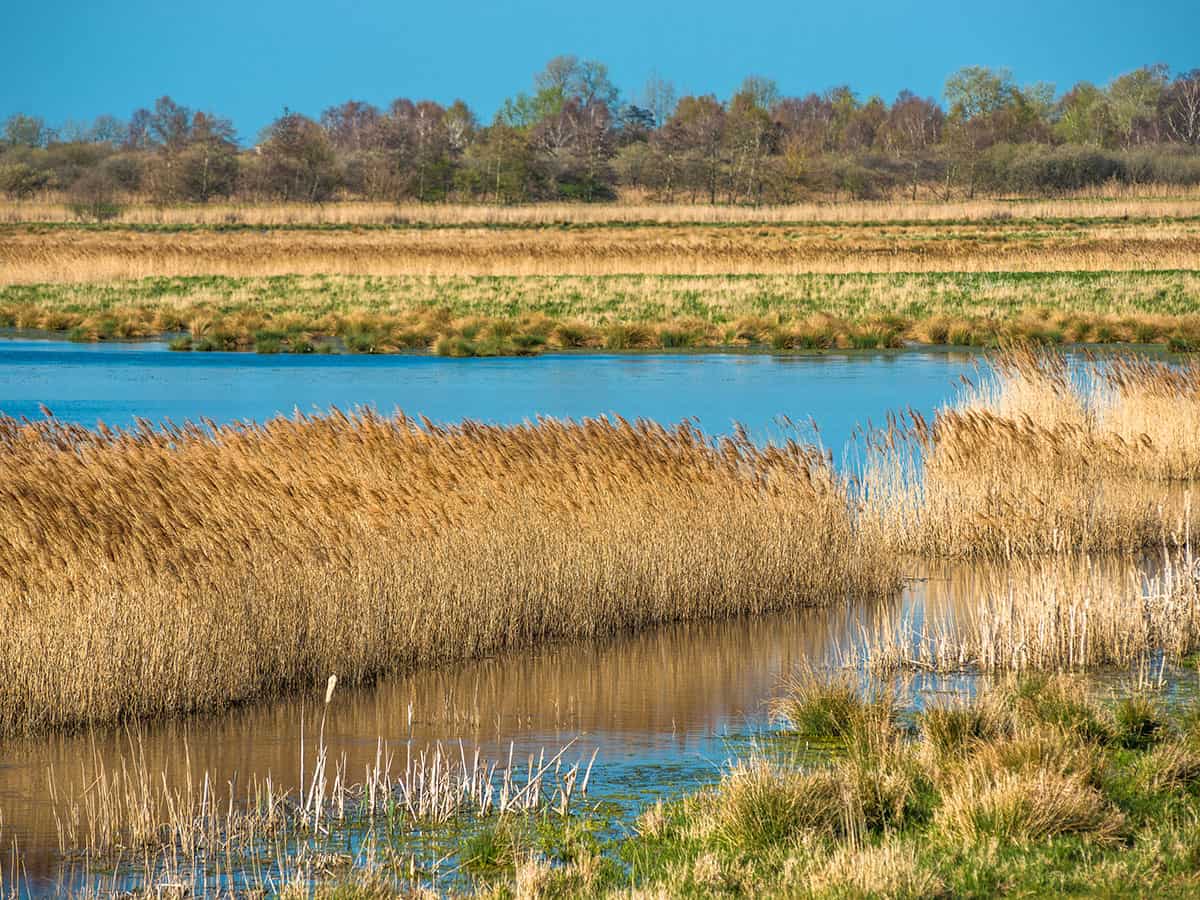
A natural solution: Wicken Fen in Cambridgeshire is a historic peatland that has been undergoing restoration since 1999. (Courtesy: Shutterstock/Andy333)
One way of slowing climate change is to take the offending greenhouse gases out of the air. Natural solutions include planting trees and restoring peatlands, while the main technological contender is carbon capture and storage (CCS) – gathering carbon dioxide from a power station, for example, and pumping it into an underground storage area. The UK is well placed to take advantage of CCS. “Our oil and gas industry has left us with many suitable reservoirs under the North Sea – enough to store 100 to 200 years’ worth of emissions for the UK,” says Stuart Haszeldine, a CCS expert at the University of Edinburgh. The carbon dioxide would remain locked underground for tens of thousands of years, buying us more time to bring emissions down.
If we do embrace this route to net zero, then Haszeldine envisages hydrogen being the fuel of choice for heating our homes (using the existing gas network), and electric and biofuels meeting many other energy needs. As for food, meat will stay on the menu, but might be lab-grown rather than from the farm. Life will feel a bit different, but not radically different from today.
However, Haszeldine is clear that CCS is not an excuse to slack off. “We still need to do everything we can to decrease emissions, but CCS is our insurance policy. It’s worth doing multiple actions in case some fail.”
Bringing it home
Like many other cities in the UK, a significant chunk of York’s greenhouse-gas emissions – around a third in fact – come from heating and powering our houses. Reducing energy use at home is going to be a crucial aspect of reaching net zero. “When it comes to homes we are going to have to phase out carbon-based heating,” says James Weber, a climate scientist at the University of Cambridge and one of the authors of Net Zero Cambridgeshire.
So that’s goodbye gas and hello low-carbon heat sources such as heat pumps, photovoltaics and smart energy-storage systems. But eco-energy alone won’t be enough; extensive improvements in energy efficiency are needed too. Indeed, the CREDS team calculates that we can halve our domestic energy demand so long as two-thirds of UK homes become super-insulated and have their gas boilers replaced within the next 15 years.
It’s goodbye gas and hello low-carbon heat sources. But eco-energy alone won’t be enough; extensive improvements in energy efficiency are needed too
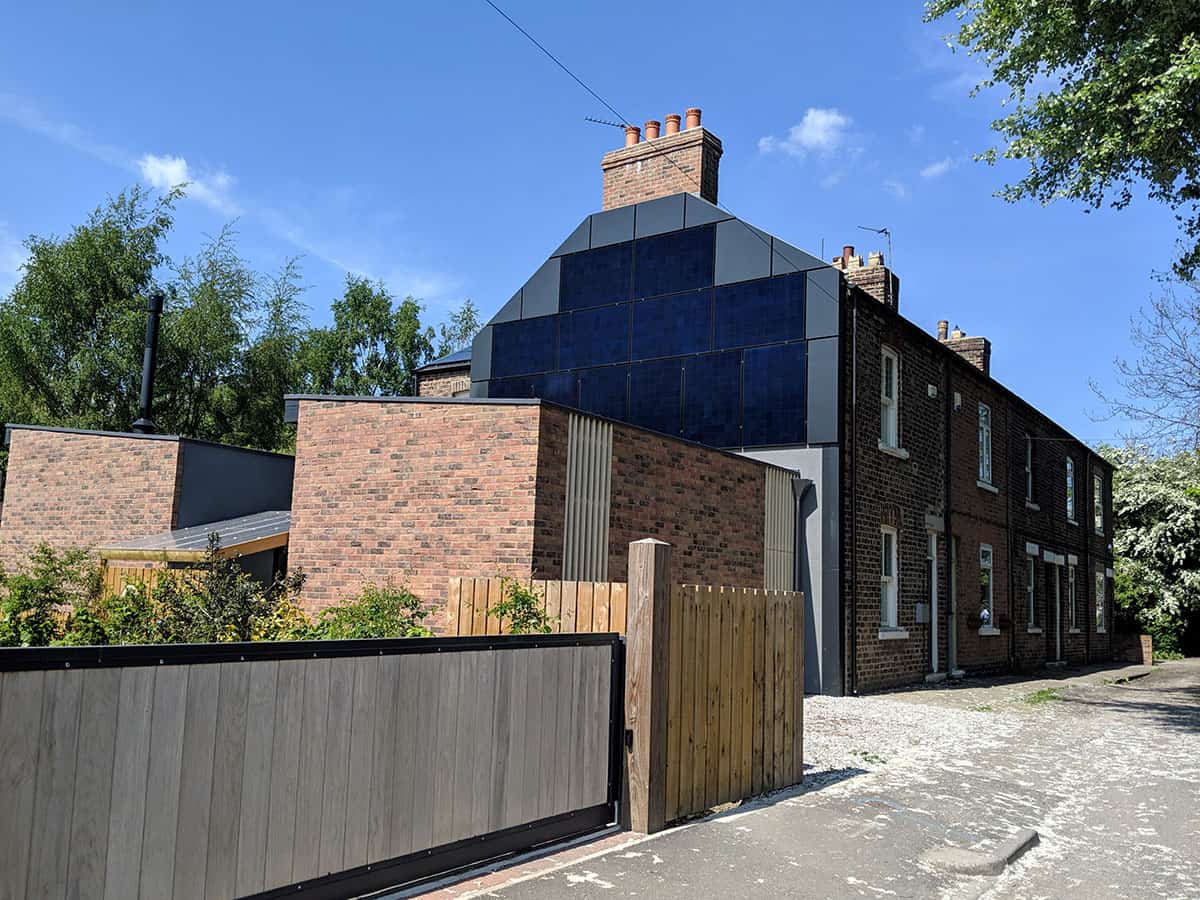
It sounds like a serious undertaking, but some people have already embraced the challenge. Phil Bixby, a York-based architect, has retrofitted his end-of-terrace Victorian brick house to be super-energy efficient. “I didn’t do this to be an eco-warrior; I did it because it seemed the responsible thing to do and I wanted to show that you don’t have to forgo comfort to do this,” he says.
Superficially, the interior of Bixby’s house looks like any other home, but closer inspection reveals otherwise. Leading me over to the window during my visit in January, Bixby points out the additional 12 cm or so of insulation that has been added to the exterior walls. He chose high-performance polyurethene – a commonly used insulation material – over natural fibres such as sheep’s wool or hemp because it is more efficient, requiring less material, and hence wall thickness, for the same level of insulation. Looking around I also realize that there are no radiators; three electric towel rails and a small area of underfloor heating is the only additional warmth the house needs. To prevent condensation, a mechanical ventilation system extracts damp air and pulls in fresh air to all the living spaces. Meanwhile, in the dining room, positioned in pride of place, is a Tesla battery unit, which stores any excess electricity generated by the building’s solar panels and pulls electricity from the grid when extra is needed. Using weather-forecast data, it optimizes capturing solar energy on sunny days, and buys electricity when it is cheapest, helping to smooth the National Grid’s load.
The house doesn’t achieve official “Passivhaus” standards – where heat loss is reduced so much that the building hardly needs any heating at all – but it isn’t far off. “Our energy bills are around £700 per year now; approximately half of what they used to be,” says Bixby. And cheaper energy bills are not the only benefit. The filtered air helps prevent respiratory problems and the thick walls make it super quiet.
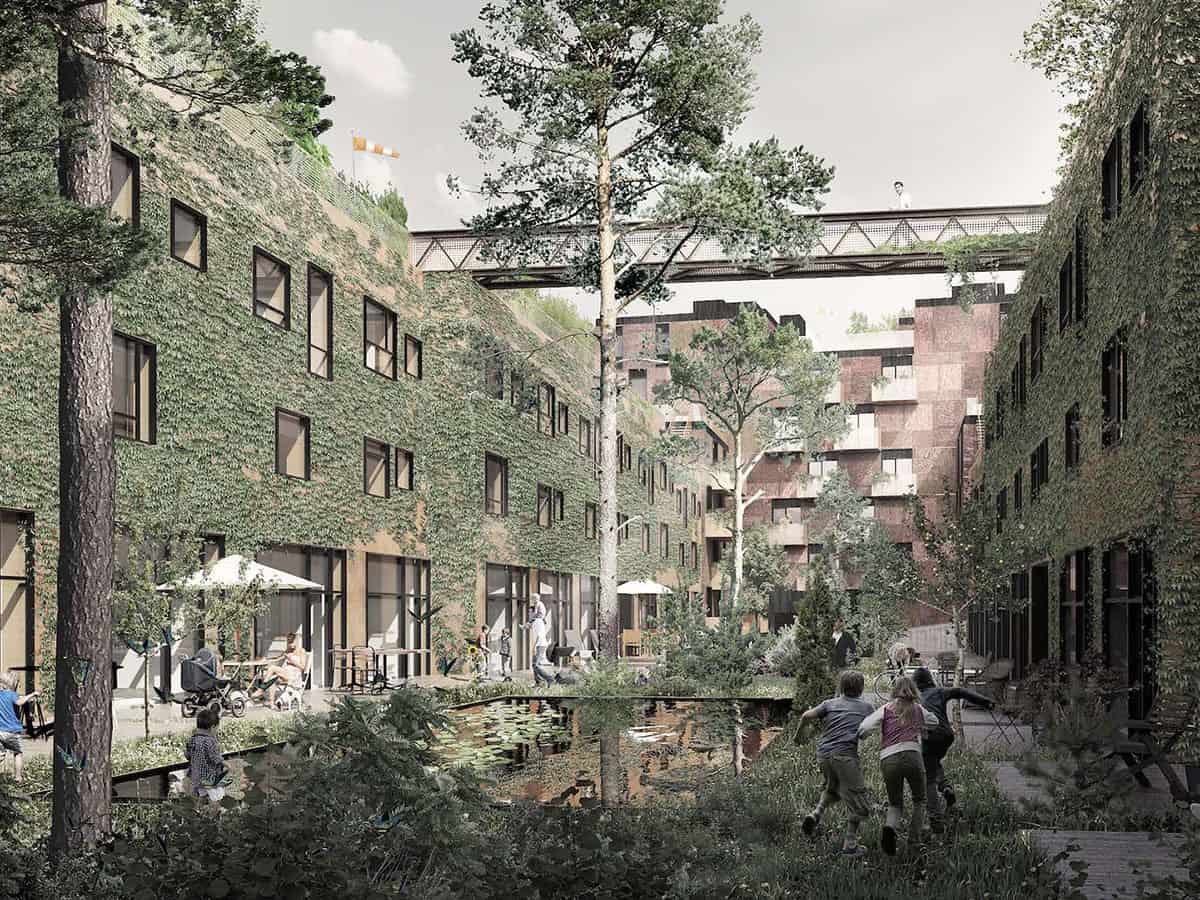
Modernizing history: Whether it’s a Victorian terraced house (such as Phil Bixby’s home in York, above) or a former brewery (such as Resource Rows in Copenhagen, below), retrofitting existing buildings to become energy-efficient homes uses less carbon dioxide than building new houses. (Courtesy: Phil Bixby)(Courtesy: Mikkel Strange)
Retrofits like Bixby’s don’t come cheap, but they could play a role in solving the UK’s housing crisis. The government’s target is to build 300,000 new homes every year by the mid-2020s, but the CREDS team says that repurposing empty homes could reduce the number of new-builds to under 200,000 every year, and breathe new life back into small towns, where many of the empty homes lie. “Building a new home can emit around 70 tonnes of carbon dioxide – approximately 15 return flights from the UK to Australia,” says John Barrett from the Sustainability Research Institute at the University of Leeds, UK, and co-ordinator of the forthcoming CREDS report. Around half the embedded energy in a building lies in the concrete and steel, so repurposing rather than demolishing can significantly reduce emissions.
Some architects are already embracing this philosophy. In the Danish city of Copenhagen, for example, architect Anders Lendager’s recent housing development, called Resource Rows, reused panels of brickwork from the demolition of a Carlsberg brewery building, halving carbon-dioxide emissions compared to conventional construction. And less flashy but equally impressive is the refurbished Minerva building in Leeds, which reused the existing concrete and steel frame of its 1970s predecessor to create a modern and energy-efficient office building.
Travelling with no footprint
So far, so good, but an eco-home can only get you so far. How do we tackle another huge source of emissions: transport? Where I live in York, vehicles are responsible for another third of the city’s greenhouse-gas emissions. It’s a similar picture across the rest of the country and a difficult one to fix. Electric vehicles will play a role, but they don’t solve congestion and still emit particulate matter from road, tyre and brake wear. Indeed, if everyone goes electric the demand for electricity will be huge. Switching to other modes of transport, and travelling less, are going to be important too.
In its report, Cambridgeshire County Council estimates that 10% of the distances we travel by car will have to be done using public transport, walking and cycling. The CREDS team goes even further than this and suggests that it’s plausible to halve the number of trips we take by car and reduce our number of car miles by 20%. For shorter journeys, walking and cycling will play a big role, making up 40% of our journeys (as compared to 25% now). UK FIRES presents the most radical change, with shipping significantly reduced and most airports closing this decade, leading to absolutely no shipping or air travel by 2050. But some don’t see this solution as wholly realistic. “I feel that this scenario fails to take into account the speed of social change and the potential damage associated with completely stopping world trade,” says Barrett.
For most of us, though, the biggest change we’ll notice will be the way we travel to work. “Commuting traffic generates the largest proportion of greenhouse-gas emissions but it is also the most difficult thing to change. We can’t rebuild our cities from scratch,” says Marc Barthelemy, an expert on spatial networks at the CEA Institute for Theoretical Physics in Saclay, France. Barthelemy has analysed traffic data from 25 major cities and showed that cities that combine high-density living with good access to public transport have the least traffic congestion and the lowest transport-related emissions. “In Tokyo, Seoul and Barcelona around 80% of the population live within 1 km of public transport and the percentage of people using their car in these cities is very low,” says Barthelemy. But counterintuitively not all public transport is a good thing. Barthelemy’s work has shown that public transport stations in outer suburbs can encourage car use and add to traffic congestion in the vicinity of the station. “Things like ‘park & ride’ are the wrong solution. They enable people to live further away from the city and encourage longer commutes,” he explains.
Things like ‘park & ride’ are the wrong solution. They enable people to live further away from the city and encourage longer commutes
Instead of focusing on extending subways and building “park & rides”, Barthelemy thinks that cities dominated by urban sprawl – such as Dallas and Los Angeles in the US – need to incentivize “urban villages”, where offices, homes and shops are mixed together. “You can already see this happening in cities like Dublin [Ireland], where big companies such as Google and Facebook have set themselves up outside of the city centre and are in the process of creating a nice living environment around them so that employees are encouraged to live their lives nearby,” says Barthelemy.
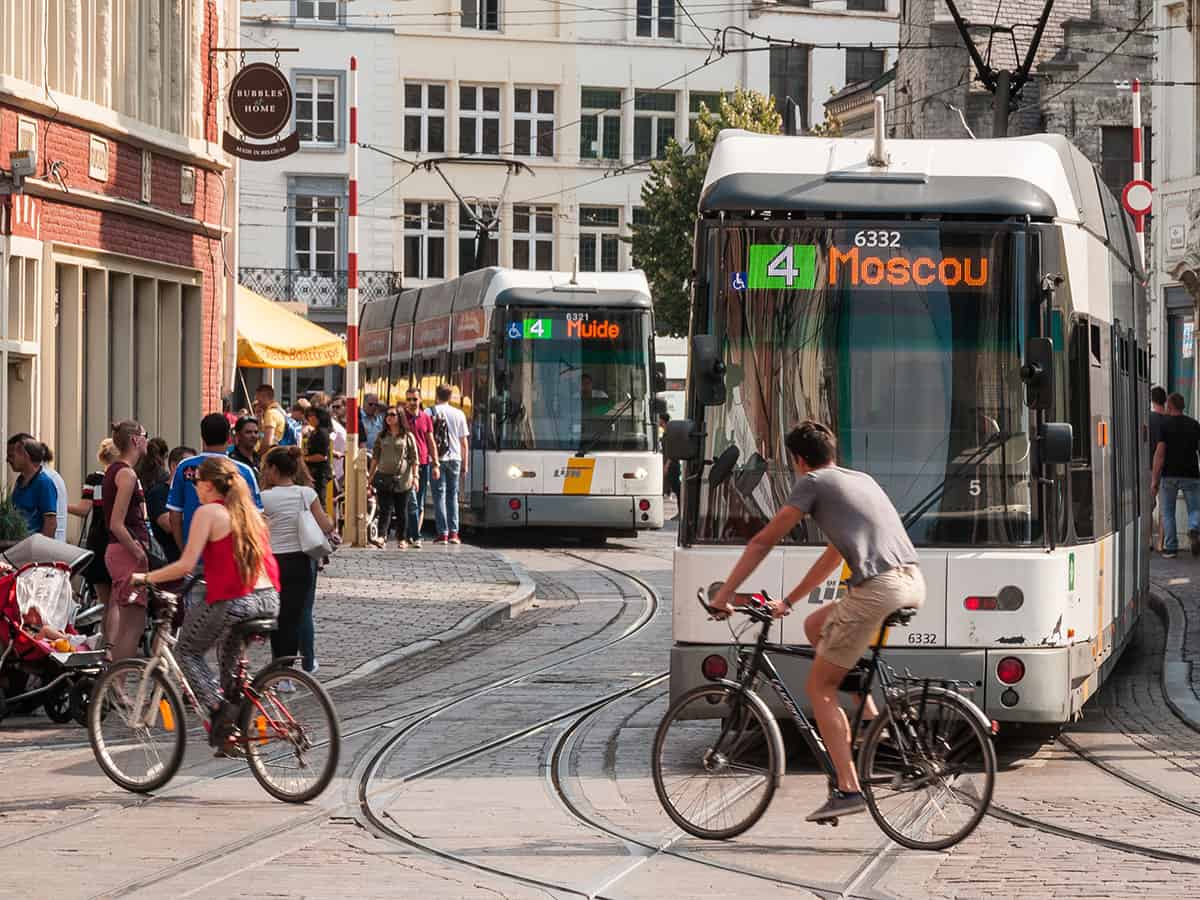
One city that has managed to bring about a fast change in people’s transport habits is Ghent in Belgium. The city transformed overnight on 3 April 2017, when it was divided into seven distinct transport zones – a car-free area in the historic centre with six zones radiating out from it like petals on a flower. “We made it impossible to go by car from one zone to another, but for pedestrians, cyclists, taxis and buses nothing changed,” explains Filip Watteeuw, the deputy mayor of Ghent, responsible for implementing the plan. “People started to question whether it was necessary to take the car and we quickly saw a big shift towards public transport and walking and cycling.”
In the three years since Ghent’s traffic plan was implemented, the number of traffic accidents has fallen by a third, the number of cars has dropped by a third, cycling has increased by 60%, carbon-dioxide emissions have been slashed by 1500 tonnes per year and there has been a significant improvement in air quality. Many people predicted that business would suffer, but in fact Ghent has seen a rise in start-ups and even a limited decrease in vacant shops. “The economy is good,” says Watteeuw. And because the plan simply repurposed existing roads, rather than building new infrastructure, it cost just €6m to implement – about the same cost as building one mile of motorway. But for Watteeuw it is the improvement in people’s quality of life that he is most proud of. “The most lovely compliment I had was from someone who said I was the best musical composer, because now they can hear the songs of the birds and before they could only hear the noise of cars,” he says. Birmingham – the UK’s second-biggest city – is already eyeing up a similar plan.
Work patterns will also need to change in order to accommodate reduced travel, and Barrett predicts greater flexibility from employers, with co-working hubs, home working and virtual meetings all becoming the norm. The COVID-19 virus has forced us to rapidly embrace many of these practices. But what kind of jobs will we be doing in a net-zero world? The fossil-fuel industry will become near-obsolete, but other opportunities will arise. “We anticipate a growth in renewable-energy industries and the IT sector, plus a rise in demand for people with engineering skills as we embrace a culture of recycling and repairing,” says Barrett. Builders and heating engineers will be run off their feet retrofitting everyone’s homes.
One important aspect of the CREDS scenario is a big reduction in the amount of stuff we buy, with throwaway fashion a thing of the past. The average lifetime of materials will increase by two years and changes in design standards will make products easier to repair. “The emphasis needs to change to value quality over quantity, and when something does break, we’ll be able to send it back to the manufacturer or take it to a repair cafe in the town centre,” says Barrett. Mundane shopping will be done online, out-of-town shopping malls will disappear, and a trip to the town centre will be a leisure experience, to have a coffee with friends or visit an attraction.
Eating in a net-zero world
So that’s transport, energy, work and leisure mapped out, but what about food? York hasn’t included food in its emissions tally, but the impact of agriculture is estimated to make up around 10% of global greenhouse emissions. Ruminants such as cows and sheep take much of the blame because they produce significant quantities of methane – a short-lived but very potent greenhouse gas. Will beef, lamb and dairy products still be on the menu in a carbon-neutral world?
Under the CREDS scenario, 40% of the UK population will be vegan (up from 3% today) and 40% will be vegetarian (up from 9% today). “We envisage a large shift in people’s diet. It will still meet all our nutritional requirements, but we’ll see a big reduction in the number of calories we consume,” says Barrett. One significant co-benefit of this shift is the improvement in people’s health, with obesity being eliminated (65% of people are classified as overweight or obese in the UK today).
However, Michelle Cain from the Environmental Change Institute at the University of Oxford, UK, suggests we might not need such a radical change in diet. Her work has shown that the short-term positive benefits of reducing methane levels are greater than often assumed and that even small changes could have tangible benefits. For example, the impact on climate of a cow herd occurs when it is first established, and remains steady over time if the herd remains the same size because the effect of methane is short lived. Cain’s calculations show that reducing methane emissions from a herd by 0.3% per year – either by decreasing herd size or by using feed additives and improved manure management – is enough to bring the emissions of the herd down to net zero. “Our calculations suggest that this reduction will have the same impact on climate as closing and stopping the carbon-dioxide emissions from an entire coal-fired power station,” says Cain.
Whichever route we choose – vegan, vegetarian or flexitarian – a walk in the countryside is going to feel very different in the decades to come. “Fewer fields of livestock will free up land and create opportunity to capture carbon by planting trees and restoring peatland,” says Barrett.
Both CREDS and Net Zero Cambridgeshire rely on trees in a big way. Weber and his colleagues calculate that even with all their proposed energy-reduction measures in place, Cambridgeshire will produce an excess 600,000 tonnes of carbon during the year 2050. Planting 0.5% of the county with trees now would be enough to mop up that much carbon between now and 2050, thereby ensuring Cambridgeshire hits the net-zero target in 2050, but it wouldn’t tackle the excess emissions produced between now and then, or those produced from 2051 onwards. If we want to hit net-zero by 2050 and maintain net-zero thereafter, they calculate that a whopping 10% of the county’s land area needs to be planted with trees now. As an added bonus, reforesting on this grand scale would also lock away around 10% of the county’s emissions in the lead-up to 2050, helping Cambridgeshire to reduce its contribution to global warming from the moment the trees are planted. But not just any old tree will do. “It is important that this isn’t a monoculture because that makes the trees vulnerable to disease and is bad for biodiversity,” says Weber. Instead the team concludes that most of the planting needs to be a mix of alder, aspen and sycamore, to maximize carbon sequestration, interspersed with a smattering of commercial forestry and traditional woodland.
Cambridgeshire will also need to restore peatland to turn it back into a carbon sink. “North Cambridgeshire has large areas of peatland that have been disturbed and used as farmland. If this peatland continues to degrade it will become a major source of emissions,” says Weber.
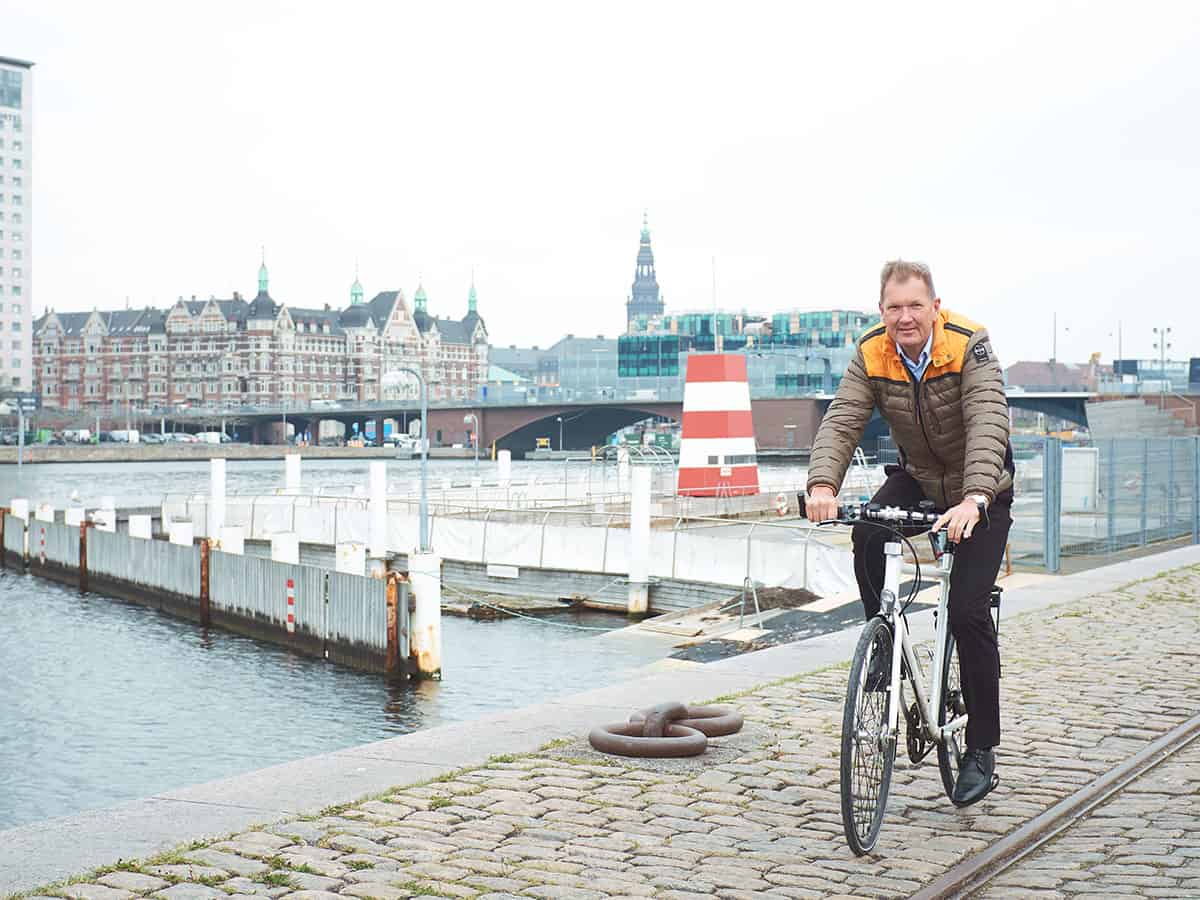
Making changes: Bo Asmus Kjeldgaard, former mayor of Copenhagen, believes that working collaboratively with stakeholders is key to the major projects required to achieve zero-carbon cities. (Courtesy: Greenovation)
Certainly, life is going to be very different in a net-zero world, but it’s far from the hair-shirt and lentil-eating existence that I might have imagined. And, if Copenhagen is anything to go by, net-zero living could be positively rosy. Back in 2009 the city set itself the goal of becoming carbon neutral by 2025. With five years to go, the city is pretty much on track, having reduced its emissions by 42% over the last 15 years, while growing its economy by 25%. Today two-thirds of trips in the city are made on foot, cycle or public transport, and more than half of the city’s heat and power is supplied by renewable energy. “We were motivated by wanting to improve the ‘liveability’ of the city, to combine sustainability and good quality of life,” says Bo Asmus Kjeldgaard, former mayor of the city and now chief executive of sustainable consultancy Greenovation.
But getting here has required tough decisions and significant investment. “Back in the 1990s we made it mandatory to connect to Copenhagen’s district heating system. Lots of people were against this but we knew we had to connect everyone to get the full benefit,” says Kjeldgaard. Ownership of utilities companies was also important, to ensure the city had control of its own power. However, it hasn’t all been top-down decision making, and Kjeldgaard is clear that working collaboratively with all stakeholders and gaining the trust of local people have been crucial too (see box below).
Kjeldgaard is also well aware that the city has not addressed the emissions associated with air travel, what people eat or what they choose to buy. “This wasn’t part of our calculation because we can’t control this, but we should be calculating these emissions and informing people about the choices they make,” he says. Kjeldgaard thinks there are still big challenges ahead for Copenhagen, but he is pleased that the city has demonstrated what can be achieved with good planning. “It hasn’t been like going back to the old times. We’ve shown that you can still be modern, use your computer, live in a nice home and eat inventive food, but also enjoy clean air and nature in the city,” he says. And if that is what is on offer, I’ll have a slice of that.
Governance for a carbon-neutral world
Neutral transport: Ghent has achieved impressive reduction in car use since 2017. (Courtesy: CC BY 2.0/bvi4092)
Whichever the route, the journey to net zero it is a daunting challenge. So where do we begin? Beth Sawin, co-director of the US think-tank Climate Interactive, thinks that we need to start by implementing solutions that solve more than one problem – a technique she calls “multi-solving”. “For example, if we make walking and cycling safer, it helps to reduce air pollution and traffic congestion, and improve people’s health,” she explains.
But the convention of allocating budgets to specific government and council departments doesn’t favour multi-solving, with the transport department, say, spending money on cycle paths but failing to get the credit for the health savings, for example. “We need to connect decision-makers across different departments and allow them to take the whole system into account. Cities with mayors are often better able to do this,” says Sawin.
But that doesn’t mean we need to wait for a mayor to come along. Sawin has been involved in a number of successful multi-solving projects, where the wisdom and desires of the groups of people with most at stake are incorporated into the decision-making process. One such collaboration in the US city of Atlanta, known as the Just Growth Circle, brought together almost 70 people including representatives from government, business, philanthropy, conservation and local community groups. Over time the group members have come to trust each other, and worked together to shape an urban restoration plan, creating parks, walking trails and clean rivers, but also securing commitments to protect against gentrification of the neighbourhood. “Because these groups of people are already connected, they are able to seize opportunities when they arise, and steer towards outcomes like equity, climate protection and health,” says Sawin.
Artificial intelligence (AI) may soon have a central role to play in the global battle against COVID-19. A European campaign is underway to develop a deep learning-based model for the automated detection of abnormalities on chest CT and for quantifying lung involvement.
“In these unprecedented circumstances, we must find ways of helping doctors in their fight against the virus,” noted Erik Ranschaert, president of the European Society of Medical Imaging Informatics (EuSoMII), who is leading the initiative with fellow radiologist Laurens Topff, from the Netherlands Cancer Institute (NKI) in Amsterdam. “The value of AI also comes into play, by reducing the burden on clinicians. While a manual read of a CT scan can take up to 15 minutes, AI can finish reading the image in 10 seconds.”
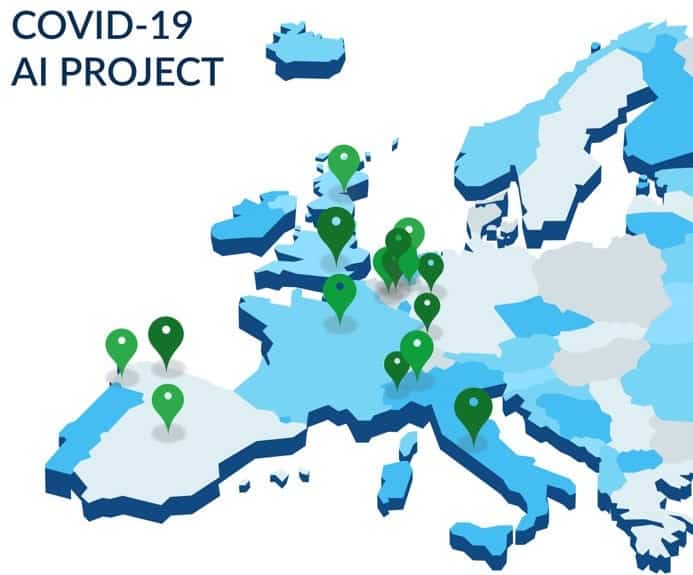
Around 30 partners have already expressed their willingness to share data and to support the plan to train the algorithm. These include academic and non-academic hospitals located in the most affected areas of Italy and Spain, and also in Germany, Belgium, the Netherlands and the UK.
The map shows the European hospitals collaborating in the COVID-19 project, as of 20 March. (Courtesy: Erik Ranschaert)
Each hospital will transfer the data directly and securely to the servers of Quibim. Based in Valencia, Spain, it specializes in machine learning and image processing technologies for medical images, and it will provide a research platform for the development and deployment of the deep-learning model. For data preparation, annotation and algorithm training, the Robovision AI (RVAI) software will be used. The data will only be used for research purposes.
Automated image analysis with AI techniques can optimize the role of CT in the assessment of COVID-19 by supporting clinical decision-making, improving workflow efficiency, and allowing accurate and fast diagnosis of infection in a large number of patients, Ranschaert explained.
“We believe that it’s possible to train an accurate AI algorithm with the wealth of data already available since the outbreak of the virus in Europe, with the main aim of helping doctors to make this diagnosis in time,” he added.
A team from the NKI will assess and statistically analyse the performance of the deep-learning model, which will be made freely available as a research solution to participating hospitals.
Growing use of CT
The clinical presentation of patients with COVID-19 ranges from asymptomatic to severe pulmonary infection. The most specific method and reference standard to diagnose infection is the reverse transcription polymerase chain reaction (RT-PCR) test, but due to the varying levels of sensitivity of viral testing, shortage of viral testing kits and longer turnaround times to provide results, lung CT scans are attracting attention, Ranschaert said.
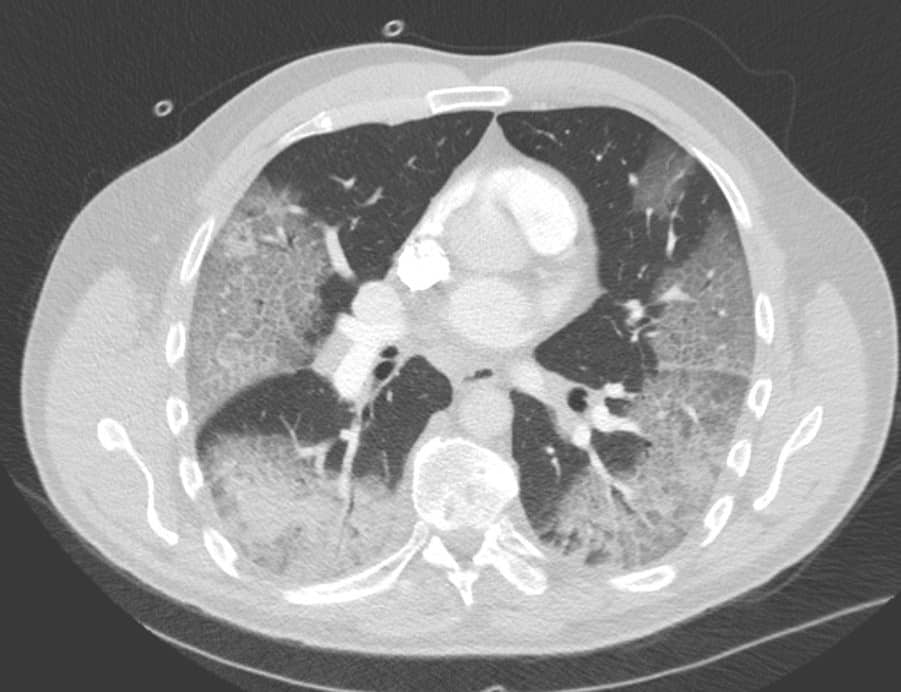
“COVID-19 causes a wide variety of findings on these scans, most typically ground-glass type of densities located on the outside of both lungs (see white areas in figure),” he continued. “The accuracy of chest CT to diagnose COVID-19 has been reported as high and can predate a positive classic serological RT-PCR test. Therefore, in endemic areas where the healthcare system is under pressure, hospitals with a high volume of admissions are using CT for rapid triage of patients.”
CT scan of a COVID-19 patient who was originally referred for CT angiography of the chest to exclude pulmonary embolism. (Courtesy: Erik Ranschaert)
There is a role for chest CT to assess COVID-19 infection in patients with severe and worsening respiratory disorders. Based on the images, doctors can evaluate how severely the lungs are affected and how the patient’s disease is evolving, which is helpful in making treatment decisions, according to Ranschaert.
Also, pulmonary abnormalities caused by COVID-19 can be found by chance in exams carried out for other reasons – for example, abdominal CT scans for bowel problems – in patients without respiratory complaints.
“Patients are coming in with different types of complaints and therefore sometimes get other examinations. Some radiologists are even proposing to do a standard CT chest with every CT abdomen,” he noted. “If a CT abdomen needs to be done because of nonspecific complaints, just scan higher to assess more lung tissue, leading to more nonspecific COVID-19 patients being detected.”
In areas of widespread coronavirus outbreak, many hospitals are installing special scanning units to enable efficient screening of the steadily growing number of victims. If CT is used for screening, there will be so many studies that radiologists will be overwhelmed and AI will be urgently needed.
“The scans run full-time and the number of doctors to assess all these scans is sometimes insufficient, partly due to the fact that doctors are also more often exposed to infected patients and therefore themselves become victims of the virus,” Ranschaert pointed out, adding that 300 Chinese doctors had to be flown into Italy to cope with the growing number of patients.
The danger of cross-infection via the CT scanner is an important consideration.
“Some hospitals are very prudent and do a complete disinfection of the CT scan suite, taking about an hour,” he said. “Others only clean the contact surfaces of the scanner, while also protecting the radiographers of course with an adapted outfit – this on advice of their microbiologists. These hospitals usually have a dedicated scanning suite for COVID-19 scans. Some even have a mobile unit outside the hospital to provide these scans.”
PeakForce Tapping has been widely adopted in a broad range of research fields, outpacing all other recently developed AFM modes in research impact and productivity.
In December 2009, a new mode for atomic force microscopy was introduced – PeakForce Tapping. Since then, it has been widely adopted in a broad range of research fields, outpacing all other recently developed AFM modes in research impact and productivity. PeakForce Tapping and its associated modes ScanAsyst, PeakForce QNM, PeakForce TUNA, PeakForce KPFM, and PeakForce SECM, have been cited in more than 4000 peer-reviewed publications over the last 10 years, with more than 30% of these publications in the top 10% of journals. In this webinar, we will select from this vast repository of publications to review the impact of PeakForce Tapping on today’s science. In particular, we will examine how the measurement of mechanical and electrical properties at the nanoscale have led to new discoveries and insights into material behaviour.
PeakForce Tapping eliminates the need for contact mode in electrical modes, such as conductive and tunneling AFM (e.g. PeakForce TUNA), allowing high-resolution electrical property maps even on soft and fragile samples, and even in liquid (with PeakForce SECM). Battery work using the mode includes a recent Nature Communications article co-authored by Professor John Bannister Goodenough, the 2019 Chemistry Nobel laureate, where high-performance, dendrite-free metal lithium anodes were characterized. In energy research, PeakForce Tapping studies have resolved conductivity along individual lamellae in organic photovoltaics, revealed a nanocontact pinch-off that allows for improved solar fuel devices, and characterized the SEI layer in Li ion batteries in operando as well as ex situ.
Since PeakForce Tapping provides piconewton-level force control and sensitivity, it is ideal for mapping the nanomechanical properties of materials (enabling a mode called PeakForce QNM). Among the many firsts enabled by PeakForce QNM is work by Professor Konstantin Novoselov and Professor Andre Geim, the 2010 Physics Nobel laureates for the discovery of graphene, revealing a commensurate–incommensurate state transition in graphene on boron nitride, as shown in their Nature Physics article.
In biology, it has enabled new studies of ligand receptor interactions, of individual microvilli on live cells, and of variations in the DNA double helix structure, to name just a few. In studies of polymers and composites, it has become the mode of choice for quantifying properties at interfaces and in interphases, including in adhesives, where other AFM modes struggle.
Presenter:
Dr Bede Pittenger
Dr Bede Pittenger is a senior staff development scientist in the AFM Unit of Bruker’s Nano Surfaces business. He received his PhD in physics from the University of Washington (Seattle, WA) in 2000 and has worked with scanning probe microscopes for 25 years, building systems, developing techniques, and studying properties of materials at the nanoscale. His work includes more than 30 publications and four patents on various techniques and applications of scanning probe microscopy. Dr Pittenger’s interests span topics from interfacial melting of ice, to mechanobiology of cells and tissues, to the nanomechanics of polymers and composites.