Specially engineered materials known as metamaterials can boost heat transfer over nanoscale distances compared with conventional materials, thanks to the coupling of quasiparticles known as surface phonon polaritons. This new result, from researchers at Carnegie Mellon University, Stanford University and Purdue University, all in the US, could help improve technologies such as on-chip cooling and thermophotovoltaic systems.
The maximum radiative heat transfer between two macroscopic-sized objects at different temperatures can be estimated by assuming that the objects are “black bodies”. These are ideal entities that absorb all the radiation falling on them and emit thermal radiation according to Planck’s law. This approximation breaks down, however, when the objects are placed within a few hundred nanometres of each other. In this case, they begin to exchange heat much more strongly thanks to a phenomenon known as near-field enhancement, which can exceed the far-field black body limit by several orders of magnitude. This effect is already put to good use in technologies such as heat extraction and thermophotovoltaic systems.
Until now, near-field enhancement had only been observed and studied in naturally occurring materials, such as polar dielectrics, doped semiconductors and metals, explain the study leaders, mechanical engineer Sheng Shen at Carnegie Mellon and electrical engineer Shanhui Fan from Stanford. Although theoretical studies have predicted that metamaterials could surpass the performance limits of naturally occurring materials, there had not previously been any experimental demonstration of metamaterial-enhanced near-field radiative heat transfer. Identifying such metamaterials would be of great use as it would allow the effect to be exploited more widely.
Heat transfer increased by up to four times
Shen, Fan and colleagues observed enhanced near-field radiative heat transfer in a nanodevice platform comprising metamaterials based on arrays of gold split-ring resonators patterned on silicon nitride membranes. The researchers positioned the metamaterials so that they faced each other across a nanoscale gap, observing that heat transfer between them increased by as much as four times compared with similar setups using ordinary materials.
As well as confirming that radiative heat transfer is enhanced over short distances for these metamaterials, the results suggest that the interaction between metamaterials and surface phonon polaritons is responsible for the increase. These quasiparticles are produced by phonons, which are vibrations of the crystalline lattice, as they interact with oscillating electromagnetic fields at the material surface – in this case, those at the surface of the gold metamaterial structures. This coupling allows heat to tunnel across the gap between them and the silicon nitride membranes more efficiently – something that increases the energy flow between the two, explains Shen.
Heat management applications
According to the researchers, the effect could help enhance and manipulate heat exchange at the nanoscale and could find applications in next-generation cooling for high-performance microelectronics, thermophotovoltaic systems for waste-heat harvesting and high-sensitivity infrared detection.
There are still a number of challenges to overcome before such applications see the light of day, however. On the theoretical side, notes Fan, the complex interactions between the metamaterial units and their supporting substrate make numerical calculations and analyses exceptionally difficult. “To address this difficulty, we have developed a numerical tool based on fluctuational electrodynamics to design the structures, alongside a coupled-mode theory model to fully elucidate the underlying physics,” he says.
Experimentally, measuring nanowatt-level radiative heat exchange across a sub-micron gap also demands extreme precision. The researchers tackled this challenge by designing an on-chip device using a “suspended thermal bridge” method that transforms the minute heat exchange into a measurable temperature rise. Indeed, they succeeded in detecting heat flow of less than 1 nW in these nanodevices.
It is one of the most extraordinary feats of military history – how the Carthaginian general Hannibal managed to cross the Alps with an army of 46,000 men, 7000 horses and 37 war elephants in 218 BCE.
Hannibal’s method was to catch the Romans by surprise by starting from what is present-day France and crossing the Alps into what is now northern Italy.
Yet the exact route that Hannibal’s army took remains a mystery and has been debated for decades given that no records by contemporary historians have survived.
The route crossing Col du Clapier – passing first through Grenoble and Aiton before descending into the Po Valley – appeared to be the likely candidate, but recent analysis has suggested an alternative southerly route via the Col de la Traversette.
Using route modelling and elevation data, the team found that the Col du Clapier route would have required 6.28 × 10¹² joules of energy, while Col de la Traversette, however, would have needed 5.42 × 10¹² J.
Yet even on that route, the 15-day crossing would have required 230 tonnes of food and supplies.
The authors calculate that the army would still have lost about a fifth of their body fat reserves during the crossing, which explains the high mortality rate among men.
Yet on the Col de la Traversette route, the war elephants would have fared better, losing just 4% of their reserves. This may explain why some 30 elephants are estimated to have made it through to fight in the Battle of the Trebia – the first major battle of the Second Punic War.
“The new analysis does not eliminate all ambiguity, but it does strengthen the case for the Traversette route by demonstrating that it would better accommodate the demands of moving a large army that included elephants through extremely difficult alpine terrain,” notes Berti.
A galaxy that formed around a billion years after the Big Bang is in its death throes thanks to a powerful galactic wind that is blasting its gas into space, say astronomers at Australia’s Swinburne University of Technology. The discovery, which is based on data from the James Webb Space Telescope (JWST) and the Atacama Large Millimeter/submillimeter Array (ALMA) in Chile, could help explain why some of the universe’s earliest massive galaxies ceased to form new stars.
One of the JWST’s most surprising discoveries is that when the universe was between one and two billion years old, it already contained large numbers of massive galaxies. Astronomers think these galaxies may have acquired most of their mass in intense bursts of star formation. But at some point, that process stopped: in technical terms, the galaxies became quiescent.
“These galaxies seemed to have formed all their stars very quickly and then they suddenly died, all within the first two billion years of the universe being formed,” says Rebecca Davies, who led the new research.
The CRISTAL-02 galaxy
One possible explanation for the onset of quiescence is that when galaxies collide with each other, the resulting winds “blow away” the hydrogen fuel required for new stars to form. To investigate this hypothesis, Davies and colleagues focused on a galaxy called CRISTAL-02, which was one of 20 galaxies in the recent ALMA-CRISTAL survey of early star-forming galaxies.
“When we looked at the data, it stood out because it was the only one that showed strong evidence for a galaxy wind,” Davies explains. “We saw this as an excellent opportunity to study how winds impacted the evolution of galaxies in the early universe.”
The light from CRISTAL-02 travelled for approximately 12.7 billion years to reach us, meaning that we see it as it was one billion years after the Big Bang. Because the universe has been expanding since then, the galaxy’s spectra appear highly red-shifted. This meant the Swinburne astronomers needed the JWST’s infrared-sensing capabilities to analyse a spectral feature known as the hydrogen-alpha (Hα) line that is normally red. They also used ALMA to analyse CRISTAL-02’s C II line, which comes from ionized carbon and has a (non-redshifted) wavelength of 158 mm. Both emission lines can yield important information about the properties of early galaxies.
Living fast and dying young
From the ALMA-CRISTAL survey’s measurements of Hα luminosity, astronomers knew that CRISTAL-02 forms stars at a rate of around 260 M☉ per year. This is about three times the average value for “main-sequence” star-forming galaxies at similar mass and redshifts.
The latest observations, however, suggest that it won’t maintain this pace for long. Davies and colleagues identified a huge plume of C II emissions that extends as far as 7 kiloparsecs (kpc) to the north-east of CRISTAL-02, making it almost as long as the galaxy itself. This is a telltale sign that gas is being driven out of the galaxy. The fact that the gas in this plume is blue-shifted by 100 km s-1 lends further support to this explanation.
If this rapid blowout continues, Davies says that CRISTAL-02 will cease to exist in less than 50 million years. But the team’s findings may have implications beyond the fate of this single galaxy. “Our results could help to explain how some of the earliest massive quiescent galaxies in the universe behave,” she tells Physics World. “When the JWST started observing distant galaxies in 2022, it found far more evolved galaxies in the early universe than models predicted. These galaxies seemed to have formed all their stars very quickly and then suddenly died, all within the first two billion years of the universe. The galaxy we discovered seems to be following this path.”
Learning about the early universe
Davies explains that because the early universe was much more compact than it is now, collisions between galaxies were common. During such collisions, gas funnels towards the galactic centres, triggering strong bursts of star formation but also producing strong winds that eventually drive the gas away. “If many early galaxies collide and experience rapid growth, then it may not be surprising at all that we see so many dead galaxies in the early universe,” she says.
The researchers stress that the present work, which is detailed in the Monthly Notices of the Royal Astronomical Society, is based on a case study of just one galaxy. They now need to observe other early, massive galaxies caught during periods of intense growth to determine whether they, too, experience powerful winds that could rapidly expel their gas and stop them from forming stars.
Static electricity is one of those everyday phenomena that turns out to be much more complicated than you might expect. Indeed, our guest in this episode of the Physics World Weekly podcast has devoted much of his career to understanding how objects exchange electrical charge – a process that he says scientists are mostly “clueless” about.
Based at the Institute of Science and Technology Austria, Scott Waitukaitis is in conversation with Physics World’s Margaret Harris. He explains how his early work in granular physics opened his eyes to the many unsolved problems related to static electricity. They also chat about some of Waitukaitis’s current research projects including his quest to understand the role that adsorbed molecules play in how an object is charged.
Frost can spread not only along surfaces but also via suspended “ice bridges” that form above them. The discovery of this previously unknown frost-propagation pathway could lead to new ways of making surfaces that resist frost growth, thereby improving the performance of devices that operate in cold, humid environments.
Frost accumulation is a major problem in refrigerators, aeroplanes and heat pumps, to name just a few. On the microscale, it primarily spreads from one individual freezing water droplet to the next via two-dimensional bridges, or causeways, that temporarily form on the surface of an object. Although the wettability of the surface is known to affect the spreading process, the mechanism behind this effect was poorly understood.
Ice bridges can grow in two distinct spatial modes
To learn more, a team led by physicist Nenad Miljkovic at the University of Illinois Urbana-Champaign, US imaged the channel-forming process using high-speed high-resolution optical microscopy combined with a profilometry technique called focal plane shift imaging (FPSI). They found that frost can spread in two distinct ways. On hydrophilic surfaces, causeways form along the substrate, in line with current theoretical models. On superhydrophobic surfaces, however, the situation is quite different. Here, frost spreads via ice bridges that are suspended above the surface in three-dimensional space.
This suspended or “out-of-plane” growth mode represents a fundamentally different pathway for frost propagation, says team member Siyan Yang, the first author of a Nature Physics paper about the work. Previous studies likely overlooked this mechanism, Yang adds, because of limitations in experimental observations.
Superhydrophobic coatings nearly double the frost propagation time
The researchers also studied the growth rate of the different bridge types. They found that suspended bridges grew slower than bridges on the surface due to the reduced thermal coupling between the bridges and the cold substrate. This reduced coupling correspondingly reduces the vapour pressure difference between ice and water droplets (which depends on surface droplet geometry, itself controlled by wettability) and drives down ice growth. Indeed, the team found that the speed at which frost spreads fell more than 80% in this mode.
To test the practical relevance of their findings, the researchers applied superhydrophobic coatings to metre-sized structures such as the finned-tube aluminium heat exchangers commonly found in air conditioners, refrigerators and automotive systems. Condensation frosting on such systems poses a major efficiency challenge because frost has an inherently low thermal conductivity. When it accumulates on heat exchangers, it therefore severely impedes heat being exchanged with the surrounding air.
On uncoated commercial heat exchangers that are inherently hydrophilic, the team found that frost rapidly forms and spreads across the fins. “In the superhydrophobic counterparts, however, the onset of frost formation is delayed, and it propagates much more slowly,” Yang says. In the two kinds of commercial systems they tested, she adds, applying superhydrophobic coatings nearly doubled the frost propagation time.
The results suggest that designers of anti-frost surfaces could benefit from trying this new strategy, Yang says. “Rather than focusing solely on delaying initial ice nucleation, surfaces could be engineered to control the geometry of ice-bridge growth and interrupt frost spreading, thereby improving the performance and energy efficiency of a host of equipment operating in cold and humid environments,” she tells Physics World.
The team is now investigating how surface chemistry and surface structures influence suspended ice-bridge formation and frost propagation. “We are also exploring ways to translate the fundamental mechanism into scalable anti-frost coatings and heat-exchanger technologies,” Yang reveals. “Ultimately, our goal is to establish predictive design rules that connect microscale ice-bridge dynamics with real-world frost management performance.”
The Bullet Cluster of galaxies might only have half as much dark matter than scientists thought, or perhaps even none at all, according to a new look at observations of this immense collision of galaxies from the James Webb Space Telescope (JWST).
“Our results indicate that the required amount of additional unseen mass – dark matter – is reduced,” astrophysicist Dong Zhang of the University of Bonn, who led the study, tells Physics World.
The Bullet Cluster is a central battleground for proponents of alternative models of gravity seeking to usurp dark-matter theory. The cluster itself is actually two clusters of hundreds of galaxies that have collided head-on. In 2006 the Hubble Space Telescope mapped how the Bullet Cluster’s mass was warping space and creating gravitational lensing, and from this it was possible to infer where the dark matter in the cluster was relative to the galaxies themselves and the hot, X-ray emitting gas. While the galaxies and hot gas remained in the middle, the dark matter from both colliding clusters had passed through unhindered and is now on opposite sides – exactly as dark-matter theory predicted.
In 2025 the JWST observed the Bullet Cluster and the initial analysis, led by Sangjun Cha of Yonsei University, found that while the distribution of mass in the cluster is more complex than expected, it still supports the dark-matter model.
“Those JWST observations of the Bullet Cluster have sparked a lot of interest,” says astrophysicist Richard Massey of Durham University, who was not involved in the new study.
Counting stellar remnants
Astrophysicists led by Zhang have now made their own analysis of the JWST data and arrived at a very different conclusion, as they report in Physical Review D.
Zhang’s team aimed to precisely measure the total mass of not just the stars, but also of dark stellar remnants – white dwarfs, neutron stars and black holes formed when stars die – to see if these objects could account for the extra gravity attributed to dark matter. They found that there would be enough stellar remnants to reduce the amount of dark matter required by half, at least. Furthermore, applying MOND (modified Newtonian dynamics) to the cluster potentially removes the need for dark matter entirely.
They utilized a model called the integrated galaxy-wide initial mass function (IGIMF), which is a variation on the standard IMF that describes how a collapsing molecular cloud fragments into clumps that produce stars. The standard IMF favours low-mass over high-mass stars.
However, variations in chemical compositions, stellar radiation fields and the rate at which gas cools in a given environment mean that the IMF varies from galaxy to galaxy. The IGIMF is designed to get around this by integrating over the full stellar population of a galaxy, or in this case, an entire cluster of galaxies.
“The IGIMF framework was developed independently of MOND and is motivated by observational constraints related to star formation and stellar populations,” says Zhang.
One of the quirks of the IGIMF is that it predicts that in the early universe, more massive stars formed in giant elliptical galaxies than form in galaxies today, consequently producing more stellar remnants than what the standard IMF predicts. Such giant galaxies exist in the core of clusters such as the Bullet. Since massive stars leave behind massive remnants when they go supernova, the gravity of these remnants could account for a large amount of the dark matter. This is supported, says Zhang, by the abundance of heavy elements in some galaxies that’s hard to explain without invoking an early population of very massive stars.
When the quantity of stellar remnants predicted by the IGIMF is applied to the standard model of cosmology “it does not appear sufficient to account for the strong lensing mass in the central regions of the Bullet Cluster,” says Zhang. It is only when applying MOND that things begin to align, he adds.
Questioning the mass function
However, not everyone is convinced by the choice to use the IGIMF over the standard IMF.
“It’s kind of a neat theoretical framework, in which aspects that could produce a total IMF are broken down into separate mathematical terms that can be modelled individually,” says Massey. “But it’s also kind of irrelevant for this sort of empirical analysis, since mainstream analyses already assume that the IMF varies between galaxies, and even in different regions of a galaxy.”
Traditionally, estimating the total stellar mass of a galaxy is accomplished by taking spectra or multi-band photometry and employing a technique called “stellar population synthesis” that best-fits a galaxy’s light to a particular distribution of stellar masses, Massey explains.
“However, the emitted light can be dominated by the brightest, most massive stars,” he says, meaning that the far greater number of less massive stars has to be extrapolated from a galaxy’s stellar mass function, which is derived from the IMF while factoring in the galaxy’s age.
Stellar remnants are even more difficult to detect directly, hence the dependency on the IMF or IGIMF.
“Stellar remnants cannot generally be detected in external galaxies beyond the Milky Way and its satellites,” says Kathy Romer, an astrophysicist at the University of Sussex who studies galaxy clusters. “Exceptions would be via gravitational-wave events or ultra-luminous X-ray binaries, but those are only the tip of the iceberg, so estimates of the total contribution of stellar remnants will always be an extrapolation of what we measure in the Milky Way and Magellanic Clouds.”
Like Massey, who describes IGIMF as being “less mainstream”, Romer is also sceptical about the new results, but acknowledges that “there are some strong aspects to their paper” and that “bringing fresh perspectives and challenging the orthodoxy is essential to keep science moving forward”.
Massey also highlights recent work from a team led by Gregor Rihtarŝiĉ and including Douglas Clowe of Ohio University who led the original Hubble observations of the Bullet Cluster, and who are running simulations to try and refine their maps of dark matter in the cluster.
Safety first: Internal Dosimetry is the practice of estimating intakes and risk from occupational exposures to radioactive materials (Credit: iStock/magicmine)
Radioactive materials have become a vital tool in our modern society, enabling the delivery of powerful medical treatments, the detection of toxic substances, and the generation of energy on a massive scale. But they also pose significant risks to human health, which means that organizations handling radioactive isotopes must have robust procedures in place to manage and monitor the dose received by their workforce and the wider public.
Dosimetry badges provide a visible and straightforward way to measure external exposure to radiation, but they are unable to determine the amount of radioactive particulates that have entered the body. Quantifying these intakes requires internal dosimetry, which typically uses measurements of urine or faecal samples – or less commonly in vivo radiological counts – to estimate the intake of specific radioisotopes. While the internal dose cannot be measured directly, monitoring data from these bioassays can be combined with biokinetic models to assess the likely impact of an individual inhaling, ingesting or being injected with a radioactive substance.
But internal dosimetry is not an exact science, and organizations with limited experience of radiation safety can struggle to translate regulatory requirements and the associated guidance into monitoring programmes that provide appropriate protection for their employees. Luckily, help is at hand. Dade Moeller & Associates, a wholly owned subsidiary of NV5, is a consultancy company specializing in radiation safety and dosimetry monitoring. Dade Moeller’s team of senior and certified health physicists can help organizations to balance worker protection with regulatory compliance.
Fit for purpose
“We encourage people to think about what they are monitoring for,” says Dr Brett Rosenberg, a certified health physicist at Dade Moeller with expertise in internal dosimetry. “The dosimetry programme must be tailored to the activity and half-life of the materials being handled, how those particular radionuclides interact with the body, and the maximum dose that an individual is likely to receive.” All of these considerations are important for prescribing a monitoring programme that does not become too onerous in costs and implementation while still providing an accurate assessment of occupational exposures.
In low-dose environments, for example, Rosenberg would advise organizations to run a confirmatory programme, in which samples from a subset of the workforce are used to check for any unexpected intake that would warrant further investigation. In contrast, routine internal dosimetry becomes a necessary requirement when there is a greater risk of workers receiving doses that exceed monitoring criteria – or even limits – set by the regulations.
Such situations are likely to arise, for example, in facilities that develop and manufacture medical radioisotopes, such as highly volatile iodine-131 for treating thyroid conditions. Radionuclides with the potential to generate higher doses are also produced throughout the fuel cycle for nuclear power generation, from extracting and refining the uranium – which creates radioactive dust that is easily inhaled – through to the management of nuclear waste.
In the US, such commercial operations are overseen by the Nuclear Regulatory Commission (NRC), which sets maximum limits both for the total radiation dose and the intake that a worker can receive. Companies must demonstrate compliance with these limits, but the NRC does not dictate the methodologies that are used for internal monitoring, or for estimating the intake from lab-based measurements. “Programme development and design is not based on regulation, it’s based on guidance,” says Rosenberg.
Flexibility leads to variability
That leaves organizations with significant flexibility in how they design their monitoring strategies, which allows programmes to be tailored to operational realities rather than forced into a rigid template. However, it also leads to variability in monitoring approaches and in the interpretation of results. Annual audits required by the NRC offer an opportunity for experts like Rosenberg not just to verify compliance, but also to identify opportunities for improvement. “I look for technical shortfalls in internal dosimetry, and check that the measures in place are effective and appropriate,” he says.
Many companies value the input they receive through these regular evaluations. Dan Sowers, for example, is the Global Radiation Protection Manager for Westinghouse, a nuclear services company that, among other things, fabricates uranium fuel and maintains the inner workings of nuclear reactors when they are not being operated. “My priority is the health of our workers,” he says. “Ultimately, we want our internal dosimetry programme to demonstrate that workplace controls are effective.”
Regular input from external advisors helps Sowers to ensure that robust procedures are in place for contamination control, and for assigning a dose to an employee when there is an intake of radioactivity. “The experts at Dade Moeller have enough real-world experience to know what’s right, which can go beyond the guidance we get from the regulators,” says Sowers. “They bring a fresh set of eyes to our operation and share best practice from other sites.”
The team at Dade Moeller also provides expert input to the US Department of Energy (DOE), which runs the national labs as well as facilities for nuclear security. Unlike the NRC, the DOE prescribes structured programmes for internal dosimetry that are tailored to the radioactive materials being handled at each site. It mandates lower dose thresholds than specified by the NRC for workers to undergo routine internal dosimetry checks, and uses a newer set of recommendations for assessing intake and estimating the dose received by different parts of the body. (However, notes Rosenberg, neither the NRC nor DOE use the latest set of recommendations, which are being adopted internationally.)
Creating consistency
Many of those recommendations come from the International Commission on Radiological Protection (ICRP), an independent body that provides guidance on dose limits and monitoring methodologies. The ICRP also develops and publishes the biokinetic models that are used by dosimetrists to translate the radiation counts from bioassays into estimates of intake and effective dose. Specific models have been developed to assess the impact of inhaling or ingesting different radioactive species, but the results are open to interpretation and depend on the version of the model being used.
To avoid these ambiguities, national regulators in Europe have combined forces to create a unified framework for internal dosimetry. Based on the outcomes from a co-ordinated research project in the early 2000s, this framework defines a standard set of methods and assumptions to ensure that different organizations calculate similar dose estimates from the same monitoring data. However, no such consistency exists in the US, where the NRC does not specify the details of the monitoring programme or the modelling methods a company should use, or between regulators in other parts of the world.
That lack of consistency can create difficulties for international companies like Westinghouse, which operates across 21 countries in different geographic regions. “Our internal dosimetry programmes are slightly different in each location,” says Sowers. “Those differences don’t affect the fundamentals of how we protect the health and safety of the worker, but the fine print of the regulations often requires us to do things slightly differently to make sure we are compliant.”
Dealing with uncertainty
To improve consistency, Rosenberg is involved in both national and international standards initiatives that aim to define best practice. However, he says, even the most carefully designed monitoring programme cannot eliminate the inherent uncertainty in estimating the effective dose from lab-based measurements of excreted samples.
“Even the most up-to-date models may not be very accurate,” says Rosenberg. “While the bioassay results are taken from a real individual, the model assigns the dose to a reference person who weighs 70 kg, excretes 135 g of faeces per day, and has both ovaries and a prostate.” As a result, the effective dose calculations based on excreted samples can carry errors of 300% when considering the anatomy and physiology of an “average worker”, and the practical limitations around counting statistics and sampling. “For practitioners, the challenge is not to remove uncertainty, but to understand and manage it,” says Rosenberg.
Given these intrinsic uncertainties, Rosenberg’s mission is to help regulators and commercial organizations to deploy the most effective methodologies for improving the standard of care. As part of these efforts, he has developed a week-long training course that aims to demystify the process of internal dosimetry for managers and regulators who need to understand the guidance from regulatory and international bodies like the ICRP.
“We do see uncertainty associated with inappropriate dosimetry practices, and to advance the field both the regulators and the practitioners need to stay current with the latest recommendations and models,” he says. “It’s easy to follow NRC regulations, but putting structured monitoring programmes in place and using the most appropriate models will help companies to produce more accurate evaluations and improve the safety of their workers.”
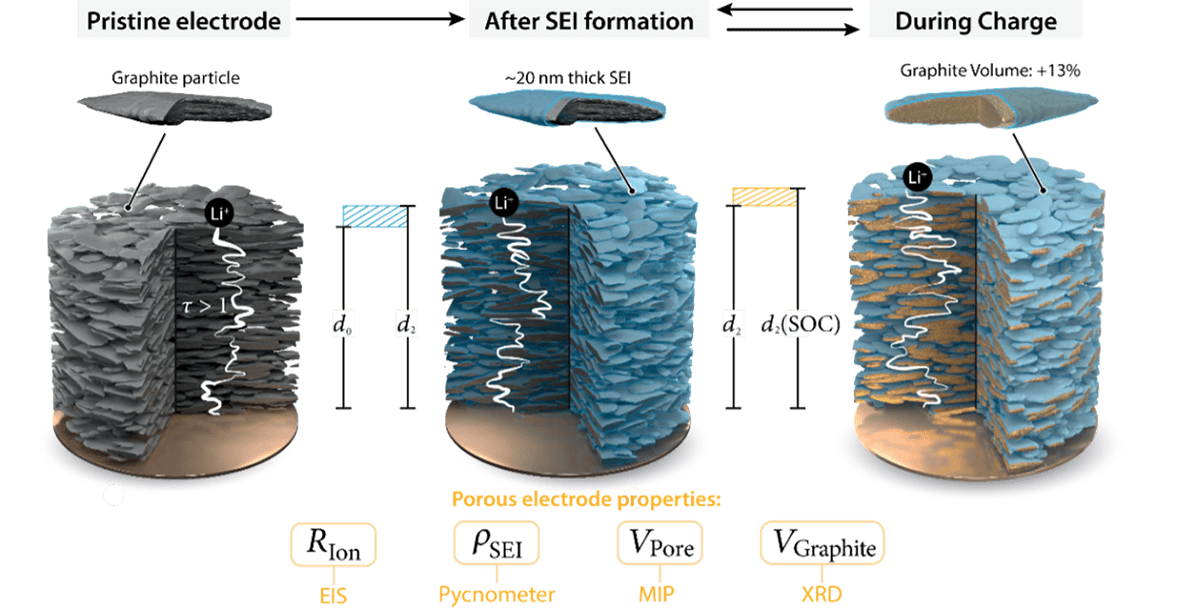
The fast-charging performance of lithium-ion batteries is strongly influenced by the structure of porous electrodes and its evolution during battery operation. In such electrodes, ionic transport is governed by the electrolyte conductivity as well as by the porosity, tortuosity and thickness of the electrode. The latter parameters undergo both reversible and irreversible changes, induced by the lithiation and delithiation of graphite particles and by the formation of the solid–electrolyte interphase (SEI).
We will discuss how SEI formation alters electrode thickness, porosity and tortuosity. Particular emphasis will be placed on how these structural changes depend on the initial electrode porosity and how SEI formation can be quantitatively linked to the evolution of transport properties.
Second, we will address state-of-charge–dependent effects. Graphite particle expansion during lithiation changes the pore structure, influencing electrode porosity, thickness and pore volume. It will be shown how these changes affect ionic resistance and electrolyte transport, and how they connect to macroscopic effects such as the recently described electrolyte-motion–induced salt inhomogeneity (EMSI).
Together, these insights provide a coherent picture of how SEI formation and state-of-charge-dependent expansion alter ionic transport in porous graphite anodes, offering guidance for electrode design and improved methodologies for realistic parameter determination used in battery modelling and fast-charging optimisation.
Lennart Reuter received his PhD from the Technical University of Munich (TUM) in June 2025 under the supervision of Hubert Gasteiger and is now a postdoctoral researcher at Uppsala University. His research centres on identifying and quantifying material and electrolyte decomposition processes in lithium-ion batteries. He implemented OEMS for gas analysis in the presence of volatile commercial electrolytes and developed a novel three-electrode cell for the operando detection of parasitic side reactions. In addition, he investigated structural and transport changes in porous electrodes during operation, including the characterisation of porous transport properties by electrochemical impedance spectroscopy (EIS).
Jonas Dickmanns is a PhD candidate at the Chair of Technical Electrochemistry, supervised by Hubert Gasteiger at the Technical University of Munich (TUM), focusing on advanced lithium-ion battery cell chemistry and anode materials. He received his MSc in chemistry from TUM, where he worked on the electrochemical characterisation of graphite. He later expanded his research to other anode materials, including microscale silicon and silicon/carbon composites. His work investigates key electrode processes such as solid–electrolyte interphase (SEI) formation, structural evolution of anodes, and electrolyte interactions. The goal of his research is to enhance the performance, stability and lifetime of next-generation lithium-ion batteries.



 Lennart Reuter received his PhD from the Technical University of Munich (TUM) in June 2025 under the supervision of Hubert Gasteiger and is now a postdoctoral researcher at Uppsala University. His research centres on identifying and quantifying material and electrolyte decomposition processes in lithium-ion batteries. He implemented OEMS for gas analysis in the presence of volatile commercial electrolytes and developed a novel three-electrode cell for the operando detection of parasitic side reactions. In addition, he investigated structural and transport changes in porous electrodes during operation, including the characterisation of porous transport properties by electrochemical impedance spectroscopy (EIS).
 Jonas Dickmanns is a PhD candidate at the Chair of Technical Electrochemistry, supervised by Hubert Gasteiger at the Technical University of Munich (TUM), focusing on advanced lithium-ion battery cell chemistry and anode materials. He received his MSc in chemistry from TUM, where he worked on the electrochemical characterisation of graphite. He later expanded his research to other anode materials, including microscale silicon and silicon/carbon composites. His work investigates key electrode processes such as solid–electrolyte interphase (SEI) formation, structural evolution of anodes, and electrolyte interactions. The goal of his research is to enhance the performance, stability and lifetime of next-generation lithium-ion batteries.