All-inorganic perovskite nanocrystals illuminate the future of scintillators

Understanding and advancement of scintillation, the conversion of photons to visible fluorescence, is key to many fields including medical radiography, radiation exposure monitoring, and X-ray astronomy. While conventional scintillators have reached their performance limits, new research shows the potential for cesium lead perovskite nanocrystals to revolutionize X-ray detection.

Led by Xiaogang Liu at the National University of Singapore, this recent experimental study highlights the capability of these nanocrystals to perform multicolor X-ray scintillation. Their color tunability arises simply by varying the halide of the material among bromine, iodine, and chlorine.

A new direction for development

Perovskites have already been explored for X-ray technology, but previous studies focused on the use of bulk hybrid organic-inorganic perovskites (HOIP) for the direct conversion of X-rays to current. Here, they instead offer an alternate route to advancing X-ray technology by indirect conversion of X-rays to current, using completely inorganic perovskites as scintillators and coupling them with existing detectors.

While the group considered exploring HOIP materials for scintillators, Liu said they do not have the crystallinity required to perform scintillation efficiently.  Compared with conventional, commercial CsI:TI scintillators, however, the team’s inorganic perovskite scintillators displayed higher imaging resolution and faster X-ray response.

The researchers showed the scintillator’s capabilities by capturing an image of an iPhone’s interior with and without their scintillator attached to the X-ray detector.

“We just replaced the scintillator already installed in the device and did the same experiment – a typical measurement,” Liu said. “In the same device with no scintillator, we didn’t see anything.”

 Low-cost and high reward

The perovskites are also low-cost and solution processible, offering an economic advantage to their development on top of their technological superiority. Remarkably, the perovskites were stable in ambient X-ray imaging conditions, overcoming issues of stability that plague research exploring the use of perovskites LEDs and photovoltaics. Under high level X-rays for five days, the study showed that photostability remained unchanged.

While Liu says it is still important that they test their material for longer times and at different temperatures and humidity levels, overall he feels their work is very promising. In the future, these materials have the potential for flexible, portable X-ray imagers. Already, they were able to take X-ray images with just a standard digital camera.

More details can be found in Nature 10.1038/s41586-018-0451-1.

Multifunctional carbon fibres enable massless energy storage

Despite progress in energy storage technology, batteries still make up a significant part of the weight for devices such as laptops and even cars. Rather than focussing solely on the battery technology to tackle lightweight demands, Leif Asp at Chalmers University of Technology alongside a broad team of researchers in Sweden, Italy and France report in Multifunctional Materials  that exploiting the electrochemical properties of carbon fibres could drop device masses by as much as 50%.

The mechanical properties of carbon fibres have been well understood for several decades, with a lot of seminal work dating back to the 1980s. While more recent, the promising electrochemical properties of carbon fibres have also been known since the late 2000s. However, no-one had looked into how to make carbon fibres that were stiff and strong while simultaneously demonstrating high-performance electrochemical properties, a gap in the knowledge that may be attributable to the nature of the research environment around carbon fibres. “When it comes to carbon fibres, knowledge is kept in the companies,” says Asp. “Few research groups are working on it.”

Asp and colleagues compared the microstructure and electrochemical performance for two types of commercial carbon fibre that have middling mechanical properties and one of the sector’s hardest hitters in terms of structural strength. Knowing that electrochemical properties improve for more amorphous microstructures with smaller more loosely oriented crystals, whereas mechanical properties improve with greater crystalline order, they were expecting a trade-off. What surprised Asp was that the compromise was far less than expected.

“The intermediate strength carbon fibres were much less organised than I expected,” says Asp as he describes some of the observations for the two middling carbon fibre types that remain competitive commercial options for applications that do not require extreme mechanical strength. “That these fibres still had such high mechanical properties means I might expect to be able to go to carbon fibres with even smaller crystals and I might still get good mechanical properties.”

Order isn’t everything

Carbon fibres are very sensitive to production conditions. The three types of carbon fibres at the focus of the current research – intermediate fibres T800 and IMS65, and the high modulus fibre M60J – were all produced by pyrolysis of polyacrylonitrile (PAN) but while the production temperature for T800 and IMS65 were similar, that for M60J was almost double. As a result the stiffness of the T800 and IMS65 is around 290 GPa and close to that of steel – still more than adequate for many applications –  whereas that of M60J is almost double. The structural differences are immediately apparent from high-resolution transmission microscopy images, which are much more mottled for T800 and IMS65, whereas M60J shows a very finely stratified structure, with turbostratic defects where stratified layers run into each other.

Raman spectroscopy data, as well as axial swelling measurements taken as the carbon fibres were cycled through lithiation and delithiation suggest differences in the lithiation and resulting structural strains. M60J behaves akin to graphite, bar the absence of certain features attributed to turbostratic defects, while T800 and IMS65 behave like amorphous structures with small disoriented crystal sizes. The highly amorphous structure of T800 and IMS65 allows double the electrochemical capacity, while preserving good mechanical properties. The results raise the question “how far can you go” in terms of amorphous microstructures before the compromise in mechanical properties becomes too great.

Teamwork makes the dream work

Leif Asp

The results suggest a promising outlook for using carbon fibre batteries for structural parts such as the body of a car. Although the battery performance itself does not compare with the state of the art, the resulting savings through weight reduction could have significant benefits for the system as a whole. However Asp highlights that it can be difficult to make these benefits apparent when approaching people at commercial automobile companies, who work specifically on one functionality such as energy storage, and may not appreciate the potential benefits of a material that underperforms in comparison to the current leading energy storage materials. “It’s a tricky issue to find the business case when you realise you need to go for replacing the materials for particular components, whereas the potential gain is at the systems level,” he adds.

He also emphasises how studies of such multifunctional materials thrive with a large team of researchers with wide-ranging expertise, which he likens to an orchestra. “My immediate reaction when I got the funding – I got really scared thinking now we have to do it, we need to get together a team interdisciplinary enough to do it but still agree the research aim and share the ambition – you find yourself like a conductor of an orchestra rather than a researcher.” In the same breath he expresses how grateful he is for the deep trust and mutual respect among the different researchers in his own team that made pursuit of the investigations so rewarding.

Next Asp would like to look more closely at radial swelling of the structures during lithiation. “We can measure how much these fibres expand axially when we charge them, and it’s pretty amazing – more that 1% for T800 and IMS65 (for which the strain to failure is 2%), and M60 almost doesn’t expand at all,” he says. “But radial measurements are harder as we need to do it in a microscope somehow.” He is also keen to better understand how many lithium atoms coordinate to each carbon in the lithiated product, and how the stiffness changes.

The full details are reported in the first issue of Multifunctional Materials recently launched by IOP Publishing. Asp also expresses his enthusiasm for the scope of the journal, adding, “I’m really excited about this journal – it’s a really fast growing and exciting area.”

New printer can use honey or liquid metal as ink

An acoustic printing method that uses highly viscous fluids such as honey has been developed by researchers in the US and Switzerland. The team claims that the technique overcomes viscosity-related limitations of other printing techniques and could open new avenues for the digital fabrication of materials with a wide range of physical properties.

Daniele Foresti, Jennifer Lewis and colleagues at Harvard University and ETH Zurich demonstrated the technique by printing patterns of food, optical resins, liquid metals, and a cell-laden collagen. The team claims the technology could be useful in the food, pharmaceutical and materials industries.

Inkjet printing is used for droplet-by-droplet patterning of liquids in many applications beyond the familiar computer printer. These include the creation of biological microarrays and additive manufacturing techniques. However, the inkjet is only really suitable for low viscosity fluids.

Cell-laden solutions

“Inkjet printing is the most common technique used to pattern liquid droplets, but it’s only suitable for liquids that are roughly ten times more viscous than water,” Foresti explained to Physics World. “Yet many fluids of interest to researchers are far more viscous. For example, biopolymer and cell-laden solutions, which are vital for biopharmaceuticals and bioprinting, are at least 100 times more viscous than water. Some sugar-based biopolymers could be as viscous as honey, which is 25,000 times more viscous than water.”

There are other techniques for printing highly-viscous fluids, such as laser-induced forward transfer. This uses lasers to induce a phase change in a film that then ejects droplets of the material for use in printing. But according to Foresti and colleagues, these techniques require various printing parameters to be adjusted when the ink composition changes. This makes the techniques challenging to use with materials whose physical properties change over time.

The more viscous a fluid is, the more resistant it is to flow. This means high-viscosity fluids exit print nozzles very slowly and in large droplets, which makes it difficult to produce sufficiently small droplets for printing. To solve this problem, the researchers turned to acoustics. They placed their printer nozzle inside a custom-made subwavelength acoustic chamber. This allowed them to use a single transducer to produce a highly-confined sound field around the tip of the nozzle. By generating forces up to 100 times greater than normal gravitational forces, the acoustic field pulled droplets of fluid off the nozzle.

Decoupled detachment

The team controlled the size of droplets falling from the nozzle by adjusting the amplitude of the sound waves. As the amplitude increases, the droplet size decreases. Foresti says, “This characteristic allows us to decouple the droplet detachment process from the fluid flow.”

The researchers tested the process on food, and optical, electrically conductive and biological materials. For example, they printed honey droplets on white chocolate, a microlens array using transparent optical adhesive, and liquid metal.

“By harnessing acoustic forces, we have created a new technology that enables myriad materials to be printed in a drop-on-demand manner,” says Jennifer Lewis.

“This technique enables the manufacturing biopharmaceuticals, cosmetics, and food, and expands the possibilities of optical and conductive materials,” Foresti says.

Further improvements

Foresti and his colleagues were able to create and release droplet sizes ranging from 100-1000 μm in diameter. However, he believes that further improvements will increase the print resolution by decreasing the droplets size below 50 μm. “We are also working on multi-nozzle print heads to increase the throughput,” he adds.

Brian Derby, a material scientist at the University of Manchester, told Physics World that while this is an interesting technique, there are already other printing methods that do exactly the same thing, such as laser-induced forward transfer. “People are interested in printing viscous liquids, but this is just another way of doing it,” he says. It probably has advantages over other techniques, he adds, “but it probably has some disadvantages too”.

However, laser expert Robert Eason at the University of Southampton points out that laser-induced forward transfer is not a routine technique and currently has set-up costs of around £50,000. What would be great, Eason says, is a “technique that could print liquids of arbitrary viscosity on any surface”. But he says that while the acoustic method looks interesting it is too early to say whether it is a good, precise and repeatable option.

The new technique is described in Science Advances.

Self-assembled molecular layers strike a balance

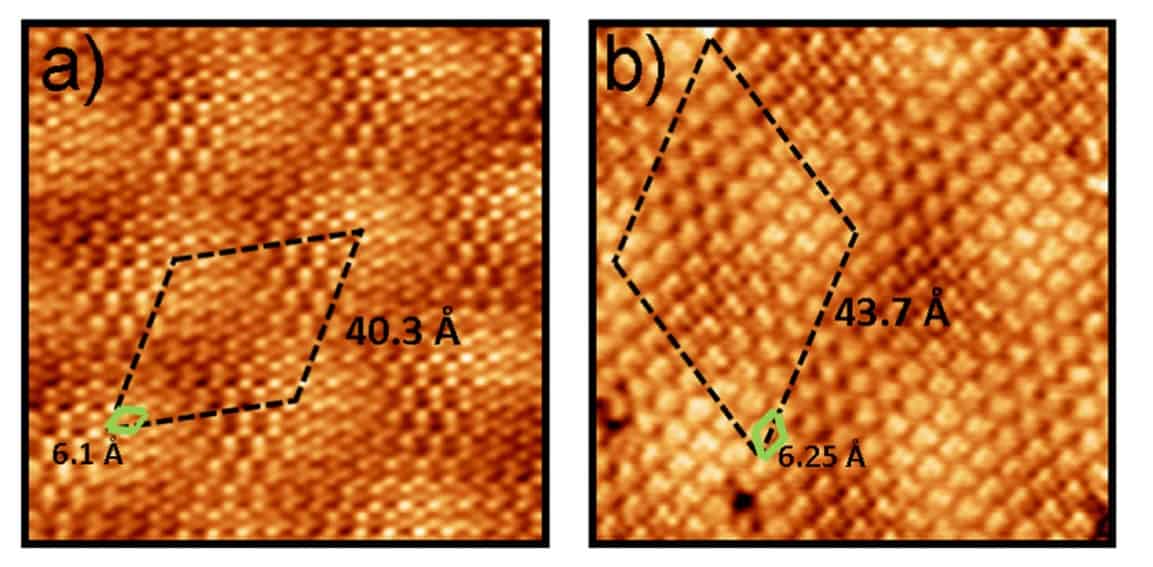
Experimental scanning tunnelling microscopy (STM) images for the triazine on the highly ordered pyrolytic graphite (HOPG) (a) and on the graphene on Pt(111) (b) substrate. Both the full system moiré (black dashed line) and the intermolecular (light green solid line) cells are depicted. Acquisition parameters: (a) Vs = +2.26 V,It = 60 pA, size: 10 × 10 nm2 ; (b) Vs = +0.27 V, It = 290 pA, size: 9.6 × 9.6 nm2. The bias voltage was applied to the sample. Courtesy of Nano Futures

Power is nothing without control, even for graphene. What attracted Ruben Perez, Professor of Condensed Matter Physics at Universidad Autonoma de Madrid, to study the self-assembly of molecular layers on graphene supported by various substances was the potential it opened up to tune graphene’s properties for technological applications.

Perez and his team combined density functional simulations and scanning tunnelling microscopy observations to study the self-assembly of a molecular layer of triazine on graphene on different supporting materials. They found that although the intermolecular forces between the triazine were relatively strong compared with the interactions between the molecules and substrate, the self-assembly remained governed by a fine balance between the two.

In addition, despite using the most advanced density functional tools at their disposal, their calculations also revealed previously unknown fundamental limitations in the exchange-correlation functional, which led to discrepancies in the comparison of theory and experiment. “Spotting the limitations of these functionals, which are widely applied in many research fields, from catalysis to molecular electronics, is an important contribution of our work,” says Perez.

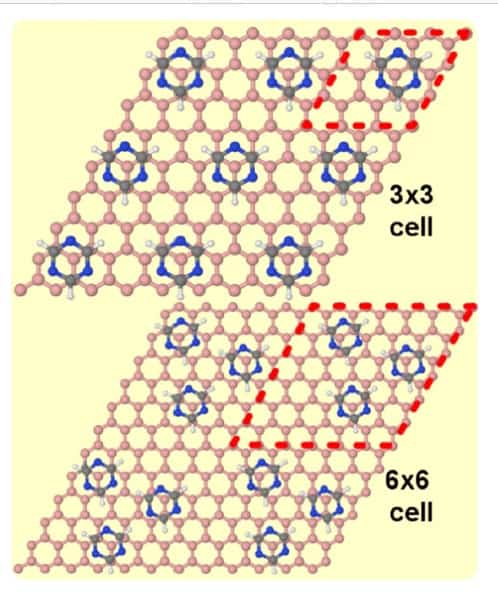
Ball-and-stick models for the equilibrium structures for the G(3×3) and G(6×6) cells of graphene (G) used for the study of the molecule–substrate and molecule–molecule interactions respectively. The G monolayer C atoms are coloured in pink while for the triazine molecule the C atoms are grey, nitrogen atoms are blue and hydrogen atoms are white. The unit cell is highlighted in red. Courtesy of Nano Futures

The perfect molecule

Perez and colleagues focused their investigation on the self-assembly of triazine on account of numerous attributes that make it the “perfect candidate”. The molecule is like a benzene molecule – a ring of six carbons each bonded to one hydrogen atom on the outside of the ring and a carbon on either side – but in the case of triazine, three of the carbon atoms and associated hydrogens are replaced by nitrogen. This means that while remaining a small molecule, with a hexagonal structure to match graphene’s honeycomb lattice, the hydrogen bonds between the nitrogen atoms of one molecule and the hydrogen atoms of neighbouring molecules allows for strong intermolecular interactions, unlike benzene.

The researchers studied the self-assembly of triazine single molecule molecular layers on graphene, graphite and graphene on platinum, in particular the Pt(111) surface. “In spite of this strong intermolecular binding, the differences in interaction with the two substrates lead to markedly different self-assembled molecular layer periodicity,” says Perez.

Theory and experiment mismatch

In fact the researchers found that the molecule-substrate and the intermolecular interactions were of the same order. Interactions with the substrate influenced the orientation of the triazine, and intermolecular interactions then led to large moiré patterns – the fringes that result when overlaying two periodic patterns – as the balance of interactions wrestled with lattice mismatches not just with graphene but also the material beneath.

It is the effect of the materials beneath the graphene that even state-of-the-art density functional calculations fail to produce. “So far, the community would tend to attribute this discrepancy with the experiments to the limitations of our description of the van der Waals interaction,” says Perez. “Our study, which includes the sophisticated MBD [many-body dispersion] approach, conclusively shows that this is not the case.”

Perez explains that short-range electronic correlations should be responsible for the effects of the material beneath the graphene. However none of the exchange-correlation functionals that the team considered seemed to describe them properly. 

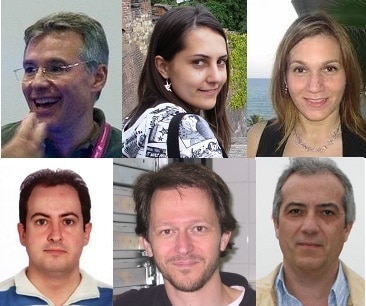
From left to right, top row: Ruben Perez, Lucia Rodrigo and Ruth Martinez-Casado; bottom row: Antonio J. Martinez-Galera, Pablo Pou and Jose M. Gomez-Rodriguez

Peter Liljeroth, Group Leader of Atomic Scale Physics at Aalto University in Finland, is a world expert in this field, and not involved in the current research. He commented, “Density-functional theory calculations are extensively used in condensed-matter physics and materials science to predict new structures and materials and to understand existing experimental results in more detail. However, systems where the structure depends on a delicate balance between chemical and van der Waals interactions are difficult to capture quantitatively and experimental results on well-characterized systems are required as benchmarks for the theory. This extremely solid piece of work highlights the problems that still remain before DFT can reach true predictive power.”

Strengthened understanding of weakly interacting surfaces

With so much interest in maximizing the technological potential of graphene, you’d be forgiven for thinking the literature was rife with studies on any strategy that showed potential to manipulate the material’s fantastical properties. However, as Perez tells Physics World the self-assembly of molecular layers on graphene and other weakly interacting substrates remains little understood.

“From the experimental side, the preparation and characterization of SAMs [self-assembled molecular layers] on weakly interacting substrates is challenging,” explains Perez. He tells Physics World that most of the previous work in this line has concentrated on molecules adsorbed on noble metal substrates like gold, copper and silver. “In these cases, although the molecule-substrate interaction is small compared with other reactive metals, it is still strong enough to dominate the SAM formation.”

Next the Perez and his colleagues will be focusing their attention on understanding self-assembled molecular layers of single-stranded DNA and the role of water concentration in its structure. “This work is part of our research on the mechanical properties of proteins and nucleic acids in their native biological environment and is relevant for the development of biosensors to detect single mutations in DNA.”

Full details are reported in Nano Futures


Knitting the universe, astronomers to vote on ‘Hubble-Lemaître law’

Sarah Spencer, a software engineer from Australia, has knitted a huge map of the sky by reprogramming a 1980s vintage knitting machine. “As a woman in tech, I wanted to create something which would engage young minds in an area of STEM,” she told Chelsea Gohd, of Space.com. There is much more in Gohd’s article “Software engineer hacks a knitting machine to create massive stellar map”.

Should the Hubble law be renamed the Hubble-Lemaître law to honour the contribution of the Belgian astronomer Georges Lemaître to our understanding of the expanding universe? That will be the subject of an electronic vote by members of the International Astronomical Union, as Krzysztof Bolejko of the University of Sydney explains in The Conversation: “Game-changing resolution: whose name on the laws of physics for an expanding universe?”.

Born in 1894, Lemaître was a Catholic priest who taught at the Catholic University of Leuven. As Bolejko explains, he published a paper on the expanding universe in 1927 – before Hubble and others. The paper was originally in French, and because of a decision made by Lemaître when it was translated to English, his contribution was overlooked for years.

NASA must fund major exoplanet mission top US scientists say

NASA should design and launch a space mission capable of directly imaging rocky planets that orbit stars similar to the Sun. That is the main conclusion of a 203-page report issued on 5 September by a panel of the National Academies of Sciences, Engineering, and Medicine (NASEM). The report outlines two main goals for exoplanet research: a need to identify potentially habitable planets outside the solar system as well as gain a better understanding the formation and evolution of planetary systems.

Now is really the time to understand the formation and evolution of planetary systems as the products of star formation

David Charbonneau

The report, commissioned by NASA, says that recently acquired knowledge about the frequency of small planets, as well as advances in optical technologies, “have significantly reduced uncertainties associated with a large direct imaging missions”. The 14-strong panel that wrote the report recommends that the new spacecraft should use a coronograph or starshade to enable the direct imaging of an exoplanet by blocking the light from parent stars. Indeed, the panel recommends that NASA should keep developing its Wide Field Infrared Survey Telescope, which is scheduled to launch in the mid-2020s and will demonstrate the technology behind the “coronographic spectroscopy” of exoplanets.

“Now is the time”

The report warns, however, that developing the necessary technology for a new mission would require a lot of investment over a long timescale. Work on the craft would also need a range of interdisciplinary expertise as well as collaboration with ground-based telescopes. Regarding such telescopes, it recommends that the National Science Foundation should invest in both the Giant Magellan Telescope and the proposed Thirty Meter Telescope to enable “profound advances” in the imaging and spectroscopy of entire planetary systems.

“Now is really the time to understand the formation and evolution of planetary systems as the products of star formation,” notes Harvard University astronomer David Charbonneau, who co-chaired the NASEM panel. That view is backed by fellow co-chair Scott Gaudi from Ohio State University. “This is the first generation that, if we so choose, could go out and try to search for life and answer one of humankind’s most profound questions,” says Gaudi.

During a press briefing, Charbonneau and Gaudi also stressed the need to eliminate discrimination and harassment within astronomy that has hit the community in recent years and is also of increasing concern for junior scientists. “Many of the most exciting discoveries are being made by very young scientists as exoplanets is a very young field,” says Charbonneau. “We need the very best minds to approach the question: are we alone in the universe?”.

Supramolecule joins the battle against cancer

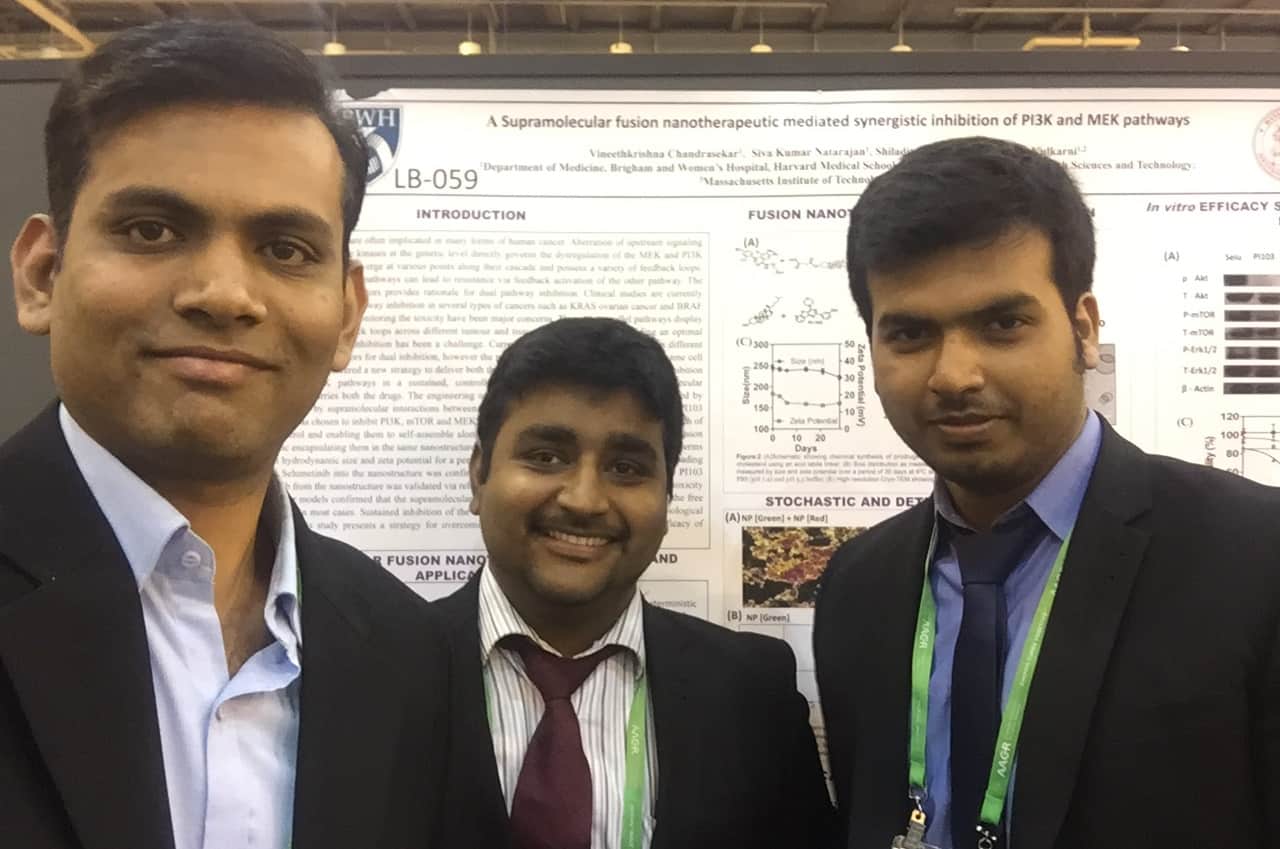
Study authors

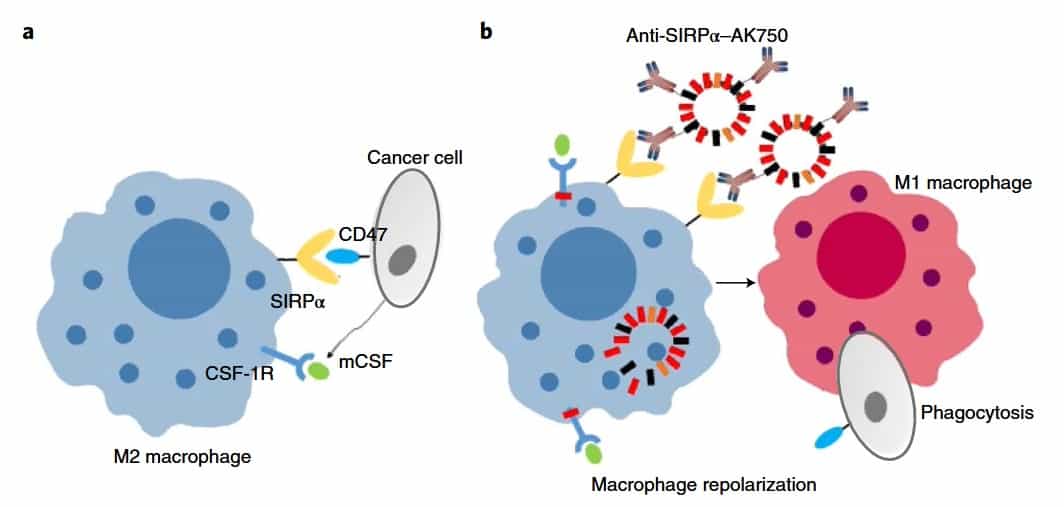
Macrophages are key players in the body’s immune response and they can effectively “eat” cancer cells. However, cancer cells are tricky and express a “do not eat me” signal to avoid this phagocytosis. Moreover, cancer cells can switch the tumour-associated macrophages from an antitumour M1 phenotype to an M2 pro-tumourigenic one. This transition from M1 to M2 is ensured by CSF-1R (a tyrosine kinase receptor found on the surface of macrophages).

Inhibition of CSF-1R signalling is thus starting to be seen as an attractive therapeutic goal. A team of scientists from Brigham and Women’s Hospital have managed to show that a supramolecule assembly termed AK750 enabled a shutdown of the CSF-1R-signalling pathway and enhanced M2-to-M1 repolarization within the tumour microenvironment. The supramolecule improved antitumour and antimetastatic efficacies in animal models of melanoma and breast cancer, paving the way for a new kind of immunotherapy (Nature Biomed. Eng. 2 589).

The birth of the supramolecule AK750

Initially, the authors simulated the formation of the supramolecule in silico. They then synthesized amphiphile subunits (which have both hydrophilic and lipophilic properties) and, in agreement with the theoretical predictions, a stable supramolecular assembly formed.

In the next step, the authors exposed macrophages to AK750. They observed a sustained inhibition of CSF-1R, even after 48 hours. Moreover, a reverse transcription polymerase chain reaction (RT-PCR) analysis revealed increased expression of IL12 and IL10 (pro-inflammatory molecules that play an important role in host defence and immune homeostasis) in the macrophages following AK750 treatment – indicating that these are being polarized to M1 status.

M2-M1 transitions

Further on, the treatment of macrophages with IL4, which can polarize a macrophage to an M2 state independent of CSF1 signalling, resulted in a significant increase in the M2 phenotype. When these M2 macrophages were treated with AK750, there was a significant increase in M1 macrophages, indicating the efficient repolarization of M2 macrophages to M1 phenotype. Importantly, M2 status can be achieved by the cancer cell through manipulation of the tumour microenvironment, but AK750 treatment can inhibit these modulatory effects.

The effect of AK750 in vivo

The authors tested the in vivo efficacy of the AK750 supramolecule in melanoma and breast cancer animal models. The treatment of melanoma-bearing mice with AK750 resulted in a complete inhibition of tumour growth, revealing an inhibition of the CSF-1R phosphorylation and a reduction in the M2 macrophages, together with an increase of the M1 pool. For the breast cancer model, AK750 significantly inhibited tumour growth, but in a dose-dependent manner.

The “do not eat me” signal that cancer cells express is called CD47 and binds to a signal-regulatory protein α (SIRPα) receptor on macrophages to prevent phagocytosis. The authors hypothesized that integrating a SIRPα-targeting function could increase the antitumour efficacy. Thus, they integrated tumour-associated macrophages isolated from melanoma-bearing mice with the bifunctional supramolecule. An internalization of the supramolecule was identified within the macrophages, together with a significant inhibition of CSF-1R phosphorylation and an increase of the M1 phenotype.

The findings of this study indicate that bifunctional supramolecules could be used to advance immunotherapy in humans. The supramolecule can accumulate in the tumour and induce a sustained inhibition of the CSF-1R signalling cascade, resulting in enhanced antitumour efficacy and reduced metastasis in aggressive tumour models. Moreover, blocking two distinct targets in the same immune cell might be the future of immuno-oncology.

Renewable energy could green Sahara

Installing large amounts of wind and solar power in the Sahara Desert and neighbouring Sahel would increase local temperatures, rainfall and vegetation. That’s according to climate modelling by a team from the US, Italy and China.

“Previous modelling studies have shown that large-scale wind and solar farms can produce significant climate change at continental scales,” says Yan Li of the University of Illinois at Urbana-Champaign, US. “But the lack of vegetation feedbacks could make the modeled climate impacts very different from their actual behaviour.”

With that in mind, Li and colleagues included vegetation response in their models. They were among the first to take this approach for wind and solar farms.

The simulated renewable energy plants would cover more than 9 million square km; the wind farms would generate an average of around 3 terawatts of electrical power and the solar farms around 79 terawatts.

“In 2017, the global energy demand was only 18 terawatts, so this is obviously much more energy than is currently needed worldwide,” says Li.

Wind farms warmed near-surface air temperatures in the region, the model showed, changing minimum, i.e. night-time, temperatures more than maximum temperatures. Wind turbines enhance vertical mixing, potentially bringing down warmer air from above.

Precipitation also increased as much as 0.25 mm per day on average. “This was a doubling of precipitation over that seen in the control experiments,” says Li. “This increase in precipitation, in turn, leads to an increase in vegetation cover, creating a positive feedback loop.” In the Sahel, average rainfall rose 1.12 mm per day where wind farms were present.

Map of Sahara climate projections

Solar farms also boosted temperature and precipitation in the models. Solar panels with a conversion efficiency of 15% reduced the albedo — reflectivity – of the land surface so that it absorbed more heat, increasing rainfall by around 50%. Solar panels with an efficiency of 30% would have a negligible effect on albedo, according to the team.

“The increase in rainfall and vegetation, combined with clean electricity as a result of solar and wind energy, could help agriculture, economic development and social well-being in the Sahara, Sahel, Middle East and other nearby regions,” says Safa Motesharrei of the University of Maryland, US.

The team focused on the Sahara because it’s the largest desert in the world, sparsely inhabited, highly sensitive to land changes and “is in Africa and close to Europe and the Middle East, all of which have large and growing energy demands”.

The team reported the findings in Science.

  • This article was based on a press release from the University of Illinois, US.

Martin Ryle’s vision of renewable energy, what twistronics could do for us, big-G remains elusive

In this episode of the Physics World Weekly podcast, Matin Durrani talks to James Dacey about the life of the Nobel-prize-winning astronomer Martin Ryle, who was also a visionary in the field of renewable energy. Ryle’s wide-ranging studies on energy were done in the 1970s, and Durrani explains why they are highly-relevant today.

The emerging field of “twistronics” is the subject of a lively discussion between Belle Dumé and Anna Demming. They explain why putting a twist on layers of graphene could lead to the development of new electronic and optical devices.

Later in this episode, Hamish Johnston explains why physicists have struggled for more than two centuries to measure the gravitational constant big-G. Also, he talks about a study that reveals how athletic training could allow humans to function on planets with gravity greater than Earth’s.

Maxwell’s demon brings order to an atomic lattice

The famous “Maxwell’s demon” thought experiment has been brought to life using lasers to significantly reduce the entropy of a 3D array of ultracold atoms. The work was done by David Weiss and colleagues at Pennsylvania State University who say that such well-ordered arrays of neutral atoms could form the basis of future quantum computers.

Quantum computing continues to be a hot topic in physics because it could lead to the creation of devices that perform certain calculations exponentially faster than conventional digital systems. Scientists are investigating several technologies to create quantum bits (qubits) and among the front runners are arrays of trapped ions held and also superconducting circuits.

The spin states of neutral atoms held in arrays also hold great promise for making qubits. The fact that such atoms have no charge means that large numbers of them can be trapped very close to one another without mutual interference. One popular kind of trap is the optical lattice, which exploits the interference between pairs of laser beams to set up a standing wave that holds atoms at its nodes or antinodes — depending on whether the force is repulsive or attractive.

Engineering interactions

The challenge with neutral atoms is being able to engineer interactions between atoms to establish entanglement – one of the basic requirements for quantum computation. This can be done using a controlled NOT gate, which flips the state of one qubit depending on the state of a second qubit. While neutral-atom systems have been used to make two-qubit gates, the error rates of those gates are higher than the trapped-ion or superconducting equivalents.

Weiss and colleagues’ work is important because they have minimized the entropy of an atom trap, something that will be important for creating high-fidelity quantum gates. This was done by realizing Maxwell’s demon in the lab.

The demon was first proposed in the mid-19th century by James Clerk Maxwell as a challenge to the second law of thermodynamics. The imaginary creature lurks in a pair of gas-filled chambers that is separated by a tiny door. The demon opens the door to allow faster-moving molecules to pass into one of the chambers, and to allow slower moving molecules to pass into the other chamber. Heat is therefore transferred from a colder to a hotter region and the entropy of the system decreases, in apparent violation of the second law.

Rather than sort gas molecules by speed, Weiss and colleagues sorted neutral atoms according to their spatial position. They started by laser cooling a collection of caesium atoms to a few millionths of a degree above absolute zero and then loading them into a 3D optical lattice – made from three pairs of laser beams.  Most atoms quickly leave the lattice in such a way that the lattice is left half-full, with each site either empty or occupied by one atom in a random distribution (see figure).

Shifting nodes

The next step is to convert this half-full lattice of randomly positioned atoms into a smaller sublattice that is completely full and therefore entirely uniform. The team was able to see which of the nodes were occupied, thanks to the light from the cooling lasers scattering off the atoms. They then exploited the fact that the standing-wave nodes can be shifted in space by changing the polarization of one of the laser beams in each pair, as well as the fact that this shift occurs in opposite directions for the two spin states of each atom.

The researchers used an additional pair of tightly focused laser beams plus a source of microwaves to selectively flip the spin of any atom in the lattice while leaving the spins of surrounding atoms undisturbed. A change in the polarization of the relevant lattice laser then allowed them to move that atom relative to the others. Repeating these steps numerous times they were able to convert a half-empty 5x5x5 lattice into a completely full 5x5x2 sublattice. This lowered the lattice entropy by more than a factor of two.

Our demon observes the whole system at once instead of one particle at a time, and then acts on it to create a manifestly low entropy state

Aishwarya Kumar

“This process is almost exactly like Maxwell’s demon thought experiment,” says Aishwarya Kumar – lead author of a paper in Nature that describes the work. “The only difference is that our demon observes the whole system at once instead of one particle at a time, and then acts on it to create a manifestly low entropy state.”

Kumar says their experiment does not violate the second law of thermodynamics. Indeed, it was realized in the mid 20th-century that Maxwell’s demon would actually increase the overall entropy in the universe as a result of sorting the gas molecules. Likewise, he says, in their experiment the entropy goes up when cooling photons randomly scatter off atoms – which the team exploited to see the atoms. He adds that the group’s next step is to entangle the qubits with high fidelity

Ronald Hanson, who investigates diamond-based “spin qubits” at the Delft University of Technology in the Netherlands, is impressed with the latest work but is reluctant to discuss its implications for quantum computing. “This is first and foremost a beautiful physics experiment,” he says. “Comparing different quantum computing experiments is not so easy and often subjective as the potential paths to scalable technologies are very different.”

Copyright © 2026 by IOP Publishing Ltd and individual contributors