Borrowing Einstein’s body, fluid mechanics of dripping taps, birds and spiders devour insect energy

Are you feeling a bit down on your cognitive abilities on a Friday afternoon? The best way to stay sharp for the rest of the day is to assume the physical identity of Albert Einstein – according to Mel Slater and colleagues at the University of Barcelona. Writing in Frontiers in Psychology, the team describe how they embedded male subjects into “virtual bodies” of either Einstein or an average man. The Einstein-embedded subjects performed better at an IQ test than those who appeared as average blokes. The difference was greatest for people with low self-esteem. So, the next time you have an exam or tough problem to solve, put on a crazy wig and false moustache.

One of the most annoying sounds is surely that produced by a dripping tap. Yet it could be a thing of the past thanks to researchers from the universities of Cambridge and Poitiers. While much work has been done on the fluid mechanics of a falling water droplet into liquid, little research has been carried out on what produces the characteristic “plink, plink” sound as the water droplet hits a liquid surface.

By using an ultra-high-speed camera, a microphone and a hydrophone, the team recorded droplets falling into a tank of water. They found, rather surprisingly, that the sound is not caused by the droplet itself, but by the oscillation of a small air bubble trapped beneath the water’s surface. Thankfully, the team offers a solution to stop the noise: add soap to lower the surface tension of the liquid. “[But] I think the best way to stop the sound being produced is to get whatever is causing the drip fixed,” Sam Phillips from Cambridge told Physics World.

Quiz question: what consumes more energy on a yearly basis, insectivorous birds or New York City? The answer, according to an international team of zoologists, is that they both consume about 2.8 exajoules per year. This, by the way, is the same amount of meat and fish energy consumed annually by all humans on the planet. But that’s nothing on the global spider community, which could eat its way through twice as much insect energy as birds.

Could graphene quantum dots help treat Parkinson’s disease?

Quantum dots made from the carbon material graphene prevent alpha-synuclein from aggregating into strand-like structures known as fibrils. They also help disaggregate fibrils that have already formed. Alpha-synuclein fibrils are thought to be implicated in Parkinson’s disease because they kill dopamine-generating neurons, so the new findings might help in the development of therapies to treat this disease as well as others in which fibrilization occurs.

Synucleins are a family of proteins typically found in neural tissue. Researchers believe that one type of synuclein, alpha-synuclein, twists into fibrils, which then accumulate in the midbrain of patients with Parkinson’s. Treatments with efficient anti-aggregation agents might thus be one way of fighting the disease.

A team led by Byung Hee Hong of Seoul National University and Han Seok Ko of The Johns Hopkins University in Baltimore have now found that graphene quantum dots (GQDs) bind to alpha-synuclein in vitro. Thanks to fluorescence and turbidity assays, as well as transmission electron microscopy measurements, the researchers found that the dots prevent alpha-synuclein from forming into fibrils. The nanostructures also dissociate already-formed fibrils into short fragments, with the average length of the fragments shortening from 1 micron to 235 nm and 70 nm after 6 and 24 hours respectively. The number of fragments starts to decrease after three days too and cannot be detected at all after seven days, which implies that the fibrils completely disintegrate after this time.

Mice show improved symptoms of the disease after six months

In their experiments, Hong and Ko’s team also injected the GQDs into the bloodstream of transgenic mice with Parkinson’s and found that they showed improved symptoms of the disease after six months – as assessed by routine cylinder and pole tests. The mice showed fewer movement problems, were able to use both forepaws to balance themselves on cylinders and ran down poles quicker. The researchers say that these improvements could come from the fact that the quantum dots are small enough to penetrate the blood-brain barrier and protect against dopamine neuron loss induced by alpha-synuclein preformed fibrils.

The GQDs do not show any appreciable in vitro and in vivo toxicity after six months of “prolonged injection” either and can be cleared from the body and excreted into urine, they add. The quantum dots might produce a similar effect in other diseases in which fibrilization occurs. Indeed, previous research by another team has already shown that injecting them into mice with Alzheimer’s inhibits the fibrilization of beta-amyloid peptides.

Full details of the research have been published in Nature Nanotechnology 10.1038/s41565-018-0179-y.

Cosmic neutrino points back to blazar driven by supermassive black hole

A high-energy neutrino detected by IceCube in 2017 was created in a blazar – an intense source of radiation powered by a supermassive black hole. That is the claim of three international teams of astronomers, who have characterized the event using three different instruments in another important breakthrough of multimessenger astronomy. The IceCube team also looked back at previous neutrino detections and say that these particles may have also come from the blazar. Together, the observations make a strong case that blazars are a source of high-energy cosmic rays – a hypothesis that had been discounted by many astronomers.

Located at the South Pole, IceCube comprises more than 5000 photomultiplier tubes buried in the Antarctic ice cap. Very occasionally a neutrino will collide with an atom, creating charged particles that emit light as they travel through the ice. This light is captured by photomultiplier tubes, and in some cases the signal can be used to work-out where in the sky the neutrino came from.

On 22 September 2017, IceCube detected a 290 TeV neutrino that could be traced back to TXS 0506+056, which is a well-known, but poorly studied, blazar that emits copious amounts of gamma rays. A near real-time alerting system meant that astronomers using the Fermi Gamma-ray Space Telescope in space and the MAGIC gamma-ray telescope on the Canary Islands could focus on the blazar less than a minute after the neutrino detection.

Extremely high energy

Fermi immediately spotted a very strong gamma-ray flare from the blazar and follow-up observations by MAGIC detected gamma rays with energies as high as 400 GeV. This emission of extremely high-energy gamma rays, say astronomers associated with the study, is evidence that the blazar could also generate very high energy cosmic rays. These energetic particles could then go on to create the high-energy neutrino detected by IceCube.

The 2017 observation inspired IceCube physicists to look back at previous high-energy neturinos captured by the detector. They found an increase in neutrino detections from the vicinity of the blazar over a five-month period beginning in September 2014. They calculate that the statistical significance of this neutrino “flare” being associated with the blazar to be 3.5σ, which is still well below the value of 5σ for a “discovery” in particle physics. Similarly, the statistical significance of the September observation is also below discovery level at 3σ.

Consensus shattered

Although more observations are need, the research provides strong evidence that blazars are a source of high-energy cosmic rays – a hypothesis that has been contentious. “It is interesting that there was a general consensus in the astrophysics community that blazars were unlikely to be sources of cosmic rays, and here we are,” says Francis Halzen, a of the University of Wisconsin-Madison and IceCube’s lead scientist.

Cosmic rays are charged particles, so they are bent off course by galactic and extragalactic magnetic fields as they travel to Earth – making it impossible for astronomers to trace cosmic rays back to their sources.

The research is reported in two papers in Science.

Irradiation beyond the target may reduce distant metastases

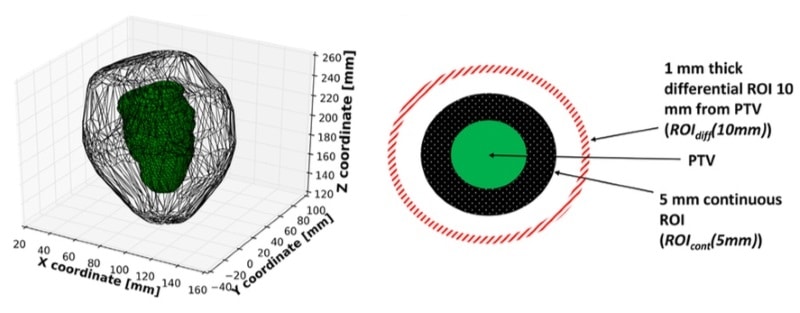
ROI depiction

Stereotactic body radiation therapy (SBRT) is highly effective in targeting high dose to a tumour while minimizing radiation exposure to surrounding healthy tissue. But if the mean radiation dose reaching potentially cancerous tissues immediately surrounding the tumour is not high enough, a patient may be at risk for developing distant metastases.

A Canadian study of non-small cell lung cancer (NSCLC) patients suggests that irradiation of a secondary margin outside the planning target volume (PTV) of a tumour could dramatically reduce distant metastasis rates, without adverse consequences to patients (Radiother. Oncol. 10.1016/j.radonc.2018.05.012).

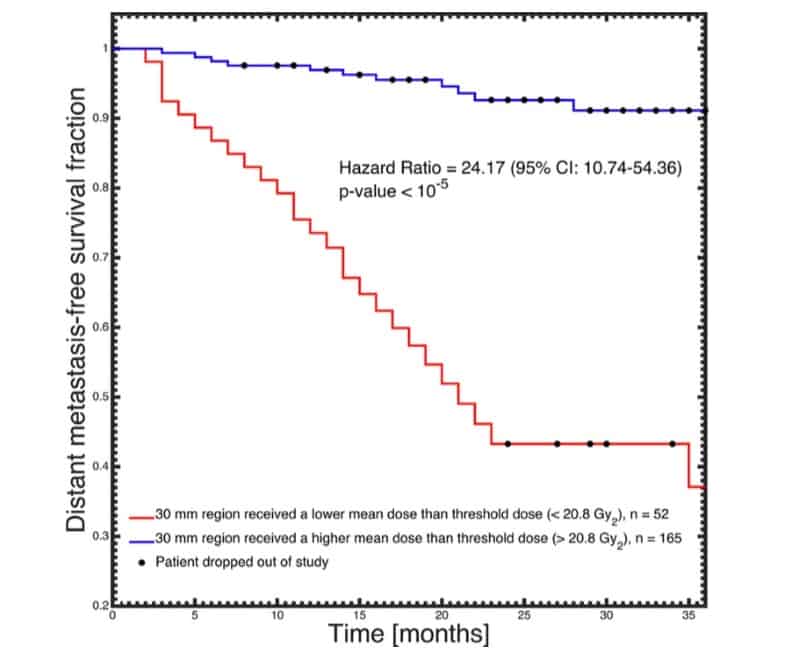
If these findings are independently confirmed, radiation dose escalation beyond the PTV may be beneficial. The researchers suggest the use of a secondary margin outside the PTV subject to a dose constraint of at least 20.8 Gy2 (where Gy2 is the equivalent dose delivered in 2 Gy fractions) to ensure the eradication of microscopic malignant cells.

André Diamant

In a prior investigation of SBRT outcomes of NSCLC patients, André Diamant from McGill University Health Centre had determined that radiation target volume size was inversely correlated with distant metastasis. Because this finding seemed counter-intuitive, Diamant and colleagues conducted a study to determine whether a correlation exists between the dose immediately outside the PTV and metastatic development in patients with stage 1 NSCLC treated with SBRT.

The researchers analysed the distant metastatic rate in 217 patients with a single primary tumour. The patients had received SBRT either at McGill University Health Centre (96 patients receiving 3D-CRT) or Centre Hospitalier de l’Université de Montréal (121 patients receiving VMAT). Radiotherap was planned using a PTV with a 3-5 mm extension margin to the internal target volume.

Distant metastases developed in 37 patients (17% of the total) at 10 different sites, and loco-regional failure in 26 patients (12%). Eighteen patients (8%) experienced radiation pneumonitis. The researchers determined that two years after treatment completion, 60% of patients who received a mean dose outside the PTV of lower than 20.8 Gy2 developed distant metastases. This compared with only 5% for patients who received a higher mean dose to the same region.

Distant-metastasis-free survival curve

The researchers evaluated dose parameters in a region of varying size outside each patient’s PTV. The maximum difference in mean dose fall-off between the two groups (distant metastases versus no distant metastases) was 6.6 Gy2, at 16 mm away from the PTV. The authors suggest that ROIcont(30 mm), a shell-shaped region of thickness 30 mm outside the PTV, represents the region most indicative of the risk of distant metastasis. The mean dose received by this region had an area under the curve (AUC) of 0.82.

None of the dose coverage factors (homogeneity index, mean and median PTV) were predictive, nor were differences between planned and delivered dose distributions arising from patient setup error or movement.

The authors note that microscopic disease extensions, which have been reported at least 26 mm beyond gross tumour edges, were killed more efficiently by the higher mean dose. The immunosuppressive nature of radiotherapy may also have influenced the spread of microscopic tumour cells. This might explain the correlation with distant metastasis without seeing any correlation in loco-regional control.

“When it comes to dosimetric outcome analysis, the attention is often solely on the PTV, which is assumed to contain any and all microscopic cancer spread,” Diamant tells Physics World. “Our work indicates that perhaps more attention should be directed towards neglected regions that may contain otherwise unknown cancer cells. If confirmed independently, this calls for more advanced treatment planning strategies which take into account the biological tumour environment,”

“We are very interested in extending the analysis to other treatment modalities and/or cancer types. Additionally, we are actively researching the use of current artificial intelligence technologies to combine both image and dose information to predict oncological outcomes,” Diamant adds.

Finding a niche within scientific computing

Why did you decide to start Tech-X?

John Cary, chief scientist and CEO: When I was a professor of physics at the University of Colorado, and my wife Svetlana (Sveta) was a researcher there, we saw an opportunity for doing tech transfer within the Small Business Innovation Research (SBIR) programme. The US government created this programme to give small businesses a way to get research funding (which would otherwise all go to laboratories, big businesses or universities) and to help them translate that research into commercial products that could grow the economy.

What we did was to develop computer programs that take the fundamental laws of physics and use them to model how systems will behave and evolve. An example would be the klystrons found in particle accelerators. Klystrons are cavities – metal boxes or cylinders – where a beam of electrons enters at one end, and then a small amount of power is injected into the cavity to cause the beam to bunch. By the time the beam reaches a second cavity, it has begun oscillating, and that produces microwaves that can be extracted and used for a variety of purposes. Our software can tell equipment designers how these devices are going to work – how much power is going to come out, how narrow a spectrum, whether the frequency is stable or drifting, how much energy is wasted, and so on. That means they can try many, many configurations on the computer before they make the device, saving money and time.

How has the company changed over the years?

JC: At first, our growth was all based on the SBIR model. The US government would basically pay us to write the software that scientists at the Department of Energy use to build particle accelerators, and then we would turn around and sell that software to laboratories in other countries as well, such as the UK’s ISIS neutron source and facilities in Europe, China and Russia. During that period, the people we hired were mostly scientists and engineers who could write proposals for SBIR funding, and we also contracted with a company to help us understand the paperwork required to work with the federal government.

We developed computer programs that take the fundamental laws of physics and use them to model how systems will behave and evolve

More recently, though, we have started to attract customers from the commercial sector. We’ve worked with a firm called Applied Materials, for example, that builds large plasma devices for manufacturing integrated circuits, and we also work with companies in the aerospace, defence, and oil and gas industries. As we got more into commercial markets, we created a quality-control department, and we also brought in people who can help customers use our software, because it is fairly complex and you need to understand a lot of basic physics principles.

What have been your biggest challenges?

JC: Establishing a sales group has been tough. We have had some success in hiring scientists and engineers and teaching them how to sell, but we have not found the ideal senior person who combines skills in sales and in science or engineering.

Sveta Shasharina, senior scientist and co-founder: I can elaborate on that. Essentially, we tried to hire someone who could help us commercialize our product and find new customers, but we couldn’t find anyone who had a sales-type personality – driven and personable – who could also understand the technical aspects of the software well enough to run it and drive customer-oriented development. For the moment, John has taken on that role in addition to his responsibilities as CEO, but it takes a lot of his time, so we are still looking for that magical person.

What do you know now that you wish you’d known when you started?

SS: I used to think I knew how to communicate with people, but it has taken me several years to become relatively good at it. I’ve learned a lot since becoming a manager. I also wish I hadn’t spread myself so thin early on, because my curiosity led me into lots of projects that didn’t end up contributing to the company’s current direction. My background is in fusion plasma physics, but I was working on distributed computing, and now I’m splitting my time between R&D and the business or commercial side.

JC: When you start a company, you’re trying to find your way in the world. You’re figuring out what you can do. Then, as you grow, you realize where your biggest strengths are, and at that point it’s important to focus. That is hard, especially in a research-driven company where you have a lot of very smart people, and they have lots of ideas about how to go off in their own very smart directions. Running a business is different from managing a research group: it’s important to get people to focus and put their energies into a few areas, rather than doing whatever they want.

Any advice for someone starting a business in scientific computing?

JC: Figure out what your competitive advantage is and then test your theory. If you think your selling point is X, go out and say it a few times: “We are good because of X.” Then, if you don’t get any sales, go and think of an alternative. It is easy to get caught up in how wonderful your software is, but it won’t help unless you can communicate it to someone and they accept it.

Scientists differ on climate’s carbon dioxide sensitivity

Scientists have yet to settle one of the biggest questions of warming: the climate’s carbon dioxide sensitivity. How much more carbon dioxide can the atmosphere absorb – and how will life on Earth respond – before the global temperature ticks past the political milestones of 1.5 °C and 2 °C above the average levels for most of human history?

These were set in 2015 when 195 nations agreed in Paris to contain global warming to “well below” 2 °C by 2100 and spoke openly of holding to no more than a 1.5 °C average rise as the ambition.

But that means doing the sums all over again. In the last century the ratio of the greenhouse gas in the atmosphere has risen from its historic average of around 280 parts per million to more than 400 ppm. And global average temperatures have risen by around 1 °C already: the world has just half a degree of leeway before the Paris target becomes impossible.

But one of the longest-running arguments in climate science is a simple uncertainty known to the professionals as “climate sensitivity”. That is: how much emitted carbon dioxide – emitted from the combustion of fossil fuels – makes a half a degree rise?

And it is a difficult question because forests, grasslands, wetlands, rivers, animals, microbes, rocks and oceans all release and absorb carbon dioxide from the atmosphere, sometimes storing it as hardwood, or peat, or carbonate rocks, sometimes releasing it as organisms decay.

Global temperature and carbon dioxide ratios have varied many times in pre-human history. So the human use of fossil fuels is only one component in a truly global calculation. Another factor is the area of healthy mixed forest and wetland, mangrove and prairie available to absorb that extra carbon, not to mention the algae in the warming oceans.

British scientists report in the journal Nature Climate Change that they asked the big question: how high could carbon levels get while temperatures stayed at no more than 1.5 °C? They calculate that – as long as warming happens slowly – the carbon count could get as high as 765 ppm. Right now, most climate researchers think that this mark will be reached or surpassed at between 425 ppm and 520 ppm.

And what makes the difference is the unresolved question of how the green things respond to all that extra carbon dioxide in the atmosphere. What difference will this make to crop yields (it is, in effect, a fertiliser), to the mix of species in the forests, and to the acidity of the oceans?

Other researchers have already asked the same question: what difference, for instance, will it make just to the tropics? And how will clouds – another factor in temperature control – respond?

“As well as being a major cause of global warming, carbon dioxide also affects life directly,” said Richard Betts, of the UK Met Office, based at the Hadley Centre in Exeter.

“Higher carbon dioxide concentrations cause increased growth in many plant species. This causes a general ‘greening’ of vegetation, but also changes the make-up of ecosystems – some species do better than others. Slower-growing large tree species can lose out to faster-growing competitors,” he said.

“It can also reduce the effects of drought to some extent, because many plants use less water when carbon dioxide is higher. Both of these factors can potentially enhance crop yields, possibly helping to offset some of the negative impacts of climate change – although even if that happens, the nutritional value of the crops can be reducedas a result of the extra carbon dioxide.”

But, Betts warned, the same extra carbon dioxide changed the chemistry of the oceans, making sea water more acidic and potentially more damaging to corals, and to plankton.

The message of such research is that there are a lot more questions to be answered. Nature’s response might buy the world more time to act. But there is no guarantee.

And the Exeter reasoning has its limitations: that is because it considered only the case of carbon dioxide, and although this is the big driver of climate change, it is not the only greenhouse gas. In a warming world, the permafrost is expected to melt to release potentially colossal quantities of buried methane.

The researchers arrived at their estimates by reversing the normal reasoning. They did not try to calculate the probability of so much warming for a stipulated rise in carbon dioxide ratios. Instead, they started with what the carbon dioxide count might look like at a particular temperature.

“This lets us estimate what the range of carbon dioxide concentrations would be when global warming passes those levels, if carbon dioxide were the only thing in the atmosphere that we are changing,” Betts said.


A nanotech bonanza in Paris and a journalism boot camp in Sicily

In this episode of Physics World Weekly, Anna Demming is in conversation with Hamish Johnston about her highlights from Nanotech France, which took place in Paris at the end of June. You will hear from Keibock Lee the president at Park Systems, Inc, who speaks about recent developments in atomic force microscopy (AFM) and electrodeposition. You also hear from Keon Jae Lee from Korea Advanced Institute of Science and Technology (KAIST) about the booming industry of microLED lighting technologies.

Later in the podcast, James Dacey is in conversation with the freelance journalist Ben Skuse who has just returned from 2018 International Science Journalism School in Erice, Sicily. Skuse discusses the theme for this year’s event ‘What’s Next: Challenges and Opportunities for Tomorrow’s Fundamental Physics’. He also explains why he felt so inspired by the independent award-winning writer Jacopo Pasotti, then offers some practical advice for anyone considering a career in science journalism.

If you enjoy the podcast then you can subscribe via iTunes or your chosen podcast app.

Exotic ‘non-classical paths’ affect quantum interference, experiment confirms

The importance of including exotic “non-classical paths” in analyses of quantum interference has been demonstrated experimentally by physicists in India. Urbasi Sinha and her colleagues at the Raman Research Institute in Bangalore measured the interference pattern produced by microwaves as they navigated through three parallel barriers. Their results show that the pattern cannot be calculated by simply assuming that the microwave photons travel via “classical paths” through the barriers. Instead, all possible routes through the barriers – including weaving through multiple gaps – must be accounted for.

One of the cornerstones of quantum theory is the fact that particles can also behave as waves. This can be demonstrated by the double-slit experiment, which involves firing a stream of particles such as electrons through two adjacent slits and observing the build-up of a wave-like interference pattern on a screen on the other side of the slits. However, each particle is detected as a tiny dot within the pattern, suggesting that the particles are discrete entities too.

This double-slit pattern can be calculated by treating the system as a superposition of waves that travel through one slit and waves that travel through the other slit. However, in 1986 the Japanese physicist Haruichi Yabuki showed that this is an approximation because it ignores the tiny possibility that a particle could take a non-classical path through the slits. An example of such a path is when a particle goes through one slit and then loops back through the other slit and then back through the first towards the detector.

Tiny effect

In 2014, a team led by Sinha used the path-integral formulation of quantum mechanics to calculate the effect of non-classical paths on the interference pattern from three slits. The calculations revealed that the deviation from a simple superposition depends on the size of the de Broglie wavelength of the particle.  The effect is tiny for electrons and visible light – being one part in 108 and one part in 105 respectively – which is too small to detect.

However, they did show in 2014 that the deviation is much larger for microwave photons and now Sinha and colleagues have done an experiment that has measured this deviation for the first time.

Instead of using three slits, the team did a “triple slot” experiment whereby the interference pattern is created when quantum particles encounter three barriers (slots) to their propagation. Slots rather than slits were used for practical reasons related to the size and cost of the experiment.

Moving detector

The team used a pyramidal horn antenna to generate a beam of microwave photons with a wavelength of 5 cm. The beam was directed at three microwave-absorbing barriers (slots) – each 10 cm wide and separated by 3 cm. A microwave detector was located behind the slots, where it can be moved very precisely to acquire the resulting interference pattern. The slots were located halfway between source and detector – which were 2.5 m apart.

The team measured a deviation of 6% from the superposition principle thereby confirming the significance of non-classical paths. They also point out that their observation has implications for radio astronomy, where arrays of detectors are used to create large radio telescopes using the principle of superposition. Describing their results in the New Journal of Physics, the team points out that such deviations could affect observations made using arrays, particularly in precision astronomy experiments.

Monolayer MXenes show impressive strength and elasticity

MXenes, two-dimensional transition metal carbides or nitrides, have electronic properties rivalling graphene, often considered the nanomaterial of the future. As a result, these nanosheets also have many applications, such as energy storage, conductive coatings, filtration membranes, and electromagnetic interference shielding. However, little is known about the mechanical properties of MXenes, an important criterion when considering usage within these applications.

Lipatov et al. address this issue by directly measuring the Young’s modulus of monolayer solution-processed titanium carbide (Ti3C2Tx) MXene using atomic force microscopy (AFM) nanoindentation. Comparison to graphene oxide (GO) and other similar 2D solution-processed nanomaterials reveals the strong potential of Ti3C2Tx.

Novel Nanoindentation

As its name implies, nanoindentation AFM uses an AFM tip to apply a known force to a membrane sample. To use nanoindentation AFM, the synthesized MXene flakes must be placed over microwells. “The AFM tip was positioned directly in the centre of a selected well and slowly moved downward, providing controlled stretching of a MXene flake,” describes Research Assistant Professor  Alexey Lipatov. The tip force is incrementally increased and the deflection of the sample is measured to yield force over deflection curves.

Elastic sheets trump graphene oxide

Using these data along with the known Poisson ratio and sheet thickness for monolayer Ti3C2Tx, researchers under the direction of Alexander Sinitskii and Yury Gogotsi calculated the Young’s modulus – the ratio of applied stress to resulting elastic strain a material can endure.  They found the solution-processed Ti3C2Tx had a Young’s modulus of 333 GPa, which compares favourably with similar solution-processed nanosheets, such as MoS2, as well as graphene oxide and reduced graphene oxide.  They also report excellent reproducibility, as values ranged from 278 N/m to 393 N/m over 36 data points.

Interestingly, the measured Young’s modulus is significantly lower than the theoretical limit of 502 GPa for Ti3C2. Lipatov states, “As expected, the experimentally determined value… is lower because of surface functionalization and the presence of defects. However, the difference in the Young’s moduli of the ‘ideal’ Ti3C2 and the experimentally realized Ti3C2Tx is not as dramatic as in the case of graphene and graphene oxide (1050 GPa versus 210 GPa).” He adds that, given the known defects introduced during solution-based synthesis, “There is potential to develop methods to synthesize Ti3C2Tx flakes of higher quality to reach a larger Young’s modulus close to the theoretical value.” He also suggests that there is great potential for MXenes within many applications, particularly given that Ti3C2Tx is just one of about 30 synthesized MXenes, and MXenes with a different number of atomic layers or a different transition metal may have a higher elasticity.

Solution synthesis but dry transfer

The researchers exploited the scalable solution-based synthesis to generate Ti3C2Tx flake samples by using an acidic solution to etch away aluminium from the Ti3AlC2 ‘MAX’ phase, where MAX refers to a large family of hexagonal layered ternary transition metal carbides, carbonitrides and nitrides with the composition Mn+1AXn. This leaves high-quality Ti3C2Tx MXene sheets up to 10 μm in size suspended in water.

The researchers then deposited MXene flakes onto a silica-coated silicon microwell plate by first drop casting the dispersion onto a PDMS substrate. They rinsed the substrate with the MXene sample to remove the remaining contaminating salts. They could then place the PDMS-MXene stack MXene-side down onto the microwell plate and manually remove the PDMS to reveal MXene nanosheets tightly suspended over the microwells.

Lipatov notes, “The rationale behind this technique is that hydrophilic MXene flakes should have a stronger attractive interaction with the hydrophilic silica surface than with the hydrophobic PDMS.” Indeed, such a transfer method “consistently produced MXene membranes of excellent quality.”

Full details are reported in Science Advances.

Air con led to quicker thinking during heat wave

Students living without air con during a heatwave in the US performed worse in cognitive tests than students with air con. The study is the first to show the detrimental effects of indoor temperatures during a heat wave on young, healthy individuals’ thinking, according to the researchers.

“Most of the research on the health effects of heat has been done in vulnerable populations, such as the elderly, creating the perception that the general population is not at risk from heat waves,” said Jose Guillermo Cedeño-Laurent of Harvard T H Chan School of Public Health, US. “To address this blind spot, we studied healthy students living in dorms as a natural intervention during a heat wave in Boston. Knowing what the risks are across different populations is critical considering that in many cities, such as Boston, the number of heat waves is projected to increase due to climate change.”

Extreme heat is the leading cause of death of all meteorological phenomena in the US. Most previous research on the health impacts of extreme heat has used records of outdoor temperature. In the US adults spend 90% of their time indoors, however.

Cedeño-Laurent and colleagues asked 44 students in their late teens and early 20s to take tests on their smartphones first thing in the morning. The students had to describe the colour of displayed words, which assessed cognitive speed and ability to focus on relevant stimuli, and answer arithmetic questions, testing cognitive speed and working memory. The tests took place on 12 days in the summer of 2016; after five days there was a five-day-long heat wave followed by a two-day cooldown.

A total of 24 students lived in six-storey housing built in the early 1990s with central air con. The other 20 lived in low-rise buildings from 1930 – 1950 without air con. The team put a device to measure temperature, carbon dioxide levels, humidity and noise in each student’s room, and the students wore devices to track their physical activity and sleep.

During the heat wave, students living without air con had reaction times for the word-colour tests 13.4% longer than the students with air con. The students without air con also scored 13.3% lower on the addition and subtraction test. Together, the data showed that students in rooms with air con were both faster and more accurate in their responses.

The students’ cognitive performance differed most during the cooldown period, when outdoor temperatures began to drop but indoor temperatures remained high in the dorms without air con.

“Indoor temperatures often continue to rise even after outdoor temperatures subside, giving the false impression that the hazard has passed, when in fact the ‘indoor heat wave’ continues,” said Joseph Allen of Harvard T H Chan School. “In regions of the world with predominantly cold climates, buildings were designed to retain heat. These buildings have a hard time shedding heat during hotter summer days created by the changing climate, giving rise to indoor heat waves.”

 The researchers published their findings in PLOS Medicine.

Copyright © 2026 by IOP Publishing Ltd and individual contributors