LUMICKS, a leading supplier of equipment for dynamic single-molecule analysis, has introduced a new instrument that combines high-resolution optical tweezers, confocal microscopy or STED nanoscopy, and an advanced microfluidics system. The company says that the C-Trap instrument is the first of its kind to bring these capabilities together in a truly integrated and correlated way, allowing scientists to visualize and manipulate molecular interactions in real time, with sub-picoNewton force resolution and sub-nanometer position resolution.
The video below shows a typical workflow of the C-Trap instrument, and how it can be used solutions for single-molecule research.
The C-Trap is able to sense the smallest molecular conformation changes, and the rarest and most transient molecular states. It can also be used to take measurements under physiological conditions and to investigate temperature-dependent interactions, and offers full automation and improved data management.
Physicist Jim Gulliford has spent the past 30 years of his career working in the global nuclear industry, from France to the US. Since 2010 he has been employed at the OECD Nuclear Energy Agency (NEA) in Paris, as head of nuclear science and leading the agency’s international “data bank”. I caught up with Gulliford to find out what sort of career options are available for nuclear physicists joining the field today, and about his main project – the NEA’s newly launched Nuclear Education, Skills and Technology (NEST) framework. NEST’s main goal is to create a global network of universities, research institutes and businesses to help maintain and build the skills of the next generation of nuclear researchers. Such a network is especially needed today, when a large percentage of the current generation of nuclear experts is at or nearing retirement age.
What should early-career physicists coming into the nuclear field be considering?
I’m trying to imagine what it’s like to be a young physicist now; it must be a bit scary. Certainly, in the UK, and probably in other countries, there isn’t the same pipeline that there was when I started. There always used to be government-funded research programmes, which were international collaborations, and so you just found a way of doing the next thing. I think nowadays it’s harder.
Today, it probably depends what kind of physicist you want to be. If you are interested in experimental work, then you need facilities to go and work at, and be part of a multidisciplinary team. That’s hard to find in the UK now, so be prepared to work internationally. The more theoretical route is outside my experience, but I would say the way is through academia, and working at a big national research centre.
What are the hot topics in the nuclear industry that people starting out now will be working on in the next five or 10 years?
It’s material science. When I started, it was all about neutron physics. But as time has gone on, it’s become clear that all innovation now will depend on taking advantage of new materials. There is still a lot of work do to in the modelling area, as we are still relying on some fairly important approximations and experimental correlations. In contrast, in neutron science we can model things at a fundamental level now.
The real gains to be had are in the area of materials used in current reactors – those that are exposed to the highest radiation: the fuel, the fuel matrix, and the clamp. Also, some of the structural materials that operate in an extreme environment. Nowadays, we expect our reactors to keep going for longer than they were originally designed for, due to economic reasons, and so you have to able to predict how they’ll behave in the longer term. Will they stand up? What sort of maintenance might be needed? If you look to any advanced reactor design, the big question is how the materials behave – their ability to maintain their properties of containment, for example – and to get a better understanding of their chemical properties, such as corrosion.
Tell me about the NEA’s data bank.
The data bank operates as a repository and an archive for information – it includes data on experiments used to validate our simulation methods, to help understand the physics a bit better, so we can improve our experiments. We distribute the codes and software that people have produced over the years, so that they can be shared and improved. We’re responsible for making all reports – scientific, technical, engineering, as well as economic and safety reports – available to the NEA membership.
But we are also in the process of changing. Rather than acting as a passive archive, we’re now looking to engage with the user community, especially expert users. We want to benefit from their feedback on topics such as what should be the next experiment to do; what extra physics needs to be put into the codes and what the next application of the codes should be. We’ve always done training and been part of knowledge management in the data bank, but it’s more proactive now. And one of the drivers now is that there is a generation of people like me, who are moving into retirement, but who know what went wrong. We have the practical knowledge that comes with such experience. That aspect of knowledge management is important, and it’s part of where the data bank is moving – to create communication and hands-on engagement between the older and younger generation, rather than just be handing out CDs with stuff on them.
How involved are you when it comes to helping government with policy decisions?
If you’ve been involved in NEA work for a decade or more, then you’re working with group of people who the policy-makers come to for advice. We also have a formal steering committee at the top level of the NEA, which includes the people connected to the policy-makers. We also have specific policy debates. We had one on the use of thorium a few years ago, and one on small modular reactors. In connection with NEST, two years ago we had a debate on educational skills. We pick topics and arrange for expert speakers to come and give an overview in a way that is relevant to what policy-makers need to know.
Could you tell me more about what the NEST framework is trying to achieve?
We have been developing NEST for two years now, but it is still very early days. The issue of a skills shortage in the nuclear industry has been around for quite a while. I’ve drawn on reports from as far back as 1993 where the danger of such a shortage was mentioned. By 2000 everybody was aware that we were heading for a really difficult situation. In 2012 there was yet another policy debate and report. This was slightly more optimistic, because we’d been through what was known as the “nuclear renaissance”. More universities were offering courses to nuclear engineers and scientists, and people were considering it a viable career option. But then we had the Fukushima nuclear disaster. In the years since the accident, there was more and more concern about where we’re going, and so everyone agrees that nuclear education is crucial.
NEST takes advantage of what an international organization like the NEA can do. While we can’t cover all the major skills required to train nuclear scientists, NEST is the starting point for creating the next generation of subject-matter experts – those at the top of the skills pyramid. The idea is that they would have a specialized technical skill and experience in one area, but also a broader view of the whole nuclear system. So, they may be a reactor physicist, but they would also know about safety, about licensing regulation and about social issues – the whole spectrum. But of course this kind of training takes time to do.
How is NEST going to be rolled out?
International projects are at the heart of the NEST concept. Students – we call them NEST fellows – will take on projects that are incorporated into an already existing programme at a university or institute, where they will be working alongside those with long-standing expertise in the field. So a fellow will get their specialist training in whatever their project is about. But they will also pick up implicit and tacit knowledge from the experienced people that they work with, and they’ll start to build a network. They’ll start to form relationships with the other NEST fellows, who may not necessarily be from the same technical discipline, but who will be part of the nuclear energy industry in some way. Hopefully they will meet at conferences, or collaborate on projects in the future, and form the kind of expertise network that is necessary.
The UK estimates that 7000 new people are required to come into the nuclear industry each year – we will be training only 1%. While that doesn’t sound like a lot, producing 70 subject-matter experts is a huge challenge. Hopefully there will be a trickledown effect from them as their groups grow and they get involved in mentoring programmes. Ten of the NEA countries have currently signed on to the programme, and we are working on getting others, including the UK, on board.
What sort of impact will Brexit have on the nuclear industry, especially when it comes to travel and international co-operation?
It won’t be so easy for British scientists to go and get a job in France, and vice versa – scientists in Europe might be a little wary about building a long-term career in the UK. But I think there may be some benefit in that the UK will realize it has to do something that actively facilitates its researchers to get involved in overseas activities. I suspect that the policy makers and the people who are planning the future research programmes will be looking now in some detail at ways of compensating for Brexit.
A round-up of the latest international patent applications in radiation therapy.
Interweaving low and high doses reduces radiation damage
Radiation Barrier, an adaptive immunotherapy company, has published details of a method for preventing damage to healthy cells surrounding a tumour during radiotherapy (WO/2018/126277). The process involves irradiating such cells with low-dose radiation, which initiates a protective cellular response in the healthy cells and prevents later damage by radiation. It also generates an immune response against neoplastic cells. The filing describes a scheme in which the low-dose radiation is interspersed with high-dose sessions, which themselves are varied through the weekly schedule.
Scattering model improves ion-based therapy planning
RaySearch Laboratories has proposed a method for modelling multiple scattering in ion-based radiotherapy treatment planning (WO/2018/115114). The approach first uses a Coulomb scattering model to determine multiple elastic scattering of ions for scattering angles in a first angular interval with an upper limit at a selected cut-off angle. Next, it determines multiple elastic scattering of ions for a second angular interval with a lower limit at a selected cut-off angle. The system then determines the scattering for angles in a range comprising at least part of the first and second angular intervals, based on the obtained results. The method avoids the double counting of particles at large scattering angles that occurs when using conventional methods, aiming to more accurately reflect the scattering of protons and other ions in ion-based radiotherapy.
MLC-based device lines up for minibeam radiotherapy
A collaboration from CNRS, University of Paris-Sud and Paris Diderot University has invented a system for delivering minibeam radiotherapy at a lower cost device than existing minibeam generators (WO/2018/091280). The device incorporates a multileaf collimator with an array of alternating leaves and slits extending in a longitudinal direction (from an entrance plane of the array toward an exit plane). It also includes a source for emitting an incident electromagnetic beam or beam of subatomic particles. The source emits the beam in the direction of the entrance plane of the array. The multileaf collimator is arranged to create an arrangement of beams that form alternating high-energy and lower-energy lines, suitable for minibeam radiotherapy.
Low-intensity focused ultrasound tackles dementia
A low-intensity focused ultrasound pulsation device for treating degenerative dementia is described by BrainSonix (WO/2018/112269). The device works by directing the focal point of an ultrasonic transducer beam at a target area of the brain, to promote removal of substances that accumulate in the interstitial pathways that are in part responsible for degenerative dementia. In one example, the target area is the hippocampus and the degenerative dementia is Alzheimer’s disease. The ultrasonic beam can stimulate brain tissue at a frequency corresponding to a naturally occurring deep-sleep burst frequency of neurons. The subsequent astrocyte activation patterns drive a process responsible for brain solute disposal. For example, the transducer may generate a burst frequency of 1-4 Hz to stimulate deep-sleep brain functions that help remove amyloid plaque.
Compact gantry delivers high-quality proton beam
Varian has developed a compact, lightweight proton therapy gantry with a source-to-axis distance (SAD) of less than 2 m (WO/2018/125627). This small SAD reduces the requirements on the maximum magnetic fields generated by the bend magnets in the gantry beamline, enabling the use of lightweight bend magnets. The components in the gantry beamline are optimized to achieve a beam spot size of approximately 4 mm sigma or less, through a pencil-beam scanning nozzle downstream of the final bending magnet. In addition, the proton therapy system is configured to operate at a maximum beam energy of 220-230 MeV. According to the filing, the gantry can be configured to rotate 360° and maintain treatment precision, thus delivering the same treatment quality and workflow efficiency as much larger and more expensive conventional proton systems.
PET guides radiation therapy
RefleXion Medical has designed radiotherapy systems and methods for emission-guided high-energy photon delivery (WO/2018/093933). In emission-guided radiation therapy, gamma rays from markers or tracers that are localized to tumour regions are detected and used to direct radiation to the tumour. The treatment systems comprise: a gantry with a rotatable ring coupled to a stationary frame via a rotating mechanism, such that the rotatable ring rotates up to about 70 RPM; a radiation source (such as a MV X-ray source, for example) mounted on the rotatable ring; and one or more PET detectors mounted on the rotatable ring.
A research team at the University Medical Center Göttingen has created a cochlear implant that uses light to restore auditory responses in deaf gerbils. The study provides a proof-of-concept that combining optical stimulation with genetic manipulation can successfully restore sound perception, and could lead to a new generation of more accurate cochlear implants (Sci. Transl. Med.10 eaao0540).
Approximately 360 million people worldwide have hearing impairment. Traditional cochlear implants can partially restore the ability to hear in many of these patients by stimulating ear cells with electrical signals. In such devices, however, the generated current tends to spread around each point of contact, activation of a large population of neurons and limiting the resolution and clarity of sound signals.
Christian Wrobel and colleagues tackled this obstacle by designing a light-based cochlear implant. Optical stimulation promises spatially confined activation of neurons in the auditory nerve, potentially yielding spatially precise ear cell stimulation with limited spreading.
(A) Electrical cochlear implants, (B) optical cochlear implants and (C) single-channel optical stimulation. (Courtesy: University Medical Center Göttingen)
To test their approach, the researchers carried out experiments in adult gerbils, which have a larger cochlea than other rodents and can detect the lower frequencies that a human would hear. The animals were first trained to jump over an obstacle upon hearing an alarm. The authors then injected a virus that carries a gene encoding for a light-sensitive ion channel into the gerbils’ cochlea, allowing their cochlear neurons to be activated by light. They then implanted optical fibres in the cochlea to deliver light signals.
When the cochlear cells were stimulated with a blue light instead of the alarm, the gerbils with implants jumped over the obstacle – suggesting that they registered the light stimulation as sound. The authors also induced deafness in a group of implanted, trained gerbils, and found that although they could no longer register the alarm, they still jumped over the obstacle after optical stimulation.
These findings indicate that the implant successfully restored auditory responses in the animals, and suggest that optogenetics might be used to develop cochlear implants with improved restorative capabilities.
Alessandro Curioni, vice-president, IBM Europe and director of the IBM Research Lab in Zurich, Switzerland. (Courtesy: IBM Research)
Alessandro Curioni, vice-president, IBM Europe and director of the IBM Research Lab in Zurich, Switzerland
We have been pushing basic research as a way to create transformational innovations for our company for 60 years. Within Europe, IBM is participating in more than 90 Horizon 2020 projects on a diverse set of topics, and we are collaborating with more than 900 institutions. Within these projects, I would say that 20–30% could be considered “blue-sky” research, where it’s not just about creating better products or services, but eventually creating completely new businesses or transforming some that we already have. An example is quantum computing. We have been investing in that area for more than 30 years, starting from fundamental research, and without that work we would not have an IBM quantum computer on the market today.
It’s very difficult to quantify the impact of basic research. You can do it only if you accept that basic research has a value per se.
Alessandro Curioni, IBM
Another area where we have been involved in basic research is in scanning-tunnelling microscopy (STM). When it was developed, STM was really a very basic tool to understand the nanoworld, but today, it’s the basis of nanotechnology and it will allow us, for example, to come up with new neuromorphic-analogue types of computing that will probably be the base of the computing of tomorrow.
To do this, I think you need to have a very wise and future-looking style of management within your company. Basic research is not something that brings results the next day. If you lose that longer-term view from management, there is a big risk that your manager might tell you that what you are doing is not bringing any value for the next couple of quarters, and so you don’t move forward. We are also seeing this in government institutions and universities, because there is more of a move to ask for “impact”. When the focus is always on the return, that can create barriers, because then the people who are doing basic research have to come up with constructs that are very artificial to try to explain why basic research is important and has “impact”.
The reality is that at a given moment, it’s very difficult to quantify the impact of basic research. You can do it only if you accept that basic research has a value per se, and if you have the right culture, you understand that whatever brings you success today has come from investment many years before. I think the European Commission’s more “mission-oriented” funding programmes are helpful in this sense, because if you have a high-level mission, then within this you can find space for contributions from across the spectrum between basic and applied research, and the boundaries disappear.
Thierry Botter, head of Airbus Blue Sky (Image courtesy of Airbus)
Thierry Botter, head of Airbus Blue Sky
Until last year, Airbus’ central R&T (CRT) organization and divisional R&T organizations were very much involved in applying for publicly-funded research projects. However, following a comprehensive reorganization of our central entity, the decision was made to no longer seek public funding within CRT. The decision was motivated by several factors, including the low probability of success. Substantial time and effort would be invested by CRT members to set up collaborations that were relevant for Airbus’ future capabilities and met strict organizational conditions established by the funding body, but with only a limited success rate, the company deemed this effort not worthwhile.
In addition, there is a time lag in these public projects. By the time the project proposal is put in, feedback is returned, the project is kicked off, and the results come in, it may be years later, and the company’s direction or focus might have shifted. This disconnect between our immediate needs and desires for quick, short-term action was also part of the decision to move us away from publicly funded initiatives.
We at Airbus Blue Sky are curious to see how we can take concepts and principles from neuroscience, how the human brain works and interprets its environment, and use them for the benefit of aerospace-relevant applications – drones, for example.
Thierry Botter, Airbus
Now, we are instead focusing our activities in a few key sectors, and a few key topics within those sectors, and we are self-funding them: we define the activity we want to undertake, we identify partners and we try to collaborate with them. We have also set up my department, Airbus Blue Sky, to focus on very long-term research, tied to basic science, with a very wide range in terms of what topics it can explore. This department is now officially six months old, and over those six months we’ve begun to engage with a few different topics. Notable examples include quantum computing, quantum communication and quantum sensing, but also computational neuroscience, which is a discipline that overlaps with the world of artificial intelligence. We at Airbus Blue Sky are curious to see how we can take concepts and principles from neuroscience, how the human brain works and interprets its environment, and use them for the benefit of aerospace-relevant applications – drones, for example.
Another area of interest is structural power storage. Can we take an aircraft that has certain structural properties – tensile strength, an ability to resist shocks and vibrations and so forth – and also empower this structure to hold electric charge? It might not be a very large amount of charge, but even a little extra on top might enable certain vehicles to get more mileage out of their trajectory. We’re not going to double the distance an electric aircraft can travel, but we might enable slightly longer ranges or flight times.
Airbus Blue Sky has worked with a variety of partners so far, including small companies, start-ups, academic research teams and national research labs. It really is topic-dependent – who we partner with depends on the topic at hand. The tricky bit, however, is that a lot of our partners are not necessarily familiar with this approach, so the contract negotiations are sometimes difficult. This is one advantage of publicly-funded schemes: people are familiar with the framework agreement for collaborations, and they don’t tend to be as objectionable to legal representatives as doing things on an ad-hoc, per-project, per-company basis. This is one sticking point; it’s not insurmountable, but it’s something that we’ve had to address.
Jean-Luc Beylat, Nokia Bell Labs. (Courtesy: Nokia Bell Labs)
Jean-Luc Beylat, vice-president of global innovation ecosystem partnerships at Nokia Bell Labs and head of Bell Labs France
In my case it’s quite easy to answer this question “How does your company engage with basic research?”, because Bell Labs is the famous research institute which, after various consolidations in the telecommunications industry, is now part of Nokia. The expectation from the Nokia group is that we will not do development or prepare the next phase of Nokia products; instead, our role is to work on fundamental or disruptive science. We have 1500 researchers at different offices around the world, with activities in photonics, cybersecurity, artificial intelligence, data analytics and more, and we work intensively with universities as well.
For us, basic research is critical for two reasons. The first is because there has been an acceleration of the technology cycle. Twenty or 30 years ago we had maybe a few years’ gap between doing the research and going to market with a product, but now it’s even shorter. The other reason is that we really need to anticipate the ways the world is changing, not only at the perimeter of Nokia but more globally. For example, we had an intensive research programme in mathematics to identify advanced algorithms for artificial intelligence, and specifically for applications in deep learning. We did this to give the telecommunications network the capacity to self-optimize, so that the network understands the problems it faces in terms of resource management and traffic, and can optimize the traffic without a specific program to instruct it. On paper it’s quite easy to understand, but in terms of research it’s necessary to have a network “forecast” to anticipate trends.
Marc Rougier, Elaia Partners. (Courtesy: Elaia Partners)
Marc Rougier, partner at Elaia Partners
We’re a venture-capital fund, so we finance research, which I suppose is sort of a way to engage! Our focus is on super-early-stage technology transfer. We are trying to make start-ups and viable companies out of research, and we have a lot of contacts within academic research, private research and government research to help us identify opportunities to do that. For example, we have a technology-transfer fund that works in partnership with Paris Science and Literature – a group of 24 universities and research institutes within Paris. This group has spun off companies in fundamental physics and biotechnology, and also from mathematicians working on artificial intelligence.
At the moment, especially (but not only) in France, a lot of innovations that happen in the lab either die there, and stay at the level of theoretical research, or they are acquired in one way or another by a larger corporation. We think there is a third way, which is to try to transform some of the researchers into entrepreneurs and help them build companies.
The down side is that by coming in super-early, we are more likely to make no money at all, because the likelihood of a given start-up going all the way down that path is small. However, if it does, we create a lot of value, and that is one reason we’ve adopted this approach. The other is that we really believe there is a gap in financing these things, because research is traditionally financed by mechanisms that are not directly connected to the value of a business. Later on, once a team has been built up, they have a proof of concept and have already signed a handful of clients, anyone will want to finance them. But there is a gap when an idea is no longer pure research, but it’s not yet a viable company. That’s the gap I want to bridge.
Olivier Pfeiffer, ID Quantique. (Courtesy: ID Quantique)
Olivier Pfeiffer, head of financial and critical infrastructure markets, ID Quantique
ID Quantique is interesting in that respect because the company was founded by people from the physics department at the University of Geneva, and there’s always been plenty of cross-pollination, with people who work at ID Quantique also teaching or doing postgraduate degrees in the university. On a more practical level, a lot of our products are used by universities, so it helps us to have feedback from researchers on the products, their uses and their interfaces so that we can improve them. Another example is that we recently did a joint project with the University of Toronto and a large Canadian bank. The bank sponsored the purchase of quantum-key-distribution equipment for the university, with the aim of leveraging our equipment and the knowledge of the researchers to become familiar with quantum-key exchange, so that they can potentially install it in their bank later.
One of the challenges is that, as a private company, we’re running on a tighter schedule than most universities, where you might have a whole semester or year to work on a specific project. We have to work around that.
Dynamic MRI could better identify emphysema patients likely to benefit from invasive lung volume reduction surgery (LVRS), according to a study presented at the recent 68th Lindau Nobel Laureate meeting in Germany.
Emphysema results in reduced elasticity in lung tissue, causing it to remain hyper-inflated and preventing the fresh intake of oxygen with each breath. Surgery removes affected segments, providing more space for healthy lung tissue to expand in the thoracic cage during breathing.
Patients are typically selected for surgery according to CT scans and parameters measured by pulmonary function testing (PFT), such as the forced expiratory volume in one second (FEV1). Upon analysing their local patient population in Switzerland, however, researchers at the University Hospital Zurich found these criteria have limited predictive power.
“We had only 30-40% of patients with a treatment benefit,” said radiologist and first author Katharina Martini, who presented the research as a poster in Lindau. A proportion of the candidates for surgery also have cardiovascular disease, increasing the risk of complications in the operating theatre.
Martini and colleagues set out to assess the potential of dynamic MRI as a way to identify patients likely to have an improvement in lung function following surgery. They studied 39 patients referred for surgery, carrying out dynamic MRI scans one day before and three months following the procedure.
Patients also underwent PFT before and after surgery, providing a benchmark measure of lung function. Treatment benefit was defined in-house as a minimum increase of 30% in FEV1 following surgery.
The dynamic MRI scans comprised sagittal slices of both lungs acquired over two respiratory cycles during normal breathing. The researchers used an existing, commercially available balanced Steady-State GRE sequence, TrueFISP, on a 3T Siemens Skyra scanner. The resulting frame rate was 4 Hz. Patients were typically in the scanner room for five minutes.
Using the scans, the researchers then made a series of simple, geometric manual measurements of the lungs pre- and post-surgery. They included lung height, the anterior-posterior diameter of the thorax and the cross-sectional area of the lungs following full inspiration and expiration. Each measure was normalized by the patient height.
Complex measures and automated techniques not typically available on clinical scanners were avoided to make the approach as easy as possible to implement in routine clinical practise. “We wanted to keep it simple,” Martini told Physics World.
In a key finding, the researchers were able to demonstrate that the dynamic MRI data could measure changes in lung function following surgery. When analysed over the entire study cohort, statistically significant improvements in lung area in both lungs (pright=0.001, pleft=0.016) and the AP-diameter of the right lung (pright=0.003) on expiration were obtained following surgery.
The data also revealed that, based on the 30% FEV1 threshold, the pre-operative MRI measurements could predict a patient’s outcome following surgery. Using a receiver operating curve (ROC) analysis, the researchers found the pre-operative normalized total lung area on expiration was the most sensitive predictor. The parameter had a sensitivity of 86% and a specificity of 61%, corresponding to a pre-operative normalized lung area greater than or equal to 358 cm2.
Arguably, one drawback of the dynamic MRI approach is its significantly higher cost than the tests currently used in clinical practise. However, the benefits of avoiding unnecessary surgery in 60% of patients currently referred for the procedure still significantly outweigh the costs, Martini told Physics World.
The researchers hypothesize that MRI-derived patient selection criteria are likely to be most beneficial in addition to existing clinical criteria, rather than replacing them. Advancing the work, Martini and her colleagues are now investigating ways to combine the two sets of measures into a single score indicating a patient’s suitability for surgery.
Extensive room-temperature molecular dynamics simulations by researchers at the National Institute of Standards and Technology (NIST) have shown that logic operations might be performed by trapping water-dissolved metal ions in graphene-embedded crown-like pores. As well as making liquid-based computational devices, the set up might also be used in applications such as deionization, ion sensing and sieving, and energy storage.
Crown ethers
The NIST team studied a graphene sheet measuring 5.5 × 6.4 × 5.0 nm containing one or more nanopores lined with oxygen atoms. These pores resemble crown ethers, which are a family of electrically neutral cyclic ethylene oxide molecules that can trap different metal cations depending on the crown size and its composition. Graphene (a 2D sheet of carbon atoms) can naturally embed various types of crown-like pores thanks to its hexagonal symmetry. One such pore is the 18-crown-6-pore, which is produced by removing an entire carbon hexagon, and then replacing the remaining edge carbons with oxygen atoms.
“Such a pore is expected to preferentially bind aqueous potassium (K+) ions over other ions such as sodium or chlorine,” explains Alex Smolyanitsky, who is the lead author of this study.
Ion-based logical operations
In their simulations, the researchers suspended the graphene in water containing potassium chloride. Their calculations showed that when a single potassium ion is trapped in a pore, it prevents other ions from penetrating it. The trapping can be tuned by applying different voltages across the graphene membrane, which suggests that ion-based logical operations could be performed in a conceptually simple way, says Smolyanitsky.
“If we apply a low voltage (denoted “0”) across the membrane at a high K+ concentration, the membrane is nearly non-conductive because its pores are fully occupied by the trapped ions,” he adds. “The charge in the graphene circuit in this case is relatively high (denoted “1”). But, when we apply a high voltage (of more than 300 mV) (denoted “1”), the membrane become highly conductive (ON) because fewer ions are trapped. The membrane subsequently has a low charge (denoted “0”).
“This input-output relationship can be viewed as a NOT logic gate or operation,” he says. “An input of 0 produces an output of 1, and vice versa.”
“Cascaded” circuitry
The researchers found that small changes in applied voltage produce relatively large changes in potential membrane charge or current. This implies that sensitive switching may be possible and that voltage-tuneable ion trapping in the pores might be used to store information – or to make transistors for use in “cascaded” ion-based logic circuitry.
“Cascaded means that the output of one cell is connected to the input of another – that is, one cell controls the other, similarly to transistors in conventional integrated circuits work,” Smolyanitsky tells Physics World.
Not limited to graphene-embedded crowns
The researchers stress that the physics described in this work isn’t limited to graphene-embedded crowns and that, in principle, similar structures are possible in other 2D materials like hexagonal boron nitride (h-BN).
“As well as the applications mentioned, another interesting one may be generating and detecting terahertz radiation,” adds Smolyanitsky. “It just so happens that the resonant frequency of the trapped ions is in the THz range. This could be promising for wireless communications and medical imaging.”
The team, reporting its work in ACS Nano 10.1021/acsnano.8b01692, says that it is now busy looking into atomically symmetric ultra-narrow nanopores in transition metal dichalcogenides (monolayer molybdenum disulphide, for example) and h-BN. “An interesting aspect here is that these materials do not seem to require extra functionalization the way crownlike pores in graphene do – the pore function comes from the material itself,” says Smolyanitsky. “We are also in the early stages of a new collaboration with experimentalist colleagues to pursue a research direction that combines both theory and experiment.”
China has revealed plans for two space-based missions to study gravitational waves. The National Space Science Center, Chinese Academy of Sciences (CAS), announced on 4 July that the country will launch a mission in 2020 to monitor gamma-ray bursts associated with gravitational-wave events. The CAS also gave the go-ahead for a fully-fledged gravitational-wave detector to be sent into space in 2033.
Gravitational waves are distortions of space–time that occur when massive bodies, such as black holes, are accelerated. Since their first direct detection in 2015 by the Laser Interferometer Gravitational-Wave Observatory (LIGO) detectors in Washington and Louisiana, scientists have since picked up several other events from the merger of black holes as well as neutron stars.
While scientists have the capability to detect such events, pinpointing their exact location is difficult with ground-based gravitational-wave detectors. This can be improved, however, by follow-up observations from ground- and space-based telescopes operating at various wavelengths. Gamma rays, for example, can play a unique role in this effort. During the merger of two neutron stars, a gamma-ray burst usually happens right after the generation of gravitational waves and before X-ray, optical and radio wavelengths can be detected.
Collaboration between China and Europe in space-based gravitational wave science is absolutely needed
Karsten Danzmann
“It’s like when you hear a thunderstorm, you look for lightning somewhere in the sky,” says Shaolin Xiong, a high-energy astrophysicist from the Institute of High Energy Physics in Beijing. “The lightning shows where the thunder is coming from”. Similarly, if scientists can associate a detected gamma-ray burst to a gravitational-wave event, they will be able to tell specifically which part of the sky it is happening and carry-out follow-up observations at other wavelengths.
Xiong is principal investigator for a new mission that will consist of two probes placed at opposite sides of the Earth to detect gamma-ray bursts in the energy range of 8 keV – 2 MeV. Dubbed the Gravitational wave high-energy Electromagnetic Counterpart All-sky Monitor (GECAM), it is now going through “phase A” study but the technical readiness for the mission is “high” according to Xiong. Once launched, the craft should begin operation in the second half of 2020, just when LIGO reaches its design sensitivity.
Space-based detection
A mission to directly detect gravitational-waves from space was also given the green light for further development by CAS. Low-frequency gravitational waves are inaccessible on Earth because ground-based interferometers would be required to have impossibly long arms. A space-based mission, however, could pick up gravitational-waves with frequencies between 10–4-10–1 Hz from, for example, the coalescence of supermassive black holes.
Dubbed TAIJI, the craft would detect gravitational waves from the merger of black holes and adopt a similar mission concept and technology with the European Space Agency’sLISA probe, which will launch around 2034 and consist of three spacecraft separated by 2.5 million km in a triangular formation, following Earth in its orbit around the Sun.
Like LISA, TAIJI would also place three craft in a triangular configuration in a sun-synchronous orbit with each side of the triangle instead being three million kilometers long. It will operate at a frequency range 0.01-1 Hz, and will focus on intermediate mass black-hole binaries.
TAIJI’s budget has not been revealed but it is considered to be at least 15 billion yuan ($2.26bn). China aims to first launch a “pathfinder” demonstrator craft around 2025 to test the technology behind TAIJI. “We’ve got good technology reserves and talent teams, and we are pushing forward at full speed to meet the timeline,” says Yueliang Wu, a theoretical physicist from the University of the Chinese Academy of Sciences who is TAIJI’s principal investigator.
China was invited to join LISA but its role was limited after NASA returned to the mission. While the community in China then decided to develop their own probe, it won’t stop researchers from the country working with their Europe counterparts. “Collaboration between China and Europe in space-based gravitational wave science is absolutely needed,” says Karsten Danzmann from the Max Planck Institute for Gravitational Physics in Hannover, who is also chair of the LISA consortium. “We’ll be happy to help with TAIJI pathfinder, for instance by organizing workshops in Europe.”
Paul Corkum has won the Isaac Newton Medal and Prize, which is awarded by the Institute of Physics (IOP) for “world-leading contributions to physics”. The Canadian physicist is based at the University of Ottawa, where he is National Research Council-Canada Research Chair in Attosecond Photonics.
“Isaac Newton was one of the greatest scientists to have ever lived, having laid the foundation for much of modern physics,” said Corkum, adding, “It is therefore a tremendous honour to receive a prize named after him. While I may be the first Canadian to win this award, I am surely not the last, as this is a golden age for Canadian science.”
Corkum is honoured for his pioneering work on creating ultrashort attosecond (10-18 s) laser pulses and using them to observe ultrafast chemical processes in real time. Working with the Hungarian physicist Ferenc Krausz, Corkum was the first to create 650 as pulses. Attosecond pulses have become an important tool for chemists and condensed-matter physicists because this is the timescale that that electrons move within atoms and molecules.
Corkum then went on to use ultrashort pulses to study a range of phenomena – developing techniques to obtain the first-ever real-time image of a molecular orbital and the first-ever space-time image of an attosecond pulse.
Debt to car repair
A native of St John, New Brunswick, Corkum began his career as a theoretical physicist by doing a PhD in at Lehigh University in the US. His dissertation was related to the physics of lasers and he soon found himself in the laboratory. “I was looking for a job when I completed my PhD studies and I was offered one in an experimental lab, he says. “But it is one thing for me to be willing to take a position as a post-doctoral fellow in an experimental lab, and yet another to be considered a viable candidate. The latter I owe to car repair.”
The Isaac Newton Medal includes a prize of £1000 and is the only one of the IOP’s awards that is open to an international field beyond the shores of the UK and Ireland. Corkum will give the Isaac Newton Lecture in London at a date to be confirmed and the IOP has published an interview with the winner.
The IOP has also announced the winners of 21 other awards today and you can find a full list here.
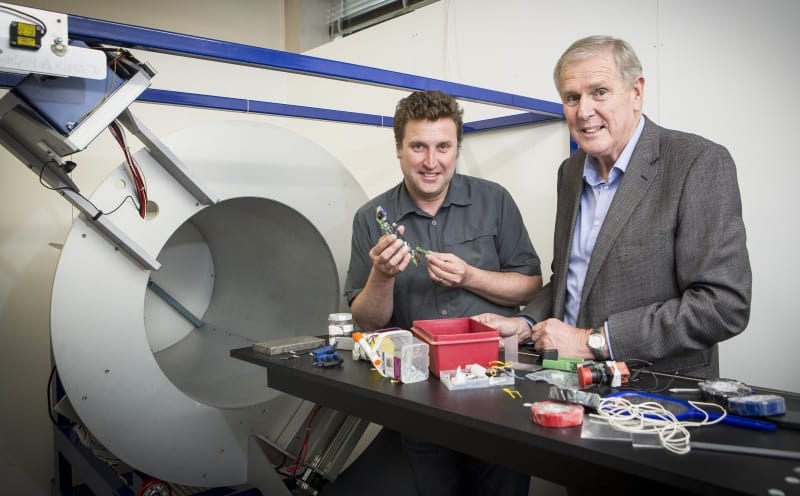
Anthony Butler (left) with his father Phil Butler, and their MARS spectral X-ray scanner. (Courtesy: University of Canterbury)
The first human has been scanned with a revolutionary 3D colour medical scanner developed by father and son scientists in New Zealand. Phil Butler, a physicist working at the University of Canterbury, and Anthony Butler, a radiologist at the Universities of Otago and Canterbury, invented the MARS spectral X-ray scanner, which has been commercialized by MARS Bioimaging.
The MARS scanner uses Medipix3 technology developed at CERN to produce multi-energy images with high spatial resolution and low noise. Medipix is a family of read-out chips originally developed for the Large Hadron Collider and modified for medical applications.
The Medipix3 detector measures the energy of each X-ray photon as it is detected. This spectral information is used to produce 3D images that show the individual constituents of the imaged tissue, providing significantly improved diagnostic information.
Phil Butler says that CERN’s Medipix3 technology sets the machine apart diagnostically because its small pixels and accurate energy resolution allow it to record images that no other imaging tool can. “As a new imaging device, a new microscope if you like, biomedical researchers can non-invasively see different kinds of detail inside patients,” he explains.
Small versions of the MARS spectral scanner that can house tissue samples are already in use in research institutions around the world. So far, researchers have used these scanners to study cancer, bone and joint health, and vascular diseases that cause heart attacks and strokes. “In all of these studies, promising early results suggest that when spectral imaging is routinely used in clinics it will enable more accurate diagnosis and personalization of treatment,” says Anthony Butler.
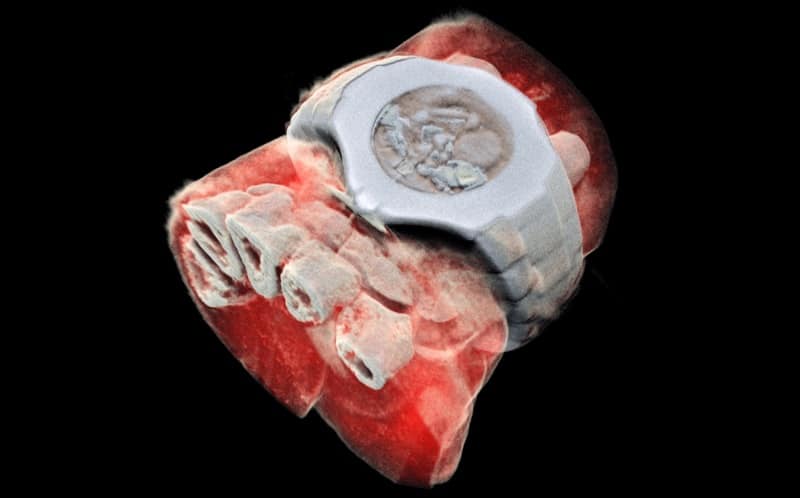
A 3D MARS scan of Phil Butler’s wrist with a watch, showing part of the finger bones in white and soft tissue in red. (Courtesy: Mars Bioimaging)
Phil Butler was the first person to be scanned with the MARS spectral scanner, using a larger version to image his ankle and wrist. The next step is an imminent clinical trial, where orthopaedic and rheumatology patients from Christchurch will be scanned. This will allow the MARS team to compare the images produced by their scanner with those generated by current technology used in New Zealand hospitals.
Anthony Butler says that after a decade in development, it is really exciting to have reached a point where it’s clear the technology could be used for routine patient care. “X-ray spectral information allows health professionals to measure the different components of body parts such as fat, water, calcium and disease markers. Traditional black-and-white X-rays only allow measurement of the density and shape of an object,” he says.