Time examined and time experienced

“Time is nature’s way to keep everything from happening all at once.”

Though the meaning behind this quote could be taken literally, it reads like a joke. Thought to be originally written by the science-fiction author Ray Cummings in 1919, the phrase was used by American theoretical physicist John Wheeler in his chapter of the 1990 book Complexity, Entropy and the Physics of Information.

But Wheeler, who had a way with words, also knew how to be serious about time, and in 1986 he wrote, “Of all obstacles to a thoroughly penetrating account of existence, none looms up more dismayingly than ‘time’…To uncover the deep and hidden connection between time and existence…is a task for the future.”

The shift in tone from treating time as a joke to something deeper is a sign that we do not understand it, though, like fish in the sea, we are immersed in it. Even while expressing our ignorance about time, Wheeler himself had no choice but to self-referentially allude to one of its mysterious aspects – the future. And though he could not explain time, he reminded us that it has human as well as physical meaning when he wrote in that same chapter from 1990: “Heaven did not hand down the word ‘time’. Man invented it…or as Einstein put it, ‘Time and space are modes by which we think, and not conditions in which we live.’ ”

Thinking about time

Wheeler and Einstein are not alone in pondering the nature of time. Philosophers and thinkers have done so for centuries, and no wonder: time both permeates all that we humans do and fascinates us when we consciously consider it. We endlessly speculate about its nature and about the possibilities of manipulating it and travelling through it. These were science-fiction themes even before H G Wells’ classic The Time Machine (1895), and they still remain current, featuring in the 2014 film Interstellar and last year’s Netflix series Dark. The late Ursula Le Guin’s science-fiction novel of ideas The Dispossessed (1974) gives time special attention, with its physicist protagonist Shevek developing a “general field theory of time” to explain both its “sequency” (as Le Guin calls it) or linear evolution, and its relation to cyclic events like the orbiting of a planet around its sun or the repetitive sweep of the hands of an analogue clock.

Time permeates all that we humans do and fascinates us when we consciously consider it. We endlessly speculate about its nature and about the possibilities of manipulating it

In physics itself, scenarios involving relativistic wormholes hint at the possibility of time travel, while tachyons – hypothetical faster-than-light particles – could travel backwards in time or send signals to the past. Although it seems unlikely that wormhole travel can be physically realized, and tachyons have never been detected, real particles going backwards in time have meaning in the diagrams Richard Feynman invented to calculate the behaviour of elementary particles. One of his insights in these useful representations is to show positrons as their antiparticles, electrons, travelling backward in time.

Despite dealing with such exotic notions, physicists have still not been able to produce a full theory of time. Lee Smolin of the Perimeter Institute for Theoretical Physics in Canada even argues in his 2013 book Time Reborn that physics is guilty of “expelling time” by not incorporating its fundamental reality. Nevertheless, physicists have long grappled with defining and using time as they try to explain the universe. Early in Isaac Newton’s seminal Principia (1687), which laid out much of how physics functions today, he defined “absolute, true and mathematical time” that “from its own nature flows equably without regard to anything external”. Along with “absolute” and “immovable” space, to Newton absolute time formed a backdrop for dynamic behaviour and physical reality that, his definitions imply, cannot be affected by human actions.

We abandoned the notion of absolute space in 1887 when Albert Michelson and Edward Morley determined the speed of light to high precision, with results that eliminated the ether, which was previously thought to be the space-filling entity against which motion should be measured. Absolute time was likewise abolished after Einstein re-analysed what it means when we say two events happen at the same time, and then went on to derive special relativity. Now we know that time changes as measured by a moving observer and, according to general relativity, in a gravitational field: if time is a flow, its flow rate can be altered.

Black hole

General relativity has also amplified the role of time in physics. Adding time to the three spatial dimensions through the term ct – the distance light moving at speed c covers in time t – gives a 4D space–time manifold that concisely describes gravity and the universe. This has put time on a par with space, and relativity has also forced us to think more carefully about time. The “twin paradox” – in which a twin who rockets away from Earth at high speed returns younger than her stay-at-home sister – is an exercise in the variability of time and is also an example of time as a physical parameter with deep human effects.

Irreversibly forward

Other features of physical time may connect to our perception of it. The concept of entropy as a measure of disorder that always increases, at least in large systems over long times, has led to its label as the “arrow of time” – a physical progression that, unlike the reversible processes of classical mechanics, irreversibly points “forward” to define the apparent flow of time. That asymmetric one-way road seems integral to the human sense of time; as Feynman succinctly put it in his 1964 lecture at Cornell entitled The Distinction of Past and Future. “We remember the past, we don’t remember the future,” he said. “We have a different kind of awareness about what might happen than we have about what most likely has happened.”

But some subjective experiences of time differ from physical time. Pleasant events seem to pass quickly while unpleasant or boring ones invariably drag, though the measured elapsed time may be the same. These internal experiences depart from the objective measurement of time because of how our consciousness deals with it, as Wells understood. In The Time Machine, the Time Traveller who built that device explains to his friends, saying “There is no difference between time and any of the three dimensions of space except that our consciousness moves along it.”

We do not know if consciousness moves along or through time, or simply provides a vantage point to observe time as it flows; but we do know that the brain does not produce a one-to-one correlation between its evaluation of time and temporal events in the outside world.

The philosopher and cognitive scientist Daniel Dennett from Tufts University in the US has provided a model for this intricate behaviour. In Consciousness Explained (1991) and elsewhere he proposes that the brain and consciousness operate under a “multiple drafts” approach. Instead of a central place in the brain that houses one’s personhood and interprets sensory information – an idea that traces back to René Descartes in the 1600s – consciousness emerges from various functions occurring at different times in different parts of the brain. To bring together these neural events distributed in space and time, Dennett maintains we create a coherent internal narrative that is the “I” of a person, with personality, memory and so on. The scattered behaviour behind consciousness, he adds, guarantees that “the temporal order of subjective events is a product of the brain’s interpretational processes, not a direct reflection of events making up those processes”.

Dennett’s counterintuitive model strongly contrasts with our internal sense of self and is not the only one offered by cognitive scientists. But regardless of the model, the relation between external time – whatever that really is – and our internal time is extraordinarily complex. Reporting on their work about how time and space are perceived by the brain, neuroscientists György Buzsáki and Rodolfo Llinás at New York University comment that “there is no doubt that the terms ‘space’ and ‘time’, as well as other mental constructs, will be part of research for years to come”.

Nature’s clock

Our bodies too experience different aspects of time. Overlaid on our moment-to-moment responses to external events is the circadian rhythm – the approximately 24-hour cycle of physiological activity built into much of life on Earth, from people and animals to plants. In humans, it defines the periods of lowest body temperature, greatest alertness, sharpest rise in blood pressure and deepest sleep. Though the circadian rhythm can be affected by external light and temperature, it arises from internal molecular mechanisms whose exploration led to the 2017 Nobel Prize in Physiology or Medicine for Jeffrey Hall, Michael Rosbash and Michael Young.

The evolutionary benefit of the circadian rhythm is thought to be that it enables organisms to make the best use of light, food and other resources depending on their availability at different times of the cycle. From the viewpoint of our reactions to physical time, this bodily rhythm shows that we respond to its cyclic nature along with its passage. It would be too much to say that the rotation of the Earth around its axis gave birth to time; but the regular alteration between light and dark must have impressed itself upon early humans and helped form our perception of time.

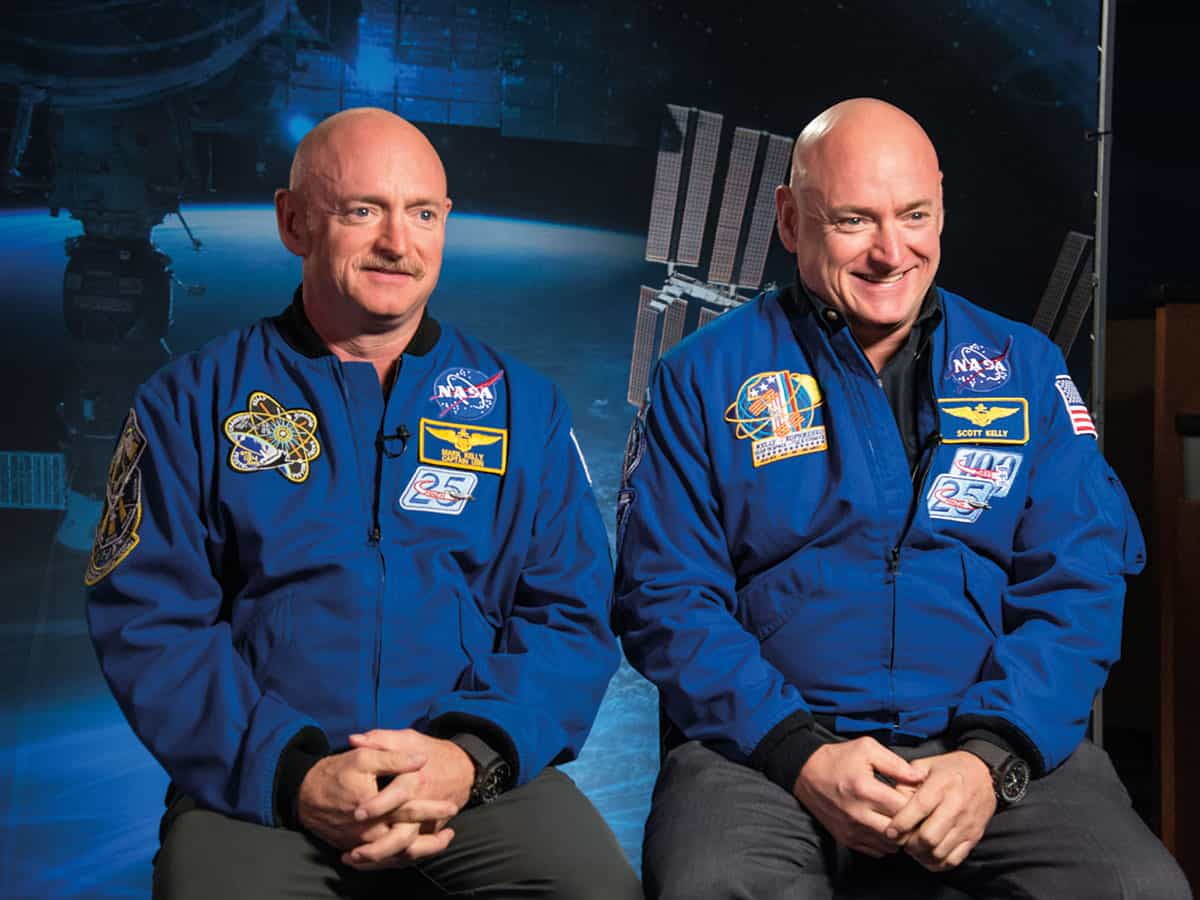
The passage of time hits us hardest as we age. Though now that we understand that time is variable, could we ever slow down the process? From measurements aboard aircraft and from the space satellites in the global positioning system, we know that relativity correctly predicts how time dilates with speed and gravitational field to make a traveller age more slowly. But at the comparatively low speeds and gravitational variation we can reach with today’s technology, the changes are tiny compared to human lifetimes. NASA astronaut Scott Kelly spent over 11 months aboard the International Space Station starting in March 2015, but returned to Earth barely a few milliseconds younger than his identical twin brother astronaut Mark who remained on our planet.
Identical twin astronauts

However, the brothers participated in another kind of NASA twin study. With Mark as a control, they underwent extensive medical comparisons to determine how life in space – with its microgravity conditions, increased radiation and psychological stress in unnatural surroundings – affects human health. The test revealed something unexpected as far as Scott’s “telomeres” were concerned. Telomeres are DNA structures at the ends of chromosomes that protect them from damage but shrink as cells reproduce multiple times. This shrinkage seems to be a main cause of cellular ageing but Scott’s telomeres actually lengthened. This observation is probably linked to the months he spent in space, rather than to the milliseconds of relativistic time change. Still, further exploration of differences in human ageing will surely occur in space when we achieve high speeds and changes in gravity, so we should keep in mind the relationship among human biology, time, space travel and relativity.

Everyone’s time

It is hard to envision a more multidisciplinary topic than time and how we perceive and react to it. The great contributions from physics are the development of relativity, which gives time a fuller, more flexible role in the universe; our understanding of time’s arrow; and our remarkable ability to measure time with exquisite precision down to attoseconds while not knowing exactly what it is, with important outcomes for science and technology. A full picture of time, however, also needs neuroscience, biology, linguistics, anthropology, psychology and even literature because of time’s emotional impact. Feynman himself recognized this when he spoke at Cornell of “remorse and regret and hope” that “distinguish perfectly obviously the past and the future”.

Literature too can powerfully distinguish past from future to help us understand what time means to humanity, as in F Scott Fitzgerald’s masterwork The Great Gatsby (1925). In the novel Jay Gatsby is a mysterious figure who started from poor origins. After gaining great wealth he tries to rekindle a deeply felt love affair from his earlier days and enter a new life, but tragically fails to transcend his past and realize his dream. Fitzgerald’s haunting last words turn Gatsby’s story into universal truths about how we strive to grasp time and how, at last, it inevitably slips through our fingers:

“Gatsby believed in the green light, the orgastic future that year by year recedes before us. It eluded us then, but that’s no matter – tomorrow we will run faster, stretch out our arms farther…And one fine morning –
So we beat on, boats against the current, borne back ceaselessly into the past.”


Will hotter temperatures reduce urban heat island intensity?

Urban heat island intensity decreased as average temperatures rose over the last 15 years in a large ensemble of cities, according to researchers from the US. The finding contradicts a number of other studies.

“Urban heat island research is important for the billions of people who live in cities who may be potentially more at risk for heat-related illnesses,” says Anna Scott of John Hopkins University, US. “In a warming world, heat represents a unique but silent risk that urban planners and disaster management officials need to pay attention to. Research into the urban heat islands provides the information that allows decision makers to protect their residents.”

Urban heat islands have been well-documented for several decades. The phenomenon arises as the high concentrations of roads and buildings in cities trap heat more efficiently than the surrounding rural and suburban land, raising temperatures. In recent years, several studies have concluded that as the climate warms, the intensity of urban heat islands – the temperature difference between urban and rural areas – tends to increase.

The need for further research into urban heat island intensity has become critical, according to Scott. Scott and her colleagues recognised that previous studies on urban heat island intensity only considered the effect on individual cities over shorter timescales. To gather more comprehensive data, the researchers used weather data from 54 cities across the US between 2000 and 2015. They calculated the difference between the temperature values recorded at urban and rural weather stations at each location, for both maximum and minimum daily temperatures.

In 38 cities the temperature difference between the weather stations tended to be lower for higher background temperatures, the team found – especially in moister climates. The result held even accounting for extreme heat and variations between different climates.

“Our research shows that during many warmer conditions, temperature differences between cities and rural areas actually decrease because of temperature sensitivity in rural areas,” says Scott. “Many people think the opposite is true, so this has potentially important implications for how governments think about heat in rural areas, which we find can sometimes get left out of the heat-related health discussions because we often focus on urban areas.”

The researchers believe that large-scale trends in weather conditions are responsible for their result, suggesting for the first time that heat mitigation efforts may need to be increasingly focused outside cities.

Scott acknowledges that urban heat island intensity is not the only important parameter when considering the effects of climate change on cities. “Many factors affect thermal comfort, including humidity, which we didn’t consider in this study,” she says. “So, this doesn’t say that climate change won’t affect cities but rather, suggests that rural areas may be more sensitive to warming than previously thought.”

In the future, the insight could be important to consider when making economic projections of climate change and designing methods for relieving and mitigating the effects of heat.

Scott and colleagues reported their findings in Environmental Research Letters (ERL).

Mysterious high-energy event in IceCube could be a tau neutrino

The IceCube Neutrino Observatory may have detected a tau neutrino with an extraordinarily high energy of about 100 PeV, according to a new analysis done by Matthew Kistler at Stanford University and Ranjan Laha at Johannes Gutenberg University Mainz in Germany. The detection was made in 2014 and could provide a glimpse of hitherto unknown astrophysical processes.

Situated at the Amundsen-Scott South Pole Station, the IceCube detector is an array of thousands of light detectors (photomultiplier tubes) embedded throughout a cubic kilometre of Antarctic ice. Occasionally a neutrino will collide with an atom in the ice and produce a charged lepton (electron, muon or tau) that is moving faster than the speed of light in ice. This creates a track of Cherenkov light in the ice, which is picked up by the detector array. By studying the track, IceCube physicists can work-out the energy of the neutrino and its trajectory into the detector.

Neutrinos come in three different flavours (electron, muon or tau) and this dictates what type of lepton is produced in the collision. An important challenge for IceCube physicists is to differentiate between the three leptons, which is not always straightforward.

Long tracks

In June 2014, IceCube saw light from a charged lepton that deposited 2.6 PeV in the detector – an extremely large amount of energy that had never been seen before in the detector. Initially, physicists assumed the event had been initiated by a muon neutrino with an initial energy of at least 10 PeV. Muons had been responsible for most previous tracks measured by IceCube, mostly because these leptons have ideal properties for creating long tracks of Cherenkov light. However, the highest previous muon neutrino energies seen by IceCube were at around 2 PeV – leaving a mysterious gap in energy up to 10 PeV.

Writing in Physical Review Letters, Kistler and Laha argue that it is unlikely that the signal is related to a muon neutrino created by known astrophysical processes. They have also calculated that it is possible that the event could have been caused by a tau neutrino – an elusive particle that was discovered just 18 years ago at Fermilab. Tau leptons are very short-lived, which means that they would normally decay before creating a long track in IceCube. However, Kistler and Laha reckon that a tau lepton created by a neutrino with an energy of about 100 PeV could leave such a track.

New processes

If this proves to be correct, it could open a window to new high-energy astrophysical processes that can create such high-energy tau neutrinos.  “Assuming this is the case,” says Laha, “this opens up completely unexpected possibilities, namely that astrophysics should start looking for neutrinos with energy of up to 100 PeV”.

Kistler and Laha plan to study the 2014 event more closely, and also hope to develop new ways to identify different charged leptons based on their individual tracks.

A science-communication pilgrimage to Sicily

Poor planning on my part and a missed connection meant my travel from Somerset in the UK to the 2018 International Science Journalism School in Erice, Sicily, took a staggering 34 hours. It was already feeling like a pilgrimage when I finally landed in Sicily, but on the last leg by car our final destination came into view to give a hint as to why Erice is such a special place – the ancient town perched atop a mountain was enchantingly shrouded from prying eyes by its very own cloud, the only one in an otherwise clear blue sky.

With its own micro-climate and historical religious significance, an “Erice pilgrimage” may have been a thought that flashed through some of the greatest scientific minds in modern history, given my host for the summer school – the Ettore Majorana Foundation and Centre for Scientific Culture – was founded in 1963 by eminent fundamental physicists to foster ‘science without secrets and without frontiers’. The organization has since attracted dozens of Nobel Prize winners and other titans of physics.

While the likes of Paul Dirac and Richard Feynman were likely hammering out the finer details of quantum theory during their time in Erice, I along with 34 other writers, YouTubers, editors and science communicators of varying flavours had converged on the town to understand how to convey tomorrow’s complex fundamental physics to different audiences.

A hi-tech lecture theatre in the bowels of a converted church was our place of worship for the next four days. For those wanting an update on the latest gravity wave news or what the Large Hadron Collider is doing “post-Higgs”, they got it by the bucketload from Marica Branchesi (Virgo Collaboration) and Guy Wilkinson (LHCb experiment). For others keen to develop their media skills, the likes of Robin McKie from the Observer newspaper and Mario Tedeschini Lalli shared their experiences.

But most inspiring for me was a session by independent award-winning writer Jacopo Pasotti detailing his methods in reportage for the likes of National Geographic, Science and Wired. Having exposed illegal mining in the most biodiverse parts of the Amazon and uncovered hidden science stories that shine a light on tragedies such as the Banda Aceh tsunami, Pasotti was the perfect person to offer a “how-to” guide for any reporter or writer wanting to go beyond regurgitating news – and instead make a difference.

Equally thought-provoking were many of the attendees, whose opinions on the challenges science journalism currently faces in terms of hype, monetizing digital journalism and the role of the journalist in an increasingly crowded media landscape were intelligent and eye-opening during the interactive sessions.

But as with any conference or school, the best stories are told during the coffee breaks. During one of these I got the chance to speak to a young Law student from Ukraine called Daria Zaremba. Her passion for science and frustration at the lack of science reporting in Ukrainian media has led her and a clutch of like-minded students to build PIDZEMKA, the country’s first science-communication digital platform. Meeting people like Daria made my Erice pilgrimage extra special – her determination to report science that informs and inspires the public in the face of overwhelming challenges is a lesson all science journalists should heed.

Time – the abiding mystery: the July 2018 special issue of Physics World is now out

The July 2018 issue of Physics World

Our attempts to understand time is the theme of the new issue of Physics World magazine, which is out now in print and digital format.

The July 2018 issue includes an interview with the Italian-born physicist and author Carlo Rovelli, whose latest book The Order of Time dubs time “perhaps the greatest mystery”.

Sidney Perkowitz examines physicists’ attempts through the centuries to unravel time, while Philip Ball sheds light on exotic materials called “time crystals”.

Jon Cartwright looks at how atomic clocks can determine precisely “when” stock-market transactions take place – in an effort to spot potentially fraudulent transactions, while Robert P Crease wonders why we’re fooled by time.

Finally, we’re delighted to publish our first-ever cartoon by illustrator Eugenia Viti, who takes a wry look at time.

Remember that if you’re a member of the Institute of Physics, you can read the whole of Physics World magazine every month via our digital apps for iOSAndroid and Web browsers. Let us know what you think about the issue on TwitterFacebook or by e-mailing us at pwld@iop.org.

For the record, here’s a run-down of what else is in the issue.

• Horizon Europe plans unveiled – The European Commission is proposing to spend €100bn on science over seven years from 2021, but will the UK see any of the cash now it is quitting the EU? Michael Banks and Michael Allen report

• Newcastle’s new generation – With the first physics students in a decade graduating from Newcastle University this month, Nick Parker and Angela Dyson reflect on what it takes to rebuild and reopen a physics department

• Fusion dreams – James McKenzie wonders if a commercial approach will bring a practical fusion reactor to market faster

• Fooled by time – Robert P Crease wonders if there is a topic murkier than time

• Time examined and time experienced – How we perceive and experience time is fundamental to our lives but we don’t fully understand what is a complex phenomenon. Sidney Perkowitz looks at how scientists and philosophers alike are seeking to
grasp this mysterious and ever-present concept

• Time traders – In today’s markets, every microsecond counts. Jon Cartwright discovers how the UK’s National Physical Laboratory is keeping regulators up to speed

• In search of time crystals – Dreamt up by the physics Nobel laureate Frank Wilczek in 2012, the notion of “time crystals” is now moving from theory to experiment – and could also lead to applications such as a new kind of atomic clock. Philip Ball explains

• The time lord – Carlo Rovelli – the Italian-born physicist and author of the bestselling popular-science book Seven Brief Lessons on Physics – has now published what promises to be another success story. Matin Durrani reviews The Order of Time and questions Rovelli about the motivations behind his new work

• The physicists in the comedy club – Jess Wade reviews The Element in the Room: Science-y Stuff Staring You in the Face by Helen Arney and Steve Mould

• Nuclear futures – Tushna Commissariat talks to Jim Gulliford about a new programme to train early-career nuclear physicists, and what a future in the field looks like today

• Once a physicist – meet Eline van der Velden, who is the two-time award-winning actor, writer and director of the new BBC Three series Miss Holland and founder of Particle6 Productions

• What is time? – An illustration by Eugenia Viti and Ivan Viti

Like the issue? Don’t like it? Did we miss something out? E-mail us at pwld@iop.org to share your thoughts.

Skyrmion phases: two for the price of two

Skyrmions are small magnetic vortices that occur in an astonishingly wide range of materials and they were first discovered about a decade ago. They can be imagined as 2D knots in which the magnetic moments rotate about 360° within a plane. They could form the basis of future magnetic data storage technologies that have a higher density than today’s disk drives. This is because they can be made much smaller than the magnetic domains used in these devices and they can be controlled efficiently with spin currents.

“Skyrmions usually exist in a single thermodynamic parameter range (that is, a certain temperature and magnetic or electric field range). Indeed, this is the case for all the materials in which they have been found so far,” explains physicist Christian Pfleiderer of Munich Technical University, who led this research study. “In a way, this represents an important constraint for when it comes to manufacturing and tailoring skyrmions since the only way to stabilize them is to find the exact physical parameters (pressure, strain, or field for example) at which they occur.

Two disconnected parameter regimes

“We have now discovered two disconnected parameter regimes in one and the same material (namely Cu2OSeO3) with different skyrmion phases. These two phases are stabilized by different mechanisms but are nevertheless active at the same time.”

The first skyrmion phase in this material, which was discovered in 2012, exists at high temperatures near the helimagnetic to paramagnetic transition when a small magnetic field is applied. This phase is isotropic (it does not matter in which direction the field is applied with respect to the crystal structure).

“The second phase, which we discovered in our work, exists at low temperatures at the border between the so-called conical phase (a type of ‘spin-flop’ phase) and the field polarized (ferromagnetic) state,” explains Pfleiderer. “This phase only shows up when we apply a magnetic field along the cubic <100> axis in the material.”

“Something very unexpected and odd”

This phase was discovered by the lead author of the study, Alfonso Chacon, while he was investigating the metastable properties of the high-temperature skyrmion phase. “This metastable behaviour is interesting because it allows us to determine the energetics and mechanisms of how stable skyrmions are and how they are created and destroyed (known as topological protection and unwinding, respectively),” he explains. “Using a technique called small-angle neutron scattering (SANS), I systematically tracked the magnetic order in Cu2OSeOover a wide range of temperatures (0 to 50 K) and magnetic fields ((0 to 120 mT) parallel to the <100> crystal axis. I discovered that something very unexpected and odd was going on.”

This second phase is in fact stabilized by magnetic anisotropy in this cubic material, Pfleiderer tells Physics World. “We used to think that anisotropy did not play an important role here (because it is very weak), but it turns out that it does. We have managed to explain this new phase with all its associated details in remarkable agreement with experiment, thanks to our colleagues in Cologne and Dresden who proposed the detailed interpretation and also performed rather tricky Monte Carlo simulations.”

 Generating skyrmions might be even easier than we think

“The discovery means that it might be much easier to generate skyrmions than we thought,” he adds. “Even very weak magnetic anisotropies might do the trick, if they are carefully selected. Our study also made us realize that several mechanisms may be strong enough in one and the same material, which means that they could appear under many more different conditions. We expect that this will be extremely useful for tailoring skyrmions to specific applications.”

The finding is also important from a fundamental point of view. “For example, we are now asking ourselves the question: how does the topological protection differ between the different phases in Cu2OSeOand is it possible to switch between the two?”

The researchers, reporting their work in Nature Physics 10.1038/s41567-018-0184-y, say they are now busy with measurements of bulk properties, magnetic force microscopy, magnetic resonance and resonant elastic X-ray scattering on the material to better understand its thermodynamics and morphology (domain patterns and defects in the magnetic texture). “We have also started to look for further examples of such two (and more) skyrmion phases in other materials, having now understood what to look out for,” adds Pfleiderer.

Bimetallic nanoparticles enhance proton dose

Particle therapy enables highly conformal radiation delivery while reducing dose to normal tissue. However, the presence of nearby organs-at-risk can limit the maximum achievable tumour dose. One approach that could overcome this limitation is nanoparticle-aided radiotherapy. Researchers from Korea have now investigated the use of  Fe3O4/TaOx nanoparticles as dose-enhancing radiosensitizers for proton therapy (Phys. Med. Biol. 63 114001).

Nanoparticles are selectively taken up by tumours, due to the leaky tumour vasculature. Upon irradiation, the nanoparticles emit low-energy electrons that are deposited nearby, thereby enhancing the deposited local dose. The researchers chose the bimetallic nanoparticle Fe3O4/TaOx (core/shell) as it is already used as a contrast agent for CT and MR imaging, thus opening up the potential for theranostic applications.

“Verifying the tumour position with CT or MR images every day during treatment can enhance the accuracy of radiation therapy,” explains Youngyih Han from Samsung Medical Center and Sungkyunkwan University. “In addition, we wanted to investigate whether these bimetallic nanoparticles can enhance the therapeutic ratio as a radiosensitizer.”

In vivo imaging

First, Han and colleagues verified the detectability of Fe3O4/TaOx nanoparticles in vivo by imaging six mice bearing mammary carcinomas. They acquired MRI and microCT images of the animal’s organs before, and 5 min, 30 min, 60 min and 24 hr after injection of the nanoparticles in solution.

Nanoparticle imaging

They observed that the uptake ratio of the tumour region increased with time, with a maximum tumour-to-tissue concentration ratio of 0.16 after 24 hours. In the MR image, the tumour was distinguishable 5 min after nanoparticle injection, and the signal intensity of the tumour region gradually increased with time. In the microCT image, however, the aorta and blood vessels were seen 5 min after injection, but the tumour periphery was not visible until after 24 h. The authors note that improvement in the uptake efficiency is desirable.

Simulation studies

In the second part of this work, the researchers used Monte Carlo simulations to compute the dose enhancement from Fe3O4/TaOx and other nanomaterials. They simulated 70 and 150 MeV proton irradiation of gold, gadolinium, Fe3O4/TaOx, Fe3O4, iodine and BaSO4 nanoparticles located at the centre of a 4x4x4 µm water phantom. They then calculated the dose enhancement ratio (DER) – the ratio of the radiation dose with nanoparticles to the dose without – for each case.

Calculating DER as a function of distance from the nanoparticle surface demonstrated that all nanomaterials had a dose enhancement effect, and that it was greatest near to the particle surface. Irradiation with 70 MeV protons resulted in DERs (at 1 nm) of 15.76, 7.68, 7.82, 6.17, 4.85 and 5.51, for gold, gadolinium, Fe3O4/TaOx, Fe3O4, iodine and BaSO4, respectively. The dose enhancement with 150 MeV proton irradiation was similar.

Dose enhancement ratio

The researchers expect that the approach will also work for higher proton beam energies, as used in patient treatments. “As shown in the Monte Carlo simulation, the dose enhancement ratios for 70 and 150 MeV were not that different, but we think the dose enhancement could be slightly lower due to the lower yield of secondary electron at higher energies,” says Han.

Han notes that additional in vitro experiments have shown that cells mixed with Fe3O4/TaOx nanoparticles and irradiated with 230 MeV energy proton beams showed a decrease in cell survival compared with a control group without nanoparticles.

For both proton energies, gold generated the largest yield of secondary electrons, followed by gadolinium and Fe3O4/TaOx. The dose enhancement with the Fe3O4/TaOx nanoparticles was approximately half that seen for gold, and similar to that of gadolinium. However, the researchers point out that Fe3O4/TaOx nanoparticles are cheaper to produce than gold nanoparticles, and more biocompatible than gadolinium.

A unique feature of Fe3O4/TaOx nanoparticles is that the Fe3O4 in the core is superparamagnetic.  This could enable tumour targeting, by combining this superparamagnetic property with a well-designed magnetic field. “We are investigating active targeting methods for Fe3O4/TaOx nanoparticles to overcome the 50% lower dose enhancement compared with gold,” Han explains.

The authors concluded that Fe3O4/TaOx nanoparticles can be effective cancer cell sensitizers when used with proton therapy. “We are now preparing in vitro and in vivo experiments using proton beams, to link the Monte Carlo simulation results to biological effects,” Han told Physics World.

Big data, small lab

Claire Lifan Chen

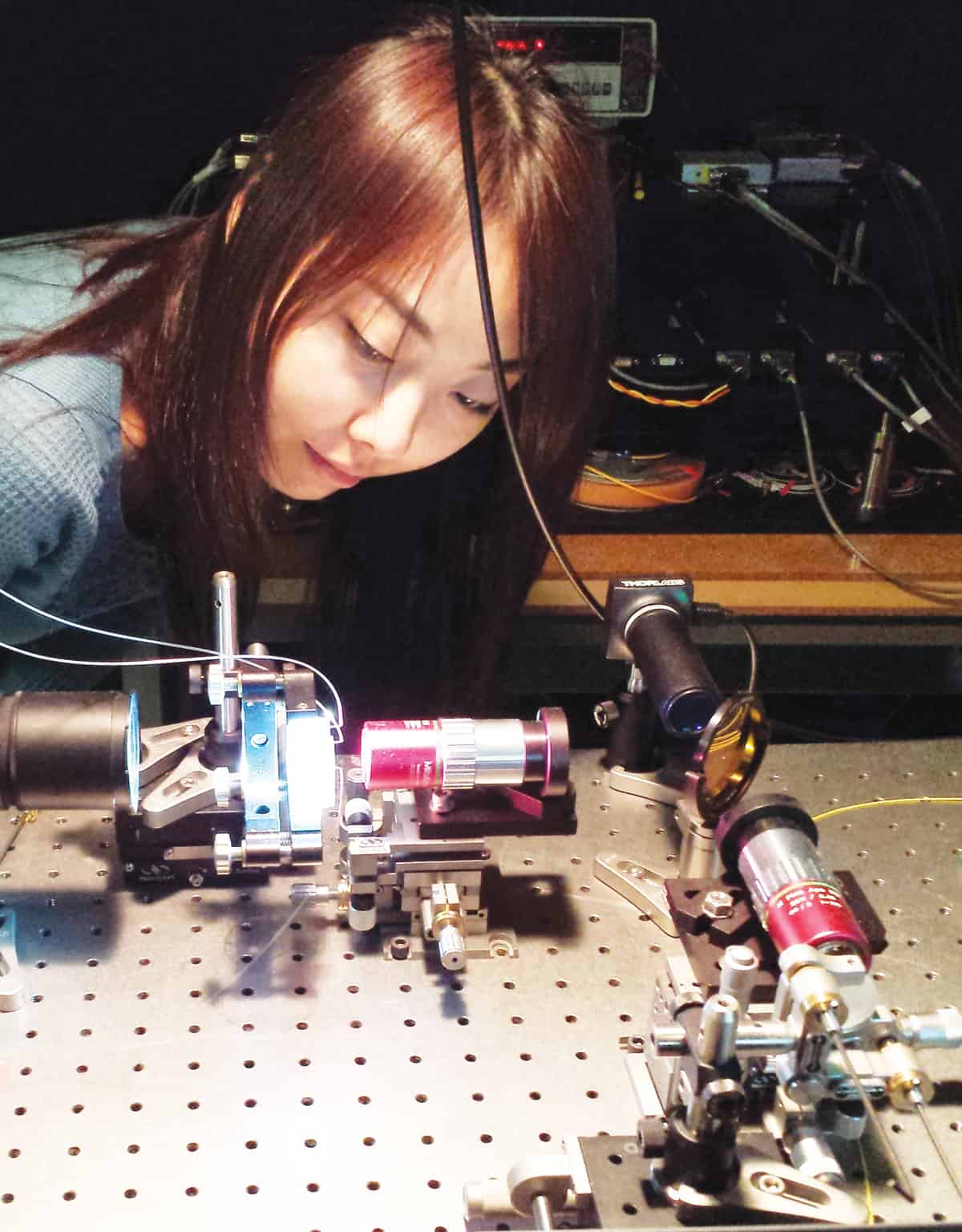
The Large Hadron Collider at CERN is one of the world’s largest scientific instruments. It captures 5 trillion bits of data every second, and the Geneva-based lab employs a dedicated group of experts to manage the flow. In contrast, the instrument shown here – known as a time-stretch quantitative phase imaging microscope – fits on a bench top, and is managed by a team of one. However, it is also capable of capturing an immense amount of data: 0.8 trillion bits per second.

These two examples illustrate just how ubiquitous “big data” has become in physics. Challenges once limited to huge machines managed by international teams are now beginning to crop up in small devices used by single researchers. Consequently, more physicists need to get comfortable with donning the hat of “data scientist”.

Acquiring the necessary skills is often framed as a daunting task, one that inspires some physicists to enrol in intensive boot camps over a series of weeks to learn an alphabet soup of disjointed, unfamiliar tools. However, physicists already have much of the conceptual understanding required to handle big data. All they need is for the computational tools they are already using to continue to work when their problem grows beyond the (somewhat arbitrary) point considered “big”. Physicists should not have to worry so much about the computing fabric that makes this possible.

Generating data

These two principles are the motivation behind the big data and machine-learning capabilities in MATLAB – the software that my company, MathWorks, produces. At the American Physical Society’s 2018 March meeting, I joined a series of speakers at a session entitled “Put Big Data in Your Physics Toolbox” to explain how these principles work in practice, using the time-stretch quantitative phase imaging (TS-QPI) microscope as a case study.

Bahram Jalali, a photonics expert at the University of California, Los Angeles (UCLA), his then PhD student Claire Lifan Chen and postdoc Ata Mahjoubfar built their TS-QPI microscope with the aim of imaging every cell in a 10 mL blood sample and determining which of these cells are cancerous. The cells in the sample are sent through a flow cytometer one at a time, at a rate of almost 100,000 blood cells per second; if the cells could be stacked end to end, that would equate to imaging about 1 m of cells per second. To capture clear images at such a torrential rate, their imaging system runs at 36 million frames – equivalent to 20 HD films – per second. Hence, a single small blood sample generates between 10 and 50 terabytes of data.

The physical infrastructure that enables their TS-QPI system to run at such a fast clip is interesting in its own right. The system creates a train of laser pulses with durations measured in femtoseconds. Lenses, diffraction gratings, mirrors and a beam splitter disperse these laser pulses into a train of multifrequency “rainbow” flashes that illuminate the cells passing through the cytometer. The spatial information for each cell is encoded in the spectrum of a pulse, and the optical signal is then intentionally dispersed as it is sent through a waveguide, imposing varying delays to spectral components at different wavelengths and stretching the signal enough to enable it to be digitized using a standard electronic analog-to-digital converter.

Manipulating and exploring data

All told, Jalali, Mahjoubfar and Chen extracted more than 200 numerical measurements from each cell in their sample. These data were grouped into three categories: morphological features that characterize the cell’s size and shape; optical-phase features that correlate with the cell’s density; and optical-loss features that correlate with the size of organelles within the cell. The result was a staggeringly large dataset. Fortunately, MATLAB intelligently and transparently breaks down these data into small chunks, allowing operations that can incorporate the entire dataset. This means that common expressions, such as A+B, will still work even with big datasets.

Another helpful trick is to define such data as MATLAB “tall” arrays, rather than in-memory arrays. Unlike in-memory arrays, tall arrays typically remain unevaluated until you request that the calculations be performed using the “gather” function. This so-called deferred evaluation allows you to work quickly with large datasets. When you eventually request output using gather, MATLAB combines the queued calculations where possible and takes the minimum number of passes through the data. Better still, all the subsequent code written for small in-memory data will automatically work on the big-data versions: no code changes and no special techniques are required.

The UCLA researchers sought to develop a supervised machine-learning model that could classify cells as either healthy or cancerous

To generate these tall arrays of numerical measures of cells, Jalali and his colleagues used the MATLAB API for Python to integrate a specialized open-source cell image analysis package with more general workflows supported by MATLAB’s Image Processing Toolbox. Since every image was processed the same way to extract their features, they could use a parallel for-loop, “parfor”, to run their image-processing iterations concurrently on their 16-core processor with MATLAB’s Parallel Computing Toolbox. This reduced the time needed to complete their analysis from eight days to approximately half a day.

Incorporating machine learning

Machine learning comes in two flavours. One is unsupervised learning, where an algorithm finds hidden patterns or intrinsic structures in input data. The other is supervised learning, where an algorithm is “trained” on known input and output data and then uses the resulting model to generate reasonable predictions for outputs based on new data. In their work, the UCLA researchers sought to develop a supervised machine-learning model that could classify cells as either healthy or cancerous. A principal benefit of MATLAB is the ability to test a wide variety of machine-learning models in a short amount of time, so the pair used the software’s Statistics and Machine Learning Toolbox to compare three classification algorithms – naive Bayes, support vector machine (SVM) and logistic regression (LR) – before selecting the most useful.

Jalali’s group also explored deep- learning methods to create their predictive model. Deep learning is a specialized form of machine learning. With a deep-learning workflow, relevant features are automatically extracted from images. In addition, deep learning performs “end-to-end learning” – in which a network is given raw data and a task to perform, such as classification, and it learns how to do this automatically.

Although Jalali’s lab trained their network from scratch, most deep-­learning applications use “transfer learning” instead. In this method, the idea is to start with an existing pre-trained network, such as AlexNet or GoogLeNet, then fine-tune it by feeding new data that contain classes pertaining to your problem. After making some tweaks to the network, you can then ask it to perform a new task, such as categorizing cancerous or normal cells instead of, say, dogs and cats (a real example from AlexNet’s set of classes). This requires much less data – you might end up processing thousands of images, rather than millions – and thus less time.

Jalali, Mahjoubfar and Chen got all their machine-learning models to perform with greater than 85% accuracy. They then pushed their deep-learning model’s accuracy above 95% by combining their third-party deep-­learning package seamlessly with MATLAB to perform a global optimization of the receiver operating characteristics: the true positive rate versus the false positive rate at various discrimination threshold settings.

The UCLA team’s work – inventing a novel cancer-detecting microscope, and then using specialized tools within MATLAB to process their data – represents a good example of how data-science techniques and workflows can be integrated into small laboratories. The tools that were once distributed among teams of experts, or were found in the toolbelts of just a handful of researchers, are now increasingly available even to scientists who skipped the boot camp and jumped straight into making their big data work for them.

Can we predict heatwaves better?

Understanding more about the drivers of heatwaves could help weather forecasters make better predictions and give people more time to prepare. Now, thanks to large ensembles of climate models, researchers are probing the co-occurrence of atmospheric blocking and summer temperature extremes – a relationship that has been difficult to study due to limited observations.

During atmospheric blocking, a persistent and stationary high-pressure system diverts the usual westerly flow at mid-latitudes for a few days to several weeks. It’s a scenario that can lead to extreme events such as heatwaves.

The researchers used simulations for 1979–2015 to determine that there is a significant correlation between the magnitudes of summer heatwaves and the number of days influenced by atmospheric blocking in Northern Europe and Western Russia.

After demonstrating agreement with historical records, the group – which includes scientists from the Canadian Centre for Climate Modelling and Analysis, ETH Zurich and the European Commission’s DG Joint Research Centre – examined how the relationship might hold for the rest of this century.

Although heatwaves are projected to become more intense and last longer with continued global warming, the relationship between heatwaves and blocking appears to remain the same, the researchers found.

Considering multiple, large ensembles of climate models is an advantage from a statistical perspective. “They seem to represent the relationship between blocking and heatwaves correctly, and in a similar manner to that of the real world,” says Nathalie Schaller of the Centre for International Climate Research in Norway.

Schaller and colleagues suggest that under present-day climate conditions we could experience even larger heatwaves than the one observed in Central Europe in 2003. The group is keen to develop the approach, examining aspects such as the return period of prolonged periods of high-temperature.

“If blocking events or their probability of occurrence could be more skillfully predicted in monthly to seasonal forecasts, this would be particularly useful to increase our preparedness for extreme heatwaves in the future,” writes the team in Environmental Research Letters (ERL).

Such information could aid decision-makers in planning disaster risk reduction and adaptation to climate change.

Ionic liquid formulation makes oral insulin pill

Diabetes mellitus is becoming a serious worldwide health problem. This auto-immune disease leads to β-cells being destroyed in type-1 diabetes and progressive β-cell dysfunction in type-2 diabetes. The result is insulin insufficiency in the patient.

Current treatments rely on closely monitoring blood glucose levels and then injecting insulin to simulate natural insulin secretion by pancreatic β-cells. Not only are repeated injections painful, this approach is far from ideal in itself and often fails to keep glucose levels within the tight physiological range required. Complications such as potentially fatal hypoglycaemia can ensue, as well as various pathologies (such as cardiovascular disease, kidney failure, retinopathy and neuropathy) linked to repeated hyperglycaemic episodes.

An insulin capsule that can be swallowed would be much better because not only would it make patients’ lives easier, the delivered insulin would closely mimic the natural physiological path that pancreatic insulin takes (via the portal vein to the liver and then on into the systemic circulation).

Researchers have been working on such a pill for a few decades now, but no formulation has successfully passed clinical trials yet. “One of the main problems to overcome is the fact that insulin is degraded in the stomach by enzymes and gastric acids,” explains Samir Mitragotri of Harvard University. “And even if some insulin survives and enters the intestine, it cannot be absorbed into the bloodstream because of the viscous mucus layer on the intestinal wall and the tight junctions of the intestine cells, through which large molecules such as insulin cannot easily pass.

“In our work, we have overcome these hurdles using ionic liquids.”

CAGE for oral insulin delivery

Ionic liquids consist of organic/inorganic salts and are widely used in various novel chemical and pharmaceutical technologies. In their work, Mitragotri and colleagues suspended insulin in an ionic liquid comprising choline and geranic acid (CAGE). This formation has already proved itself to be efficient for delivering antibiotics and insulin through skin.

“CAGE is good for three reasons for when it comes to oral insulin delivery,” says Mitragotri. “First, it protects insulin against enzyme degradation. Second, it reduces the viscosity of the mucus layer on the intestine, which improves how the insulin permeates across it. Finally, it can pass through the tight junctions of the intestine wall.”

The researchers filled capsules with an acid-resistant enteric coating with 80 microlitres of the formulation and orally administered these to nondiabetic male Wistar rats that had fasted overnight. They then measured blood glucose using a commercial glucose meter every hour for 12 hours and found that a relatively low dose of 10 U/kg dose brings about a 45% decrease in blood glucose levels. The blood glucose drops rapidly within the first two hours and then steadies out, reaching a plateau after 10 hours. In comparison with injected insulin, a dose of 2 U/kg of insulin produces a sharp drop of 49% in one hour, which rises steadily and subsequently peaks at 88% of the initial value in four hours.

Biocompatible and stable

The formulation is also biocompatible, and, according to circular dichroism measurements on its structure, is stable for up to two months at room temperature and up to four months in the fridge (at 4°C).

“Our work demonstrates the feasibility of oral delivery of insulin,” Mitragotri tells Physics World. “The same technology might also be used to deliver other proteins.”

Reporting the work in PNAS 1722338115, the team, which includes researchers from the University of California at Santa Barbara, is now busy with longer term safety and efficacy studies in larger animals. These will pave the way for subsequent human trials.


Copyright © 2026 by IOP Publishing Ltd and individual contributors