Mammography, the current gold standard for breast cancer screening, is a valuable but less than ideal imaging modality. The scans expose patients to X-ray radiation, are less sensitive in dense breast tissue and require breast compression – which can deter women from attending mammography appointments.
Now, researchers at Caltech Optical Imaging Laboratory have developed an alternative: a single-breath-hold photoacoustic computed tomography (PACT) system. The device, developed in the lab of Lihong Wang, can find tumours in as little as 15 s by shining pulses of near-infrared laser light into the breast (Nature Commun. 9 2352).
During a PACT scan, the incident light diffuses through the breast and is absorbed by haemoglobin in the patient’s red blood cells, causing the molecules to vibrate ultrasonically. These vibrations travel through the tissue and are detected by a 512-element ultrasonic transducer array. The recorded data are then used to construct an image of the breast’s internal structures.
PACT creates images with a high in-plane spatial resolution of 255 µm, at a depth of up to 4 cm. Because the 1064 nm light is so strongly absorbed by haemoglobin, the images primarily show the blood vessels present in the tissue being scanned. This is useful for detecting cancer as many tumours induce the growth of new blood vessels, surrounding themselves with dense networks of vascular tissue.
A patient undergoing a PACT scan lies face down on a table with the breast to be imaged placed in a recess containing the ultrasonic sensors and laser. As the scan takes just 15 s, the patient can hold their breath while being scanned, resulting in a clearer image with negligible breathing-induced motion artefacts. “This is the only single-breath-hold technology that gives us high-contrast, high-resolution, 3D images of the entire breast,” says Wang.
In a pilot study, the team used PACT to image the breasts of one healthy volunteer and seven breast cancer patients. By assessing blood vessel density, PACT correctly identified eight of nine biopsy-verified breast tumours. Tumours were clearly revealed even in radiographically dense breasts, which could not be readily imaged by mammography.
Wang has founded a company to commercialize the PACT technology and conduct large-scale clinical studies. “Our goal is to build a dream machine for breast screening, diagnosis, monitoring and prognosis without any harm to the patient,” he says. “We want it to be fast, painless, safe and inexpensive.”
In this video interview, David Smeulders speaks about his search for technology solutions to efficiently store energy and release it again when required. These two related processes are key to improving the economic viability of many renewable energy sources, such as wind and solar.
“If we go deep down in the earth we find molecules – we find gas we find oil reserves – but we never find batteries. So nature has found a way to store energy but what we need to do is find a way to store electricity as well,” says the Dutch researcher.
Smeulders is part of a group at Eindhoven University of Technology (TUE) investigating a number of innovations, including the idea of storing heat in mineral formations known as zeolites. He imagines a future where homeowners could capture ambient heat during the summer, before releasing it during the winter.
The interview also looks at the challenges of transferring research from the lab to the real-world. From the very beginning of research projects, his group at TUE work closely with applied research institutes and commercial companies, some of which are located on the same campus.
If you enjoy this interview, then take a look at our Sustainable Futures collection, which looks at some of the ways science is helping to tackle some of the big challenges of the 21st century.
It was the most profound discovery in cosmology since the detection of the faint radio hiss from the cosmic microwave background (CMB). In 1998 two teams of researchers, locked in a fierce rivalry to be the first to measure the expansion rate of the universe, independently announced that they had arrived at the same startling conclusion: the expansion of the universe is not slowing down as expected, but is speeding up. The discovery led to the 2011 Nobel Prize for Physics being awarded to the two team leaders – Brian Schmidt of the High-Z Supernova Search Team and Saul Perlmutter of the Supernova Cosmology Project – as well as Schmidt’s teammate, Adam Riess, who was the first to plot the data and realize that the universe is not behaving as it should.
The discovery was a “terrifying” moment, admits Riess, who is now at Johns Hopkins University in the US. At the time he was fresh out of his PhD and charged with plotting the supernovae data that the High-Z team had been collecting. Because all type Ia supernovae – the thermonuclear destruction of a white dwarf star – explode with very similar luminosities and light curves, they can be calibrated to act as “standardized candles” by which cosmic distances can be measured. Comparing those distances to the redshift of the supernovae tells us how fast the universe is expanding. Riess’s conclusion that the data implied the expansion is accelerating was so counter-intuitive that he was sure he’d made a mistake.
However, when Perlmutter’s team revealed that it had found the same thing, history was made, with the discovery of the accelerated expansion documented in two breakthrough papers – one by the Supernova Cosmology Project (Astrophys. J.517 565) and the other by the High-Z team (Astron. J.116 1009). To explain this acceleration, an old idea was reborn: Einstein’s cosmological constant, which describes the energy density of empty space – and with it the notion of “dark energy”. The latest measurement from the Plank mission suggests the cosmos is made of roughly 68% of this dark energy, along with 5% ordinary matter and 27% dark matter. However, the exact nature of dark energy remains mysterious.
The supporting arguments
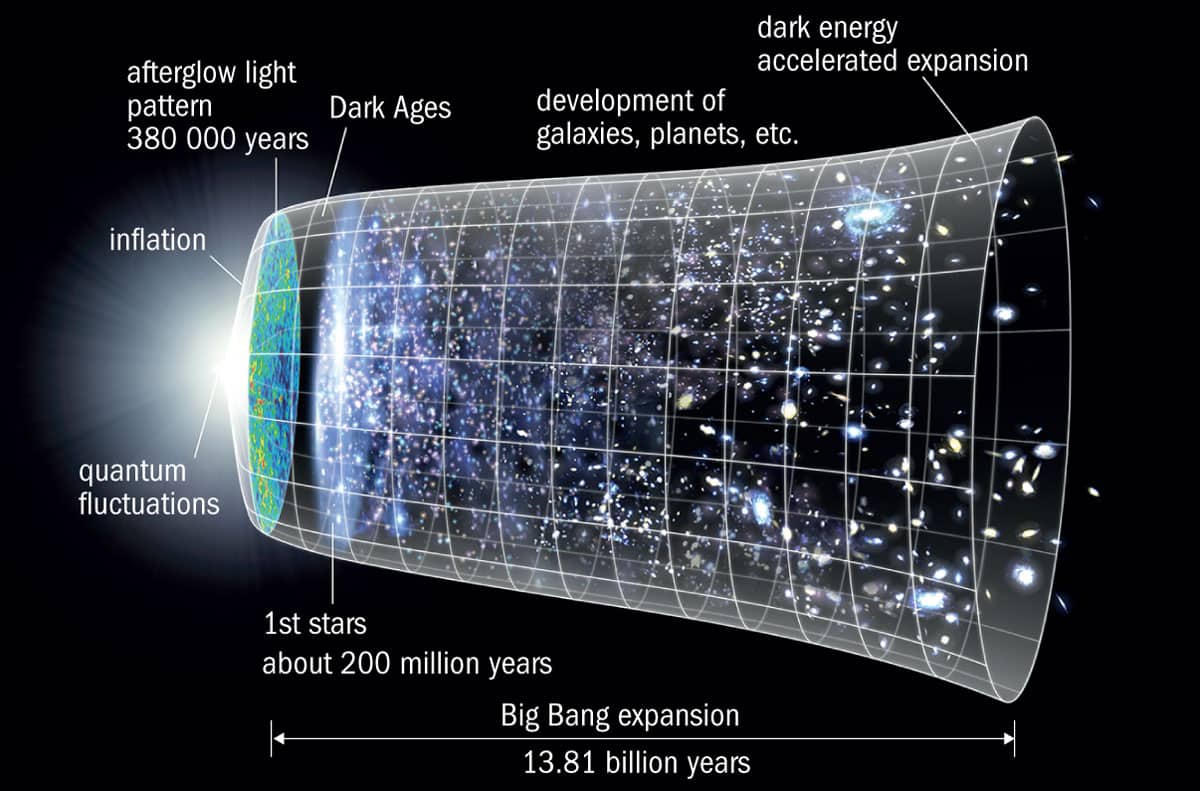
In the subsequent 20 years, two major advances have been made. The first is independent confirmation that the observed acceleration is a real effect. This confirmation has come from several different avenues, in particular the baryonic acoustic oscillations (BAOs) in the CMB. These oscillations originate from the early universe, less than 380,000 years after the Big Bang, when space was filled with an ocean of plasma dense enough to allow acoustic waves to oscillate through. The sound waves had peaks and troughs represented by hot and cold spots – the anisotropies – in the CMB, and shared a characteristic wavelength. Over the aeons the hot spots became the nucleation sites for matter to condense into galaxies and, as the universe expanded, so did the characteristic wavelength. Today, the average distribution of galaxies reflects the size of the BAOs in the CMB. Just as type Ia supernovae are “standard” candles, so BAOs are standard rulers by which to measure the expansion of the universe. They support the finding that the expansion is accelerating.
A flat universe has a critical matter/energy density that requires 68.3% of all the mass and energy in the universe to be made from dark energy
Further evidence that the acceleration is real centres on the geometry of space itself, which the CMB indicates is “flat”. In such a universe, Euclidean geometry applies: if you draw two parallel lines and extend them to infinity, they will always remain parallel, whereas in a curved universe the lines would diverge or converge. A flat universe has a critical matter/energy density that requires 68.3% of all the mass and energy in the universe to be made from dark energy, a value that can be derived from the magnitude and spacing of the acoustic peaks in the CMB.
The other big development of the last two decades, says Riess, is dark energy’s equation of state, which describes the ratio between the energy density of dark energy, and its pressure. Because it is causing the universe to expand rather than contract, dark energy is said to have negative pressure, or “tension”, hence the solution to its equation of state has a minus value. In theory, the equation of state for a universe dominated by the cosmological constant would have a solution of –1, but in truth any solution to the equation of state greater than minus one-third results in a universe that undergoes accelerating expansion.
It turns out that the solution to the equation of state for our universe is almost bang on –1, (+/–0.05). This is exactly the value, to within 5%, that one would expect in a universe dominated by the cosmological constant. On the face of it, this would seem to rule out alternatives to the cosmological constant such as a scalar field called quintessence, in which dark energy varies across time and space. Because the cosmological constant is a fixed value across the universe, it implies that dark energy will always have the same strength. Since it is the energy of space itself, then as space expands more dark energy comes into the universe, causing the expansion to accelerate ever faster. If dark energy is left unchecked, it is a scenario that could ultimately result in a Big Rip that would tear the fabric of space–time apart.
Cosmic expansion: The universe has been expanding since the dawn of time, but instead of slowing down, in the last five or six billion years the expansion has sped up. (Courtesy: NASA/WMAP Science Team)
The other side
So, case closed? Not exactly. Dark energy could be merely mimicking the cosmological constant, a scalar field changing so slowly that we have not yet been able to detect it. Or (whisper it quietly) perhaps dark energy does not even exist.
The discovery of what appears to be an accelerating expansion is undisputed, but are we being tricked by nature? Riess is, perhaps surprisingly, open to the possibility. “I don’t think the phenomenon of dark energy has to be real,” he says.
One of the stumbling blocks is the staggering discrepancy between the predicted strength of dark energy, and its observed strength. Quantum field theory calculates a value that is 10120 times larger than what we observe. If dark energy really were that strong, it would expand space so fast that individual atoms would be separated by vast distances and stars and galaxies would not be able to form. Clearly, we seem to be missing something fundamental.
As such, this discrepancy has led some scientists to consider other, somewhat controversial, possibilities instead. Before we delve into them, it is important to recognize the difference between the accelerating expansion and dark energy. The former has been shown by observations, but the latter is just the interpretation of those observations.
Any interpretation has to take into account all the observations: the supernovae results, the BAOs, the CMB and its acoustic peaks, and the growth of galaxy clusters. Riess has already been involved in a public skirmish along these lines. In 2016 Subir Sarkar of the University of Oxford, Jeppe Nielsen of the Niels Bohr Institute at the University of Copenhagen and Alberto Guffanti of the University of Torino published a paper (Scientific Reports6 35596) in which they argued that the evidence for dark energy was weaker than had been thought, based on their statistical analysis of data from 740 type Ia supernovae.
Riess disagreed with their assessment. “I think it had serious flaws,” he says, describing their analysis of the supernovae data as “non-standard”. Indeed, a re-analysis of the Sarkar results by David Rubin and Brian Hayden of the Lawrence Berkeley National Laboratory (ApJL 833 L30) demonstrates what they say are errors in Sarkar and colleagues’ analysis. Sarkar, however, disputes this, saying such criticism is “disingenuous”, not only because his team was using a common statistical method called the Maximum Likelihood Estimator, but also because this method does not assume that the standard Λ-CDM (the paradigm of cold dark matter and dark energy) model of the universe is the correct model, and is therefore unbiased. Sarkar is sceptical of this standard cosmological model, saying that it has “never been rigorously tested”.
Another criticism Riess raises of Sarkar’s work is that it did not include all the evidence for accelerating expansion from BAOs, the CMB and so on. “I don’t know why one would ignore all the other confirming evidence,” says a bemused Riess. Sarkar counters this by arguing that some controversial analyses, such as that by Isaac Tutusaus in a 2017 paper in Astronomy and Astrophysics (602 10.1051/0004-6361/201630289), claim to see no evidence for acceleration in BAO data. However, the consensus remains among cosmologists that BAOs are strong evidence for accelerated expansion.
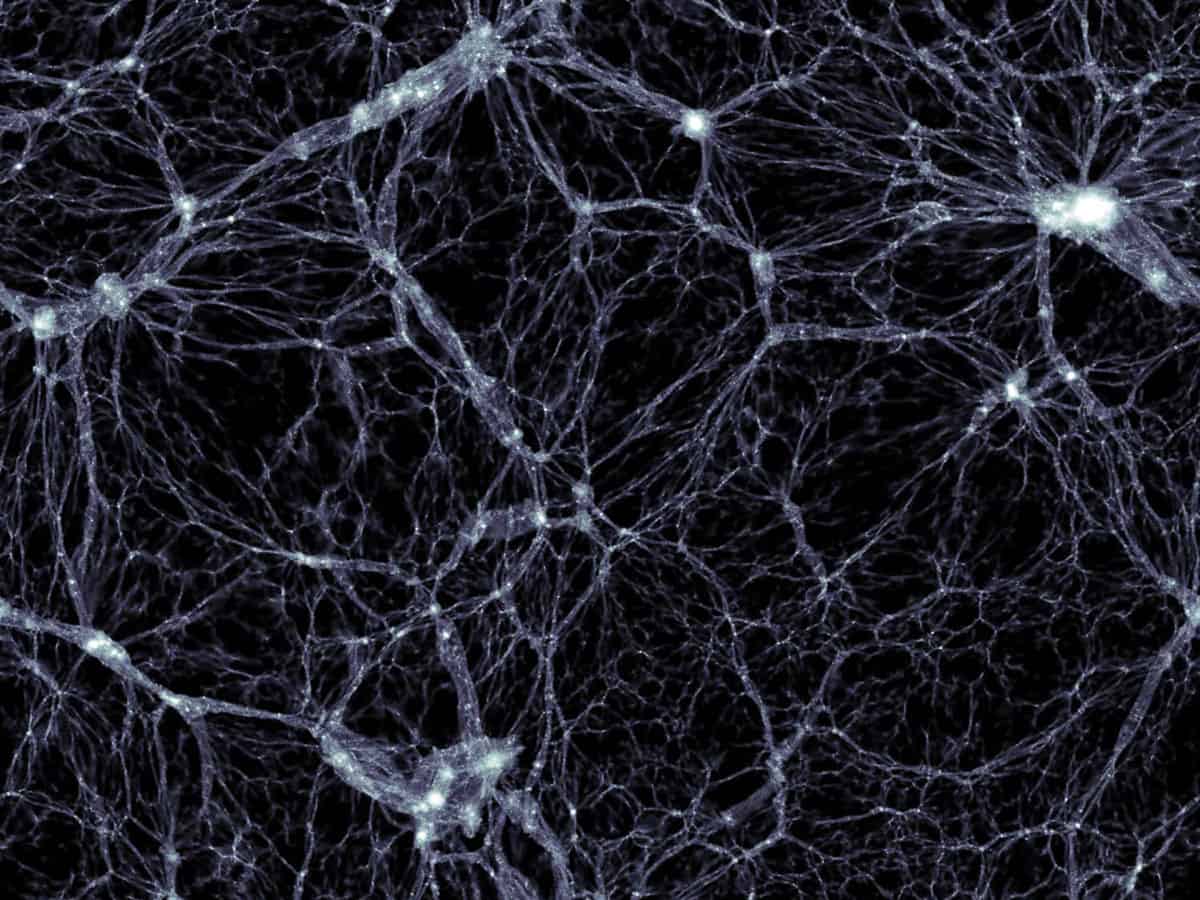
Space stuff: Matter in the universe is found mostly in filaments that form the cosmic web. (Courtesy: Markus Haider/Illustris Collaboration)
The great voids
Indeed, challenges to the existence of dark energy often focus on our most precious cosmological models. The Cosmological Principle states that the distribution of matter in the universe is both homogenous and isotropic. However, on smaller scales matter is lumpy, arranged into galaxies and clusters of galaxies, which form great chains and walls of clusters that stretch hundreds of millions of light-years. Crucially, though, these largest structures, such as the Sloan Great Wall, are not gravitationally bound. In-between these islands of matter are vast voids where the density of matter is far lower. Gravity will affect the expansion of space differently depending on whether you are in a cluster or a void.
Challenges to the existence of dark energy often focus on our most precious cosmological models
The $64,000 question, according to István Szapudi of the University of Hawaii, is not whether structure influences the expansion of the universe – “It’s clear that it does,” he says – but what is the size of that effect?
Szapudi co-wrote a paper published in 2017 (MNRAS 469 L1) that argues that the Λ-CDM model fails to take into account the changing structure – manifest in the voids and clusters – as one travels through the universe. Models of the expansion of the universe are typically based around the Friedmann–Lemaître–Robertson–Walker (FLRW) metric. This is an exact solution to the Friedmann equation, which solves the general theory of relativity for an expanding universe consistent with the Cosmological Principle and where the curvature of space, which is zero, is the same everywhere. However, using their AvERA algorithm, Szapudi and his colleagues, led by Gábor Rácz of Eötvös Loránd University in Budapest, found that their simulated expansion takes place at different rates depending on the surrounding structure. Because the universe is dominated by voids where the lower gravity allows the universe to expand faster, it is only by averaging all the different rates of expansion that it would seem like the expansion is accelerating.
Long vs short scales
Another contentious alternative to dark energy that also acknowledges structure but takes a different tack to Szapudi and Rácz’s approach, is David Wiltshire’s “timescape cosmology”. Based at the University of Canterbury in New Zealand, Wiltshire is dubious about the validity of the FLRW metric. In particular, he is critical of the fact that in FLRW cosmology, the scales that matter are the largest scales that ignore the coarse graininess of individual galaxies and clusters. “On what scales are matter and geometry coupled by Einstein’s equations?” he asks. “My answer is that short scales take precedence.”
On scales less than 450 million light-years, the universe is lumpy, filled with those voids and clusters that affect space and its expansion differently. The largest voids, at over 160 million light-years across, occupy 40% of the volume of the observable universe in total. Add in all the smaller voids, and they account for more than half the universe, so they have a big say in how the universe appears to expand.
In timescape cosmology, clocks run faster in voids than in more densely populated regions of space. A clock running in the Milky Way would therefore be about 35% slower than the same clock in the middle of a large cosmic void. Billions more years would have passed in voids than in galaxy clusters, and in those extra billions of years there will have been more expansion of space. Averaging the expansion rate across all of space – that is, the voids and the clusters – makes it seem like the expansion is getting faster because the voids dominate.
Back-up needed
It’s mind-blowing stuff, but Riess isn’t ready to down tools and give up researching dark energy just yet. “I don’t really take things like this too seriously until other people can independently verify it,” he says. “People have their pet way of looking at the problem, but in the cases that I’ve seen nobody has been able to reproduce what they have done.”
One of the problems that timescape cosmology currently faces is that it’s not yet as well-developed as models of dark energy. Wiltshire says his group has just begun work tackling the challenge of reducing the BAO data without assuming the FLRW metric, and says that the initial results show promise.
Fitting the heights of the acoustic peaks in the CMB data is even more of a challenge, as it requires rewriting the mathematics that describes the growth of the tiny anisotropies that are the seeds of cosmic structures. To do so with the same accuracy as the FLRW metric relies on something referred to as “backreaction”.
In standard cosmology, the FLRW metric is assumed to exactly describe the average growth of the universe on arbitrarily large scales. However, in a generally inhomogeneous universe as described in timescape cosmology, this is no longer the case. Even if the deviations from homogeneity are small, as the anisotropies of the CMB show, their average growth may not exactly follow the Friedmann equation on large scales. These differences are called backreaction.
“No-one has ever considered backreaction in the primordial plasma [of the CMB] before,” says Wilt-shire. “This is a very hard problem, but I doubt anyone else will want to do it unless the Friedmann equation is shown to fail.”
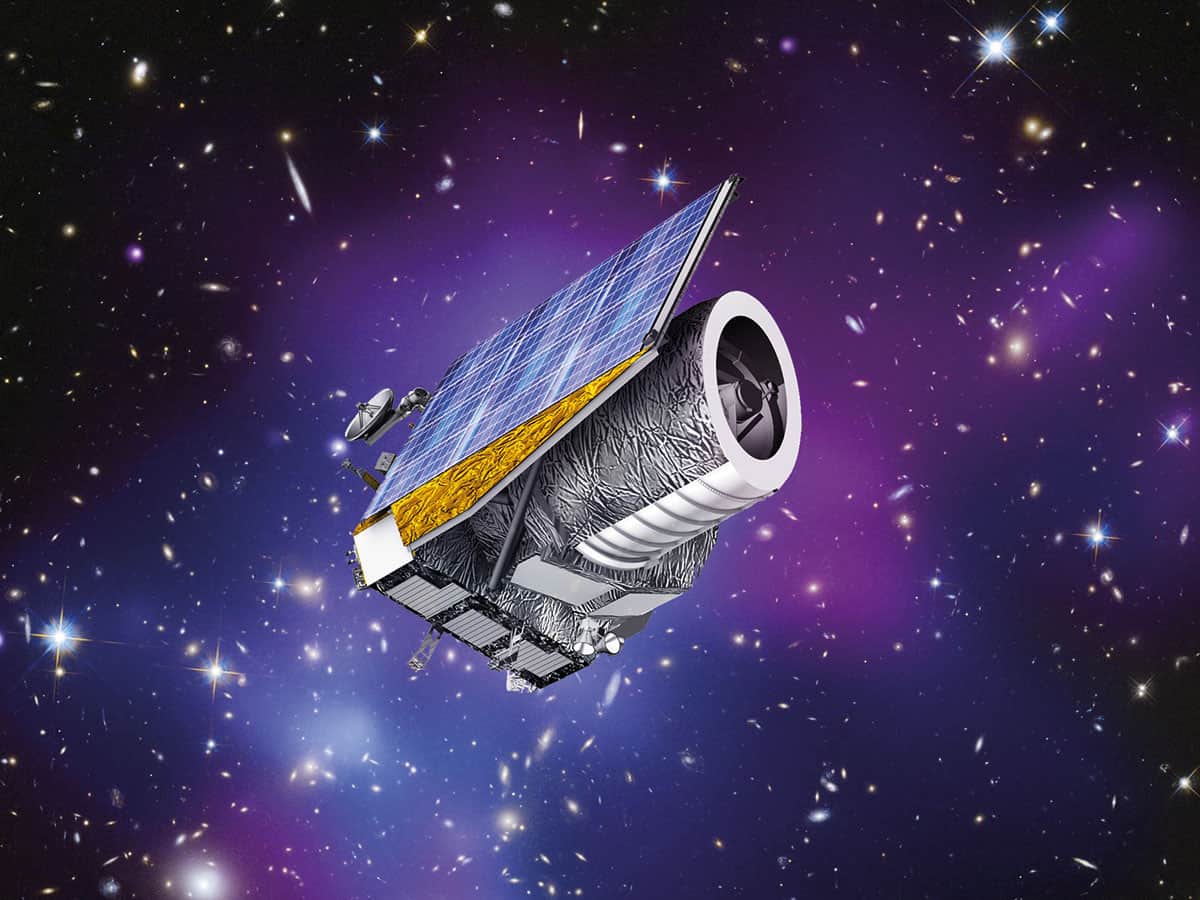
Measuring up: The European Space Agency’s Euclid mission. (Courtesy: ESA/C Carreau)
Wiltshire, however, has the FLRW metric in his sights. Euclid, which is a European Space Agency mission launching in the next decade to study dark matter, dark energy and the geometry of space, will be able to put FLRW on the spot using a method developed by Chris Clarkson, Bruce Bassett and Teresa Hui-Ching Ku in 2007. It looks for a relation between the Hubble constant – a measure of the expansion of space – and the luminosity distance (a relation between the absolute and apparent magnitude) of an object. This relation holds only for a universe where the curvature of space is the same everywhere, as per the Friedmann equation. If the test supports the predictions of the FLRW metric, then timescape cosmology is probably wrong. On the other hand, if it disproves the FLRW metric, “it will be game on”, as Wiltshire puts it.
Not so constant constant
The Hubble constant, which is so fundamental to the expansion of space, is also a source of consternation. In 2016 Riess led a team making the most precise measurement of the Hubble constant in the local universe. As with his discovery of the accelerating expansion 20 years ago, Riess made this measurement using type Ia supernovae, initially those that had exploded in galaxies that also host visible Cepheid variable stars – another cosmic yardstick with which to measure stellar distances. By calibrating the supernovae distances with the accurate distances as measured by the Cepheids’ period-luminosity relation, his team then applied that calibration to 300 other type Ia supernovae in more distant galaxies to produce an accurate measurement.
The resulting Hubble constant that Riess’s group measured was 73 km/s/Mpc (in other words, in every million-parsec-wide volume of space, the universe expands by 73 kilometres every second). However, the measurement of the constant in the local universe seems to differ to that in the very early universe, as measured by the European Space Agency’s Planck mission, which found a value of 67.3 km/s/Mpc.
Riess draws an analogy with the growth of a human body. A doctor might measure the height of a child and plot that on a growth chart to predict how tall that child will be when they are an adult. The local measurement of the Hubble constant is like measuring the height of the adult, and Planck’s measurement of the Hubble constant is like measuring their height when they were a child. “Our cosmological model, which includes dark energy and dark matter, predicts what the final height of the child will be,” he says. “It doesn’t appear to be correct.”
So why the difference in the Hubble constant at the opposite ends of history? One possibility is that our assumptions about the early universe are wrong. Perhaps dark-matter particles are less stable or interact more than we thought, which would affect the properties of the CMB. Perhaps there was an earlier spurt of dark energy sometime in the first billion years. “We’re all scratching our heads about this, trying to figure out what could cause it,” says Riess.
For his part, Szapudi thinks that the discrepancy in the Hubble constant can be explained by a small difference between the standard Λ−CDM model and how the AvERA algorithm depicts the expansion of the universe. “If nothing else, our alternative theory has illustrated that the Hubble constant discrepancy could be a tell-tale sign of a slightly different expansion history,” he says. “Quite independently of the details of our theory, it is an indication that future surveys by Euclid, WFIRST [the Wide-Field Infrared Survey Telescope] and LSST [Large Synoptic Survey Telescope] are likely to find something very interesting when mapping the expansion history.”
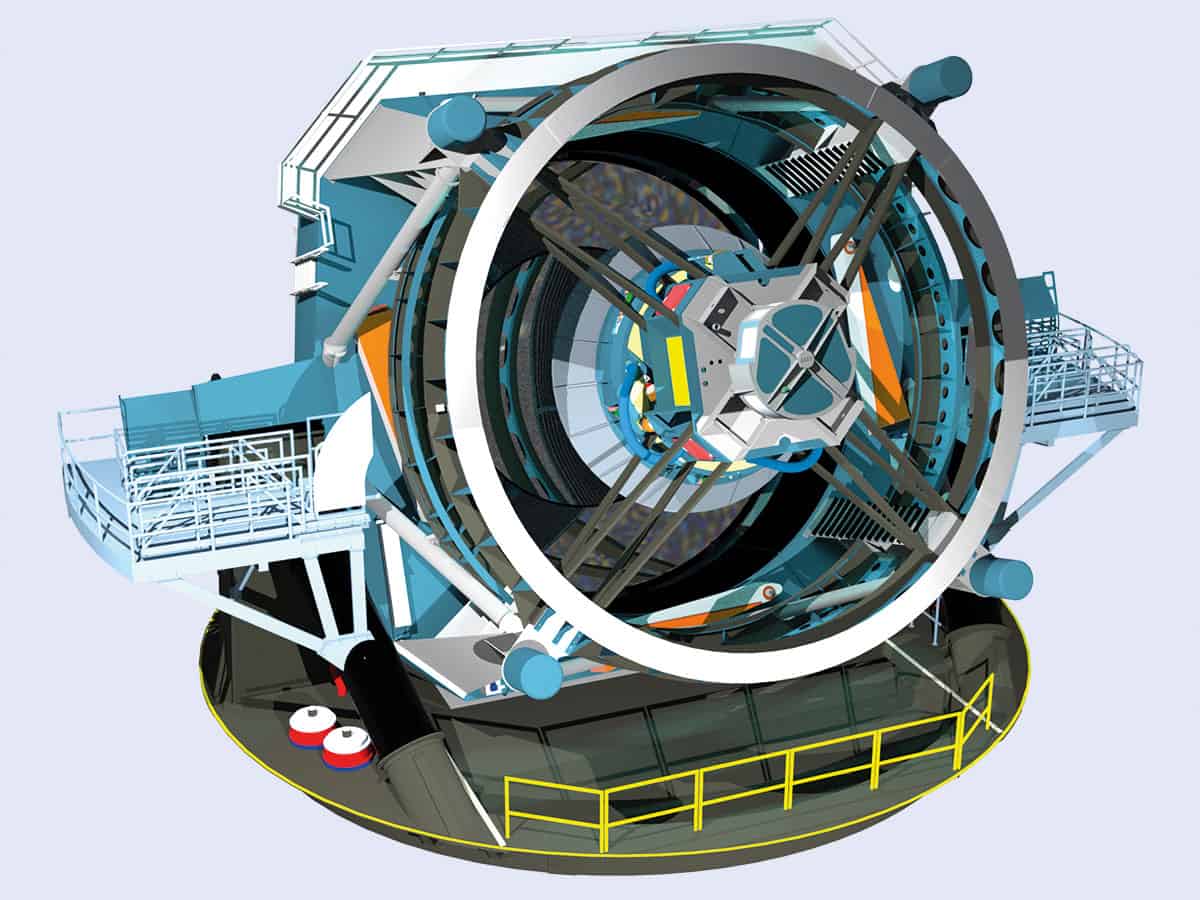
Future surveyor: The Large Synoptic Survey Telescope (LSST) will transform the study of the expansion of the universe by conducting the most detailed survey of galaxies and supernovae ever undertaken. (Courtesy: LSST Project)
Still controversial
Make no mistake, dark energy – be it the cosmological constant or quintessence – is the leading theory with plenty of observational evidence to support it. The alternatives remain highly controversial. Yet those nagging questions – like that huge 10120 discrepancy – just won’t go away. Upcoming surveys will either solidify dark energy theory’s position further, or produce a surprise by pulling the rug out from under it. With the Dark Energy Survey – an international collaboration using a 570-million-pixel camera called DECam on the Blanco 4 m telescope at the Cerro Tololo Inter-American Observatory in Chile – releasing its first data from a survey of 300 million galaxies, these are exciting times.
“What makes this a really fun field to be in is that I don’t know what the next big step will be,” concludes Riess. “We’re just in the middle of our initial reconnaissance, and I don’t think we should be surprised by surprises.”
A common view of patents is that they are only useful if someone tries to copy your research and product. At that point, so the thinking goes, you need to spend copious amounts of money to enforce your patent and stop them. However, in biomedical physics, as in other fields, patents are not merely a last line of defence against unscrupulous competitors. They are also a deterrent. A timely and well-constructed patent can head off competition right from the start, as it is common (and advisable) for companies to check patent records before launching a product to see if they will be free to market it without infringing other parties’ intellectual-property rights.
An even less well-understood role of patents, though, is as an attractor to investors. Deterring competitors is part of this: because patent protection prevents some would-be competitors from entering a market, it is more likely that one company (and, of course, that company’s savvy investors) will reap any future profits associated with the invention. However, before they can obtain patent protection, applicants must demonstrate that a technology is innovative. This fact is also attractive for investors because it helps to demonstrate the potential value associated with an investment.
Early investor support is particularly important in areas like biomedical engineering, where inventions usually require significant investment to move from the proof-of-concept phase via prototypes to viable commercial products. In addition, innovations in biomedicine demand close attention to regulatory standards designed to ensure safe and standardized product development for clinical applications. Developing new products under these conditions brings its own costs.
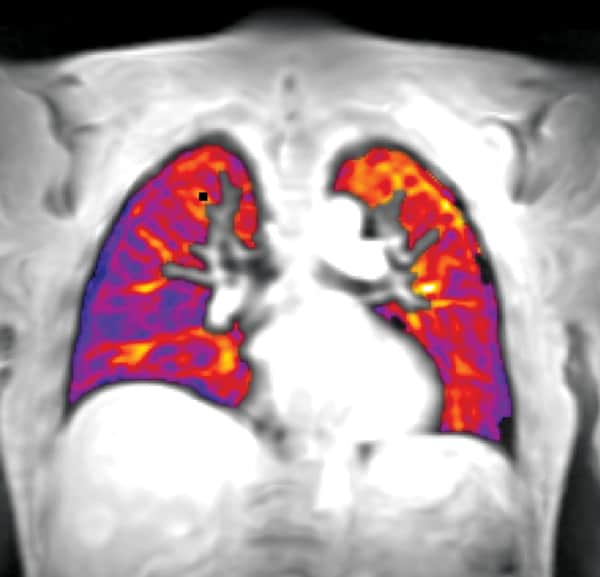
Bioxydyn, a magnetic resonance imaging (MRI) applications and imaging services provider, is a good example of how patents proved key to attracting investment. Founded in 2009 as a spin-out from the University of Manchester, UK, Bioxydyn uses advanced MRI technology to evaluate lung diseases, including cystic fibrosis, asthma and cancer. Although there had been plenty of academic research into the technology in the years before Bioxydyn was founded, further research identified a way to transform this technology into a clinically practical tool by, among other things, applying novel biophysical models of lung ventilation (the capacity of the lung to receive gas) and perfusion (the blood supply to the lung at the capillary level) to the information available in the images. This made it possible for those viewing the images to draw conclusions about lung health.
Once the Bioxydyn researchers had developed a technique that could prove commercially viable, Manchester’s technology-transfer office encouraged them to consider the patenting process as a means of bringing their technology to market. Following seed investment from a venture-capital fund, the company secured its first service contract with a major international pharmaceutical company in 2011 and has been growing steadily ever since. It is now on the path to acquiring European regulatory approval marking for its technology and launching its first clinical product.
Protecting the right things
When looking to secure intellectual property (IP) protection, one of the first things companies need to decide (most commonly in collaboration with an external patent attorney) is exactly what to protect. Because the protection needs to provide a roadblock to competitors wanting to take unfair advantage of the work, the most common strategy is to protect the technology underlying the main product itself. However, there are strict criteria that need to be met for an invention to be considered patentable, and there are several exclusions. It is commonly believed, for example, that software cannot be patented. However, methods implemented by software can be, as long as they have “technical effect” (that is, a real-world outcome).
Image analysis: A colour-coded image showing the delivery of oxygen to the lungs of a patient, making it possible to visualize and quantify the variation in oxygen uptake across the lung. (Image courtesy: Bioxydyn)
In Bioxydyn’s case, the tools being developed for clinical use are based on software that the company has produced, which is designed to analyse magnetic-resonance images. The tools are also based on the team’s knowledge about the best ways to deploy and implement this software. The company’s patents cover methods embedded in this software that are primarily designed to interpret information arising from a technique known as oxygen-enhanced MRI. With complex analysis so key to physics-based engineering, patents like these – on processing methods implemented by software – will likely become more important to businesses wanting to maintain their competitive edge.
As companies grow, their product developers continue to hone existing products or diversify into new ones. To maintain a deterrent against copycat competitors and remain attractive to investors, savvy companies need to develop their patent portfolio alongside their product range. Although each new patent family requires additional expenditure, robust, well-thought-out protection can help defend or grow market share.
Since obtaining initial protection for its core oxygen-enhanced MRI technology, Bioxydyn has gone on to patent multiple developments within this area. A new version of the core technology that produces richer and more specific information is one example. Another, later example involved patenting different applications for the technology. The initial product focused on analysing oxygen transfer in the lungs alone, but subsequent iterations have gone on to produce imaging techniques that can determine whether an imaged tumour is well oxygenated, while other image-analysis techniques can map the anatomical connectivity between regions of the brain.
A final consideration when seeking patent protection is where to protect. Patents are territorial rights, so for each territory where you want to protect your invention you need a local patent. Budget constraints mean that few organizations file in every jurisdiction globally. Instead, companies look to the most commercially important jurisdictions to prioritize their filings.
Because physics-based products often require sophisticated support technology – Bioxydyn’s services and software, for example, require MRI scanners – most companies in this sector choose to protect their innovations in jurisdictions that include the world’s most developed economies. These are the jurisdictions where potential customers are most likely to have access to the technology required for there to be a market for those services and software. However, as developing economies continue to evolve, so does the need to consider them as jurisdictions in which to seek protection. As more jurisdictions have access to the necessary technology, so new markets open up. In addition, for biomedical applications of physics, the geographic distribution of relevant diseases may also affect the locations where seeking protection makes commercial sense.
Decisions on where to seek protection need to be made fairly early in the patent application process. There are tools to provide more time for decision-making, such as the PCT (international) application, which buys an extra 18 months before a decision on jurisdictions is required. However, after a certain point in time, the decision as to where patent protection will be sought is fixed and you cannot subsequently obtain a patent in a jurisdiction other than those already selected, even if your product suddenly enjoys commercial success there. During the process of obtaining a patent, therefore, decisions will need to be taken based not only on current commercial factors, but also on how markets will evolve in future. Striking a balance between the cost of obtaining protection in different jurisdictions and the potential benefit of having a significant competitive advantage (in the form of a barrier to entry into the market for competitors) is often difficult.
Long-term thinking
The nature of physics research means that often, a great deal of fundamental work must be completed before commercialization appears on the horizon. Even at that point, it can take many more years of engineering, investment and commercial planning to get that research out of the lab and into the real world. While the process for applying for patent protection is also complex and IP strategies need careful forethought and planning, the benefits to R&D-based companies are well-recognized. As different areas of physics research continue to develop and move from the academic sphere to commercial application, intellectual property will continue to develop as an important commercial tool. Start-ups and spin-outs considering their IP strategy from the outset will be the best placed to seize the opportunities afforded by new technologies and retain their commercial incentive for further research and development.
Elekta has announced that its Unity MRI-guided radiotherapy system (MR/RT) system has received the CE mark, clearing the technology for commercial sales and clinical implementation in Europe. Unity, the first high-field MR-linac, integrates a diagnostic quality 1.5 T MR scanner with a state-of-the-art linear accelerator.
“Receiving CE mark for Unity is a big achievement in revolutionizing the field of radiation therapy and a real watershed moment for treating cancer,” said Elekta’s CEO Richard Hausmann. “The change that MR/RT will bring in cancer therapy is paramount in advancing patient treatment. I’m thankful to the MR-linac Consortium members, Philips (our MR technology partner) and our dedicated employees for helping us reach this important day.”
Unity has the potential to transform how clinicians treat cancer by enabling delivery of the radiation dose while simultaneously visualizing the tumour and surrounding healthy tissue with high-quality MR images. Unity also integrates advanced tools that allow clinicians to adapt the patient’s treatment to this current anatomical information.
“Unity is a tremendous innovation in patient care, one that enables a scan-plan-treat approach to developing tailored regimens that should yield substantive clinical benefits,” said Bas Raaymakers, from University Medical Center (UMC) Utrecht. UMC Utrecht is a founding member of the Elekta MR-linac Consortium and the inventor of the high-field MR-linac concept. “I am thrilled that our vision of personalized radiation therapy is becoming a clinical reality,” Raaymakers adds.
“We’re the first to show a clear effect of the haze pollution on biodiversity,” says Matthew Struebig of the University of Kent, UK. “Previous studies have demonstrated impacts of the forest fires on wildlife activity or the suitability of habitat, but no-one has looked at the pollution effects over in Southeast Asia.”
Although fires occur each year in Indonesia’s forests and peatlands, those in 2015 were exacerbated by a prolonged drought caused by the El Niño -Southern Oscillation and Indian Ocean Dipole. In September and October 2015 the air pollution from the haze regularly reached “unhealthy” or “very unhealthy” levels. Pollution levels near the fires were 15 times greater than in Singapore.
Struebig, Benjamin Lee and Zoe Davies analysed recordings of the dawn chorus made before, during and after the haze at the ‘EcoLink’ wildlife overpass in forest in central Singapore. The prevailing winds at the site brought smoke from Indonesia.
Built in 2013, the 62-m long EcoLink bridge is 50 m wide and re-connects two tropical lowland rainforests, the Bukit Timah Nature Reserve and Central Catchment Nature Reserve. Construction of the Bukit Timah Expressway 30 years ago separated these two reserves.
“The acoustic work was originally intended as a cost-effective way to sample bats remotely,” says Struebig. “Ben was tasked with setting up a monitoring scheme of the new green bridge infrastructure that had been built in Singapore. We recorded the dawn chorus as a bonus, but it quickly became evident that this was changing during the onset of the haze.”
The team assessed four acoustic indices from the soundscape recordings, for a total of 78 mornings between January 2015 and March 2016. All four indices decreased – by up to 37.5% – when the smoke pollution began in September 2015. The acoustic complexity and bioacoustic indices had recovered almost completely 16 weeks after the smoke dispersed but the acoustic diversity and normalized difference soundscape index remained low.
“This suggest that some components of the ecological community continued to be absent or torpid for at least four months after the smoke dissipated,” writes the team in Environmental Research Letters (ERL). The recordings mainly picked up noise from birds and insects, as well as human activity.
Terrestrial vertebrates are likely to suffer from air pollution in similar ways to people, including respiratory diseases, lack of oxygen, irritated eyes and skin, increased stress, and death. The haze may also harm animals indirectly through its reduction of light and sound, which could hamper foraging, decrease the availability or size of prey or alter plant timings.
“We show that (relatively) simple acoustic indices can…track biodiversity patterns in response to quite rapid environmental changes,” says Struebig. Rolling the technique out over a larger area could show how far the pollution impacts reach from the source, and the extent to which biodiversity recovers. “We don’t expect acoustic studies to replace core field research – nor would we want them to – but in some situations, such as dangerous pollution conditions, they are safer and more cost effective to implement,” he adds.
Struebig is now monitoring a site in Borneo with a network of recorders whilst the landscape undergoes conversion. “The idea is to see whether acoustic techniques could be used to monitor biodiversity – in particularly species of conservation concern – as part of conservation commitments by landowners, particularly oil palm and forestry,” he says. “It’s early days and it’s much more challenging than the context in Singapore, but there are some early signs that this is possible.”
While a lot of biomedical researchers aim to save lives, Suvi Haimi, CEO and co-founder of Sulapac, wanted to save the planet. “We were devastated by the plastic pollution of the oceans,” says Haimi. Working in biomedical materials research at the time, she realized she could use her expertise in this field to develop an alternative to plastic.
Sulapac produces materials made from wood composites using natural binders derived from starch and glucose. Their products are 100% biodegradable and contain 0% microplastics.
Founded in 2016, the company’s first focus was the cosmetic industry. “I looked in my bathroom cabinet and saw it was full of plastic,” says Haimi. Unsurprisingly, there was more to the decision of which industry to focus their initial attention on than a cursory glance while getting ready for bed. “We spent a lot of time looking into customer segments,” Haimi told Physics World. “A new material costs money so we needed pioneering customers.” They then spent a lot of time defining the properties with their customer, bringing not just a material to market but a full design. Haimi believes this may be a crucial factor in the company’s success, compared with others who have attempted to introduce environmentally friendly plastic alternatives.
Embarking on a portfolio for the food sector will require new designs, but Haimi believes this should be easier the second time around. Certainly there is plenty of demand for alternatives to plastic for food packaging to protect and prolong food lifetimes and reduce food waste.
In May 2018 Sulapac started collaborating with Fazer, a leading producer of food and food services in the Baltic region, who plan to use Sulapac materials for packaging their Christmas products in December 2018. “Fazer is actively involved in discussions on recycling and re-use of packaging waste, as well as the development of new kinds of environmentally friendly packaging solutions,” says Nina Elomaa, Corporate Responsibility Director of the Fazer Group.
Sulapac CEO Suvi Haimi (left) and co-founder Laura Kyllӧnen. Courtesy: Olga Poppius
Sustainability at every stage
Haimi and co-founder Laura Kyllӧnen have long been aware of the plastic pollution issue on account of their field of work. But while a lot of public education work was previously needed to raise awareness, nowadays plastic pollution is big news with the general public too. Yet in some ways available alternatives lag behind demand.
“A lot of alternatives to plastics are only 97% biodegradable and still contain 3% microplastics,” Haimi comments. “We think 0% microplastics is important.”
She also highlights her concerns about the slow biodegradation rate of some bioplastics, such as polylactic acid, which can still take 10 years to degrade in the ocean. Sulapac use barrier materials inside their jars to keep the contents sealed from the environment, and this barrier layer is the slowest to biodegrade. Yet testing their materials in industrial compost, Sulapac products degrade in less than 30 days in compost, which is even a little faster than wood.
Haimi and her team are keen to establish the sustainability of every stage in the life cycle of their products from production to re-use and recycling, and studies to clarify this are ongoing. Already the company is keen to source the wood sustainably using local resources, and while the world’s forests may not cope with demand if everyone switched entirely from plastic to Sulapac material, Haimi says they can use a range of primary materials including grass.
They also use unprocessed wood, which both saves energy and improves the scalability of production. Another bonus in their production compared with other ecological packaging material producers is that they can use the same moulds as plastics, saving on resources and reducing obstacles for companies to work with Sulapac composites instead of plastic.
Next steps
Now in its second year, the company began as the brain child of Haimi with Kyllӧnen, who was her first graduate student. They soon brought on board Taneli Vӓisӓnen and Antti Pӓrssinen, who not only had expertise in wood composites but had also founded their own company and could bring their business experience to the table as well.
In the interests of staying focused enough to remain successful, Sulapac will not be working on alternatives to plastic bags. “There are good alternatives for this already,” says Haimi. However, they are looking into flexible versions of the material for other single-use applications to further increase the impact of their products in reducing plastic pollution.
Physicists working at the National Ignition Facility (NIF) in the US say they have passed another important milestone in their quest for nuclear fusion energy. They have shown that the fusion energy generated by the laser implosion of a deuterium-tritium fuel capsule is twice that of the kinetic energy of the implosion. By further trebling the fusion energy, they say they will be close to the long-sought goal of an overall net energy gain.
The $3.5bn NIF trains 192 pulsed laser beams on to the inner surface of a centimetre-long hollow metal cylinder known as a hohlraum. Inside is a fuel capsule, which is a roughly 2 mm-diameter hollow sphere containing a thin deuterium-tritium layer. Each pulse lasts just a few nanoseconds and the lasers can deliver about 1.8 MJ of energy. This powerful blast causes the capsule to implode rapidly, creating immense temperatures and pressures inside a central “hot spot”, where fusion reactions occur.
The long-term goal is that the energy of neutrons given off by fusion can generate electricity. Before this is possible, NIF must show that it is possible to achieve ignition – the point at which fusion reactions generate at least as much energy delivered by the laser system. This involves self-sustaining reactions, in which the alpha particles that are also emitted during fusion give off enough heat to initiate further fusion.
High-footing it
After experiments done in 2009-2012 fell well short of ignition, Omar Hurricane and colleagues at NIF made significant changes to their strategy. They changed the shape of the laser pulses to create much more stable implosions. In 2014, these “high-foot” pulses each yielded up to 17 kJ of fusion energy (and later 26 kJ ) – exceeding the roughly 10 kJ created in earlier experiments.
Now, the team has modified the “high-foot” pulses and changed the composition of the outer layer of the capsules from plastic to carbon. The new material is three times as dense as the plastic, which means that laser pulses with a third of the duration can impart the same kinetic energy to implosions. Less helium gas is needed inside the hohlraum to prevent its walls from blowing in prematurely, which in turn makes for more stable implosions. And that means that more laser energy is ultimately converted into the kinetic energy of capsules’ collapse.
In 2017, the researchers obtained 54 kJ of fusion energy per laser pulse – as measured by the number of neutrons and alpha particles produced. This is twice the kinetic energy of the imploding capsules, which they established by measuring the implosion speed using X-ray radiography and by simulating the changing mass of the evaporating shell. In contrast, the 2014 experiments only just about recouped the kinetic energy.
Closer to the threshold
Team member Sebastien Le Pape says that the new experiments created a greater density and pressure within the hotspot and about twice as much heating by alpha particles. Although the latest energy output is less than a thirtieth of that needed for ignition, he points out that self-heating makes the fusion process highly nonlinear. What is crucial, he says, is generating a “burning plasma”, in which alpha particles dump more energy in the hot spot than is lost through radiation and electron conduction. Reaching this point, he estimates, will require a fusion energy of around 150 kJ. “We are much closer to that threshold than we were before,” he says.
The team is now using capsules and hohlraums with diameters about 10% larger than before. The larger capsules absorb more energy, which should make them collapse more quickly and generate more fusion reactions. Having carried out eight laser shots since January, he says the preliminary results look promising. “Nothing is telling us that we can’t make a burning plasma,” he says.
Le Pape believes a burning plasma could be achieved within two years if the group can solve additional engineering problems. As to how much longer it will then take to reach ignition, he refuses to speculate. “It is really hard to answer that question,” he says. “It depends on what challenges we find.”
Cautious enthusiasm
Fusion experts outside NIF are enthusiastic but remain cautious. Steven Rose of Imperial College London says that the research is “a significant advance on previous work at NIF,” arguing that although it remains to be seen how much higher the fusion output can be pushed, the group’s step-by-step approach is “plainly the right one”.
The University of Oxford’s Steve Cowley says that the group is “beginning to understand better how to control the asymmetries that have plagued NIF,” but points that even if it does achieve ignition “many more steps” will still be needed to turn fusion into a practical source of energy.
Cancer is a major healthcare concern worldwide, with 20 million new cases per year expected by 2025. Recent reports suggest that around 70% of the 7 million yearly cancer deaths occur in low- and middle-income countries (LMICs), and that 60% of cancer patients in such countries will require radiotherapy.
Intensity-modulated radiotherapy (IMRT) can increase a patient’s quality-of-life by sparing more normal tissue, while also reducing costs associated with managing toxicities. But while IMRT is available in essentially all radiotherapy clinics in high-income countries, it is largely absent in vast regions of LMICs. One obstacle is that most IMRT systems use multileaf collimators (MLCs), which contain hundreds of moving parts that need to be maintained to strict tolerances.
A team headed up at the University of Washington Medical Center has come up with a simple and cost-effective alternative: replace the moving MLCs with a ring of physical compensators. Importantly, the proposed device can be retrofitted to existing linac and cobalt teletherapy units – allowing clinics to add IMRT without having to purchase a new treatment system (Med. Phys. 10.1002/mp.12985).
“The overall goal of this project is to improve access to radiotherapy in low- and middle-income countries,” said senior author Eric Ford. “Due partly to the successes in dealing with infectious diseases in these parts of the world, cancer is becoming a big problem and many people have no access to care. To me, that is a problem worth solving.”
Reusable beads
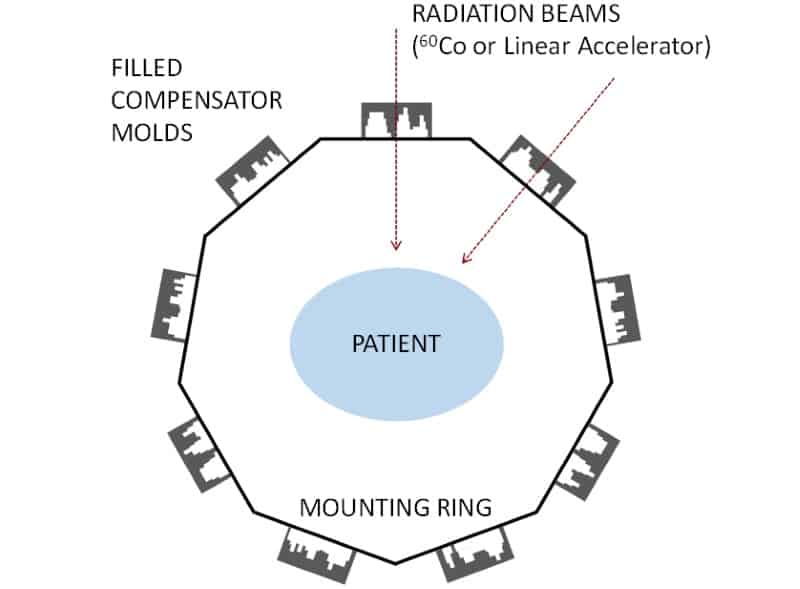
The compensators comprise plastic moulds, which are lightweight and easy to manufacture, filled with attenuating material such as tungsten beads. After each treatment the attenuator can be emptied from the moulds and re-used for another patient, minimizing the required amount of expensive attenuating material.
The compensators are mounted around the patient on a ring structure. The treatment gantry rotates around the ring and delivers each beam through each compensator in turn. Compared with MLCs, compensators offer simplicity, lower cost, streamlined QA and more efficient use of MUs. Another advantage is that the compensators do not need to be manually exchanged between delivery of each field, greatly increasing treatment efficiency.
To assess the dosimetry of this new set-up, the researchers used the Pinnacle treatment planning system to create plans for 60Co teletherapy beams used with the compensator. They chose a 60Co system as these are widely used in LMICs, and present the most challenging scenario due to their unfavourable depth-dose characteristics and large source sizes.
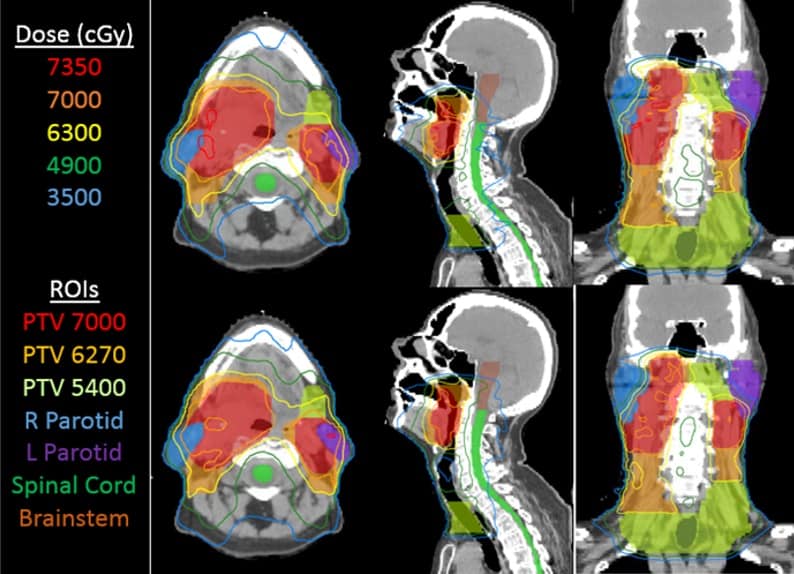
The researchers generated 60Co-compensator IMRT plans for five head-and-neck cancer and five gynaecological cancer patients, and compared these to MLC-based plans using a 6 MV linac. Ford noted that the treatment planning process is similar to that for standard IMRT.
“Inverse planning is performed and an idealized fluence map made,” he explained. “At this point the fluence map would normally be turned into a pattern of beam shapes using MLCs. Instead, we turn it into a compensator shape. Some treatment planning systems have this capability already, but even in those that do, it is not well developed. More work needs to be done to refine it.”
Comparing dose distributions revealed that 60Co-compensator plans had, on average, equivalent planning target volume (PTV) coverage to the MLC plans. The 60Co-compensator plans had higher mean parotid dose (for head-and-neck cases) and higher rectum D60% (for gynaecological cancers), but the differences in organ-at-risk (OAR) dosimetric endpoints were clinically acceptable. The 60Co-compensator plans were roughly twice as fast to deliver, with average total delivery times of 4.1±0.7 min compared with 8.2±2.6 min for the MLC plans.
Design details
The team also examined the effect of various compensator design parameters on plan quality. First, they varied the compensator resolution from 2 to 10 mm for the five head-and-neck plans. While there was no clear trend in OAR doses, PTV coverage was inferior at resolutions of 6-10 mm. PTV dose distribution was more homogeneous for finer resolutions.
They also assessed the effect of varying the maximum compensator thickness between 0.5 and 3.0 TVL (tenth-value-layer, which for tungsten is 2.14 cm) for two plans. In both cases, PTV doses were unaffected by maximum thickness, while OAR doses decreased as thickness increased. At 2 TVL, OAR sparing was similar to 6MV-MLC plans. The authors note that there is little benefit to using greater than 2 TVL and that 1.5 TVL may be acceptable.
Examining the source-to-compensator distance (SCD) revealed no clinical difference in plan quality between SCDs of 63 and 53 cm. Likewise, varying the number of beams from five to 13 did not reveal any clear trends in tumour or OAR dose. The team suggests that seven or nine beams would usually be appropriate.
The authors concluded that the compensator can deliver plans of comparable quality to MLC-based systems, even for 60Co beams. This makes the system well-suited to large portions of LMICs where 60Co units are the only available technology. They note that the compensator-ring system will also work as an add-on to a linac.
The team is now developing a prototype compensator system. “We have completed our initial round of planning studies, which has been very helpful in informing the design,” Ford told Physics World. “Together with our commercial partner in India under the NCI grant, we are pursuing a prototype and are about six months away from having something ready to test.”
In this month’s Physics World Stories podcast, Andrew Glester looks at some intriguing developments in the space industry. He is in conversation with Harvard University astrophysicist Martin Elvis about the prospects of asteroid mining moving from science fiction to reality.
Later in the podcast, Glester investigates how the UK space industry might be affected by Brexit – the UK’s imminent departure from the European Union. Lucy Berthoud from the Space Universities Network explains why it is so important for the UK government to get the right deal because of what is at stake in the space sector.
Finally, Glester takes a trip to Goonhilly Earth Station on the south-western tip of the UK. Goonhilly representative Kat Hickey explains why the site is such a unique place to do science and why she believes it should be chosen for the UK’s first spaceport.
Look out for a special collection of articles about the space industry to be published on this site in the next week or so. Also, if you enjoyed this podcast then you can subscribe via iTunes or your podcast provider. Also check out Physics World Weekly – our news-focused podcast presented by the Physics World editorial team.