Photography is a universal language. Humans are visual creatures and we instantly relate to images that make a subject come alive. Our eyes are immediately drawn to an image on the printed page or on the screen. With just a quick glance, we see all of its complexities: forms, patterns, structures and colours.
Photography is also a science – the science of light and optics. Ever since the French artist Louis Daguerre invented the photographic imaging technology, known as daguerreotype, in 1839, photography and science have formed a lasting bond that is only set to continue in the coming century. Indeed, careful observation of evidence lies at the core of the modern scientific method, with photography having always been valued as an objective observational technique for probing and documenting the natural world
Science has used photography, for example, to gather data that cannot be detected or processed by the eye, or by “slowing down” processes that are too quick for humans to visualize. Indeed, photography in science often has several functions – from being used as scientific evidence to represent a broad concept or idea to even being an independent piece of art. Indeed, photography has always wavered between art and science, often resting in the margins occupied by both fields.
Photography also provides an efficient means of communicating science to the general public and the scientific community. It is simply one of the best ways to make science accessible and understandable. Photography helps researchers demystify science, especially when dealing with concepts that non-scientists do not comprehend. Great photographs help tell a story by creating a visual narrative, captivating and maintaining the reader’s attention and sparking their curiosity.
In our frenetic and social-media obsessed lifestyles, people are losing the ability to invest time in reading beyond 280 characters. And that is exactly where the power of strong photography comes in. Not only does an image quickly synthesize the essence of an article but it also captures the reader’s attention long enough for them to read on.
As a science photographer I am fascinated by how particle physicists construct and utilize extremely large and complex detectors such as CMS and ATLAS at CERN’s Large Hadron Collider. They are some of the biggest machines ever built, searching for the smallest particles in the universe. In astronomy, meanwhile, digital cameras have opened up even more possibilities. Ultra-sensitive light sensors and the use of long exposures (without large colour shifts) were simply not possible before the digital photographic revolution. The added sensor sensitivity and increased time exposures make distant faint objects in the sky now clearly visible.
Eye for beauty
So, what makes a great photograph? Well, that is usually in the eye of the beholder, but besides the obvious correct exposure and an in-focus image, we can certainly agree on a few points. One is a unique and strong composition. This could perhaps reveal an interesting aspect of the instrument or experiment, or show a singular perspective that has rarely been seen before. Another is lighting, which can be used to enhance the photograph by adding drama, or by imbuing it with a particular mood. Finally, giving an image a sprinkling of mystery helps to grab our attention and speak to our emotions.
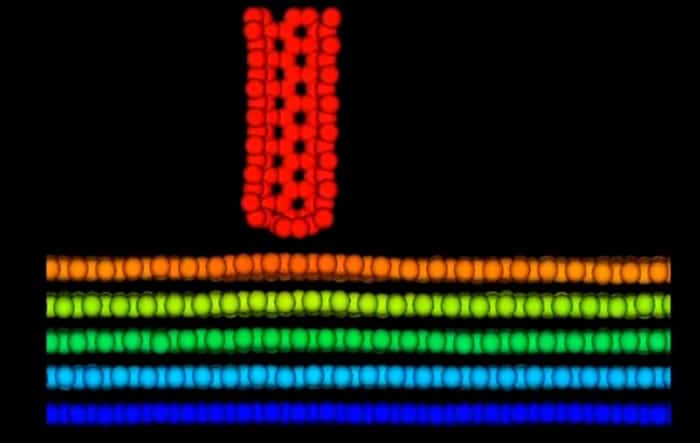
My own photography (see above) tends to lie more towards the artistic end of the science–art spectrum and is almost exclusively about aesthetics. I look at the geometry and symmetry of an instrument, letting it guide me to the correct composition and unique point of view. I am interested in showing the reader the beauty, as well as the complexity, of these behemoth machines. These detectors have kilometres of wires, pipes and cables criss-crossing each other in endless repeating shapes and patterns and, when photographed just right, these shapes and patterns are pleasing to the eye.
I am interested in showing the reader beauty, as well as complexity
A good image lets us appreciate the ingenuity that was necessary for the conceptualization and realization of these massive experiments. The importance of a good photograph is that its uniqueness, beauty or mystery grabs and holds the reader’s attention just long enough to liberate some of their precious time to read the accompanying article.
If as a photographer I can achieve that, then I have done my job.
The good news is that renewables now supply nearly 30% of UK electricity and the UK’s attractiveness to renewable developers has improved. In Ernst and Young’s latest Renewable Energy Country Attractiveness Index, the UK has moved up three places in the global rankings since October 2017 to hit seventh place – a ranking it last held in September 2014. This has in part been put down to the fact that some projects are now said to be able to generate returns on subsidy-free projects.
That’s not just the case for some large PV projects but also, it seems, for wind farms. The first subsidy-free on-shore wind project has been agreed. It’s an 18 MW extension to an existing 18 MW scheme in Yorkshire.
However, some see these examples as exceptions, only available to developers in special circumstances, e.g. where an existing scheme can cross-subsidise a new one. Certainly the wider investment picture looks grim – clean energy investment in the UK fell 56% last year and the Environmental Audit Committee’s chair said that “a dramatic fall in investment is threatening the government’s ability to meet legally binding climate change targets”.
Alan Whitehead, Labour’s shadow minister for energy and climate change, commented: “It’s clear there is a substantial downward trend in new investment, which is across the board in terms of investment in clean technology ranging from big wind farms right down to the effective collapse of the solar market”. With on-shore wind and PV blocked, “if anything, the country is beginning to introduce a ‘hostile environment’ for green investment for the future”.
It is certainly true that support for on-shore wind and large-scale PV has been significantly curtailed by the government. In answer to a Parliamentary question on 25 May, energy minister Claire Perry, reiterating the Conservative election manifesto position, said that “we do not believe that more large-scale onshore wind is right for England”. Tough planning controls have been imposed, and large on-shore wind projects have been blocked from getting support under the CfD system. It’s the same for large solar farms.
This is all a little odd given that the government’s latest survey of public attitudes shows overwhelming support for renewables, particularly solar (87%) but also for on-shore wind (76%). That is not to say there is no local opposition to some projects, e.g. to a proposed wind farm with to 200-foot tall turbines, but then, as developers look to large, more profitable turbines to win in the tighter subsidy-free market now established, that’s perhaps to be expected.
However, being optimistic, even though it will be hard for most new on-shore wind and PV projects to get into the market without a CfD contract, even one at zero subsidy level, that could change as costs fall. Analysis by Aurora suggests that 9 GW of solar, 5-6 GW of on-shore wind and 3-4 GW of off-shore wind could be built without subsidies by the end of the next decade, with PV and on-shore wind reaching grid price parity in the early 2020s, and off-shore wind getting there in the late 2020s or the 2030s.
The 10 MW Clayhill solar farm in Bedfordshire claims to have already managed to go ahead without subsidy, though its finances have evidently been aided by cash flow from/the asset status of an existing project on the site, while Hive Energy and Wirsol Energy have unveiled plans to build the country’s biggest ever solar farm (350 MW) in Kent, without any subsidies.
Falling costs are, of course, good news, hopefully enabling projects like this to go ahead, but there can be a market downside. A Cornwall Insight study warns that a surge in renewables capacity, stimulated by competition-driven falling costs, could potentially push wholesale power prices down to such an extent that it reduces the incentive for future investment in the renewables sector. It’s a competitive race to the bottom with only the cheapest surviving and not many of them, so the whole thing slows. A gloomy prognosis.
However, that doesn’t have to happen if the market expands, and we do need more capacity. What’s more, there are some other possible ways forward, including direct power links to some users, outside of normal grid power market arrangements (avoiding grid transmission and distribution costs), as well as some interesting repowering investment opportunities – upgrading wind projects with new turbines. That could boost UK generating capacity by over 1.3 GW, according to the Energy & Climate Intelligence Unit. That says “it makes sense to repower sites of the earliest wind farms, which tend to be in locations that have the best wind resource…existing infrastructure including network connections can also be reused or upgraded at costs lower than for new sites”.
So what happens next? For its part, the government has said that it will not be offering any subsidy support for new renewables until 2025, apart from one new £557 million round of the CfD, which is likely to mostly be taken up by offshore wind, which it favours. The focus on offshore wind has certainly been remarkable, since it was initially so expensive. But since it has involved large investments from foreign companies, and offshore wind projects are getting cheaper, that probably explains most of the UK’s rise up Ernst and Young’s attractiveness index. However, that means that, unless things change, on-shore wind and large PV are out on their own.
There are some on-shore wind projects supported under earlier CfD rounds going ahead, and smaller PV projects can still get support from the Feed-in Tariff system, but that is to end next year. The theory is that these technologies are now market ready and do not need subsidies. We will see. They certainly are getting cheaper around the world. So too is offshore wind. But will that all happen fast enough to ensure that renewables expand at the rate envisaged by the government, which sees them reaching 45 GW, supplying around 50% of UK power by 2035?
Probably not without a bit more help, which after all is what new nuclear is continuing to get, despite it being clearly much more expensive. Nuclear is currently only supplying around 18% of UK power and that will fall as more old plants close. Even if all goes well, the new 3.2 GW Hinkley EDF plant seems unlikely to be running before 2027 at the earliest. Meanwhile, there is talk of the taxpayer being asked to shell out something towards the £13.3 billion needed for Hitachi’s Wylfa project.
Priorities do seem a little skewed, as was clearly felt by those who had backed the now evidently blocked proposal for a 320 MW Swansea tidal lagoon. But at £1.3 billion, that was, it seems, too much to ask for, although to be fair, it was argued that, to get a similar £/MWh return, as a first of a kind project, it would need a CfD at a higher level even than nuclear, and over a longer period. Subsequent larger lagoon projects, in areas with higher tidal ranges, should be significantly cheaper and some see the Swansea project as a pathfinder for them. But not everyone agrees – though, as I write, it’s still not finally decided either way. That is adding to the sense of uncertainty about the future of marine renewables in the UK, for example in relation to the next phase of the (eventual) 398 MW Meygen tidal stream project in the Pentland Firth, which didn’t get support under the last round of the CfD system. Will that be sunk too?
Researchers at Northwestern University have printed a 3D mini-tissue that mimics the bile duct. They achieved this by combining peptides amphiphiles, which form a scaffold, with bioink consisting of cells and growth factors (Biofabrication 10 035010).
Three-dimensional (3D) bioprinting uses conventional 3D printing methods to mimic natural tissue states and promote self-assembly. 3D bioprinting uses cells and bioinks – natural or synthetic printable materials used with signal molecules such as growth factors and cytokines – to engineer tissue-like structures, or “mini-tissues”.
Cells in vivo need a fibrous scaffold that mimics the extracellular matrix (ECM), along with signalling molecules, to perform a desired function in a tissue. In bioprinting, the ECM is provided by a versatile class of peptide-based molecules known as peptides amphiphiles (PAs). PAs self-assemble into nanofibres and can be modified for different tissue engineering applications such as bone regeneration. Currently, the challenge is to develop and fine-tune bioinks that can be easily printed and meet the requirements for biomedical applications.
A stable bio-nanostructure
With this in mind, Ming Yan and colleagues have successfully 3D printed a nanostructure consisting of bioink, PAs and bile duct cells (cholangiocytes). They mixed thiolated-gelatin, PAs and cholangiocytes at 37°C and 3D printed the nanostructure at 4°C. The bioinks printed into filaments that retained integrity and could support multi-layered scaffolds. The bioink-PA scaffold was made stable by cross-linking a derivative of ethylene glycol with calcium ions. The scaffold remained stable for a long time (more than one month) in culture at 37 °C.
The researchers also investigated the influence on cholangiocytes of including a laminin-derived peptide (Ile-Lys-Val-Ala-Val, IKVAV) within the bioink. Laminin is an ECM molecule (found in the basement membrane) necessary for cell adhesion. After bioprinting, the cholangiocytes remained viable in vitro. Staining showed the formation of functional bile-cell-based tube structures, with enhanced morphology of these nanostructures observed when cultured in IKVAV-bioink. This is the first time that a bioink-based system supplemented with PAs has been used for a specific biological application – bile duct tissue engineering.
3D bioprinted scaffolds show promise in tissue engineering and regenerative medicine. For instance, complex spatial models need to be tested in order to bioprint a functional liver tissue with blood vessels, bile ducts and liver cells.
Building on the present study, the scientists now want to optimize the peptide concentration and test other signalling molecules within the bioinks to enhance the formation of functional tubular structures reminiscent of the architecture seen in natural liver. In addition to bioprinting, the PA-bioinks can help establish adaptable in vitro systems for modelling diseases such as bile duct cancer and discovering new drugs.
Physicist and writer Anthony Zee has written a number of specialized books on various physics topics, including a trio of (ironically named) weighty tomes for graduate physicists: Quantum Field Theory in a Nutshell (608pp), Einstein Gravity in a Nutshell (888pp) and Group Theory in a Nutshell for Physicists (632pp). But he has also penned more accessible popular-science books – his Fearful Symmetry: the Search for Beauty in Modern Physics, for instance, garnered rave reviews for its exposition of the physicist’s search for an understanding of the universe.
His latest offering, On Gravity: a Brief Tour of a Weighty Subject, is ostensibly neither of these, being written “to help people bridge the gap between popular books and textbooks on Einstein gravity”. Inside, Zee’s deep enthusiasm and wit shine through, as the reader pauses to visit the four fundamental forces of nature, zoning in on Newtonian gravity, before reaching the book’s final destination of Einstein gravity.
Here Zee invites the reader to get off the tour bus and explore concepts familiar to lay physics enthusiasts, such as curved space–time, but also more up-to-date topics such as the great effort required to confirm Einstein gravity through the Laser Interferometer Gravitational-Wave Observatory (LIGO) detection of gravitational waves announced in 2016. The tour ends on a high, revealing continuing efforts to bring gravity and quantum physics together in the form of quantum gravity, and what the LIGO detection may herald in terms of opening a new window to the cosmos, which might just expose the nature of dark matter and dark energy.
Though pop-sci in spirit, there is a sense the author is yearning to break the shackles of simple exposition in the book, frequently halting flow with asides or sending the reader on endless diversions to footnotes and a whopping 177 endnotes. Often coming across like a “Choose Your Own Adventure” children’s gamebook from the 1980s, the reader is constantly impelled to flick back and forth between the paragraph they are reading and the footnotes/endnotes, occasionally more than once in a single sentence. Sometimes this effort bears fruit, providing unusual titbits like the fact that French mathematician Pierre de Fermat’s year of birth is unknown because his father named two sons from two different wives both Pierre. At other times it is highly frustrating, interrupting the story only for the reader to discover the endnote is simply referencing the author’s other more detailed textbooks.
Leaving aside the awkward reading experience and the feeling that the book is simply an abridged version of his weightier back catalogue, Zee is more often than not accomplished in combining analogies and humour to make challenging topics understandable. Like many writers before, he uses the passing train analogy to clarify subtleties in special relativity, and uses Newtonian gravity’s instant influence on distant bodies to explain away the mystery of quantum entanglement that Einstein famously called “spooky action at a distance”. But he also has his own analogies, quirkily likening the least time principle for light to a chiselled Richard Feynman saving a drowning girl by taking not the shortest but the best possible path to the stricken swimmer.
Zee does not rely solely on these tricks of the trade to draw in the reader. In a chapter dedicated to the LIGO experiments, he tones down his idiosyncratic style and provides a clear and concise introduction to gravitational-wave astronomy. This serves as a stalwart explanation of the experiments involved, as well as the scale of the achievement, in terms of both physics and politics.
Zee offers a new and refreshing base from which to delve deeper than most popular-science books
Where Zee shines brightest, though, is in explaining often-ignored concepts and basic mathematics that help the reader gain a more fundamental understanding of the subject. By clearly describing the action principle, for instance, On Gravity offers a new and refreshing base from which to delve deeper than most popular-science books into the most pressing problems in fundamental physics.
The action principle provides a means of looking at a physics problem in a different way, allowing complicated equations of motion in classical and quantum physics to be written concisely. As an example, Zee tells us: “Maxwell’s eight electromagnetic equations are replaced by a single action, specifying a single number for each possible history describing how the electromagnetic field changes.” This neat action formulation is then put to use to help peel back the curtains on the quest for a “Grand Unified Theory” of physics, and why dark energy is the leading candidate to explain the accelerating expansion of the universe.
By refusing to patronize the reader (as some pop-sci authors do when they only include fully established theories or omit mathematics), Zee takes us on a whirlwind tour of gravity that opens a window to advanced topics including Hawking radiation, the cosmological constant problem and quantum gravity. As a result, On Gravity provides a fresh way to understand the concepts behind relativity and a good introduction to the latest challenges in fundamental physics.
Experiments by Sam Dillavou and Shmuel Rubinstein at Harvard University have, for the first time, revealed that the friction between two surfaces has a “memory”. This means that the force can depend not only on the present state of the interface but also on how the interface has reached its current state.
This new insight could have a bearing on how physicists characterize friction in materials such as rock, metals and paper and apply to a wide range of physical systems from micromachines to earthquakes.
Contact area
The amount of friction generated by two surfaces is directly related to their contact area. Microscopic irregularities in the surfaces are gradually flattened as time progresses, increasing the contact area and therefore increasing friction.
Under these conditions, the contact area, and thus friction, increases logarithmically with time in a process known as ageing. “The observed behaviour is always logarithmic,” explains Dillavou, “with the magnitude of the logarithm proportional to the force applied”.
In the new experiments, Dillavou and Rubinstein used two clear acrylic slabs, one on top of the other. By shining light on the interface, they can measure the contact area. In one experiment they applied a constant normal force, which pushed the slabs together. After a certain amount of time, the researchers reduced the normal force to a lower value. Surprisingly, “under the constant second load, the contact area shrank for some time, then spontaneously began growing,” says Dillavou.
Repeating the experiments with different waiting times before reducing the load and different forces, it became clear that the system had “remembered” how it reached its current state and was evolving based on its history, not just its current state.
Out of sync
Next, the researchers conducted the same tests but applied an increasing lateral shear force on one block until the interface slipped. This allowed them to measure the coefficient of static friction, which should correspond directly with the area of contact.
Once again friction fell and rose again after load reduction, exhibiting the same memory effect. Surprisingly, however, this change did not occur in tandem with the area of contact. Indeed, friction rose while the area of contact continued to fall.
“Finding that the two values could evolve in opposite directions was a bit of a surprise,” says Dillavou, who attributes the discrepancy to certain regions of the interface being more important than others with regards to friction.
Glassy system
To understand these puzzling experimental results in more detail, the team turned to a universal model for ageing in disordered systems. Previously used to describe “glassy” systems such as crumpled paper and elastic foams, the theory was also able to explain the results from the friction experiments.
“The theory is phenomenological, meaning it is not about a single physical process, but rather a class of processes,” explains Dillavou. Hence, plastic creep, adhesive bonding or any analogous thermally activated process could contribute to the ageing, de-ageing and memory effects witnessed. “The process that generates this ubiquitous behaviour may actually be several processes,” Dillavou muses.
Hiroshi Matsukawa from Aoyama Gakuin University in Japan, finds the results “very interesting”, and believes they could “open a new world of tribology in relation to glassy dynamics”.
Mammography, the current gold standard for breast cancer screening, is a valuable but less than ideal imaging modality. The scans expose patients to X-ray radiation, are less sensitive in dense breast tissue and require breast compression – which can deter women from attending mammography appointments.
Now, researchers at Caltech Optical Imaging Laboratory have developed an alternative: a single-breath-hold photoacoustic computed tomography (PACT) system. The device, developed in the lab of Lihong Wang, can find tumours in as little as 15 s by shining pulses of near-infrared laser light into the breast (Nature Commun. 9 2352).
During a PACT scan, the incident light diffuses through the breast and is absorbed by haemoglobin in the patient’s red blood cells, causing the molecules to vibrate ultrasonically. These vibrations travel through the tissue and are detected by a 512-element ultrasonic transducer array. The recorded data are then used to construct an image of the breast’s internal structures.
PACT creates images with a high in-plane spatial resolution of 255 µm, at a depth of up to 4 cm. Because the 1064 nm light is so strongly absorbed by haemoglobin, the images primarily show the blood vessels present in the tissue being scanned. This is useful for detecting cancer as many tumours induce the growth of new blood vessels, surrounding themselves with dense networks of vascular tissue.
A patient undergoing a PACT scan lies face down on a table with the breast to be imaged placed in a recess containing the ultrasonic sensors and laser. As the scan takes just 15 s, the patient can hold their breath while being scanned, resulting in a clearer image with negligible breathing-induced motion artefacts. “This is the only single-breath-hold technology that gives us high-contrast, high-resolution, 3D images of the entire breast,” says Wang.
In a pilot study, the team used PACT to image the breasts of one healthy volunteer and seven breast cancer patients. By assessing blood vessel density, PACT correctly identified eight of nine biopsy-verified breast tumours. Tumours were clearly revealed even in radiographically dense breasts, which could not be readily imaged by mammography.
Wang has founded a company to commercialize the PACT technology and conduct large-scale clinical studies. “Our goal is to build a dream machine for breast screening, diagnosis, monitoring and prognosis without any harm to the patient,” he says. “We want it to be fast, painless, safe and inexpensive.”
In this video interview, David Smeulders speaks about his search for technology solutions to efficiently store energy and release it again when required. These two related processes are key to improving the economic viability of many renewable energy sources, such as wind and solar.
“If we go deep down in the earth we find molecules – we find gas we find oil reserves – but we never find batteries. So nature has found a way to store energy but what we need to do is find a way to store electricity as well,” says the Dutch researcher.
Smeulders is part of a group at Eindhoven University of Technology (TUE) investigating a number of innovations, including the idea of storing heat in mineral formations known as zeolites. He imagines a future where homeowners could capture ambient heat during the summer, before releasing it during the winter.
The interview also looks at the challenges of transferring research from the lab to the real-world. From the very beginning of research projects, his group at TUE work closely with applied research institutes and commercial companies, some of which are located on the same campus.
If you enjoy this interview, then take a look at our Sustainable Futures collection, which looks at some of the ways science is helping to tackle some of the big challenges of the 21st century.
It was the most profound discovery in cosmology since the detection of the faint radio hiss from the cosmic microwave background (CMB). In 1998 two teams of researchers, locked in a fierce rivalry to be the first to measure the expansion rate of the universe, independently announced that they had arrived at the same startling conclusion: the expansion of the universe is not slowing down as expected, but is speeding up. The discovery led to the 2011 Nobel Prize for Physics being awarded to the two team leaders – Brian Schmidt of the High-Z Supernova Search Team and Saul Perlmutter of the Supernova Cosmology Project – as well as Schmidt’s teammate, Adam Riess, who was the first to plot the data and realize that the universe is not behaving as it should.
The discovery was a “terrifying” moment, admits Riess, who is now at Johns Hopkins University in the US. At the time he was fresh out of his PhD and charged with plotting the supernovae data that the High-Z team had been collecting. Because all type Ia supernovae – the thermonuclear destruction of a white dwarf star – explode with very similar luminosities and light curves, they can be calibrated to act as “standardized candles” by which cosmic distances can be measured. Comparing those distances to the redshift of the supernovae tells us how fast the universe is expanding. Riess’s conclusion that the data implied the expansion is accelerating was so counter-intuitive that he was sure he’d made a mistake.
However, when Perlmutter’s team revealed that it had found the same thing, history was made, with the discovery of the accelerated expansion documented in two breakthrough papers – one by the Supernova Cosmology Project (Astrophys. J.517 565) and the other by the High-Z team (Astron. J.116 1009). To explain this acceleration, an old idea was reborn: Einstein’s cosmological constant, which describes the energy density of empty space – and with it the notion of “dark energy”. The latest measurement from the Plank mission suggests the cosmos is made of roughly 68% of this dark energy, along with 5% ordinary matter and 27% dark matter. However, the exact nature of dark energy remains mysterious.
The supporting arguments
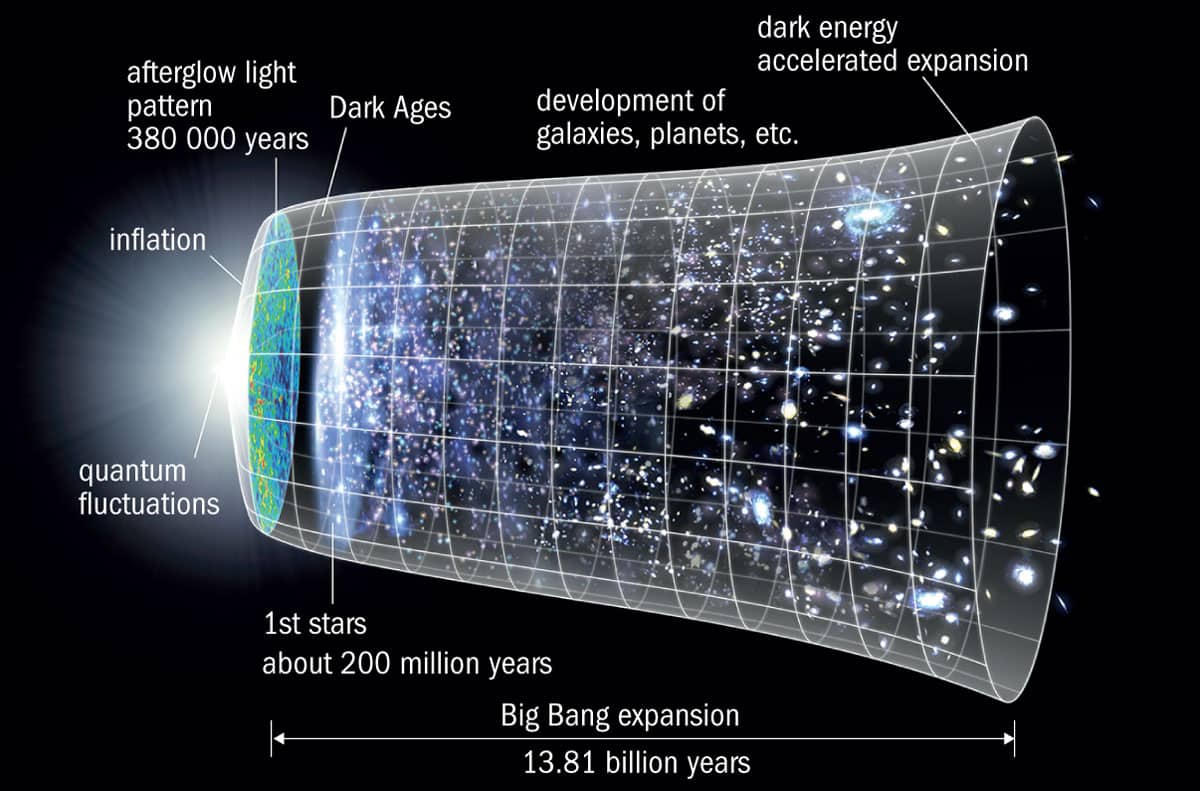
In the subsequent 20 years, two major advances have been made. The first is independent confirmation that the observed acceleration is a real effect. This confirmation has come from several different avenues, in particular the baryonic acoustic oscillations (BAOs) in the CMB. These oscillations originate from the early universe, less than 380,000 years after the Big Bang, when space was filled with an ocean of plasma dense enough to allow acoustic waves to oscillate through. The sound waves had peaks and troughs represented by hot and cold spots – the anisotropies – in the CMB, and shared a characteristic wavelength. Over the aeons the hot spots became the nucleation sites for matter to condense into galaxies and, as the universe expanded, so did the characteristic wavelength. Today, the average distribution of galaxies reflects the size of the BAOs in the CMB. Just as type Ia supernovae are “standard” candles, so BAOs are standard rulers by which to measure the expansion of the universe. They support the finding that the expansion is accelerating.
A flat universe has a critical matter/energy density that requires 68.3% of all the mass and energy in the universe to be made from dark energy
Further evidence that the acceleration is real centres on the geometry of space itself, which the CMB indicates is “flat”. In such a universe, Euclidean geometry applies: if you draw two parallel lines and extend them to infinity, they will always remain parallel, whereas in a curved universe the lines would diverge or converge. A flat universe has a critical matter/energy density that requires 68.3% of all the mass and energy in the universe to be made from dark energy, a value that can be derived from the magnitude and spacing of the acoustic peaks in the CMB.
The other big development of the last two decades, says Riess, is dark energy’s equation of state, which describes the ratio between the energy density of dark energy, and its pressure. Because it is causing the universe to expand rather than contract, dark energy is said to have negative pressure, or “tension”, hence the solution to its equation of state has a minus value. In theory, the equation of state for a universe dominated by the cosmological constant would have a solution of –1, but in truth any solution to the equation of state greater than minus one-third results in a universe that undergoes accelerating expansion.
It turns out that the solution to the equation of state for our universe is almost bang on –1, (+/–0.05). This is exactly the value, to within 5%, that one would expect in a universe dominated by the cosmological constant. On the face of it, this would seem to rule out alternatives to the cosmological constant such as a scalar field called quintessence, in which dark energy varies across time and space. Because the cosmological constant is a fixed value across the universe, it implies that dark energy will always have the same strength. Since it is the energy of space itself, then as space expands more dark energy comes into the universe, causing the expansion to accelerate ever faster. If dark energy is left unchecked, it is a scenario that could ultimately result in a Big Rip that would tear the fabric of space–time apart.
Cosmic expansion: The universe has been expanding since the dawn of time, but instead of slowing down, in the last five or six billion years the expansion has sped up. (Courtesy: NASA/WMAP Science Team)
The other side
So, case closed? Not exactly. Dark energy could be merely mimicking the cosmological constant, a scalar field changing so slowly that we have not yet been able to detect it. Or (whisper it quietly) perhaps dark energy does not even exist.
The discovery of what appears to be an accelerating expansion is undisputed, but are we being tricked by nature? Riess is, perhaps surprisingly, open to the possibility. “I don’t think the phenomenon of dark energy has to be real,” he says.
One of the stumbling blocks is the staggering discrepancy between the predicted strength of dark energy, and its observed strength. Quantum field theory calculates a value that is 10120 times larger than what we observe. If dark energy really were that strong, it would expand space so fast that individual atoms would be separated by vast distances and stars and galaxies would not be able to form. Clearly, we seem to be missing something fundamental.
As such, this discrepancy has led some scientists to consider other, somewhat controversial, possibilities instead. Before we delve into them, it is important to recognize the difference between the accelerating expansion and dark energy. The former has been shown by observations, but the latter is just the interpretation of those observations.
Any interpretation has to take into account all the observations: the supernovae results, the BAOs, the CMB and its acoustic peaks, and the growth of galaxy clusters. Riess has already been involved in a public skirmish along these lines. In 2016 Subir Sarkar of the University of Oxford, Jeppe Nielsen of the Niels Bohr Institute at the University of Copenhagen and Alberto Guffanti of the University of Torino published a paper (Scientific Reports6 35596) in which they argued that the evidence for dark energy was weaker than had been thought, based on their statistical analysis of data from 740 type Ia supernovae.
Riess disagreed with their assessment. “I think it had serious flaws,” he says, describing their analysis of the supernovae data as “non-standard”. Indeed, a re-analysis of the Sarkar results by David Rubin and Brian Hayden of the Lawrence Berkeley National Laboratory (ApJL 833 L30) demonstrates what they say are errors in Sarkar and colleagues’ analysis. Sarkar, however, disputes this, saying such criticism is “disingenuous”, not only because his team was using a common statistical method called the Maximum Likelihood Estimator, but also because this method does not assume that the standard Λ-CDM (the paradigm of cold dark matter and dark energy) model of the universe is the correct model, and is therefore unbiased. Sarkar is sceptical of this standard cosmological model, saying that it has “never been rigorously tested”.
Another criticism Riess raises of Sarkar’s work is that it did not include all the evidence for accelerating expansion from BAOs, the CMB and so on. “I don’t know why one would ignore all the other confirming evidence,” says a bemused Riess. Sarkar counters this by arguing that some controversial analyses, such as that by Isaac Tutusaus in a 2017 paper in Astronomy and Astrophysics (602 10.1051/0004-6361/201630289), claim to see no evidence for acceleration in BAO data. However, the consensus remains among cosmologists that BAOs are strong evidence for accelerated expansion.
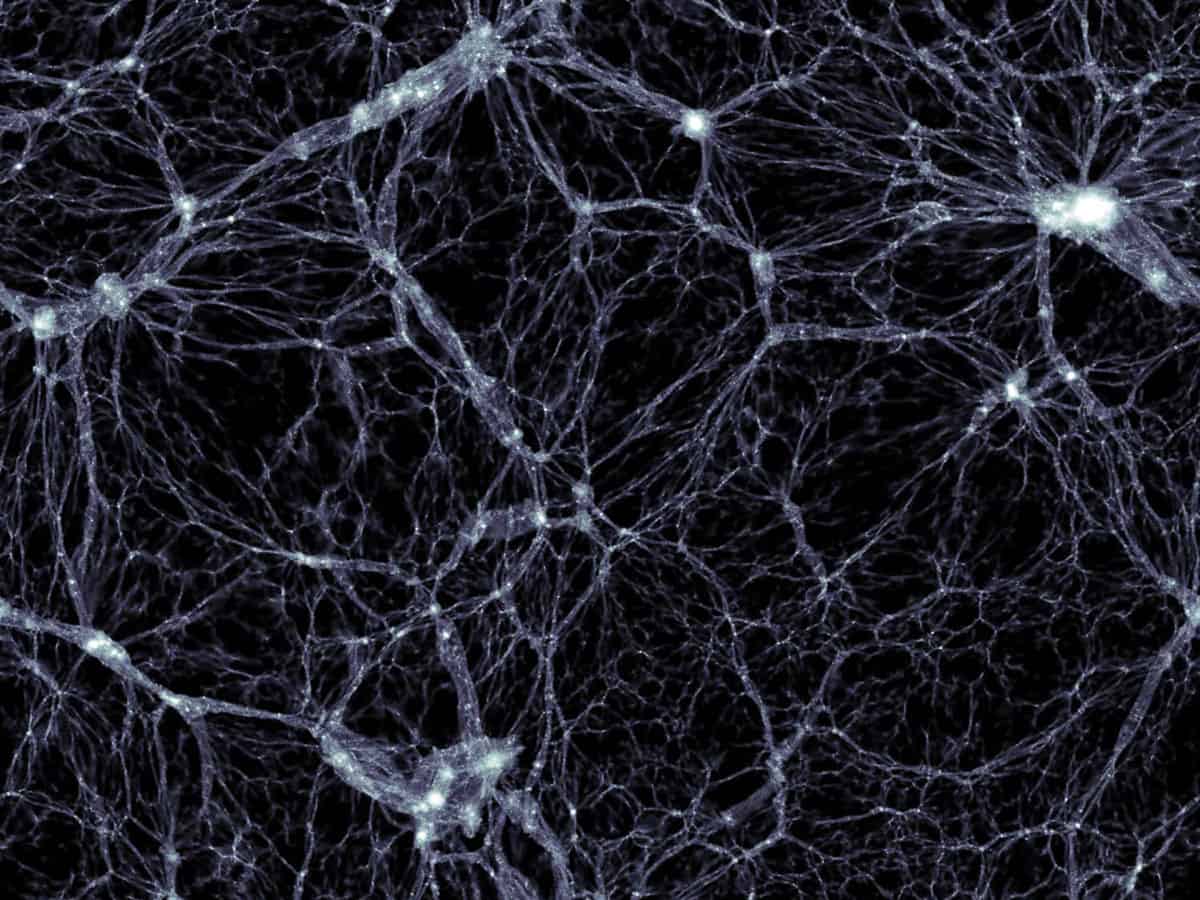
Space stuff: Matter in the universe is found mostly in filaments that form the cosmic web. (Courtesy: Markus Haider/Illustris Collaboration)
The great voids
Indeed, challenges to the existence of dark energy often focus on our most precious cosmological models. The Cosmological Principle states that the distribution of matter in the universe is both homogenous and isotropic. However, on smaller scales matter is lumpy, arranged into galaxies and clusters of galaxies, which form great chains and walls of clusters that stretch hundreds of millions of light-years. Crucially, though, these largest structures, such as the Sloan Great Wall, are not gravitationally bound. In-between these islands of matter are vast voids where the density of matter is far lower. Gravity will affect the expansion of space differently depending on whether you are in a cluster or a void.
Challenges to the existence of dark energy often focus on our most precious cosmological models
The $64,000 question, according to István Szapudi of the University of Hawaii, is not whether structure influences the expansion of the universe – “It’s clear that it does,” he says – but what is the size of that effect?
Szapudi co-wrote a paper published in 2017 (MNRAS 469 L1) that argues that the Λ-CDM model fails to take into account the changing structure – manifest in the voids and clusters – as one travels through the universe. Models of the expansion of the universe are typically based around the Friedmann–Lemaître–Robertson–Walker (FLRW) metric. This is an exact solution to the Friedmann equation, which solves the general theory of relativity for an expanding universe consistent with the Cosmological Principle and where the curvature of space, which is zero, is the same everywhere. However, using their AvERA algorithm, Szapudi and his colleagues, led by Gábor Rácz of Eötvös Loránd University in Budapest, found that their simulated expansion takes place at different rates depending on the surrounding structure. Because the universe is dominated by voids where the lower gravity allows the universe to expand faster, it is only by averaging all the different rates of expansion that it would seem like the expansion is accelerating.
Long vs short scales
Another contentious alternative to dark energy that also acknowledges structure but takes a different tack to Szapudi and Rácz’s approach, is David Wiltshire’s “timescape cosmology”. Based at the University of Canterbury in New Zealand, Wiltshire is dubious about the validity of the FLRW metric. In particular, he is critical of the fact that in FLRW cosmology, the scales that matter are the largest scales that ignore the coarse graininess of individual galaxies and clusters. “On what scales are matter and geometry coupled by Einstein’s equations?” he asks. “My answer is that short scales take precedence.”
On scales less than 450 million light-years, the universe is lumpy, filled with those voids and clusters that affect space and its expansion differently. The largest voids, at over 160 million light-years across, occupy 40% of the volume of the observable universe in total. Add in all the smaller voids, and they account for more than half the universe, so they have a big say in how the universe appears to expand.
In timescape cosmology, clocks run faster in voids than in more densely populated regions of space. A clock running in the Milky Way would therefore be about 35% slower than the same clock in the middle of a large cosmic void. Billions more years would have passed in voids than in galaxy clusters, and in those extra billions of years there will have been more expansion of space. Averaging the expansion rate across all of space – that is, the voids and the clusters – makes it seem like the expansion is getting faster because the voids dominate.
Back-up needed
It’s mind-blowing stuff, but Riess isn’t ready to down tools and give up researching dark energy just yet. “I don’t really take things like this too seriously until other people can independently verify it,” he says. “People have their pet way of looking at the problem, but in the cases that I’ve seen nobody has been able to reproduce what they have done.”
One of the problems that timescape cosmology currently faces is that it’s not yet as well-developed as models of dark energy. Wiltshire says his group has just begun work tackling the challenge of reducing the BAO data without assuming the FLRW metric, and says that the initial results show promise.
Fitting the heights of the acoustic peaks in the CMB data is even more of a challenge, as it requires rewriting the mathematics that describes the growth of the tiny anisotropies that are the seeds of cosmic structures. To do so with the same accuracy as the FLRW metric relies on something referred to as “backreaction”.
In standard cosmology, the FLRW metric is assumed to exactly describe the average growth of the universe on arbitrarily large scales. However, in a generally inhomogeneous universe as described in timescape cosmology, this is no longer the case. Even if the deviations from homogeneity are small, as the anisotropies of the CMB show, their average growth may not exactly follow the Friedmann equation on large scales. These differences are called backreaction.
“No-one has ever considered backreaction in the primordial plasma [of the CMB] before,” says Wilt-shire. “This is a very hard problem, but I doubt anyone else will want to do it unless the Friedmann equation is shown to fail.”
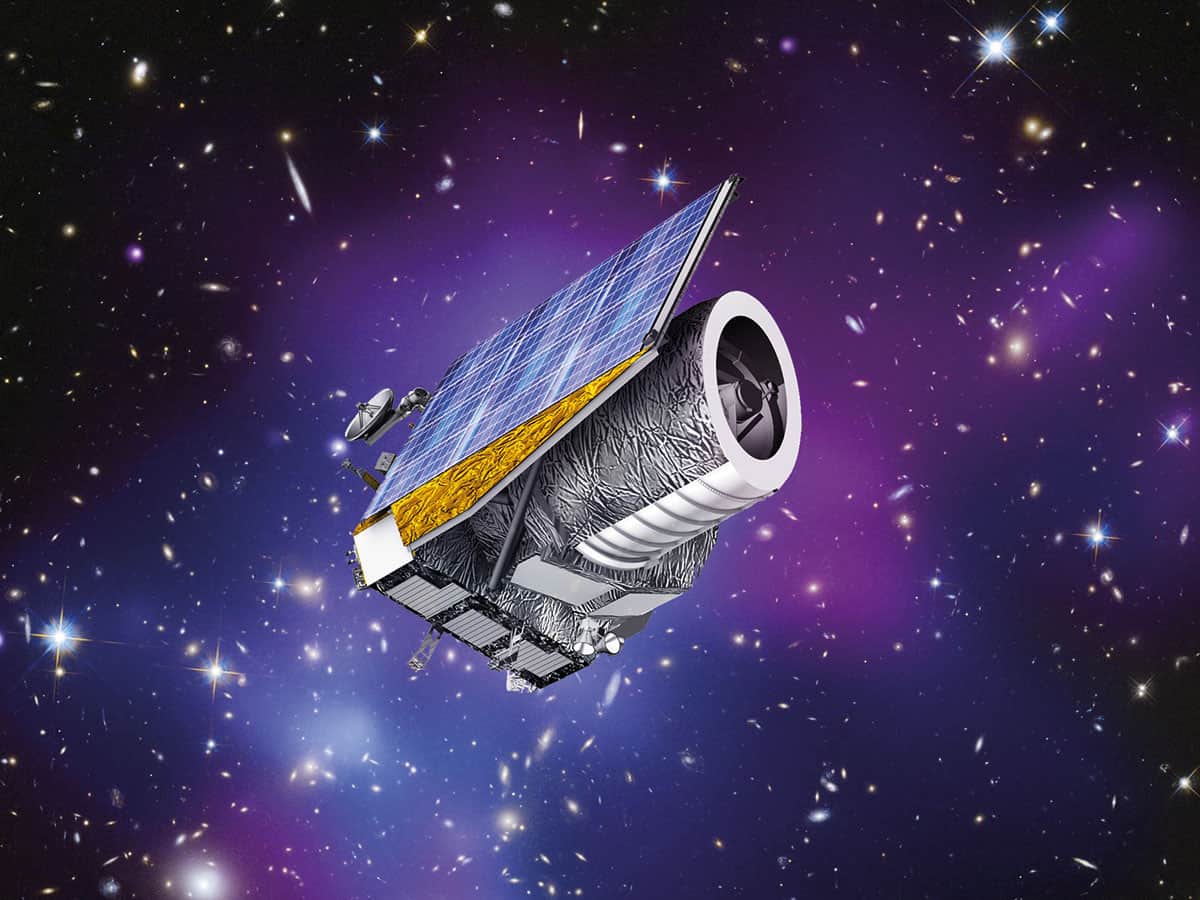
Measuring up: The European Space Agency’s Euclid mission. (Courtesy: ESA/C Carreau)
Wiltshire, however, has the FLRW metric in his sights. Euclid, which is a European Space Agency mission launching in the next decade to study dark matter, dark energy and the geometry of space, will be able to put FLRW on the spot using a method developed by Chris Clarkson, Bruce Bassett and Teresa Hui-Ching Ku in 2007. It looks for a relation between the Hubble constant – a measure of the expansion of space – and the luminosity distance (a relation between the absolute and apparent magnitude) of an object. This relation holds only for a universe where the curvature of space is the same everywhere, as per the Friedmann equation. If the test supports the predictions of the FLRW metric, then timescape cosmology is probably wrong. On the other hand, if it disproves the FLRW metric, “it will be game on”, as Wiltshire puts it.
Not so constant constant
The Hubble constant, which is so fundamental to the expansion of space, is also a source of consternation. In 2016 Riess led a team making the most precise measurement of the Hubble constant in the local universe. As with his discovery of the accelerating expansion 20 years ago, Riess made this measurement using type Ia supernovae, initially those that had exploded in galaxies that also host visible Cepheid variable stars – another cosmic yardstick with which to measure stellar distances. By calibrating the supernovae distances with the accurate distances as measured by the Cepheids’ period-luminosity relation, his team then applied that calibration to 300 other type Ia supernovae in more distant galaxies to produce an accurate measurement.
The resulting Hubble constant that Riess’s group measured was 73 km/s/Mpc (in other words, in every million-parsec-wide volume of space, the universe expands by 73 kilometres every second). However, the measurement of the constant in the local universe seems to differ to that in the very early universe, as measured by the European Space Agency’s Planck mission, which found a value of 67.3 km/s/Mpc.
Riess draws an analogy with the growth of a human body. A doctor might measure the height of a child and plot that on a growth chart to predict how tall that child will be when they are an adult. The local measurement of the Hubble constant is like measuring the height of the adult, and Planck’s measurement of the Hubble constant is like measuring their height when they were a child. “Our cosmological model, which includes dark energy and dark matter, predicts what the final height of the child will be,” he says. “It doesn’t appear to be correct.”
So why the difference in the Hubble constant at the opposite ends of history? One possibility is that our assumptions about the early universe are wrong. Perhaps dark-matter particles are less stable or interact more than we thought, which would affect the properties of the CMB. Perhaps there was an earlier spurt of dark energy sometime in the first billion years. “We’re all scratching our heads about this, trying to figure out what could cause it,” says Riess.
For his part, Szapudi thinks that the discrepancy in the Hubble constant can be explained by a small difference between the standard Λ−CDM model and how the AvERA algorithm depicts the expansion of the universe. “If nothing else, our alternative theory has illustrated that the Hubble constant discrepancy could be a tell-tale sign of a slightly different expansion history,” he says. “Quite independently of the details of our theory, it is an indication that future surveys by Euclid, WFIRST [the Wide-Field Infrared Survey Telescope] and LSST [Large Synoptic Survey Telescope] are likely to find something very interesting when mapping the expansion history.”
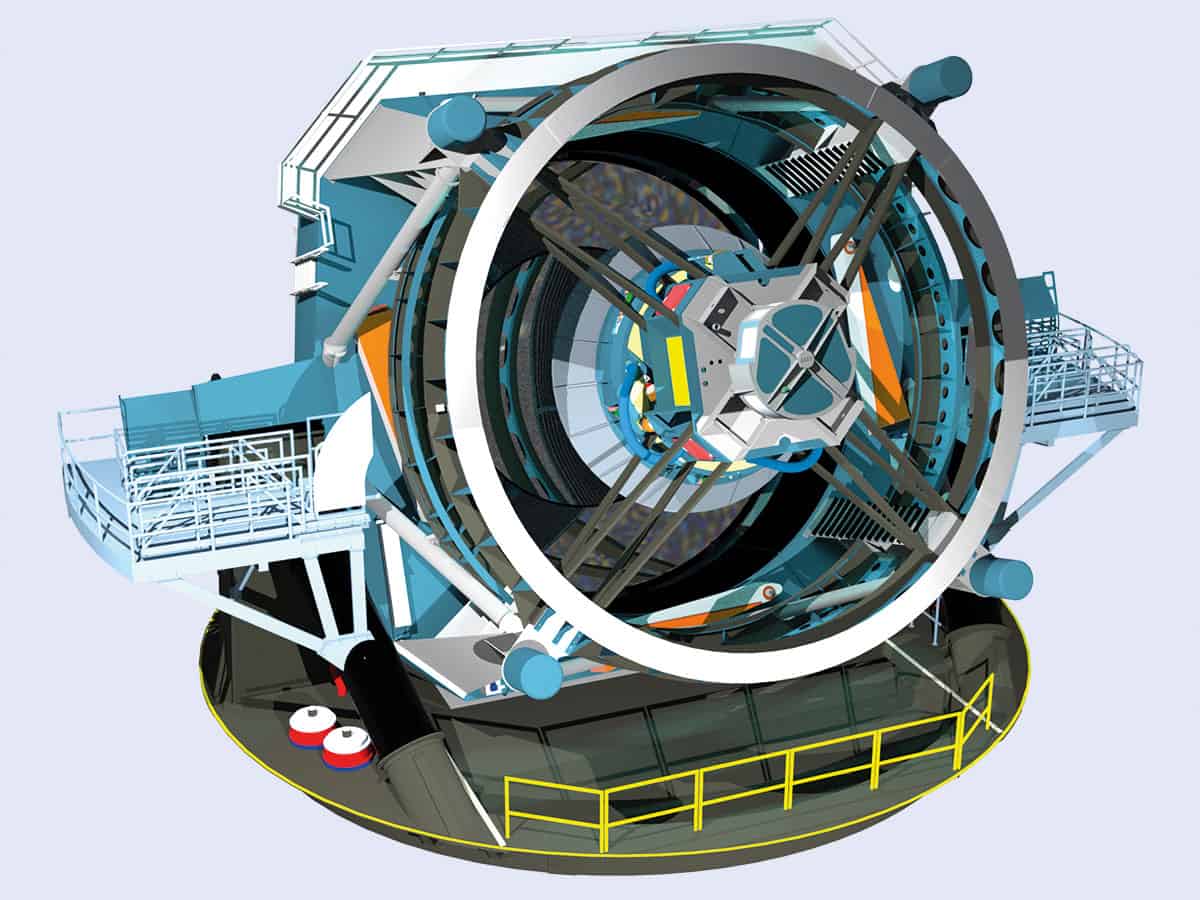
Future surveyor: The Large Synoptic Survey Telescope (LSST) will transform the study of the expansion of the universe by conducting the most detailed survey of galaxies and supernovae ever undertaken. (Courtesy: LSST Project)
Still controversial
Make no mistake, dark energy – be it the cosmological constant or quintessence – is the leading theory with plenty of observational evidence to support it. The alternatives remain highly controversial. Yet those nagging questions – like that huge 10120 discrepancy – just won’t go away. Upcoming surveys will either solidify dark energy theory’s position further, or produce a surprise by pulling the rug out from under it. With the Dark Energy Survey – an international collaboration using a 570-million-pixel camera called DECam on the Blanco 4 m telescope at the Cerro Tololo Inter-American Observatory in Chile – releasing its first data from a survey of 300 million galaxies, these are exciting times.
“What makes this a really fun field to be in is that I don’t know what the next big step will be,” concludes Riess. “We’re just in the middle of our initial reconnaissance, and I don’t think we should be surprised by surprises.”
A common view of patents is that they are only useful if someone tries to copy your research and product. At that point, so the thinking goes, you need to spend copious amounts of money to enforce your patent and stop them. However, in biomedical physics, as in other fields, patents are not merely a last line of defence against unscrupulous competitors. They are also a deterrent. A timely and well-constructed patent can head off competition right from the start, as it is common (and advisable) for companies to check patent records before launching a product to see if they will be free to market it without infringing other parties’ intellectual-property rights.
An even less well-understood role of patents, though, is as an attractor to investors. Deterring competitors is part of this: because patent protection prevents some would-be competitors from entering a market, it is more likely that one company (and, of course, that company’s savvy investors) will reap any future profits associated with the invention. However, before they can obtain patent protection, applicants must demonstrate that a technology is innovative. This fact is also attractive for investors because it helps to demonstrate the potential value associated with an investment.
Early investor support is particularly important in areas like biomedical engineering, where inventions usually require significant investment to move from the proof-of-concept phase via prototypes to viable commercial products. In addition, innovations in biomedicine demand close attention to regulatory standards designed to ensure safe and standardized product development for clinical applications. Developing new products under these conditions brings its own costs.
Bioxydyn, a magnetic resonance imaging (MRI) applications and imaging services provider, is a good example of how patents proved key to attracting investment. Founded in 2009 as a spin-out from the University of Manchester, UK, Bioxydyn uses advanced MRI technology to evaluate lung diseases, including cystic fibrosis, asthma and cancer. Although there had been plenty of academic research into the technology in the years before Bioxydyn was founded, further research identified a way to transform this technology into a clinically practical tool by, among other things, applying novel biophysical models of lung ventilation (the capacity of the lung to receive gas) and perfusion (the blood supply to the lung at the capillary level) to the information available in the images. This made it possible for those viewing the images to draw conclusions about lung health.
Once the Bioxydyn researchers had developed a technique that could prove commercially viable, Manchester’s technology-transfer office encouraged them to consider the patenting process as a means of bringing their technology to market. Following seed investment from a venture-capital fund, the company secured its first service contract with a major international pharmaceutical company in 2011 and has been growing steadily ever since. It is now on the path to acquiring European regulatory approval marking for its technology and launching its first clinical product.
Protecting the right things
When looking to secure intellectual property (IP) protection, one of the first things companies need to decide (most commonly in collaboration with an external patent attorney) is exactly what to protect. Because the protection needs to provide a roadblock to competitors wanting to take unfair advantage of the work, the most common strategy is to protect the technology underlying the main product itself. However, there are strict criteria that need to be met for an invention to be considered patentable, and there are several exclusions. It is commonly believed, for example, that software cannot be patented. However, methods implemented by software can be, as long as they have “technical effect” (that is, a real-world outcome).
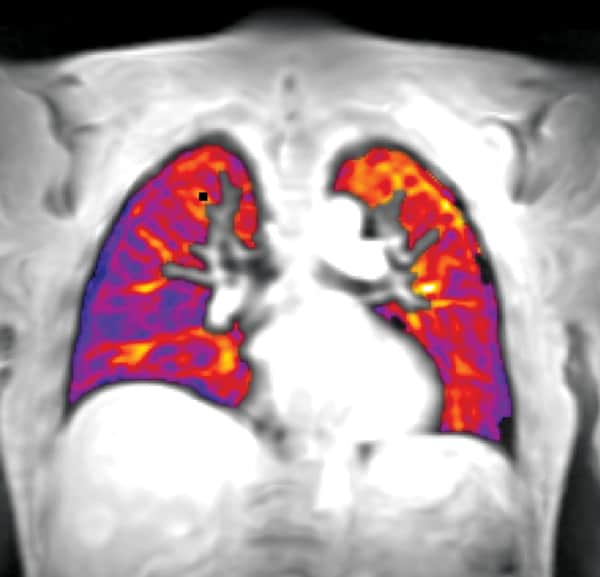
Image analysis: A colour-coded image showing the delivery of oxygen to the lungs of a patient, making it possible to visualize and quantify the variation in oxygen uptake across the lung. (Image courtesy: Bioxydyn)
In Bioxydyn’s case, the tools being developed for clinical use are based on software that the company has produced, which is designed to analyse magnetic-resonance images. The tools are also based on the team’s knowledge about the best ways to deploy and implement this software. The company’s patents cover methods embedded in this software that are primarily designed to interpret information arising from a technique known as oxygen-enhanced MRI. With complex analysis so key to physics-based engineering, patents like these – on processing methods implemented by software – will likely become more important to businesses wanting to maintain their competitive edge.
As companies grow, their product developers continue to hone existing products or diversify into new ones. To maintain a deterrent against copycat competitors and remain attractive to investors, savvy companies need to develop their patent portfolio alongside their product range. Although each new patent family requires additional expenditure, robust, well-thought-out protection can help defend or grow market share.
Since obtaining initial protection for its core oxygen-enhanced MRI technology, Bioxydyn has gone on to patent multiple developments within this area. A new version of the core technology that produces richer and more specific information is one example. Another, later example involved patenting different applications for the technology. The initial product focused on analysing oxygen transfer in the lungs alone, but subsequent iterations have gone on to produce imaging techniques that can determine whether an imaged tumour is well oxygenated, while other image-analysis techniques can map the anatomical connectivity between regions of the brain.
A final consideration when seeking patent protection is where to protect. Patents are territorial rights, so for each territory where you want to protect your invention you need a local patent. Budget constraints mean that few organizations file in every jurisdiction globally. Instead, companies look to the most commercially important jurisdictions to prioritize their filings.
Because physics-based products often require sophisticated support technology – Bioxydyn’s services and software, for example, require MRI scanners – most companies in this sector choose to protect their innovations in jurisdictions that include the world’s most developed economies. These are the jurisdictions where potential customers are most likely to have access to the technology required for there to be a market for those services and software. However, as developing economies continue to evolve, so does the need to consider them as jurisdictions in which to seek protection. As more jurisdictions have access to the necessary technology, so new markets open up. In addition, for biomedical applications of physics, the geographic distribution of relevant diseases may also affect the locations where seeking protection makes commercial sense.
Decisions on where to seek protection need to be made fairly early in the patent application process. There are tools to provide more time for decision-making, such as the PCT (international) application, which buys an extra 18 months before a decision on jurisdictions is required. However, after a certain point in time, the decision as to where patent protection will be sought is fixed and you cannot subsequently obtain a patent in a jurisdiction other than those already selected, even if your product suddenly enjoys commercial success there. During the process of obtaining a patent, therefore, decisions will need to be taken based not only on current commercial factors, but also on how markets will evolve in future. Striking a balance between the cost of obtaining protection in different jurisdictions and the potential benefit of having a significant competitive advantage (in the form of a barrier to entry into the market for competitors) is often difficult.
Long-term thinking
The nature of physics research means that often, a great deal of fundamental work must be completed before commercialization appears on the horizon. Even at that point, it can take many more years of engineering, investment and commercial planning to get that research out of the lab and into the real world. While the process for applying for patent protection is also complex and IP strategies need careful forethought and planning, the benefits to R&D-based companies are well-recognized. As different areas of physics research continue to develop and move from the academic sphere to commercial application, intellectual property will continue to develop as an important commercial tool. Start-ups and spin-outs considering their IP strategy from the outset will be the best placed to seize the opportunities afforded by new technologies and retain their commercial incentive for further research and development.
Elekta has announced that its Unity MRI-guided radiotherapy system (MR/RT) system has received the CE mark, clearing the technology for commercial sales and clinical implementation in Europe. Unity, the first high-field MR-linac, integrates a diagnostic quality 1.5 T MR scanner with a state-of-the-art linear accelerator.
“Receiving CE mark for Unity is a big achievement in revolutionizing the field of radiation therapy and a real watershed moment for treating cancer,” said Elekta’s CEO Richard Hausmann. “The change that MR/RT will bring in cancer therapy is paramount in advancing patient treatment. I’m thankful to the MR-linac Consortium members, Philips (our MR technology partner) and our dedicated employees for helping us reach this important day.”
Unity has the potential to transform how clinicians treat cancer by enabling delivery of the radiation dose while simultaneously visualizing the tumour and surrounding healthy tissue with high-quality MR images. Unity also integrates advanced tools that allow clinicians to adapt the patient’s treatment to this current anatomical information.
“Unity is a tremendous innovation in patient care, one that enables a scan-plan-treat approach to developing tailored regimens that should yield substantive clinical benefits,” said Bas Raaymakers, from University Medical Center (UMC) Utrecht. UMC Utrecht is a founding member of the Elekta MR-linac Consortium and the inventor of the high-field MR-linac concept. “I am thrilled that our vision of personalized radiation therapy is becoming a clinical reality,” Raaymakers adds.