Can you spot the difference in DESY’s new logo?

We have noticed that the DESY lab in Hamburg has had a rebrand that involves a change to its logo. At first glance, however, it might not be obvious what those tweaks are.

On closer inspection, you will just make out the addition of a small orange dot after DESY while the lines that go through the six balls now stop rather than sticking out at the other end (and are slightly thicker).

So why did the lab feel the changes were necessary? “The new logo is a way of expressing and keeping up with the momentum of our research centre [and] we think [the new logo] is clearer and more dynamic,” a DESY spokesperson told Physics World. “The new orange dot represents the undiscovered, the unknown. If you see it as a punctuation mark it also turns the logo – and with it DESY as a whole – into a statement.”

Given that the orange dot has such a deep meaning, do the six blue balls represent anything in particular? “They are completely up to the interpretation of the beholder, so no matter whether you see a simplified model of an atom, the six quarks, lollipops, dumbbells or a particle collision it’s all correct,” adds the spokesperson.

I will stick with lollipops then.

Stephen Hawking’s science: the May 2018 issue of Physics World is now out

The cover of the May 2018 issue of Physics World magazine

Stephen Hawking, who died on 14 March at the age of 76, was the physicist the whole world knew. But what exactly were his key scientific achievements? Out now in print and digital format, the May 2018 issue of Physics World examines Hawking’s scientific legacy through the eyes of Seth Lloyd from the Massachusetts institute of Technology, who knew the great man and includes some of his favourite Hawking anecdotes too. It’s an unmissable article that you can also read online here.

Elsewhere, you can discover the eight most promising wearable technologies for monitoring your health and find out why research into the mysteries of liquids could help us know what’s going on at high pressures inside planets like Jupiter.

Plus learn about the upcoming International Day of Light on 16 May, explore working in the Paralympics “pit lane” in this month’s Lateral Thoughts article, and find out what life’s like as a PhD physicist with a career at NASA’s Jet Propulsion Laboratory in California.

Remember that if you’re a member of the Institute of Physics, you can read the whole of Physics World magazine from the start of every month via our digital apps for iOSAndroid and Web browsers. Let us know what you think about the issue on TwitterFacebook or by e-mailing us at pwld@iop.org .

For the record, here’s a run-down of what else is in the issue.

A day of light – James McKenzie reflects on the business impact of lasers and light-emitting diodes

A cancer collaboration – David Scott outlines why we need physics to drive change in cancer research

Unenlightened thinking – Steven Pinker may be a talented scientist, but he abuses the humanities, argues Robert P Crease

Hawking’s gift – The late Stephen Hawking is an icon of modern physics. As well as inspiring generations of scientists, his contributions have changed our understanding of the universe. Seth Lloyd looks back over Hawking’s key scientific achievements, from gravitational singularities to quantum cosmology

Making health digital – With wearable tech now a staple of modern life, it’s never been easier to keep track of your health. But what will be the next big innovation? Jess Wade gives her top eight technologies-in-the-making that will lead to a new generation of health aids

Liquid mysteries – It’s easy to assume there’s nothing new to learn about liquids. John Proctor explains just how weird liquids can be at high pressures and why this work could shed light on planetary interiors

Take a teacher and a pupil – Philip Ball reviews The Dialogues: Conversations About the Nature of the Universe by Clifford V Johnson

From dust to dust – Tushna Commissariat reviews Losing the Nobel Prize: a Story of Cosmology, Ambition, and the Perils of Science’s Highest Honour by Brian Keating

Engineering a career in terahertz – A PhD in physics is the perfect basis for a career as an engineer, as Ken Cooper from NASA’s Jet Propulsion Laboratory tells Susan Curtis

Once a physicist – meet LeeAnn Janissen, who divides her time between her ceramic-art practice and her role as managing director of research for East Coast Fund Management in Toronto, Canada

Life in the Paralympics ‘pit lane’ – Maddy Nichols, who is a PhD student at the Bristol Centre for Functional Nanomaterials in the UK, describes her role at the 2018 Pyeongchang Winter Paralympic Games in South Korea.

And don’t forget, if you have any thoughts on the issue do let us know on TwitterFacebook or by e-mailing us at physics.world@iop.org.

From dust to dust

I’ve been a science journalist for the past seven years. In that time, I’ve covered my fair share of ground-breaking discoveries, such as the Large Hadron Collider’s discovery of the Higgs boson in 2012 and LIGO’s first detection of gravitational waves in 2016. I’ve also covered controversial claims, like that made by researchers on the Opera experiment in 2011, who said they had seen faster-than-light neutrinos. But the most intriguing, and ultimately tragic, saga in modern physics was that of the BICEP2 experiment and its (as it turned out) non-detection of primordial gravitational waves. In Losing the Nobel Prize: a Story of Cosmology, Ambition and the Perils of Science’s Highest Honour, experimental astrophysicist Brian Keating tells this tale from an insider’s perspective.

These days Keating is director of the Simmons Observatory and is based at the University of California San Diego, but in 2006 he was the key researcher who conceptualized and designed the original Background Imaging of Cosmic Extragalactic Polarization (BICEP) experiment. Its purpose was to detect the polarization of the cosmic microwave background (CMB), and it served as a successor to the BOOMERanG experiment, which measured the CMB’s radiation. While Losing the Nobel Prize tells the story of BICEP and BICEP2, it is also three books all packed into one long (sometimes confused) narrative.

First and foremost, the book is an autobiography of Keating – his life, his work, his family, his religion and his colleagues all feature greatly in this tale. A few relationships in particular stand out. There’s Keating’s father, who left the family while his son was still a young child, and who he reconnects with later and has a deep relationship with until his death in 2005. We also read about Keating’s close collaborator and mentor Andrew Lange, the principal investigator of BOOMERanG, who sadly died by suicide in 2010, just as BICEP2 was deployed. Keating talks openly about his grief at the situation and his frustration at why Lange didn’t reach out for help.

Another person Keating mentions throughout is Galileo. Keating seems to identify with Galileo from a very young age, reading about Galileo’s work and discoveries, and the astronomer’s own struggles with dust. But beyond that, Keating keeps mentioning the Italian polymath, charting situations in his own life and work against that of Galileo’s numerous times. Occasionally, this comes off as egotistical, but I think that Keating invokes Galileo in an almost talismanic way, rather than deeming himself Galileo’s equal.

Problem prize?

Keating also does what he says on the tin, and spends several chapters talking about the history and background of the Nobel prize, its influence on him personally and science in general. Indeed, the book’s introduction is a vivid description of the Nobel family, including Alfred Nobel and how the prize came to be. This is woven in with Keating’s closest brush with the award – an invitation from the Royal Swedish Academy of Sciences to nominate a discovery or invention for the 2016 physics prize. A large chunk of the book is about the prize and its problems from Keating’s point of view, with the author willingly admitting that many may see this whole book as a case of sour grapes on his part. What Keating does is openly acknowledge his near-obsession with winning the prize for a large part of his career despite claiming that it’s an affliction that most – if not all – scientists suffer from too. He eventually comes to terms with the fact that he won’t, simultaneously noting the many problems with this most well-known of prizes.

Keating openly acknowledges his near-obsession with winning the prize for a large part of his career, before coming to terms with the fact that he won’t

In this part of the book I found myself agreeing with Keating on many points – the Nobel’s arbitrary rules about not awarding it to more than three people; its severe lack of female laureates, especially in physics and chemistry; not to mention the rather insular and secretive way in which nominations and nominees are handled by the Academy. But at other times I wasn’t quite sure what his point was. For example, Keating talks as if no other prizes or honours exist in the sciences, or that every large physics collaboration today is working towards a Nobel in fierce competition with others. He also compares the Nobel prize both to the Olympics and the Oscars, which I found a bit bizarre. Finally, he makes the claim that the prize is “broken” and that if Alfred Nobel (who he describes multiple times as an idealist) were to come back today, he “might be shocked at how far we’ve strayed from his dreams for a more peaceful world catalysed by his prizes”. This was a bold claim to make and I’m not sure Keating has the data to back it up, especially as at no point in the book does he speak to anyone involved in executing the Nobel estate or from the Academy. Towards the end of the book, Keating suggests five ways to reform the “church” of Nobel. Some are obvious, such as adding prizes in other scientific disciplines, but others, including the suggestion that prizes should be given “primarily for unexpected discoveries”, do not make sense to me.

Dusty lens

At this point, I feel like I can finally talk about the one remaining aspect of the book – the science! This can be broken down into two parts – cosmology in general, and BICEP in particular. Keating spends a chapter or two talking about the birth of the universe, the CMB and its discovery, before getting into polarization and inflation – the supposed period of very rapid expansion of the early universe. When it comes to the story of BICEP and BICEP2, the author describes how he was involved in coming up with the original experiment, but also how his decision to later also be a part of a competing experiment (POLARBEAR) meant that he was relegated to the footnotes of BICEP2 history.

In the week before BICEP2’s big announcement on 17 March 2014, rumours were already rife, and on that fateful Monday, scores of physicists and journalists listened to the jubilant press conference. The fact that physicists had found actual evidence for inflation was amazing, and as I penned my headline an hour and a half later – “BICEP2 finds first direct evidence of cosmic inflation” – I was suitably impressed. The team claimed that its experiment had spotted the first evidence for the primordial “B-mode polarization” of the CMB. Theory suggests that this polarization is a remnant of gargantuan primordial gravitational waves that would have abounded in the early universe, had it undergone inflation. This concept was first proposed by Alan Guth and Andrei Linde in the 1980s. Their proposal was both popular and poetic, and is still a widely accepted solution by most cosmologists.

By the end of the press conference, researchers the world over were rushing to praise BICEP, and a Nobel prize was already being mentioned. The one slight niggle that I remember having on this exciting afternoon was the fact that the team’s paper – titled “BICEP2: Detection of B-mode polarization at degree angular scales – had not yet been peer reviewed or assessed by anyone outside of the BICEP2 team.

Before I could assuage my own doubts, I got a rather unexpected phone call from Neil Turok, director of the Perimeter Institute in Canada. I had reached out to him via e-mail for his views on BICEP2’s findings, having contacted several cosmologists as I intended to write a follow-up piece the next day, full of what I assumed would be praise. But Turok wanted to speak with me about some issues he had with the news. After an hour of speaking with him, I was left dazed and confused. Turok was convinced that something was amiss with BICEP’s observations, when taken into consideration with previous measurements made by both the WMAP and Planck experiments. His other worry was that BICEP’s signal could be contaminated due to interstellar dust in our galaxy.

As it turned out, Turok was bang on the money with his prediction about dust, but it would take nearly a year for BICEP2 to officially retract its discovery. In the book, Keating spends three chapters – “Elation!”, “Inflation and its discontents” and “Deflation” – outlining the whole story, so if that is specifically what you are after, I’d suggest skipping forward to them. Particularly interesting to read about were Keating’s initial misgivings about the BICEP2 team’s idea to lift an unofficial Planck slide from a PowerPoint presentation, after being denied an official dust map from the Planck collaboration, which could have potentially scooped BICEP2. Keating describes their rivalry in detail and I was surprised by how guarded both collaborations were to begin with, all in the hopes of being the one to bag a Nobel prize, if Keating is to be believed.

On 22 September 2014, as I wrote a much more pessimistic headline – “BICEP2 gravitational wave result bites the dust thanks to new Planck data” – I couldn’t help but feel sorry for the whole BICEP2 team. As it happened, the polarized emission from dust across the sky was much more significant than BICEP2 had allowed for, or than was evident from that one purloined PowerPoint slide of Planck data. Apart from the fact that the detection was not what it seemed, the whole situation inadvertently created a furore over the scientific process. There were the rather presumptuous celebrations from the team and the wider scientific community; the now cringe-worthy video they filmed telling Linde about the “discovery”, complete with clinking champagne glasses; and most importantly, the fact that BICEP2’s results had not been vetted by anyone outside the team. Much debate followed about how breakthroughs should be announced, be it to the scientific community or the world at large.

Keating does admit culpability for many of the team’s decisions (especially when it comes to the dust data), writing that “it was BICEP2’s vision which was clouded: a bit by fear, a bit by greed and mostly by bits of dust”. At the same time, he maintains until the end that the BICEP2 signal was true, and that it was a matter of erroneous interpretation.

Whether you agree with him or not, Losing the Nobel Prize makes for an interesting read. If you are not a part of the scientific community, it will offer you a window into science as it is done today, warts and all.

  • 2018 W W Norton 352pp £20hb

Functional MRI maps neural activity

Alan Jasanoff

Existing brain imaging techniques are either unable to penetrate the brain or are not of a high enough resolution to follow specific brain processes. Researchers at the Massachusetts Institute of Technology have now created a sensor that can detect neural activity using functional magnetic resonance imaging (fMRI), which is non-invasive.

The new sensor targets calcium ions (Ca2+), the extracellular concentrations of which fluctuate during synaptic activity. These fluctuations can last for tens of seconds and can push Ca2+ concentrations down to as low as 100 µM. Even slower variations are associated with sleep-wake transitions, for example.

Abnormal Ca2+ signals are thought to be implicated in brain disorders, such as epilepsy and Alzheimer’s disease. However, the problem is that most current fMRI techniques are unable to monitor the dynamics of Ca2+ ions over large volumes in brain tissue.

Clustered nanoparticles look darker in MRI

As in standard MRI, fMRI involves using a fixed magnetic field to align the spins of protons inside the water molecules of biological tissue. Radio waves are used to deflect these spins, which then relax back to their original alignment. This relaxation is probed with a radio receiver coil, and the result provides information on the tissue’s composition. In the new calcium-dependent fMRI method, paramagnetic molecules known as “contrast agents” are used to interact with some of the water molecules and change their brightness in scans.

“Our new sensors are bioengineered paramagnetic nanoparticles that cluster together in the presence, but not the absence, of calcium ions,” explains Alan Jasanoff, who led this research effort. “Clustered nanoparticles look darker in MRI than non-clustered ones and this allows us to monitor changes in calcium levels based on the changes in the darkness of MRI scans obtained with the sensors.”

Jasanoff and colleagues engineered their magnetic calcium-responsive nanoparticles using synaptotagmin proteins. These proteins are components of the synaptic machinery that releases neurotransmitters and which naturally responds to changes in Ca2+ concentrations ranging from 0.1 to 1.0 mM. This range is suitable for monitoring extracellular calcium signalling processes in the brain.

Measuring the strength of the contrast agent

The researchers observed the nanoparticles using a technique called dynamic light scattering (DLS). Atomic force microscopy (AFM) further confirmed that the particles aggregate in the presence of Ca2+ ions.

“We injected the nanoprobes into rat brains and showed that the probes produce a MRI response when injected brain tissue is stimulated with chemicals or electrodes,” says Jasanoff. “In one set of experiments, we detected responses to rewarding brain stimuli that emulate the action of certain illegal drugs.”

The researchers say they were easily able to detect the nanoprobes’ responses with MRI by measuring the strength of the contrast agent, or transverse relaxivity, r2. Indeed, they observed a calcium-dependent increase in r2 from 0 mM Ca2+ to 1.2 mM Ca2+.

Towards human trials

“Such functional brain imaging using the new sensors provides us with a more direct measure of neural activation than earlier fMRI methods,” Jasanoff tells nanotechweb.org. “Using the new technique, we should be able to map activity across large areas of the brain with much better precision than current fMRI methods permit. We will also learn how to interpret calcium-related brain imaging signals in terms of the underlying function of specific calcium-related proteins in the brain, including receptors involved in neurotransmitter signals or learning and memory.”

The team, reporting its work in Nature Nanotechnology 10.1038/s41565-018-0092-4, says that it is now busy optimizing its new calcium sensors and the way they are delivered to large regions of the living brain in animals. “In the long term, we are interested in seeing whether we can use the probes in human patients, probably initially in surgical contexts, in which brain injections are feasible.”

Huddling emperor penguins undergo phase transition

Emperor penguins huddle together for warmth when weather conditions deteriorate below a critical “apparent temperature” in a process that resembles a physical phase transition. That is the conclusion of an international team of scientists who have studied the penguins in Antarctica and developed a mathematical model of their behaviour. Their research could lead to a new way of measuring the health of emperor penguin colonies and how they adapt to a changing climate.

Emperor penguins breed during the frigid Antarctic winter. Once they have mated and the females have set off to forage, the males are left to incubate the eggs. A bird will rest its egg on its feet and cover it with a fold of skin to maintain its offspring at a balmy 38° C.

The males must endure temperatures below -50° C, wind speeds in excess of 150 km/h and starvation for as long as 130 days until the females return. As a result, they need to conserve as much energy as possible if they and their chicks are to survive.

Penguin teamwork

The males keep warm by working as a team. Waddling into a densely packed huddle, the colony shares body heat and individuals shelter each other from the biting conditions. This works so well that temperatures deep inside a huddle can reach as high as 37.5° C.

But exactly what weather conditions must be present to drive the penguins into a huddle remained a mystery until it was investigated by Sebastian Richter and colleagues at the University of Erlangen-Nuremberg, the Scientific Centre of Monaco, the University of Strasbourg and the Woods Hole Oceanographic Institution.

We did not have a concept of what ‘feeling cold’ actually means for an emperor penguin

Sebastian Richter, University of Erlangen-Nuremberg

“It is an intuitive thought that the colder a penguin feels the more likely it is to look for the proximity of others to share body heat and shelter from the wind,” says Richter. “But we did not have a concept of what ‘feeling cold’ actually means for an emperor penguin.”

Time-lapse photographs

To study the huddling behaviour, the physicists set up a camera to take time-lapse photographs of an emperor penguin colony less than a kilometre from the French Antarctic research station Dumont d’Urville. They chose a period between mid-April and the end of May to take the pictures in order to ensure no chicks were present that could influence the colony’s behaviour, and used the facilities at Dumont d’Urville to record meteorological data.

The team draws an analogy between the huddling transition and the phase change that occurs when a liquid or gas becomes a solid. In their model, the area occupied by the penguins indicates the phase of the colony. A tight huddle occupying a small area signifies a solid state and less dense clusters are described as liquid or gas phases. A similar analogy was used in previous work by team members that analysed the distribution of sites occupied by breeding pairs of king penguins.

Richter and colleagues then defined a phase transition point to be the “apparent temperature” at which half of the penguins are in a huddle. The apparent temperature is a combination of temperature, wind speed, sunlight and humidity. Applying a Bayesian sampling process, the researchers used weather observations from Dumont d’Urville to quantify the contribution of each of the meteorological factors to the apparent temperature.

Adaptive advantage

The mathematical biologist Mauricio Canals Lambarri of the University of Chile is enthusiastic about the results. “I think it is a remarkable example of an environmentally triggered process of self-organization that extends to a group,” he says. “And this group acquires an adaptive advantage that ultimately results in a better biological fitness of the species.” However, he also says the work would benefit from studying a larger number of specimens and more species, which would allow the researchers to generalize the conclusions.

Richter and colleagues are now focusing on expanding their model with more data over a larger time interval and across different colonies and locations. He believes the team’s relatively simple and affordable method could in future be applied to measure how different colonies cope with a changing climate.

“A shift in the phase transition temperature, i.e. the temperature at which penguins begin to feel cold and start huddling, could provide valuable information on the energy budget of a colony,” he says. “A higher transition temperature could indicate a lower cold tolerance – hence lower insulation and less energy reserves – serving as an integrated indicator of the pre-breeding foraging success at sea and the strain experienced on land during the breeding period.”

The research is described in Journal of Physics D: Applied Physics.


Planning for extreme temperatures could help five billion people worldwide

Acting on extreme temperature forecasts could reduce the risks posed to around five billion people by heatwaves and coldwaves, new research has found.

Extreme temperatures are a primary cause of death and disease worldwide, and heat extremes are projected to rise in many regions.

The research from the Red Cross Red Crescent Climate Centre and Columbia University (US), identified vulnerable areas of the world where the seasonality of these changes can be modelled and predicted, and where heatwave and cold weather plans could help mitigate the impact of those temperature extremes.

The study is published today in the journal Environmental Research Letters.

Lead author Erin Coughlan de Perez, from the Red Cross Red Crescent Climate Centre, said: “Extreme temperatures are one of the leading causes of death and disease in developed and developing countries, especially among infants and the elderly.

“Heat extremes are also on the rise in many regions. Heatwave plans and cold weather plans can reduce risk, and have been effectively used around the world. However, much of the world’s population is not yet protected by the early-warning systems that enable activation of heatwave protocols when a heatwave is imminent. That includes many data-scarce but highly vulnerable regions.”

The research team wanted to find out where prediction systems could reduce risk from temperature extremes on a global level. They examined long-term average occurrence of heatwaves and coldwaves; the seasonality of these extremes; and the short-term predictability of these extreme events three to 10 days in advance.

They used weather forecasting models from the European Centre for Medium-Range Weather Forecasts (ECMWF) and the National Oceanic and Atmospheric Administration. Data from the models was combined with population density estimates from the Centre for International Earth Science Information Network, to identify locations where humans are exposed to temperature hazards. This is the first study on predictability of heatwaves and coldwaves globally, and the first to combine these results with population density.

This enabled them to develop global maps showing the locations likely to benefit from the development of seasonal preparedness plans, and/or short-term early warning systems for extreme temperature.

Their findings showed that while almost the entire world experiences heatwaves – except for certain areas in the tropics – large areas of the world do not see sustained extreme cold.

Coughlan de Perez said: “We found a sizable percentage of the world’s inhabited areas – encompassing around five billion people – could benefit from heatwave and coldwave planning that covers seasonal preparedness as well as action based on shorter-term early warnings.

“Climate adaptation investments in these regions can take advantage of seasonality and predictability to help reduce risks to these vulnerable populations.”

Artificial intelligence tackles global cancer care

“We have information coming at us at a rate that no human could possibly keep up with,” said Susan McLaughlin from IBM Watson Health. At the recent ESTRO 37 congress, speaking at a symposium hosted by Swedish radiotherapy specialist Elekta, McLaughlin explained that this data onslaught was IBM’s motivation for creating Watson for Oncology, an artificial intelligence (AI)-based clinical decision support system. The tool was developed in collaboration with the Memorial Sloan Kettering (MSK) Cancer Center, which provided training by expert clinicians using patient records and published guidelines. This was supplemented with millions of pages of text from over 300 research journals articles and 250 medical textbooks.

Earlier this year, Elekta announced a collaboration with IBM to offer Watson for Oncology within its digital cancer care systems, including integration into its widely used MOSAIQ oncology information system. “Joining forces with IBM Watson Health positions Elekta as the first radiation therapy company to offer capabilities that combine conventional health information systems with artificial intelligence and cognitive cloud computing,” said Richard Hausmann, Elekta’s CEO.

TF: What was Elekta’s motivation for collaborating with IBM Watson Health?
RH: Elekta has two product offerings, firstly the treatment solutions, which are the machines that deliver the dose and the associated software. On top of that is what I call a digitization level of healthcare, our MOSAIQ workflow software, which supports all data accumulation and storage of relevant data. MOSAIQ manages the patient from diagnosis through the whole therapeutic work-up, whether this is radiotherapy, chemotherapy, immunotherapy or surgery.

Within this digitized world, between diagnosis and treatment, there is typically a tumour board where experts come together to decide on the appropriate treatment for the patient. But in many cases, you don’t have all the experts available to do this effectively. Here, it makes sense to have a tool like Watson for Oncology.

So how does Watson for Oncology work with MOSAIQ?
Basically, all the patient’s information is input into Watson, both data from MOSAIQ and also from the diagnostic side, such as images, diagnoses, lab data – all the things that a tumour board typically sees. The data from the patient are then mirrored to the closest case at MSK, and Watson finds the most probable treatment that MSK would perform.

Elekta's MOSAIQ oncology information system

This is where the AI comes in – Watson also examines all of the studies that are relevant for this particular data set, and all of the publications in the field. It then creates probabilities of what would be the best therapy to use and provides a treatment recommendation – such as radiotherapy with a certain number of fractions, chemotherapy, radiation first to reduce the tumour size and so on.

Where will this technology be of most benefit?
This approach comes into play in situations where not all of the experts are in place, such as in developing countries where there can be a huge lack of oncologists, but still a huge need for treatments. Watson can extend the capabilities and knowledge of the few oncologists that there are, and increase access to care.

It also comes into the game for standardization of treatments in larger hospital chains or cancer centres, where variability of care can be significant. Here, the aim of using Watson is to create reproducible, standardized procedures. We see a huge application there as well.

Watson is really a workflow tool. Instead of having experts in place you can use the accumulated experience that was put into Watson and correlate this with your patient’s data set. Or you can use Watson as a control, if you have decided how best to treat, but want to check it against what MSK would have done.

Does Elekta plan to use Watson with its Monaco treatment planning system?
This collaboration is just starting – this is such a big area that we’ll do it step by step – but I’m sure we’ll get to the point where treatment planning forms part of it as well. To automate contouring for dose planning and dose calculation, for example, or to find organs-at-risk in images from the MR-linac, then these tools will get more and more important. And with every patient, the system learns – this is what deeper AI algorithms do. As well as improving quality, it will also make planning faster.

Elekta and IBM Watson Health team up at ESTRO

Will this help with adaptive treatments, on the MR-linac for example?
In my view, in 10 years from now, there will be no planning scan at all. A patient will be diagnosed and then at every session on the MR-linac, there will be integrated segmentation, planning and execution, at a speed as fast as a pre-planned treatment today. It will happen, no question. And if you go to the next step, real-time adaption where you track moving parts of the body, then of course you will need the speed and automation of AI behind that.

How do you see the future of AI within oncology?
In Elekta’s business, we view AI, or deep learning, as a significant foundation for the future. One application, for example, is for tasks that we have to perform quickly and effectively, such as segmenting sensitive organs and the tumour itself. Automated tools can do this faster and more reproducibly than the human eye. It can be used for simpler things too, such as optimizing linac scheduling in case of unexpected events.

We also see AI as an important tool for improving our own products. Today, we choose which sensors to put into our systems and monitor these constantly. If a parameter changes, we conclude that we should perform preventative maintenance or exchange a part. I call this the “dipstick method” – you know what to look for, you make a sensor and you act on some parameters.

With AI, you could imagine a situation where you stream numerous data from a system, even things that you may not think relevant. With such a stream of data coming in, you can constantly evaluate correlations between those parameters and the status of the system. This would enable you to prepare to take action without even needing to know the actual physical correlation.

This seems to be a really interesting approach for preventative remote service. And since all our systems around the world are connected with our server, that is something that in principle can be implemented pretty soon.

EEG signals accurately predict autism

Autism spectrum disorder (ASD) is a complex condition that’s challenging to diagnose, especially early in life. Now, US researchers have shown that electroencephalograms (EEGs), which measure brain electrical activity, can accurately predict or rule out ASD in infants as young as three months old (Scientific Reports 8 6828).

“EEGs are low-cost, non-invasive and relatively easy to incorporate into well-baby check-ups,” said co-author Charles Nelson, director of the Laboratories of Cognitive Neuroscience at Boston Children’s Hospital. “Their reliability in predicting whether a child will develop autism raises the possibility of intervening very early, well before clear behavioural symptoms emerge. This could lead to better outcomes and perhaps even prevent some of the behaviours associated with ASD.”

The researchers examined EEG data from 99 infants considered at high risk for ASD (having an older sibling with the diagnosis) and 89 low-risk controls. EEGs were recorded from three until 36 months of age, by fitting a net containing 128 sensors over the babies’ scalps. All babies also underwent extensive behavioural evaluations with the Autism Diagnostic Observation Schedule (ADOS), an established clinical diagnostic tool.

The team used computational algorithms developed by first author William Bosl to analyse six EEG frequency bands (high gamma, gamma, beta, alpha, theta and delta). They computed nine nonlinear features for each of the frequency bands, to give as complete a characterization of the signal dynamics as possible. The algorithms predicted a clinical diagnosis of ASD with high specificity, sensitivity and positive predictive value, exceeding 95% at some ages.

“The results were stunning,” said Bosl. “Our predictive accuracy by nine months of age was nearly 100%. We were also able to predict ASD severity, as indicated by the ADOS calibrated severity score, with quite high reliability, also by nine months of age.”

Bosl believes that the early differences in signal complexity, drawing upon multiple aspects of brain activity, fit with the view that autism is a disorder that begins during the brain’s early development but can take different trajectories. In other words, an early predisposition to autism may be influenced by other factors along the way.

“We believe that infants who have an older sibling with autism may carry a genetic liability for developing autism,” said Nelson. “This increased risk, perhaps interacting with another genetic or environmental factor, leads some infants to develop autism – although clearly not all, since we know that four of five do not develop autism.”

Brain modulation improves twilight vision

Resting state BOLD SD

Researchers from Goethe University, Germany, have used functional MRI (fMRI) measurements of the blood oxygen level dependent (BOLD) signal to investigate how activity in the visual cortex changes depending upon the time of day (Nature Communications 10.1038/s41467-018-03660-8).

Using resting-state fMRI, they discovered a drop in the standard deviation (SD) of the BOLD signal (producing a higher signal-to-noise ratio) at twilight, and between sunset and dusk. These results imply that the visual cortex endogenously becomes better at visual detection in low-light regimes. The authors suggest an anticipatory mechanism whereby visual detection improves according to the time of day.

Resting state and task scans
The researchers recorded resting state fMRI scans of 14 healthy males at 8 am, 11 am, 2 pm, 5 pm and 8 pm for two days. Nine of the participants also performed a visual detection task where they had to press a button once they saw an orange crosshair flashing for 500 ms on a screen.

BOLD SD dropped at 8 am and 8 pm, in visual, auditory and somatosensory cortices, as measured from the resting-state fMRI scan. The drop was between 17.9-25.8% compared with the SD at 2 pm, and occurred in the absence of any task, implying an endogenous modulation.

Participants performed the visual detection task during the same scanning session (at the same times of day as the resting state scan). While reaction time was consistent throughout the day, the number of times that a participant missed a stimulus (omission errors) followed the same daily pattern as the resting-state BOLD SD. This consistency between the task and resting scan shows a relationship between perception and behaviour.

Additionally, the researchers measured the task-based BOLD SD from the visual detection scans that showed a drop in SD at 8 am and 8 pm. Overall, the omission errors correlated positively with the SD in the visual cortex during rest and the visual detection task.

Authors Lorenzo Cordani and Christian Kell

Time of day modulation
The team concluded that there is a positive correlation between reduced visual cortex BOLD SD during twilight and improved visual detection. The important finding is that this occurs during resting state, indicating an endogenous, time-of-day dependency of visual cortex BOLD SD, perhaps to anticipate low-light regimes or close-to-threshold visual perception. Interestingly, the drop in BOLD SD was also found in somatosensory and auditory cortices, indicating a multisensory component to this phenomenon.

This work explores the relationship between the human diurnal cycle and BOLD signals, suggesting a likely endogenous increase in signal-to-noise ratio at times when our eyesight is hampered. This function was, perhaps, a crucial factor for survival prior to the introduction of electricity.

Liver model improves drug testing

A new liver-on-a-chip made from natural collagen could offer a more realistic model for drug screening, as well as for the study of pathological diseases such as liver cancer and cirrhosis. The new device, which is made from self-assembled endothelial cells and two types of collagen in separate layers, remains bioactive for at least seven days.

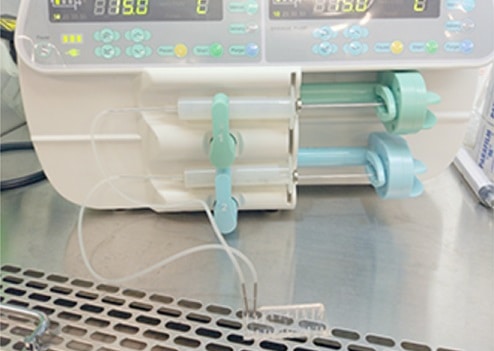
The system used to create the liver-sinusoid-on-a-chip

One of the main reasons that new pharmaceuticals fail clinical trials is the damage they cause to the liver, which metabolizes all drugs ingested into the body. Researchers thus need to develop good in vitro models for evaluating the toxic effects that drugs can have on the liver, known as hepatoxicity. Conventional drug-screening techniques, such as animal testing, are time-consuming and costly, and can also be inaccurate.

A liver-on-a-chip offers an attractive alternative, thanks to its small size, precise architecture, and a controllable biomimetic physiological environment that allows scientists to carry out accelerated bioreactions. A research team led by Wei Sun of Tsinghua University in Shenzhen, China, has now fabricated a new device that more closely mimics the natural physiological environment of the liver, which should enable a more accurate assessment of hepatoxicity (Biofabrication 10 025010).

Close to nature

The new device is designed to replicate the function of liver sinusoids, low-pressure vascular channels that mix oxygenated blood from the hepatic artery with nutrient-rich blood from the portal vein. These channels are flanked by plates of liver cells called hepatocytes, and the region between the endothelial lining of the sinusoid and the hepatocytes is called the “space of Disse”. Plasma from sinusoidal blood can flow almost unimpeded into this space, and the plasma that collects here flows back towards the portal tracts and then into the body’s lymphatic system.

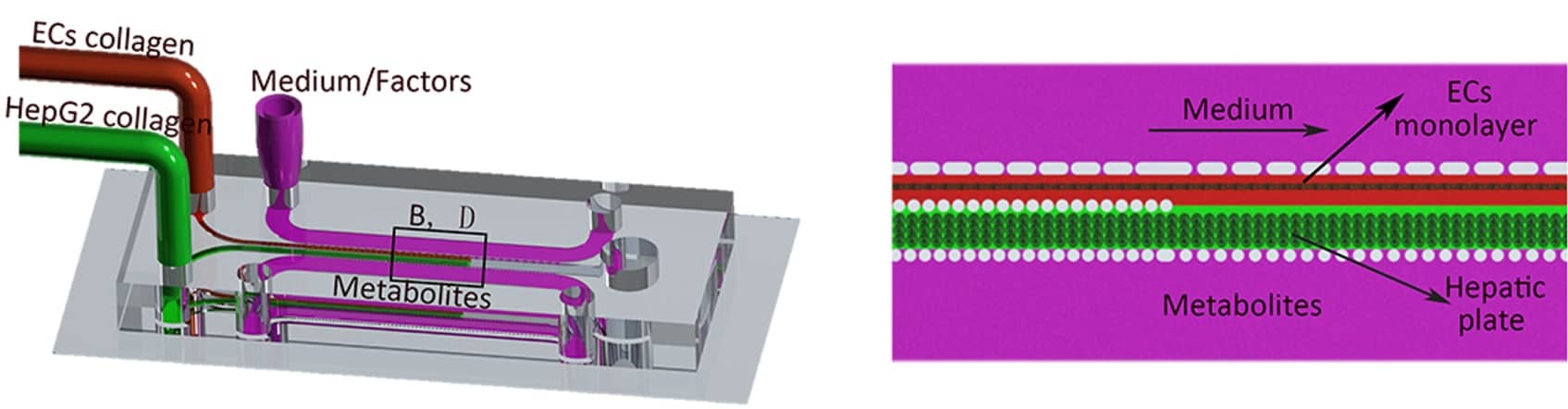
To make their liver-sinusoid model, Sun and colleagues first used standard soft lithography to fabricate a dimethylsiloxane (PDMS) chip with three chambers. Two kinds of natural collagen – one laden with hepatocytes and the other laden with endothelial cells (ECs) – were then simultaneously injected into two of the three chambers. By carefully controlling the flow rate, the researchers were able to form layers of cell-laden collagen with clear boundaries between the two types.

Stimulating self-assembly

“We then injected growth factors into the chamber next to the EC-laden collagen to stimulate the self-assembly of these endothelial cells,” explains team member Shengli Mi. “After roughly two days, the ECs in the collagen formed a monolayer – and this was our liver sinusoid on a chip.”

CreatingDiagram showing the formation of the liver-sinusoid-on-a-chip

Since the team’s model is made of natural collagen, it more closely mimics the biological environment in the human body – in which the collagen degrades slowly over time and is gradually replaced by the collagen produced from cells in the liver sinusoid. “This means that the reactions that occur in our device more closely resemble real biological reactions,” says Mi.

And that’s not all: the team also employed a passive micro-infusion pump rather than a traditional electric one to refresh the medium and to enable continuous nutrition exchange. According to Mi, this yields a cheaper device that’s also capable of high throughputs.

The researchers carried out basic quantitative measurements on the chip, such as cell viability, albumin secretion and urea synthesis, to test out its biomimetic function. “By comparing these functions with those in the presence of different concentrations of a hepatoxic drug like acetaminophen, for example, we could calculate how this drug affects the liver,” Mi told Physics World. “And by setting an allowable cell viability range or functional viability range, we could determine at which dose the drug was safe.”

Studying liver disease

Since cells migrate in the model, it can also be used to analyse the movement of cancer cells to or from the liver – which could help the study of liver diseases such as liver cirrhosis and cancer. The 3D self–assembly described in this study, which is published in the journal Biofabrication, might also come in useful for constructing different kinds of organs-on-a-chip.

The team says that it will now be focusing on designing improved passive pumps for its chip, which would allow longer periods of steady nutrition exchange. “What’s more, we will now also be designing a model with a greater variety of liver cells, such as hepatic satellite cells and Kupffer cells, and a more complex system-on-a-chip with biomimetic laminar structure and function for extended applications,” says Mi.

  • Read our special collection “Frontiers in biofabrication” to learn more about the latest advances in tissue engineering. This article is one of a series of reports highlighting high-impact research published in the IOP Publishing journal Biofabrication.
Copyright © 2026 by IOP Publishing Ltd and individual contributors