Grain boundaries limit heat flow in diamond

Imperfections such as grain boundaries in a material affect how efficiently it can transport heat at the nanoscale. A team of researchers led by Kenneth Goodson at Stanford University has now developed the first experimental technique to visualize local variations in heat flow near individual grain boundaries in polycrystalline diamond and has observed a nearly two-fold reduction in local thermal conductivity in the immediate vicinity of the disordered boundaries. This finding will be important for developing materials that are more efficient at carrying away excess heat in electronic devices.

Unwanted heat is a major problem in electronics, and the issue gets even worse as devices become smaller. It is in fact a major stumbling block to miniaturizing components further. To address this challenge, researchers have suggested that synthetic polycrystalline diamond could be ideal as a next-generation heat-sink material. However, understanding how grain boundaries affect heat flow in this material, is crucial to determining how good it might be for thermal management applications.

“Until now, researchers have studied the relationship between grain structure and heat transport using indirect techniques that average over the effects of thousands of grain boundaries. While useful, these measurements provide little direct information about the nature of heat flow in the immediate proximity of an individual boundary, explains team member and study lead author Aditya Sood. “Our approach, which is based on an ultrafast optical pump-probe technique called time-domain thermoreflectance (TDTR), allows us to measure thermal transport down to the level of single grains.”

Constructing 2D maps of thermal conductivity

“The technique involves using short pulses of light, each lasting about a trillionth of a second, to heat up the surface of a material,” he explains. “As heat leaves the surface, we use a second set of pulses to probe the rate at which temperature decays on the nanosecond timescale. This rate of heat flow can be quantitatively linked to the local thermal conductivity of the underlying material.”

By focusing the laser light to a small spot and raster scanning the sample using a high-precision stage, the researchers say they can construct 2D maps of thermal conductivity. In these experiments, one of the main challenges was to be able to precisely locate the grain boundaries in the material and to make sure that the thermal transport measurements were made at the same location on the sample. Working closely with electron microscopy expert Mark Goorsky of the University of California Los Angeles (UCLA), the researchers did this using a technique called electron backscatter diffraction (EBSD), which produces mosaic images of the local crystalline orientation of each grain.

“A unique feature of our work is that we use both techniques in a correlative manner, which allows us to construct a direct visual link between the local thermal conductivity and the underlying grain structure,” Sood tells nanotechweb.org. “This correspondence has never been visualized before with such clarity.”

Two-fold reduction in the local thermal conductivity

The researchers observed a nearly two-fold reduction in the local thermal conductivity of their sample – boron-doped polycrystalline diamond. “This dramatic suppression of heat flow occurs because of the strong scattering of thermal energy carriers (phonons) at the disordered grain boundaries,” explains Sood. “Interestingly, we detect this lowering in thermal conductivity up to a few microns away from the grain boundary. We believe that this non-local effect stems partly from the transport of heat by phonons with long mean-free-paths – that is, atomic vibrations that transmit thermal energy over large distances without scattering.”

The result could be important for thermal management of electronics devices using materials such as high-conductivity synthetic polycrystalline diamond. “Although the specific details are certainly material-dependent, we have shown that heterogeneities in the underlying microstructure of a material need to be considered when evaluating its performance as a heat-sinking substrate.”

“I believe that this is going to become increasingly important as device dimensions start to become comparable to the intrinsic defect length scales in polycrystalline substrates.”

Looking ahead

“In addition to grain boundaries, the new correlative microscopy approach might also come in handy for studying the interactions of vibrational heat carriers with other types of crystalline defects,” says Sood. These could include dislocations, precipitates and pores. “An important field that could benefit from this is thermoelectrics, in which multi-scale defects are intentionally incorporated into materials to impede thermal conduction. Understanding the underlying physics here will require accurate experimental measurements of heat flow near individual defects, something that a technique like ours might provide.”

The team is now busy working on extending its measurements from 2D to 3D. “Many technologically important materials grow with an anisotropic microstructure, such that heat flows very differently within the plane as compared to across the thickness,” explains Sood. “Constructing a 3D microscopic picture of heat transport would allow thermal engineers to design better materials for heat management and routing.”

The Stanford-led project was funded by the Defense Advanced Research Projects Agency (DARPA). As well as the collaboration with Mark Goorsky’s group at UCLA, the Stanford researchers also worked closely with Samuel Graham and colleagues at Georgia Tech. The research is detailed in Nano Letters DOI: 10.1021/acs.nanolett.8b00534.
Synaptic nanomodules could play a role in memory

Changes in the strength between synapses thought to be linked to memory might be more “digital” than previously thought, according to new work by researchers at Thomas Jefferson University in the US. The unexpected result suggests that synaptic plasticity might work by the addition of small same-size modular units of proteins, dubbed nanomodules, rather than by the synaptic connections simply becoming bigger – as was observed before.

Synapses are the biological junctions between neurons and they transform a voltage spike (action potential) arriving from a pre-synaptic neuron into a discharge of chemical neurotransmitters that are then detected by a post-synaptic neuron. These are then transformed into new spikes, leading to a succession of pulses that either become larger or smaller. This fundamental property of synaptic behaviour is known as short-term plasticity, which is related to a neural network’s ability to learn

Unexpected structural changes in spines

As the network learns, the connections between neurons become stronger and this leads to long-lasting changes in the size of the membranous protrusions, or spines, that protrude from neuronal dendrites. These spines, which nearly touch at the synapse, comprise a long thin neck and a rounder swollen head.

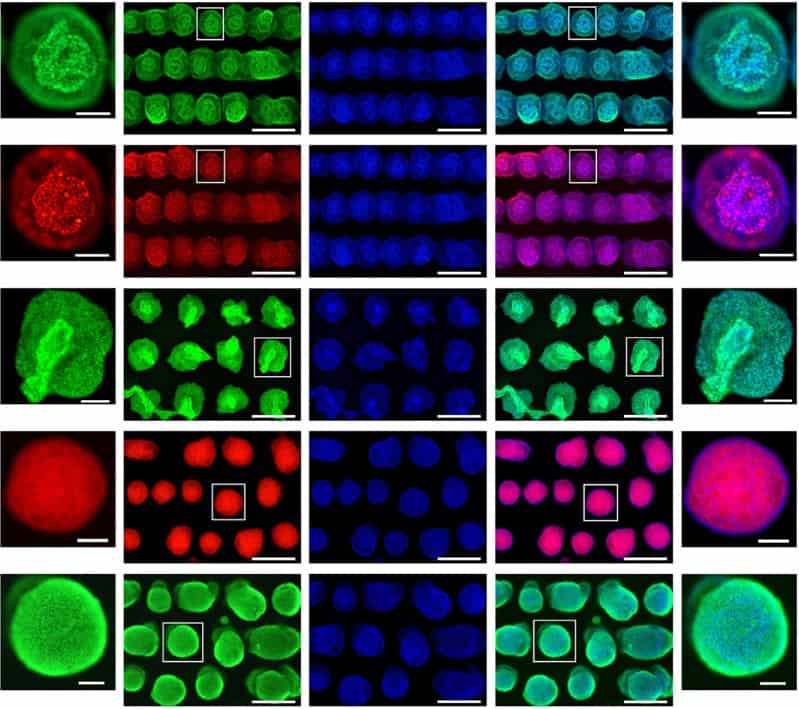
To better understand the molecular changes at play in neurons during learning, researchers led by Matthew Dalva employed a technique called multicolour stimulated emission depletion microscopy (STED) to study the connections between neurons that strengthen. Thanks to their images, the researchers have discovered hitherto unseen structural changes in the spines as they become bigger during learning.

Two and three colour STED

“Our technique relies on two and three colour STED to image how key synaptic proteins are organized on the nanoscale,” explains Dalva. “We were able to combine this approach with confocal imaging to examine the relationship between the morphology, or shape, of the dendritic spines and how the proteins that regulate spine function are organized.”

As well as this work, which was done on fixed cells, the researchers also conducted two-colour STED combined with confocal imaging to visualize what happens at spines in living neurons. “In these experiments, we induced spine plasticity (that is, we made the spine get bigger) and watched how the nanostructures at the synapses changed.”

Nanomodules begin to jiggle and move

Team member Martin Hruska’s experiments revealed that as spines increase in size, they add modular units of synaptic proteins, dubbed nanomodules. “This result suggests that changes in synaptic strength – changes that scientist think are linked to memory – might be more digital than previously thought,” Dalva tells nanotechweb.org. “The finding, which will need to be confirmed in future work, suggests that synaptic plasticity might work by adding small same-size units of proteins rather than the synaptic connections themselves simply scaling up in a linear fashion.”

And that was not all: “we also found that the nanomodules begin to jiggle and move around the synaptic spine, with pre- and post-synaptic connections always in lock step,” says Hruska.

Many new questions to be answered

The research, which is detailed in Nature Neuroscience doi:10.1038/s41593-018-0138-9, raises many interesting questions, adds Dalva. “In this work, we only looked a few different types of synaptic proteins, for instance. Are others also organized in the same way? How are the nanomodules we observed generated, and how do they stay aligned across the synaptic cleft between neurons? And how do the nanomodules increase in number?

“Could this work help us better understand how synapses work? For example, does each nanomodule operate independently or are they somehow functionally linked? These are all key questions we plan to examine next.

“Finally, our observations could also help us better understand the maladaptive learning that occurs in disorders such as addiction or other neurological diseases, in which abnormally strong or weak connections between neurons are thought to be responsible,” he adds. “It is yet difficult to say how the nanomodules behave in disease states, but our work offers a new way to explore those questions.”

Start-ups on show at ESTRO

The ESTRO 37 meeting in Barcelona last week saw over 100 companies exhibiting their products on the show floor. The 5401 m2 exhibition included a corner dedicated to start-up companies. Here, we take a look at the innovation being developed by start-ups Neolys Diagnostics, Medical Precision, PhantomX and NU-RISE.

Radiation therapy just got personal
Lyon-based Neolys Diagnostics is developing decision-making tools that allow radiation oncologists to adapt treatment according to the radiosensitivity of an individual patient. The aim is to reduce treatment side effects while optimizing efficacy.

The toxicity of radiotherapy is dependent upon three factors: the dose delivered to cells, the cell environment (such as the presence of chemotherapeutics) and the radiosensitivity of the patient. “For many years, there have been improvements mostly in the first of these factors, but the individual’s radiosensitivity has been completely forgotten,” explained Gilles Devillers, the company’s president and co-founder. “Still today, 20% of patients receiving radiotherapy have side effects.”

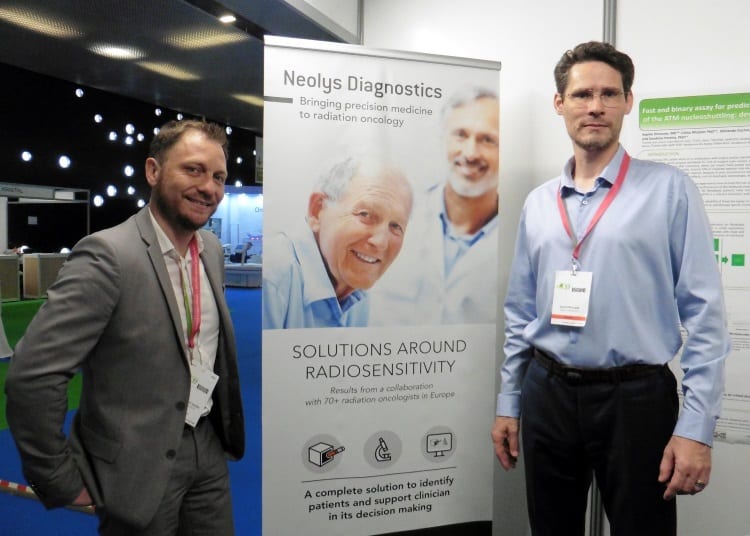
Neolys Diagnostics' Julien Gillet-Daubin and Gilles Devillers

To address this shortfall, Neolys Diagnostics currently offers two test systems. The first, RadioDTect, involves a simple blood test that gives results in 4-5 hours. Designed to be performed for every patient, at the cancer centre, the test identifies whether a patient is at risk of experiencing severe side effects or not. “This test reveals whether a patient is radiosensitive, but it doesn’t show to what extent,” Devillers explained.

To create a detailed map of their level of risk, some patients will require the next step – RadioProfile. This high-performance test involves a small skin biopsy and is performed in Expert Labs partnering with Neolys Diagnostics. Within 2-3 weeks, the test will predict exactly which side-effects a patient will have and at what level.

The tests work by examining DNA repair following radiation-induced double-strand breaks. The number of unrepaired versus repaired breaks (among other markers), identified using immunofluorescence analysis, depend upon the function of the ATM protein in the patient and are a reliable indicator of an individual’s radiosensitivity. This allows estimation of the radiation dose that the patient can tolerate without adverse side effects.

Devillers notes that both tests are CE marked and that seven additional clinical trials are ongoing. In the next phase of development, Neolys Diagnostics is developing a decision support system that helps clinicians choose the most suitable treatment for their patient, providing justification for a particular modality, such as proton therapy, for example, or hypofractionation. “We are going to bring the missing part of the radiotherapy toxicity assessment,” said Devillers.

Reference points without the pain

While radiotherapy delivery techniques have undergone enormous advancements in recent years, the reference points used to guide treatment are still created using tattoos. These are painful for the patient and are commonly injected at depths of 2-3 mm, meaning that they remain forever. This permanence can be particularly distressing for patients with several tattoos in prominent locations, such as breast cancer patients, for example.

Dutch start-up Medical Precision has come up with an alternative. Its MPV-16 system, based on technology developed for permanent make-up, uses a tiny needle to inject pigment into the upper dermis. This painless procedure, where the patient just feels the needle vibration, still creates a highly visible skin mark. Importantly, the mark is not permanent and will disappear six months to a year later – or it can be removed immediately using a laser.

The CE-approved device comes with three colour-coded heads, each offering a different injection depth. The smallest-depth needle, for thin skin, penetrates just 0.2 mm into tissue. For darker or thicker skin, a needle that penetrates 0.4 mm can be used. If a permanent mark is required, a 0.7 mm option is available. Even at this depth, the process is still pain free.

As well as being better for the patient, the shallow depth of the mark also confers greater accuracy for patient positioning. “If a tattoo is too deep, it spreads out under the skin,” explained Annelies Maas, the company’s CEO. “Using a depth of 0.7 mm still creates a small dot that doesn’t grow. The mark stays in place, but can also be removed using a laser.”

Earlier this month, Medical Precision partnered with CIVCO Radiotherapy, who will be the distributors for this innovative marking system.

Copying patients into phantoms

PhantomX, a spin-off from Charité – Universitätsmedizin Berlin, has created a novel 3D printing method that can “copy patients into phantoms”. The idea is to create a phantom with exactly the same radiation attenuation as a patient, enabling realistic simulation of their radiation exposure in CT and radiation therapy.

The phantoms are created using a two-step process. First, CT images of the patient’s anatomy are printed in radiopaque ink on paper, with the CT grayscale used to encode radiation attenuation levels. Then the paper images are stacked into a 3D structure and cut to shape. Following this process, a CT scan of the phantom will be identical to that of the patient.

Paul Jahnke and Tetje Dietrich from PhantomX

One key application is patient-specific radiotherapy quality assurance (QA). Here, a treatment plan is delivered to the phantom on the linac and the resulting dose is measured. The phantoms can also be used to generate realistic CT and X-ray images, to investigate dose and imaging parameters. Finally, they provide a realistic simulation environment for training of medical staff.

According to project leader Paul Jahnke, the phantoms could be used for all patient treatments. They are, however, particularly relevant for treatments of younger patients, secondary tumours, head-and-neck tumours near organs-at-risk, or patients with comorbidities.

Optical probes enable in vivo dosimetry

NU-RISE of Portugal is developing an in vivo dosimetry system based on fibre-optic probes that are placed inside the patient’s body. The probes monitor the level of radiation that the patient is receiving in real time, helping doctors better target the cancer and protecting patients from unnecessary irradiation. The company’s vision is to provide valuable data in real time for clinical decision support, enabling safer and accurate radiation treatments.

“We are working to solve one of radiotherapy’s problems – to know what happens in the patient in real time,” explained Luís Moutinho, NU-RISE’s founder and CEO. “Our system can precisely measure the amount of radiation delivered to a tiny volume, usually where organs-at-risk are, and compare it with the treatment plan.”

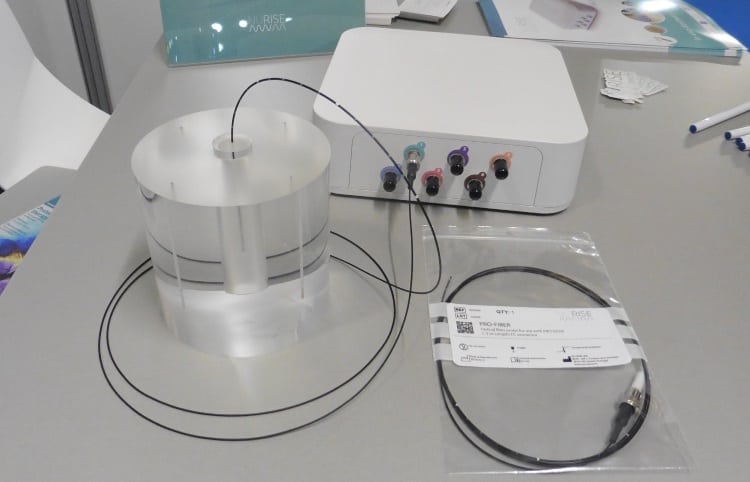
NU-RISE's in vivo dosimetry system

The system uses optical probes, each of which contains at its end a 2 mm section of a material that converts radiation to light. The probes are less than 1 mm in diameter, making them compatible with standard catheters. This makes NU-RISE’s dosimeter a great solution for real-time in vivo dosimetry in brachytherapy, where currently there are no options available. NU-RISE has also developed a novel method to process the resulting optical signal with minimal noise. According to Moutinho, this allows the probes to cost 10-20 times less than other in vivo dosimetry probes.

This lower pricing level enables the probes to be disposable. As such, each probe is provided pre-calibrated, sterilized and bar-coded, such that each fibre can be easily identified via scanning. The system enables up to six probes to be placed and used simultaneously for each treatment.

The company is currently working to CE Mark the device, but the dosimetry system is available for use by NU-RISE’s clinical partnerships and is already being employed in patients. NU-RISE is also looking for new collaborations and applications of its technology.

Physicists explain why clothes do not fall apart

A new twist in our understanding of how fibres hold together in yarn and other spun materials has been revealed by three physicists in the UK. Using statistical physics to study a problem previously contemplated in 1638 by none other than Galileo, the trio has modelled how yarn makes a transition from being a weak material that can be easily pulled apart, to a much stronger material that only breaks when its fibres snap.

Few of us stop to think whether the spun and woven fibres that make our clothes will separate from one another, sparing no blushes as they fall in a heap on the floor. Although it is known that multiple frictional contact points between fibres hold clothes, ropes and yarn together, the mechanics behind why these fibre structures do not slip apart remains unclear.

Tension transfer

Patrick Warren at Unilever, Robin Ball at the University of Warwick and Raymond Goldstein of the University of Cambridge set out to answer this question by focussing on staple yarns. These are made of spun fibres, which are individually about 2-3 cm long and comprise wool, cotton or linen. The hypothesis of their study is that a yarn with few contact points between its fibres will fail by the fibres slipping past each other. However, they postulate, twisting the fibres together provides sufficient contact points so that normal forces acting between pairs of fibres allow tension to be transferred between them. This, they predict, should transform a weak yarn into a much stronger (up to 100-fold) material that can only fail by the fibres snapping.

To provide evidence for their hypothesis, the team translated the textile mechanics problem into an abstract linear programming problem. This involves treating the yarn as a collection of randomly overlapping near-parallel fibres and solving a system of linear inequalities representing the set of tensions in each of the fibre elements.

As a quantity representing the average tension transfer between fibres grew, the researchers witnessed a transition appear in their model, where the inequalities went from being unsatisfied to satisfied. In terms of the yarn, this represents the hypothesized transition from the fibres being free to slip, to a state in which the fibres are collectively locked together by friction, “The mechanical integrity reflects a genuine, and generic, phase transition in terms of a collective friction locking mechanism in fibre assemblies,” summarizes Goldstein.

Industry experience

Further statistical analysis revealed that this transition is smooth and depends on a combination of friction coefficient and turning angle per contact – where the turning angle is the number of twists in a fibre and a contact is a location where fibres are pinned together by friction. This provides a theoretical footing for what industry experience had shown – that yarn lubrication (which reduces the friction coefficient) and spinning (which increases the turning angle) are key “make or break” factors in the manufacturing process.

Although various approaches have been taken in the past that attempt to work-out how fibrous textile materials become so strong, Goldstein believes their statistical physics abstract model is “a novel application of linear programming, which could be transferrable to other situations involving static friction”. An important application could be the study of how stress is transmitted in granular materials – which could provide insight into everyday phenomena such as the behaviour of sand in piles and grain in silos.

Ning Pan of the University of California, Davis describes the research as a “fresh characterization” that applies new tools like percolation theory and linear programming to a long-standing problem. However, he also urges caution in how the work is interpreted “The abstract model is highly simplified and ‘unorthodox’, so it would be hard for future research to build on.”

The research is described in Physical Review Letters.

Penguin physics, talking about diversity issues, millionth passenger tours exoplanets

In case you missed it, Wednesday was World Penguin Day and here at Physics World we love a good story about the antipodean birds. In “Penguin physics” the University of Bristol polymer physicist Peter Barham describes how he got involved in designing flipper bands that are used to study the behaviour of penguins. He gives a taste of his work in the above video.

Recently, we wrote about how a colony of nesting king penguins resembles a liquid that has been cooled suddenly to form a glass-like structure. Indeed, the physicists who did that research have an upcoming paper about phase transitions in emperor penguin colonies – so stay tuned for more.

LGBT+ survey

Our colleague Angela Townsend, who co-ordinates the diversity programme at the Institute of Physics, e-mailed us this week with details of a fascinating interview with David Smith from the University of York in Chemical and Engineering News. Smith’s a chemist who’s into supramolecular and nanoscale chemistry, which isn’t physics, but is close enough not to give anyone on this website a fright. Townsend and Smith have worked closely on the recently formed LGBT+ Physical Sciences Network, which is currently carrying out a survey into the “working, teaching and studying climate” for LGBT+ physicists, chemists and astronomers in the UK (closing date: 30 April).

In the interview, Smith describes his own story of how he came out as a gay chemist and how, when he began his research career in the early 1990s, he knew no other gay chemists at all. And despite Smith not finding it easy talking about diversity issues, he thinks it’s important to do so. “PhD students and postdocs in particular imagine you have to tread this cookie-cutter path to get to where you’re going,” he says. “And I think a lot of people hiring academics think the same. Anything you can do to break down that view is very powerful.”

Since it was published in September 2017, the above video from the UK’s University of Exeter and We the Curious in Bristol has attracted more than one million views. Described as a “Stunning virtual tour of exoplanets“, the virtual-reality video takes you to six different exoplanets and also contains a good dose of astrophysics.

We the Curious is a hands-on science exhibition centre. Its creative director Anna Starkey was featured in our “Once a physicist” careers column, which charts the careers of physicists working in far-flung fields.

Hopes rise for some coral survival

Researchers have raised hopes that limited coral survival may be possible, allowing one of the world’s best-known reefs to survive a little longer.

Although corals are highly sensitive to ocean warming, and notoriously bleach when temperatures exceed a certain limit, a new study has shown that at least one coral can evolve tolerance to excessive temperatures.

The implication is that even though other teams have repeatedly warned that the world’s reefs are in peril as the world warms because of ever-greater ratios of greenhouse gases in the atmosphere, as a consequence of human combustion of fossil fuels at a profligate rate, the world’s great reefs may survive for perhaps another century, rather than perish within the next 50 years.

“It means these corals will still go extinct if we do nothing,” said Misha Matz, of the University of Texas at Austin, who led the study. “But it also means we have a chance to save them. It buys us time to actually do something about global warming, which is the main problem.”

The argument is based on Darwinian logic: coral colonies produce colossal numbers of larvae each year, set adrift on ocean currents to colonise new reefs. As conditions change, those corals that by an accident of genetic inheritance have the traits needed to cope with environmental challenge will get a foothold, and flourish. Those that don’t will fade out. Natural selection will respond.

And this is hopeful news, if only because the world’s reefs are under threat as never before. Bleaching – the response to heat in which coral rejects the algae with which it normally lives in symbiosis – has always happened: research earlier this year suggests it could become five times more frequent, and reefs such as Australia’s Great Barrier would have no time to recover.

Some reefs have already been pronounced too damaged ever to be restored. This is bad news not just for the coral animals: the tropical reefs are just about the richest habitats on the planet, and of profound economic importance to humans too.

A partnership of US and Australian scientists reports in the Public Library of Science journal PLOS Genetics that computer simulation models and genetic evidence of variation from one species of staghorn coral, called Acropora millepora, together show that the coral could in theory adapt over a stretch of 20 to 50 generations.

“This genetic variation is like fuel for natural selection,” Dr Matz said. “If there is enough of it, evolution can be remarkably fast, because all it needs to do is reshuffle the existing variants between the populations.

“It doesn’t have to wait for a new mutation to appear; it’s already there. The problem is, when the genetic variation is exhausted, it is over and the future is unclear.”

Tentative conclusions

There are problems with such studies. This one is based on genetic evidence from one species of coral. But the 2,300 km Great Barrier Reef of Australia is home to at least 411 species of hard coral. It is based on a mathematical model, not on observed change in the reefs.

And global warming is not the only challenge to coral reefs, which are also threatened by human exploitation, pollution and increasing acidification of the surrounding seas, again as a consequence of ever higher levels of carbon dioxide in the atmosphere.

“Corals live in a symbiotic relationship with zooxanthellae, which are plant-like cells hosted in surface tissues that provide up to 90% of the energy to the colony,” said Stephen Simpson, a marine biologist at the University of Exeter in the UK, commenting on the study.

“Whether there is also sufficient genotypic variation in the zooxanthellae to tolerate further warming remains to be seen. While the fact that one species may do well is good news, there are many other reef organisms that may fare far worse, so it is easy to envisage a future with a few winners but many losers, threatening the functional integrity of reef ecosystems.”– Climate News Network

Laser bioprints stem cells

Researchers in Germany have succeeded in laser printing a special type of stem cell – so-called human-induced pluripotent stem cells (hiPSCs) – for the first time. These hiPSCs are prized for their ability to be differentiated into any type of human cell, a property called pluripotency, plus they can be generated from a patient’s own cells to avoid the risk of an immune response when they are implanted back into the body.

As a result, many scientists believe that printed hiPSCs offer the best option yet for making replacement organs or organ-on-chip systems for personalized drug testing. The problem is that these cells are notoriously fragile and difficult to handle, especially when dissociated into single cells.

Laser printing of stem cells

“Dissociation is required for printing these cells in high resolution patterns, but it induces programmed cell death (although this can be delayed by adding specific culture medium supplements),” explains Lothar Koch of Laser Zentrum Hannover, lead author of the study published in Biofabrication. “They are thus difficult to print with established techniques such as extrusion, ink-jet printing, acoustic droplet ejection techniques, laser-guided direct write, and laser bioprinting.”

What’s more, continues Koch, the cells’ pluripotency and directed differentiation are affected by environmental factors, such as the composition of the culture media in which they are grown and the bioinks used to print them. They are also sensitive to mechanical forces, such as the shear stresses that can occur during bioprinting processes.

The new laser printing technique developed by Koch and colleagues exploits laser pulses to expel tiny droplets of a bioink containing suspended hiPSCs from a thin layer of bioink deposited on a glass slide. “The main difference with previous approaches, such as extrusion or ink-jet printing, is the absence of a nozzle,” says Koch. “Although this makes preparation and application of the bioink more complex, it does mean that we avoid the high shear forces that usually occur in small nozzles.”

Any 2D pattern and 3D layer-by-layer patterns

The technique combines small droplet printing, down to a few picolitre volumes, with high-viscosity bioink printing and high cell densities of up to 108 cells per millilitre. “Each of these points can be achieved with other printing techniques too, but not in combination,” adds Koch.

The laser bioprinting set-up comprises the laser and two glass slides. “We coat the top slide with a thin layer of laser-absorbing materials,” says Koch. “This might be a biocompatible metal such as gold or titanium, or a polymer such as triazene or polyamide, or even a hydrogel like gelatine. Then, we deposit the biomaterial to be printed – usually a cell-containing sol – as a second layer on top of the absorption layer.”

The coated glass slide is mounted upside-down above a second slide, and 10 ns laser pulses are then focused through the upper slide into the absorption layer. “This causes a vapour bubble to expand and propel a small volume of the biomaterial towards the lower glass slide,” explains Koch. “By moving the laser and the glass slides, we can print any 2D pattern and also generate 3D layer-by-layer patterns. It is also possible to put substrates or scaffolds on the lower glass slide and print the biomaterial directly onto the substrate or scaffold.”

Survival rate of nearly 100%

Koch told Physics World that all the cell types tested in these experiments survived this printing procedure, with a survival rate of nearly 100%. The technique also retains the pluripotency of the cells, and allows them to be printed into highly controlled patterns to generate functional tissue substitutes.

The researchers tested a variety of hydrogels as bioinks and culture substrates for printing, and found that fibrinogen, blood plasma, Matrigel and hyaluronic acid were particularly suitable. “Hyaluronic acid is naturally found in the human body; it is generated in the early stage of embryogenesis and is abundantly found in stem cell niche environments,” explains Koch. “It enhances the proliferation of stem cells and supports pluripotency too. It is also good for the laser-printing process and allows us to fine tune the bioink’s viscosity.”

While Koch believes that hiPSCs are the most promising types of cells for printing tissue or organs, he highlights the need to investigate the process in more detail. “An important question we must ask ourselves is: which stage of differentiation is the optimal one for printing? To answer this, we need to investigate the printability of hiPSCs in all possible stages of differentiation.”

The team, says that it will now be developing a more advanced bioink to print more complex 3D structures. “Another interesting application for printed hiPSCs is to use them to generate cell constructs that mimic embryoid bodies for modelling human development or investigating diseases,” says Koch. “We will be looking to print such embryonal organoid models with our technique.”

  • Read our special collection “Frontiers in biofabrication” to learn more about the latest advances in tissue engineering. This article is one of a series of reports highlighting high-impact research published in the IOP Publishing journal Biofabrication.

Functional MRI scans could help identify brain disorders

AuntMinnie logoUsing functional connectivity MRI (fcMRI) scans to show how various brain networks interact and activate to perform basic daily tasks may someday help diagnose abnormalities in people with brain disorders, according to a study published April 18 in Neuron.

While the findings are preliminary, researchers from Washington University in St. Louis are hopeful that the approach could provide insight into variations in cognitive ability and personality traits, as well as brain dysfunction.

For the study, nine researchers took turns undergoing a variety of MRI scans late at night, dubbing their group the Midnight Scan Club, according to a release from the university. During the scans, each person performed tasks related to vision, memory, reading or motor skills, or the person rested quietly. The group then analysed data from more than 10 hours of fcMRI scans and 10 separate one-hour sessions performed on each person (Neuron 98 439-452.e5).

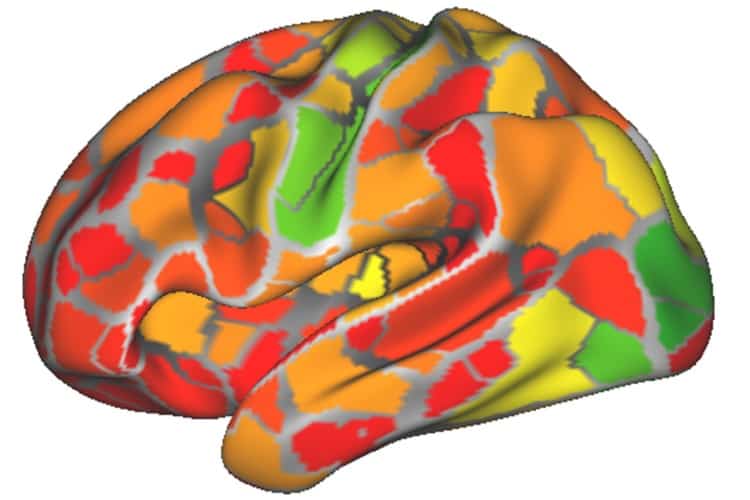
A heat map using data from nine brain networks

From the data, first author Caterina Gratton created a dynamic functional connectivity map of the brain’s outer surface and activity changes in 333 regions over time. The goal was to identify areas that became active and inactive in unison. Network maps were also created for each individual, showing patterns of correlation between parts of the brain.

The vast amount of data for each person allowed Gratton to determine how much an individual’s brain networks changed from day to day based on different mental tasks. The conclusion: There is very little change at all.

“Whether someone’s watching a movie or thinking about their breakfast or moving their hands makes only a small difference,” she said in the release.

That consistency actually makes fcMRI a promising diagnostic tool to identify brain disorders and diseases. While the technique’s potential was noted years ago, fcMRI-based diagnostic tests have not become part of the clinical routine because clinicians cannot tell which scans reflect fundamental, stable features of the brain or if the brain changes with every passing thought.

More data are needed before researchers can accurately determine the difference between normal variation in brain activity and a disorder or abnormal activity.

“The individual differences were really easy to pick up, even in a population that is really very similar,” Gratton said. “It is exciting to think that these individual differences may be related to personality, cognitive ability, or psychiatric or neurological disease. Thanks to this work, we know we have a reliable tool to study these possibilities.”

  • This article was originally published on AuntMinnie.com.
    © 2018 by AuntMinnie.com. Any copying, republication or redistribution of AuntMinnie.com content is expressly prohibited without the prior written consent of AuntMinnie.com.

Early universe simulated in a cloud of ultracold atoms

The early universe has been mimicked in the lab using a ring-shaped Bose-Einstein condensate (BEC) of ultracold atoms. Gretchen Campbell, Stephen Eckel and colleagues at the Joint Quantum Institute at the University of Maryland expanded the size of their ultracold atomic cloud at supersonic speed and observed several effects believed to be associated with the inflationary epoch of the early universe. This epoch is thought to have occurred less than 10–32 s second after the Big Bang when the universe expanded at an exponential rate.

Bose–Einstein condensates (BECs) are formed when identical atoms with integer spin are cooled until all the atoms are in the same low-energy quantum state. This means that a BEC comprising tens of thousands of atoms behaves as a single quantum entity. A BEC can be thought of as a vacuum state for phonons, which are quanta of vibrational mechanical energy. The team used this phonon vacuum as an analogy for the quantum field vacuum in the early universe.

In one experiment, the researchers introduced a sound wave onto their cloud to see how it evolved during expansion. The phonon wavelength increases (or redshifts) as the expansion occurs, thereby providing an analogy with how photons redshift in an expanding universe. They also saw that the amplitude of the wave decreases during expansion. The team has made a tentative connection between this effect and a strange cosmological damping phenomenon called “Hubble friction”.

End of an epoch

In another test, the team expanded the BEC with no sound waves, and watched it stabilize after it reached its maximum radius, a state analogous to the end of the universe’s inflationary epoch. Here, energy that had been powering inflation quickly translated into unstable BEC solitons and vortices, producing phonons.

“We see the creation of excitations in a way that is reminiscent of preheating and reheating in the early universe,” explain Campbell and Eckel. “After inflation, all of the energy in the universe was presumably contained within a quantum field that drove inflation called the ‘inflaton’. That field decayed, depositing its energy into lower mass particles causing the universe to heat up (hence, the term reheating).”

The team is now working to improve their expanding ring BEC model to better observe the damping they associate with Hubble friction. Looking future ahead, the physicists hope to generate correlated pairs of sound waves that mimic Hawking radiation from black holes.  They also hope to simulate cosmological horizons by creating casually-disconnected regions in a condensate.

“Beautifully executed”

Although unconvinced by the connection with preheating and reheating, Silke Weinfurtner of the University of Nottingham thinks the experiments are “beautifully executed” and “a significant step forward in carrying out table-top analogue gravity experiments”. “Overall, analogue gravity cosmology experiments allow us to test some of the fascinating physics in a controlled laboratory setting,” she adds.

Yet as with other analogue cosmology experiments, the key test will be if the researchers uncover new physics or confirm new cosmological theories: “We have already learned a lot from cosmology, but it’s not yet clear if we will in turn guide cosmology,” note Campbell and Eckel. “Our hope is that our system could provide a testbed where we could actually study new models and see what happens.”

The research is described in Physical Review X.


Funnelling charges to boost solar-cell efficiency

Funnels are efficient tools for channelling liquids into containers with narrow openings. Now, researchers in Exeter have demonstrated the first funnel for electrical charges on a chip. The discovery builds on the ability to oxidize the atomically thin semiconductor, hafnium disulphide (HfS2), with a high-intensity UV laser. The non-uniform strain between oxidized and non-oxidized regions, and the subsequent band-gap modulation, generates electric fields, which effectively funnel the charges in the semiconductor flakes to areas where they can be more easily collected. This concept could enable a new generation of solar cells with 60% efficiency (currently around 21%), thanks to the increased efficiency in collecting photo-excited charges and the potential for hot-carrier extraction.

Intense laser light means oxidation, oxidation means strain

In general, bulk semiconductors can only sustain strains up to 0.4% before breaking. However, a layer of semiconductor that is only a few atoms thick can support strains of up to 25%. This amount of strain changes the band gap in the energy dispersion by up to 1 eV.

In this work, Saverio Russo and his group at the University of Exeter, induce the strain in the HfS2 using a 375 nm laser to remove sulphur atoms, which are then replaced by oxygen atoms. According to calculations performed using density functional theory, the hafnium atoms have different separations in HfS2 and HfO2. This produces a 2.7% strain at the boundary between the oxidized and non-oxidized regions. Electrical contacts anchor the material to a substrate, so a strain gradient is present across the whole flake, shifting asymmetrically the conduction and valence bands to higher energies, and opening the band gap by 30 meV.

Collecting the funnelled charges

Another key to making a useful charge funnel is ensuring that the charges will move towards an area where they are more easily extracted. In most direct semiconductors (such as GaAs), the funnelling effect pushes charges towards the strained region. By using HfS2, which is an indirect semiconductor, the charges were pushed away from the strained region, towards the electrodes at the edge of the flake, as observed in inverse charge funnelling.

To test the inverse charge funnelling, a field effect transistor was made using a flake of patterned HfS2/HfO2. The researchers used a laser to excite charges in the flake and scanning photocurrent microscopy to measure the current from these charges. Comparing the same device before and after a small area was oxidized, they measured a 350% increase in response in a region near the interface between HfS2 and HfO2. Their theoretical calculations of the system supported the results, and also revealed that the charge carriers had an increased lifetime of around four orders of magnitude – another indicator of the charge funnelling effect.

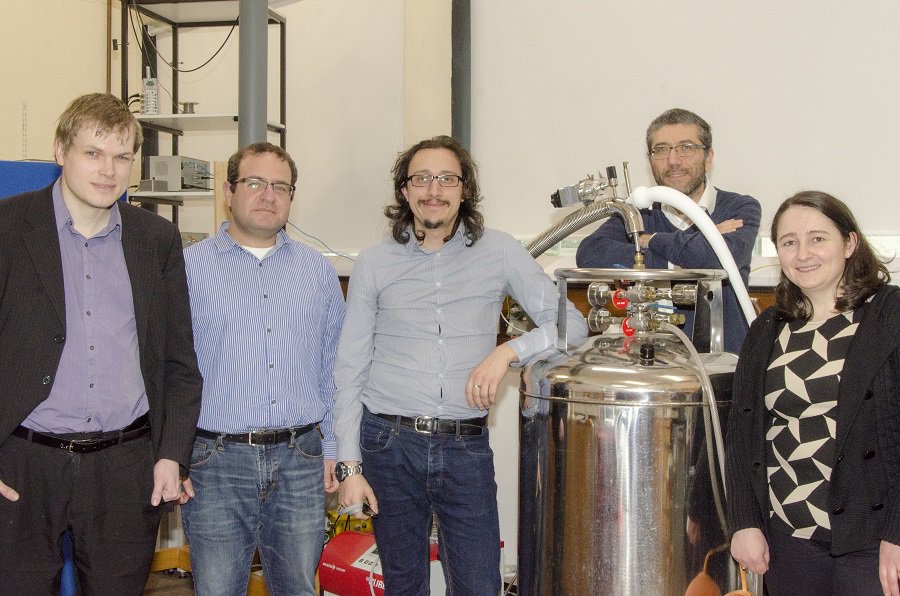
The team from the Quantum Systems and Nanomaterials group at the University of Exeter

Looking to the future

So how can this new phenomenon be implemented in future technologies, and what benefits will this lead to? Lead author, Adolfo De Sanctis, had this to say: “The electrical measurement of the charge funnelling effect could be revolutionary for photovoltaic devices. Two-dimensional semiconductors are truly unique when it comes to strain, and they offer the best platform for future ‘straintronic’ devices. The next steps will be to implement this technique on a larger scale, optimize the strain gradients, and study other materials in order to demonstrate the feasibility for photovoltaic solar energy conversion.”

Read the full article in Nature Communications.

Copyright © 2026 by IOP Publishing Ltd and individual contributors