A new experiment has revealed how sheared granular materials emit sound waves that evolve in characteristic patterns as grains suddenly slip and rearrange themselves. The research, carried out by Ted Brzinski and Karen Daniels at North Carolina State University, could improve our ability to forecast natural disasters by monitoring the sounds emitted by granular materials in nature.
When granular materials experience shear forces – such as when tectonic plates rub against each other, or as the weight of snow on a steep slope acts against friction – the microscopically-vibrating grains will initially stick to the interface as stress builds in the material. When the stress becomes too high for the overall system to cope, many grains will slip at once; suddenly rearranging themselves into different patterns. During this stick-slip transition, grains develop low-frequency vibrational modes as stress is suddenly dissipated. The presence of these modes can be detected in the form of sound waves that are emitted at the material interface.
In a recent experiment, Daniels studied this effect by firing sound waves into granular materials and measuring how they changed as the sound had passed through. The study successfully documented how acoustic waves evolve in a characteristic pattern shortly before grains underwent stick-slip transitions. However, Daniels realized that manipulating the material directly made the technique somewhat invasive.
Rotating wall
In this latest study, she and Brzinski devised a way to observe the signals passively. To do this, the researchers created an annular chamber, with an inner wall that rotated once per hour, and a static outer wall. The space in between was filled with a single layer of 8000 small plastic disks, packed together as closely as possible to replicate a granular material. The disks resisted the rotation of the inner wall, which generated shear forces in the overall system. When stick-slip transitions eventually occurred, the disks rearranged themselves rapidly in about 0.5 s in a process that repeated roughly once every minute. The sounds produced by the events were then picked up by sensors embedded in the outer wall.
As stress built up in the system, the sensor data revealed that individual disks vibrated in a narrow range of modes. This resulted in the generation of a spectrum of sound waves with similar frequencies, which did not evolve significantly over time. However, in the moments shortly before each slip, the frequency distribution of the disks’ vibrational modes began to broaden, while the average frequency increased gradually. After each slip, this average frequency dropped rapidly, and the distribution narrowed once again.
The researchers believe that the evolution they observed in the frequency distribution is characteristic enough to be useful for predicting slips in natural materials. Using sensors to measure changes in the sounds emitted at sites of potential avalanches, landslides or volcanic eruptions, it could become easier to predict when natural disasters are more likely to occur. Systems for predicting earthquakes would be a particularly useful application, although the researchers realise that they could still be a long way off. In the future, Brzinski and Daniels aim to collaborate with seismologists, which could allow them to develop some of the most sophisticated detection technology yet produced.
Magnetic detection and manipulation of cells is attractive for numerous biomedical applications, and so scientists have been eager to discover how many types of fish, amphibians, mammals and birds can sense changes in the earth’s magnetic field. Some theories claim that this “magnetoreception” is driven by biomagnetic structures – but these have yet to be found. Taking a complementary approach, a team of researchers led by Gil Westmeyer at the Technical University of Munich and Helmholtz Zentrum München have bioengineered a magnetoresponsive system using bacterial components (Nature Comm.9 1990).
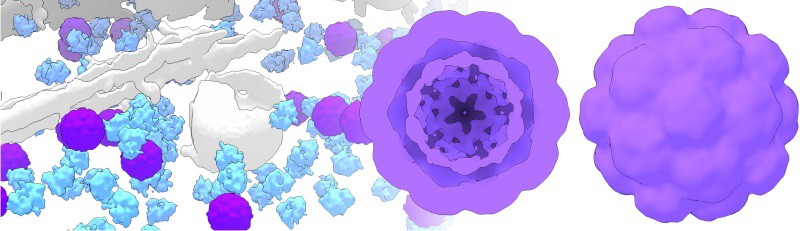
The researchers expressed bacterial shell proteins called encapsulins within mammalian cells and showed that they self-assemble into enclosed nanospheres that can accumulate substantial amounts of iron in their interior. The researchers were thus able to magnetically sort and separate the cells containing iron-rich nanospheres from non-magnetic cells, and use them to generate contrast in MRI and act as a genetic marker for electron microscopy.
In addition to applications with iron-accumulating nanocapsules, Westmeyer’s team explored the encapsulation of different types of cargo, such as enzymes, turning the nanospheres into mini bioengineering “workshops” within eukaryotic cells. “This method to genetically control compartmentalization of multi-component processes will be quite useful as a general tool for mammalian cell engineering,” says Westmeyer.
Building an iron accumulation chamber
Firstly, the researchers modified encapsulin genes from the bacterium Myxococcus xanthus and added them into a mammalian cell line, forcing expression of the nanospheres. A variety of identifying tags were added to the encapsulin shell protein (EncA) and its native cargo proteins so that the expression, self-assembly and cargo loading could be verified in in vitro assays. They also employed cell viability assays and showed encapsulins to be non-toxic.
Next, the researchers moved encapsulins in vivo, encoding them in adeno-associated viruses that they intracranially injected into mice. The nanospheres were robustly expressed and assembled in neurons, and again showed no toxic effects.
Native encapsulin cargo proteins EncB and C have iron storage capabilities, and when expressed with EncA, were able to accumulate and shield iron within the nanospheres from the metabolic processes occurring within the cytosol of a mammalian cell.
Magnetic genetics
By creating these iron accumulation chambers within mammalian cells, the researchers were able to significantly enhance the MRI contrast of cells, and Westmeyer hopes that, in the future, iron loaded encapsulins could possibly be used for deep-tissue molecular imaging and manipulation. For instance, optogenetics is a technique that uses light to control molecular processes in living animals; the drawback is that light does not travel well through tissue. Magnetic fields, on the other hand, could be used for molecular manipulation deeper in tissue. “With encapsulins we have started to obtain sufficiently magnetic handles that are genetically controlled,” Westmeyer explains.
The researchers also demonstrated that encapsulins could be used as a genetic marker in electron microscopy. Chemical reagents are often used to obtain contrast from molecular signals in electron microscopy, but the process of delivering these reagents can disrupt intracellular structures and complicates more high-throughput applications.
Artistic modification of cryo-electron microscopy data. (Courtesy: Philipp Erdmann)
“Encapsulins possess a well-defined structure that is clearly discernible in cryo-electron microscopy, and when they accumulate iron they exhibit additional contrast without extra preparative steps involving synthetic compounds,” says Westmeyer. As a direct, fully genetically encoded reporter, Westmeyer hopes encapsulins could generate similar value for electron microscopy as green fluorescent protein and its powerful variants delivered for fluorescent microscopy.
A workshop for bioengineering
In this study, the researchers also showcased the encapsulation of other, non-native proteins into the nanospheres. By simply adding an eight amino acid targeting tag, they were able to isolate specific enzyme reactions within the nanospheres, recruiting small reactants through pores in the shell but shielding enzymes and products from the cell’s complex metabolic processes.
Mammalian cell engineering is often confounded by the complexity of molecular processes, but Westmeyer thinks that the capability to contain reactions within encapsulins and prevent interference from other cellular processes will help the field to advance.
“The 32 nm nanospheres are tiny workshops, subspaces where we control which molecular players act on the inside… and things can be quite different from the office next door (the cytosol),” says Westmeyer. “Our next steps will be to exploit the modularity of these genetically controlled compartments to install more interesting functionalities into mammalian cells.”
Climate change is expected to displace millions of people through impacts like sea level rise, crop failures, and more frequent extreme weather. Yet scientists still cannot predict where these expected climate-induced migrants are likely to go in the coming decades.
A new study, published today in Environmental Research Letters, seeks to address this need by incorporating climate impacts into a universal model of human mobility.
To demonstrate the efficacy of the new approach, the study focused on the case of sea level rise (SLR) and human migration in Bangladesh, where the authors estimate that more than two million Bangladeshis may be displaced from their homes by 2100 because of rising sea levels alone.
The study, led by Columbia University, New York, used a probabilistic model combined with population, geographic, and climatic data to predict the sources, destinations, and flux of potential migrants caused by sea level rise.
Lead author Dr Kyle Davis, from Columbia University, explained: “More than 40 per cent of Bangladesh’s population is especially vulnerable to future sea level rise, as they live in low-lying areas that are often exposed to extreme natural events.
“However, SLR is a very different type of migration driver from short-lived natural hazards, in that it will make certain areas permanently uninhabitable.”
The team’s results using Representative Concentration Pathway (RCP) scenarios showed that mean SLR will cause population displacements in 33 per cent of Bangladesh’s districts, and 53 per cent under more intensive conditions. By mid-century, they estimated nearly 900,000 people are likely to migrate because of direct inundation from mean SLR alone.
Under the most extreme scenario, of up to 2 metre mean SLR, the number of migrants driven by direct inundation could rise to as many as 2.1 million people by the year 2100. For all RCP scenarios, five districts – Barisal, Chandpur, Munshiganj, Narayanganj, and Shariatpur – are the source for 59 per cent of all migrants.
Their analysis considered mean SLR without normal high tides, so the results – both in terms of inundated area and displaced population – are conservative.
The researchers also estimated the extra jobs, housing and food needed to accommodate these migrants at their destinations. They found that to cope with the numbers likely to be displaced by 2050, 600,000 additional jobs, 200,000 residences and 784 billion food calories will be needed.
These results have clear implications for the places that are likely to receive incoming migrants.
Davis said: “SLR migrants are unlikely to search far for an attractive place to move to, and the destination will generally be a trade-off between employment opportunities, its distance from the migrants’ origin, and how vulnerable it is to SLR itself.
“We found that the city of Dhaka was consistently favoured, coming out as the top destination in all scenarios. This means the city will need to prepare for the largest number of migrants, which may compound the area’s already rapid urban growth.”
The study also identified other risks from SLR, most notably on livelihoods and food security.
Davis explained: “Inundation by the sea, and the out-migration it causes, will have significant effects on agriculture and aquaculture. For instance, 1000 km2 of Bangladesh’s cultivated land could be underwater by the end of the century, with an even larger area made unusable by saltwater intrusion. Given that 48 per cent of the labour force works in agriculture, the impact of this would be keenly felt in terms of jobs and food security.
“Similarly, a great deal of the country’s coastal aquaculture is vulnerable to climate change impacts, and this will probably have important nutritional and economic consequences, given that 58 per cent of animal protein in the Bangladeshi diet comes from seafood, and the country is the world’s fifth largest aquaculture producer.
“Ultimately, we hope that the modelling tool we have developed can be used by researchers and planners to accurately predict the relocation of climate-induced migrants, and to enable the development of political and economic strategies to face the challenge.”
To say that I eagerly anticipated the arrival of my review copy of Jean Bricmont’s latest book would be an understatement approaching “we physicists have maybe got one or two loose ends to tie up when it comes to interpreting quantum mechanics” proportions. Bricmont – theoretical physicist, philosopher and emeritus professor at the Université catholique de Louvain – became, along with his co-author Alan Sokal, the scourge of postmodernists far and wide following the publication of Fashionable Nonsense: Postmodern Intellectuals’ Abuse of Science back in the 1990s. I thoroughly enjoyed Fashionable Nonsense, and with Bricmont’s latest book – titled Quantum Sense and Nonsense – was looking forward to a characteristically clear-headed analysis of the myriad interpretations of quantum mechanics that are now used and abused by physicists and non-physicists alike.
As a veteran of the so-called “science wars” that formed the backdrop to Fashionable Nonsense, where scientific realists were pitted against those who dismissed science’s claims to objective “truth” (however that might be defined), Bricmont is better equipped than most to expose the signature excesses of the worst of the “woo” surrounding quantum physics out there. And for those of you not aware of just how bad it can get, here’s Deepak Chopra – author, public speaker, widely lauded New Age guru (3.34 million Twitter followers and counting) and proponent of, um, quantum healing – on what quantum physics can do for you: “Viewing your body from the perspective of quantum physics opens up new modes of understanding and experiencing the body and its ageing. The practical essence of this new understanding is that human beings can reverse their ageing.” Or how about this gem? “Quantum healing involves a shift in the fields of energy information, so as to bring about a correction in an idea that has gone wrong.”
As I like to put it during the Skeptics in the Pub and Café Scientifique talks where I “critique” Chopra’s clueless take on the subject, his writings remind me of that classic 1970s Morecambe and Wise sketch with André Previn – “All the right words, just not necessarily in the right order.” To be fair to Chopra, at least he hasn’t quite plumbed the depths of claiming that lobsters hold the secret to life, the universe and everything. We can instead thank the latest kid on the self-help guru block, University of Toronto psychologist and author of 12 Rules For Life, Jordan B Peterson, for this insight into our crustacean kin. Peterson has also had very Chopra-esque things to say about quantum mechanics, but that’s a whole other story. As is the expanding “quantum life coaching” industry. Yes, you read that right.
If, like me, you were expecting Quantum Sense and Nonsense to be a take on quantum woo that echoes the style and approach of Fashionable Nonsense, then you may be slightly disappointed with Bricmont’s new book. That’s not to say that it isn’t an important, informative and at times engaging read. But it’s a book that falls between two camps. Indeed, one might even suggest that it exists in a superposition of states. It opens by stating, laudably, that “although this book belongs to the ‘popular physics’ category, its main purpose is cultural rather than scientific. We shall try to explain to the lay reader the basic principles of quantum theory”. But Bricmont also simultaneously wants to do justice to the many complexities and intricacies of the subject with the type of diligence we’d expect of a theoretical physicist of his standing. This leads to a rather disjointed and difficult read at times – a lot is asked of a reader who’s familiar with the subject matter, let alone a lay audience.
I agree with Bricmont that we physicists must shoulder a portion of the blame for fuelling the rise of woo
Moreover, while I agree entirely with Bricmont that we physicists must shoulder a fair portion of the blame for fuelling the rise of woo by making excitable and ill-advised pronouncements over the years about the nature of quantum mechanics (particularly with regard to the role of consciousness, the observer and that confounded cat), I would have preferred a slightly more up-front rebuttal of the more egregious pop-sci claims out there. As it is, chapter 11, titled “The cultural impact of quantum mechanics”, feels somewhat tacked on, piecemeal, and not as integrated as one might expect given the opening statements regarding the rationale for the book.
In this context, it was also rather surprising that the exceptionally important topic of decoherence – the suppression of the interference effects that are the very essence of quantum “weirdness” – is relegated to a throwaway footnote buried in the middle of the book. The scrambling of phase coherence due to interactions with the environment is now seen by most physicists as key to explaining how the big, bad classical world (and all its attendant myths, mysticism and misinformed gurus) emerges from the quantum. Decoherence thus plays a central role in disentangling quantum sense from nonsense, and Bricmont’s book would have benefitted from a brief review of the topic at the very least.
On the spectre of quantum weirdness, I should admit that I read this book and Philip Ball’s most recent, Beyond Weird: Why Everything You Knew About Quantum Physics is Different, in short succession. Brian Clegg’s review of the latter in April’s Physics World is spot on: Ball is an exceptionally talented writer who manages to combine accessibility and thoroughness in razor-sharp prose. This sets a very high bar for Bricmont’s book, and I came away from it with the distinct sense of a certain lack of coherence by comparison.
But when Bricmont is good, he’s very, very good. His insights into thorny (meta)physical and philosophical issues such as determinism, non-locality, hidden variables and Bell’s inequalities, and the ontological-versus-epistemological nature of the wavefunction are sharp and deserve to be widely read. I also especially enjoyed his sure-to-be-contentious critique of the Many Worlds Interpretation. (But then, as a dyed-in-the-wool experimentalist for whom empiricism is everything, I would say that. I’ll remain agnostic about all interpretations of quantum physics until experimental evidence gives one or other the edge. That, after all, is how science works.)
Similarly, Bricmont’s revised history of quantum mechanics is a fascinating read, in which the development of the field is considered against the socio-political backdrop of the time. David Bohm’s career, and the associated (lack of) influence of the “de Broglie–Bohm pilot-wave theory”, were particularly affected by those political underpinnings. But whether this theory deserves its centrepiece status in the book is questionable. The reader does get a heads up very early on that Bricmont is a proponent of de Broglie–Bohm (and that it’s hardly a universally accepted theory). But while it’s true that the pilot-wave idea perhaps deserves rather more attention than it has garnered (if only as an ingredient worth keeping in the conceptual mix), it’s certainly not a silver-bullet solution to the interpretational difficulties of quantum mechanics.
I think it’s unlikely that Quantum Sense and Nonsense would ever top my list of recommended quantum-physics books for the non-physicist. There are more readable “lay” introductions out there; in particular, Beyond Weird. Where Bricmont’s book comes into its own, however, is in providing a thorough overview and analysis for a Physics World audience – a readership that is already likely to have an appreciation of the foundational principles and the deep interpretational issues that continue to plague quantum physics. Undergraduate and postgraduate students, and their lecturers and tutors alike, will all benefit from Bricmont’s far-from-traditional take, including his well-placed closing plea for rather less hubris when it comes to waxing lyrical about what quantum mechanics tells us about our place in the universe (or multiverse, if you’re so inclined). After all, if there’s one field of physics in which we should admit to uncertainty about our interpretations, it’s quantum mechanics.
2017 Springer International Publishing 286pp £24.99pb
MILabs, a Dutch developer of molecular imaging systems, has launched the E-Class line of preclinical tomographic imaging products. The high-performance, economical PET, SPECT, optical and CT systems are designed for researchers with a limited budget who wish to get started on their research now, with the option to easily upgrade their system in the future.
“We have an exciting new range of E-class products in our portfolio, and these modular, standalone and integrated imagers are economical, exceptional and field-expandable,” says Frederik Beekman, CEO of MILabs. “We are enabling the cost-saving aspects by these entry level imaging systems, and we are confident that our global prospects will be enthusiastic that the E-Class PET, SPECT and CT systems are available today and can be upgraded later. With these new products, we are continuing our brand promise of ‘making molecular imaging clear’ for all preclinical researchers.”
The E-Class systems were developed using the same advanced imaging technologies as MILabs’ VECTor system, but refined for lower cost and easy scalability. They offer the same high-end specifications as existing MILabs systems: SPECT at sub-half-mm resolution, PET at sub-mm resolution, 2D and 3D bioluminescence and fluorescence, and ultrafast X-ray CT at low dose levels.
“The E-Class systems were built for the future needs of researchers, so they can start small, think big and scale fast,” adds Beekman.
“I’ll make a prediction right now. The first trillionaire will be made in space.”
So said Texas senator Ted Cruz, shortly after a bill was signed to increase NASA’s budget for 2018. To untrained ears, his claim would have sounded extraordinary. It might even have stretched credulity for those familiar with the challenges of space. But on closer inspection, Cruz was not being that revolutionary. Peter Diamandis – founder of the X Prize competition to encourage tech developments – made the same prediction back in 2008 and expanded on the theme in his 2015 book Bold. As for how those trillionaires will make their riches from space, both he and Neil DeGrasse Tyson – the US astrophysicist and TV host – reckon it will be done by mining asteroids.
Progress is already under way. The first asteroid company, Planetary Resources, was founded in 2012 by Diamandis, Chris Lewicki and others in Washington. Within a year the US company Deep Space Industries was set up by Rick Tumlinson, Stephen Cover and a host of others. A handful more firms have since been established, and while some are admittedly are less serious than others, the race to the riches of space is on.
Fake space rocks: A prototype of the Asteroid Redirect Mission’s robotic capture module system. (Courtesy: NASA)
Despite the existence of such firms and Cruz’s declaration, however, Donald Trump’s 2018 NASA budget cancelled the Asteroid Redirect Mission (ARM), which planned to bring an asteroid into an orbit around Earth where it could be studied and mined a lot more easily than one in the asteroid belt. A NASA spokesperson told me the ARM team is ensuring that the key knowledge from the mission so far is not lost, but NASA pulling out has left the asteroid-mining community without a valuable learning tool and places asteroid mining firmly in the realm of the private space sector.
Nevertheless, the investment bank Goldman Sachs has reassured its clients about the financial benefits of investing in asteroid-mining companies. “The psychological barrier to mining asteroids is high, the actual financial and technological barriers are far lower,” it said in a report published last year. A Caltech study put the cost of an asteroid-mining mission at $2.6bn – perhaps not surprisingly the same estimated cost of NASA’s erstwhile ARM. It might sound a lot, but a rare-earth-metal mine has comparable set-up costs of up to $1bn and a football-field-sized asteroid could contain as much as $50bn of platinum.
There are, however, potentially major challenges for anyone wanting to mine such an asteroid. How do you get it back to Earth through the atmosphere and land it without destroying the planet? Who do you sell it to in space if you can’t get it back to Earth? And even if you can bring it to Earth, all of a sudden platinum is no longer rare. Given that common metals aren’t as expensive as rare metals, will mining an asteroid really be worth it?
Metals and water
Scientists have studied asteroids using ground-based telescopes and space missions – such as NASA’s Galileo and Dawn crafts – which together have gathered close-up imagery and data. Perhaps the most important data came from Japan’s Hayabusa, which in 2010 became the first spacecraft to have landed on an asteroid and successfully returned home with samples. These studies have revealed that there are two types of asteroids of interest to the mining community.
The first are achondrites, which are rich in platinum group metals (ruthenium, rhodium, palladium, osmium, iridium and platinum). These precious metals gravitate to the cores of planets as they form, meaning that they are very deep down on Earth. In the turbulent early solar system, however, some burgeoning planets were smashed to pieces in collisions and became some of the achondrite asteroids that may provide a treasure trove for today’s space miners.
The other asteroids of interest are chondrites. They are perhaps the more immediately valuable, being rich in water. Astronauts need this vital resource not only as a drink and to hydrate food, but also because it is a very efficient radiation shield. Water will be precious for the Moon bases and hotels promised by today’s space entrepreneurs such as Elon Musk (founder of SpaceX) and Jeff Bezos (founder of Blue Origin).
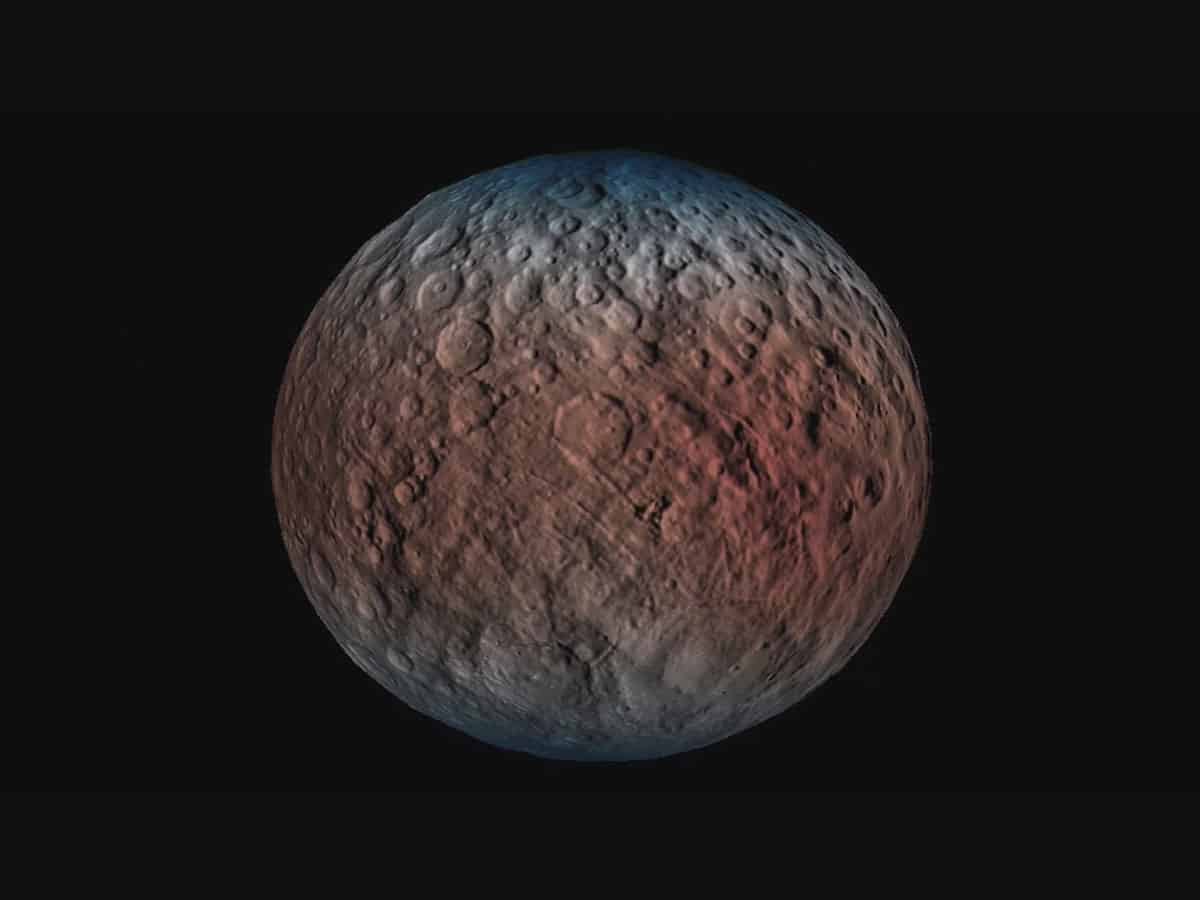
Watery wonder: The asteroid Ceres, showing the concentration of hydrogen measured by NASA’s Dawn spacecraft. (Courtesy: NASA/JPL-Caltech/UCLA/MPS/DLR/IDA/PSI)
But water is heavy and therefore expensive to launch out of the Earth’s atmosphere. Indeed, it costs between $9000 and $43,000 to send a water bottle into space – which is why it is all recycled on the International Space Station. However, Hubble images of the largest known asteroid, Ceres, suggest that it could hold more water than our planet. Smaller asteroids hold lots too and a technique known as optical mining would use the heat from the Sun to bake the water out of the rock.
The elements of water can also be used for rocket fuel. Asteroid miners are already planning to split the water from chondrites into hydrogen and oxygen, which would serve as fuel and oxidizer respectively. They are hoping to set up fuel stations in low-Earth orbit and the asteroid belt so that spacecraft can fill up on their way to the outer planets of the solar system. Currently, around 90% of the weight of modern rockets is taken up with fuel, so if you can carry less fuel on take-off because you can fill up off-Earth, space flight becomes much cheaper.
Within our reach
But how many asteroids are potential mining hotspots? Martin Elvis, a Harvard University astrophysicist with an interest in asteroid mining, developed an equation in 2013 to estimate the number of asteroids that might be potential mining candidates with our current technology. The equation accounts for the number of asteroids within reach of today’s rocket ships, the likelihood of them being worth mining, whether it is practically feasible to mine them, and whether they would yield a profit. When he first ran the numbers back in 2013, Elvis estimated that around 10 potentially metal-rich asteroids, and 18 sufficiently water-rich, lie within our grasp.
SpaceX’s development of increasingly powerful rockets has bolstered the hopes of asteroid miners because it means we can travel further into space. But Elvis told me that recent press reports claiming he thought the successful Falcon Heavylaunch on 6 February had burst open the sky to potential asteroids were wide of the mark. “I made the remark at a conference in Texas recently and the press missed off the word ‘might’, but the truth is that I haven’t run the numbers yet. We need more data before I can run the numbers again, but a wild guess might be that this new fleet of heavy rockets could increase the numbers by a factor of 10.”
Elvis was not just referring to Falcon Heavy either. Blue Origin’s New Glen rocket and, in the longer term, the New Armstrong rocket can all be added to the mix when Elvis next runs his equation. Yet even though the SpaceX rockets are boosting the hopes of asteroid miners who could one day provide his explorers with fuel and raw materials, Musk does not seem convinced. In fact, in 2003 he called asteroid mining “bogus” and, at least publicly, has not updated that view.
Amara Graps, an astrophysicist who organizes the bi-annual Asteroid Science Intersections with In-Space Mine Engineering Conference (ASIME) and founded the Latvian initiative Baltics in Space, is more optimistic. “Elon will come around. He’s a clever guy and he’s surrounded by clever people. He’ll get there but I don’t know how to reach him to sell it to him.” Half the delegates at the most recent ASIME conference, which took place in Luxembourg in April, came from asteroid-mining companies, with the rest being asteroid scientists. Indeed, Graps believes the interface between scientists and business people is essential. The asteroid scientists’ role is to provide scientific support to the companies; addressing some of the companies’ largest asteroid science questions.
Need riches to get rich
Asteroid companies have one major cash-flow issue: if there are riches in space, the miners are reliant on faithful funders to get them there in the first place. That’s why Graps believes communication is key. “Everyone is struggling in their own way,” she says. “So it helps if we can talk to each other. And share. And use our own resources more efficiently.”
Before any company reaches an asteroid, they’ll have to fill that gap in their finances with other revenue streams. The business model for asteroid-mining companies is therefore currently much more Earth-bound. Planetary Resources, for example, which uses its expertise for mining here on Earth, is still reliant on wealthy bankers. Indeed, after missing a funding milestone last year, the company laid off many of its 70 employees. Asteroid-mining companies need to convince potential funders that the claims of untold riches in space are believable and achievable.
But rather than just targeting wealthy investors, Mitch Hunter-Scullion, chief executive of the UK-based Asteroid Mining Corporation, has taken a different tack. He’s turned to crowdfunding for his first asteroid-prospecting mission, which he hopes to fire into space in 2020. “We’re launching APS-1 [Asteroid Prospecting Satellite 1] from India, because it is orders of magnitude cheaper than elsewhere,” he says. “We’re aiming to raise £2.6m through crowdfunding, which, in space terms, is not too overwhelming.” That may be true, but £2.6m will still require a lot of backing from the public for what, to many people, seems like a distant dream. If they do manage to raise the funds, he then plans to sell the data they own to raise more revenue.
A boost for public interest might not be too far away. Although NASA’s Asteroid Redirect Mission has been cancelled, its OSIRIS-Rex sample-return mission to asteroid 101955 Bennu left Earth in September 2016, before Trump took office. It will reach Bennu in December this year and then return a sample to Earth in 2023. Asteroid miners will be watching closely, just as they did when Rosetta landed on 67P/Churyumov–Gerasimenko…and then bounced along its surface.
“We knew a lot about the composition of the comet but that was still a surprise,” Graps tells me. “We need more science before we land on an asteroid to mine it. You don’t want to be bouncing off.”
Graps believes that the asteroid-mining community was distracted by the wrong thing to begin with. “I think [they] wasted time focusing on the metal-rich asteroids,” she says. Her view is shared by Planetary Resources, which puts the platinum-rich asteroids in its second wave of targets. They believe you’re better off targeting chondrites as they have water, which will be your revenue stream in the near future. You mine the water, you own the rocket fuel stations in low-Earth orbit, on the Moon and on the way to deep space. Whether it will make anyone a trillionaire is another question, however. You can use the heat of the Sun to bake the water out of the asteroid but you then need to stop it sublimating off into space. None of this is particularly cheap and you need the spacecraft to come along relatively frequently to keep your revenue streams buoyant. As Elvis says, “In space, no-one can hear you sell.”
How to be a trillionaire
Legally, nobody can own an asteroid, but the US Space Act of 2015 allows companies to own the materials they mine from bodies in space. Luxembourg passed similar laws last year and Hunter-Scullion tells me he is lobbying the UK government to follow suit. Graps is hopeful Latvia will join the party too. In fact, the country that gets the laws right might just win the most lucrative business in space. After all, if your space-mining company is making billions of pounds in space, the money will, for the foreseeable future, be spent on Earth.
There are fabulously wealthy and intelligent people who claim that they will become trillionaires from asteroid mining. Personally, I find it easier to imagine the tidal wave as their asteroid splashes down into the ocean, and the price of platinum dropping through the floor as it becomes suddenly and abundantly available. A future where the metals, rock and water that we mine in space are used in space feels more achievable. Whether that happens soon enough to make the investors of today rich is, I imagine, their big gamble. Elvis for one is convinced that asteroid mining will take place in our lifetime and gave me a top tip on how to become a space millionaire. “It’s relatively easy,” he says. “You just start with a billion.”
Using electric vehicles (EVs) as mobile power storage could eliminate the need to build costly stationary grid storage for energy from renewable sources.
That is the key finding of a new study by the Lawrence Berkeley National Laboratory (Berkeley Lab) in California, published this month in Environmental Research Letters (ERL).
Using California as a case study, the researchers looked at the issue of large-scale deployment of renewables across the energy grid, the associated problems of variability (daytime overproduction, or evening surge demand), and how controlled charging of mandated EVs could help to mitigate these problems.
Lead author Jonathan Coignard, from Berkeley Lab, said: “California has ambitious targets to decarbonize transportation, mandating the introduction of 1.5 million zero-emission vehicles (or ZEVs) by 2025, most of which will be EVs. It also has a renewable energy policy requiring 33 per cent of grid energy to come from renewables by 2020, and 50 per cent by 2030.”
Co-author Jeffery Greenblatt, now at Emerging Futures LLC, said: “A substantial opportunity exists if EVs from the ZEV Mandate are used to provide grid storage to support renewables integration.
“By removing the need to build new stationary grid storage, EVs can provide a dual benefit of decarbonizing transportation while lowering the capital costs for widespread renewables integration. These benefits are not limited to California, but are applicable worldwide whenever EVs and renewables generation become widespread.”
Using net grid load forecasts from the California Independent System Operator (CAISO), the research team quantified how increasing numbers of EVs would affect the evolving grid load in three scenarios: 1) if EVs were charged in an uncontrolled manner, 2) if vehicles were grid-integrated with controllable charging only (one-way power flow, or V1G), and 3) if vehicles were grid-integrated with controllable charging and discharging rates (two-way power flow, or V2G) for the worst day of each forecast year.
Their results showed that California’s storage mandate could largely be met through the ZEV mandate with only V1G-capable vehicles. The finding is significant, as V1G is readily available today with little added cost compared with uncontrolled charging.
Co-author Dr Samveg Saxena, also at Berkeley Lab, said: “Even more significantly, we found that several billion dollars of capital investment could be saved if EVs are used in lieu of stationary storage. Those savings could be redirected to further accelerate the deployment of clean vehicles and vehicle-grid integration, and could even be used to pay EV owners when their vehicles are grid-connected with controlled charging.”
For aerospace every kilo has to count. Meyya Meyyappan, chief scientist for exploration technology at Ames Research Center, put the cost of every kilogram launched into near-Earth orbit at close to USD$25,000. Aim for further afield and that figure increases by a factor of 10. The instrumentation demands that need to be met within these requirements are extreme – both to control and maintain the space craft, as well as monitoring the health of any humans who may be on board. Above and beyond the basic subsistence of the craft and crew, there is the raison d’etre of the mission – taking unprecedented measurements with an accuracy and reliability such that the results add to the sum total of human knowledge in a way that justifies the cost of the mission in the first place. No small wonder then that space missions continue to invest in new technologies.
Looking into space
An exciting aspect of detecting photons in space missions is the view it gives not just into distant space but into the distant past, as photons from the far extremes of the Universe take vast periods of time to reach us. Capturing these photons requires detectors for vanishingly low photon intensities. Superconducting nanowires have been a popular option to explore here as they are very sensitive to photons, which break up the Cooper pairs. This way superconducting nanowires can detect intensities as low as single photons. Although superconducting devices have strict cooling requirements Robert Hadfield at the University of Glasgow and colleagues in STFC Rutherford Appleton Laboratory in the UK, Single Quantum BV in the Netherlands and KTH Royal Institute of Technology in Sweden have already miniaturized a platform for superconducting photon detectors that operate at 4 K, and seen it launched aboard the Ariane 5 rocket in 2009 as part of the Planck mission.
The snag with superconductor photon detectors has been that the sensitivity rapidly diminishes as the photon energy decreases, limiting their range within the electromagnetic spectrum. To tackle this a team led by Dirk Englund at MIT developed a device based on graphene contacted at both ends by a superconducting material. The device – a form of Josephson junction – can sustain a superconducting current unless incident photons heat up the graphene and break up the Cooper pairs. Importantly this device is more sensitive to lower-frequency photons. “First, graphene can absorb light at nearly any wavelength in the electromagnetic spectrum. Second, because graphene is two-dimensional, it can be easily integrated into structures that can further enhance its light absorption,” said Englund. This view of low-energy radiation provides observations of some of the faintest objects in the universe.
It turns out graphene also comes in handy at higher energies. Radiation in the 10-200nm range can give information on solar storms and the way nebulae expand, but current technology to detect in this range – violet chromatographs and microchannel plates – are not just heavy, whacking up payload costs, but they are power hungry too. Photovoltaic devices that require zero power are the ideal alternative, and reports from China of a heterojunction device based on p-type graphene could represent a breakthrough for this type of detector. “The new VUV-light-detecting device, being much lighter than existing detectors, could also help lower launch costs of the spacecraft carrying it,” said Feng Huang of the School of Materials at Sun Yat-Sen University in Guangzhou.
While great progress has been made in the sensitivity of superconducting radiation detectors, according to researchers at the University of Jyväskylä the next goal is increasing the number of detector pixels in single devices, which has so far been limited by device heating. Having stumbled upon the giant thermoelectric effect, these researchers are now leading the SUPERTED consortium to use the phenomenon to solve heat issues in radiation detection. “The idea is old, but the problem has been to find a strong enough thermoelectric effect,” says consortium leader Tero Heikkilä from the University of Jyväskylä department of physics. “We found it in 2014 by accident as we were studying the properties of hybrid structures of superconductors and magnets. Our theoretical prediction was experimentally demonstrated in 2016.” The consortium has attracted support from the European Commission who are investing 3 million euros of funding to develop ultrasensitive sensors of electromagnetic radiation based on hybrid structures of superconductors and magnets.
Sniffing into space
Image of a gas sensor array (1.7 cm × 2.0 cm) fabricated on a printed circuit board. S01–S16 indicates the individual sensors. (Credit: MRS BULLETIN)
Probing for biological and chemical data from space, as well as monitoring the crew, their food and their environment, requires chemical and biosensors that are ideally small, light, specific, robust to different environments and energy efficient. A lot of current sensors are power hungry and have high environmental requirements, such as operating temperatures of 200 °C, taking the widely used tin oxide thin film sensors as an example. As a result, there has been a lot of research into exploiting nanomaterials instead, with their high surface area to volume ratio and the sensitivity of their properties to chemical and biological analytes.
The potential of carbon nanotubes for sensing applications has long attracted notice. Carbon nanotubes have shown potential for sensing a wide range of substances including glucose, an important indicator of metabolic health. As far back as 2013 AT Charlie Johnson and colleagues were able to demonstrate sensitivity to glucose at concentrations as low as 1 μM by functionalizing the nanotubes with highly negatively charged pyrene boronic acid. “These low concentrations fall within the range at which glucose is found in saliva,” said Johnson. CNTs can also detect harmful gases in the atmosphere with simple devices distinguishing between carbon monoxide and carbon dioxide based on how readily the molecules adhere to the nanotubes.
Taking advantage of the wide range of analytes CNT sensors can detect, Meyya Meyyappan and colleagues have combined 16 CNT sensors onto a chip. “In addition to purified SWCNTs, variations in sensor material may include doping, metal loading, coating or functionalization of the nanotubes and the use of metal oxide nanowires or nanoparticles, to elicit a signal from the analyte of interest, as pure SWCNTs might not respond to every gas or vapor,” they explain in a report referring to the work. They then train the devices in the lab to distinguish different gases based on the effect on the resistance of each sensor and as a result the pattern of resistance on the chip, thereby producing an “electronic nose”.
Nanotechnology launch off
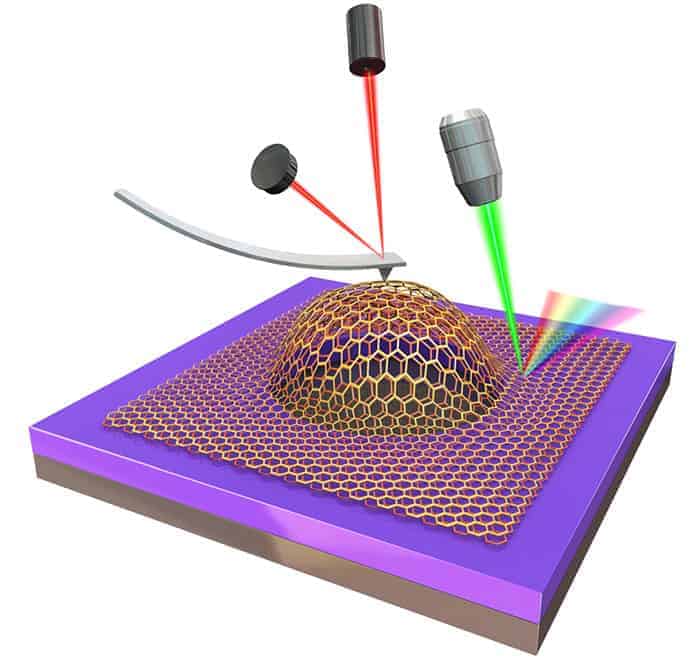
The key characterization tools that first brought nanostructures into view were the scanning tunnelling microscope for conducting samples and the atomic force microscope developed shortly afterwards for imaging non-conducting samples. Thirty years on these tools remain crucial analysis tools for nanostructure characterization both on and off planet Earth.
When the Rosetta orbiter launched in 2014 it carried a micro-imaging dust analysis system (MIDAS) featuring an atomic force microscope. As the orbiter trailed after comet 67P/Churyumov-Gerasimenko it was able to collect data on the structure of dust samples from the comet with the aid of MIDAS. Comparing the structure with the predictions of planetary accretion models has helped to gain insights into likely scenarios as to how the solar system formed, providing another glimpse back in time.
Despite the restrictive payload costs, not just nanomaterials but their characterization devices have already made it onto space missions. Given the fit of space mission requirements and what nanomaterials have to offer it seems reasonable to expect the role of nanomaterials in tooling up space missions to literally sky rocket.
Enzymatic biofuel cells are a potentially clean and renewable technology since they only produce water as the by-product of combustion, but they do suffer from poor electron transfer between the enzyme catalysts and the electrode surface employed in the cells. A new strategy that makes use of both direct electron transfer and mediated electron transfer processes in the same device could help overcome this problem. The result? Fuel cells that have much higher power density than those that rely on direct or mediated electron transfer processes alone.
In an enzymatic biofuel cell (BFC), enzyme electrocatalysts convert the chemical energy of biofuels, such as sugars, alcohols and hydrogen, into electrical energy. Redox enzymes oxidize biofuels at the anode and oxygen is reduced at the cathode, producing electric power as a result.
BFCs are better than conventional fuel cells in many ways. For one, they are cheaper, since enzymes are much less expensive than precious metal catalysts. They are also specific (they catalyse only one biofuel), can be miniaturized and operate at room temperature. They do produce little power, however, do not last very long and are relatively inefficient. These problems are thought to come from the fact that it is difficult to electrically wire the enzymes and the electrode surface.
To improve this electron transfer, researchers have designed BFCs so that they work by either direct electron transfer (DET) or mediated electron transfer (MET). In DET, an enzyme is electrically connected to an electrode surface so that electrons directly tunnel between it and the surface. In MET, a mediator, such as a metal complex-based polymer is employed. This mediator not only undergoes redox reactions at an electrode surface, it can also exchange electrons with the enzyme, which results in electrons being transported via the mediator (electron shuttle).
Combining MET and DET
A team led by Jong-Min Lee of Nanyang Technological University in Singapore has combined these two mechanisms for the first time in a single device.
The researchers used the multi-copper oxidase enzyme laccase, known to have a high activity for the oxygen reduction reaction (ORR). This is a key chemical reaction that takes place at the cathode of fuel cells. They also designed an electron transfer system connected to a multi-walled carbon nanotube surface. This system contains three parts: a 2,2’-Azino-bis(3- ethylbenzthiazoline-6-sulfonic acid) (ABTS) compound in the middle with a pyrene group at one end and a polypyrrole group at the other end.
Although researchers have used ABTS as a MET mediator for ORR enzymes before now, in this work the pyrene group appears to orient itself towards the copper redox active site of the laccase. This improves electron transfer from the ABTS to the laccase. The polypyrrole group, for its part, also helps to attach the ABTS to the electrode for better transfer of electrons.
Thanks to these combined mechanisms, the maximum ORR current density in a fuel cell based on this system can be as high as 2.45 mA/cm2. What is more, the MWCNTs/polypyrrole-ABTS-pyrene/laccase bioelectrode keeps 50% of its initial ORR current even after 120 days.
Although the researchers say that their system still needs to be optimized (its working cell voltage is relatively low at just 0.19 V), their DET/MET coupling technique might come in handy for making other types of bioelectrochemical devices. These include glucose biosensors and photobioelectrochemical cells, in which enzymes are wired to electrode interfaces too.
A new experiment that tests the limit of how large an object can be before it ceases to behave quantum mechanically has been proposed by physicists in the UK and India. The measurement involves trapping a nanocrystal with light and then measuring its position to see if its behaviour violates the Leggett-Garg inequality – which is a test of the quantum nature of a system. While the team is keen to have their proposal tested in the lab, not all physicists believe that it could be implemented.
A crucial important feature of quantum mechanics is Heisenberg’s uncertainty principle. Whereas in classical mechanics, both the position and momentum of an object can be determined at arbitrarily high precision at the same time, the principle states that it is impossible to measure both position and momentum in quantum mechanics beyond a certain degree of accuracy. Furthermore, the more you know about one measurement, the more uncertain the other becomes.
The proposed experiment tests how large an object can be before the rules of quantum measurement do not apply. Sougato Bose of University College London and colleagues at the Bose Institute and the SN Bose National Centre for Basic Sciences in Kolkata studied the behaviour of a quantum linear harmonic oscillator, which bears a strong resemblance to its classical counterpart. “The uncertainties in position and momentum are both as low as they can get,” explains Bose.
Caught in a trap
Bose and colleagues have done an analysis of a hypothetical experiment involving a cooled nanocrystal oscillating in a trap that is created by an optical harmonic potential. The experiment can detect which side of the trap is occupied by the nanocrystal at any instant by focusing a beam of light on one side of the trap. The light causes fluorescence in the nanocrystal, and if fluorescent light is not detected it can be concluded that the nanocrystal is in the other side of the trap – a procedure called negative result measurement.
The experiment begins with a position measurement and then the system evolves for about a microsecond before the position is measured again. If the nanocrystal is a purely classical object, the researchers reasoned, a negative result in the first measurement would not affect the nanocrystal’s position in the second measurement. This is because the nanocrystal would have been in the other half of the trap, and therefore would not have interacted with the beam. If there were quantum uncertainty in the position and momentum of the nanocrystal, however, the null result at the start of the experimental run could still affect its measured position at the second measurement. This is because the nanocrystal’s position would not be well defined until it was actually measured. Therefore, the nanocrystal could have interacted with the light beam in one half of the trap despite not being detected there.
The team calculated the Leggett-Garg inequality for the systems. This is analogous to Bell’s inequality, which is famously used to rule out hidden variable explanations of quantum mechanics. Bell’s inequality quantifies the maximum statistical correlation that is possible between properties of independent particles separated by distances so great that information could not pass between them without travelling faster than light.
The Leggett-Garg inequality uses similar reasoning to calculate the maximum statistical correlation between two results that had not influenced each other. Violation of the inequality, therefore, would show that the nanocrystal’s state could be influenced by the earlier negative result, and therefore that the nanocrystal is a quantum, rather than a classical, object. Crunching the numbers, the researchers calculated that it should be feasible to detect non-classical behaviour in objects with masses up to around 1010 amu or about 10-14 g. Bose says experimentalists are planning to test this.
“That’s pretty tricky”
Bose and colleagues report their results in Physical Review Letters. Theoretical physicist Clive Emary of Newcastle University in the UK says “if someone goes on to do these experiments, we’ll all look back and say it was a significant paper”. He cautions, however, that: “it looks like it needs very high time resolution to do the proposed measurements and in my experience that looks like the kind of thing you propose to experimentalists and they come back and say ‘that’s pretty tricky’.” Quantum information theorist Renato Renner of ETH Zurich is more optimistic: “We can now do experiments in quantum technologies that, five or ten years ago, people would have said were not possible,” he says, “I’m optimistic that most quantum experiments we can think of will at some point be feasible.”
Emary and Renner agree, however, that, whereas in Bell’s inequality, the two measurements are isolated classically by the fact that nothing that can travel faster than the speed of light, the Leggett-Garg inequality relies on proving there can be no classical explanation for the earlier measurement disturbing the later one. “That’s just not possible,” says Emary, “There’s always a loophole: you could disturb the air molecules in the lab next door and they could come back and disturb your system, for example.”