

Photonic cellulose goes iridescent
Sub-micron architectures in a cellulose derivative produce bright, structural colours
 Read article: Photonic cellulose goes iridescent

Sub-micron architectures in a cellulose derivative produce bright, structural colours
Read article: Photonic cellulose goes iridescent
Chameleons are researchers’ new best friend
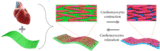 Read article: Colour-changing hydrogels make heart-on-a-chip
New microscopy measurements reveal why chicken eggshells resist fracture from the outside but weaken during hatching
 Read article: Eggshell nanostructure changes help chicks hatch
New biocompatible material that stiffens when it is stretched and changes colour in the process might be used to make better medical implants
 Read article: Chameleon-inspired polymers behave like skin
Controlling the weight and structure of 3D printed scaffolds makes it possible to match their mechanical properties to those of human cartilage
 Read article: Optimizing 3D polymer scaffolds for cartilage repair
Different surface sites can “talk” to each other in ways that are very similar to catalytic allostery in enzymes – nature’s most efficient nanoscale catalysts
 Read article: Communication is key in nanocatalysts too
Small cross-sectional area device does not damage brain tissue and could allow for high-density electrical recording
 Read article: Tiny intracortical probe monitors neural activity
A new liver-on-a-chip platform offers an attractive alternative to animal models for testing the effects of drugs on the human body
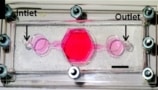 Read article: Liver-on-a-chip assesses drug toxicity
New technique reduces unwanted artifacts and increases sensitivity so excessively stiff cantilevers are no longer needed
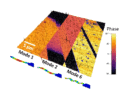 Read article: Higher-order eigenmodes improve piezoresponse force microscopy
Device could be used in a number of practical areas
 Read article: 3D single-atom force sensor goes sub-attonewton