“Solar towers” that convert sunlight into heat could play a useful role in the renewable energy transition, but high installation costs and complex requirements limit their attractiveness to commercial operators. A team of researchers from Germany’s Karlsruher Institut für Technologie (KIT) and the German Aerospace Center (DLR) is now taking steps to change that. By creating a freely accessible database of information about how these plants work, they aim to accelerate research on solar thermal energy and drive improvements that could allow the technology to be more widely deployed in the future.
Unlike photovoltaic panels, concentrating solar power (CSP) plants do not convert sunlight directly into electricity. Instead, they generate heat by using an array of movable mirrors called heliostats to funnel sunlight onto a receiver located at the top of a tower. This heat can be used to drive a turbine to produce electricity immediately, but it can also be stored and used to generate electricity at night or on cloudy days. Depending on the plant’s location and setup, the heat could even be used directly for industrial applications and district heating.
The problem, explains study leader Kaleb Phipps, is that operating solar power tower plants safely and efficiently is a complex and expensive task. “CSP technologies have the potential to help the transition to a renewable energy system,” says Phipps, a research fellow at KIT’s Scientific Computing Center. “However, they are still not financially viable and there are operating challenges associated with them.”
Before researchers can develop and reliably test new, improved processes, Phipps explains that they need access to real-world operational CSP data. “We believe that modern data-driven machine learning methods like ours can help solve a lot of these problems,” he says.
849 gigabytes of operational data
To construct their database, which is known as PAINT, researchers collected data from the CSP tower near Jülich, Germany. These data include the exact positions of the tower’s 2014 mirrors, their dimensions, how they are warped and the way they rotate and tilt. The team also obtained fine-grained weather data for the entire 2021-2024 period under study, plus a further 218 000 images to help determine whether the mirrors were efficiently directing sunlight precisely to the top of the tower.
All in all, the PAINT database contains 849 gigabytes of operational data organized using the SpatioTemporal Asset Catalog (STAC) standard. To make these data FAIR (findable, accessible, interoperable and reusable), the researchers developed software to simplify access to the database and then published the data in a way that is freely available to all users.
Their goal, they say, is for other researchers to use this FAIR database to develop “digital twins”, or virtual replicas, of real-world CSP plants. When combined with machine-learning models, such twins can be used to answer questions such as whether the mirrors are aligned for maximal light absorption (one of the most important parameters for efficient operation) in near real time.
Community reaction
“The fact that we are receiving many positive responses regarding the data and that people seem to appreciate it is our biggest success,” Phipps says. Such responses are especially gratifying, he adds, because constructing databases like PAINT can be an arduous task.
“The main difficulties were about collecting the data, cleaning and unifying it into standard formats and parsing and organising all the metadata, which was originally complete chaos,” Phipps recalls. “We therefore put a lot of time and effort into creating standardized and automated workflows so that the process is as transparent as possible and can be reused for future data.”
The team also faced challenges when trying to convince peers that this work counted as “research”, he adds. “The fact that the data itself didn’t directly result in a new algorithm or method meant that lots of people didn’t believe we would be able to publish the results or achieve anything with them,” says Phipps. “Luckily, we were able to prove the doubters wrong.”
While the PAINT database currently contains data from only one CSP, the KIT researchers, who report their work in Nature Energy, are hoping to expand it. “We really need contributions from other CSP power plants around the world to transform the database into a truly international and diverse source for researchers,” Phipps says. “As data from different facilities is added in the future, it will be possible to develop a common standard for open operational data in solar tower research. This would speed up the development and promote a widespread adoption of this technology.”
Astronomers have raised concerns over a decision by the Federal Communications Commission (FCC) to permit the launch of a private satellite that can reflect sunlight onto the Earth’s surface after dark. Astronomers, however, fear that the mirror, and the several thousand that could follow it, will negatively impact both optical and radio astronomy.
The proposal by the Californian company Reflect Orbital involves putting a mirror-carrying-satellite – Eärendil-1 – into low-Earth orbit. Reflect Orbital aims to use the craft to test technology intended to deliver sunlight to solar farms after sunset, thus expanding the production of solar power at a time of peak demand for electricity.
In orbit, the satellite will unfold an 18 × 18 m aluminiumized Mylar reflector that can deliver a roughly 5 km circular spot of light to the ground with about the brightness of a full Moon.
In addition to providing solar power after dark, the company sees its technology as potentially effective for response to disasters, construction work and outdoor events at night.
Assuming Eärendil-1’s flight proves successful, the company plans to launch 1000 larger satellites in 2028, which would be able to reflect as much light as 100 full Moons with 5000 more satellites two years later.
The FCC has approved only the radio operations of “a single demonstration satellite [that is] an example of a potentially groundbreaking technology”. Other aspects of Eärendil-1, however, do not require official authorization.
Ben Nowak, chief executive and co-founder of Reflect Orbital, sees the licence as “the first step toward rigorously testing our technology’s efficacy and the safeguards we have developed”.
Flash points
Orbiting satellites’ impact on astronomy is hardly a new phenomenon. Their burgeoning number has already reduced observing times for optical astronomers, particularly after sunset.
Following the approval, the American Astronomical Society (AAS) has expressed “dismay” at the FCC’s decision. [Eärendil-1] carries the potential for significant harm to our members and the broader community of those who depend on a dark night sky,” the association says in a statement. “[This] could include damage to sensitive research equipment, potential flash-blinding of pilots and drivers, and potential permanent eye damage to anyone looking through a mid-sized telescope.”
While some satellite owners have been open to working with astronomers to reduce the impact on astronomy, astronomer Marcel Agüeros from Columbia University, who is also president of the AAS, told Physics World that Reflect Orbital “has been far less open” to discussing its plans. “We know nothing about the satellite’s orbit, for example,” adds Agüeros.
DarkSky International, a nonprofit organization that aims to preserve and protect the nighttime environment, has now called on the company to commission a “comprehensive, independent environmental impact assessment conducted by qualified experts”.
“The burden of proof rests with the operator to demonstrate that their system will not cause environmental or public harm, and a full, independent assessment is the necessary first step,” notes DarkSky International.
That move is backed by Agüeros, who adds that there doesn’t seem to have been much thought about the consequences of the FCC’s decision. “When you start to mess with the nighttime, there should be a very high bar you have to clear,” he adds. “We’re losing our ability to experience a dark sky – an experience that gives you a sense of your place in the universe that is pretty much unmatched.”
Reflect Orbital spokesperson Christopher Buscombe told Physics World that the company “care deeply” about the night sky and that they “want to preserve astronomical observation”.
“We’re also working with the National Science Foundation to develop a coordination agreement on these questions and look forward to their input,” adds Buscombe.
New insights into the “reverse sprinkler” problem popularized by Richard Feynman have been provided by US researchers using modified rotary sprinklers. The results, which indicate that the reverse sprinkler is driven by the angular momentum induced at its centre by water being drawn in, could shed light on the fluid dynamics of open systems.
Rotary lawn sprinklers are ubiquitous devices that eject water at an angle to the head, thereby generating the torque to rotate and water a 360° area. The puzzle is how – or whether – sprinklers rotate if the problem is inverted and they suck the fluid in rather than blowing it out. A lawn sprinkler will, of course, draw in air, but Feynman conducted experiments with a submerged sprinkler that sucked water in and arrived at conflicting results.
Applied mathematician Leif Ristroph of New York University says that the asymmetry of the problem is not in itself surprising. “You can blow out a candle but you can’t suck it out,” he points out. “When you blow out a fluid through an orifice at a high enough flow rate, it forms a concentrated jet…When you reverse the system and pull in fluid at the same flow rate, the flow does not reverse – it pulls in fluid from all directions. That comes from the irreversibility of the Navier-Stokes equation.”
The correct way to model the system, however, is less clear. Some researchers have argued that the problem should be best solved by considering the total angular momentum of the system. Others focused on the torque exerted on the outside of the structure as fluid enters the nozzles, or the angular momentum that builds up at the centre due to the fluid that flows in from the outside of the arms.
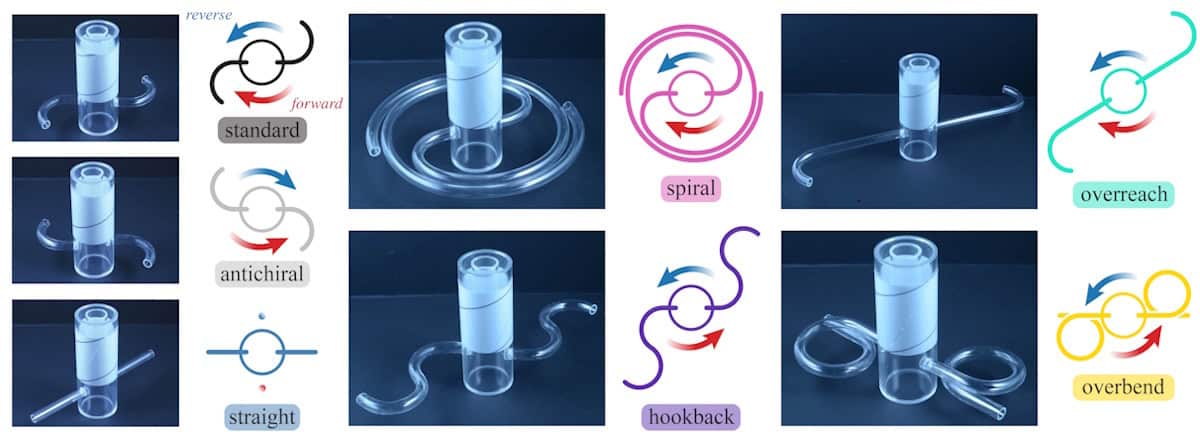
Attempting to disentangle these explanations, Ristroph and colleagues constructed a set of specially designed sprinklers. They submerged the devices before either drawing water out of the centre of each one or feeding it in. Each device’s geometry was designed either to amplify or nullify one of the effects previously proposed to determine the torque and thereby the rotation rate. For example, they tested the impact of the overall angular momentum by comparing devices with “spiral” arms (in which water travelled 360° before escaping) to those with S-shaped “hookback” arms (in which it doubled back). This did not explain the observed results.
Sprinkler geometries The studied sprinkler designs, with the observed rotation direction in the forward (red arrow) and reverse (blue) modes. (Courtesy: NYU’s Applied Mathematics Laboratory)
There was one factor, however, that correlated with torque and rotation rate irrespective of the geometry of the arms. “If you measure the angular momentum flux from any one of these designs it’s quantitatively one-to-one with the torque on the solid [in the forward case],” says Ristroph. “The beautiful thing is the same thing works in the reverse case, except now you should look at the centre where these arms begin, and there are very subtle asymmetries that inject angular momentum to the core of the device…That’s the common unifying principle: in all cases there are jets generated, but in the reverse case those jets are pointing in.” The lower torque at the centre makes the sprinkler much slower in reverse.
Mechanical engineer Earl Dowell of Duke University says that “the study in the paper is largely experimental,” although he acknowledges that “the experiments appear to have been carried out competently and the results presented in a well-organized manner”.
“What the authors call theories are notional ideas based upon highly simplified concepts that tend to be favoured by some physicists,” Dowell adds. “An expert in fluid mechanics…would attack this problem with well-established computational models for the flow field and rigid body dynamics for the sprinkler per se.” He believes that this is not, to his knowledge, being done because neither experiments nor computational simulations are expected to reveal any fundamental new concepts in fluid mechanics.
“I have a hard time thinking this going to generate a practical device,” concedes Ristroph. However, he says that entirely new methods were needed to conduct these experiments and the researchers are now developing new computer simulations of fluid dynamics, in which fluids enter and escape from the system, to apply to it. “This is a beautiful problem to test your experimental methods, your computational methods, modelling, theory…This is a place to give it the best test it can possibly have.”
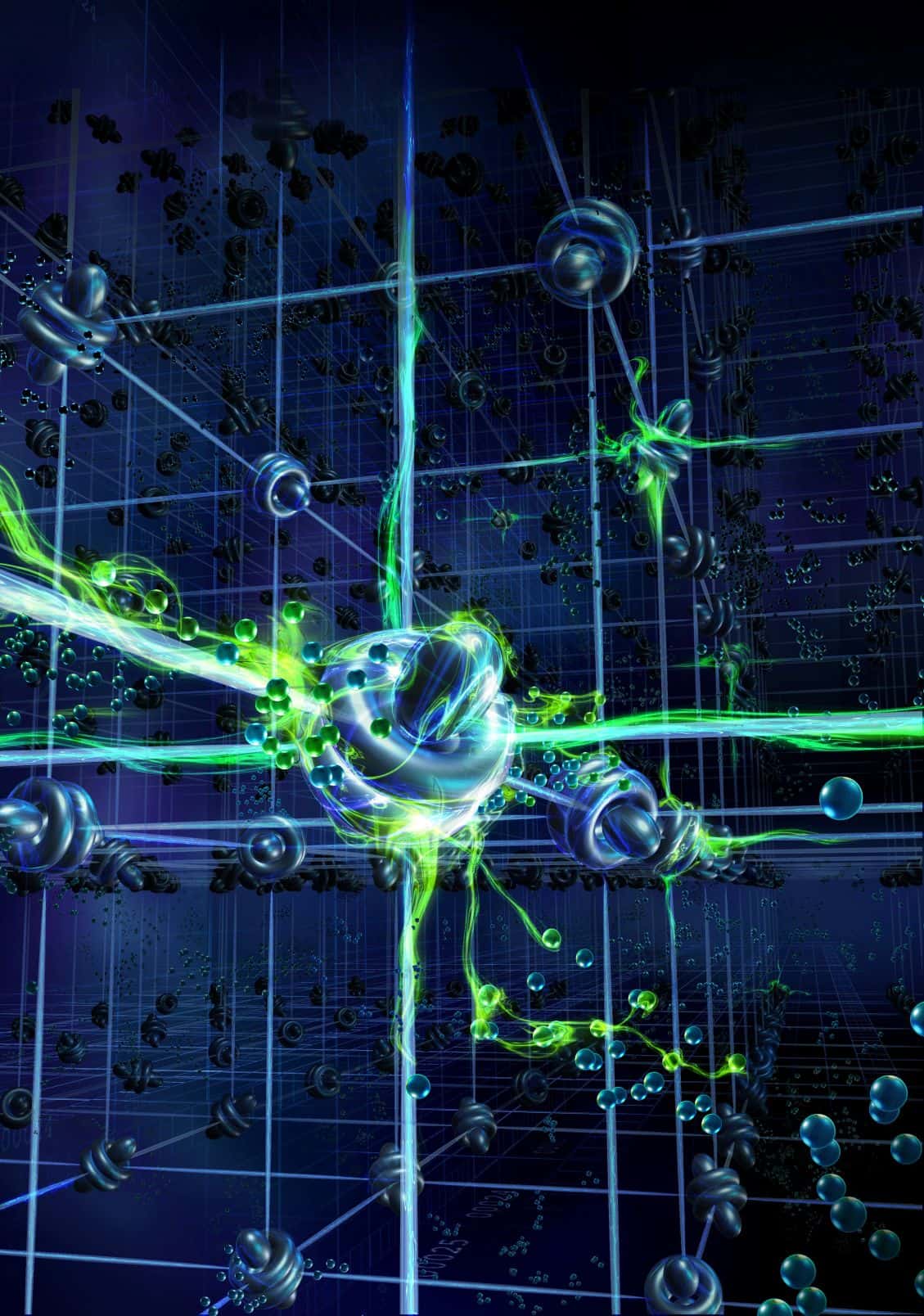
Correlation explanation: Quantum entanglement between electrons in strange metals appears to account for some of their unusual behaviour. (Courtesy: Harald Ritsch / TU Wien)
“Strange” metals owe at least some of their peculiar properties to the quantum entanglement of their electrons. This finding comes from physicists at the Vienna University of Technology in Austria, who used a concept from quantum information science to guide their experiments. A similar approach, they say, could also yield a better understanding of certain high-temperature superconductors and other correlated quantum materials.
Electrons travel relatively unimpeded through most metals, but in the 1980s, scientists identified puzzling exceptions in certain cuprate high-temperature superconductors. Further examples of this “strange” metal behaviour subsequently turned up in other classes of materials, including heavy-fermion materials, pnictides and organic compounds. This resistive behaviour cannot be explained by theories that treat electrons as independent, non-interacting particles, nor by theories that include interactions while treating electrons as quasiparticles. And although multiple recenttheoretical works suggested a possible role for entanglement, experimental evidence was lacking.
A novel statistical tool
To investigate further, a team led by solid-state physicist Silke Bühler-Paschen used facilities at the Institut Laue-Langevin (ILL) in Grenoble, France to perform inelastic neutron scattering measurements on a heavy-fermion metal with the chemical formula Ce3Pd20Si6. According to team member Federico Mazza, who conducted this part of the study, the scattered neutrons would normally each transfer their energy to individual particles.
However, when the researchers analysed their data using a concept called quantum Fisher information – roughly, a measure of how sensitively a quantum state depends on a given parameter – they found that they could not explain what they were seeing in terms of particles behaving independently. Instead, the data indicated that groups of at least nine quantum-entangled entities were acting collectively. Mazza says this provides direct evidence of highly multipartite quantum entanglement in the material – and, in turn, a new way of understanding why strange metals are so strange.
The parent state of high-temperature superconductivity
The strange metal state is of great interest because physicists consider it the “parent” state of high-temperature superconductivity, though it also occurs across other materials platforms. “We had suspected that some of the intriguing properties of this state might be related to entanglement but were not able to pin it down until now,” Bühler-Paschen explains. “The results are a great success for us. They confirm that our unusual approach of using methods from quantum information science for solid-state physics studies of novel materials can reveal fundamentally new insight.”
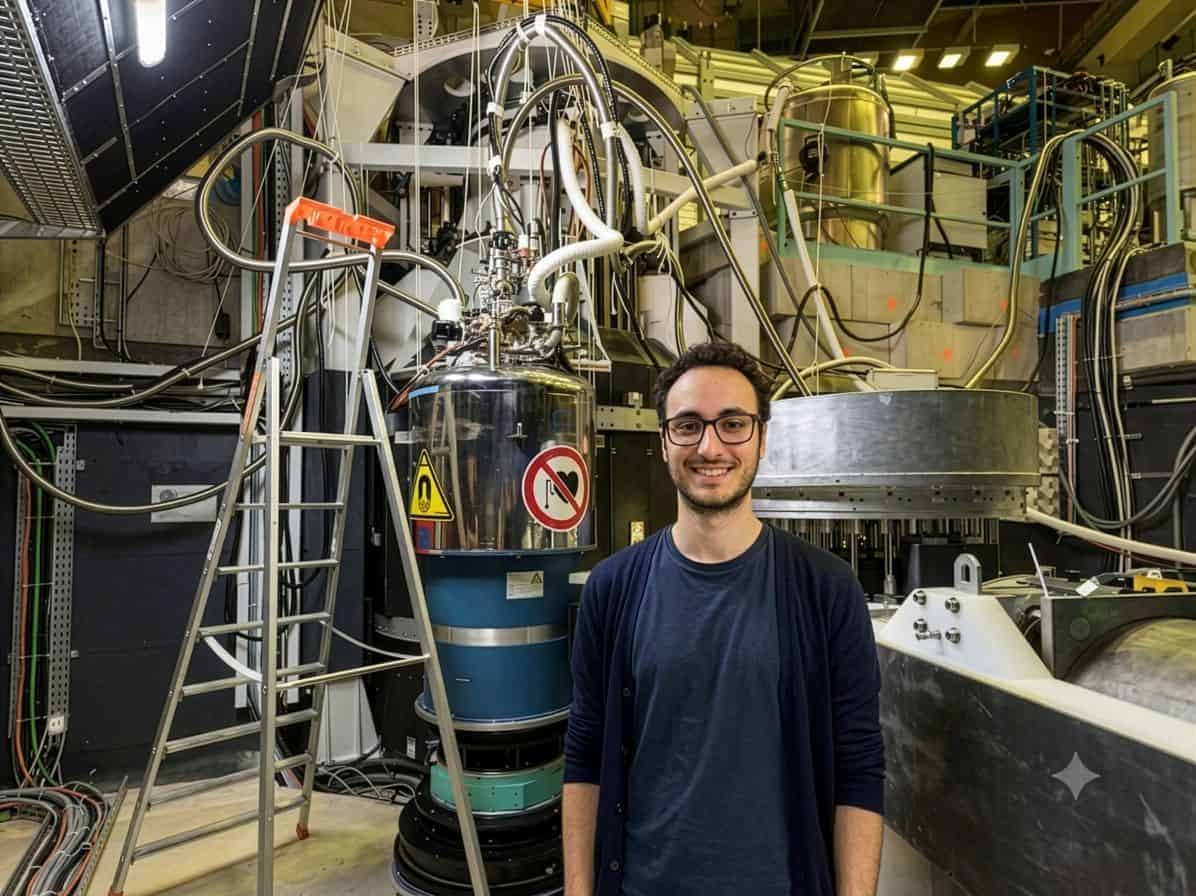
Neutron scattering: Federico Mazza at the Institut Laue Langevin. (Courtesy: ILL Grenoble)
The experiments, which are detailed in Nature Physics, were not without challenges. For starters, the researchers needed to identify an ideal material to study the effect they were looking for and then grow it as a large, high-quality single crystal. Once they secured inelastic neutron scattering beamtime at the ILL’s powerful high-resolution triple-axis spectrometer – a difficult feat in itself – Bühler-Paschen notes that they had to obtain and analyse the data at the highest standards and support it with simulations. “Last but not least, [we had to] communicate with our peers that multipartite entanglement contains valuable information beyond correlation functions and scaling analyses,” Bühler-Paschen recalls.
Rather than being a “detail” of one particular material, Bühler-Paschen says the team’s result suggests that enhanced multipartite entanglement might be an integral part of the strange metal state. Verifying this, however, will require studies on other strange metals across materials classes, she says.
“Looking further ahead, we can envision that this aspect of strange metals finds application in quantum devices,” she tells Physics World. “It could also help us better understand high-temperature superconductors and other materials in which electrons are so strongly correlated that they lose their (quasi)particle nature.”
This episode of the Physics World Weekly podcast explores how artificial intelligence can be used to improve the aerodynamics of passenger cars and other vehicles. My guest is David Wheater, who is vice president automotive at UK and US-based PhysicsX.
An aeronautical engineer by training, Wheater spent much of his career using aerodynamics to improve the performance of Formula 1 racing cars for several F1 constructors.
Now, his focus is on using AI-based “large physics models” to improve the performance of mass-produced vehicles. This involves combining computational fluid dynamics simulations with wind-tunnel experiments and real-world testing. In this wide-ranging conversation, Wheater explains the need for high-quality training data and we also explore career opportunities for physicists in this multidisciplinary industry.
An exceptionally loud gravitational wave signal has offered an unprecedented glimpse into the region of space near a black hole’s event horizon – the “surface of no return” beyond which nothing, not even light, can escape the pull of gravity. Denoted GW250114, the signal originated from the merger of two black holes, and its unusual strength and clarity meant that astrophysicists could extract information from it that was previously only accessible via theoretical modelling.
Physicists describe a black hole’s event horizon in terms of two parameters: the black hole’s rotation frequency ΩH and its surface gravity κ. When an object falls into a black hole, it appears to orbit at ΩH because of a phenomenon known as frame dragging in which the black hole literally drags nearby spacetime along with it as it rotates. This means that objects near a black hole’s edge are constantly in motion relative to observers on Earth.
Regions of space near an event horizon can be described very well theoretically, but observational data has been hard to come by – at least until recently. “Gravitational waves are changing that,” says Sizheng Ma, a postdoctoral researcher at Canada’s Perimeter Institute who led the new study alongside astrophysicist Ling Sun and PhD student Neil Lu from the ARC Centre of Excellence for Gravitational Wave Discovery (OzGrav) and the Australian National University.
Gravitational waves are ripples in spacetime produced whenever dense astronomical objects such as black holes and neutron stars collide. With facilities such as the Laser Interferometer Gravitational-Wave Observatory (LIGO), Virgo and KAGRA (Kamioka Gravitational Wave Detector) now routinely recording these ripples, Ma says, “something that once sounded almost like science fiction – learning about black-hole horizons through observations – is now becoming a real scientific programme”.
From prediction to observation
In earlier theoretical work, Ma and colleagues in Japan, China and the US predicted that if Einstein’s general theory of relativity is correct, the gravitational waves produced when two black holes merge should carry information about the near-horizon region during the final stage of the merger. This information takes the form of a gravitational-wave component known as a direct wave that oscillates around a value that is twice that of ΩH. “The big question was whether such a signal could actually be seen in real gravitational-wave data,” Ma says.
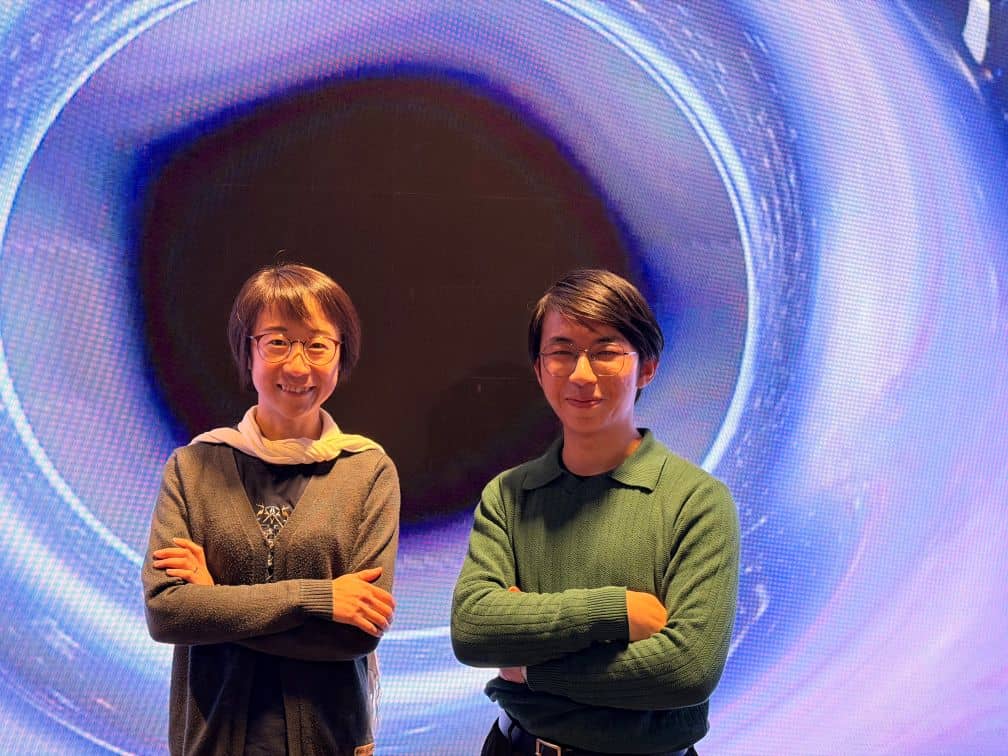
Observing an event horizon: Team members Ling Sun and Neil Lu from the ARC Centre of Excellence for Gravitational Wave Discovery (OzGrav) and the Australian National University. (Courtesy: OzGrav/Swinburne University)
The main challenge, he explains, is that gravitational-wave data are hard to interpret. “Interesting features can appear for many reasons, so we had to be very cautious,” he says. “We needed to separate this possible direct-wave signature from the much stronger and better-known ‘ringdown’ signal of the final black hole, and then check whether the remaining pattern behaved as the theory predicted.”
When the LIGO-Virgo-KAGRA network detected GW250114 last year, the astrophysicists realized they were in luck. With a network signal-to-noise ratio of approximately 80, this event was around three times louder than LIGO’s first gravitational-wave signal in 2016, and it gave the team a rare opportunity to test their prediction against data. “Our new analyses have allowed us to decrypt the signal and measure ΩH and κ for the first time,” Ma says.
“A new way of studying black holes”
Even with an unusually clear signal, Ma acknowledges that the work required “careful modelling and many double-checks to make sure we were not overinterpreting a feature in the noise”. But if the team’s interpretation holds up, Ma tells Physics World that their method could become a new way of studying black holes. Gravitational-wave observations have already enabled scientists to study how black holes orbit, merge and settle down, Ma notes. The present work extends this by offering access to the near-event-horizon region during the merger’s final stage.
“That gives us a new observational handle on some of the most extreme predictions of Einstein’s theory, allowing us to perform sharper tests of this theory and better understand how black holes form and relax after a merger,” he says. “It also allows us to explore whether the near-horizon region behaves exactly as Einstein predicted.”
The researchers’ next step will be to improve their direct-wave model so that it describes realistic black hole mergers in greater detail. “On the observational side, we want to apply the analysis to more gravitational-wave events,” Ma says. “The result detailed in this study comes from one exceptionally loud and clean event, so the most convincing confirmation would be to see the same kind of near-horizon signature in other black-hole mergers.”
The good news is that as gravitational-wave detectors continue to improve, the researchers hope to collect more such high-quality events. “These will allow us to test whether this pattern appears consistently in the way general relativity predicts and eventually turn this first result into a more systematic way of studying the regions near black hole horizons,” Ma says.
Patient-specific quality assurance (PSQA) plays an essential role in the safe and effective delivery of radiotherapy to cancer patients. Enabling a “dry run” in which the treatment plan is delivered to a physical device before the patient enters the room, PSQA provides a final safety net before treatment. The aim: to ensure that the correct dose is delivered to the correct location for every patient and every single fraction.
That said, measurement-based PSQA is not sensitive enough to catch all errors – some still slip through. What’s more, pre-treatment measurements are not feasible in online adaptive radiotherapy, where treatment is re-planned and delivered within minutes. There’s simply no time to deliver the new plan to a phantom while the patient waits on the couch
And as clinics increasingly adopt adaptive workflows, incorporate artificial intelligence (AI) into the treatment chain and deliver more complex, more automated and faster radiotherapy than ever before – is it time to rethink radiotherapy QA? Could properly commissioned delivery techniques render routine measurement-based PSQA obsolete?
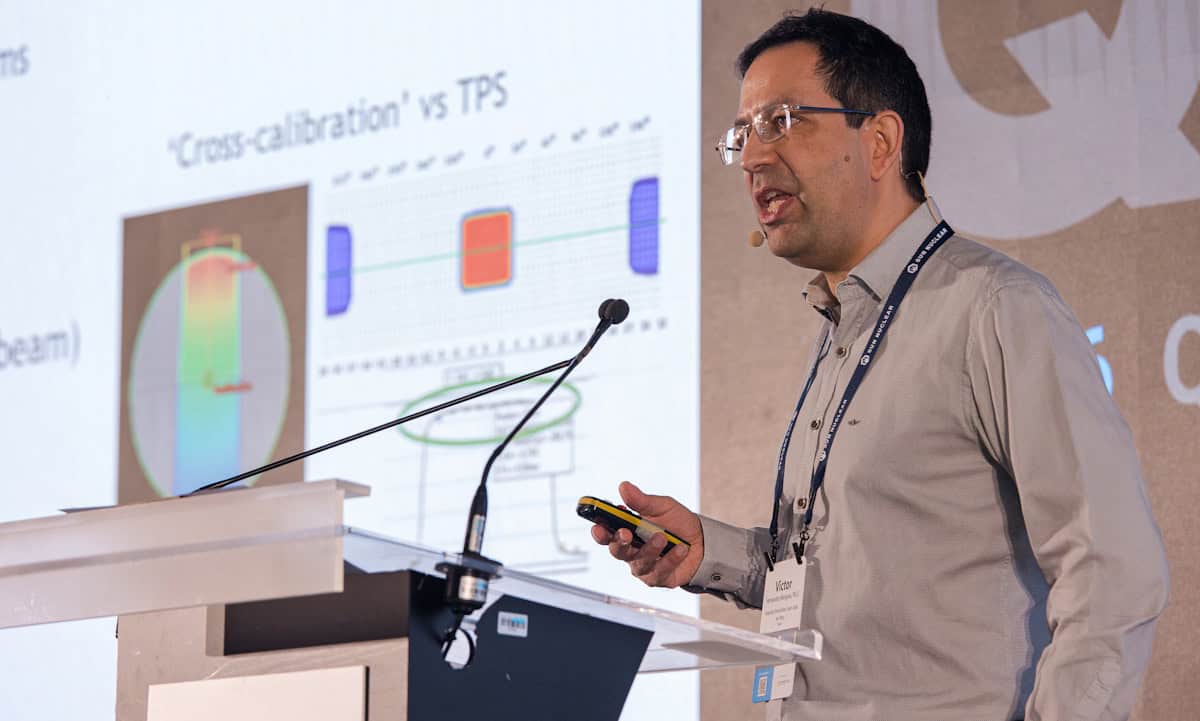
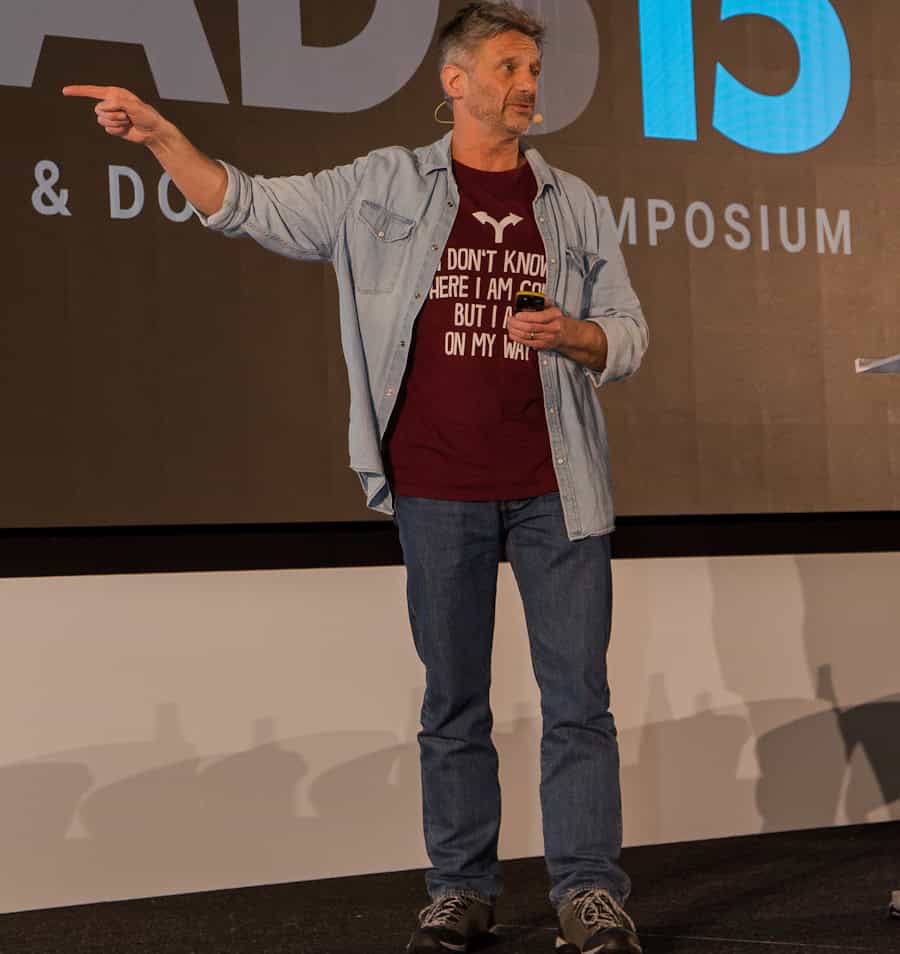
This was the question discussed at the QA & Dosimetry Symposium (QADS) hosted earlier this year by Sun Nuclear. In an animated debate, Victor Hernandez of Hospital Universitari Sant Joan de Reus in Spain and Dirk Verellen of the University of Antwerp and Iridium Netwerk in Belgium, considered the options.
Far fewer PSQA measurements
“We are debating today because we have a problem,” said Hernandez. “Measurement-based PSQA is not sensitive, not efficient and just not working.” The good news, however, is that a simple independent dose calculation – as provided by software-based PSQA – is an order of magnitude better at detecting failures than measurements.
Victor Hernandez “We need to commission and standardize all the steps of the radiotherapy process.” (Courtesy: Sun Nuclear)
Hernandez emphasized that to make this shift, it’s essential to commission and standardize the whole radiotherapy process, including not just the linac and treatment planning system (TPS) but the PSQA system itself, to optimize how it is used and understand its limitations. Perhaps the most important step is commissioning the treatment planning process – or “QAing” the plan characteristics. “Less complex plans tend to be more accurate and more robust to uncertainties,” Hernandez explained. “So you need to evaluate and minimize plan complexity during treatment planning.”
He proposed a simple process for QA of treatment planning, based on class solutions (pre-defined dosimetric objectives and geometric parameters) that incorporate complexity metrics in their definition. These class solutions are validated using measurements and used to standardize treatment planning. If a final plan falls outside of the class solution, it will require verification using both measurements and software. But most clinical plans will be within a class solution, where software-based verification will suffice.
Hernandez noted that if you’re performing less PSQA, then machine QA becomes more important and must be reinforced. This could, for example, involve measurements of a fixed set of complex plans every few weeks to make sure that the linac is stable. “But that’s no longer PSQA – it’s part of your machine QA programme,” he emphasized.
“You can perform treatment planning without controlling or evaluating the plan parameters, but then there’s no consistency in your plans and you need pre-treatment measurements of all plans because you’re not in control,” he explained. “Or you can control the plan parameters. Then you reduce variability, improve robustness and quality, and you don’t really need PSQA measurements anymore because that’s part of QA, which is of course, much more efficient.”
“That’s my vision for enhancing safety and advancing QA,” Hernandez concluded.
The unknown errors
Verellen was less convinced that measurement-based PSQA is obsolete. Contemplating Hernandez’s arguments, he agreed that phantom-based pre-treatment PSQA is “just recommissioning over and over again”, noting that “you won’t see any errors in your PSQA unless you have done your commissioning wrong.”
Dirk Verellen “For me at this moment, patient specific pre-treatment QA is my backup.” (Courtesy: Sun Nuclear)
He concurred that accurate commissioning should pick up any mechanical or dosimetric errors, dose tracking can account for anatomical variations, and surface- and image-guided radiotherapy can address positioning errors. “And we also have in vivo dosimetry,” he added. “So in principle, we are covered.”
But sometimes, the things that go wrong are the things nobody thought to look for. “You might have a very good plan, but are you really sure that everything is covered?” he said.
One obstacle is knowing which metrics to use to define a complex plan. Another problem lies in the onslaught of new technologies such as online adaptive that create and deliver a plan in minutes. Verellen pointed out that companies are selling complex adaptive systems as a plug-and-play option that can be commissioned and treating patients in just a few weeks. “Your department is not ready for that. You don’t have the procedures. People are not trained for that,” he emphasized.
And as software is updated, hardware is upgraded and AI is rapidly becoming inherent in ever more stages of the radiotherapy workflow, it becomes challenging to rely on existing procedures. “With this large-scale introduction of AI and automation, we really start to rethink our role as humans in monitoring that process,” said Verellen.
The big challenge is to anticipate each and every kind of error that could possibly occur. And as Verellen pointed out, radiotherapy is much more than just the treatment machine. “There are a lot of people [involved] and they may make mistakes,” he said. “The interactions of the different system components make things so complicated that it’s very difficult to really anticipate all the things that might go wrong.”
What’s needed is a way to evaluate, validate and monitor the entire treatment chain, and a way to detect and avoid catastrophic events. Currently, pre-treatment PSQA is still an important safety barrier in this respect, he emphasized, by detecting the small, unexpected errors that could add up to create a catastrophic event. Moreover, in vivo dosimetry (IVD) will become even more important as a final safeguard of quality that, in the case of online adaptive radiotherapy, will need to evolve into real-time IVD.
“We need rigorous commissioning, but we need to realise that this cannot predict every situation,” said Verellen. “That’s my main point: as my father used to say, ‘don’t throw away your old shoes before you have the new pair’ – this is why we still need pre-treatment patient-specific QA at this stage … until we’ve figured out how to deal with the new developments.”
Near agreement
Remarkably for a conference debate, Hernandez and Verellen agreed on many points – in particular, that the field requires a redefinition of radiotherapy QA. “AI and automation are like a tsunami coming over us and we are not prepared for it,” said Verellen. “We have to step back and rethink the QA of the process.”
Where they differed, however, was on whether it is safe to abandon current PSQA measurement practices right now. “We know where we want to go, but we’re not there yet,” said Verellen.
“I agree with Dirk about many things,” said Hernandez. “But pre-treatment verification to a phantom is not patient safety. That’s why we need to make sure that our plans are accurate and robust, then you can verify it in every single fraction.”
“That works if the flow goes according to plan,” Verellen countered. “But unpredictable things happen.” He likened the risk to that of skydiving, where sky divers spend much time meticulously folding the parachute to guarantee that it will open. “But I’ve never seen a sky diver jumping without a reserve parachute,” he said. “For me, pre-treatment PSQA is my backup, until we have a solution that’s more or less watertight. And at this moment, it is not.”
Both agreed that the way forward is to focus, not just on the machine or the plan, but on understanding and verifying the entire treatment process – particularly the treatment planning and delivery processes. Treatment verifications such as real-time beam monitoring systems and IVD are also crucial for patient safety. “We need to think about how to better monitor all these processes to really advance QA and improve safety for patients,” said Hernandez.
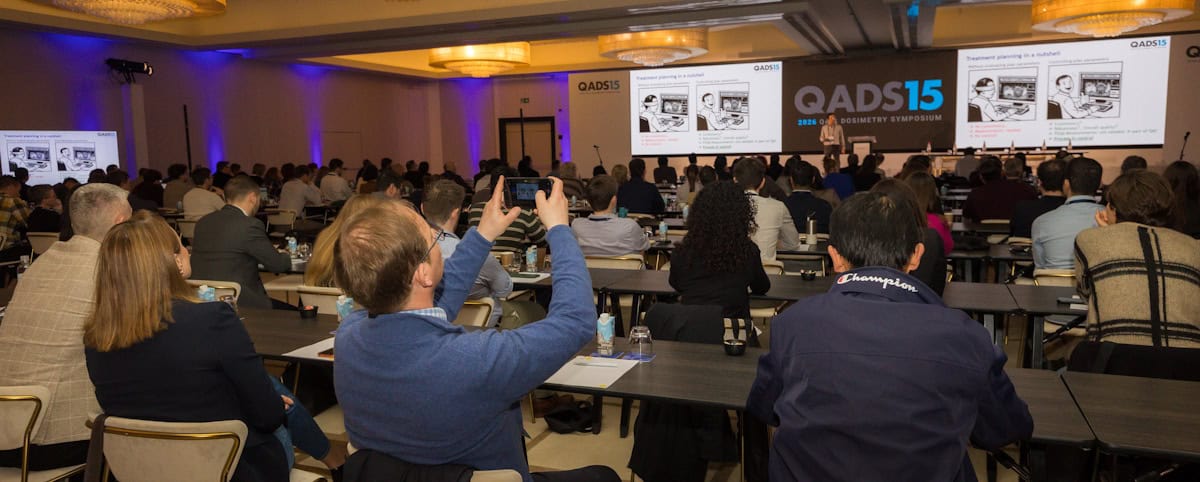
Top billing In one of the most talked-about sessions at QADS15, delegates crowded in to learn how treatment quality can be maintained as radiotherapy becomes more complex, more automated and faster than ever before. (Courtesy: Sun Nuclear)
The next frontier
While the QADS debate was framed as “measurement versus calculation”, Greg Robinson from Sun Nuclear reiterates that the real evolution is the shift from checking a device to monitoring the entire process, driven by the introduction of automation and AI.
“The debate was interesting because they were arguing for both extremes, but I think the field is going to land somewhere in the middle,” Robinson tells Physics World. “It’s not that physical measurements are going away, but the frequency by which clinics are doing these measurements is dropping.”
Verellen pointed out that to enable the uptake of software-only PSQA, “we need QA tools that monitor the process”. One option for completely virtual pre-treatment QA is the DoseCHECK secondary 3D dose calculation algorithm and PerFRACTION, both part of SunCHECK from Sun Nuclear.
“SunCHECK brings machine and patient QA together in a single platform,” explains Robinson. “[This] lets a clinic see relationships that isolated tools miss; for instance, when a change in machine performance begins to show up in patient results.” Meanwhile, for adaptive online radiotherapy, AdaptCHECK provides an independent secondary check of the adapted plan within the session time frame.
Looking further ahead, Robinson predicts that the next frontier will be “turning connected QA data into understanding”. In other words, ensuring that errors are not just detected, but can be understood and prevented. “It isn’t enough to tell a physicist that a result passed or failed – the value is in the why: what’s trending, what’s related, what’s likely to drift next,” he explains. “Sun Nuclear is developing new solutions to help physicists untangle the meaning behind all of this data, and make connections across machine and patient data much more seamless.”
Robinson concludes that measurement-based PSQA is not obsolete, but can no longer stand alone. “The future is an independent, connected, insight-driven QA layer that spans machine and patient, works where measurement can’t, and explains the results it produces,” he says. “Quality first, delivered by automation and intelligence rather than replaced by them. That’s exactly where Sun Nuclear is investing.”
The New York Times recently published a 124-page special issue of its Style Magazine entitled “How to be cultured”. According to the cover of this glossy, ad-driven supplement, the contents were “idiosyncratic” but amounted to a “compendium of what you need to know right now”. The material had been “chosen by experts” for the purpose of “teaching readers how to be more cultured”.
Curious as to what would be included, my hopes were raised by the magazine’s lead editorial. It said that the issue “celebrates expertise, a quality ever less valued in our culture today, where learnedness and firsthand research can be overshadowed by slick presentation and dumb certainty”.
Now, I’m not naïve. I know that the New York Times Style Magazine caters to advertisers, who in turn cater to wealthy readers who feel the need to spend gobs of money to get culture. It didn’t therefore surprise me to have to leaf through 40 pages of adverts for jewellery, champagne, watches and home furnishings before finally coming across the table of contents.
I saw headings for film, food, music, theatre, fashion and the visual arts. Shakespeare showed up several times: over half a dozen plays, sonnet #94 and one of his monologues. There were entries for 1930s movies, animated videos and films from Brazil. One page on food and drink covered porridge from Norway, meat from Mexico, lemonade from Vietnam and wine from Austria.
There was no mention of science in “How to be cultured”, nothing at all
Novels from the US, UK, France, Japan, India and Brazil made the list, as did selections of music from medieval times to opera and hip-hop. Samples of theatre, puppetry and architecture made it in too. But there was no mention of science, nothing at all. The closest I found were architectural materials such as plaster, glass, steel and textiles.
Snow’s lament
The absence of anything scientific should not have shocked me; in fact, it reminded me of the British scientist and novelist C P Snow’s 1959 essay The Two Cultures and the Scientific Revolution. Even back then, Snow lamented that humanists and scientists were living in two separate cultures divided by a “gulf of mutual incomprehension”.
In the essay’s most famous passage, Snow wrote that “a good many times I have been present at gatherings of people who, by the standards of the traditional culture, are thought highly educated and who have with considerable gusto been expressing their incredulity at the illiteracy of scientists”.
“Once or twice,” he went on, “I have been provoked and have asked the company how many of them could describe the Second Law of Thermodynamics. The response was cold: it was also negative. Yet I was asking something which is about the scientific equivalent of ‘Have you read a work of Shakespeare’s?’”
Snow did not stop there. “I now believe,” he continued, “that if I had asked an even simpler question – such as, ‘What do you mean by mass, or acceleration’, which is the scientific equivalent of saying, Can you read? – not more than one in ten of the highly educated would have felt that I was speaking the same language.”
“So the great edifice of modern physics goes up,” he concluded, “and the majority of the cleverest people in the western world have about as much insight into it as their neolithic ancestors would have had.”
Culture club
Snow’s tone was snobby and arrogant, but he was on to something. Can someone who knows nothing about, say, Einstein’s equation E = mc2 or about Heisenberg’s uncertainty principle really be called cultured? Sure, cultured individuals don’t need to know much about these topics. But they ought at least to realize that those equations concern how mass and energy work and the inherent limitations to what humans can know.
I’d say those are principles fundamental to the formation, maintenance and fate of the universe – and ones that a cultured person ought to know something about. Indeed, references to them are routinely found in arts and popular culture. Einstein’s equation has made the cover of Time magazine, while the uncertainty principle has been taken up by novelists, theologians and comedians.
Shouldn’t a cultured person be acquainted in some way with the existential threats facing the world?
Further, shouldn’t a cultured person be acquainted in some way with the existential threats facing the world? Wouldn’t such a person have to have an inkling of the way a carbon molecule absorbs and emits heat, of how vaccines work, and of safe and unsafe levels of substances toxic in high doses? How cultivated can an ostrich be?
Of course, there was nothing about the second law in “How to be cultured”, or about any other science of the sort Snow had in mind.
Nothing about scientific equations, experiments, theories or facts that a cultured person ought to know.
No discussion of dark matter, dark energy or of quantum physics, genes or vaccines. Nor about the Pythagorean Theorem or the double-slit experiment.
The critical point
Culture refers to the influences and values that are embedded in the way we live. Judging such influences and values – deciding which influences and values ought to be so embedded – is a tempting but arrogant game.
So let’s play. Imagine that you are among the experts charged with compiling a “compendium of what you need to know right now”. What would you include of science – and why? Send me your contributions, and tell me why they are what we need to know, and I’ll write about them in a future column.