Medical physics – the application of physics principles and techniques to medicine – plays a pivotal role within modern healthcare, with advances in the field serving to improve diagnostic accuracy, treatment precision and patient safety. But despite its immense potential to enhance patient care, medical physics in the UK faces various funding, regulatory and approval challenges that may prevent it from fulfilling this promise.
Taking a closer look at these obstacles, the Institute of Physics (IOP) has published a new community perspective report entitled Medical Physics in the UK: Opportunities and Challenges. The report examines the barriers to translation and commercialization of medical physics research, and proposes the next steps towards creating a more supportive environment for medical physics in the UK.
The report was instigated by the IOP Medical Physics Group and presents the conclusions of a series of discussions, held over two months, examining the challenges that medical physicists encounter in their daily work. The report also highlights the outcomes of an intensive two-day workshop examining the translation of quantum technologies into clinical applications.
The challenges and the opportunities
The UK has a strong legacy of leading medical physics research. To benchmark its contributions, the report authors analysed the top 5% most highly cited papers published in international medical physics journals from 2014 to 2023, revealing that the UK is fourth in the world for its research output in medical physics.
The UK also boasts a large, diverse medical technology industry and has the sixth largest medical device market globally. Notably, its research output involves a high proportion of non-academic co-authors – including corporate, government and clinical collaborators – suggesting a strong potential for translating physics research into the medical market.
The report identifies some of the challenges in realising this potential, including a stretched workforce and critical skills shortages, and outlines some of the more impactful obstacles – namely misaligned funding structures, a complex regulatory landscape, and lengthy approval processes for medical devices and clinical trials.
In the UK, medical physics research is funded by a combination of government agencies, charitable organizations, and independent trusts. The multidisciplinary nature of medical physics, however, risks promising projects falling into the gaps between funding categories, making it difficult for researchers to secure financial backing.
Navigating the regulatory landscape for medical physics developments is also a complex process, with different global markets having their own specific requirements. Challenges here include obtaining initial regulatory approval, adapting to evolving standards and managing multiple regulatory bodies simultaneously. And while new technologies are often sold into larger markets such as the USA and Germany, the UK’s medical device approval process lacks seamless integration with international regulatory bodies, creating barriers to such wider market adoption.
Finally, clinical trials and validation processes for medical physics innovations can often take several years. Securing funding for large-scale trials and collecting sufficient data to demonstrate long-term efficacy can also lead to delays in introducing new technologies to patients.
Overcoming these challenges will be key to fully exploiting the significant potential of medical physics to revolutionize healthcare in the UK. An initial step could be to bring together this diverse community – including researchers, medical practitioners, industry, NHS officials, government representatives and funders – to initiate a collaborative dialogue and brainstorm innovative strategies.
The report suggests three possible discussion points: how to better align funding mechanisms to support interdisciplinary research; how to shape an integrated regulatory framework with increased transparency; and how to strengthen collaboration between academia, healthcare and industry.
Such discussions should result in a comprehensive list of actionable recommendations. The report authors propose that the IOP establishes an impact project to explore the details of these recommendations and identify pragmatic, implementable solutions for their implementation.
By harnessing the unique properties of tantala (tantalum pentoxide), a team of US-based researchers has created a photonic integrated circuit that can be tuned to deliver laser light across a broad spectrum of visible and infrared wavelengths.
The work was done by researchers at the National Institute of Standards and Technology (NIST) and colleagues at Octave Photonics.
From consumer electronics to atom-based metrology systems, many modern technologies depend on sources that deliver light at specific wavelengths. However, delivering high-quality narrow-band light is difficult – especially at visible wavelengths. As a result many of these technologies cannot be miniaturized to create low-cost, portable devices. Instead they must be implemented in bulky tabletop setups that are operated in expensive laboratory settings.
“Photonics technology offers routes to miniaturize components like laser sources and switches to the chip scale – devices smaller than a grain of rice,” explains study leader Grant Brodnik . “Different photonic materials have different strengths and limitations, and there is currently no single material ecosystem that can accommodate all the diverse demands of photonics.”
Mismatched materials
One promising solution involves integrating multiple advanced materials into the same device, harnessing combinations of their photonic properties to engineer capabilities that would not be possible with any single material. The key challenge is that many photonic materials have mismatched thermal, mechanical, and chemical properties, making them broadly incompatible with one another. So far, this has prevented researchers from seamlessly combining multiple materials into chip-scale devices.
To address this challenge, Brodnik’s team looked to the unique properties of tantala. A key feature of the material is that it can transform laser light at one frequency into laser light within a broad spectrum of light at visible and infrared wavelengths.
Tantala can be deposited onto other materials at room temperature, before being annealed at relatively modest temperatures of around 500 °C. In comparison, more conventional materials such as silicon nitride require annealing temperatures approaching 1200 °C.
Once deposited, tantala benefits from low internal mechanical stress, at around 38 MPa compared with around 800 MPa for silicon nitride. Together, these properties make it compatible with a broad range of underlying substrates and structures without damaging devices during fabrication.
In this latest work, Brodnik and colleagues deposited tantala directly onto a patterned thin-film substrate of lithium niobate – which itself an advanced photonic material. The result is a monolithically integrated, 3D photonic platform.
Sprinkling tantala
“We essentially sprinkle tantala directly on top of existing photonic circuitry,” Brodnik explains. “Then, we can make new photonics circuits on top, link other circuits below, or even operate together with the underlayer material and devices for new functionality.”
The team then showed that their combined platform is capable of a range of useful capabilities. “We demonstrated various photonic functions that involve generating new, custom-colour light sources from single-colour input lasers,” Brodnik says. “We also made frequency combs and supercontinuum, which are important tools for things like optical communications, precision metrology, and sensing applications.”
Several of these devices relied on the tantala and lithium niobate layers working in tandem. For instance, they used tantala to generate intense laser pulses, before passing light into the lithium niobate layer for further nonlinear processing. This allowed them to precisely measure the frequency of the laser light.
The work points to a new and broadly applicable route to the 3D integration of photonic materials, which could make it far easier to link advanced photonic functions across existing platforms.
In turn, this could open new pathways towards the scalable, affordable fabrication of complex photonic circuits, applicable in real-world devices. “New configurations offer opportunities to realise entirely new photonic designs that will drive lab experiments to field-deployable systems,” Brodnik says.
The quantum-technology sector is burgeoning, but challenges remain when it comes to creating viable commercial products. While quantum sensors show great promise, some technologies rely on ultrahigh vacuum (UHV) – which is difficult to achieve in compact, portable devices.
My guest in this episode of the Physics World Weekly podcast is Florence Concepcion, who focuses on the miniaturization of UHV systems for practical quantum sensors and other devices. She is a senior quantum engineer at Aquark Technologies – a UK-based company that is developing cold-matter quantum technologies.
In 2025 Concepcion was awarded a £1.9m Innovate Future Leaders Fellowship by the UK government. She explains how that money will be spent over four years to develop vacuum systems for quantum technologies.
Before joining Aquark, Concepcion did a PhD on a topic at the intersection of astronomy and atomic physics. She talks about her transition from academia to industry and we chat about careers for physicists in the quantum sector.
SmarAct proudly supports this episode of Physics World Weekly. The company advances breakthroughs in science and technology through high-precision positioning, metrology and automation. Discover how SmarAct shapes the future of innovation at smaract.com.
In scientific terms, fission and fusion are two sides of the same coin. The first produces energy by splitting big atomic nuclei into two or more pieces. The second produces it by combining two or more small nuclei into a larger one. In both cases, the difference between the mass you start out with and the mass you end up with determines how much energy you get, following Einstein’s famous equation E=mc2.
Practically speaking, though, fission and fusion are worlds apart. Fission power plants have been putting electrons on the grid since the 1950s. In 2024, they produced around 10% of the world’s total electricity – less than coal, gas or hydropower, but more than wind and solar.
Fusion power plants, in contrast, do not exist yet. Although the US National Ignition Facility (NIF) can generate more energy from a pellet of fusion fuel than it delivers to the pellet, not even its biggest fans would mistake it for a power plant. A Europe-based fusion experiment, ITER, remains under construction after years of delays. And so far, the private fusion companies that have sprung up in recent years have only designs, not working devices, to show for their efforts.
It’s an interesting question, then, why the vibes at last week’s Fusion Fest – which took place on 14 April in London, UK – were so much better than those at the Nuclear Summit held the next day in the same location. Both events took place under the auspices of The Economist newspaper. Both featured experts from finance, government, academic and policy circles. So why was the fusion gathering so bullish, and why was the fission one so downcast?
Fusion is having a moment
If you believe the speakers at Fusion Fest, they are optimistic because, after decades of being – as the old gibe has it – permanently 20 years in the future, fusion energy is finally ready for its close-up. “We are, I believe, at a pivotal moment in the field, and it’s a very exciting time to be in it,” Tim Bestwick, the interim chief executive of the UK Atomic Energy Authority (UKAEA), told the crowd at the opening session.
Later that day, a subsidiary of UKAEA, UK Fusion Energy Ltd, unveiled its strategy for building a pilot fusion power plant. Known as the Spherical Tokamak for Energy Production (STEP), it is receiving £1.3bn in UK government support and is scheduled to begin operations in 2040.
Other fusion organizations are promising results on even shorter timelines. A start-up called Pacific Fusion has pledged to build a power plant based on inertial fusion by the mid-2030s. Another company, Proxima Fusion, has a 2035 target for its stellarator-based technology. A third, Commonwealth Fusion Systems, is building a tokamak-style reactor that will, it claims, generate its first plasma (though admittedly not its first net energy) next year.
Declaration of energy independence: Koichi Masuda is the chief executive of Liberty Fusion, a spin-out from Los Alamos National Laboratory in the US. His company aims to produce a commercially viable version of the lab’s plasma-jet driven magneto-inertial fusion technology. (Courtesy: Margaret Harris)
The spokespeople for these firms (and many others) have a strong incentive to be optimistic. They’re trying to attract funding, and in most cases, they’re relying on notoriously impatient venture capitalists rather than nations like the UK (and, on a far bigger scale, China) that can afford to take a longer view. A certain amount of pie-in-the-sky thinking is to be expected from them. Yet when The Economist’s global energy and climate innovation editor, Vijay Vaitheeswaran, asked a more diverse pool of attendees to predict when fusion would become cost-competitive with solar, the most popular choice was “within 20 years”. It certainly wasn’t “never”.
Bumps on the road to limitless energy
A few Fusion Fest speakers did mention some potential pitfalls. One area of concern is that suppliers of key components – high-grade optics for laser fusion, high-temperature superconducting wire for magnetic fusion, and so on – do not yet have the capacity to support a growing fusion sector. This is a financial problem as well as a technical one. Jeff Lawson, the chief executive of Inertia Fusion, warned the audience that fusion will only succeed commercially if it follows the example of solar power by using components manufactured cheaply and at scale. Otherwise, he said, it risks becoming more like nuclear fission, characterized by expensive, bespoke facilities.
In a similar vein, several speakers suggested that it would be a serious setback for the field if fusion – which produces far less radioactive waste than fission, carries no risk of meltdown and does not use materials that can be repurposed for nuclear weapons – ends up bearing the same regulatory burden as fission reactors. Indeed, one audience member drew murmurs of agreement by asking whether fusion experts should avoid using the word “reactor”, to remove any associations with fission nuclear power.
Nuclear’s (new) new dawn
With fusion’s enthusiasts promoting it as the clean, safe nuclear energy of the future, it’s easy for fission to get cast as the waste-producing, meltdown- and proliferation-prone nuclear energy of the past. Yet there are reasons to be optimistic about fission’s prospects, too. Recent increases in energy demand have triggered an uptick of interest in low-carbon baseload power. So, too, has the Iran War and the closure of the Strait of Hormuz, which threatens the world’s supply of fossil fuels in a way that hasn’t happened since the 1970s. Back then, France responded by building 57 new fission reactors. Could it happen again?
Charles Oppenheimer certainly thinks it could. The grandson of atom bomb pioneer J Robert Oppenheimer, he is the founder and chief executive of Oppenheimer Energy, which aims to accelerate reactor deployment. At the Nuclear Summit, Oppenheimer argued that “economic tailwinds” are producing a burst of optimism about nuclear power, as new concerns about energy security join older ones about climate change. But even he couldn’t avoid sounding a note of caution. “Institutional capital does not look at nuclear as an investible product,” Oppenheimer warned. “It looks at it as a field with a bad track record.” To counter this view, he argued, “we need to get something going to justify the optimism.”
Small reactors could be huge…
For many attendees, that “something” is small modular reactors (SMRs). Because they are designed to be somewhere between the size of a shipping container and a house, the idea is that SMRs could be assembled by the hundreds in factories, rather than constructed on-site in ones and twos. This would save time and money, which is essential in an industry with a reputation for high costs and long delays. As Tim Stone, a former chair of the UK Nuclear Industry Association, put it, the nuclear industry needs to treat “construct” as a dirty word: “Anyone who says ‘construct’ has to put £5 in the swear box,” he said.
SMRs promise other benefits, too. Their small size makes them less prone to catastrophic meltdowns, and they are poorly suited to producing material for nuclear bombs. For these reasons, some speakers expressed hope that they could be regulated like research reactors, not power plants. That would ease the burden on developers and further reduce the time required to constr – sorry, manufacture – them.
Another advantage of SMRs is that in principle, they can be installed in places where large-scale power plants would not make technical or economic sense. For example, the UK firm Cambridge Atomworks is developing a 5 MW SMR that is designed to supply power to mines in remote locations. According to its chief executive, Ian Farnan, such a reactor could compete with diesel generators on logistics and environmental considerations as well as price.
Government backing: Patrick Vallance, the UK Minister for Science, Innovation, Research and Nuclear, speaking at Fusion Fest in London. (Courtesy: Margaret Harris)
More promising still – at least from an investor perspective – is the prospect of using SMRs to power AI data centres. The largest such centres can consume as much as a gigawatt of electricity, and their developers are increasingly looking off-grid for ways of powering them. They also have stringent uptime requirements (the industry standard is “five nines”, or 99.999% availability) that make them awkward for variable energy sources such as wind and solar. With local communities unsurprisingly objecting to data centres that run on noisy, polluting gas generators, SMRs are an attractive alternative. “If you want clean, firm, reliable and shit-tonnes of power, it’s got to be nuclear,” summarized Amy Roma, a lawyer and nuclear energy policy expert at the law firm Orrick.
…but maybe not right away
Despite these developments, though, an SMR-led fission revival is far from guaranteed. James Walker, the chief executive of the SMR firm Nano Nuclear Energy, drew pained laughter from the audience when he declared that the problem with small modular reactors is “they’re not small and they’re not modular”. Robert Rudich, the chief business development officer at another SMR firm, CGE, agreed that this is something the industry needs to work on. “If we don’t bring [reactors] to a place where the private sector can help, we’re not going to get there,” he said. On the policy front, Najat Mokhtar, the deputy director general of the International Atomic Energy Agency, isn’t sure that regulators will go easy on SMRs. “The technology is evolving fast and the regulation and licensing is not,” she warned.
With a technology that faces such knotty problems, it’s easy to be pessimistic. But it’s also easy to be optimistic about a technology that hasn’t matured enough to run into similar difficulties. This is the main reason for the different moods within fusion and fission. Though the fusion community may see the nuclear industry as a model of what not to do, many nuclear experts return the favour by regarding fusion as vapourware promised to gullible investors on impossible timelines. Will technical advances, climate concerns and the rising tide of world energy usage come together in a way that proves both sets of doubters wrong? Perhaps a future Fusion Fest and Nuclear Summit will hold the answers.
This article was amended on 23/04/2026 to update Amy Roma’s affiliation and on 27/04/2026 to correct the nature of Pacific Fusion’s power-plant concept.
Almost 1400 people, including two Nobel laureates, have signed an open letter condemning the US/Israeli attacks on Iranian academicinstitutions. The signatories call on the international community to “protect scientific infrastructure, defend academic life, and uphold the principle that knowledge-serving institutions must never be treated as expendable in war”.
The letter, which is addressed to the United Nations secretary-general, the director-general of UNESCO, the UN High Commissioner for Human Rights and “the governments of all parties to the conflict”, was instigated by the theoretical condensed-matter physicist Alireza Qaiumzadeh and colleagues from the Norwegian University of Science and Technology.
The signatories, which include May-Britt Moser and Edvard Moser who shared the 2014 Nobel Prize in Physiology or Medicine, express their “grave concern” over the attacks that they say have “damaged laboratories, universities, hospitals, and other scientific institutions”.
Organizations that have been attacked include Isfahan University of Technology, Iran University of Science and Technology and the Pasteur Institute of Iran and Sharif University of Technology. During the 12-day war between Israel and Iran in June 2025, Israel’s Weizmann Institute of Science and Ben Gurion University were also hit.
“Scientific and educational institutions are civilian spaces essential to public health, knowledge, and human survival,” the letter states. “Their destruction endangers researchers, students, medical personnel, and the broader public, while causing lasting harm to science and society.”
Qaiumzadeh says that many of the Iranian research institutions that have been destroyed were built over decades under sanctions. “My colleagues in Iran are deeply disheartened to see that what they achieved under such difficult conditions has been reduced to rubble,” he says.
Due to the ongoing war, which began on 28 February, many schools, universities and research centres – in which more than 60% of Iranian students in STEM subjects are women – are now closed, with courses forced online under limited internet access.
Particle physicist John Ellis from King’s College London, who is among those who signed the letter, says that he counts many Iranian, Gulf State and Israeli physicists among his colleagues and friends and says he has visited some of the institutions that have been attacked.
“I deplore any and all military attacks on universities, and indeed other educational institutions,” adds Ellis. “I can only hope that this open letter and the publicity it receives may help convince the belligerents to refrain from such attacks.”
The letter now calls on all parties in the war to “immediately” end attacks on civilian scientific and educational sites. “Science is not a military target,” the letter states. “Universities and laboratories must not become battlefields.”
It also calls on international bodies to “document [the] damage”, “protect affected scholars and students” and “support independent investigations into violations of international humanitarian law”.
Qaiumzadeh told Physics World that he finds it “particularly troubling” the scientific bodies, such as academies and international scientific organizations, have remained largely silent during the conflict.
“They must understand that undermining academic institutions will only worsen the situation for those who believe in gradual, constructive change within Iran’s complex society,” he says.
The quantum revolution is no longer a distant dream. It is unfolding right now, promising to shake up computing, communication and security on a global scale. The race to harness these transformative technologies will not, however, be determined by who succeeds in manipulating qubits – but by who can secure the ideas that make this technology possible.
Intellectual property (IP) is the currency of innovation, and in the quantum era, it will determine whether breakthroughs become valuable assets or lost opportunities. Quantum physics has already made a huge contribution to global economic growth: just think of the billions of transistors in the smartphones that we carry around in our pockets.
But the “quantum 2.0” revolution, which will exploit phenomena such as superposition and entanglement, is set to bring us entirely new kinds of devices. In fact, quantum computers are already developing so fast that they will soon complement (even if they probably won’t entirely replace) the classical computers we all take for granted.
Given the huge potential, it’s hardly surprising that many countries around the world have national quantum research programmes. The UK, for example, recently announced unprecedented levels of grant funding in this area as it enters a second – and hugely ambitious – 10-year quantum initiative. Bringing together entrepreneurs and inventors from diverse fields to develop scalable qubit architectures and quantum-secure networks, the programme is well placed to deliver a strong return on the initial investment.
Another sign of the UK government’s commitment to quantum technology, despite well-publicized cuts to other areas of physics research funding, is the SpeQtre satellite. Launched late last year as a collaboration between the Science and Technology Facilities Council, RAL Space and Singapore’s SpeQtral, it will test how “encryption keys”, based on entangled particles, could lead to ultra-secure space-based communication.
IP assets are important, being essentially government-awarded prizes that encourage innovation
For too long, though, the UK has pioneered groundbreaking achievements, but failed to turn those accomplishments into economic benefits. That’s why IP assets are so important, being essentially government-awarded prizes that encourage innovation.
When it comes to patenting quantum technologies, however, companies in the UK and the rest of Europe are falling behind competitors in the US and China. There is still time to catch up. But we risk losing out – even in our own markets – if UK businesses fail to protect their quantum innovations.
Patent protection
Despite being so counter-intuitive, quantum technologies need to satisfy the same patentability requirements as any other type of invention. They must, in other words, be new, inventive, industrially applicable, not excluded from patent protection, clearly defined and sufficiently explained.
Patent laws around the world are these days largely harmonized, although there is some divergence in how different countries assess whether an invention should be excluded from patentability. In the UK and Europe, for example, there are ways to get around patent exclusions for innovation that relates to discoveries, scientific theories, mathematical methods, business methods and computer programs.
Patent law is continually developing as it catches up with emerging science, especially in areas such as quantum computing, artificial intelligence (AI) and smart technology. The UK Supreme Court, for example, recently handed down a judgement that brought UK law up-to-date regarding how the patentability of inventions is assessed, especially those related to AI software.
Quantum algorithms can be patented by demonstrating technical effects that have been achieved
When it comes to assessing patentability, quantum computing is held to the very same standards as classical computing. Quantum algorithms, for example, can be patented by demonstrating technical effects that have been achieved. What’s more, guidance provided by the UK Intellectual Property Office explains that aspects of superconducting and/or photonic circuits for controlling processing and measuring qubits would likely escape exclusion.
Developments in quantum theory can be protected too, although to obtain patent protection, the patent application will need to explain how those quantum effects could be implemented by bringing together hardware that is already available today. It is worthwhile as well for patent applications that cover quantum innovation to set out the commercial opportunities that are envisaged.
Audit your assets
But it’s not all about patents. If you are looking to launch a business in the quantum sector, there are some other IP rights that are worth bearing in mind too. Registered designs, for example, can protect the appearance of products that you have created. Semiconductor topography rights can protect the design of integrated circuits, while trade marks can protect your brand, so that your business stands out from the rest of the market.
Building a robust IP portfolio is paramount for persuading investors that they should take the opportunity to support the deployment of quantum solutions
An IP audit by a patent attorney will help to identify the variety of ways to commercialize your quantum innovation, while also highlighting the risks as well as the potential opportunities too. Building a robust IP portfolio is paramount for persuading investors that they should take the opportunity to support the deployment of quantum solutions.
Remember though, that if you intend to pursue patent protection, you’ll need to file your patent application before your innovation is revealed to anyone who is not obliged to keep it confidential. Before you publish quantum physics research, you should therefore seek advice from a patent attorney, to ensure that your IP strategy aligns with your commercial objectives.
As theoretical and experimental quantum science matures into commercial applications and government industrial strategies, physicists will continue to make a vital contribution in shaping how their discoveries are to benefit our society. Together we will build a successful quantum economy.
A fundamental theory in electrostatics is that two particles with the same charge will repel and two particles with opposite charge will attract. This idea is built into most models that describe how particles behave in liquids. Yet over the past several decades, experiments have revealed that like charged particles can attract each other in solution, forming clusters that standard theories cannot explain.
In this work, researchers explore this unusual phenomenon and find that the attraction between like‑charged particles is strong, long‑ranged, and sensitive to the particles’ surface chemistry and size. Using optical imaging, they directly observed how pairs of charged microscopic spheres interact in different liquids with high precision. They tested particles with various surface coatings, including DNA and lipid bilayers, the same material that forms cell membranes.
Conventional electrostatic models treat the solvent as a uniform medium with a single dielectric constant, but real solvents (such as water) have structure, form hydrogen bond networks, orient themselves around charged surfaces, and can exhibit long‑range correlations. This research suggests that the way water molecules organise around charged surfaces creates an additional attractive force, known as the electrosolvation force. DNA coated and lipid coated particles show especially long‑range attraction, indicating that the interaction depends not only on the solvent but also on the chemical and structural properties of the particle surface.
Overall, this work shows that like charged particles can attract each other over unexpectedly long distances, something current theories say should not happen, revealing a missing piece in our understanding of electrostatic forces in liquids. These insights could reshape models of biological self-organisation and help explain how molecules such as DNA, RNA, and membranes naturally cluster and form structures inside cells.
“We are really excited about this emerging discovery and the possibility that what has been uncovered so far on interactions in fluids may be just the tip of the iceberg…” – Professor Madhavi Krishnan, University of Oxford
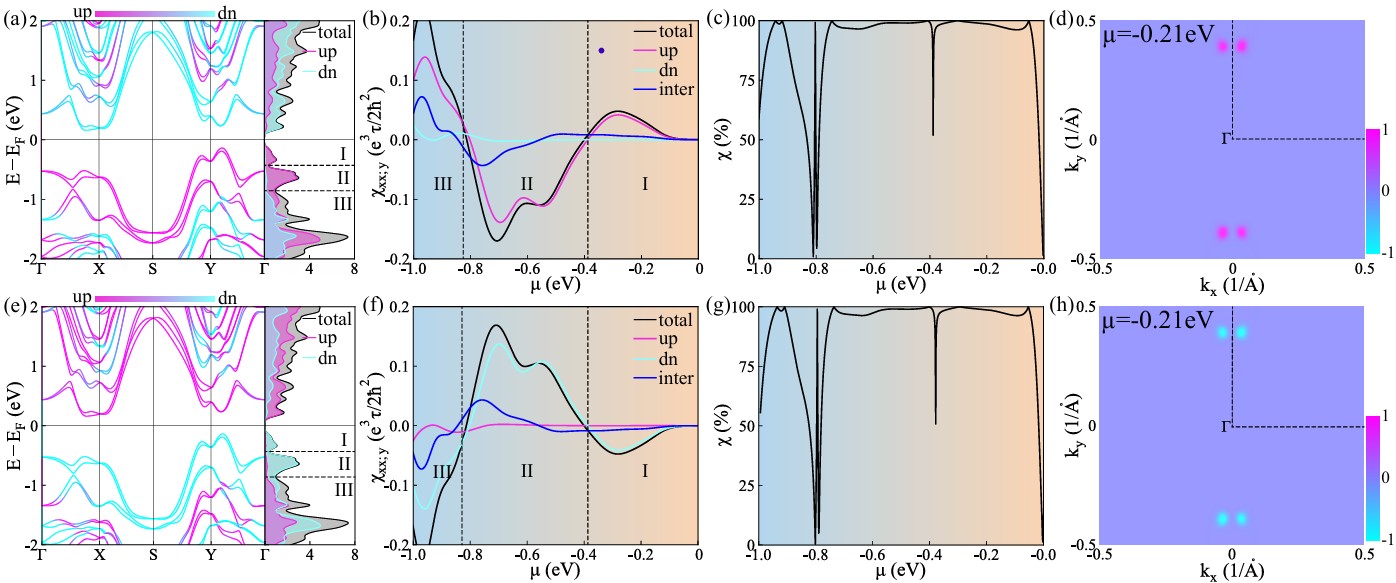
The Hall effect is a voltage that appears across a material when a current flows through it in the presence of an external magnetic field. The nonlinear Hall effect, however, can occur without a magnetic field if the material’s internal structure is asymmetric. It typically appears under an AC or oscillating electric field, and the resulting Hall voltage scales with the square of the input current, making it a nonlinear response. Researchers are interested in this effect because it could enable new types of sensors, low‑power logic elements, and electrically switchable quantum devices. But so far, the nonlinear Hall effect has been difficult to control in a reliable, switchable way. In this work, the scientists demonstrate a new method to control the second‑order nonlinear Hall effect using a gate electric field. They show that certain bilayer materials can switch the effect on and off when a gate field is applied, functioning much like a transistor. The switching is non-volatile, binary (ON/OFF), and does not require magnetism.
The researchers focus on bilayer SnSe and SnTe, well known ferroelectric and thermoelectric materials. Although these bilayers appear symmetric overall, each layer carries a hidden internal polarization. This hidden polarization is tied to a layer‑locked hidden Berry curvature dipole, the quantum property responsible for generating the nonlinear Hall effect. Under a gate field, the hidden polarization behaves like a pseudospin, and the gate field acts as a pseudospin Zeeman field, selecting the preferred orientation of this polarization. Reversing the direction of the gate field flips the pseudospin orientation and therefore switches the nonlinear Hall response.
Layer-resolved band dispersions and projected density of states, from figure 3 in article (Courtesy: Xiaoliang Xiao et al 2026 Rep. Prog. Phys. 89 020501)
By screening 80 possible bilayer symmetry groups, the authors identify 18 that can host this switchable effect, establishing a universal design principle for creating electrically switchable nonlinear Hall devices. This approach combines symmetry analysis, effective modelling, and first‑principles calculations, and it opens the door to future nonlinear quantum electronics. The same design principle can also be extended to other gate‑field-controllable nonlinear transport and optical phenomena, including the circular photogalvanic effect, the nonlinear Nernst effect, and second‑harmonic generation.
We’ve congregated outside the main physics lab at the University of Dschang in Cameroon when a shouting match ensues about the two red cards issued in last night’s football match. It’s as dark as night inside and the lecture on LAMMPS-GUI, a molecular dynamics modelling software, hasn’t started yet because it’s been raining. The power is out and the prof, who has access to the generator, has delayed his trip to work so as not to get wet.
These are typical scenes in central Africa, where learning is a challenge. There is no WiFi in the university so we have come armed with routers to get online. Students can’t use the university toilets due to lack of running water and researcher professors have to provide their own batteries for the much-needed generators that run the projectors and overhead lights.
Victoria Merriman outlines the principles of publishing. (Courtesy: Stephane Kenmoe)
I’m here to attend the seventhCentral African School on Electronic Structure Methods and Applications, which is being held alongside one of 23 satellite events to the Global Physics Summit (GPS) in Denver, Colorado, US. Organized by the American Physical Society (APS), the GPS is the world’s biggest physics conference, with 14,000 delegates, but not everyone has the time, money or visa paperwork to attend in person.
That’s why it’s great that the APS, along with AIP Publishing and IOP Publishing – which together form the Purpose-led Publishing (PLP) coalition – are hosting satellite events across Africa, Asia, the Middle East and South America to expand participation in this year’s GPS.
I’ve made the journey on behalf of the PLP to hold an editorial school at the university, teaching a variety of topics from artificial intelligence publishing policies to how to review academic papers. In my session with senior-career researchers at the university, I’m swamped with questions every time I pause to take a breath. They range from philosophical queries about funding access in the region, to funny misunderstandings, including when my pronunciation of “ORCID” misaligns with theirs.
Victoria Merriman (right) with Cladi Rodnet Boulingui, who had spent three days travelling to Dschang by bus. (Courtesy: Victoria Merriman/IOP Publishing)
The University of Dschang is a highly regarded institution in central Africa, so for Boulingui, whose visit is sponsored by the Universität Duisburg-Essen in Germany, it’s been worth it.“Dynamic simulations are highly relevant to my work, it’s worth the journey to access the specialist lecturer,” he tells me.
The organizing director, Stephane Kenmoe, has joined from Germany, where he is an associate professor at the faculty of chemistry at Duisburg-Essen. He regularly visits his alma mater, and current students benefit from connections he’s made around the world. He brings his entrepreneurial spirit with him: Kenmoe is an active promoter of the APS satellites in Africa, has made award-winning films about science, and is a champion of community engagement.
This collegiate spirit extends to the heads of department who have been called upon to write PhD curricula for neighbouring Francophone countries where scientific funding is lacking.
We end the week watching a film that Kenmoe has worked with the local film industry to produce, Seeds of Science. The film shines a light on the high percentage of child labour and child marriage in the region. The actress playing the young girl who is forced to marry instead of continue her studies has joined us from nearby Bafoussam to watch the showing.
Thankfully, Aisha is still studying, particularly enjoying economics, geography and English. There is a sombre mood in the room, only interrupted by laughter when the power fails. The power may be out but the joy and passion for learning continue to burn here in Dschang.
Participants watching the movie Seeds of Science. (Courtesy: Victoria Merriman/IOP Publishing)