CT imaging in radiotherapy: standardization and personalization are the driving forces

Fundamental transformation doesn’t come easy in radiation therapy given the countervailing forces at play within the clinical workflow. On the one hand, there’s the relentless drive among radiation oncology teams for enhanced efficiency and standardization across treatment planning, management and delivery. At the same time, those multidisciplinary care teams are striving to deliver increasingly personalized radiation treatments tailored to the needs of individual patients and their specific cancer indications.

The trade-offs between standardization and personalization are particularly evident when it comes to CT simulation in the radiotherapy suite – chiefly because of the requirement for patient imaging to service the needs of two very different end-users. Radiation oncologists, for example, seek optimized image quality to support contouring and delineation of the tumour volume as well as adjacent critical structures and organs-at-risk (OARs). Medical physicists, for their part, apply the associated tissue density data in the CT scan to calculate accurate 3D dose distributions for 3D treatment planning.

Clinical impact

Squaring that circle – generating a geometrically accurate and qualitative representation of the patient in tandem with robust dose calculations – remains an ongoing priority for the Cancer Therapy Business Line at Siemens Healthineers. The equipment vendor’s DirectDensity algorithm is a case in point, reconstructing images from single-energy CT acquisitions in which the resulting CT values at any given kV setting can be interpreted to show relative electron or mass density for dose calculations. Currently, radiotherapy treatment planning systems (TPS) require a kV-specific calibration curve to carry out this conversion (i.e. where tube voltage is allowed as an extra degree of freedom during simulation, this implies a time and resource overhead as well as a possible source of error in a busy clinical environment).

As such, the core innovation of the DirectDensity algorithm – a single linear relationship that does not depend on the tube voltage of CT acquisition – is something of a game-changer, unlocking the full potential of CT imaging in radiotherapy by dispensing with the traditional practice of scan protocols at a fixed tube voltage (typically 120 kV)1. By extension, the DirectDensity algorithm also reduces the scope for workflow errors that may be introduced if the medical physicist inadvertently selects the wrong TPS calibration curve.

At the clinical sharp-end, the advanced functionality offered by DirectDensity – the option to vary the tube voltage of the CT scanner while using one calibration curve – opens the way for care teams to design scan protocols that are more personalized to the patient. In the case of bariatric patients, for example, who have a higher X-ray attenuation, the output current of the X-ray tube at lower or conventional kV settings may not be sufficient to produce the required contrast-to-noise ratio. Here, higher X-ray tube voltages might be necessary. For paediatric patients or younger breast cancer patients, who might be unnecessarily exposed to higher radiation doses with a conventional 120 kV scan protocol, the contrast-to-noise ratio in the images could be maintained by using a scan protocol with lower kV setting – thereby lowering the received dose during CT simulation.

Educating the care team

Among the clinical early-adopters of the DirectDensity algorithm are medical physicist Enric Fernandez-Velilla Cepria and his colleagues at Hospital Del Mar in Barcelona, Spain. The clinic’s radiation oncology programme treats around 900 adult cancer patients every year – a wide range of disease indications excluding sarcomas – on a suite of three Varian machines (two TrueBeams and a GammaMedPlus brachytherapy system) and an additional intraoperative radiotherapy system for breast cancer patients.

Enric Fernandez-Velilla

“We were the first radiotherapy clinic in Spain to deploy the Siemens Healthineers SOMATOM Confidence RT Pro [in 2017], an advanced CT scanner for patient simulation,” explains Fernandez-Velilla. The timing was such that the Hospital Del Mar medical physics team was co-opted to work with SOMATOM Confidence development engineers on road-testing of the CT scanner’s advanced functionality – and specifically the preclinical validation of the DirectDensity algorithm. In this way, the evidence-based evaluation from the Barcelona team informed subsequent iteration of DirectDensity and its user interface ahead of wider clinical roll-out.

“Bear in mind,” adds Fernandez-Velilla, “DirectDensity was so new at the time that our first task here was an education and training process for the multidisciplinary oncology care team. Up to that point, we were used to working at a single CT tube voltage during CT simulation, so we needed to highlight the clinical advantages of imaging at different kV settings.”

The main beneficiaries of DirectDensity, he notes, are Hospital Del Mar’s radiation oncologists, who take advantage of the flexible kV settings of the CT scanner to fine-tune image quality for enhanced delineation and contouring across the clinic’s diverse patient population. When imaging obese patients, for example, the standard 120 kV setting often means too much noise and artefacts on the CT image, so there are improvements to be had by pushing the tube voltage out to 140 kV. “By the same token,” adds Fernandez-Velilla, “we see that CT image quality in head-and-neck patients is enhanced at 80 kV. So that means dose to the patient decreases, also the motion and registration artefacts as there’s no need for a supplementary 120 kV image series.”

Specific reconstructions for specific tasks

Elsewhere, Ghent University Hospital in Belgium is another Siemens Healthineers customer seeing significant clinical upside following deployment of the DirectDensity algorithm into its radiotherapy workflow. Ghent’s radiation oncology programme treats around 2000 patients annually in a facility comprising four linacs (three Elekta linacs and a Varian Clinac iX) and two brachytherapy afterloaders. In April this year, the clinic also completed commissioning and acceptance of Siemens Healthineers’ latest SOMATOM go.Open Pro CT scanner for patient simulation (including the Direct Density algorithm).

Evelien Bogaert

“The introduction of DirectDensity means that SOMATOM functionalities such as CARE Dose and CARE kV – which can semi-automatically adapt tube current and, of special interest, tube voltage – can be included in our CT scan protocols,” explains Evelien Bogaert, a medical physicist at Ghent University Hospital and project manager responsible for clinical implementation of the SOMATOM go.Open Pro scanner in the radiotherapy suite. “While the image set reconstructed with the DirectDensity algorithm is used for dose calculation,” she notes, “additionally reconstructed data sets at the same tube voltage optimize acquisition and, with the focus on image quality, aid the task of delineation for Ghent’s radiation oncologists.”

It’s worth noting, though, that the enhanced image quality for patient contouring is not just down to the DirectDensity algorithm, rather a portfolio of software and hardware advances within the SOMATOM go.Open Pro scanner. Key innovations include the high-performance Stellar detector; the use of iterative metal-artefact reduction (iMAR) to suppress beam-hardening artefacts caused by artificial joints, pacemakers, chemotherapy ports or dental implants; and SAFIRE iterative reconstruction algorithms to smooth noise and decrease artefacts at lower doses (thereby increasing lesion conspicuity).

The Ghent team also reports significant advantages for patients imaged with contrast media. “Since iodine contrast appearance is supressed in DirectDensity images for dose calculation, there’s no need for an additional non-contrast CT scan in our clinical workflow,” explains Bogaert. Conversely, enhancement of iodine contrast is the priority when it comes to the specific task of contouring. “The fact that there is improved contrast media visualization at lower tube voltages,” she adds, “allows for a reduction in the aggregate contrast burden to the patient when administering kV-dependent iodine contrast volumes.” In this way, a significant patient cohort in the Ghent oncology programme see benefits, without any loss of contrast enhancement, in their image data sets for target and OAR definition.2

“Ultimately,” concludes Bogaert, “the use of DirectDensity means we profit from optimal image quality for delineation and the specific requirements for dose calculation without having to worry about the potential errors introduced by multiple CT conversion curves – something which prohibited us in the past from exploiting kV optimization for CT simulation of the patient.”

The DirectDensity algorithm3 is available on Siemens Healthineers SOMATOM CT scanners compatible with the software version syngo.CT VA30 (or higher).

In pictures: the DirectDensity algorithm
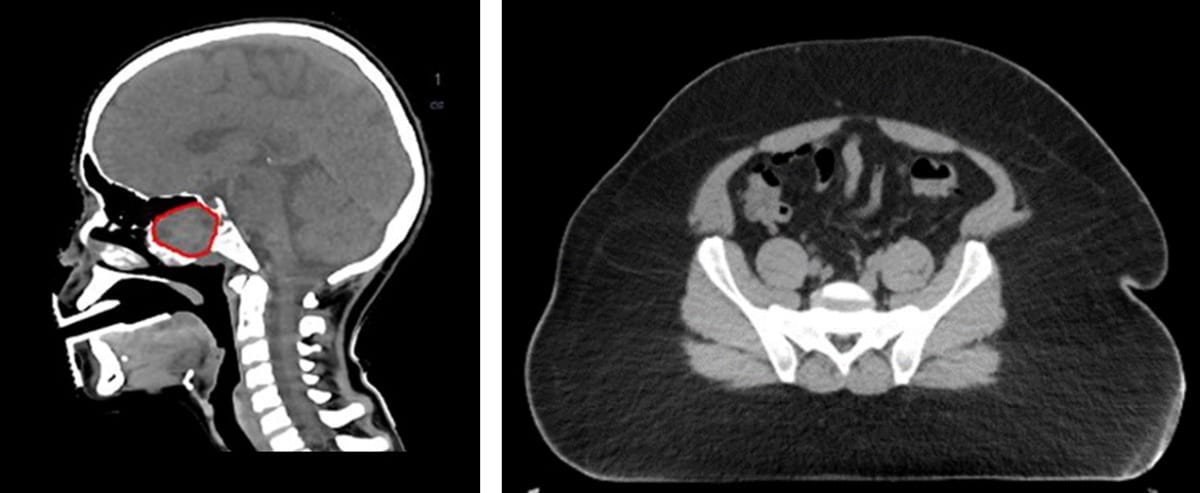
CT acquisition for paediatric and bariatric patients

CT scan optimization

1As shown by measurements with a Gammex 467 Tissue Characterization Phantom comparing standard reconstruction and DirectDensity reconstruction. Image value to relative electron/mass density conversion for the standard reconstruction was based on a two-linear-equations approach with individual calibration for each tube voltage. For DirectDensity images, a single tube-voltage-independent linear conversion was used.
2DirectDensity reconstruction is designed for use in radiation therapy planning (RTP) only; DirectDensity reconstruction is not intended to be used for diagnostic imaging.
3The results by Siemens Healthineers’ customers described herein are based on results that were achieved in the customer’s unique setting. Since there is no “typical” hospital and many variables exist (e.g. hospital size, case mix, level of IT adoption) there can be no guarantee that other customers will achieve the same results.

Processing tweak makes solar cell ‘ink’ more stable

Researchers in China have made lead halide perovskite solar cells more stable by changing the chemical used to process the precursors from which they are made. The switch could make it easier to commercialize this type of solar cell as it makes it less likely for the material to form phases that reduce the cells’ ability to convert sunlight to electricity.

Halide perovskites are crystalline materials with an ABXstructure, where A is caesium, methylammonium (MA) or formamidinium (FA); B is lead or tin; and X is chlorine, bromine or iodine. They are promising candidates for thin-film solar cells because they are easy to manufacture and can absorb light over a broad range of solar spectrum wavelengths thanks to their tuneable bandgaps. Charge carriers (electrons and holes) can also diffuse through them quickly and over long distances. These excellent properties have enabled researchers to make perovskite solar cells with a power conversion efficiency (PCE) that exceeds 25%, placing them on a par with established solar-cell materials such as silicon, gallium arsenide and cadmium telluride.

If all this sounds too good to be true, that’s because it is. Unfortunately, perovskite solar cells are also unstable at room temperature and ambient humidity. This is obviously something of a drawback for solar panels, which need to be exposed to weather to convert sunlight into electricity.

PCEs up to 25.5%

In the new work, a team led by Yaowen Li of the National Science Foundation of China focused on the perovskite formamidinium lead triodide (FAPbI3). This material is one of the best perovskite candidates for making high-performance solar cells, as its small bandgap relative to its chemical cousin methylammonium lead triiodide (MAPbI3) makes it more thermally stable and capable of absorbing solar light over a broader range of wavelengths. In 2019, researchers made solar cells from FAPbI3 with PCEs of 23.7%. More recently, this certificated PCE value was increased up to 25.5%.

High-quality films of FAPbI3 are usually made from a precursor solution, or ink, containing an additive of methylammonium chloride (MACl). The problem is that this additive decomposes into methylamine, forming unwanted phases such as δ-FAPbI3 that destroy the photovoltaic performance of FAPbI3.

Li and colleagues realized that they could overcome this problem by replacing MACl with caesium chloride (CsCl), as this additive does not form unwanted phases. To test their hypothesis, the researchers compared the stability of a solution of FAPbI3 containing either MACl or CsCl precursors. They found that each additive works well for making high-quality FAPbI3 films, resulting in efficient carbon-electrode perovskite solar cells. However, the solution containing MACl is unstable and degrades within a week because it decomposes into methylamine. The solution containing CsCl, in contrast, remained stable for over a month.

“Our work shows that there is a great need to develop non-MACl FAPbI3 perovskite precursor solutions for the cost-effective preparation of perovskite solar cells,” Li says. “These will help bring perovskite solar cells closer to commercialization.”

The researchers, who report their work in Chinese Physics B, tell Physics World that they now plan to print stable and efficient large-area perovskite solar modules based on their durable perovskite ink.

Prompt gamma spectroscopy enables real-time proton range monitoring

Prompt gamma spectroscopy (PGS) is a promising technique for monitoring the range of protons delivered during proton therapy. Its ability to measure absolute range deviations during a course of treatment and provide real-time feedback could allow for immediate changes if organ movement is identified during treatment. For proton therapy of prostate cancer, the use of PGS to monitor rectal radiation exposure in real time could potentially reduce the risk of gastrointestinal toxicities.

Proton therapy is designed to target the most difficult-to-treat and hard-to-reach tumours, and enables higher doses of radiation to be delivered to the prostate using proton beams of less than a millimetre in diameter. Because the energy from a proton beam can damage healthy tissue near the targeted tumour, real-time monitoring is of critical importance to verify the precision of dose delivery. In the case of prostate cancer treatments, for example, high radiation dose to the rectum correlates with increased gastrointestinal toxicity.

A multinational research team coordinated by Joao Seco of the German Cancer Research Center (DKFZ), is investigating the use of PGS to monitor rectal radiation exposure during prostate cancer proton therapy, using an endorectal balloon (employed to stabilize prostate location during treatment) inflated with a silicon dioxide/water mixture.

Seco, together with first author Paulo Magalhaes Martins and Hugo Freitas at DKFZ, and Stephan Brons, Benjamin Ackermann and Thomas Tessonnier from the Heidelberg Ion-Beam Therapy Center (HIT), investigated PGS with both water-filled and silicon dioxide/water-filled balloons inserted into a prostate phantom. They report their findings in Scientific Reports.

Silicon as a range probe

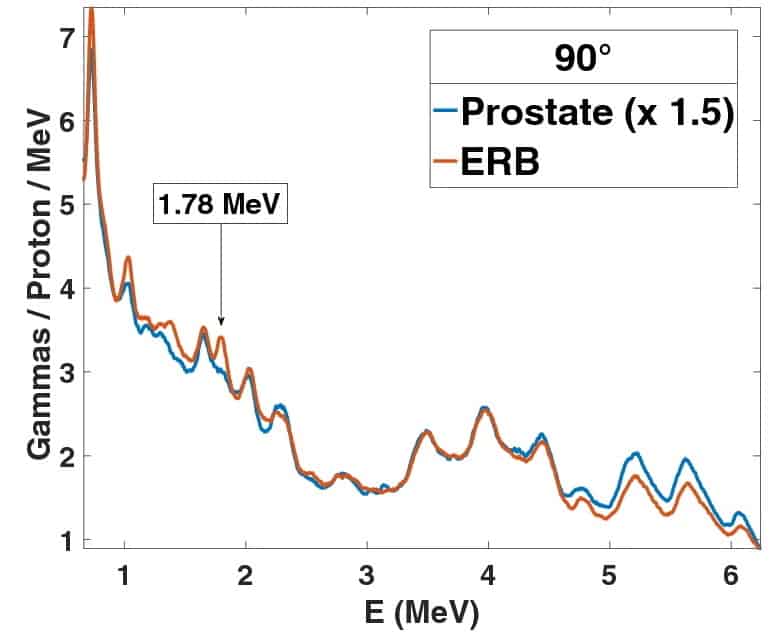
PGS works by analysing the energy spectrum of prompt gamma rays emitted when charged particles such as protons irradiate atomic nuclei within the human body. These gamma rays have characteristic energy lines that reflect the elemental composition of the irradiated tissue. The researchers determined that protons hitting silicon atoms in the endorectal balloon emit prompt gamma rays with a unique energy of 1.78 MeV, which is distinguishable from the tissue spectrum. This finding suggests that the use of a silicon dioxide/water-filled balloon could serve as a real-time range verification probe during a standard 2 Gy proton therapy fraction.

The team initially irradiated various water solutions and mixtures with single-spot proton beams, increasing the beam energy to a level applicable for prostate cancer treatment. Based on their findings and its lack of toxic effects, the researchers continued their investigations with a mixture of water and silicon dioxide (from diatomaceous earth).

Prompt gamma spectra

Next, the researchers irradiated a prostate phantom containing the silicon dioxide/water-filled balloon with horizontal single-spot proton beams at different positions. To replicate a clinical treatment scenario with a rotating gantry, they rotated the phantom by 90° in the transaxial direction at gantry angles of 0°, 90° and 270°. To monitor the ion-beam-induced prompt gamma rays, they used cerium bromide scintillation detectors, which measure the entire prompt gamma emission spectrum.

The team also delivered treatment-like plans to the phantom, with an anterior beam irradiating the prostate either conformally or overlapping with the endorectal balloon. The conformal plans were designed to deliver a maximum rectal dose below 0.3 Gy per 2 Gy fraction, and to prevent any Bragg peak localization within the balloon. The overlapping plans covered an extended target including the prostate and a 1.5 cm extension towards the balloon.

The researchers demonstrated that PGS could identify iso-energy layers crossing the balloon, as well as the columns parallel to the balloon within each iso-energy layer. They also validated the same method using an anterior–oblique field with a gantry angle of 279°. Such real-time feedback would allow clinicians to decide whether to adapt or continue treatment.

Sharing the data

In a related manuscript published in Scientific Data, the team subsequently developed a PGS dataset obtained after irradiating the prostate phantom with the inserted endorectal balloon (filled either with water or a silicon dioxide/water mixture) with 43 single-spot anterior beams of defined proton energies. The data from these measurements, and those described above, provided enough evidence to determine the presence of the silicon in the beam path above a certain beam energy.

“Such evidence is crucial to monitor the irradiation of the rectal wall in anterior beams and may open new possibilities for future control or prevention,” the researchers write. “The energies used are within the range of energies available in most proton centres either with passive scattering or active scanning delivery.”

In both measurement campaigns, the researchers irradiated different regions of the phantom with single spots, increasing the energy of the proton beam in sequential steps from 86.72  to 134.06 MeV and obtaining a prompt gamma energy spectrum for every beam energy.

The researchers have made the dataset available to researchers in the figshare repository. They hope that the dataset will provide other researchers with the tools to reproduce their results and evaluate alternative geometries, beam species and phantoms.

‘Janus textile’ could keep you warm and cool you down

Researchers in Belgium have unveiled the design for a fabric that could keep a person warm when worn one way, while cooling them down if worn inside out. Through simulations, Muluneh Abebe and colleagues at the University of Mons showed how the infrared-emitting properties of their “Janus textile” could allow it to be comfortably worn across a temperature range of 13°C. Although large-scale manufacturing of the material is not yet feasible, the researchers hope their results will inspire further research into similar fabrics.

When at rest in indoor environments, about half of the heat lost by our bodies is transferred to the surrounding air through conduction and convection. To stay warm, we can simply slow these processes by adding layers of clothing. However, the other 50% of heat loss at rest occurs via infrared radiation from skin and from the surfaces of clothing. Therefore reducing this radiative loss – or increasing it to improve cooling – involves modifying the surfaces of clothing.

In previous studies, researchers have shown that some materials can absorb infrared radiation from the wearer’s skin, and then allow it to escape from a highly emissive outer surface. The effect of this is to cool the wearer in warm environments.

Photonic engineered textiles

So far, however, these cooling fabrics have largely been composed of impermeable membranes that trap air and humidity against the skin, making them uncomfortable to wear. To address this issue, Abebe’s team turned to the advanced capabilities of photonic engineered textiles. These involve the of integration infrared-emitting and absorbing elements into mechanically flexible fabrics.

In their study, the researchers present a theoretical design for a 20 µm thick Janus textile – named after the two-faced Roman god.  The two interwoven sides of the material are composed of two different fibres – dielectric and metallic – each with very different infrared-emitting properties. On one side the dielectric fibres can emit large amounts of radiation; while on the other side the metallic fibres have low emissivity.

To test their asymmetrical fabric, the team used a thermal model to calculate the differences between the infrared transmission, reflection, and absorption properties of each side. They discovered that if the Janus textile is worn with its dielectric fibres touching the skin, large amounts of radiation could be prevented from escaping – keeping the wearer comfortably warm in temperatures as low as 11°C. Yet if the fabric is flipped inside-out, it could emit as much radiation as bare skin – keeping the wearer cool in temperatures as high as 24°C.

On top of these passive heating and cooling capabilities, the Janus textile is thin and flexible. Gaps between the fibres should allow moisture to move away from the body – ensuring comfort for the wearer. For now, Abebe’s team acknowledges that high manufacturing costs will mean that such reversible fabrics will not be appearing in our clothes any time soon – but with further research, they hope that new designs could keep us comfortable across a wide range of temperatures.

The research is described in Physical Review Applied.

Innovation, investment and collaboration in the quantum sector

Ilana Wisby

It’s no surprise to anyone that quantum computing will have far-reaching impact in most areas of industry and communication. For physicist and “deep-tech” entrepreneur Ilana Wisby, the key to solving some of the 21st century’s most pressing challenges – from data security and drug discovery to climate science and artificial intelligence – lies in quantum computers. Wisby should know: she is the chief executive of the pioneering UK start-up Oxford Quantum Circuits (OQC).

Spun off from the University of Oxford in 2017 by fellow physicist Peter Leek, a year later the firm had built and launched the UK’s best superconducting quantum computer. In July this year, OQC followed in the footsteps of the likes of IBM and launched Europe’s first “quantum computing-as-a-service” (QCaaS) cloud-computing platform. “The launch of our QCaaS platform is not only a remarkable achievement in the history of OQC, but is a significant milestone in unlocking the potential of quantum computing both in Europe and globally,” says Wisby. Here, she talks to Physics World about the challenges of the quantum start-up sphere, the funding available in the UK, how to scale up quantum computers and more.

What’s it like being at a start-up and competing for funding in quantum technology right now? And where do you see the UK, when it comes to the global quantum technology race?

At OQC we are often compared to much larger companies, especially US-based ones. In the US, which has its own niche capital market that is risk-tolerant, these large companies often run huge fundraising campaigns to the tune of tens of millions. I am proud that we’ve achieved similar performances to much larger competitors with a lot fewer resources. That resource-efficient approach is recognized as one of OQC’s USPs within the investors community. We are demonstrating the type of return on investment they’re looking for.

I am proud that we have been able to achieve similar performances to much larger competitors, with a lot fewer resources

Part of being a start-up is that you are always trying to be innovative and therefore you can have an element of, “do what you can with what you have”. I think that hustle is something that the UK really has a drive for, and is within all of us. The UK has been key in pioneering the quantum programme, and there was government buy-in way ahead of much of the world. The likes of the EU, China and the US are of course bigger today, but we did share a lot of early work and research. This means that the UK has a diverse range of quantum technologies, and particularly when it comes to quantum sensing, the field is doing very well. We’ve also got a lot of momentum in quantum key distribution and cryptography.

So the UK is known for being a leader, particularly in academia. Where it historically has struggled is translating the academic innovation through to successful companies that remain in the UK. The government is very aware of this, and has opened a significant amount of investment focusing on research and development in quantum technologies. I firmly believe that the UK quantum scene is world-leading, particularly in the start-up sector. The way in which we collaborate with each other and encourage the sharing of ideas is, I think, important because we need to build a quantum ecosystem in order for it to be successful.

It’s not just about scaling up into big systems. Quality over quantity is what we have been focusing on, and with 10 orders of magnitude less money, we’ve got the same quality and the same power of devices, because we’re building smart. We’re building from the foundations, to get simple, scalable and flexible tech. It’s about investing in a design rather than just chasing scale.

At OQC, you focus on superconducting qubits, but there are a number of other types being exploited, such as cold ions and even silicon. Is there going to be one winner that comes out on top, or will we more likely see different qubits for different tasks?

This is not a race where there’s a one-horse winner. I come from a background of hybrid quantum systems, and I’ve worked with superconducting systems. But if we look at the computing market as a whole, and how that network is built, there are specific systems that are optimized for specific purposes.

I’m sure that there will be some technologies that are more widely adopted than others – if you want to do calculations quickly, and especially in the near term, superconducting circuits are the way to go. But if we’re starting to think about building an entire quantum network, I genuinely think there will be different elements that are more suited for different components of a future quantum computer. And right now, all of these technologies are room-sized, like we were in the 1960s with classical computation. We’ve got a long way to go before it’s an equivalent to what we have classically today – something that doesn’t need specialist engineers to make it work.

The other thing is, it’s really hard to get an objective take on which qubit is the best, as everybody’s biased to their own. At OQC, we are trying to understand the advantages, disadvantages and market for each of them. If you can find someone who can do that independently, I want to talk to them!


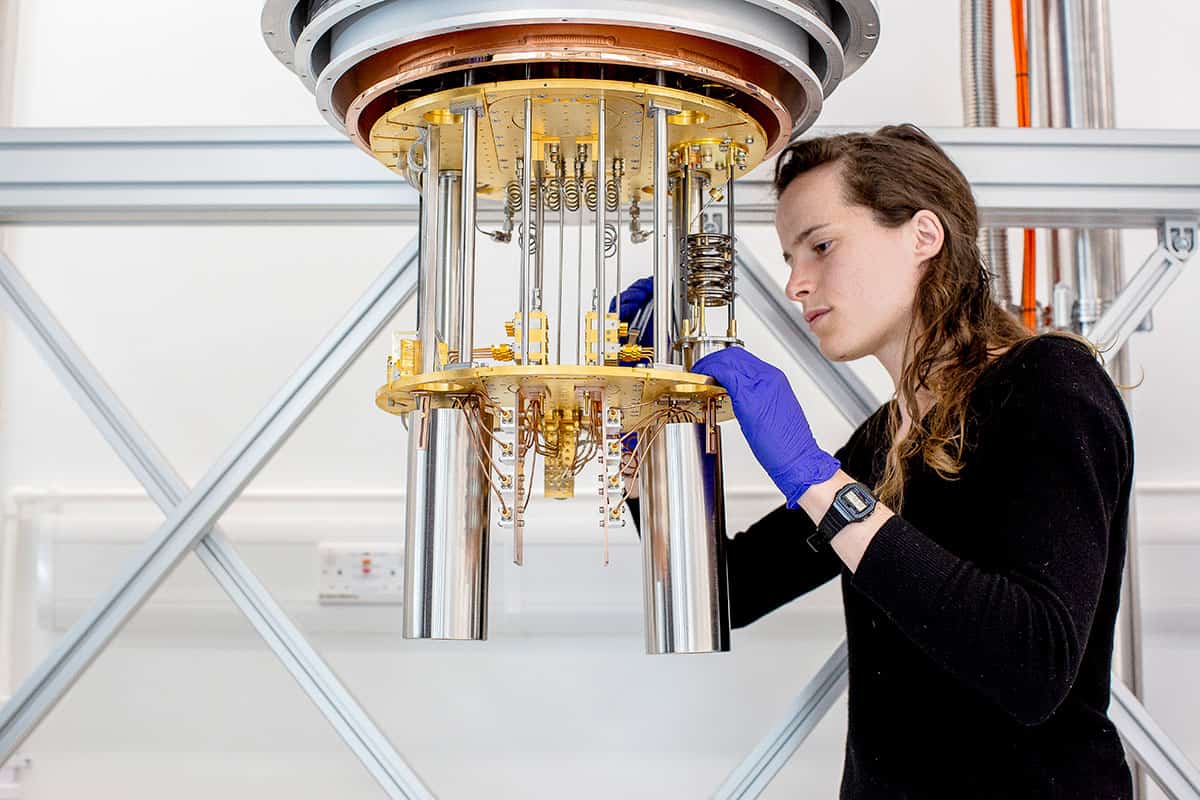
An engineer inspects one of Oxford Quantum Circuits’ quantum computers

As of now, we have four-qubit devices, which you can’t do true applications with, but we are soon scaling up to deliver larger-scale devices. Also, the number of qubits in any system is the worst measurement, as it’s a vanity metric. And this is where, while our four qubits may not stand up to those with 52 or 72 at first glance, all of those qubits are comparable to the best devices at this stage. Indeed, our qubits show high coherence and very low crosstalk. What we are trying to show now is that they are scalable, and as our company comes out of academia and into the R&D phase, we can look at things like scaling and engineering systems.

Going back to qubits, this is where benchmarking is so important, but currently there’s no independent approach. People are starting to talk about this, and the idea of “quantum volume” – which looks at number of qubits, connectivity and quality factors – is starting to head in the right direction.

Do you feel that there is a risk of hype in quantum computing, and the promises it makes, especially when it comes to people outside of the field?

Everyone talks about hype, but for me there’s a spectrum of thoughts when it comes to quantum technologies. You get some people who heavily lean towards an academic perspective, and don’t think anything should be said unless it’s been published and peer reviewed. And then others have already promised to solve the COVID-19 crisis using quantum computing. What I’m trying to do is to have an authentic voice that sits in the middle.

Even then, we’re having to justify saying that this field is going to be visionary. Quantum technologies are going to change the world, and I’m comfortable saying that the applications will be revolutionary and have a significant societal impact in a few years. But there are others who might find it uncomfortable saying even that much.

Quantum technologies are going to change the world, and I’m comfortable saying that the applications will be revolutionary and have a significant societal impact

For me, it’s about being able to help others understand that we do need to bring in the wider world. We need to engage with skills and people who don’t currently know that quantum exists. And the way to get their attention is for them to understand a concept or become interested in something that’s inspirational and conceptually cool – even if it’s not necessarily completely scientifically accurate. I’m okay with that.

Ultimately, as an industry, we need end users and we need that customer pull. We’re growing an industry and an ecosystem, and for that we need to be able to talk to a variety of people, whether they’re quantum specialists or software engineers or lab managers or marketing specialists. We need to be able to talk to everybody about what we’re doing, and that requires different strategies and a different language than purely scientific.

Top 10 Breakthroughs of 2021: a lively round-up of the year’s best physics results

This episode of the Physics World Weekly podcast features a lively discussion about some of the best physics done this year as we talk about our Top 10 Breakthroughs of 2021. Our choices run the gamut from particle physics to neural engineering, with a good helping of quantum mechanics, fusion and astrophysics as well.

The Top 10 serves as the shortlist for the Physics World Breakthrough of the Year award, which will be announced on 14 December. Links to all the nominees, more about their research and the criteria for the award can be found here.

Bluefors logo block

Physics World‘s Breakthrough of the Year coverage is supported by Bluefors, a leading supplier of cryogen-free dilution refrigerator measurement systems with a strong focus on the quantum computing and information community. Our aim is to deliver the most reliable and easy to operate systems on the market which are of the highest possible quality.

Electric fields make a ‘tuning knob’ for solid-state systems

Researchers at ETH Zurich in Switzerland have developed a new way of controlling the strength of interactions between particles in two-dimensional semiconductors. Their technique, which relies on generating so-called “Feshbach molecules” and adjusting their interactions using an applied electric field, might well become a versatile “tuning knob” to study a broad range of 2D solid-state platforms in the laboratory.

Feshbach resonances allow researchers to tune the interaction strength between quantum entities by bringing them into resonance with a bound state. In the ETH team’s work, these states correspond to an exciton (an electron-hole pair) in one layer of a two-dimensional material bound to a hole in the adjacent layer. When the exciton (which is created by exciting the material with light) and hole overlap in space, the hole in one layer can then tunnel to the other layer and form an interlayer exciton-hole “molecule”, the researchers explain. It is this exciton-hole interaction strength that they tune by applying a varying electric field to the system.

Twisted bilayer system

In the work, the team, led by Atac Imamoglu, Ido Schwartz and Yuya Shimazaki of ETH Zurich’s Institute for Quantum Electronics, studied the 2D semiconductor molybdenum selenide (MoSe2), which belongs to the family of materials known as transition metal dichalcogenides (TMDs). In 2020, Imamoglu and colleagues showed that like its cousin, graphene (a 2D sheet of carbon just one atom thick), two single layers of MoSe2, separated by a single-layer barrier made of hexagonal boron nitride (hBN), can be arranged so that there is a small angle between the layers.

Such a “twisted bilayer” system, also known as a Moiré structure, can host a broad range of exotic and unexpected phenomena such as correlated insulator states and (in the case of graphene) even superconductivity thanks to strong correlations between the electrons in the layers. As well as these purely electronic states, TMDs also host light-matter states, which means they can be studied using optical spectroscopy – something that is not possible for graphene.

The researchers say that the electrically tuneable Feshbach resonances they exploited in the current work, which is detailed in Science, could be a generic feature of other bilayer systems that exhibit coherent tunnelling of electrons and holes. They add that being able to tune the binding energy of their Feshbach molecules using electrical fields is very different from the situation in cold-atom systems, where such resonances also exist, but must be controlled using magnetic fields, which are generally more difficult to produce. “The ‘tuning knob’ we have developed might become a versatile tool for a broad range of solid-state platforms based on 2D materials – opening up in turn intriguing perspectives for the wider experimental exploration of quantum many-​body systems,” they explain.

Ask me anything: Farai Mazhandu – ‘I find it fulfilling to support and inspire others, and to make seemingly complicated subjects exciting’

What skills do you use every day in your job?

I am a community builder in quantum technologies, start-up founder, mentor and PhD student, so I wear many hats that fit together nicely. Bringing people together in a field like quantum requires simplifying concepts to cater to all levels of education, as our community targets everyone interested in participating. My background in teaching physics has helped me a lot with this. As a start-up founder, I need to know how to structure my ideas to solve problems and attract the right partners.

In my research I characterize quantum materials to learn about current limitations at the fundamental level and to help develop better quantum hardware. To do this, I rely on my genuine curiosity, as well as persistence, as the process of scientific inquiry involves a lot of repetition and setbacks.

Another important role for scientists today is to stay objective and promote integrity in a hyperconnected world where fake news and exaggeration are constant challenges. Quantum computing, for example, currently resonates with many people’s interests and inevitably gets hyped. Some excitement is essential as it creates the impetus, enthusiasm and vision to drive big shifts. However, we should ensure that we paint the correct picture of current capabilities and the hard work that lies ahead until we have fully capable devices.

What do you like best and least about your job?

I feel fortunate to work on interesting things that are smoothly interconnected with one another. Every day I get to interact with talented people from diverse backgrounds. It is super fun to chat with entrepreneurs, policymakers, academics and enthusiasts about how to harness our distributed strengths. Inching towards a future where quantum computers can break new ground in drug discovery, optimization, machine learning and materials discovery will require the collective talent and contributions of many brilliant people. Further, I find it fulfilling to support and inspire others to reach their goals, and to make seemingly complicated subjects exciting.

On the downside, the field of quantum technologies is changing very fast, and it’s hard to keep up. It’s easy to get overwhelmed as there are so many exciting directions to pursue, and it’s hard to pick an area where one can have maximum impact. I have to sadly accept that I cannot get involved in everything.

What do you know today, that you wish you knew when you were starting out in your career?

From an early age, I had interests in many fields, and the advice I often received was that I needed to focus on one. I wish I had known that it’s okay not to want to be great at any one thing — you just need to be pretty good at an array of valuable skills that, when combined, make you truly one of a kind. It’s okay to specialize, but there is also room for those of us who want to be “jacks of some trades” instead.

Another important aspect I learned the hard way is that you have to work to learn, not just to earn. I wish I had volunteered often and said yes more than no. I also wish I had travelled more when I had few responsibilities: travelling to learn and discover; visiting places that would challenge my thinking; and meeting and networking with as many people as possible. Doing this can have a tremendous impact on your career and professional growth.

Carbon nanotubes help space-bound electronics resist radiation damage

As space missions venture ever further afield, spacecraft will inevitably be exposed to greater amounts of cosmic radiation that can damage or even destroy their onboard electronics. Researchers at the Massachusetts Institute of Technology (MIT) and the US Air Force Research Laboratories have now shown that adding carbon nanotubes to transistors and circuits could render these devices resistant to higher amounts of radiation than is possible with standard silicon-based electronics.

Cosmic radiation is ionizing radiation made up of a mixture of heavy ions and cosmic rays (high-energy protons, electron and atomic nuclei). The Earth’s magnetic field protects us from 99.9% of this radiation, while the remaining 0.1% is significantly attenuated by our atmosphere.

Electronics designed for space applications have no such protection, however, and researchers are investigating ways of using emerging nanomaterials to mitigate the problem. Carbon nanotubes (CNTs), which are rolled-up sheets of carbon just one atom thick, are one promising possibility. These materials are beginning to be employed in electronics components such as transistors because they are more energy efficient than standard silicon-based devices. The radiation toleration of carbon-nanotube-containing field-effect transistors has not, however, been widely studied until now.

Electrical properties protected

In their work, a team led by Pritpal Kanhaiya and Max Shulaker deposited CNTs on a silicon wafer as the semiconducting layer in field-effect transistors (FETs). They then added radiation shields consisting of hafnium oxide, titanium and platinum to the semiconducting layer. They found that placing the shields both above and below the CNTs protected the electrical properties of the FETs against incoming X-ray radiation up to a dose of 10 Mrad (107rad). When a shield was placed only beneath the CNTs, they tolerated doses of up to 2 Mrad, which is similar to commercial silicon-based radiation-tolerant devices.

The researchers say their CNT-containing FETs, which they describe in ACS Nano, owe their high radiation tolerance to both extrinsic and intrinsic properties. The former include the fact that the devices can be fabricated at temperatures below 400°C. This makes it possible to engineer the device in geometries that are more tolerant to “total ionizing dose” effects – that is, to long-term ionizing damage. Intrinsic properties include material properties of the CNTs themselves, which provide radiation tolerance for so-called transient upsets that occur when ionizing radiation strikes the semiconducting channel in a device. The energy produced by the ionizing strike generates large amounts of electrons and holes within the semiconductor, creating charge disturbances and temporary current fluctuations.

NASA launches first dedicated X-ray mission to study the polarization of extreme cosmic objects

NASA has launched a mission to measure the X-ray polarization from the most extreme and mysterious objects in the universe. The $188m Imaging X-ray Polarimetry Explorer (IXPE) was launched today from the Kennedy Space Center at 01:00 local time aboard a Falcon 9 rocket. During the probe’s two-year mission, it will study several astrophysical phenomena including black holes, active galactic nuclei, quasars, pulsars and supernova remnants.

Following a successful launch and separation, IXPE is now in orbit around the equator at an altitude of around 600 km above Earth. This particular orbit will minimize the X-ray instrument’s exposure to radiation in the South Atlantic Anomaly, the region where the inner Van Allen radiation belt comes closest to Earth’s surface.

The mission contains three identical telescopes, which are able to operate independently and that each have polarization-sensitive detectors. The craft will use these to provide simultaneous spectral, spatial and temporal measurements of cosmic sources, with scientists aiming to improve the polarization sensitivity by two orders of magnitude over the X-ray polarimeter aboard the Orbiting Solar Observatory OSO-8, which was launched in 1975.

Astronomers hope this will allow them to determine the geometry and the emission mechanism of active galactic nuclei and microquasars as well as find the magnetic field configuration in magnetars.

It is an indescribable feeling to see something you’ve worked on for decades become real and launch into space

Martin Weisskopf

“IXPE represents another extraordinary first,” says Thomas Zurbuchen, associate administrator for NASA’s science mission directorate. “IXPE is going to show us the violent universe around us – such as exploding stars and the black holes at the centre of galaxies – in ways we’ve never been able to see it. [It] will shape our understanding of the universe for years to come.”

Developed by NASA’s Small Explorer programme, IXPE is a collaboration between NASA and the Italian Space Agency and was selected in January 2017 with a launch date in May 2021. However, that was delayed due to the impact of the COVID-19 pandemic.

“It is an indescribable feeling to see something you’ve worked on for decades become real and launch into space,” says IXPE’s principal investigator Martin Weisskopf, who helped to conceive and build the spacecraft. “This is just the beginning for IXPE. We have much work ahead.”

Copyright © 2026 by IOP Publishing Ltd and individual contributors