Gating and MLC tracking could increase access to real-time adaptive radiotherapy

Stereotactic ablative radiotherapy (SABR), in which high radiation doses are delivered over just a few fractions, requires management of intrafraction tumour motion to ensure accurate and safe treatment. Such motion management is generally provided by dedicated commercial real-time tracking systems. But according to new research from Australia, both multileaf collimator (MLC) tracking and gating can provide real-time motion adaptation on a standard linear accelerator. These low-cost strategies have the capability to make SABR treatments more accessible.

Writing in Radiotherapy and Oncology, researchers from the ACRF Image X Institute of the University of Sydney and four other Australian cancer treatment centres evaluated radiation doses delivered to 44 prostate cancer patients when using MLC tracking and gating with a standard linac. The patients were enrolled in the TROG 15.01 SPARK trial, which examined the use of kilovoltage (kV) intrafraction monitoring (KIM) to measure tumour position during treatment.

During the study, led by Paul Keall, professor of medical physics at the University of Sydney Medical School and director of the ACRF Image X Institute, and Jarad Martin, a radiation oncologist at Calvary Mater Newcastle, the researchers delivered 49 fractions using MLC tracking and 166 fractions using beam gating and couch shifts. They performed motion tracking with KIM, which uses the linac’s on-board kV imager to acquire patient images during treatment. Intrafraction KIM-guided motion adaption was then performed using MLC tracking for 10 patients or gating for 34 patients. Of the 166 gated fractions, 65 included prostate motion that exceeded established thresholds and required treatment interruptions.
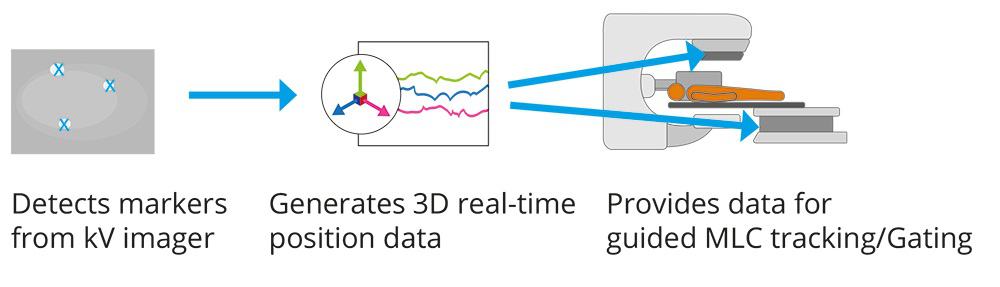
Kilovoltage intrafraction monitoring

The researchers estimated the radiation doses that would have been delivered without motion adaptation and compared these with doses delivered when employing MLC tracking or gating. To evaluate the efficiency of gated treatments, they also calculated the time required to gate and perform a couch shift for each fraction.

Gated treatments proved to be efficient, taking between 5 and 19 min to complete, compared with 2 to 17 min for MLC tracking. Couch shift interruptions lasted between 1 and 4 min. Because KIM calculated the new couch position, the treatment team only needed enter the new values into the treatment system.

Emily Hewson

Both MLC tracking and gating delivered similar radiation doses, and both delivered doses closer to the treatment plans than if no motion adaptation strategy had been used. “Both methods were effective at improving dose delivery accuracy that is crucial for high-dose treatments,” says first author Emily Hewson. “While MLC tracking had a slight dosimetric improvement compared with gating, this difference was small, so either method could be used to provide accessible SBRT treatments for prostate cancer.”

Hewson notes that the variance of dose differences from the treatment plan was larger with gating than MLC tracking for the bladder and rectum. “Data suggest that while both strategies would perform similarly on average, gating would result in doses that deviated more from the plan for the worst cases,” she adds.

The researchers suggest that MLC tracking might have been more accurate if a leaf width smaller than 5 mm had been used. “Smaller MLC leaves offer higher beam adaptation accuracy, which would benefit the small, slow motion that the prostate undergoes,” explains Hewson. “Another alternative to improve accuracy would be to integrate MLC tracking with a real-time couch tracking method in the future to compensate for the finite MLC leaf width.”

Addressing the complexity of each strategy, Hewson says that treatment planning and implementation were comparable, but that the underlying software and quality assurance processes for MLC tracking are more complex than gating.

“MLC tracking requires complex software to automatically adapt the treatment beam in real time, requiring more commissioning. Also, each patient plan requires pre-treatment dosimetric quality assurance,” she explains. “But implementing MLC tracking during treatment simply requires the treatment team to open the MLC tracking software; adaptation is automated. Gating requires more intervention by the treatment team if tumour motion exceeds the designated threshold.”

The researchers say that the accuracy of each adaptation method will be limited by the accuracy of the tumour localization method. The 3D tumour localization accuracy of KIM in the trial was quantified to be 0.0±0.5 mm, 0.0±0.4 mm, and 0.0±0.5 mm in the anteroposterior, left–right, and superior-inferior directions, respectively.

“KIM provides real-time tumour position in six degrees-of-freedom using fiducial markers that are MR-compatible and smaller than beacons used with some commercial systems,” the team write. “And because KIM utilizes the on-board kV imager that is already equipped on modern linacs, it potentially will allow widespread implementation of SABR.”

“Our implementation of KIM to monitor tumour motion, combined with either gating or MLC tracking improves the availability of intrafraction motion adaption for all clinics with standard treatment machines,” says Hewson. “One of the major barriers to implementing real-time adaptive radiotherapy in many countries has been a lack of finances and resources. The adaptive methods we compared could potentially overcome these obstacles and bring intrafraction motion adaptation into standard clinical practice at any cancer treatment facility that treat patients using a modern linear accelerator.”

Tiny ultrasound detector achieves super-resolution imaging

A device described as the world’s smallest ultrasound detector has been created by Vasilis Ntziachristos and colleagues at the Technical University of Munich and Helmholtz Zentrum München. The extremely sensitive device can image structures smaller than individual living cells and is made using inexpensive and readily available silicon-on-insulator technology. With further optimization, the team says their detector could be mass-produced for use in a broad range of imaging applications.

Traditionally, ultrasound detectors use piezoelectric transducers to both broadcast high-frequency sound and also pick up sound that has reflected from target objects – using the reflected signal to create an image. The spatial resolution of an ultrasound image can be improved by shrinking the size of the transducers, but this can drastically lower the sensitivity of the system.

Recently, optical detection techniques have been used to get around this resolution problem. One approach has been to detect changes in the resonant properties of an optical cavity that are caused by ultrasound waves. But so far, even the most advanced miniaturization techniques have not succeeded in confining light to dimensions smaller than about 50 microns, placing a constraint on the resolution that can be achieved.

Silicon-on-insulator technology

Ntziachristos’ team has improved on these designs using silicon-on-insulator technology, which can be fabricated through techniques widely used in the semiconductor industry. The researchers developed a “silicon waveguide-etalon detector” (SWED). The waveguide is contained in a periodic arrangement of Bragg gratings, each separated by spacers; but with one grating replaced by a cavity. A reflective layer of silver is then deposited on the end of the waveguide.

When Ntziachristos and colleagues pumped a continuous-wave laser into the SWED, they found that incident ultrasound waves could induce characteristic intensity variations in the light reflected off the silver layer. Furthermore, the high contrast between the cladding and cavity material enabled far better light confinement than had been achieved previously.

With a sensing area that is 220×500 nm in width, the SWED is a factor of 10 smaller than the diameter of a blood cell; and 10,000 times smaller than previous resonator-based sensors. The resulting spatial resolution made possible for Ntziachristos’ team to image of structures 50 times smaller than the wavelength of the ultrasound used to obtain the images – a capability called super-resolution imaging. At the same time, the SWED is 1000 times more sensitive than current optical devices; and some 100 million times more sensitive than piezoelectric detectors of the same size.

Such a significant improvement in both sensitivity and resolution mean that the SWED can fit onto a chip just half a micron in size. This opens-up a wealth of opportunities for improvement in both medical and industrial imaging. With further optimization, the device could soon be integrated into mass-produced, extremely dense ultrasound arrays, capable of picking out ultra-fine details in materials and biological tissues. It could also be used to study the fundamental properties of high-frequency sound waves, and their small-scale interactions with matter.

The new technology is described in Nature.

Canadian Light Source overcomes geographic challenges while building local expertise

What are the benefits of the CLS to the Canadian user community when compared to using facilities outside of the country?

The Canadian science community has always had access to foreign facilities, including several dedicated beamlines at the now decommissioned Synchrotron Radiation Center in Wisconsin, in the 1980s. But having a reliable and dedicated source for Canadian scientists has allowed for comprehensive, robust, and long-term research projects to be conducted, helping Canada maintain and secure scientific prominence in key scientific areas, including nanomaterials, agriculture, and protein crystallography, among many others.

The CLS was also built to specifically address Canada’s science needs and strategic priorities, with dedicated infrastructure for research in health, agriculture, energy and the environment, and advanced materials, while facilities in other countries have understandably been designed to support those nations’ strategic interests.

Additionally, building a light source for and in Canada has encouraged the development of previously unavailable expertise in the design and manufacture of synchrotron components. Several companies across the Canada now compete to deliver services and equipment to other synchrotron development projects around the world.

Finally, while of course we hope that scientific endeavour around the world remains collaborative, open and unaffected by political winds, it is important that our country maintains a reliable advanced light source for Canadian scientists to be able to access.

What are some of the challenges of running a national facility in a country where major population centres are separated by huge distances?

Canada is the second largest country in world by area. Indeed, the distance between Toronto and Vancouver, two of its major cities, is almost the same as from London to Cairo. Perhaps Canadians are simply used to this but we have all grown accustomed to calculating time zones (six across the country) for conference calls and adjusting in-person meeting schedules (pre-COVID-19) to allow for everyone to recover from jetlag.

Isabelle Blain (left) and Marie D'Iorio.

The CLS is located at the University of Saskatchewan in Saskatoon – which is not a major metropolitan area and is some distance from any large cities. Has this relative isolation been a problem? If not, how has it been overcome? 

Because of Canada’s expanse, the CLS’s location would have presented a bit of a challenge regardless of the site selected. Being located in the centre of Canada has allowed for centralization, giving equal access to the theretofore largest provincial user groups (Ontario to the east and British Columbia to the west) but also, and importantly, it fuelled the growth of Saskatchewan’s provincial synchrotron user community. Indeed, Saskatchewan grew from a single synchrotron user to more than 300 in 10 years, attracting research funding, faculty and graduate students from around the world.

Additionally, Canadian grant councils, especially the Natural Sciences and Engineering Research Council, have continuously funded travel for users to access the CLS in Saskatoon. Although travel within Canada is known to be expensive compared to travel within Europe and the US, for instance, Canadian synchrotron users have been largely successful at accessing travel funding to use the CLS.

The benefits of having a synchrotron in a smaller community also include easy access from the airport, affordable accommodation, and lower overall ancillary costs.

Has the presence of the CLS in Saskatoon strengthened science in that city and elsewhere in the Prairie region of Canada?

The CLS caters to approximately 1000 scientists from academia, government and industry per year, approximately a third of them from the Prairies.

The CLS helps to train and educate hundreds of graduate students per year, attracts some of the most talented scientists in the world to Canada, fosters collaborations between Canadian and local scientists and colleagues at facilities around the world, and has created technologically advanced jobs and unique scientific and technical expertise in our province and country.

The CLS also strengthens Canada’s and Saskatchewan’s international scientific reputation through publications in academic literature (more than 5000 papers to date), through hosting international scientific conferences, and by bringing media attention to scientific discoveries.

The CLS collaborates with a number of other initiatives in the Prairies including the Protein Supercluster, the National Research Council’s Aquatic and Crop Resource Development Research Centre, and the Global Institute for Food Security.

It is important that Canda maintains a reliable advanced light source for Canadian scientists to be able to access

Are there any plans to build complementary facilities in Saskatoon? For example, a neutron source that would make Saskatoon the “Grenoble of the Prairies”?

The University of Saskatchewan, the CLS’s owner, is a leader in the effort to build a new dedicated neutron source for Canada. It would be advantageous of course to have it near the CLS, in terms of the complementary nature of the research and the enormous possibilities for scientific cross-pollination, but there are no immediate plans to build a neutron source on our campus.

However, the proximity to the university – as well as the federal agriculture department, nuclear science facilities, and an innovation park renowned for its plant biotech companies – has created a cluster known for its global-leading agriculture expertise, which culminated in the recently funded Protein Industries Canada (PIC), an industry-led, not-for-profit organization created to position Canada as a global source of high-quality plant protein and plant-based co-products.

What will the future bring for the CLS? Are there any major upgrade plans?

The CLS is a third-generation facility and already brighter, faster and stronger fourth-generation light source facilities are being built around the world. While the CLS will remain globally competitive and a crucial resource for the Canadian scientific community for at least a decade, the national light source science community is developing plans for the next generation of Canadian synchrotron-enabled science.

Based on consultations with international machine-design experts as well as extensive engagement with the Canadian user community, a conceptual design report for CLS 2.0 is in development. CLS 2.0’s beam will be 700 times brighter and more coherent than the current CLS. A brighter, faster and smaller light beam will enable scientists to see samples much more clearly and collect better data much faster, allowing for better scientific outcomes.

CLS 2.0 will be among the best light sources in the world and will enable the Canadian scientific community to remain a global leader.

What are some of the physics research highlights from the CLS over the past 16 years?

Physics is the backbone of everything we do as a science facility – the accelerator and rings operate thanks to the expertise of our physicists and engineers – and it is a huge part of the research programme. Our Far-Infrared beamline, for example, is a powerful tool for studying molecular vibrational dynamics, as Ohio State University and University of New Brunswick scientists showed by demonstrating the effects of quantum monodromy on the spectrum of cyanogen is-thiocyanate.

Our many X-ray beamlines can be put to several useful applications in physics research, most prominently in the recent discovery and exploration of charge density waves in cuprate superconductors.

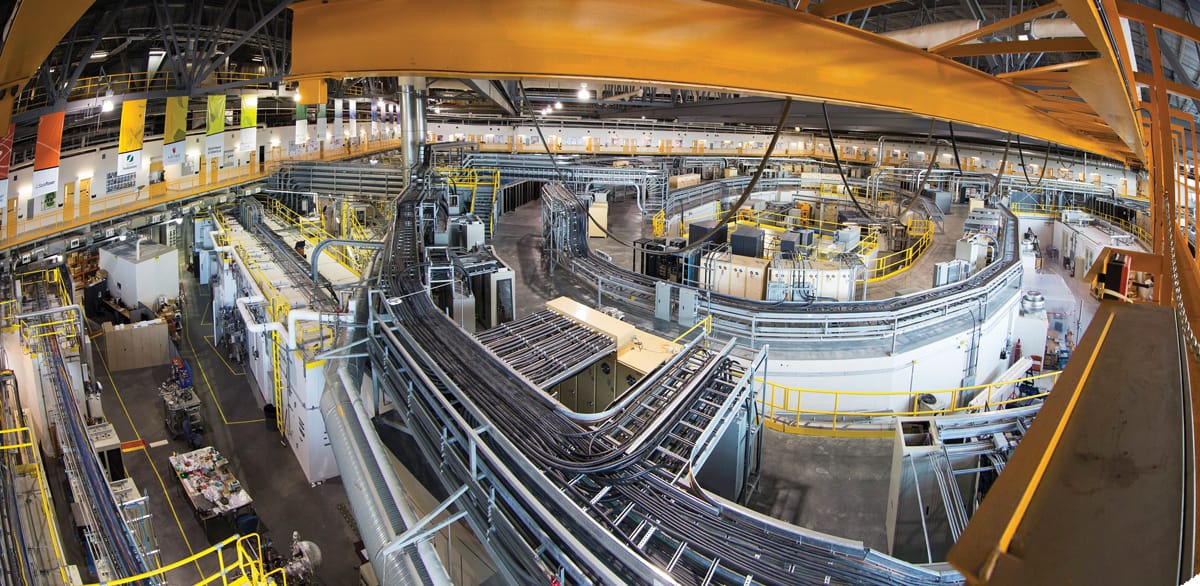
Inside the CLS experimental hall.

Recently, our REIXS beamline was used by the Canadian Space Agency and NASA scientists to test and validate the performance of window shielding for an upcoming satellite launch, by ensuring that X-rays within the desired range, but no infrared light, could pass through.

Researchers from University of Toronto and King Abdullah University of Science and Technology have overcome a key obstacle in combining the emerging solar-harvesting technology of perovskites with the commercial gold standard – silicon solar cells. The result is a highly efficient and stable tandem solar cell with the perovskites mixed as a liquid solar ink. The CLS was used to show that the solution processing treatment left the perovskites’ crystal structure untouched, leaving their basic function intact.

The REIXS beamline, one of the top X-ray scattering beamlines in the world in quantum materials research, was used to study a conductor-to-insulator phase change in samarium nickelate, a quantum material known as a strongly correlated electron system. The dramatic phase change means that the material can be used as a very sensitive detector. Indeed the team from the CLS, Argonne National Laboratory, Rutgers University, the National Institute of Standards and Technology, the Massachusetts Institute of Technology, Columbia University and the University of Massachusetts was inspired by an organ near a shark’s mouth called the ampullae of Lorenzini, which is capable of detecting small electric fields from prey animals.

This of course is just a small subsection of the physics research at our facility, which also covers hydrophobics, catalyst structure, new imaging techniques and many other areas.

Quantum treatment sheds fresh light on triboelectricity

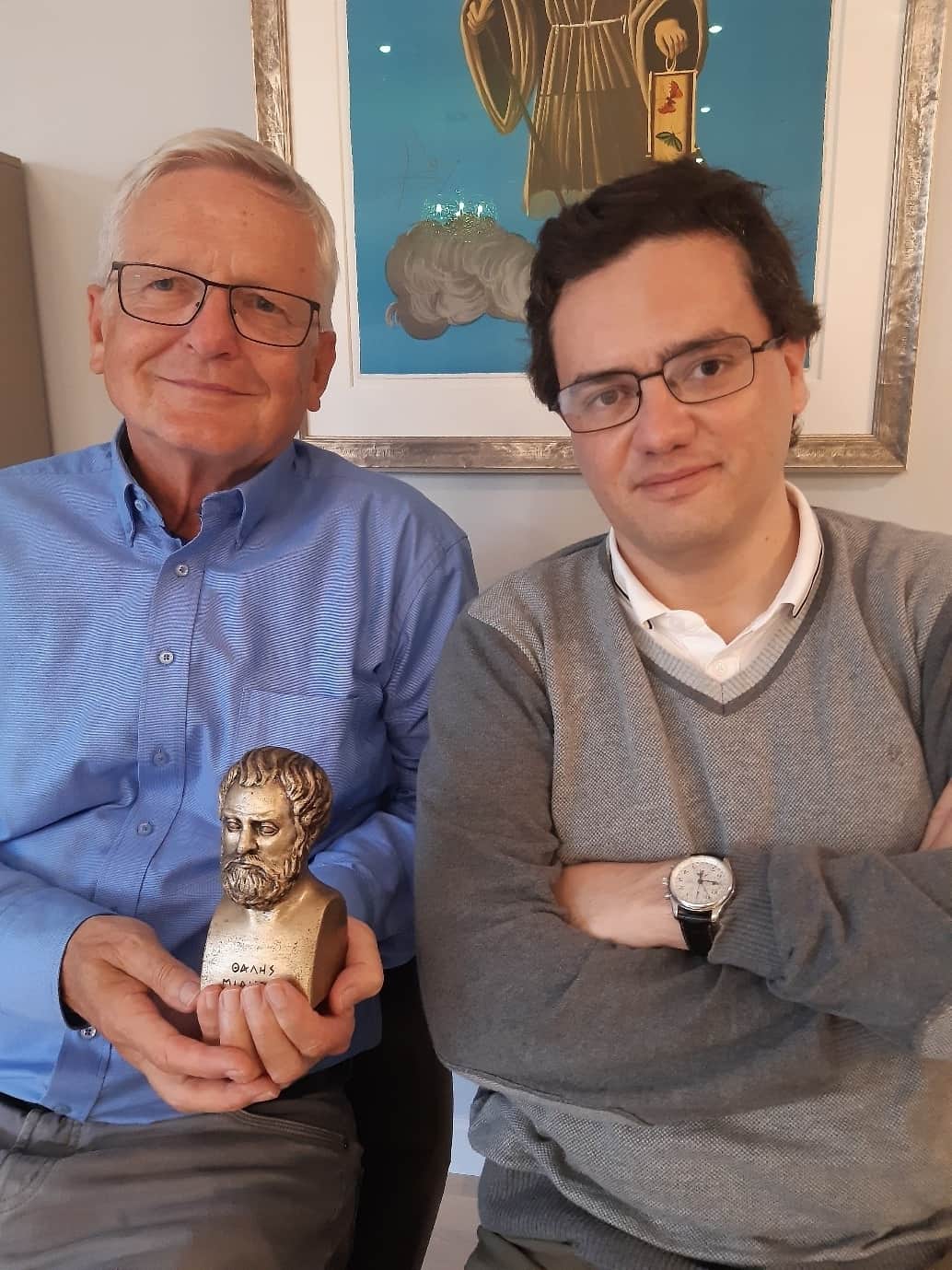
Photo of Robert Alicki and Alejandro Jenkins with a bust of Thales

Shuffling around on a carpet to give someone an electric shock might seem like the oldest trick in the book, yet scientists know surprisingly little about why it happens. “I believed – like I think most physicists – that these phenomena were understood by the experts,” says Robert Alicki, a mathematical and theoretical physicist at the University of Gdansk, Poland. “But it was not the case. It was still an open question.”

Thanks to Alicki and his colleague Alejandro Jenkins of the Universidad de Costa Rica, the mystery surrounding triboelectricity (as the “charging by rubbing” effect is known) may be clearing up. According to Alicki and Jenkins, a major barrier to understanding triboelectricity is that physicists tend to view the phenomenon in terms of electrostatic potentials, even though “from a potential effect, you are never going to sustain a current that is going around a circuit,” Jenkins says. “It’s like the problem of perpetual motion.”

Alicki and Jenkins formulated their alternative description by incorporating the concept of pumping into a new, quantum model of a system undergoing triboelectric processes. “Pumping can replenish a potential, but it is not describable by a potential,” Jenkins explains. “It can do something that no potential can do, and that is to drive something around on a closed path.”

Using this pumping-based model, the pair successfully reproduced several experimentally observed characteristics of triboelectricity, such as its dependence on material surface and geometry and the speed of rubbing. In particular, the model accurately predicts that the most electrically negative and electrically positive materials will have symmetrical maximum charge densities when rubbed – something that models based on electric potentials models cannot explain. The new model also predicts a maximum tribovoltage in terms of the sliding velocity of the two surfaces, which Alicki and Jenkins say could be tested using an experimental set-up with sufficient control over a constant sliding velocity.

From lasing bosons to fermions

While Alicki has been working on quantum thermodynamics for decades, Jenkins is a more recent recruit, having started out in high-energy theory. As their paths converged – Jenkins has just begun a fellowship at Gdansk’s Institute for Theory of Quantum Technologies (ICTQT) – they discovered that they shared an interest in systems found in motors and engines that operate away from equilibrium, where energy is irreversibly converted from one form to another. While such systems are the bread and butter of engineers, and Alicki and collaborators started working on them as far back as the late 1970s, Jenkins says that on the whole, they have attracted less attention from theorists than systems at equilibrium, fluctuating around equilibrium or relaxing to equilibrium.

At first, this common interest in out-of-equilibrium systems led Alicki and Jenkins to formulate a mathematical description of “superradiance”, or the enhanced effects of radiation associated with rotating objects. Such effects were first described in 1971 by Yakov Zel’dovich, whose suggestion that superradiance ought to apply to a spinning gravitational mass led to follow-up work by Jacob Bekenstein and Stephen Hawking on the thermodynamics of black holes.

By describing rotating systems in terms of quantum fields, and treating the moving object as a heat bath, Alicki and Jenkins showed how work could be extracted via stimulated emission, similar to a laser’s operation. But while their laser analogy offered a new perspective on such systems, the underlying process, while exotic, was already pretty well-understood. It was only later that they realized that their formulation of a quantum field and two heat baths could lead to something “qualitatively new”: a description for the motion that drives an active current of fermionic electrons from one material to another in the humble triboelectric effect.

“The soul of inanimate objects”

The pair built up their model by defining Hamiltonians with creation and annihilation operators for electron states on the surface of the moving material (where the population inversion takes place) and within the interior of the two rubbed materials (which act as the heat baths). They then defined the pumping of the system in terms of the rate of change of the populations of these electron states. Although the Pauli exclusion principle forbids fermions such as electrons to exhibit superradiance, Alicki and Jenkins were able to show that with the bulk bodies of the two surfaces acting as two heat baths, a motion-induced population inversion of fermions could nevertheless result and sustain a macroscopic current.

While magnetic and triboelectric effects have been known to scientists since antiquity – in the 6th century BCE, the pre-Socratic philosopher Thales of Miletus referred to them as “evidence of a kind of soul” – Jenkins notes that “the interesting point is neither can be described classically”. The need for quantum mechanics to explain the behaviour of permanent magnets was established by Niels Bohr and Hendrika Johanna van Leeuwen over 100 years ago, and Jenkins says that his and Alicki’s latest work shows that the same is true of triboelectricity. Although pumping and work cycles exist in classical thermodynamics, the pair insist that only a quantum treatment can make sense of electrons’ fermionic behaviour as they move between surfaces in the triboelectric effect. In effect, Alicki says, “Quantum mechanics is the soul of inanimate objects.”

Alicki and Jenkins are now considering ways to further investigate dry friction to explore how it relates to the triboelectric effect. They are also interested in understanding details of energy transduction in active devices such as batteries, solar cells and thermoelectric generators, as well as active processes in various applications from astrophysics and cosmology, to fundamental physics.

Full details of the work are reported in Physical Review Letters

Roger Penrose, Reinhard Genzel and Andrea Ghez bag the Nobel Prize for Physics

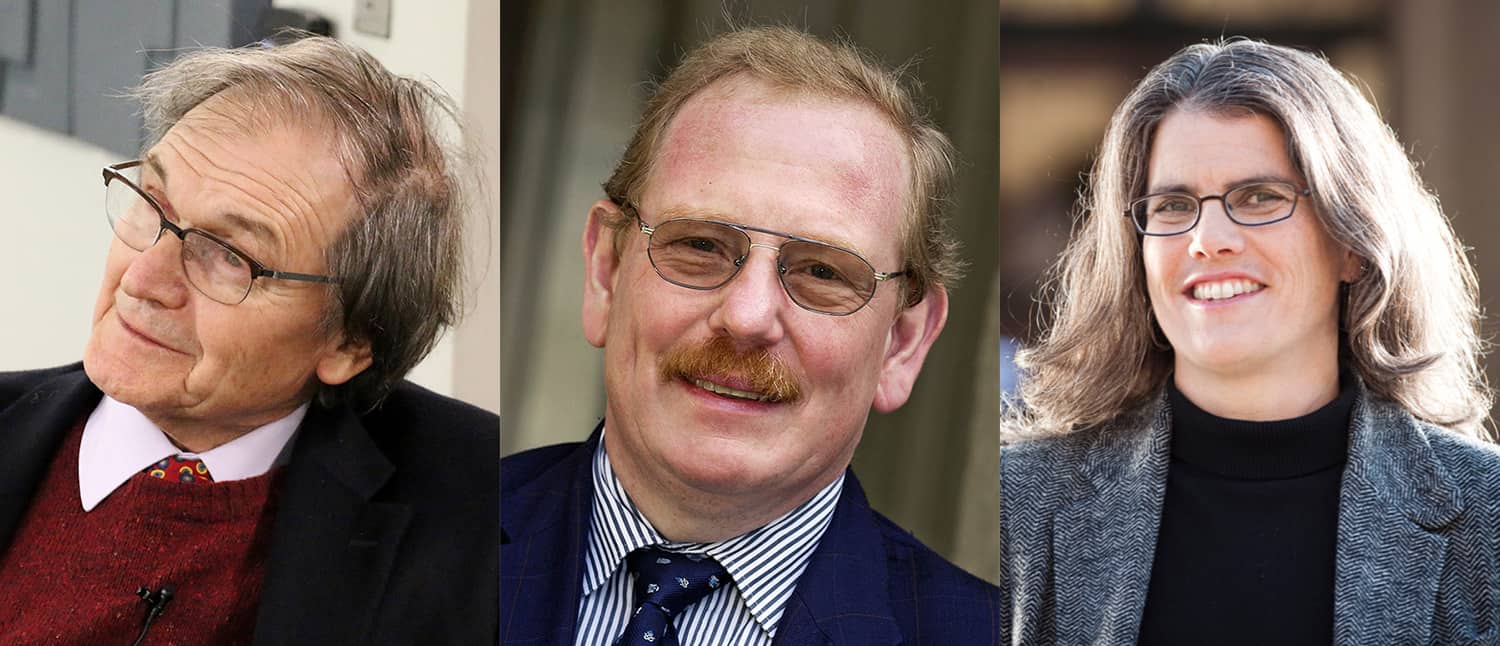
Nobel Prize for Physics 2020 winners

The 2020 Nobel Prize for Physics has been awarded to Roger Penrose, Reinhard Genzel and Andrea Ghez for their work on black holes.

The prize is worth 10 million Swedish krona (about $1.1 million) and half goes to Penrose, with Genzel and Ghez sharing the other half of the prize.

The Nobel Committee cites Penrose “for the discovery that black hole formation is a robust prediction of the general theory of relativity”, and Genzel and Ghez “for the discovery of a supermassive compact object at the centre of our galaxy”.

After the announcement was made this morning by the Royal Swedish Academy of Sciences, Ghez answered questions remotely from the US.

Doubt and excitement

When asked what went through her mind when she first thought there was a huge black hole lurking in the middle of the Milky Way, Ghez replied “The first thing was doubt that you’re really seeing what you think you’re seeing. Doubt and excitement – that feeling that you’re at the frontier of research.”

On being the fourth woman to win the physics Nobel prize, Ghez said “I’m thrilled to receive the prize and take very seriously the responsibility with being the fourth woman to win the Nobel prize. I hope I can inspire other young women into the field – it’s a field that has so many pleasures. And if you’re passionate about science there are so many things that can be done.”

Since the 18th century, physicists have speculated about the existence of objects so massive that even light cannot escape their gravitational pull. However, it was not until the early 20th century when Albert Einstein created his general theory of relativity that scientists had the mathematical tools to investigate black holes with mathematical precision.

Can black holes form?

But even then, there was confusion over whether a black hole could form in nature. One concern at the time was the idea that any departure from perfect spherical symmetry of an object could prevent it from collapsing to a singularity – a single point in space and time. This was an important consideration because rotating stars do not have spherical symmetry.

In 1965 Penrose developed new mathematical tools for describing how a star could collapse to a black hole and devised a rigorous proof that the formation of a black hole is entirely consistent with general relativity. In particular, he introduced the concept of the “trapped surface” – a closed 2D surface with the property that all light rays orthogonal to the surface converge when traced toward the future. A trapped surface is formed in the early stages of the gravitational collapse of a star and once it has formed, the system must collapse to a singularity, creating a black hole. Crucially, Penrose showed that this applies irrespective of the symmetry of the collapsing object.

As well as being the first major contribution to general relativity since Einstein, Penrose’s work inspired generations of astrophysicists and astronomers to work towards observing black holes.

“Renaissance in relativity”

“It was Penrose, more than anyone else, who triggered the renaissance in relativity in the 1960s through his introduction of new mathematical techniques,” says the UK’s Astronomer Royal, Martin Rees.

Also in the mid-1960s, astronomers and astrophysicists were beginning to think that light emitted from bright regions at the centres of some galaxies was created by matter falling into black holes that were millions or even billions of times more massive than the Sun. However, verifying that these active galactic nuclei (AGNs) contained black holes proved to be very difficult because telescopes did not have the resolution to distinguish between a black hole and a tight cluster of stars – which could also be lurking at the centres of galaxies.

A way around this problem is to study the motions of stars that orbit close to the AGN. If the stars are orbiting a black hole, their speeds should have a specific relationship with their distance from the black hole – as do planets orbiting the Sun. However, if the stars are orbiting a cluster of stars, a different speed–distance relationship is expected.

Highly elliptical orbit

Teams led by Ghez and Genzel studied a star that takes about 16 years to orbit the AGN at the centre of the Milky Way. The star has a highly elliptical orbit and gets to within 17 light-hours from the AGN. Independent analyses of the motion of the star by both teams suggests that it is orbiting an extremely compact object that with a mass of about 4 million Suns. The only reasonable interpretation of this is that there is a supermassive black hole at the centre of the galaxy.

Laura Nuttall, who studies black-hole mergers at Portsmouth University told Physics World “It’s great to see Penrose, Ghez and Genzel recognized with the Nobel prize. Penrose is synonymous with black holes. His work in proving how black holes form, as well as their centre being a singularity, has opened so many fields, including that of searching for gravitational waves.”

She adds, “Ghez and Genzel’s work has also inspired many, such as the Event Horizon Telescope, which only released an image of a supermassive black hole last year. It’s wonderful, that their work is very much taken as a given today – of course black holes form from the collapse of matter and of course there’s a black hole at the centre of the galaxy. It’s easy to forget that this has not always been the case!”

Ghez was born in 1965 in the New York City, US. She received a BS in physics from the Massachusetts Institute of Technology in 1987 and a PhD at the California Institute of Technology in 1992. After a year at the University of Arizona, she moved to the University of California, Los Angeles in 1994 where she has remained since.

Genzel was born in 1952 in Bad Homburg vor der Höhe, Germany. He studied physics at the University of Freiburg before completing a PhD in radio astronomy at the University of Bonn in 1978. He then moved to the US working first at the Harvard-Smithsonian Center for Astrophysics until 1980 and then the Space Sciences Laboratory at the University of California, Berkeley until 1985. After a year as a professor at the University of California, Berkeley, he became a director of the Max Planck Institute for Extraterrestrial Physics in 1986. Since 1999 Genzel has held a joint appointment between the Max Planck Institute for Extraterrestrial Physics and the University of California, Berkeley.

Penrose was born in 1931 in Colchester, UK. He did a BSc in mathematics at University College London before completing a PhD in algebraic geometry at the University of Cambridge in 1957. After spending time at Princeton and Syracuse universities in the US in 1959–1961, he returned to England to King’s College London before heading to the University of Texas at Austin in 1963–1964. Penrose then moved to Birkbeck College, London until 1973 before heading to the University of Oxford, where he has remained since.


Flexible electronics make their way into the operating room

Electrode array

A research team led by engineers at the George Washington University and Northwestern University has developed a new surgical tool containing advanced flexible electronics that could improve diagnosis and treatment of cardiac diseases.

Balloon catheters are often used during minimally invasive surgery or ablation procedures, where they are relied upon to carry out measurements and perform therapeutic functions when inserted through small incisions. They can also be inserted into the heart to treat cardiac arrhythmias by locating and ablating the region of tissue causing the arrhythmia. Currently, however, most balloon catheters are rigid, which means they cannot conform well to the soft surfaces in the heart. In addition, these devices can only perform one function at a time, requiring doctors to use multiple catheters throughout a procedure.

Using their experience in flexible and stretchable electronics, the researchers sought to create an elastic system that conforms to tissue surfaces and can act as both a diagnostic and therapeutic device in one.

Flexible arrangements

The device is made up of stretchable gold interconnects sandwiched between a flexible polyimide sheet to form a flexible surface. The catheter is not only flexible but can also stretch up to 30% in both directions without causing damage to the material.

The researchers employed existing manufacturing techniques commonly used in the semiconductor industry to produce each array on a temporary silicon wafer. They then transferred the arrays to the soft elastomeric surface.

One of the features that makes this catheter unique is its multilayer design, with each layer having a unique purpose. The layer on the outside, in contact with the skin, contains electrodes that carry out electrical readings and electrical stimulation of tissues. The next layer down, separated by an insulating layer of polyimide, contains temperature sensors. These could allow surgeons to track changes in temperature of tissues in specific areas. Finally, at the bottom is a layer containing pressure sensors, which measure local forces between heart tissue and the device.

New device could change surgery

The team tested the balloon catheter using computational models, plastic heart models, and real human and animal hearts. They found that the catheter had advantages over current devices in both physical form and functionality.

The multilayered nature of the new catheter means that a wide range of diagnostic and therapeutic functions can be integrated into one device, allowing doctors to perform several measurements simultaneously and map them to specific areas. This opens up the possibility that the device could automatically regulate properties like temperature throughout surgery.

“We have taken new breakthrough materials and fabrication techniques typically employed by the semiconductor industry and applied them to the medical field, in this case cardiology, to advance a new class of medical instruments that will improve cardiac outcomes for patients and allow physicians to deliver better, safer and more patient-specific care,” says Igor Efimov, a senior author of the study.

Details of the catheter are reported in Nature Biomedical Engineering.

Overlooked for the Nobel: Lise Meitner

The discovery of nuclear fission in 1938 is among the most momentous events in 20th-century physics. Within seven years, this experimental and theoretical breakthrough – made jointly by Otto Hahn and Fritz Strassmann, who obtained the data, and by Lise Meitner and Otto Frisch, who interpreted it – led to the first atomic weapons. Less than a decade later, it led to the first nuclear power plants. If ever there was a discovery that should have won its instigators a Nobel Prize in Physics, nuclear fission is surely it.

But that’s not what happened. Though the terms of Alfred Nobel’s bequest would have allowed three of Hahn, Frisch, Meitner and Strassmann to share a prize, only Hahn got the nod, becoming the sole recipient of the 1944 Nobel Prize in Chemistry “for his discovery of the fission of heavy nuclei”. The contributions of Frisch, Meitner and Strassmann were relegated to a few lines in the official Nobel presentation speech, which took place in December 1945. That same speech, incidentally, claims that Hahn “never dreamed of giving Man control over atomic energy” – which is a bit rich, given that Hahn worked on the Nazi atomic weapons programme and was in fact still incarcerated by the British authorities at the time.

The 1944 Nobel Prize in Chemistry represents a strong challenge to anyone who claims that the Nobels are fair or reflective of how collaborative science works. Strassmann, whom the presentation speech patronizingly called “one of [Hahn’s] young colleagues”, had in fact been his assistant for the best part of a decade. For much of that period, Strassmann worked for half wages or none; his opposition to the Nazi regime meant that he was blacklisted from other jobs, leaving him dependent on Hahn and unable to develop a solo career. Meitner fared slightly better in the speech, since it did at least acknowledge her as Hahn’s collaborator for more than 30 years. Not mentioned, though, is the reason she was absent during the crucial 1938 experiments: Meitner, like her nephew Frisch, was an ethnic Jew, and her conversion to Protestantism 30 years earlier did not protect her from Nazi predation. In the summer of 1938, both Meitner and Frisch were forced to flee Germany. They made their seminal contributions to fission in exile, communicating with the Berlin-based Hahn and Strassmann by letter and telephone.

Of the three researchers left out of the 1944 Nobel Prize in Chemistry, the injustice done to Meitner is the most severe. Unlike the other “overlooked” physicists in this series, the records of her Nobel nominations are now public. They show that Meitner’s male colleagues (the scientists in the Nobel nomination pools were all male then, notwithstanding the existence of contemporary female luminaries like Ida Noddack and Iréne Joliot-Curie) nominated her for the physics Nobel 29 times, and for the chemistry Nobel 19 times. Her earliest nomination came from the Norwegian chemist Heinrich Goldschmidt in 1924. Her last was in 1965, three years before her death, when Max Born made her his fourth choice after Pyotr Kapitsa (who went on to win in 1978), Cornelis Gorter (who never won) and Walter Heitler (ditto).

The records do not entirely explain why none of these nominations were successful. However, they do suggest that Meitner has something other than gender in common with two other entries in this series. The chemistry Nobel committee in 1944 was as divided about the relative importance of theory and experiment as the physics committee was in 1957, when Chien-Shiung Wu was denied a share of the parity-violation prize that went to Chen Ning Yang and Tsung-Dao Lee. The 1944 committee also failed to appreciate the major role that Meitner, Frisch and Strassmann played in the fission collaboration, much as a later committee failed to understand that Jocelyn Bell Burnell was not merely Antony Hewish’s assistant in discovering pulsars. On top of that, a whole suite of prejudices – racial, sexual, political and disciplinary – seems to have made it impossible for the parochial chemists of neutral Sweden to see the contributions of a refugee Jewish woman physicist in their proper light.

Early in her career, Meitner faced and overcame a considerable degree of personal prejudice. In one laughable example, the Nobel laureate Emil Fischer refused to let her work in his lab because he thought women’s long hair was a fire hazard (apparently Fischer’s massive beard was perfectly fine). Meitner’s subsequent achievements – as well as nuclear fission, she also discovered the element protactinium – won her legions of admirers, 26 of whom went on to nominate her for a Nobel Prize at least once. In the end, though, neither her efforts nor theirs were enough to counterbalance the subtle, structural forces that helped (and still do help) to keep the Nobel prizes overwhelmingly white and male, 82 years after Lise Meitner’s earth-shattering discovery.

New microwave bolometers could boost quantum computers

Two graphene-based bolometers that are sensitive to detect single microwave photons have been built by independent teams of physicists. The devices could find a range of applications in quantum technologies, radio astronomy and even in the search for dark matter.

One bolometer was created in Finland by Mikko Möttönen and colleagues at Aalto University and VTT Technical Research Centre of Finland, while the other was created by an international team led by Kin Chung Fong at Raytheon BBN Technologies in the US.

A bolometer measures the energy of incoming radiation by determining how much the radiation heats up a material. Bolometers capable of detecting single microwave photons would be very useful in creating quantum computers and other technologies that use superconducting quantum bits (qubits). This is because superconducting qubits interact via microwaves and single photons provide a very efficient way of transferring quantum information between qubits.

Too slow

So far, however, creating single-photon microwave detectors has been difficult because of the relatively low energies of microwave photons. The Finnish team had addressed the low-energy problem by creating a bolometer that used a gold-palladium alloy to absorb photons. While this device operates at very low noise levels, it is not fast enough to be useful when it comes to measuring the state of a superconducting qubit.

Now, Möttönen and colleagues have replaced the gold-palladium absorber with one made from graphene, which has a very low heat capacity. This makes graphene ideal for making a bolometer because heat capacity is a measure of the energy required to raise the temperature of a material by one degree.

“Changing to graphene increased the detector speed by 100 times, while the noise level remained the same,” explains team member Pertti Hakonen. Indeed, the new device can make a measurement in less than microsecond, which is on par with technology that is currently used to measure the state of qubits. Hakonen adds, “After these initial results, there is still a lot of optimization we can do to make the device even better”.

Josephson junction

Meanwhile, Fong and colleagues created a bolometer in which graphene is integrated within a superconducting device called a Josephson junction. When the graphene warms up by absorbing a microwave photon, it affects the electrical current flowing through the Josephson junction – thus creating the detection signal. This device is a whopping 100,000 times faster than microwave bolometers based on other materials.

Team member Dmitri Efetov at ICFO in Barcelona comments “such achievements were thought impossible with traditional materials, and graphene did the trick again. This opens entirely new avenues for quantum sensors for quantum computation and quantum communication.”

Fong and colleagues and Hakonen and colleagues describe their bolometers in separate papers in Nature.

Climate change threatens future astronomical observations

Rising global temperatures could worsen seasonal El Niño events and cause telescope images to lose their quality. That is the finding of an interdisciplinary team of researchers in Germany, who predict that climate-change-induced alterations in temperature, wind speed, humidity and “seeing” – atmospheric turbulence that causes blurring in images – will reduce the clarity of observations at ground-based telescopes around the world. The researchers, led by Faustine Cantalloube of the Max Planck Institute for Astronomy, argue that climate change therefore needs to be taken into account when building new observatories such as the Extremely Large Telescope (ELT), which is currently under construction at Cerro Armazones in Chile’s Atacama desert.

In their study, the researchers focused on the European Southern Observatory’s facility at Cerro Paranal, which is about 20 km from Cerro Armazones. There are three critical parameters for operating astronomical instruments: integrated water vapour (IWV), relative humidity and cloud coverage. They found that high IWV levels at Paranal, which affect astronomical observations in the infrared, were associated with high central equatorial sea surface temperatures during El Niño events. Although such events are a natural, periodic phenomenon, increases in atmospheric CO2 concentration could make them more vicious, thanks to the associated global rise in humidity. A rise in humidity could also cause previously rare catastrophes such as the March 2015 flooding of the Atacama region to become more frequent.

Atmospheric turbulence affecting images

The study also examined the direct effects of increasing temperatures on the four telescopes that make up Paranal’s Very Large Telescope (VLT) array. The dome enclosures that house these telescopes are kept cool during the day so that when the dome opens at sunset, the telescopes are at a similar temperature to the outside air. This cooling is necessary because any temperature difference between the inside of the dome, where the telescopes are found, and its environment can cause air turbulence. The air turbulence distorts the starlight that reaches the telescopes, much like how stars appear to twinkle to the naked eye thanks to turbulence in the higher atmosphere.

The VLT’s current thermal active control system, however, cannot exceed target temperatures of over 16 °C. Since the build-up of atmospheric CO2 is already linked to an increase of 1.5 °C in average temperatures at Paranal to over the past 40 years – 0.5 °C more than the global average – additional local increases in surface temperature could further impair observations.

The researchers used worst-case climate change scenarios on models such as the Coupled Model Intercomparison Project Phase 6 (CMIP6) multi-model ensemble to determine climate projections for the region. The results suggest that by the end of the 21st century, Paranal could experience a further 4 °C increase in average temperatures. This would cause a greater difference between the temperatures inside and outside of telescope domes, and generate more air turbulence.

Adaptive optics can help correct for atmospheric turbulence. However, the time lag associated with these corrections creates an imaging artefact known as a wind-driven halo. Such halos are caused by winds from the southern subtropical jet stream, they are visible in ~30-40% of images, and they dramatically reduce the image’s contrast. Many wind-driven halos occur during El Niño events, which are likely to become more frequent as well as more intense as global temperatures rise.

Mitigating the impact of climate change on research

On a global level, Cantalloube notes that increased humidity and worse seeing are far from the most pressing threats to astronomy. “Fires in the US and in Australia already destroyed or were about to destroy observatories,” she explains. “This is the most imminent threat that is a consequence of climate change.” Cantalloube adds that hurricanes in Hawaii, which have become stronger in recent years “could also threaten the Hawaiian-based observatories.” As for Chilean observatories, she says, “the effects are there”.

According to Cantalloube, interdisciplinary teams like hers will become more prevalent over time as scientists seek to understand the many ways that climate change could impact research capabilities. She notes that her team’s paper, which appears in Nature Astronomy, is a preliminary study, focusing solely on the effects of climate change on observations conducted in Chile. Since climate change will likely affect different regions of the globe in different ways, the team hopes to extend its analysis to cover additional sites. In the meantime, Cantalloube urges members of the astronomy community to “investigate whether climate change and/or environmental signals are also detectable in the observations of other observatories/others fields of research” and “convince political leaders to act now against climate change”.

Nobel prize sizzle: building excitement in the run-up to the physics award 

Nobel topics infographic

Tomorrow, the winner(s) of this year’s Nobel Prize for Physics will be announced. This will the 14th Nobel prize that I have covered for Physics World, and I can honestly say that the excitement has never waned.

A big challenge for journalists on Physics World, however, is coming up with new ways of creating a bit of “sizzle” in the run-up to the announcement. This is difficult because unlike some other prizes, there is no public shortlist for the Nobel prize to whet the appetite. Indeed, who has been nominated and the deliberations of the Nobel committee are kept secret for at least 50 years – so it is impossible to know who is in the running and very difficult to understand how decisions are currently being made by the committee.

However, I am not complaining about this information deficit. I think it is one of the many things that keeps the Nobel prize fresh and exciting every year.

Last year I was very fortunate to gain some insights into the selection process when I interviewed the Swedish physicist Lars Brink, who served on the Nobel Committee for Physics on eight separate occasions. So if you are keen to learn about the finer points of how winners are selected, check out my article “Inside the Nobels: Lars Brink reveals how the world’s top physics prize is awarded”.

Predicting winners

One way of generating a bit of excitement in the run-up to the Nobel is to predict who will bag the prize. The problem with predictions is that mine are almost always wrong. And after a few years, I also run out of new people to predict as winners.

To see how good our Physics World predictions have been, I looked back at a blog I wrote in late September 2009 (“Nobel predictions”). The predictions were made by Physics World editors and the Nobel laureate Albert Fert. Here are the 13 predictions we made (all men, I’m afraid) and the years that some of them actually won a Nobel prize:  Alain Aspect, David Wineland (2012), Peter Zoller, Juan Ignacio Cirac, Anton Zeilinger, Michel Mayor (2019), Didier Queloz (2019), Andre Geim (2010), Konstantin Novoselov (2010), Yakir Aharanov, Michael Berry, Saul Perlmutter (2011) and Brian Schmidt (2011). That is better than 50%, so maybe I am underselling our ability to predict winners (I say “our”, because I only got one right).

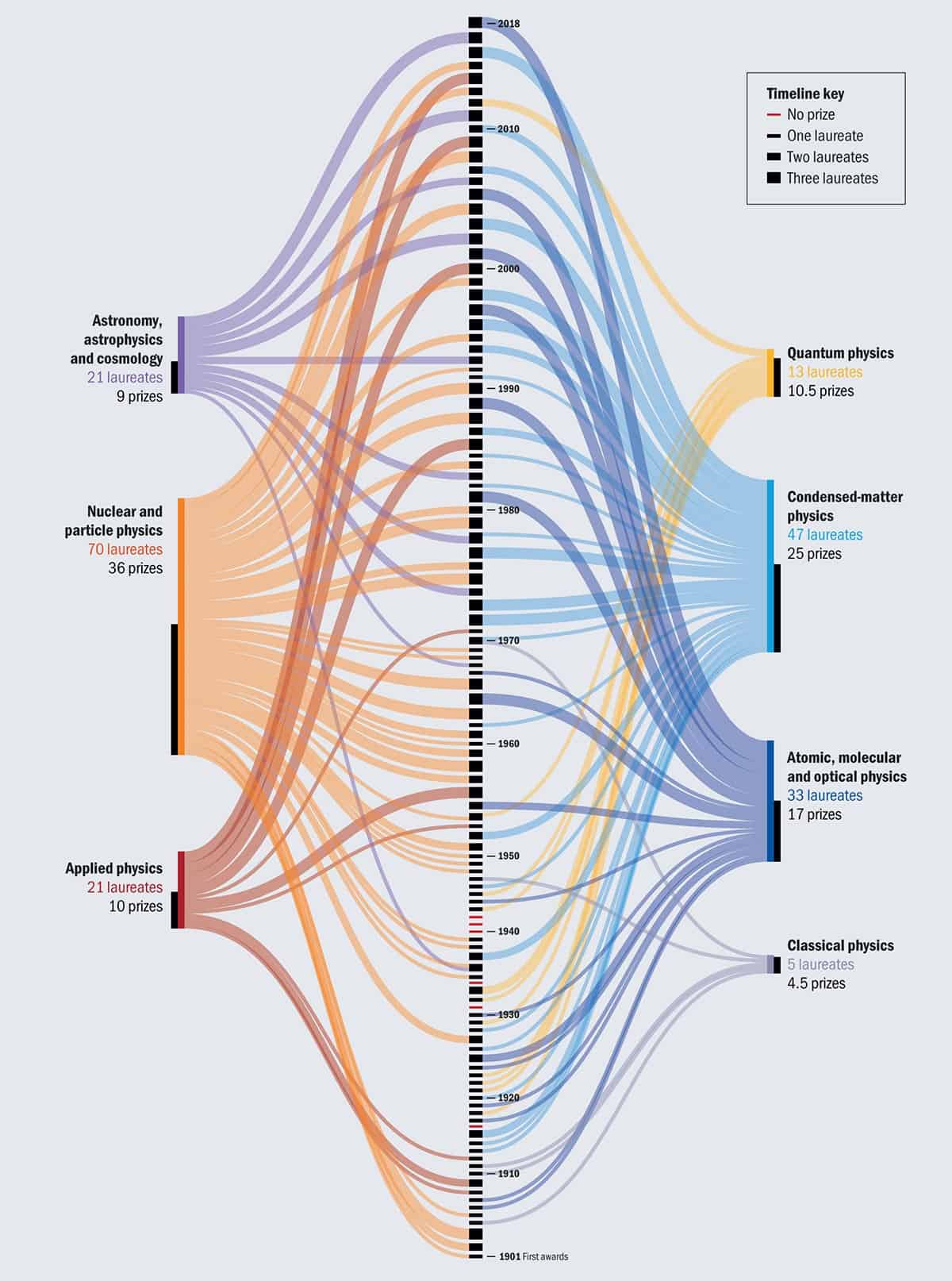
Not content to rely on intuition to pick winners, in 2014 I took a close look at whether there is a temporal pattern in how prizes are awarded. I divided physics into seven disciplines and created an infographic that shows when prizes were awarded in those fields.

Quantum information this year?

The figure “Nobel Prize disciplines timeline” is version of the infographic updated to 2019 and if you squint at it for long enough you may convince yourself that there is a pattern in the prizes. For example, there has not been an award in the field of quantum physics for eight years – so, my only prediction for this year will be a prize to physicists working in the field of quantum information.

Migration world map

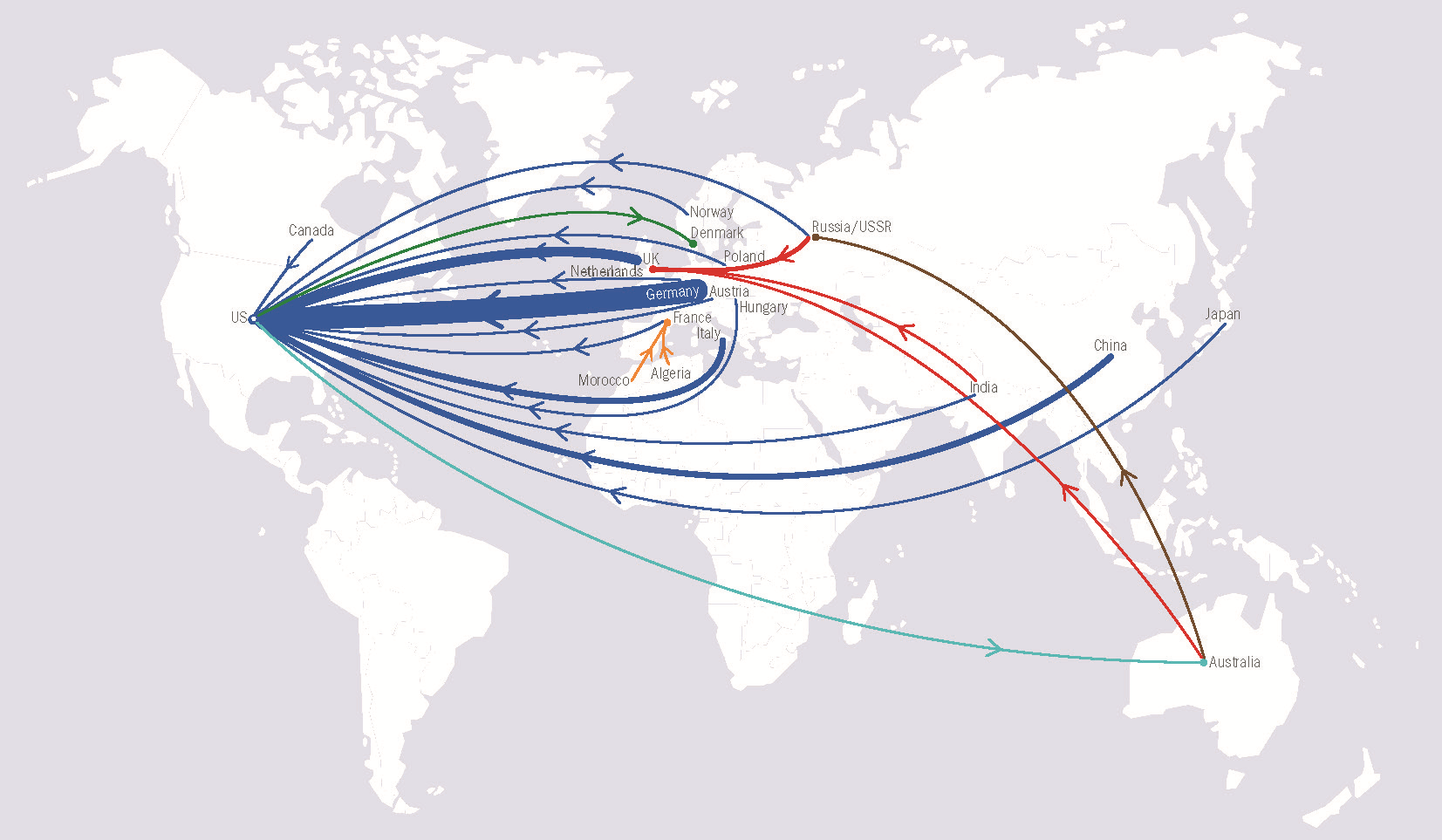
Another reasonable bet is that at least one of the 2020 laureates will be an immigrant. That prediction comes courtesy of our 2015 Nobel sizzle, when I created an infographic that reveals that more than 25% of physics laureates can be classed as immigrants. That was updated in 2019 and you can read more in “More than one-quarter of physics Nobel laureates are immigrants, reveal updated infographics”.

I think that our best bit of Nobel sizzle so far was last year’s series of pieces about our favourite Nobel prizes. My pick was the 1982 prize to Kenneth Wilson “for his theory for critical phenomena in connection with phase transitions”. I have always been fascinated by phase transitions, but I have to admit that it was a bit daunting to try to describe Wilson’s work in a few hundred words: (“My favourite Nobel prize: a universal theory for phase transitions”).

This year we are focussing on people who we think missed out on a Nobel. You can find those pieces on the Physics World website in a panel called “Overlooked for the Nobel”. I have contributed two pieces to this series: one championing the physicists at CERN who discovered the Higgs boson, and the other asking why the Chinese-American physicist Chien-Shiung Wu did not win a Nobel for her pioneering measurement of parity violation.

Copyright © 2026 by IOP Publishing Ltd and individual contributors