Geoengineering may not help crop yield

Managing solar radiation by introducing aerosols into the atmosphere may not protect crop yields from climate change. That’s according to US researchers who found that the reduced heat stress resulting from this geoengineering may not outweigh the harm to crop yield from its scattering of sunlight.

“Shading the planet keeps things cooler, which helps crops grow better,” says Jonathan Proctor of University of California Berkeley, US. “But plants also need sunlight to grow, so blocking sunlight can affect growth. For agriculture, the unintended impacts of solar geoengineering are equal in magnitude to the benefits. It’s a bit like performing an experimental surgery; the side-effects of treatment appear to be as bad as the illness.”

To come up with this assessment, Proctor and colleagues looked at the volcanic eruptions of El Chichón in Mexico in 1982 and Mount Pinatubo in the Philippines in 1991. These eruptions were big enough to send a large volume of stratospheric sulphate aerosols into the stratosphere; their cooling of the climate was the inspiration for proposed geoengineering techniques that artificially introduce such aerosols.

“The problem in figuring out the consequences of solar geoengineering is that we can’t do a planetary-scale experiment without actually deploying the technology,” says Solomon Hsiang, also of the University of California Berkeley. “The breakthrough here was realizing that we could learn something by studying the effects of giant volcanic eruptions that geoengineering tries to copy.”

El Chichón injected 7 Megatonnes of sulphur dioxide into the upper atmosphere, whilst Pinatubo introduced 20 Megatonnes. The sulphur dioxide later oxidized to form stratospheric sulphate aerosols that gradually spread around the globe and made the stratosphere more opaque for several years.

By looking at records of optical depth, the researchers assessed how the aerosols from the volcanoes altered global sunlight, and how this changed crop yields of maize, soy, rice and wheat reported to the UN Food and Agricultural Organization. Then they applied this crop yield model to a climate projection for the RCP4.5 emissions pathway and to a scenario with solar radiation management that uses sulphur dioxide injection to balance all additional manmade climate forcing after 2020.

Pinatubo reduced direct sunlight by roughly a fifth, increased diffuse sunlight by around the same amount and reduced total sunlight by 2.5%. It cooled the world by roughly 0.5°C and decreased yields of maize by 9% and soy, rice and wheat by nearly 5%.

The reduction in crop yield due to these changes in sunlight was a surprise to the researchers as some studies in wild ecosystems had found that scattered sunlight increased plant growth. The theory was that the scattering distributes light more evenly across the plant, redirecting it from sun-saturated leaves in the canopy to shaded leaves below. Diffuse light may, however, be less good at producing edible parts of plants.

The geoengineering scenario the researchers modelled cooled the planet by 0.9°C, reduced precipitation by 0.26 mm per month and increased cloud fraction by 0.0081 during the maize growing season. Average maize yields increased by 6.3% because of the cooling but decreased by 5.3% because of light dimming, the team showed. Once the researchers had accounted for optical effects, geoengineering had no statistically discernible effect on crop yields compared to the RCP4.5 scenario.

The teams believes this approach is the first use of real-world data to look at the consequences of geoengineering for a particular sector of the economy.

Hsiang reckons it’s possible to use the same method to investigate how geoengineering would affect other areas such as coral reef health, the net primary productivity of vegetation, skin cancer or worker productivity. This would provide more information on the potential risks.

Expanding his medical treatment analogy, Hsiang explains that this is like a doctor being informed about side effects. The fact that this study has highlighted important potential side effects, he believes, doesn’t mean we should rule geoengineering out as, like chemotherapy, the risks can justify the treatment.

Although many research groups are interested in field-work to trial geoengineering, we don’t have the same frameworks in place to deal with such experiments as we do for medical treatments, according to Hsiang in a press briefing. The researcher believes we need analogues to informed consent as well as institutional review boards.

Proctor, Hsiang and colleagues reported their findings in Nature.

Once a physicist: David Levey

David Levey

What sparked your initial interest in physics?

I remember being gobsmacked when I saw the interference pattern of waves in a ripple tank in my first year at secondary school. A description of this phenomenon was given to me in mathematical language, capturing the seemingly uncapturable. Quantum mechanics (specifically the Heisenberg uncertainty principle) provided further astonishment. After some unenjoyable years in chartered accountancy, I could no longer resist the lure of the quantum world and took myself off to read physics at University College London, immediately followed by a PhD in quantum field theory at Imperial College London.

Did you ever consider a career in academia?

I took up a couple of postdocs after my PhD. At that time, I remember my interest turned briefly towards nonlinear dynamics and chaos, but I have always been enthralled by the quantum world. However, quite early on I found that academic life can dim the wonderment and cloud the original vision. I suppose that if I had decided to keep going in academia, I would have pursued quantum field theory in some way. But other forces were at work, leading me in a different direction.

How did you get interested in mathematics and teaching?

Delight in mathematics has been my constant companion. I found myself wanting to communicate my love for it to younger minds. My experience as a teacher was rewarding, both for me and for my students. I also had fun with extracurricular mathematics activities: at Loretto School in Scotland, I helped run a Riemann Society for sixth-formers, and at Cheltenham Ladies’ College, I started the Euler Society. This was great as we could play around with all sorts of things that would never be on the school curriculum – introductions to group theory and topology, gems from number theory, non-Euclidean geometry and more. We also took part in UK Mathematics Trust challenges, where I remember we had some measure of success – one year, we came first in the senior regional finals, despite some hefty competition.

What were the challenges of moving from academia to teaching at secondary school?

I suppose the main challenge was how to create an effective communication channel between my experience and my students’. This seemed to emerge quite spontaneously and effectively when not forced. I listened to my students and, on the whole, they listened to me. I tried to address all concerns on an equal footing. For the naturally gifted student, the challenge was to meet their enthusiasm and acuity with encouragement and appreciation. I came across perhaps two or three exceptionally able mathematicians, which was a privilege. I remember presenting a proof of the irrationality of pi involving many steps, and some quite challenging mathematics. The most able students not only followed the intricate reasoning but kept me on the right path when I lost the thread. I suppose the other major challenge was to adjust to working as a member of a team rather than a solo operator. I’m still working on that one.

How did you become interested in Buddhism?

I won’t go into all my own personal details, other than to say I was born into a Jewish family, and answers were not forthcoming from my native religion and milieu. As a teenager, I read widely and furiously. I probed into every philosophy and religion. I could connect with much of what many had to say, and I noted the commonalities. I quickly cottoned on to any discrepancies between doxis and praxis – not all who talked the talk walked the walk. The story of the Buddha’s life and enlightenment struck home in my teens. But it wasn’t until about 20 years later, when I finally decided to learn meditation from a Burmese monk in a north London Buddhist temple that, as they say, I saw the light.

How has your background in physics helped or influenced your work as a teacher?

I’d have to say to a very limited degree. My physics research was mainly about finding things out for myself. On the few occasions I did any teaching during my research, it was like delivering a report or an update. There was not much sense of a dialogue. Of course, I now realize that this is precisely how many lecturers approach their teaching commitments. But teaching in high school is an altogether more personal affair. The dynamic is much richer and there is a lot more going on than the mere passing on of knowledge. A background in physics engenders a methodical approach in whatever activity is subsequently undertaken, and no less so in teaching.

Any advice for today’s students?

Can you still feel in your research or studies the visceral contact with the physical world? Can you let yourself be amazed by what you are dealing with? At this point I could sneak in a plug for mindfulness, given that I am ordained, and I suppose not too many Buddhist monks appear in the Physics World careers section. Truly, a connection between physics research and mindfulness is hard to resist. You must summon all your qualities of perseverance, sincerity and patience. Science and Buddhism both deal with the world we live in. Both rely on honest investigation. For the “big questions” of physics and of life, it’s only natural to be uncertain and in doubt. Be honest investigators.

Diamond Light Source – where materials surrender their secrets

With the 7000th paper reporting results from experiments at Diamond Light Source hot off the press, we visit some of the 31 beamline experiments at the main synchrotron facility, the largest of its type in the world.

We also tour the sub-angstrom resolution electron microscopes at the electron Physical Sciences Imaging Centre (ePSIC), which alongside the Electron Bio-Imaging Centre (eBIC), offers a full suite of complementary instrumentation for the scientific community.

MedPhys Slam: fostering the art of communication

MedPhys Slam

Effective communication skills are an important factor for anyone pursuing a scientific career. But for those training to work within medical physics – who will inevitably come into contact with patients, their relatives and healthcare staff – the ability to explain complex ideas and concepts in a clear and understandable manner is even more pressing.

“Patients will have questions, and you’re the physics expert in the room,” says John Ready from UC Davis Health. “You need to be able to explain what’s going on, and why, in terms that the patient can understand.”

With this in mind, Ready initiated a brand new session at this year’s AAPM Annual Meeting: the MedPhys Slam. The Slam is a communication competition in which participants – PhD students, medical physics residents and postdoctoral researchers – have just three minutes to describe their research project in a compelling and coherent manner.

Ready explained that he had seen a similar event whilst he was a graduate student at UC Berkeley, and thought it would be a great idea to bring this to AAPM. So a year ago, he invited all the AAPM regional chapters to hold preliminary competitions, and the winner of each of these was invited to the main event in Nashville, TN. “The idea is to see how well you can communicate in three minutes, what your research is, why it’s important and what’s the impact,” he told Physics World.

The competition was judged by a panel of non-medical physicists, including two local journalists, a physics teacher, a PhD student studying learning, teaching and diversity, and country music singer and songwriter Matraca Berg. The judges heard talks on topics including how to solve proton therapy’s range measurement problem, how a robot could make us better marksmen, and even why we should replace anaesthesia with Netflix.

And the winner is….

The 16 participants were judged on three categories: comprehension and content, communication and engagement. The overall winner was Ashley Tao, a medical physics resident at the Mayo Clinic, who gave a talk with the intriguing title: “The textbook was wrong – the X-ray tube does contribute substantially to occupational radiation dose during fluoroscopy”.

The winners

Tao explained that while it is generally assumed that dose to operators during fluoroscopy is mainly scattered from the patient, in actuality, the X-ray tube can contribute a non-trivial percentage of the total dose. She proposed the use of a ring of lead to cover the X-ray tube and showed that, in the particular set-up examined, this could decrease tube scatter by 50%. Tao suggested that radiation protection guidelines are adapted to these findings and emphasized the need for radiation safety education.

The judges also awarded a runner-up prize, to Eric Morris, a PhD Candidate at Henry Ford Health System. Morris described a method for automatic segmentation of cardiac substructures, to improve treatment planning of left breast radiotherapy and reduce dose to the heart.

The idea is to delineate radiation-sensitive cardiac structures and steer radiation away from these. However, planning CTs exhibit poor contrast in the heart, while MRI – which can clearly visualize substructures – is not routinely available for every patient. Instead, Morris and colleagues used fused MRI and CT scan data to develop a model that predicts the location of sensitive substructures based on just a CT scan, enabling their avoidance during radiotherapy planning.

Finally, the audience also got to share their views, with an online “people’s choice” vote. The winner here was Brian Anderson, a PhD student at the MD Anderson Cancer Center. Anderson presented a technique to improve ablation treatment of colorectal liver metastases. He explained that contrast CT is used to highlight metastases prior to needle insertion for ablation therapy. However, the liver moves with the patient’s respiration and it’s not possible to keep applying contrast. Instead, he is developing individual anatomic models that detect where the disease was located and predict where it will be.

The judges pointed out that the most effective presentations were those that included fewer slides and were explained in a way that non-physicists could understand. They noted that a relaxed pace of speaking is particularly important when using complex language. “I thought the talks were fascinating and exciting, very enlightening,” said Berg.

NASA must reassess its Mars programme – or future missions could fail, report warns

Ageing infrastructure currently orbiting Mars could threaten the viability of future missions to the red planet. That is according to a new report by the National Academies of Sciences, Engineering and Medicine (NASEM), which warns that concludes that the loss of even a single Mars orbiter – essential for communicating with Martian rovers – could make it difficult to support planned sample-return missions to the red planet.

The report – Visions into Voyages for Planetary Science in the Decade 2013-2022: A Midterm Review – provides a series of recommendations to ensure NASA fulfills the goals of the present 10-year survey for planetary science, which began in 2013. Many of the recommendations revolve around Mars including the continued planning and implementation of a Mars sample-return mission. The report also calls on NASA to completely reassess its Mars programme from developing a strategic plan and budget to implementing a new management structure and establishing partnerships – including with commercial firms.

NASA is doing a good job in following the research priorities laid out in the 2013 survey given the very challenging budget situation they were faced with at the beginning of the decade

Louise Prockter

“NASA builds extremely capable spacecraft that frequently last far longer than their design time, which results in a rich and ongoing science return above and beyond what was originally planned,” report co-chair Louise Prockter from the Lunar and Planetary Institute in Houston told Physics World. “However, relying on this ageing infrastructure is a potential risk. We are recommending that NASA evaluate how much of a risk this is.”

Budget woes

The report – written by a 16-strong panel – concludes that NASA’s planetary science division has made “impressive progress” in meeting and even exceeding some of the goals set out in the 2013 decadal survey. It has done so despite significant cuts in its budgets early in the current decade. “NASA is doing a good job in following the research priorities laid out in the 2013 survey given the very challenging budget situation they were faced with at the beginning of the decade,” says Prockter.

Yet budget cuts have affected many aspects of the 2013 survey’s recommendations with the two planned large “flagship” missions having been downsized. The Mars Astrobiology Explorer-Cacher, for example, re-emerged as the Mars 2020 rover, which will launch in 2020 to collect samples for eventual return to Earth to look for signs of life. The Jupiter Europa Orbiter, meanwhile, is now the Europa Clipper mission. Set to launch in the next decade it involves placing a spacecraft in orbit round Jupiter to carry out a detailed investigation of the giant planet’s moon Europa.

Opportunities for lower profile Discovery and New Frontiers missions have also declined, with the NASEM panel stating that the timeline for choosing such probes is on the brink of falling behind schedule. Indeed, the report calls on NASA to invite submission for another New Frontiers mission, which have a cost cap of $850m, “as soon as possible” and no later than December 2021.

“NASA has made a strong investment in technology that has exceeded the [2013 decadal survey’s] recommended levels,” says co-chair Joe Rothenberg, a former NASA associate administrator. “This investment has not only enabled science missions in this decade but is providing for the long-term technology development needed for missions in the next decade, including the Mars sample return programme and the exploration of planetary bodies with extreme environments.”

Infrared sensor could help design better drugs

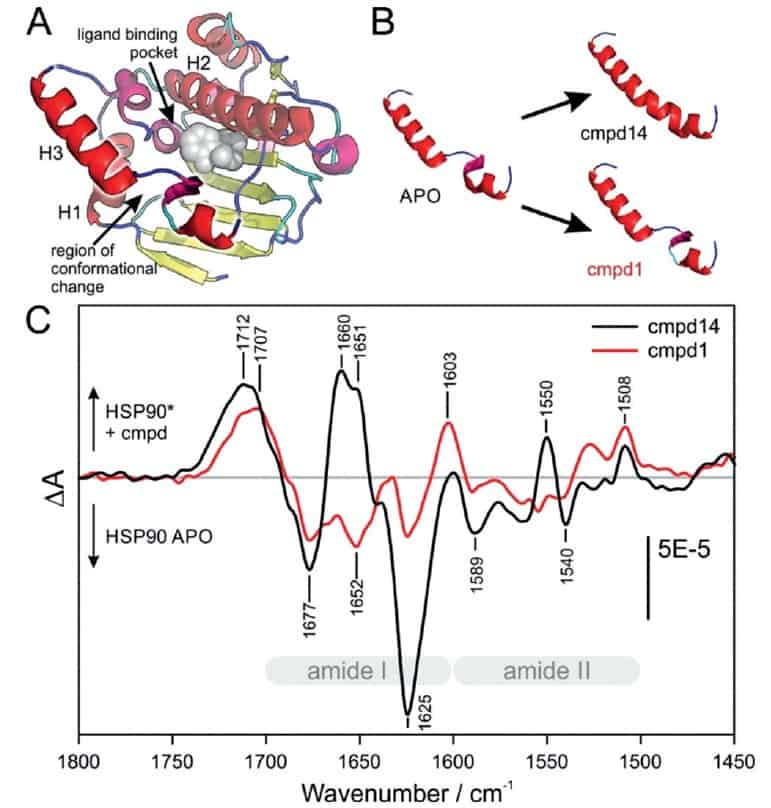
Drugs affect the metabolism of cells by inhibiting the activity of specific proteins. To do so, a drug binds to a target protein, in a pouch-like functional compartment of the protein. This binding process can also alter the structure of the protein surface, a phenomenon called conformational change, and open new pouches that would be good nesting spots for active agents.

Taking advantages of these new pouches is a holy grail of drug research, as they are likely to offer better selectivity of active agents and reduce side effects. However, conventional biophysical methods for monitoring the protein surface are currently too limited to enable such breakthroughs. While X-ray crystallography and NMR spectroscopy are highly efficient, they are also time and material consuming and need weeks to yield results. A new tool for quick monitoring of the structure of the protein is hence needed.

Tracking conformational changes

Klaus Gerwert and his team at Ruhr-Universität Bochum addressed this challenge by using an infrared (IR) sensor able to track protein conformational changes in just a few minutes. The sensor is based on a crystal that is permeable for IR light and allows tracking of the absorbance spectra.

When a protein binds on the surface of the sensor, it is then washed by a liquid containing the active agent and the recorded spectrum is analysed. The correlation between the IR spectrum and the protein structure enables direct molecular interpretation of the spectrum and study of conformational changes induced by the active agent (Ang. Chem. Int. Ed. 57 9955).

To investigate the sensor’s application, the researchers inhibited the heat shock protein 90 (HSP90), which assists newly translated proteins in the cell to fold in the correct 3D structure and is required by tumour cells to grow rapidly. They particularly looked at the changes induced by different compounds in HSP90 that are known to use various binding modes to drugs.

Conformational changes

The conclusions drawn from the absorbance spectra matched those obtained from X-ray data and clearly showed that the sensor could be used to track conformational changes. The researchers further validated the technique by measuring the absorbance of several compounds interacting together at the same time and identifying their respective binding modes. They then compared the results against both theory and subsequent crystallography experiments. In both cases, the sensor was able to identify the correct binding mode, even when the conformational differences were small.

Manufacturing more efficient drugs

The efficacy period of a drug in the body corresponds to the rate at which its molecules disengaged from the target protein. The longer an active agent is bound to the target protein, the more effective it is and the less side effects it causes. By providing near-real-time information about the interaction between a drug and its target protein, the sensor-based technique could help pharmaceutical companies to design new and more efficient drugs.


Tesla versus Edison: lessons from the AC/DC war

A few months ago I wrote about the battle in the late 19th century between Joseph Swan and Thomas Edison to build a commercially successful light bulb. In passing, I also referred to the “battle of the currents” that resulted from the revolution in electric lighting from the 1880s onwards. Now I know I told the Physics World editor that I wouldn’t write too often about the history of physics, but the story is so interesting I couldn’t resist taking it further.

I left the tale with Edison having won thanks to superior technology. His system used longer-lasting bulbs and higher resistance filaments, which could therefore be used in parallel circuits and avoid the all-lights-out-if-one-bulb-pops scenario. Things, at first, seemed to go well for Edison. There being no electrical infrastructure at the time, he designed his bulb so it could be used with an available direct-current (DC) system, making it suitable for large installations as the market grew.

However, Edison faced growing competition, particularly from the alternating-current (AC) system developed by Westinghouse Electric Corporation. The problem with a DC system was that the power losses (and voltage drops) along a cable meant power plants had to be stationed within a kilometre or so of customers. For DC to catch on, everyone would need local power plants.

Towers of power

In cities this was vaguely feasible, albeit expensive, dirty and noisy. But in the countryside it wasn’t practical at all as the distances were too large. Undaunted, in 1882 Edison opened the first power plant at Pearl Street Station in Manhattan, initially serving 82 customers and powering 400 lamps via a coal-fired generator. Within two years he had built 18 more power stations to run his electric lighting and by 1888 Edison Electric was struggling to meet demand.

In 1884, however, a young Serbian-born physicist called Nikola Tesla came to work for Edison with ideas of how to make AC motors and generators. These would be more efficient, cheaper and more reliable than DC dynamos. Convinced he was on to a winner, despite the generators producing much higher voltages, Tesla pitched his ideas to Edison. Edison, however, believed AC was too dangerous and uncontrollable.

Disappointed at Edison’s refusal to see the future as he did, Tesla left Edison’s employment and in 1887 set up his own business to develop AC further. The Tesla Electric Company quickly attracted much investment as well as the attention of George Westinghouse – a railroad baron who struck a deal with Tesla to license his AC patents for $2.50 per horsepower sold. Tesla worked closely with Westinghouse to make AC happen.

AC had another advantage too. Given that the power loss in a cable is resistance times current squared, by “stepping up” the voltage (and so lowering the current) the losses for a given cable are much smaller and power can be sent over much larger distances. AC systems soon started being used to power not just lights, but motors too, allowing elevators, drills, pumps and factory machines to be powered by electricity.

Edison’s reaction to AC’s success was to show how dogs and cattle could be killed by AC but remain unharmed by DC of similar powers, fuelling media scare stories of accidental electrocutions from faulty AC installations. Edison even helped New York state authorities to find a new way of executing prisoners using AC, with convicted murderer William Kemmler in 1890 becoming the first person executed in an AC electric chair. The end of Williams’ life was, by all accounts, gruesome and slow, which suited Edison well, who dubbed AC the “death current”.

Tesla and Westinghouse fought on, improving the properties of the insulator that cladded wires. Things came to a head, however, when Westinghouse won a vital tender from the Niagara Falls Power Company in 1893. The Westinghouse AC system had 10 generators (5000 hp each) and step-up transformers to 22 kV allowing 37 MW of power to be transmitted to cities such as Chicago and New York, despite these lying hundreds of miles away.

The Edison General Electric Company, as it was now known, started pitching AC generators to the Niagara Falls Power Company behind Edison’s back in a desperate attempt to win the contract. The board also took control and created General Electric by merging the firm in 1892 with the Thomson-Houston Electric Company, with Edison being thrown out of the very business he had created.

Not that all was rosy for Westinghouse, however, as the battle of the currents had left the company on the verge of bankruptcy. Nikola Tesla tore up his royalty agreement to let it continue, and set aside his personal future in the process. Nevertheless, by time the Niagara Falls power plant became operational in 1895, the battle was over.

Electric dreams

What this story tells us is that while DC proved excellent for lighting, there were many more applications for electricity – and AC systems could serve them all. AC motors and generators were more reliable and more efficient, while the ability to use transformers to transmit power over huge distances was crucial. The “death current” could be tamed with some good old engineering and material science.

As for Edison, he could have adopted AC and worked with Tesla but chose not to. A strong belief in “his” technology – despite the evidence against it – led to his downfall and exit from the company he had created. Surely no-one would ever make this kind of mistake again.

A strong belief in “his” technology – despite the evidence against it – led to Edison’s downfall

James McKenzie

Sadly, history has a habit of repeating itself. Remember Kodak? Its engineers invented the digital camera in the 1970s but held back from developing it for fear of killing their all-important printed-film business. In the end, they were “out-innovated” by several Japanese companies and by 2012 Kodak had gone bust. The lesson is clear: businesses must constantly innovate to survive and grow. Standing still is not an option.

MRI quantifies magnetic targeting of tumours

Cancer chemotherapy is well known to cause toxic side effects and so, unsurprisingly, scientists are keen to develop a targeted delivery system that avoids adverse impact on healthy tissue. One attractive targeting mechanism is to magnetically guide nanocarriers of toxic drugs to tumours using an externally applied magnetic field. Magnetic targeting is cheap, easy to handle and versatile; however, it currently lacks a quantifiable method for evaluating targeting efficiency within patients.

MRI is a non-invasive method for in vivo detection, producing 3D images proven to enable quantification of contrast agents such as gadolinium, for example. Now a French research collaboration has proposed a new method to process MR images for iron oxide quantification.

The researchers created ultra-magnetic nanocarriers and applied magnets to target the nanocarriers to colon tumours in mice. They then developed a novel quantification method based on the modification of intensity distributions found in MRI (Mol. Imaging Biol. 10 1007).

A magnetic target

Liposomes are popular nanocarriers because of their biocompatibility and versatility, but for efficient magnetic targeting, liposomes have to contain high levels of iron oxide. Researchers in the group of Christine Ménager had previously achieved high loading of magnetic nanoparticles of maghemite (γ-Fe2O3) into liposomes using the reverse phase evaporation process. Now members of Ménager and Bich-Thuy Doan’s teams manufactured these ultra-magnetic liposomes (UML) for magnetic targeting.

Iron oxide nanoparticles are good T2-weighted MRI contrast agents. Thus the researchers used dynamic susceptibility contrast MRI with a T2 timed schedule of radiofrequency pulse sequences to monitor UML distribution in mice. Initial injections of UML were used to assess the nanocarrier stability and survival time in circulation. Hepatic monitoring showed that total uptake of UML (and therefore its exit from circulation) occurred 1 hour post-injection, and from this, the UML time in circulation for efficient magnetic targeting was estimated at 30 minutes.

With experimental parameters now established, the scientists implanted CT26 murine colon carcinoma cells into the posterior flanks of Balb/C female mice. After two weeks of tumour growth, mice were put under anaesthetic and pre-injection imaging acquired.

The researchers then placed magnets over the skin of one tumour, leaving the tumour on the opposite flank of each mouse as a control. They intravenously injected UML, then after 30 minutes the magnets were removed, post-injection MR images taken and the animals sacrificed for ex vivo processing.

UML signal was observed in non-magnetic targeted tumours due to passive accumulation. To compare the two types of accumulation, the scientists calculated the pixel intensity in each tumour’s MRI slices. Intensities were compiled to give a single pixel intensity distribution per tumour, but comparing the mean signals between tumours didn’t show any differences.

Adjusting for intensity

The researchers noticed that UML presence in the post-injection images caused a shift in the intensity distribution towards the lower end, and realised that this was affecting their results. To adjust for this low-intensity shift and enable standardized comparison between time points and tumours, they calculated the percentage of pixels under the I0.25 value (0.25*(maximum intensity – minimum intensity) for each tumour in an animal.

This new semi-quantitative method was able to distinguish differences between differently treated mice and their tumours. The average I0.25 for tumours that only passively accumulated UML increased from 2.9% (in a reference tumour) to 15.3% in injected mice. Magnetic targeting, however, accumulated significantly more UML in tumours, with 28.6% under the I0.25.

Ex vivo processing of murine tumours and organs validated the in vivo MRI quantification technique. Confocal imaging of a fluorescent tag added to UML lipids confirmed that magnetically targeted tumours had higher UML presence than those without. Iron titration experiments confirmed the same result, showing a three-fold accumulation of iron in tumours with magnetic targeting.

This new method enables swift and robust analysis of non-homogenous MRI signal on any MRI system. And now they have a tool to quantify targeting efficiency in vivo, the researchers seem keen to trial drug encapsulation within the UML.

The researchers also want to evaluate the accumulation efficiency in different tumour types and suggest that their method could be applied to compare other targeting methods that utilize T2 contrast nanocarriers.

Designing space for scientific innovation

When a trailblazing scientist currently rewriting their field joins a department, they can bring international kudos, improved funding prospects, renewed vigour, and cross-fertilization of ideas for the rest of the department. They can also bring a unique set of challenges to house their equipment.

“It’s at this point in time when an architect becomes a key contributor to providing an environment for the PI [principal investigator] to successfully conduct the experiments for which they were hired,” says Joseph Gibbons, associate principal at Wilson Architects, where his work involves lab design and project management with a particular focus on physics labs. The firm is in some ways unique for the range in scale of their projects, which varies from overall campus and department planning to individual labs. Around half the labs they work on are new builds, while the other half are renovations – which as Gibbons emphasizes can bring many more complications than ground-up designs.

Location, location, location

One of the key challenges in renovations is location. Gibbons uses nanotechnology as an example, where Wilson Architects has building projects including the Laboratory for Integrated Science and Engineering (LISE) at Harvard University, the Nanoscience Cooperative Research Center at CIC nanoGUNE, the Naughton Institute at Trinity College Dublin, and MIT.nano, a recently completed shared core facility at the Massachusetts Institute of Technology.

“For nanotechnology labs, the ideal location is always the quietest,” says Gibbons, who highlights how environmental characteristics can change from one location to another, even for adjacent labs or neighbouring campus buildings. “Quiet” means a relatively stable slab comfortably distanced from building equipment and elevators which, besides the people traffic they attract, are major sources of quasistatic flux. When it comes to nanotechnology labs, noise is not always defined as a matter of sound waves but can also take the form of electromagnetic interference, stray fields, and anything else that might affect equipment performance. Temperature and humidity need careful control too.

While it is best to choose a new building location based on the ideal “sweet spot”, renovation projects don’t typically provide this luxury. “We can tell clients it will cost “X” to renovate a lab in the existing location, but if you reallocate space and relocate existing labs it may cost less to achieve better results. This approach doesn’t always work with ongoing research or a department’s vision, but it’s always a nice place to start the conversation,” says Gibbons.

Conflicting interests

If Wilson Architects is dealing directly with a PI in preliminary planning, conversations will focus on their specific equipment needs and process flow. However, when discussions occur with department chairs, for example, the conversations may instead focus on long-term goals, the likelihood of turnovers, and requirements for built-in flexibility. So, do the needs of PIs and department chairs conflict?

“Constantly,” says Gibbons. “And furthermore, we need to resolve conflicting interests between neighbouring PIs.” He gives an example of one PI installing a ramping magnet where a neighbouring PI is conducting a long-term characterization experiment that cannot handle the field flux. Fortunately, commercially available shielding and field-mitigation equipment can often ease these tensions – even if it’s not always clear who needs to bear the cost.

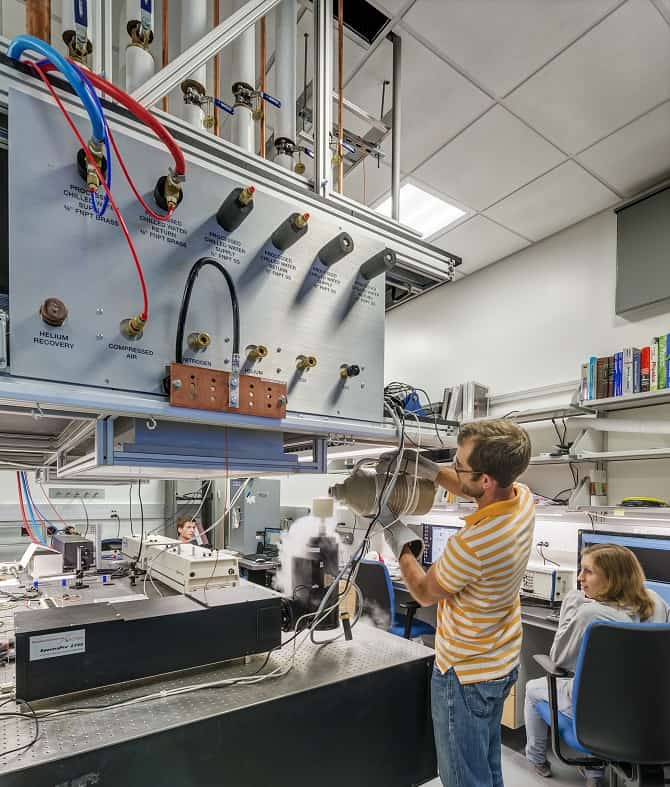
University of Pittsburgh, Levy Lab

Regulated progress

Advances in equipment can lead to higher performance requirements in lab design. In the past it would have been necessary to perform baseline durational measurements over a day to characterize a lab, but now projections can be based on assumed equipment performance within given parameters. A current trend is the shift of lab performance requirements based on equipment-specific performance. With respect to vibration, some kind of passive or active isolation on each piece of equipment is needed either way. “You just can’t build slabs quiet enough to handle today’s technology,” explains Gibbons.

On the other hand, some trends have eased design constraints. For example, there is now a tendency to create highly controlled microenvironments around equipment, removing the necessity for controlling the temperature and relative humidity of the entire lab. An increase in self-contained equipment where samples are loaded under high vacuum and never exposed to the atmosphere also allows wider parameters for the lab conditions.

“When a grant recipient has a relationship with an equipment vendor and the recipient’s current lab equipment is out-of-date,” explains Gibbons, “you might see the vendor update their equipment to be compatible for the laboratory versus the lab being updated to support equipment.”

At the same time, technological progress spurs regulatory changes to ensure safety and controlled energy usage – which can introduce further challenges in lab design. A particular issue can arise materials labs, where deposition tools may require quantities of chemicals and gases that exceed regulatory limits.

A design for life

With PI requirements, technological capabilities and regulations constantly evolving, how does any lab avoid becoming habitually condemned or redundant? “This is where the fun part of design comes in,” says Gibbons. He explains how by situating all the support equipment – pumps and compressors, sometimes control work stations too – outside the lab, architects can design service feed-throughs for interconnection between support space and the lab. “We err on the side of great conservatism by adding a higher number of empty pipes than anticipated,” he adds. “It is always easier to add these pipes on Day One and avoid cutting a hole in the lab wall later on.”

Equipment becomes more “plug and play” when collaboration exists among tool vendors, producing vibration isolation equipment that is incorporated directly into the tool. This also helps toward versatility in lab designs, particularly helpful since, as Gibbons points out, “technology is moving faster than the labs are being renovated”.

A harder hurdle to tackle is dealing with unknown or unpredictable heat loads, which makes it difficult to rely on passive water or radiant panels for temperature control, since these are designed for a specific heat range. Current lab designs still generally rely on mechanical air handling units, but some simple changes can help ease temperature control requirements  – such as moving solid-state computing devices, which generate a lot of heating, outside the lab.

Gibbons acknowledges that architects are trained to focus on aesthetics, and visually striking lab space does play an important role in obtaining grants and recruiting new hires as they tour through the experimental facilities. But Gibbons stresses that he equally enjoys “addressing the challenge of providing a tailored design solution based on the PI and the research being conducted”.

Green power – the debate hots up

The National Infrastructure Commission (NIC), the UK government’s advisory body, recently said that the government “should not agree support for more than one nuclear power station beyond Hinkley Point C before 2025”, since renewables were getting cheaper and could prove a safer investment. See my earlier post. The NIC’s view was backed up by a study by the Aurora consultancy.

Aurora looked even-handedly at the non-fossil energy options ahead and concluded that a “mostly renewable or mostly nuclear system both offer among the most promising pathways to decarbonisation, but the level of ambition required in each case is significant. A high-nuclear world would mean building up to 29 GW of nuclear capacity by 2050 – equivalent to 9 new Hinkley Point Cs. A high-renewable world could require up to 26 GW of onshore wind, 68 GW of offshore wind, and 99 GW of solar by 2050”.

In terms of cost-effectiveness, Aurora said “there is little to choose between a high renewable and high nuclear world, provided there is sufficient flexibility on the system to deal with renewable integration costs. However, we would note that this is highly sensitive to cost assumptions, with renewable costs more likely than nuclear to fall faster than expected”.

It admitted that hybrid renewable and nuclear solutions – a bit of both – could also be cost-effective, but said “they are less appropriate for systems characterized by high peak demand and low flexibility from thermal generation, since this increases renewable integration costs”. So it’s a choice of one or the other and, in either case, it has to be done fully. “Pursuing an aggressive renewables policy without adequate support for flexible technologies could increase total system costs by up to £7 billion per year on average, 2030-50. In a flexible system, reaching 70-80% renewable production by 2050 is the cost-optimizing option, with no new nuclear beyond Hinkley Point C needed to meet carbon targets. In a less flexible system, more than 40% renewable production by 2050 increases the cost to consumers. In a high renewable world, system flexibility is therefore critical to cost- effective decarbonization.”

By contrast “cost-effectiveness in a high nuclear world is less reliant on flexibility. In a high nuclear world, the importance of interconnectors, batteries, and DSR [demand side response] declines”. However, the long lifetime of nuclear plants “increases the chance that nuclear investments could prove sub-optimal over the long term, particularly given the potential for rapid renewable and battery cost declines”, whereas, “policies to support system flexibility are always a low regrets option and are key to enabling a high renewable world”.

…renewable costs more likely than nuclear to fall faster than expected

Aurora

It concludes, “it is difficult to reach carbon targets cost-effectively without new nuclear except at very high levels of renewable penetration”, but seems to think that is possible, though it may require, amongst other things, more interconnectors. Its scenario has 17.9 GW of interconnectors which “play a big role not just in the provision of flexibility, but also in meeting carbon targets, accounting for up to 15% of generation by 2050”. However, it notes there are issues: “if future policy accounts for the emissions associated with imports rather than assuming them to be carbon-free, GB would have to build a significant amount of additional low-carbon generation to meet 2050 carbon targets”. It also warns that “network costs are a critical component of whole system costs and could undermine the cost-effectiveness of renewables. More work is needed to understand how they will evolve over time in different future scenarios.”

Finally, breakthrough new technologies are possible, and though “inherently difficult to predict…have the potential to fundamentally disrupt power system economics. A significant change in the relative costs of nuclear & CCS [carbon capture and storage] could lead to different outcomes, though any role for gas CCS is severely limited in a zero-carbon power sector,” and at present “CCS rarely appears to be a cost-effective option for reducing power sector emissions” – it costs 25% more than nuclear. But it claims if nuclear is avoided entirely, then CCS will be needed.

This is a useful bit of work and the full report merits study. It may be a little optimistic on grid balancing, as Energy Matters argued in a critique, but we are entering new territory here. If we are to think in terms of renewables supplying around 80% of UK electricity by 2050, as Aurora suggests in one possible cost-optimal scenario, then at times there would be significant surplus output. This could be converted – via electrolysis – to storable hydrogen to be used to make electricity to balance the grid when renewable availability was low and/or demand for power high. That so-called Power to Gas (P2G) approach to hydrogen generation is still seen as expensive, compared to steam reformation of methane, but it is improving and does not require CCS to make it low carbon: see my forthcoming posts on that. And there is a big incentive for pushing ahead with Power to Gas, not just for grid balancing but also heating.

On that, Aurora looks at the implications for power sector decarbonization of two different approaches to reducing emissions in the heat sector – electrification and hydrogen /greener gas, though its green gas comes mostly from fossil sources, with CCS. It concludes that a green gas/hydrogen heating route would need a 30% increase in 2050 power generation, whereas an electrification approach, with heat pumps being used, would require a 67% increase in power generation, as well as grid reinforcement. It notes that “Hydrogen-based heating puts less strain on the electricity system.”

A similar conclusion emerges from another study of green heat options and costs done for the NIC, by Element Energy and E4Tech, in even more detail. It says it is still tentative, but the “hydrogen-led heat decarbonisation pathway could be lower in cost by several tens of billion pounds than an electrification-led or hybrid gas-electric”. But, like Auroa, the study sticks to the fossil CCS route to hydrogen – it sees P2G as too expensive.

Interestingly though, while both this study and Aurora’s conclude tentatively that the hydrogen route may the cheapest, as I’ve noted before, Imperial College London has produced a report for the Committee on Climate Change (CCC) looking at hydrogen gas grids and domestic electric heat pumps, which says a hybrid mix may be the least-cost option, with the “hydrogen alone” route being the most costly. And, like the NIC, it seems to ignore heat grids.

Looking so far ahead is fraught with difficulties, so specific technology choices for specific end-uses will be hard to make, but some sort of consensus seems to have emerged on the wider picture: if we want to go that way, renewables can supply the bulk of our power by 2050, and also heat and transport fuel, as demonstrated by National Grid’s new Community Renewables scenario. In that, wind and solar dominate power supply (75% by 2030!) and it uses hydrogen for some heat and transport, and also some hybrid electric-gas heat pumps/boilers for heat. Biomass use is limited mostly to power, with a few local heat networks, while there is under 6 GW of nuclear. Fascinating stuff – a mostly non-fossil future. But perhaps not something most oil companies would recognize; see my next (much delayed/held over) post.

Copyright © 2026 by IOP Publishing Ltd and individual contributors