Books about Einstein – the man, the myth and the theories (both special and general) – pop onto my desk so often that, in most cases, I simply set them aside. But I must admit that the neon-orange book, titled How to UnderstandE = mc2, caught my eye. Part of Quercus’ “Little Ways to Live a Big Life” collection – which includes titles such as How to Land a Plane and How to Count to Infinity – this tiny tome (coming in at just over 50 pages) packs quite a punch.
Written by University of Cambridge theoretical physicist and mathematician Christophe Galfard, the book gives a short, sweet and succinct explanation for what it describes as “the most famous theory of all time”. Even though the title mentions only the famed equation, Galfard does a commendable job of providing a quick (if potted) history of early 20th century ideas and discoveries that led to Einstein developing his special and general theories of relativity. I particularly enjoyed the reference to Danish astronomer Ole Rømer, who in 1676 made the first calculation of the speed of light, after his observations of the Jovian moon Io led him to realize that light does not travel instantaneously.
The book also covers key concepts, such as “frames of reference”, as well as how objects behave at light speed. An unexpected but very welcome chapter was one on antimatter. Under the section on “consequences” of relativity, Galfard smoothly segues into how Paul Dirac deduced the existence of antiparticles, before describing how these ideas ultimately led to the development of the atomic bomb. Considering the book’s length, it is impressive that Galfard manages to give such a complete, if basic, explanation of this most beloved of equations, E = mc2.
Love film? Time travel is one of the topics explored in Science(ish): the Peculiar Science Behind the Movies. (Courtesy: iStock/mj0007)
Science(ish) started life as a podcast, explaining this book’s conversational tone, sometimes stretched to the point of teasing banter between its two authors. Rick Edwards (author and TV presenter) and Michael Brooks (science writer, journalist and consultant) bring humour, enthusiasm and insight to “The Peculiar Science Behind the Movies”, taking 10 major sci-fi films as their jumping-off point. To distinguish themselves from the many other related books now available, they break each film down to three scientific questions and then answer them. For example, “Can we travel in time?”, “How do we build a time machine?” and “Could you erase yourself from history?” might sound like a flippant look at a not-very-scientific sci-fi film, but actually, Back to the Future forms the kicking-off point for explaining special relativity, general relativity, wormholes, cosmic strings and Crispin Glover’s weird slide show.
Okay, so it does get silly at times, and it does contain spoilers if you haven’t seen the films already. You will get much more from this book if you are familiar with the films covered. But it’s a decent introduction to some basic science concepts and some very complex, very current scientific questions, such as de-extinction (Jurassic Park) and human settlement on Mars (The Martian).
There isn’t space to cover issues in depth, which does lead to a few bum notes, such as the chapter on Gattaca failing to grapple at all with the moral and ethical issues surrounding genetic screening and manipulation. I also found that the plethora of illustrations, infographics, cartoons of the authors, footnotes and box-outs on related topics tend to interrupt the flow of reading. I was also annoyed that of the many scientists (past and present) referenced, the women could be counted on one hand. But overall, the authors’ forthrightness (directly calling people who dismiss evolution “idiots”) and sheer love for the films they are discussing made this a really enjoyable read.
In 2014, over 422 million people worldwide were suffering from diabetes mellitus. Three types of diabetes exist, and all affect the production of insulin, either because the pancreas cannot produce enough insulin, or due to an inappropriate response of the cells to insulin, a hormone that is secreted in response to high glucose in the blood.
Diabetes, due to high levels of glucose in the blood, can cause neurologic, ophthalmologic, nephropathic and cardiologic disorders, as well as birth defects in infants born from diabetic mothers. Diabetic patients need to assess their glycaemia several times per day, using a blood glucose self-testing device. Despite the existence of non-invasive devices, this is challenging for the patient. An alternative to blood glucose monitoring would be of great interest for diabetic patients.
With this aim, Joseph Lakowicz and his team at the University of Maryland have developed a more convenient way to read glucose, from tears, using glucose-sensitive silicone hydrogel contact lenses. Glucose concentration in tears follows the concentration in blood within five minutes, so such measurements should be accurate (J. Biomed. Opt.23 057005).
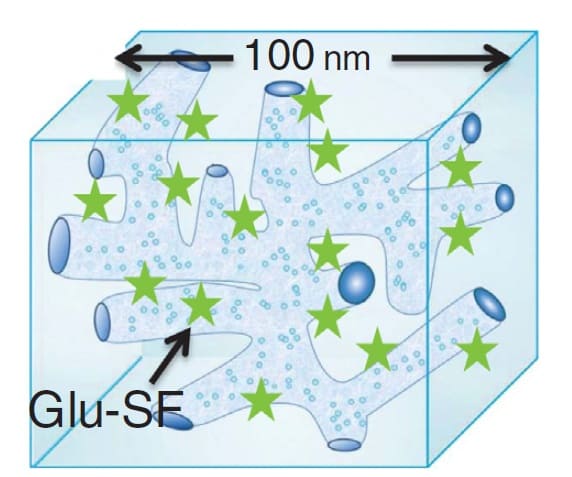
The presence of an interface between the silicone and water regions in a typical silicone hydrogel lens provides the opportunity to create the glucose-sensitive lenses. The water regions act as channels for tear fluid transport and the silicone-rich regions allow a high transport of oxygen, since the capacity of the lens to transport oxygen defines the duration of its wearability by the patient.
The system works thanks to the glucose-sensitive fluorophore Quin-C18, which contains a boronic acid that binds sugars. Quin-C18 fluorescence can be observed under an ultraviolet lamp. However, the device that will be used to detect the fluorophore in the lens is not yet determined. New technology such as a complementary metal–oxide–semiconductor (CMOS) camera could be used.
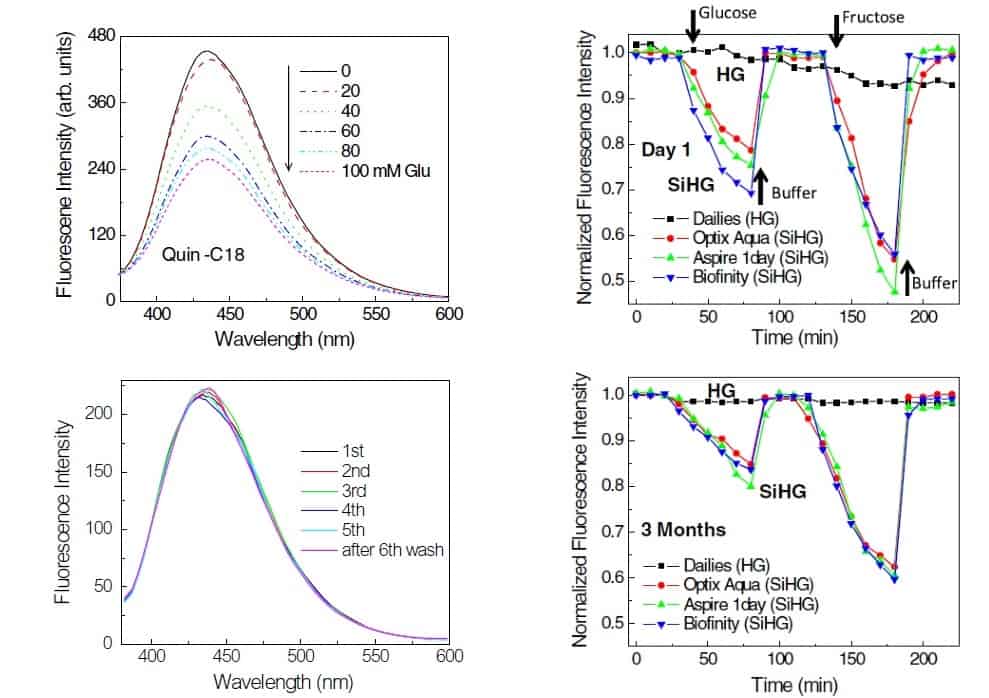
Lakowicz, and co-authors Ramachandram Badugu and Edward Albert Reece, observed that the fluorescence of the fluorophore Quin-C18 decreased when the concentration of glucose increased. There was no signal loss from the fluorophore after multiple rinses. Also, long storage (three months) did not seem to affect the lens’ response to glucose.
The researchers also demonstrated that glucose binding is reversible, by looking at the binding of fructose, which has a high affinity for boronic acid, after glucose binding. However, the minor amount of fructose in tears is not expected to affect the glucose measurements.
Besides their important potential for monitoring glucose in tears of diabetic patients, these lenses could also be used to detect other molecules or pathologies of the eye, for example for diagnosis of dry eye disease.
Coral reefs survive as long as they grow faster than erosion wears them away. Organisms that build the reef, like corals, are calcifiers; they lay down calcium carbonate they have gathered from the water to build their skeletons. Other organisms break down the reef structure physically, while it will also dissolve if the seawater becomes slightly acidic. One cause of ocean acidification is increased atmospheric carbon dioxide levels emitted by humans, a problem projected to worsen in the future.
To investigate how increased nutrient levels affect coral reefs, Nyssa Silbiger of California State University, US, and colleagues added nitrates and phosphates – common components of fertiliser – to aquaria containing coral, algae such as seaweeds, and organisms living in coral-free rubble and sand, all important components of reef communities. They measured activities critical to the healthy functioning of a reef – calcification, dissolution, respiration and photosynthesis – and combined the results to achieve a picture of the whole community.
When nutrient levels were high, both photosynthesis and respiration rates increased across the community, including in the coral’s symbiotic algae. But calcification by corals reduced. This may be because both calcification and photosynthesis compete for dissolved inorganic carbon. The corals, however, also became less able to use carbonate dissolved in seawater, their raw material for calcification. An increase in dissolved carbonate usually means more calcification but under elevated nutrient conditions this relationship collapsed; calcifying organisms did not lay down as much more, or, in some cases, any, carbonate under higher dissolved carbonate levels. Acidified seawater shrinks the reef in these conditions; it dissolves faster than the corals can build it.
Occasionally, the elevated nutrient levels used in this study have occurred naturally in the Pacific. They are set to become more widespread if pollution in the seas continues to increase. Nutrient run-off could become a serious problem in marine communities as human developments spread along coastlines, increasing the coastal population and the amount of waste it produces. These new results lay bare the threat such pollution causes to already beleaguered coral reef ecosystems, potentially tipping them from net growth into decline.
Silbiger and colleagues from the University of Hawai’i at Mānoa, University of Rhode Island and the University of California, San Diego published their findings in Proceedings of the Royal Society B.
Graphene sheet model , 3d illustration. Credit: Graphene istock
Combining electronic and magnetic properties could open up a vista of opportunities to exploit for data storage and computations. In particular there is keen interest in embellishing graphene’s uniquely impressive electronic properties by decorating it with magnetic atoms. So far it has been difficult to study these systems because of interference from the environment. Now Chao-Yi Cai from Peking University in Beijing, China, and Jian-Hao Chen at Peking University and the Collaborative Innovation Center of Quantum Matter in Beijing have developed homemade apparatus that allows them to measure the quantum transport properties of decorated graphene in situ after depositing the cobalt atoms.
Cai and Chen fabricated devices from exfoliated graphene, which they adhered to SiO2/Si substrates before affixing gold electrodes plated with chromium in a four-wire configuration. They then transferred these devices to their ultrahigh-vacuum quantum transport measurement apparatus, where they ran several cobalt deposition procedures, measuring the device behaviour in situ after each run. They focus on cobalt atoms in particular, since as they point out in their report of the work, “A previous theory predicted that among the traditional ferromagnetic elements (Fe, Co, and Ni), only Co atoms can induce magnetism in graphene.”
Cobalt atoms like to cluster
The researchers noted a decrease in conductivity, a shift in the minimum gate voltage and a decrease in the minimum conductivity as the number of cobalt deposition runs increased. These trends are consistent with what might be expected from charged particle scattering and the researchers attribute them to n-doping from the cobalt atoms.
However they also noticed additional gate-dependent resistivity that did not behave as expected for scattering from point-like charges. Further investigation revealed that the cobalt atoms were forming clusters on the surface, even on graphene at cryogenic temperatures where there is little energy for atoms to move along the surface.
The next surprise was the observation of an increasingly temperature-dependent resistivity. Graphene has notoriously low resistivity, which has very little temperature dependence, but once decorated with cobalt atoms Cai and Chen observed insulator behaviour, particularly at low temperatures and around the Dirac point, where graphene’s conically shaped valence and conduction band meet.
Finally the researchers applied a magnetic field perpendicular to the device. In pristine graphene the magnetoresistance – where a material’s electrical resistance changes in response to a magnetic field – oscillates as the field increases. These “Shubnikov-de-Haas” oscillations disappeared as they deposited more and more cobalt atoms. They also observe negative magnetoresistance behaviour that cannot be explained simply as the cobalt atoms conferring ferromagnetic behaviour on the sample. Instead the researchers attribute the negative magnetoresistance behaviour to the appearance of weak localization effects, which are more pronounced in 2D materials.
“In systems with weak localization, application of the magnetic field perpendicular to the sample breaks the time-reversal symmetry between forward and backward hopping paths, destroying the quantum inferences thus generating a negative magnetoresistance,” they explain in their report.
Cai and Chen highlight that even at magnetic fields as high as 9 Tesla the electrons have a large “cyclotron radius”, which describes their circular trajectory in a magnetic field. When the cyclotron radius becomes much lower than the phase decoherence length the quantum interference is suppressed leading to classical behaviour. However these conditions are not met in their cobalt-decorated graphene sample even at 9 Tesla, so that the negative magnetoresistance behaviour remains unsaturated.
‘Oumuamua, a mysterious cigar-shaped object travelling through the solar system having arrived from interstellar space, is being propelled by outgassing as it is heated by the Sun. That is the conclusion of Marco Micheli of the European Space Agency and colleagues, who have looked at ground- and space-based observations of the motion of the object.
First spotted on 19 October 2017 by the Haleakala Observatory in Hawaii, ‘Oumuamua is 230 m long and is the first object to be identified as entering the solar system from interstellar space. ‘Oumuamua means “scout” in Hawaiian to reflect its long voyage from a distant planetary system.
The object’s extremely eccentric orbit and shiny surface initially led the International Astronomical Union (IAU) to classify ‘Oumuamua as a comet. However, that status was quickly changed to an asteroid when astronomers could not find a “coma” of gas and dust surrounding the object, something that is seen around comets. Then in November 2017, ‘Oumuamua was again reclassified by the IAU as the first ever “interstellar object” – a new classification created in light of the object’s discovery.
Extra acceleration
In this latest study, Micheli and colleagues tracked ‘Oumuamua as it moved through the solar system and found that its trajectory cannot be explained solely by the gravitational attraction of the Sun, planets and large asteroids.
Calculations done by the team rule out pressure from solar radiation and magnetic interactions with the solar wind as causes of the additional acceleration. Instead, they report evidence of a non-gravitational acceleration that is directed away from the Sun. This phenomenon is also seen in comets, which can be propelled by the gas they release as a result of being heated by the Sun.
While ‘Oumuamua appears to be comet-like, Micheli and colleagues point out that it appears to have chemical and dust properties that are unlike most known comets. They speculate that the observed lack of dust surrounding the object could mean that ‘Oumuamua is devoid of small grains of solid material – or indeed contains a very small amount of dust in general. Another possibility is that ‘Oumuamua began its long journey as a typical comet, but its surface was somehow modified along the way.
Writing in Nature, the astronomers conclude, “although ‘Oumuamua looks familiar there are differences that relate to its birth in a solar system far from our own”.
Renewables are booming across Asia, but there are variations in pace and rival options also play a role. An interesting paper by Indian academic Nandakumar Janardhanan looks at competition in renewables in developing countries in Asia, focusing on India and China.
Janardhana notes that “India and China, being major developing economies and having huge energy appetite, focused heavily on strengthening their respective alternative energy sector” so as to reduce their over-reliance on conventional fossil fuels. He adds that “India depends on external oil supplies to meet two thirds of its oil demand, one third of oil demand in China is met by imports”. As a result, the renewable energy sector has gained great momentum in these two countries and “as innovation and development began to lead the growth of alternative energy sector, opportunities for expansion within their respective borders as well as outside emerged as promising avenues for the industry from both countries”.
China has done especially well: “the competition in the domestic energy sector in China led to the emergence of cheaper and better technologies which will enjoy a natural competitive edge over its counterparts from other countries” – solar PV is an obvious example – and the Chinese government “has been keen in enhancing its ties with the developing Asian economies in all possible ways”. Basically, “China sees that capturing the developing Asian market is important to its economy”, and believes that “spreading influence among the economies in the region is in its greater strategic interest”.
By contrast, although it too has some regional involvement via ASEAN (Association of South East Asian Nations) cooperation agreements and initiatives, India has done less well on most counts, e.g. it has around five times lower national renewables output. And on trade, China is clearly winning so far: “a critical advantage China enjoys in the region is its sheer size of economy”, and it is “able to present itself as an alternative power which can offer financial support and business opportunities”. But the contest continues, with India trying hard to catch up, while China is having to cope with the problems of being in front, including the issue of curtailment. See my earlier post. With programme costs also rising, it has recently decided to throttle back on its very rapid PV solar growth, so that only 29 GW extra may be added this year, instead of the 48 GW expected.
Both India and China have nuclear programmes, which inevitably siphon off some support from renewables, but less so in the case of China – the nation is now getting around ten times more output from its rapidly expanding renewables programme than from its nuclear plants: the output from its huge wind programme – 170 GW and rising – overtook that from nuclear a while back. That’s also now the case for the smaller wind programme in India (33 GW so far), but the output from India’s other renewables is still quite low, although growing. It aims to have 175 GW of renewables by 2022, with PV accelerating.
The other major contenders in the region are also well behind China. Japan clearly has the industrial capacity but, still recovering from the shock to its energy plans represented by the Fukushima nuclear disaster, it’s dragging its feet on renewables, PV apart.
In theory, with most of its nuclear plants closed, Japan is aiming to move away from nuclear and expand its use of renewable sources so that they supply 22-24% of its power by 2030. However, even given this relatively low target (less than the UK gets now), progress is relatively slow, although some of the big PV projects are quite spectacular. But Japan is still trying to upgrade and restart more nuclear plants, which is expensive, and it is faced with the huge Fukushima clean-up bill, which may be vastly more than the official estimate, perhaps £150 bn.
South Korea might do better, having decided to abandon its nuclear programme, but like Japan, it still has a long way to go on renewables – it’s aiming to get just 20% of its power from 58.5 GW of renewables by 2030. What’s more, although the government seems resolute, there are still those who want to rescind the nuclear decision – and one plant build has been restarted, although an old reactor is to be closed ahead of its 2022 retirement schedule.
Similar issues are being fought out in Taiwan, which, with massive popular opposition to nuclear, is aiming to phase it out by 2025 and wants to get 20% of its power from renewables by then. However, there have been signs of a back-slide .
Backing off from nuclear is clearly hard work. Japan is having to import a lot of gas, at massive cost and with significant emissions being produced. In effect, and embarrassingly, it has had to abandon its Kyoto climate pledges. And the direct impacts of the 2011 Fukushima disaster are also far from over. More than 130,000 people left or were evacuated from the region. Some are being asked to return and some want to, and some already have. But a recent survey by Greenpeace Japan in the towns of Iitate and Namie in Fukushima prefecture, including the exclusion zone, found radiation levels in some locations up to 100 times higher than the international limit for public exposure. The organisation claims that the high radiation levels in these areas pose a significant risk to returning evacuees until at least the 2050s and well into next century.
This view will be unpopular with the government, since it is looking to the upcoming Olympics for an economic boost. So the last thing it wants is bad news about radiation risks, which might deter visitors. The issues can perhaps be portrayed as being far away and of no consequence as far as the Olympics in Tokyo are concerned. But it may not in fact be just a local issue, with contamination being found up to 60 miles away. Or a trivial one, with hot particles still turning up
It’s hard to see how it can all be decontaminated. There is a harrowing report and video, which looks at the issues and shows the clean-up so far, with the vast areas of water tanks and top soil in bags. It all adds up to a horrible warning about what can happen when nuclear goes wrong, with some saying that the impacts on local people amount to a human rights violation. Let’s hope that China and India, Taiwan or South Korea don’t have to face this at some point.
However, some clearly see it all differently and argue that, albeit with the benefit of hindsight, as it turned out, the costly and disruptive Fukushima evacuation was a mistake. The problem was that, at the time, no one knew what would happen next – very major radiation releases were possible. And the long-term health impacts of what did happen are still debated. Statistically, as an Financial Times article has noted, the Fukushima evacuation may have, in effect, extended the life of those moved from the worst zones by a few months from what they would have been if they had been left exposed. But statistical analysis and on-the-ground reality may differ and certainly may be perceived differently. Even now, South Korea is still refusing to import some sea foods from the Fukushima area. That may be seen as over cautious, but in the final analysis, it is the uncertainty about nuclear risks and impacts that is the killer in public policy and public reaction terms, and that makes the alternative energy options look far more appealing, the uncertainties adding to the case against nuclear, especially near population centres.
The nuclear issue is of course only one aspect of Asian – and global – energy policy. Its significance may well diminish as renewables continue to expand. In my next post, I look at the debate on how fast that may happen and at some possible constraints.
Colorectal cancer is one of the most deadly malignancies, but is preventable and curable if diagnosed at a precancerous or early stage. Optical colonoscopy is a key component of any colorectal cancer screening programme. However, many patients are reluctant to undergo colonoscopy due to its invasive nature and requirements for bowel preparation, sedation and pain medication.
To increase screening uptake, a more patient-friendly test is needed. With this aim, an international research team has developed an ingestible X-ray imaging capsule that requires neither colon cleansing nor sedation. The capsule – which is being commercialized by Israeli diagnostics company Check-Cap – scans the colon as it travels through the gastrointestinal tract and sends data to a dermal patch receiver. The technology could reduce colon cancer mortality by screening for precancerous polyps and lesions before they become malignant.
In preliminary studies, the researchers confirmed the safety of the X-ray capsule in 138 volunteers (Abdom. Radiol. 42 1291). Now, they have published results from the first prospective trial examining its efficacy for polyp detection (Gut 10.1136/gutjnl-2018-316127).
Capsule design
The capsule incorporates a short-lived 191Os radioisotope, which emits three rotating beams of low-dose 65-75 keV X-ray photons, plus photon-counting X-ray detectors. The patient swallows the capsule, along with small quantities of an iodine-based contrast. A scanning control algorithm (SCA) then uses real-time positional data to determine whether the capsule has moved along the colon and, if so, transmits a command to perform a scan.
“Ideally, since the scan width is about 5 mm, the SCA should scan every 5 mm for 100% coverage of the colon surface,” says Yoav Kimchy, founder and CTO of Check-Cap. “In reality, since our focus is on polyps of 10 mm and above, we estimate that a scan every 10 mm, which gives 50% coverage, may still catch most of these polyps.”
The colon wall is imaged based on two processes: generation of secondary X-ray fluorescence (XRF) photons at 27 keV as the emitted photons interact with iodine atoms; and Compton scattering as the photons interact with atoms in the colon wall and lumen, creating scattered photons with energies of 52-60 keV.
“Measuring both XRF and Compton photons brings a number of advantages,” Kimchy explains. “Since both the distance from the capsule [to the colon wall] and the contrast concentration at each imaging location are unknown, having two measurements allows us to solve for distance and concentration simultaneously.”
The system combines the XRF and Compton data to estimate these parameters and reconstruct the colon surface. Kimchy notes that the two techniques behave differently when encountering a gas bubble in the colon, enabling readers to distinguish between a polyp and a bubble. False readings are also reduced by requiring both data sets to confirm the presence of a polyp.
Feasibility study
To test the capsule’s ability to detect polyps, the team analysed imaging data from 45 patients with and without polyps. Patients underwent the capsule procedure and a faecal immunochemical test (FIT, an indirect colorectal cancer detection test), followed by a reference colonoscopy. The researchers calculated the sensitivity and specificity of the capsule findings as a function of the scan imaging density.
The capsule’s overall sensitivity for polyp detection was 44%, compared with 37% for FIT. In a subgroup of 19 patients with scan imaging density above 50%, this increased to 78%, while for 12 patients with imaging density above 70%, sensitivity was 100%. Specificity was high in all cases, at between 86 and 90%.
The average total transit time of ingested capsules was 52±32 hours. There were no device-related serious adverse events and the procedure was well-tolerated by the participants. The average total X-ray dose was 0.051 mSv.
After the trial, the researchers developed an improved SCA and retrospectively implemented it on the study data. This increased the number of subjects with scan imaging density above 50% from 21 of the 45 patients to 41. “The new SCA showed an improvement in the filtering of body movements, providing more homogeneous spread of scans along the colon. This amounts to a better scan imaging density in the retrospective analysis, which we hope will translate to improved sensitivity for polyp detection,” Kimchy explains. “We are collecting new clinical data with this algorithm to show statistics on sensitivity.”
Following CE Mark approval in January 2018, Check-Cap plans for commercial sales of the capsule in Europe, with additional regulatory clearances to market in Israel and the Far East. They are also developing improved software and algorithms, performing a multicentre clinical trial, and working with the FDA to start clinical trials in the USA. In parallel, the company is preparing for high-volume manufacturing, with GE Healthcare as a partner.
As a child I was fascinated by biology and aspects of physics such as electricity and magnetism. I was very lucky that my physics lessons at school were taught by a very enthusiastic teacher, who stimulated my interest strongly. I was especially interested in nuclear physics.
What area was your physics degree in, and did you ever consider a permanent academic career?
As I preferred applied physics over theoretical physics, I chose to study the former at the Delft University of Technology. I did my MSc in radiation physics at the Reactor Institute Delft, which is a research institute, not a power plant. I worked at the institute as a research scientist for a few years after finishing my degree. After a while, I switched to working as a medical physicist – first at the Radiotherapeutic Institute RISO, and later in the radiology and nuclear-medicine departments at the Deventer Hospital in the Netherlands – for more than 30 years of my career. In that time, I published some papers and completed a PhD at the University of Utrecht, on treatment of prostatic cancer using I-125 seeds.
How did your interest in photography emerge?
In the late 1990s, while teaching radiation physics and radiation safety to radiographers and physicians as part of the hospital’s programme, I found that even very thin objects (such as flowers) can be imaged when using very low energy X-rays. After a few years, I started to colour some of these X-ray images, and people found them interesting. I got my own licensed X-ray studio in 2007 and, after retiring from the hospital in 2012, I have been working full-time creating “bioramas” – nature scenes involving flowers, plants and animals. I was inspired by the unbelievable beauty of nature, and became aware of its wonderful complexity.
How do you create your portraits?
I set up a natural scene, and then X-ray it in one session as a whole – the images are not stacked or layered digitally. The animals I use are dead, as I dont think I could justify exposing living animals to X-rays for my art. I source the animals in different ways – I find traffic-victims along the road side, or birds who have flown into windows. The fish I buy at a market, while my cat catches the occasional mouse or mole. I also have a friend who breeds reptiles, who gives me their carcasses. I use animals as I find them – especially in the case of traffic victims, the anatomy mostly is mutilated, so you will see animal injuries in a lot of images.
And how do you do this in practice?
Once the scene is set, I position an analogue silver bromide X-ray film (in a light-tight envelope) with the biorama on it, and place it on the floor. The X-ray tube is about 100 cm above the film, which is a fine-grain (high-resolution) film, with a steep gradient (high contrast). But it has relatively low sensitivity, and so a high dose of radiation is required for sufficient optical density. First, I take a low energy 2.5-minute exposure to image the thinner parts (such as the petals or leaves) of the biorama, immediately followed by a higher-energy exposure of 3.5 minutes to image the thicker parts. The film needs a maximum total dose of about 300 milliGray, resulting in a maximum optical density of about 3. After processing the exposed film in a dark room, I judge each analogue image and measure its optical density. I digitize the X-ray image using a scanner, and edit the grey levels with Photoshop. I pick and colour some areas of the image and, often, it is inverted.
What are some of your current projects?
This year, I exhibited my 3D X-ray images at the Natural History Museum in Rotterdam – you observe the portraits through a View-Master. My photographs were also included in a recent Dutch children’s book titled Binnenstebinnen, published by Gottmer, Haarlem. I hope it gets a sequel.
How has your physics background helped?
It’s not easy creating these X-ray images where there are huge differences in thickness – from the very thin petals of a flower or the feathers of a bird, to the relatively much thicker bodies of animals. I think that my medical background in X-ray physics was of great value, and allows me to now take the perfect X-ray.
Any advice for today’s students?
You are studying during a wonderful period of great discoveries and interesting discussions in physics – enjoy it!
Hospital-acquired infections (HAIs) are one of the biggest challenges in modern healthcare. Within this wider problem, urinary-tract infections associated with catheter use are a particular concern: in 2001 a US study found more than half a million cases each year, accounting for approximately 40% of all HAIs (Int. J. Antimicrob. Agents17 299). Such infections often stem from biofilms that form when a catheter is inserted into a patient’s urethra. These biofilms – which are made up of micro-organisms and their extracellular detritus – act as refuges for bacteria, making infections persistent and difficult to treat. Developing novel catheter materials that resist biofilm attachment is thus a promising strategy for reducing the number of HAIs.
Modified materials
The most common material for urinary catheters, silicone rubber, is a polymer with a backbone consisting of silicon and oxygen. This backbone makes it possible to tailor the material’s texture and elasticity to different applications, and it also makes it highly chemically inert – all excellent characteristics for a medical device. Silicone on its own is, however, hydrophobic, so it is relatively easy for hydrophobic biofilms to adhere to it. This is why BioModics, a Danish medical-supplies company where two of us (MA and PT) are senior managers, has been developing ways of modifying silicone to make it more resistant to biofilm attachment.
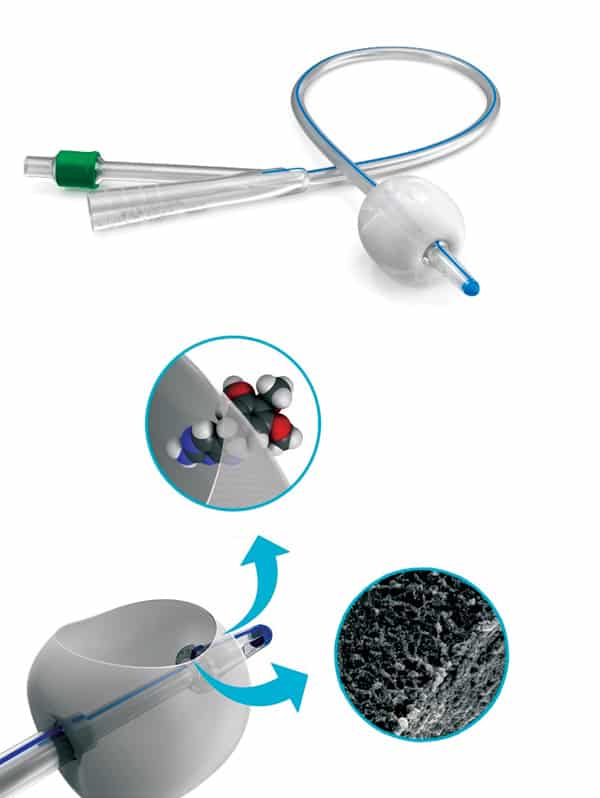
At BioModics our approach is to transform silicone by treating it with carbon dioxide at high temperature and pressure. Under these conditions, the carbon dioxide becomes a supercritical fluid – it can penetrate materials like a gas, while also acting as a solvent for the silicone. This process causes the silicone to expand, such that it can be impregnated with hydrophilic molecules that then polymerize inside the silicone network. The result is an interpenetrating polymer network (IPN) of silicone and hydrophilic gel, or “hydrogel”; the hydrophilic nature of this system makes it more difficult for biofilms to adhere to it (Eur. J. Pharm. Biopharm.94 305).
Making catheters from this hydrophilic hydrogel-silicone could significantly reduce the risk of patients developing catheter-related infections, but BioModics’ patented technology also has potential applications in drug delivery. Whereas silicone on its own repels water, the hydrogel in BioModics’ IPN material serves as a reservoir for liquids in which small hydrophilic molecules – such as antibiotics to destroy any bacteria that do manage to colonize the catheter – could be suspended. This might make it possible to deliver active pharmaceutical ingredients locally instead of systematically, limiting their side effects. Again, the change from a hydrophobic to a hydrophilic material is key.
To improve BioModics’ technology and optimize the material processing conditions for different applications, we wanted to understand precisely how the silicone and hydrogel are distributed through the IPN structure. For example, understanding and controlling properties such as the connectivity and pore sizes of the hydrogel network is critical for ensuring that the network is suited for transporting specific drugs. However, studying the hydrogel structure is tricky because the two polymer networks (silicone and hydrogel) are integrated on the nanoscale, and inspecting them with a light or electron microscope reveals little contrast between the two materials.
To overcome this problem, BioModics turned to a project called LINX, which stands for Linking Industry to Neutrons and X-rays. This initiative was designed to bridge the gap between academic research and industrial R&D in the field of neutron and X-ray scattering, and it facilitates collaborations between three Danish universities (each with its own particular expertise) and companies from a wide range of industries (see Physics World Focus on Neutron Science October 2017 pp17–18). The project’s long-term goal is to help Danish industry make the most of nearby large-scale research facilities such as the European Spallation Source, the MAX IV synchrotron and the European X-Ray Free Electron Laser.
Fine details: A BioModics catheter, with the inset diagrams showing enlarged views of the catheter wall (middle) and its nanoscale structure (bottom). (Image courtesy: BioModics)
BioModics’ first port of call was the LINX team at the University of Copenhagen, which specializes in small-angle scattering techniques and where one of us (EB) works as a physicist. In both small-angle X-ray scattering (SAXS) and small-angle neutron scattering (SANS), a beam of radiation (X-rays or neutrons) impinges on a sample and scatters off it. Detectors record the scattered radiation as a function of the scattering angle, which is typically less than 5°. The resulting pattern is related to the Fourier transform of the sample’s structure, so by comparing the scattering data to geometric models, researchers can extract information about the shape and size of the sample’s structure.
Both SAXS and SANS are great for investigating structures at length scales between 1 and 100 nm (and sometimes larger, depending on the specific experimental setup), so they are a good fit for BioModics’ nanoscale silicone–hydrogel IPN. There are, however, some key differences between SAXS and SANS, and these had important consequences for BioModics’ investigations. Whereas X-rays interact with the electrons around the atomic nucleus when they scatter, neutrons interact with the nuclei themselves. This means that neutrons can “see” light elements such as hydrogen, which are practically invisible to X-rays. A subtler but equally important fact is that neutron scattering is isotope-sensitive: if the water in a sample is replaced with heavy water (D2O), the SANS results will look different.
Different tools, different results
Researchers at the University of Copenhagen began by investigating BioModics’ IPN material with SAXS, hoping that these measurements would reveal the hydrogel’s structure. Unfortunately, the electron densities of silicone and hydrogel are nearly the same, so it was not possible to distinguish the two materials using this method. In fact, the observed X-ray scattering profile turned out to be dominated by scattering from the silica (SiO2) particles used as filler to make the silicone more mechanically stable.
After this setback, the team turned to SANS, for which the contrast between silicone and hydrogel is better, especially if the hydrogel is loaded with D2O. Using SANS did, however, present some initial hurdles. While SAXS experiments can be performed using a conventional X-ray tube available in many laboratories, SANS requires a nuclear reactor or a spallation source based on a particle accelerator. These large-scale experimental facilities are usually reserved for academic research, and although industry-access programmes exist, the usual rate for proprietary beam time is thousands of euros per day.
To overcome this financial barrier, BioModics applied for beam time via a project called SINE2020, which offers short periods of free beam time to companies that want to find out whether neutron scattering is a feasible technique for studying their materials. BioModics was awarded beam time at the Institut Laue-Langevin (ILL), a major neutron-scattering facility in Grenoble, France, where one of us (CB) works as an industrial liaison officer. After BioModics shipped their materials from Denmark to France, scientists at the ILL performed measurements on samples of pure silicone, dry IPN and on IPN samples that had been soaked in D2O for a week.
Making catheters from hydrophilic hydrogel-silicone could significantly
reduce the risk of catheter-related infections
The SANS data from pure silicone and dry IPN were strikingly similar, which unfortunately means that the strongest scattering signal was still coming from the filler material. However, SANS data on the samples soaked in D2O looked quite different. This made it possible to differentiate the signal of the hydrogel from that of the silicone, and thus to learn about the IPN structure. By applying fractal network models to the data, we succeeded in deriving a characteristic correlation length related to the pore size of the hydrogel, as well as a parameter describing the roughness of the interfaces between hydrogel and silicone. After doing this for two samples with a different silicone base but the same amount of hydrogel, we found that the samples had different correlation lengths (58.6 nm and 32.5 nm), while the interface between silicone and hydrogel was also markedly different. In one sample the interface was quite smooth, whereas in the other it was rough or jagged.
Drug delivery
This result suggests that an IPN made from the material with the smoother interface may be the better of the two for transporting drug molecules. Although this finding would, of course, need to be confirmed by more direct measurements of drug transport through the material, it was intriguing enough for BioModics to purchase additional beam time at the FRM-II research reactor in Garching, Germany. In a later series of experiments, we mapped out how the IPN’s structure changed as a function of hydrogel content, in order to determine how to produce a structure that is optimized for drug delivery. These data, taken in summer 2017, are being analysed by researchers in the LINX team at Copenhagen, but so far the results are promising. Ultimately, we expect that the project will help BioModics select the optimal silicone type, hydrogel content, and possibly other parameters, in order to achieve the best possible properties for our devices – including an optimal hydrogel structure for drug delivery and optimal mechanical properties, such as softness and flexibility, for the catheter material. In the fight against catheter-related infections, these are useful weapons.