

Innovation: patent applications review
A round-up of the latest international patent applications in radiation therapy
 Read article: Innovation: patent applications review

A round-up of the latest international patent applications in radiation therapy
Read article: Innovation: patent applications review
With proton treatment slots a limited resource, could combined proton–photon therapy provide a suitable alternative?
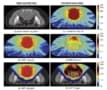 Read article: Protons plus photons: the optimal combination
Nanoparticles that convert NIR to blue-green light enable non-invasive modulation of neural activity deep inside the brain
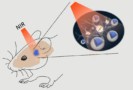 Read article: Nanoparticles enable deep-brain manipulation
Cherenkov light generated by clinical photon beams can activate light-sensitive drugs and enhance the efficacy of radiation treatments
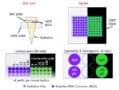 Read article: Cherenkov photo-activation enhances radiotherapy
Convolutional neural networks improve the precision of time-of-flight estimates by up to 23% compared with conventional PET signal processing
 Read article: Neural networks improve PET time-of-flight estimates
Electron collimation using a photon MLC could improve clinical workflow and enable advanced delivery techniques
 Read article: Photon MLC collimates electron beams
Quantifying structural changes in nuclear DNA could simplify detection of cancerous cells and identify different stages of malignancy
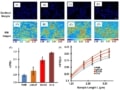 Read article: Photonic technique eases cancer staging
An adaptive control system for a robotic lower limb prosthesis adapts to the user's neural information while they walk
 Read article: Adaptive system enhances robotic limb control
Neural recording and stimulation arrays with tiny shanks decrease tissue damage and reduce foreign body response
 Read article: Ultramicroelectrodes deliver reliable neural recording
Incorporating LET criteria directly into intensity-modulated proton therapy plans could help realize the full potential of proton therapy
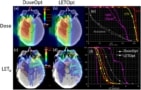 Read article: LET-based plans optimize proton therapy