
Microneedle-coated polymer particles rubbed onto the skin increase the delivery of medication by up to 37-fold
Join the audience for a live webinar on 6 October 2026 sponsored by IOP Publishing's journal, Physics in Medicine and Biology
The 2026 edition of Physics World Careers is packed full of advice for early-career scientists. Including a range of valuable advice, informative case studies and recruiter profiles, it demonstrates the variety of jobs that use a physics degree.

Nick Zacharopoulos, CEO of Aktina Medical, is our podcast guest
 Read article: Pathways to commercial and academic success in medical physics
A thin coating that hides transplanted donor cells from the body’s immune system could enable a novel therapy for type 1 diabetes
 Read article: Encapsulated islet transplants restore blood sugar control in diabetic mice
A new personal radiation shielding vest tested during the Artemis I flight could significantly reduce the radiation dose that future astronauts might receive
 Read article: Radiation shielding vest could reduce cancer risk for astronauts on deep space missions
New technique could allow for the scalable production of vascular tissue networks for regenerative medicine
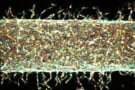 Read article: Artificial blood vessels grow with the help of mechanical forces
An easy-to-use portable 3D ultrasound system enables nurses, physicians or even patients themselves to perform frequent breast imaging exams
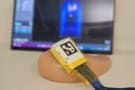 Read article: Portable breast ultrasound enables imaging between cancer screening exams
Machine learning decodes the complex chemical signatures in human breath to deliver rapid, non-invasive tuberculosis diagnoses
 Read article: AI sniffs out tuberculosis in breath’s chemical signature
Study reveals how sensitive health information about individual patients could be extracted from diagnostic medical AI models
 Read article: Privacy risks from medical AI are greater than previously thought
Radiotherapy QA must adapt to a new era of adaptive treatments, AI and automation
 Read article: Redefining radiotherapy QA: meeting the needs of modern treatment workflows
Diagnostic X-ray images recorded during an orbital spaceflight exhibited similar contrast and spatial resolution to those taken preflight on Earth
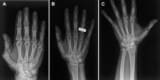 Read article: First medical X-ray images taken in space achieve diagnostic quality
Assessing the impact of radiation exposure is crucial for protecting the health of workers, but expert judgement is needed to interpret the results
 Read article: Measuring the invisible: how internal dosimetry shapes radiation protection
New device produces higher-resolution X-ray images using a much lower dose of radiation
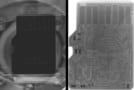 Read article: Mouldable glass screen could make mammograms clearer and much more comfortable
Handheld imaging device combines advanced optics with deep learning to enable early detection of epithelial cancers
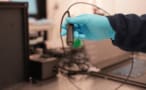 Read article: Affordable AI-powered endomicroscope lines up for early cancer detection
Our podcast guest is James Giltz of One Physics
 Read article: Independent linac commissioning matters for radiotherapy
Python-based tool calculates the neutron dose anywhere in a proton therapy treatment room using information from the treatment plan
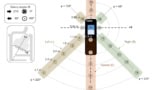 Read article: Easy-to-use calculation tool estimates out-of-field neutron dose during proton therapy
Ronan Smith from Adelaide University wins Physics in Medicine and Biology award for his work on a novel imaging method that uses X-rays to track lung ventilation
 Read article: X-ray velocimetry study earns Ronan Smith the PMB Early Career Researcher Award
A PET radiotracer that can visualize deep vein thrombosis and pulmonary embolism wins the Society of Nuclear Medicine and Molecular Imaging’s most prestigious award
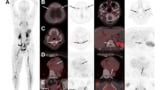 Read article: PET scan that detects dangerous blood clots is SNMMI ‘Image of the Year’
Keamogetswe Ramonaheng discusses her life in medical physics
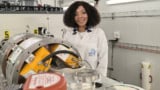 Read article: From equations to nuclear medicine: Keamogetswe Ramonaheng on building medical physics in Africa
A lively debate at the ESTRO 2026 meeting concluded with nearly 70% of the audience backing upright proton therapy as a mainstream treatment option by 2035
 Read article: ESTRO debate reveals rising confidence in upright proton therapy